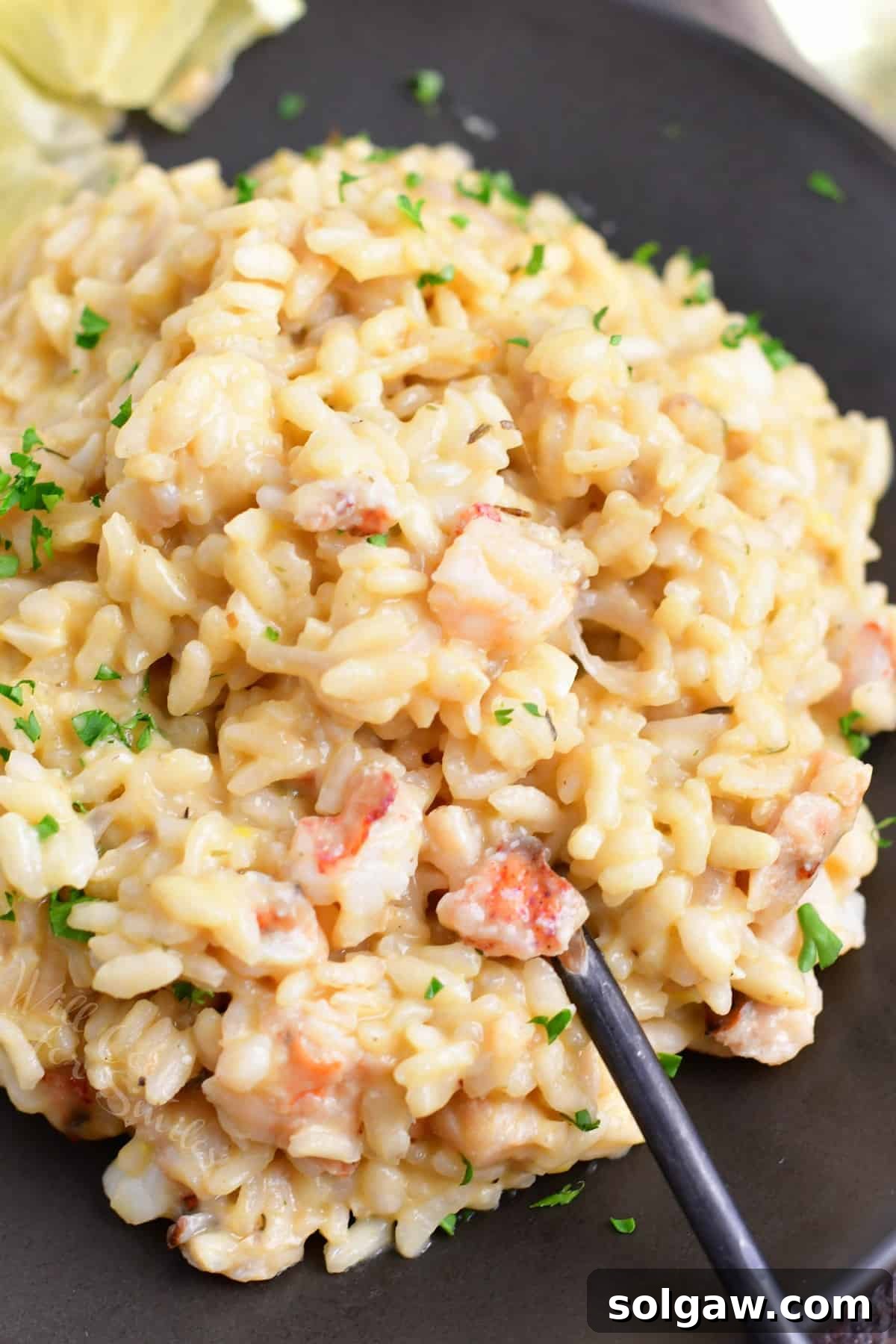
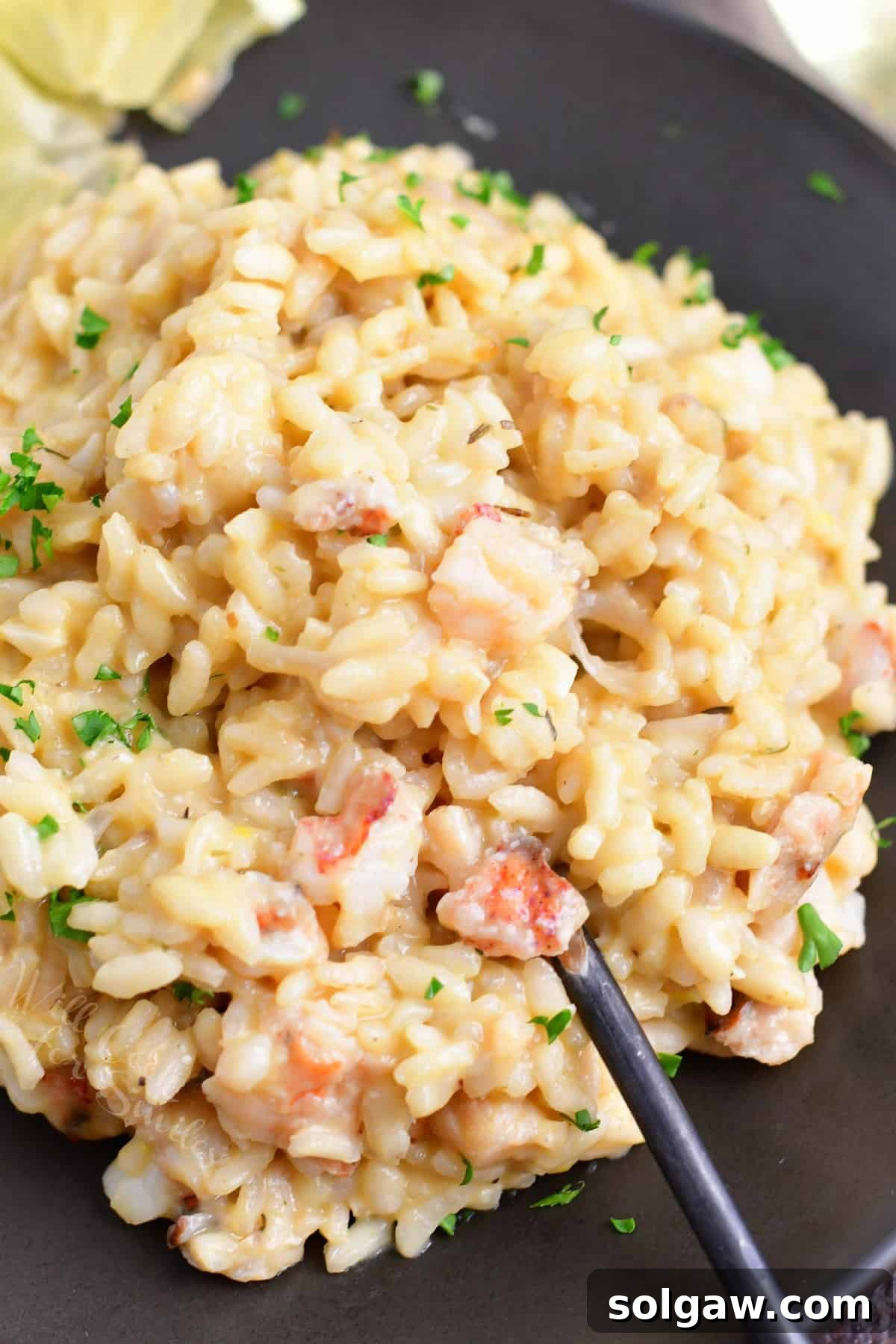
Lobster Risotto is a truly exquisite dish, perfectly suited for those special occasions when you want to create an unforgettable dining experience. This luxurious, homemade risotto is a celebration of flavor and texture, featuring succulent pieces of tender lobster meat, a rich and aromatic broth, a touch of indulgent cream, and a generous amount of freshly grated Parmesan cheese. Its creamy consistency and delicate yet profound seafood taste make it a masterpiece that’s surprisingly achievable in your own kitchen.
Featured Comment
“
Made a single serving of this tonight! It turned out sooooo well. The alcohols really helped balance the dish and give it a little tang, the lobster and heavy cream complimented each other.
Fantastic recipe! ~Hannah”
Risotto holds a special place in the heart of many as the ultimate comfort food, and for good reason. Its rich, velvety texture and deep flavors make it an ideal choice for a sophisticated dinner party or an intimate date night. If your goal is to truly impress your guests or loved ones, a perfectly executed risotto, especially one as decadent as lobster risotto, is always the answer. It’s a dish that speaks volumes about culinary skill and appreciation for fine ingredients, yet it doesn’t require advanced chef training to master.
What makes this Lobster Risotto recipe particularly noteworthy?
- Deep Lobster Flavor Infusion: Every single bite of this decadent dish bursts with authentic lobster essence. This isn’t just about adding lobster meat; the flavor profile is enhanced by infusing the broth with simple lobster ingredients, often utilizing the shells to create a homemade stock that permeates the entire dish with a delicate, briny sweetness. It’s a culinary technique that elevates the experience far beyond simply tossing in cooked lobster.
- Surprisingly Simple to Master: Don’t let the perceived complexity of risotto intimidate you. While it might seem fancy, the process is quite straightforward. Yes, risotto does demand your attention, requiring frequent stirring and gradual additions of broth. However, this active participation is the extent of its “difficulty.” With a little patience and care, you can achieve restaurant-quality results in your own kitchen.
- Effort Worth the Reward: Upon reviewing the steps, you might notice what appears to be a lengthy process. However, a closer look reveals that many of these steps involve the repetitive yet meditative act of adding broth gradually and stirring. This consistent attention is crucial for coaxing the starch out of the Arborio rice, creating that signature creamy texture without adding excessive cream. The end result – a lusciously creamy, flavorful lobster risotto – is undeniably worth every moment spent.
- Budget-Friendly Decadence: Indulging in lobster doesn’t have to break the bank. This recipe smartly utilizes lobster tails, which are generally a more economical choice compared to whole lobsters, making this luxurious meal more accessible. Moreover, once you master cooking lobster tails, you can easily incorporate them into a variety of other delicious recipes, such as classic lobster tails, a quick and satisfying lobster pasta, or the ultimate comfort dish, lobster mac and cheese. This versatility adds even more value to your investment in this exquisite seafood.
This recipe transforms fresh lobster tails into a magnificent and comforting meal. The secret to its incredible flavor lies not only in the tender lobster chunks but also in the rich, infused broth. Making a good risotto is an art, and the art lies in the simple, repetitive actions that build flavor and texture, transforming humble rice into a gourmet experience. With these tips and a clear guide, you’re well on your way to creating a truly memorable dish that will delight your senses and impress anyone you serve it to.
Key Ingredients for Your Lobster Risotto
Crafting the perfect Lobster Risotto begins with selecting the finest ingredients. Each component plays a vital role in building the dish’s signature rich flavor and creamy texture. Here’s a glimpse of what you’ll need to gather before you start cooking.
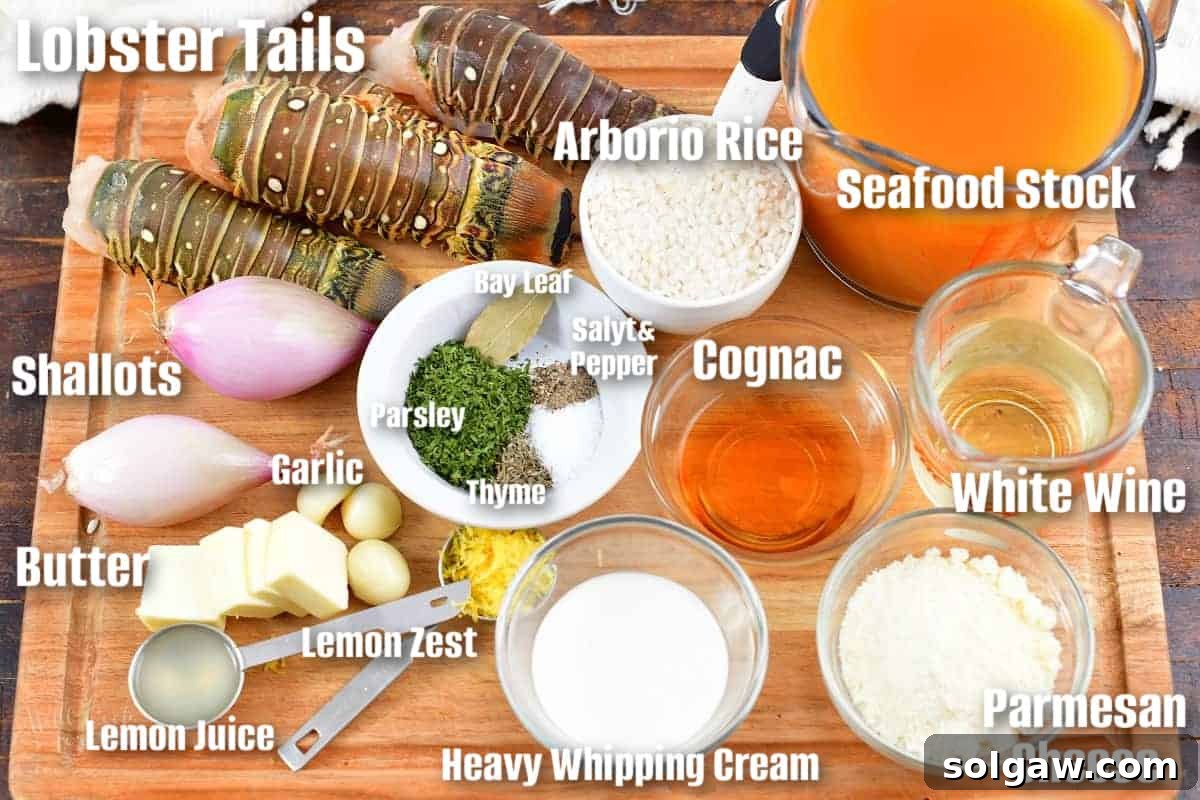
Beyond the primary components like fresh lobster tails and Arborio rice, you’ll also need aromatics like shallots and garlic, good quality dry white wine, and a robust seafood or lobster stock. Fresh herbs and a touch of lemon zest will brighten the flavors, while unsalted butter, heavy cream, and Parmesan cheese will provide the luxurious finish. Always opt for fresh, high-quality ingredients to ensure the best possible outcome for your exquisite meal.
How To Create Luxurious Lobster Risotto
Embarking on the journey to make Lobster Risotto might seem daunting, but it’s a rewarding process that yields a truly spectacular dish. Follow these steps carefully, paying attention to the nuances, and you’ll create a creamy, flavorful risotto that rivals any restaurant offering.
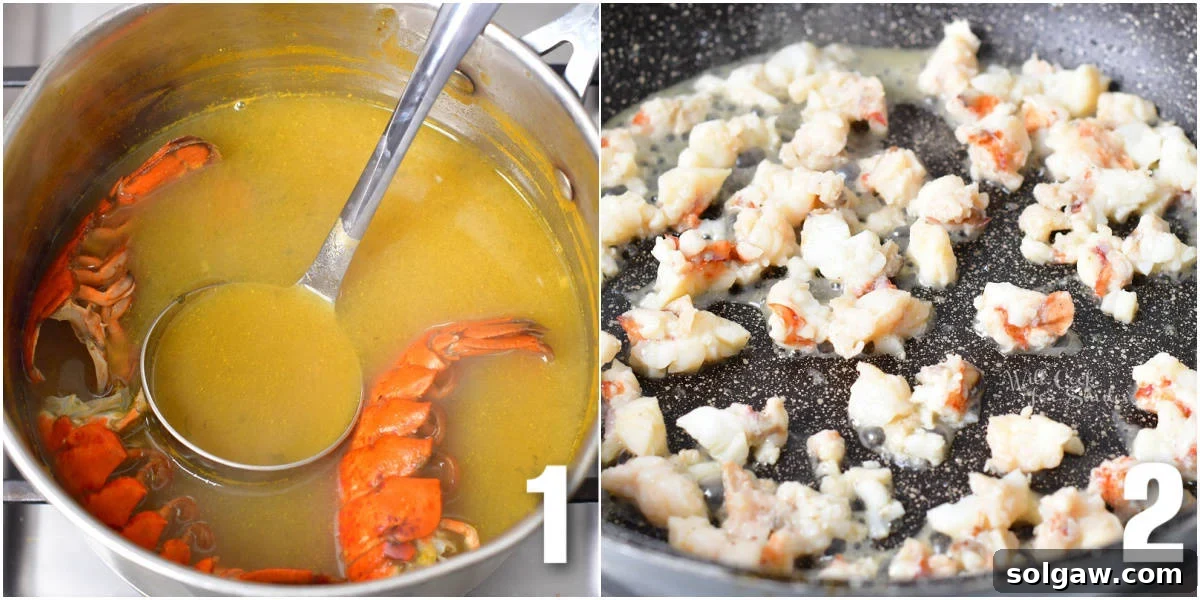
- Prepare the Lobster Meat: Begin by carefully extracting the lobster meat from its shells. A simple method involves using kitchen shears to cut lengthwise down the center of the hard outer shell. Gently pull the shell apart to expose the meat, then carefully detach it. For a more detailed guide with step-by-step photos and a video, refer to our comprehensive Lobster Tails recipe post. Once removed, dice the lobster meat into uniformly small, bite-sized pieces.
- Infuse the Broth: In a medium saucepot, combine your chosen stock (seafood or lobster stock is preferred for maximum flavor, but vegetable stock can be used), the dried herbs (such as parsley, bay leaf, and thyme), fresh lemon zest, and, importantly, the reserved lobster shells. Season with salt and pepper to taste. Bring this mixture to a gentle simmer over medium heat, then reduce the heat to low to keep it warm. This simmering process will infuse the broth with rich lobster flavor, which is crucial for the risotto’s depth.
- Sear the Lobster: Heat a large, heavy-bottomed cooking pan or Dutch oven over medium-high heat. Add a tablespoon or two of unsalted butter and allow it to melt and foam slightly. Add the diced lobster tail meat to the hot pan, season lightly with a pinch of salt, pepper, and a splash of lemon juice. Stir frequently and cook just until the lobster meat turns opaque, typically only 1-2 minutes. Be careful not to overcook, as lobster can become tough very quickly. Remove the cooked lobster from the pan and set it aside; it will be added back to the risotto at the very end.
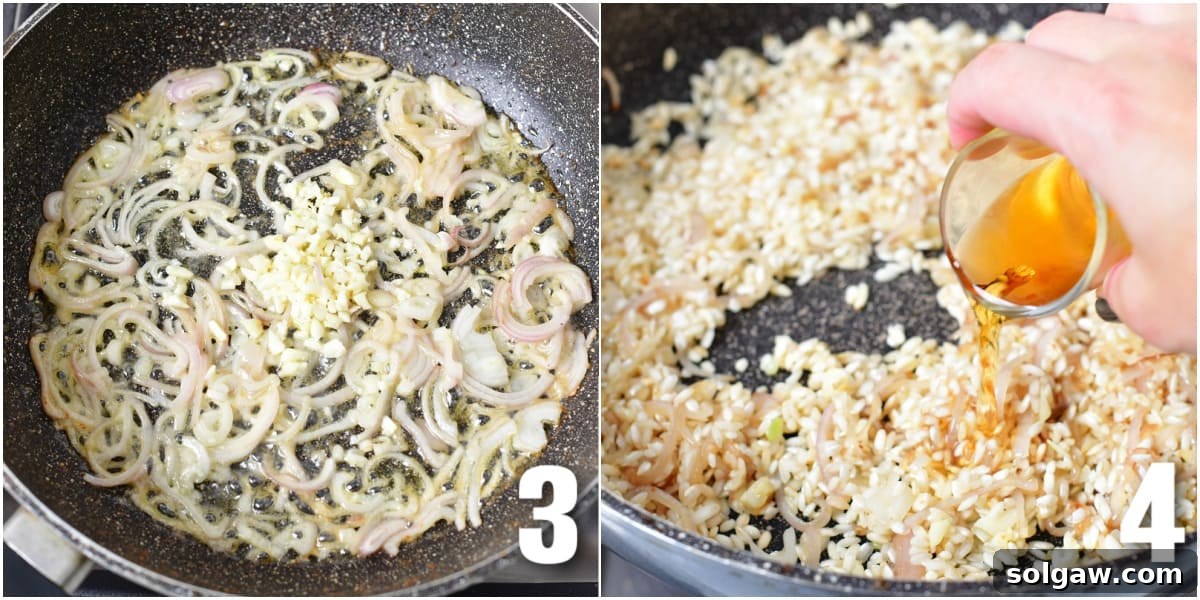
- Sauté Aromatics and Rice: Reduce the heat in the pan to medium-low. Add another tablespoon of unsalted butter if needed. Sauté the finely diced shallots in the melted butter until they soften and become translucent, about 3-5 minutes. Then, add the minced garlic and cook for another minute until fragrant, being careful not to let it brown or burn, as this can make it bitter. Stir in the Arborio rice, ensuring each grain is coated in the butter and aromatics. Sauté the rice for about 1-2 minutes until the edges become translucent, but the center remains opaque. This step, known as “toasting” the rice, helps it absorb the liquid evenly and maintain its texture.
- Deglaze with Cognac and Wine: Pour in the cognac (or a non-alcoholic substitute like a tablespoon of less sweet grape juice or a little extra broth with a squeeze of lemon). Stir well, allowing the rice to absorb the alcohol almost immediately. The cognac adds a subtle depth of flavor. Next, pour in half of the dry white wine. Stir continuously until the wine has been fully absorbed by the rice. This deglazing step adds acidity and layers of flavor to the risotto.
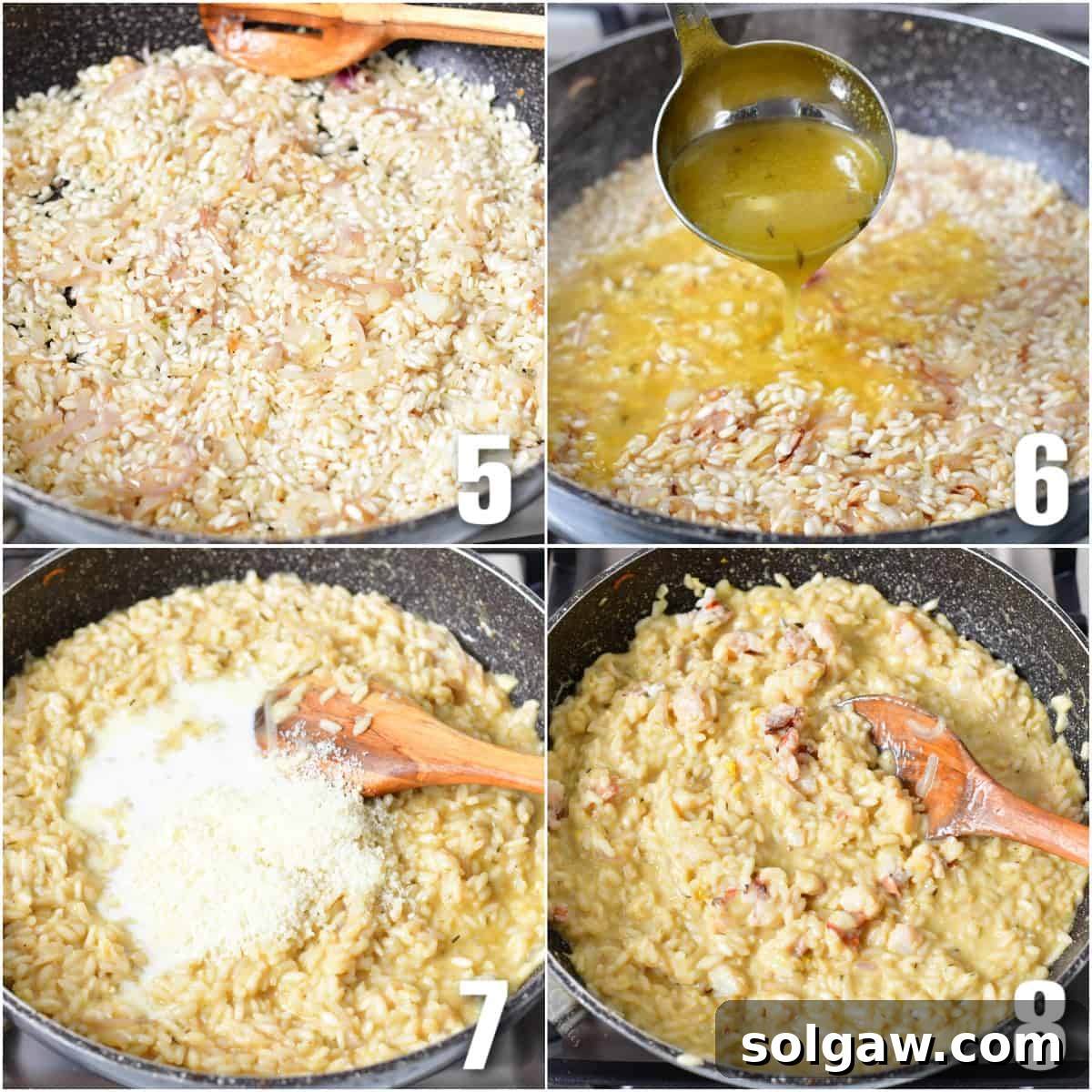
- The Gradual Broth Addition (The Risotto Process): This is the heart of making risotto. Begin adding the hot, infused broth about ½ cup at a time to the rice. Stir gently but consistently, allowing the rice to absorb most of the liquid before adding the next ladleful. This slow addition and constant stirring are vital for releasing the starches from the Arborio rice, which is what creates risotto’s characteristic creamy texture. The rice should be simmering gently, not boiling vigorously or cooking too slowly. Continue this process, adding the remaining white wine at some point (e.g., after the first 2-3 additions of broth, or simply with the broth), until the rice is al dente – meaning it’s cooked through but still has a slight, pleasant chewiness in the center. This will take approximately 18-25 minutes. Taste frequently to check for doneness.
- Incorporate Lobster, Cream, and Cheese: Once the rice is al dente and most of the broth has been absorbed, remove the lobster shells from the broth pot and discard them. Stir in the heavy cream, the cooked lobster meat you set aside earlier, and a generous half-cup of freshly grated Parmesan cheese. Continue stirring gently for a couple more minutes, allowing the cheese to melt into the risotto, making it even more luxurious and creamy. The lobster will heat through gently without overcooking.
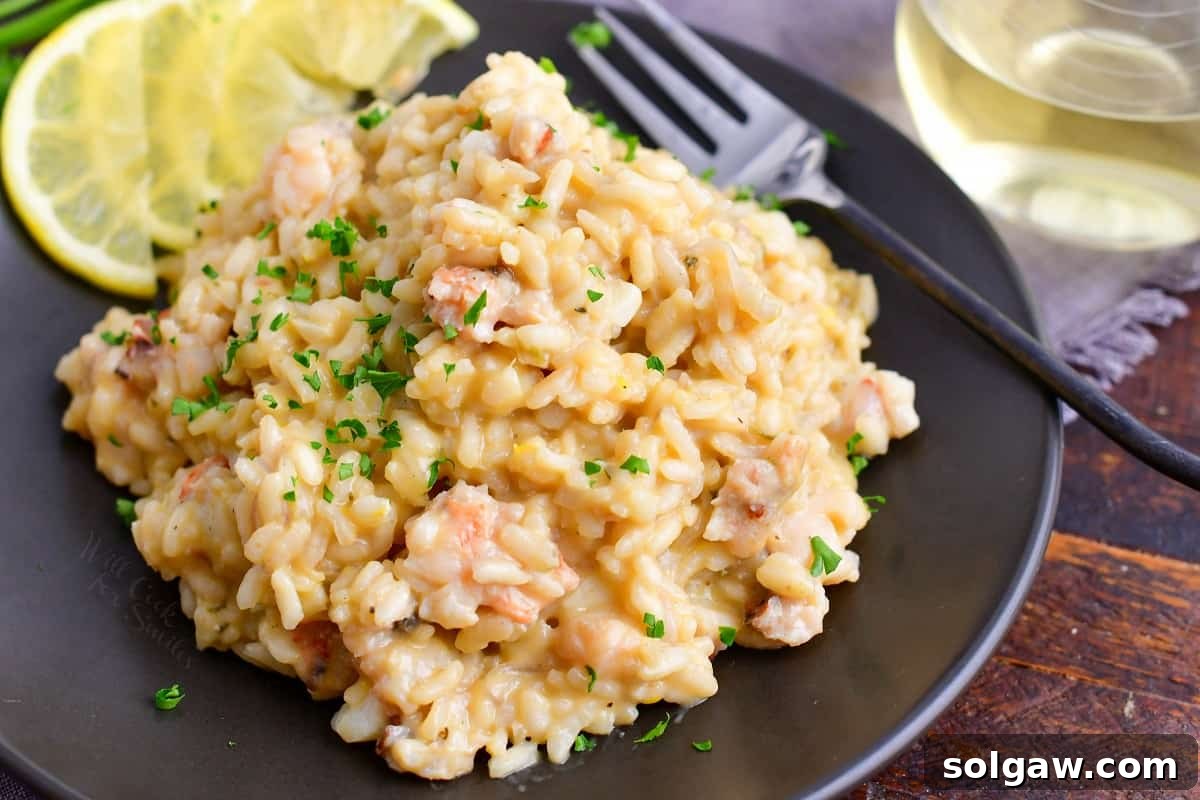
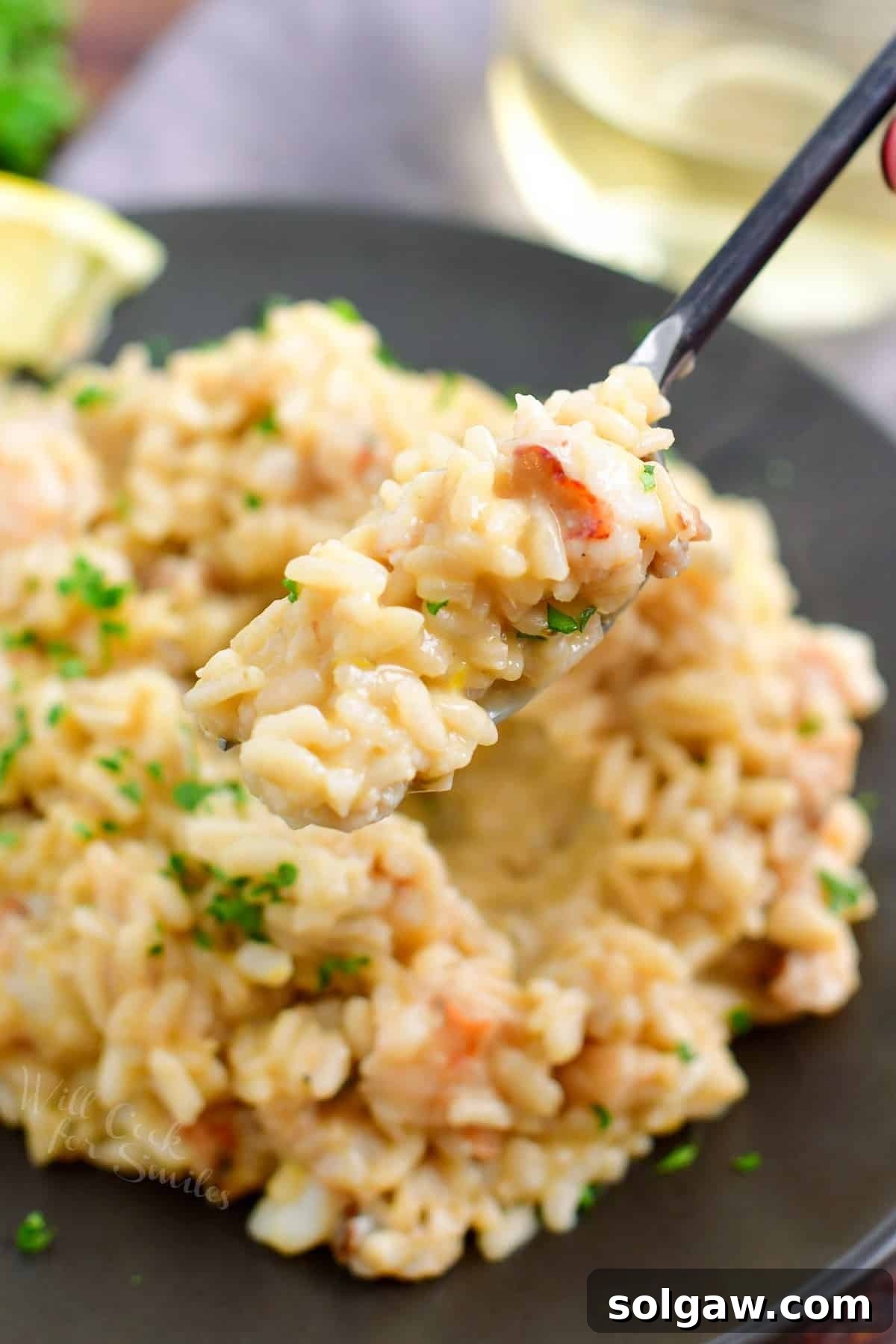
- Final Touches and Serve: Continue cooking for just a couple more minutes, ensuring the risotto reaches your desired consistency – it should be creamy and flowing, not stiff or soupy. Taste and adjust seasonings as needed. Serve your Lobster Risotto immediately, garnished with a sprinkle of fresh minced parsley, chives, or extra Parmesan cheese for an added flourish. Enjoy this indulgent dish fresh off the stove for the best experience!
Frequently Asked Questions About Lobster Risotto
Below are some common questions about making risotto, offering insights to help you perfect this classic dish.
Traditionally, a dry white wine is indeed a key ingredient in authentic risotto recipes. It contributes significantly to the overall flavor profile by adding a crucial layer of acidity, which balances the richness of the dish. When choosing a wine, always opt for one that you would genuinely enjoy drinking on its own. While most of the alcohol content will evaporate during the cooking process, a subtle hint of the wine’s flavor will remain. If you prefer to avoid alcohol, you can easily substitute the wine with an equal amount of additional stock or broth. To retain a touch of that essential acidity, you can also add a squeeze of fresh lemon juice to your broth. For an alternative flavor enhancer, one to two tablespoons of a less sweet grape juice can also be incorporated.
Yes, absolutely, Arborio rice is the gold standard and truly the one and only rice to use for risotto. It is a specific type of short-grain white rice, uniquely suited for this dish. Unlike long-grain rice, short-grain varieties like Arborio contain a higher amount of starch. When cooked and stirred gradually with liquid, this starch is slowly released, creating the distinct creamy, luscious texture that defines a perfect risotto. Substituting Arborio rice with other types of rice will not yield the same creamy consistency and will fundamentally alter the desired outcome of the dish.
Yes, this gradual addition of broth is arguably the most vital technique for achieving the signature creamy texture of a truly exceptional risotto. Risotto is not merely a side of cooked rice; its unique mouthfeel comes from the continuous interaction between the rice grains and the slowly absorbed liquid. By adding broth little by little and stirring frequently, you encourage the Arborio rice to release its starches evenly. This process builds the creamy texture incrementally, resulting in a perfectly tender, yet al dente grain enveloped in a rich, velvety sauce. Rushing this step by adding all the liquid at once will result in boiled rice rather than a creamy risotto.
What Wine Pairs Best with Lobster Risotto?
Choosing the right wine can elevate your Lobster Risotto experience to new heights. The key is to select a wine that complements the richness and delicate seafood flavors without overpowering them. A crisp, dry white wine is almost always the perfect accompaniment, offering a refreshing contrast and enhancing the overall meal.
- Serve your exquisite Lobster Risotto with a crisp white wine that you genuinely enjoy. These types of wines offer a bright acidity that cuts through the creaminess of the risotto and harmonizes beautifully with the sweetness of the lobster. Excellent choices include:
- Chardonnay: Opt for an unoaked or lightly oaked Chardonnay to avoid overwhelming the delicate lobster flavor. It offers a nice body and subtle fruit notes.
- Pinot Gris (Pinot Grigio): These wines are known for their crisp, refreshing character, often featuring notes of green apple, lemon, and stone fruit, which pair wonderfully with seafood.
- Chablis: A classic pairing, Chablis is a dry French Chardonnay known for its distinct minerality and high acidity, making it an ideal partner for rich seafood dishes.
- Sauvignon Blanc: With its vibrant acidity and herbaceous, citrusy notes, Sauvignon Blanc can provide a refreshing counterpoint to the creamy risotto.
- Important Note: Always steer clear of sweet wines! Their sweetness will clash with the savory, rich flavors of the risotto and the lobster, creating an unpleasant taste combination. Stick to dry varieties for the best pairing.
Storing and Reheating Instructions for Leftover Risotto
While Lobster Risotto is best enjoyed fresh, you might find yourself with leftovers. Proper storage and reheating can help preserve its quality, although it’s important to note that risotto’s texture can change slightly upon reheating.
- To store any leftover risotto, transfer it promptly to an airtight container. Place the container in the refrigerator, where it will keep safely for 3 to 4 days. Ensure it cools completely before sealing and refrigerating to prevent condensation buildup.
- Reheating Lobster Risotto: I generally do not recommend reheating seafood risotto in a microwave. The intense, uneven heat of a microwave can easily overcook the delicate lobster meat, making it rubbery, and can also alter the creamy texture of the rice in an undesirable way, often resulting in a dry or clumpy consistency.
- For the best possible reheating results, always use a small saucepot on the stovetop. Reheat the risotto gently over medium-low heat. As you warm it, add a splash of extra stock or broth (or even a little water or milk) to the pot. Stir continuously. This added liquid helps to reinvigorate the rice, bringing back some of its lost moisture and creaminess, making it palatable again. Be patient and reheat slowly until it’s just warmed through.
Explore More Risotto Creations
If you’ve fallen in love with the art of making risotto, there’s a world of creamy, comforting dishes to discover. Here are some more delightful risotto recipes to expand your culinary repertoire:
- Lemon Risotto with Lemon Shrimp
- Bacon Onion Pumpkin Risotto
- Parmesan Risotto
- Creamy Tomato Basil Risotto
- Mushroom Risotto
PIN THIS RECIPE FOR LATER
Did you make this recipe?
PLEASE leave a 🌟 star rating! Let me know how you liked it by leaving a 📝 comment below or share and tag me on social media @willcookforsmiles. DON’T FORGET to subscribe to my newsletter!
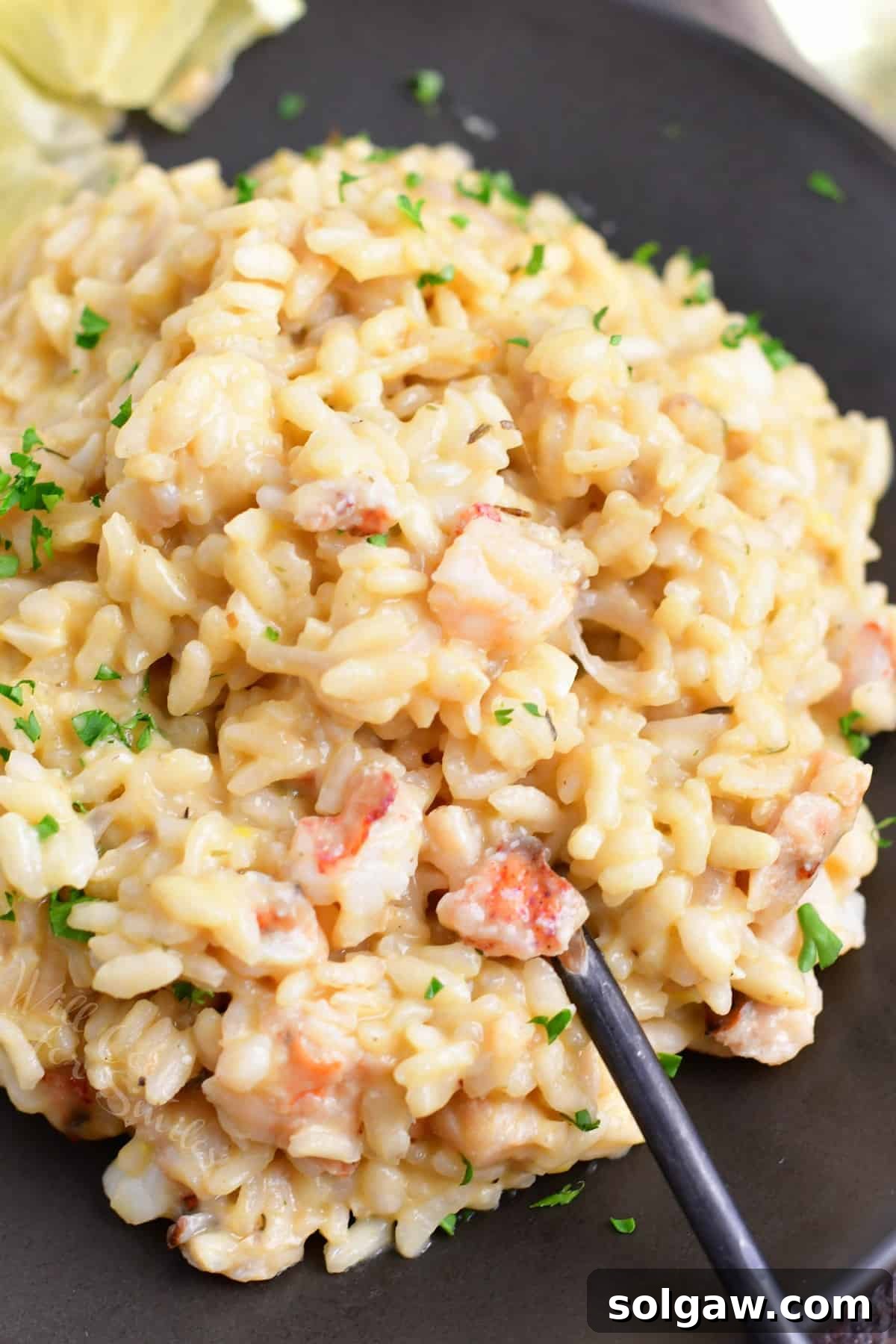
Lobster Risotto Recipe
This creamy homemade risotto is made with tender lobster meat, flavorful broth, cream, and plenty of Parmesan cheese.
5 from 6 votes
Pin
Video
Rate
Ingredients
For Lobster Meat:
For Risotto:
Instructions
How To Take Lobster Meat Out:
- Pick up the lobster tail and cut the hard, outer shell down the middle, all the way down to where the shell meets the tail.
- To pull the shell apart, you will need to use some muscle and crack the ribs on the softer underside with your hands. But be careful, lobsters often have spikes on the underbelly. (You can use gloves to help protect your hands.)
- Pull the shell open as much as you can to access the meat.
- Use your fingers to gently and carefully pull the meat away from the shell walls and gently lift the meat out. Gently pull by the meat to completely pull it out of the shell.
- Dice the lobster meat into small pieces and place the shells into the sauce pot with the stock.
- Measure and prepare remaining ingredients for the risotto.
To Prepare Risotto:
- Combine stock, dried herbs, lemon zest, lobster shells, salt, and pepper in a sauce pot and heat it until it just starts to simmer. Turn the heat down to low so it stays warm while you prepare risotto.
- Heat a large cooking pan over medium-high heat and add butter. Let butter melt and add diced lobster meat. Season with a little salt, pepper, and lemon juice.
- Stir and cook just until lobster meat turns opaque and take it out of the pan. Set aside.
- Lower the heat to medium, add a little more butter to the pan, and add diced shallots to the pan. Sauté shallots until they start to brown and become translucent, then add minced garlic. Sauté just until garlic is fragrant (about 30 seconds), and add Arborio rice.
- Stir and let rice sauté for a minute or so until the edges of the grains become translucent.
- Pour in cognac, mix well, and let rice soak it up. This should happen quickly.
- Depending on your stove, you may need to lower the heat further to medium-low to maintain a gentle simmer.
- Pour in half of the dry white wine and stir it to spread everything evenly. Let rice simmer and absorb the wine completely, stirring occasionally.
- Once the wine is absorbed, stir and pour in about a 1/2 cup of the hot broth. Stir and let the rice simmer and absorb the liquid.
- Pour in the remaining wine (if not added earlier with broth), stir, and let it absorb as it cooks.
- Continue to add about 1/2-2/3 cup of hot broth at a time, allowing the rice to absorb the liquid before each subsequent addition. Remember to stir often, both before and after adding the liquid to the rice, to encourage starch release.
- When the rice is almost done and has an al dente bite, add back the cooked lobster meat and fresh grated Parmesan cheese. Stir to combine and let the cheese melt into the risotto.
- Cook risotto for a couple more minutes, tasting often, until the rice is perfectly al dente – cooked through but still with a slight resistance in the middle when you bite it.
- Stir in the heavy whipping cream and let it heat through for a minute or so, without boiling.
- Serve your luxurious Lobster Risotto right away. You can top it off with some fresh minced parsley, chives, and/or additional Parmesan cheese for garnish.
Video
A video guide to making Lobster Risotto is coming soon!
Notes
Lyuba’s Tips:
- Arborio Rice: This is a short-grain white rice, and it is the only rice variety recommended for risotto! Short-grain rice contains more starch than long-grain varieties. This starch is gradually released during the slow cooking and stirring process, which is essential for thickening the risotto and creating its signature creamy texture. Arborio rice cannot be substituted if you want to achieve the authentic creamy consistency. (You can always use leftover rice to make Parmesan Risotto and many others.)
- Hot Broth is Key: Always ensure your broth is heated first and seasoned with salt and pepper before adding it to the rice. Adding cold broth will significantly lower the temperature of the cooking rice, disrupting the cooking process and affecting the final texture. The goal is to consistently add hot broth to the hot rice as it cooks.
- Add Liquid Gradually: Patience is a virtue when making risotto. Take your time and add the broth a little at a time. This gradual addition, coupled with frequent stirring, is what helps the rice grains release their starches slowly, resulting in the best possible creamy texture.
- Stir, But Not Constantly: While frequent stirring is important, you don’t need to stir constantly for the entire cooking time. Constant stirring can lower the temperature of the dish, prolonging the cooking time. Stir right before and immediately after adding wine and each ladle of stock, and then a couple of times in between additions to prevent sticking and promote even cooking.
- Maintain Medium to Medium-Low Heat: The rice should be in a gentle simmer throughout the cooking process – not boiling vigorously, which would cook it too quickly and unevenly, nor cooking too slowly, which would prevent proper starch release. Since stove settings vary, find the ideal medium or slightly below medium heat that maintains a consistent, gentle simmer.
- Wine Alternatives: If you cannot or prefer not to use wine, you can substitute it with an equal amount of stock or broth. To replicate the acidity that wine provides, add a squeeze of fresh lemon juice to your broth. Alternatively, a tablespoon or two of less sweet grape juice can introduce an additional layer of flavor without alcohol.
Nutrition
Calories: 540 kcal |
Carbohydrates: 47g |
Protein: 27g |
Fat: 21g |
Saturated Fat: 12g |
Polyunsaturated Fat: 2g |
Monounsaturated Fat: 5g |
Trans Fat: 1g |
Cholesterol: 112mg |
Sodium: 2064mg |
Potassium: 705mg |
Fiber: 2g |
Sugar: 2g |
Vitamin A: 624IU |
Vitamin C: 6mg |
Calcium: 382mg |
Iron: 4mg
Originally published on Will Cook For Smiles in January 2022.