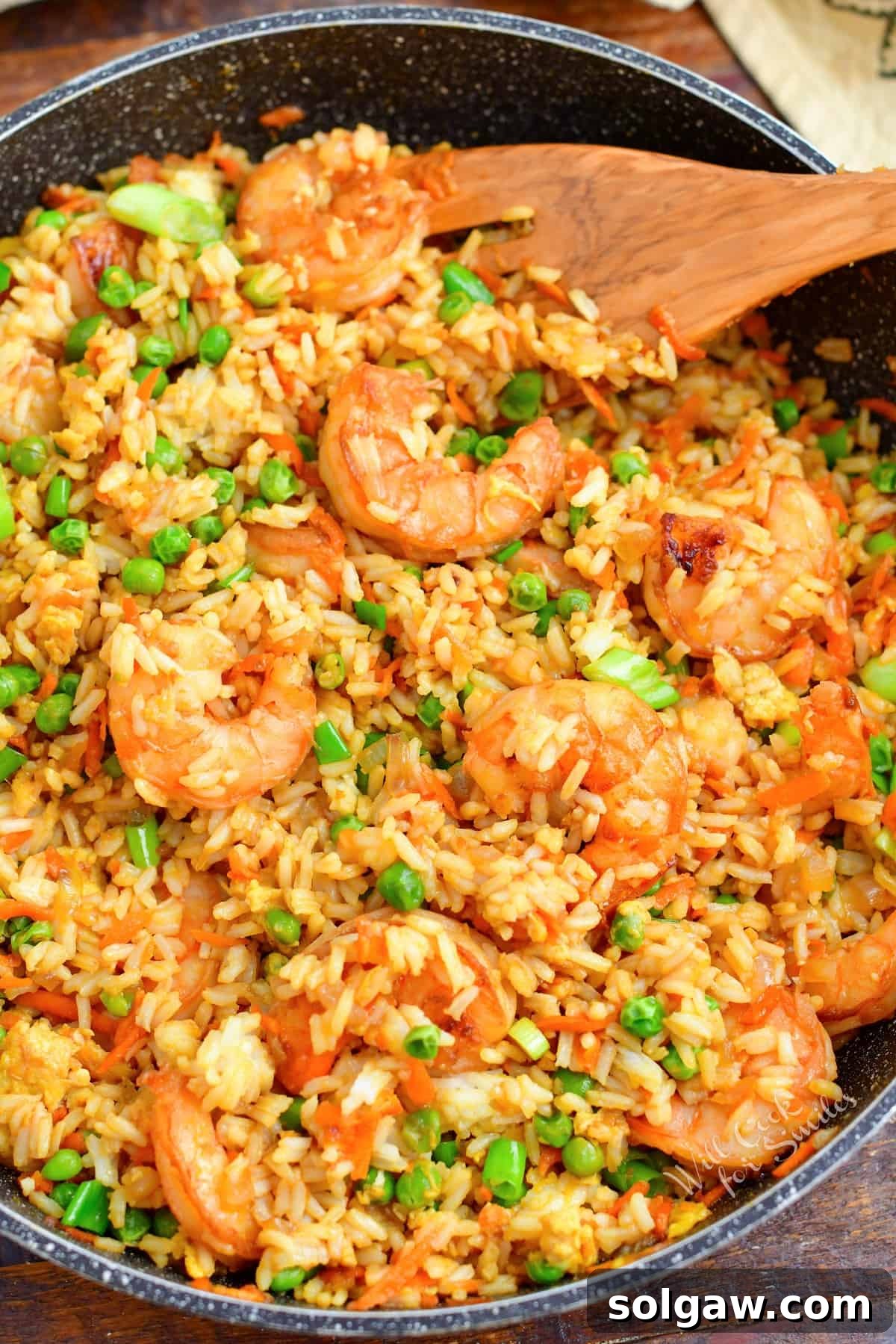
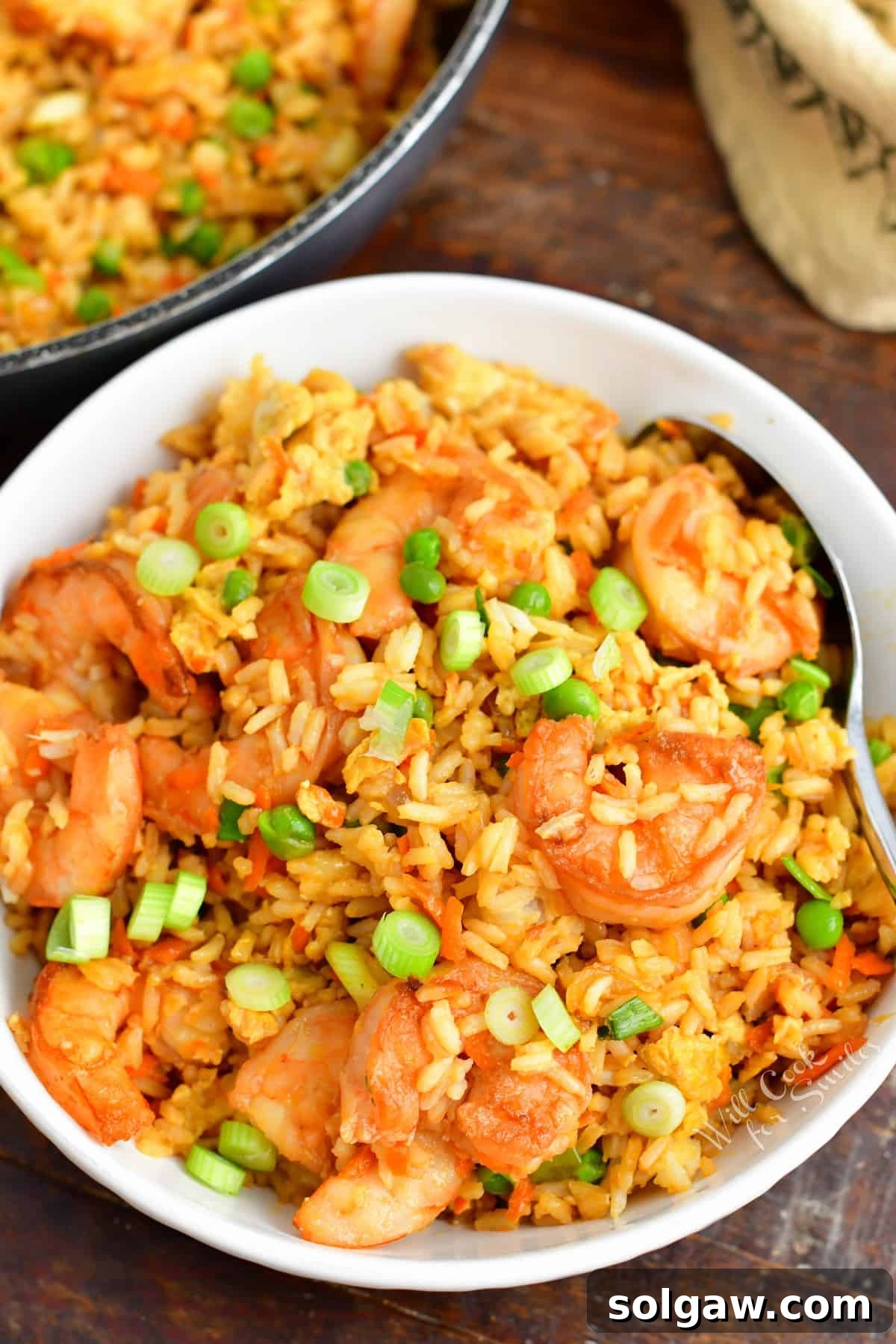
Ultimate Homemade Shrimp Fried Rice: Better Than Takeout, Every Time!
There’s something inherently comforting and utterly delicious about a plate of perfectly prepared Shrimp Fried Rice. For many, it’s a go-to order when getting Chinese takeout. However, what if we told you that the best shrimp fried rice isn’t found in a restaurant, but rather in your very own kitchen? This recipe is designed to revolutionize your perception of this classic dish, offering a homemade version that far surpasses anything you’ll receive in a white box at your doorstep.
Imagine each forkful loaded with tender, plump shrimp, fluffy long-grain rice, a colorful medley of crisp vegetables, and an exquisitely balanced savory sauce that dances on your palate. This isn’t just a meal; it’s an experience. The beauty of making shrimp fried rice at home lies in the complete control you have over every ingredient. You can opt for the freshest seasonal produce, select premium shrimp, and tailor the flavors precisely to your liking. Need to make it gluten-free? Easily done. Prefer less sodium? Adjust as needed. This level of customization ensures a dish that is not only incredibly flavorful but also perfectly suited to your dietary needs and preferences.
Too often, takeout fried rice relies solely on an overwhelming amount of soy sauce for its flavor profile, resulting in a one-dimensional taste. Our homemade sauce, however, is a carefully crafted blend of ingredients that contributes a complex depth of umami, sweetness, and tang, creating a truly harmonious flavor. Furthermore, the freshness of your pan-seared shrimp and vibrant vegetables will be immediately apparent, offering a textural and aromatic difference that is simply unparalleled. Get ready to elevate your weeknight meals with this easy, quick, and undeniably superior homemade Shrimp Fried Rice recipe!
Mastering the Ingredients: Your Essential Guide to Perfect Shrimp Fried Rice
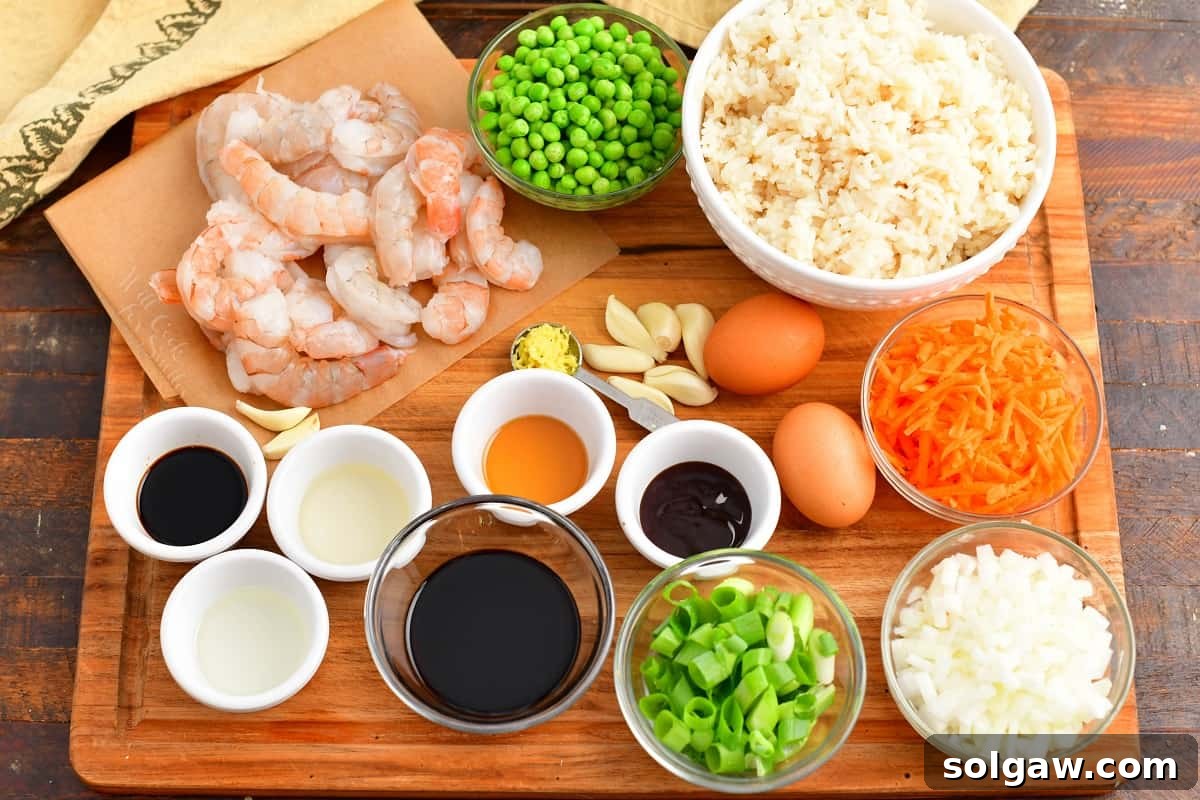
The secret to truly outstanding fried rice begins long before you even touch the pan. It lies in understanding and selecting the right ingredients, and preparing them thoughtfully. This section will walk you through the key components, offering expert tips to ensure your homemade shrimp fried rice is a resounding success.
- Shrimp Selection and Preparation: For the most tender and flavorful results, always prioritize fresh shrimp if available. The difference in taste and texture is undeniable. If you must use frozen shrimp, ensure they are completely thawed before you begin. A crucial step often overlooked is draining any excess water and patting the shrimp thoroughly dry with paper towels. This prevents the shrimp from steaming in the pan and allows them to achieve a beautiful, quick sear, locking in their natural sweetness. To streamline your cooking process, consider purchasing shrimp that are already cleaned and deveined. This small convenience can save significant prep time, making your cooking experience even more enjoyable.
- Choosing the Right Soy Sauce: When it comes to soy sauce, we strongly advocate for using low-sodium soy sauce. Traditional soy sauce can be quite potent, and its high sodium content can easily overpower the delicate balance of other ingredients in your fried rice sauce. Opting for a low-sodium version allows you to season the dish more precisely, layering flavors without making it excessively salty. You can always add a pinch more at the end if desired.
- Adapting for Gluten-Free Diets: Making this shrimp fried rice gluten-free is simple! The main culprits for gluten in traditional Asian cooking are usually soy sauce and oyster sauce. The solution is straightforward: substitute regular soy sauce with a good quality tamari (which is naturally gluten-free) and seek out a certified gluten-free oyster sauce. Many brands now offer these alternatives, ensuring that everyone can enjoy this delicious dish without compromise.
- The Unsung Hero: Day-Old Rice: This is perhaps the most important tip for achieving restaurant-quality fried rice that isn’t clumpy or mushy. The ideal choice is long-grain white rice (like jasmine or basmati), and critically, it should be leftover, cold rice. Freshly cooked rice retains too much moisture, causing it to steam when stir-fried, leading to an unappetizing, gummy texture. When rice is cooked and then refrigerated overnight, it dries out and the starches firm up. This dry, firm rice separates beautifully in the hot pan, allowing each grain to crisp up slightly and absorb the flavors of the sauce without becoming soggy. Plan ahead: cook your rice the day before and store it uncovered (or loosely covered) in the refrigerator.
Vegetable Variations and Creative Add-Ons for Your Fried Rice
While the classic combination of diced carrots, peas, and onions forms the quintessential base for fried rice, one of the greatest pleasures of cooking at home is the opportunity for creative customization. This recipe is wonderfully versatile, inviting you to experiment with a broader spectrum of vegetables. Adding different greens and textures not only boosts the nutritional value but also allows you to tailor the dish to your personal taste and whatever fresh produce you have on hand.
Here are some fantastic vegetable variations and additions you can incorporate:
- Asparagus (chopped): For a touch of freshness and a slightly bitter, earthy note, finely chop asparagus spears and add them in. Their crisp-tender texture works beautifully.
- Green Beans (chopped): Similar to peas but with a firmer bite, chopped green beans are a vibrant addition that brings a lovely snap to the dish.
- Broccoli (diced): Small, bite-sized florets of broccoli add a hearty texture and a significant boost of nutrients. Ensure they are diced small enough to cook quickly alongside other vegetables.
- Corn: Whether fresh, frozen, or canned (drained), sweet corn kernels provide pops of sweetness and a cheerful golden color that contrasts wonderfully with the savory elements.
- Baby Corn (chopped): Offering a unique crunch and a delicate, sweet flavor, baby corn can be sliced into rounds or halved for easy integration.
- Cauliflower (diced): Much like broccoli, diced cauliflower florets are a great way to add bulk and absorb the delicious sauce flavors. If you’re looking for a lower-carb option, “riced” cauliflower can also be substituted for a portion of the actual rice.
- Bell Peppers (diced): Red, yellow, or orange bell peppers bring vibrant color, a sweet crunch, and a subtle fruity note that complements the savory profile.
- Mushrooms (sliced): Earthy mushrooms, such as cremini, shiitake, or even simple white button mushrooms, add a wonderful umami depth. Sauté them briefly until golden before combining with other vegetables.
- Bok Choy or Spinach (chopped): For a boost of leafy greens, stir in chopped bok choy or fresh spinach leaves at the very end of cooking. They wilt quickly and add a fresh, slightly bitter counterpoint.
- Water Chestnuts (sliced): If you enjoy extra crunch and a subtle sweetness, sliced water chestnuts are an excellent choice.
When adding extra vegetables, remember to chop them into consistent, small pieces. This ensures even cooking and allows them to integrate seamlessly into the rice, creating a balanced and appealing dish. Feel free to mix and match to discover your favorite combinations, making each batch of homemade fried rice uniquely yours!
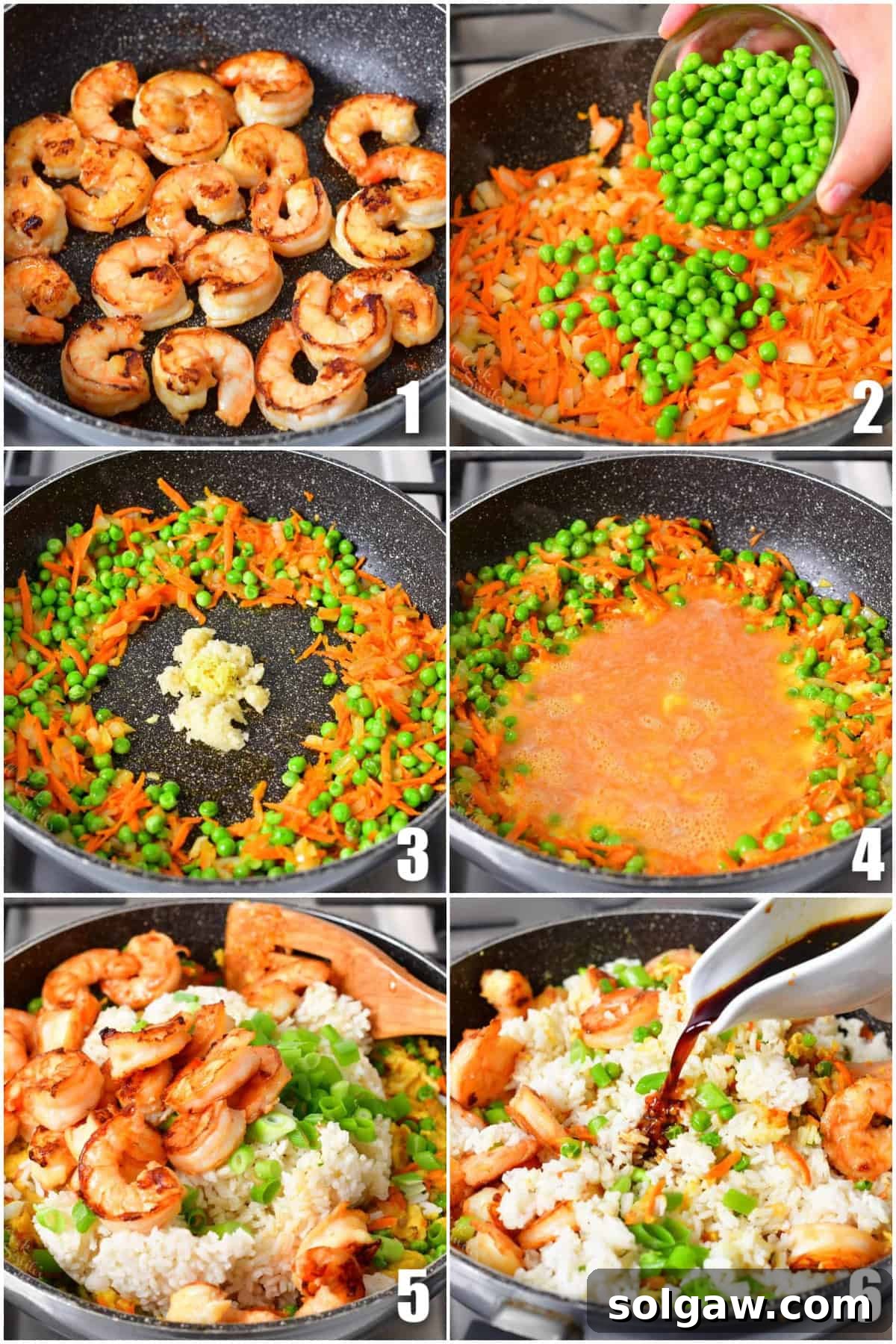
How to Make Shrimp Fried Rice: A Comprehensive Step-by-Step Cooking Guide
Creating mouth-watering shrimp fried rice at home is a straightforward process, especially when you follow a few key stir-frying principles. The key is speed and high heat, so having all your ingredients prepped beforehand is paramount. This detailed guide will walk you through each stage, ensuring a perfectly cooked, flavorful dish every time.
- The Art of Mise en Place (Preparation is Key): Before you even turn on the stove, ensure all your ingredients are prepped and ready to go. Dice your yellow onion and medium carrot, thaw your frozen peas, and mince or press your garlic and ginger. In a small bowl, whisk together your two eggs with 2 teaspoons of low-sodium soy sauce. In another separate bowl, prepare your savory fried rice sauce by whisking together the rice vinegar, sesame seed oil, 1/3 cup soy sauce, and oyster sauce until well combined. Lastly, peel, clean, and devein your shrimp. In a small bowl, marinate the shrimp with 1 tablespoon of low-sodium soy sauce, the pressed garlic (from the shrimp ingredients), and 1 tablespoon of chicken broth. This preparation stage is vital for a smooth cooking process.
- Sear the Shrimp to Perfection: Heat a large wok or a heavy-bottomed, high-sided non-stick cooking pan over medium-high heat. Add 2 tablespoons of peanut oil (or another high smoke point oil like canola). Once the oil is shimmering and hot, add the marinated shrimp in a single layer. Sear them quickly for about 1-2 minutes per side, just until they turn pink and opaque. It’s crucial not to overcook shrimp, as they can become tough and rubbery. As soon as they are cooked, remove them from the pan and set aside on a clean plate. They will return to the pan later to finish cooking with the rice.
- Sauté the Vegetables: Add another 1-2 tablespoons of peanut oil to the same pan. Reduce the heat slightly to medium. Add the diced yellow onions and carrots, stirring constantly. Sauté for about 3-4 minutes until they start to soften. Then, stir in the thawed peas and 1 tablespoon of low-sodium soy sauce, continuing to cook for another 2-3 minutes until all the vegetables are tender-crisp.
- Infuse with Aromatics: Create a clear space in the center of the pan by pushing the cooked vegetables to the sides. Add the remaining pressed garlic cloves and the fresh grated ginger to this empty spot. Sauté for just 30 seconds until fragrant, being careful not to let them burn. Once aromatic, mix the garlic and ginger thoroughly with the other vegetables in the pan.
- Scramble the Eggs: Again, clear a space in the center of the pan, pushing the vegetables and aromatics to the sides. Pour the whisked egg mixture into the empty center. Allow the egg to set undisturbed for about 1 minute. Then, use your spatula to gently scramble the eggs into small pieces. Once the eggs are cooked through and fluffy, incorporate them into the vegetable mixture, stirring everything together.
- Introduce the Rice: Add the cold, day-old cooked long-grain white rice to the pan. Use your spatula to break up any clumps, then gently fold the rice into the mixture of vegetables and scrambled eggs. Ensure everything is well combined and evenly distributed throughout the pan.
- Return Shrimp & Add Scallions: Bring the perfectly seared shrimp back into the pan. Sprinkle in the chopped scallions. Gently stir all the ingredients together to fully incorporate the shrimp and scallions throughout the fried rice.
- Drizzle with Sauce: As you continue to gently stir the fried rice, gradually pour the whisked sauce mixture (rice vinegar, sesame seed oil, soy sauce, oyster sauce) evenly over all the ingredients in the pan. Continue to stir and fold for another minute or two, ensuring every grain of rice, every piece of shrimp, and every vegetable is beautifully coated with the rich, savory sauce.
- Final Sauté and Serve: Increase the heat back to medium-high and continue to sauté the fried rice for just 2-3 more minutes. This final burst of heat helps to meld the flavors, deepen the sauce, and create that desirable slightly crisp texture on the rice. Serve your homemade shrimp fried rice immediately, garnished with additional fresh scallions if desired. Enjoy the incredible taste and satisfaction of a meal made with love!
Pro Tips for Achieving Restaurant-Quality Fried Rice at Home
While the step-by-step guide covers the essentials, these expert tips will elevate your homemade shrimp fried rice from good to absolutely outstanding:
- Heat Management is Crucial: Fried rice thrives on high heat. Use a large wok or a heavy-bottomed, high-sided pan (like a cast-iron skillet) over medium-high to high heat. This ensures ingredients fry and caramelize, developing complex flavors, rather than stewing. If your pan isn’t large enough, cook in smaller batches to avoid overcrowding, which lowers the temperature and leads to soggy results.
- The Golden Rule of Cold Rice: As emphasized earlier, day-old, refrigerated long-grain white rice is truly non-negotiable. Its lower moisture content allows it to separate and crisp up beautifully. Fluff the rice with a fork before adding it to the pan to break up any clumps, ensuring even distribution.
- Choose the Right Oil: Peanut oil is highly recommended for stir-frying due to its high smoke point and neutral flavor, which allows the other ingredients to shine. Vegetable oil or canola oil are also good alternatives. Reserve sesame oil for the final sauce mixture, as its low smoke point makes it unsuitable for initial high-heat cooking.
- Don’t Overcook the Shrimp: Shrimp cooks incredibly fast. Watch them closely, and remove them from the pan as soon as they turn pink and opaque. Overcooked shrimp become rubbery and tough. They will finish cooking when added back in with the hot rice.
- Layer Flavors Thoughtfully: Introduce aromatics (garlic and ginger) after the initial vegetables have softened, allowing their flavors to bloom without burning. The sauce should be added at the end, coating all ingredients evenly.
- Stir Continuously: Fried rice requires constant motion in the pan. Use a sturdy spatula or a stir-fry tool to keep the ingredients moving, ensuring even cooking and preventing sticking or burning.
- Taste and Adjust: The beauty of homemade cooking is the ability to adjust flavors. Taste your fried rice before serving. A pinch of sugar can balance saltiness, a dash of white pepper adds a subtle kick, and a bit more soy sauce can enhance the savory profile if needed.
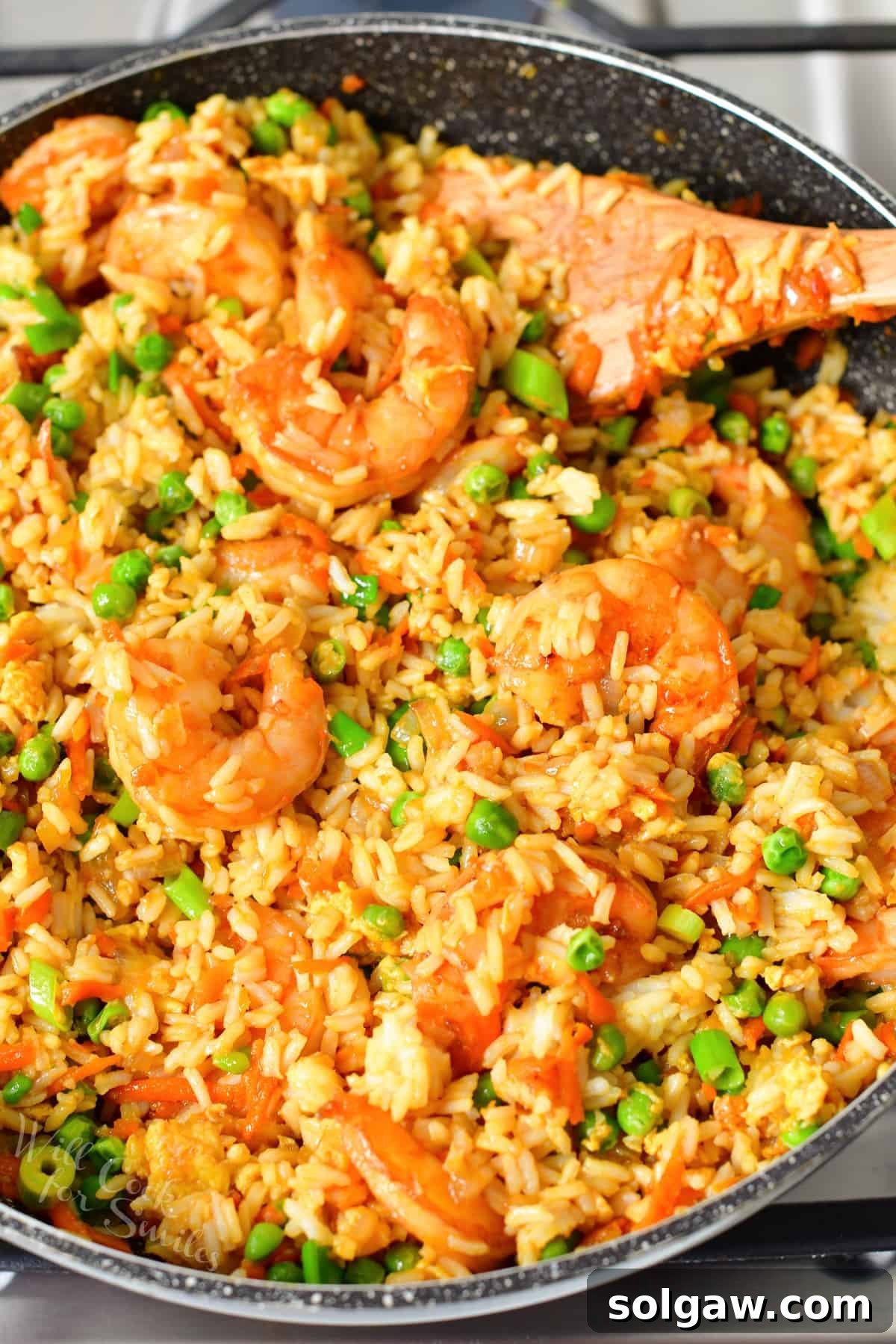
Tips For Reheating Fried Rice & Optimal Storage
While this homemade shrimp fried rice is best enjoyed fresh off the wok, sometimes leftovers are inevitable (and a welcome treat!). Proper reheating is key to maintaining its delicious flavor and texture, ensuring your second serving is just as enjoyable as the first. Seafood, in particular, requires a bit more care.
- Avoid the Microwave for Seafood: For your shrimp fried rice, I strongly recommend against reheating it in the microwave. Microwaves can quickly overcook seafood, making shrimp tough, rubbery, and sometimes giving it an undesirable texture and smell. This is especially true for delicate proteins like shrimp.
- The Pan is Your Best Friend for Reheating: The superior method for reheating leftover fried rice is in a pan or a wok on the stovetop. Place your pan over medium-low heat and add a small amount of oil (like peanut or vegetable oil). Spread the fried rice evenly across the pan. Stir occasionally, allowing it to heat through gently and evenly. This method helps to restore some of the crispy texture to the rice grains and keeps the shrimp tender and succulent.
- Rehydrate with a Splash of Moisture: Fried rice can become a bit dry after being refrigerated. To bring it back to its optimal moisture level and prevent it from becoming clumpy, add a small amount of liquid during reheating. A mixture of 1-2 tablespoons of chicken broth, a splash of water, and a tiny bit of extra low-sodium soy sauce works wonders. Drizzle this mixture over the fried rice as it heats in the pan, stirring gently to distribute the moisture. The steam created will help rehydrate the rice without making it soggy.
- Proper Storage: To ensure safety and freshness, store any leftover shrimp fried rice in an airtight container in the refrigerator as soon as it has cooled completely. It can be safely stored for up to 3-4 days.
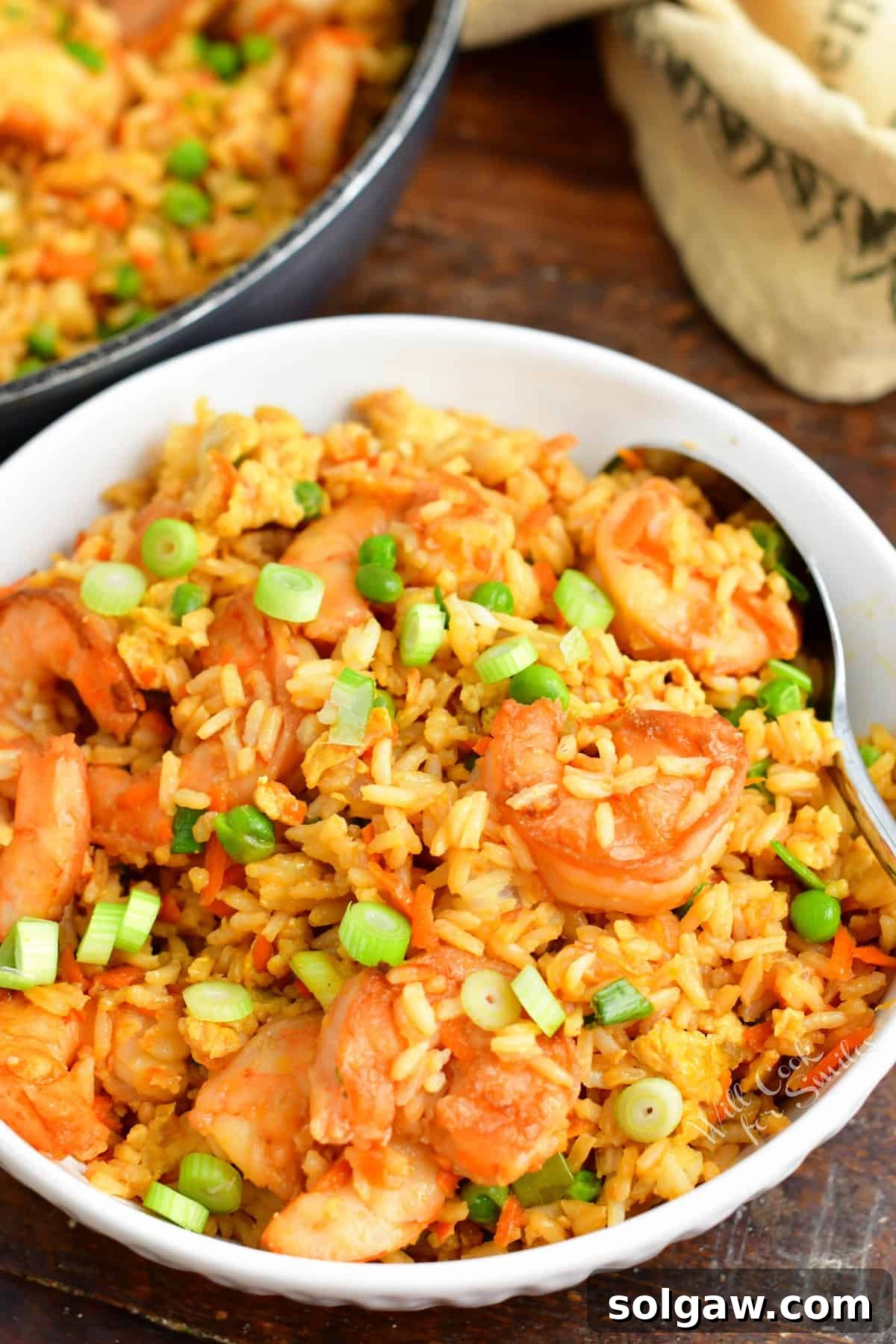
PIN THIS RECIPE FOR LATER!
DID YOU MAKE THIS RECIPE? Please share your experience! We’d love for you to leave a 🌟 star rating and a 📝 comment below, letting us know how you liked it. You can also share your culinary creations and tag us on social media @willcookforsmiles. Don’t forget to subscribe to our newsletter for more delicious recipes delivered straight to your inbox!
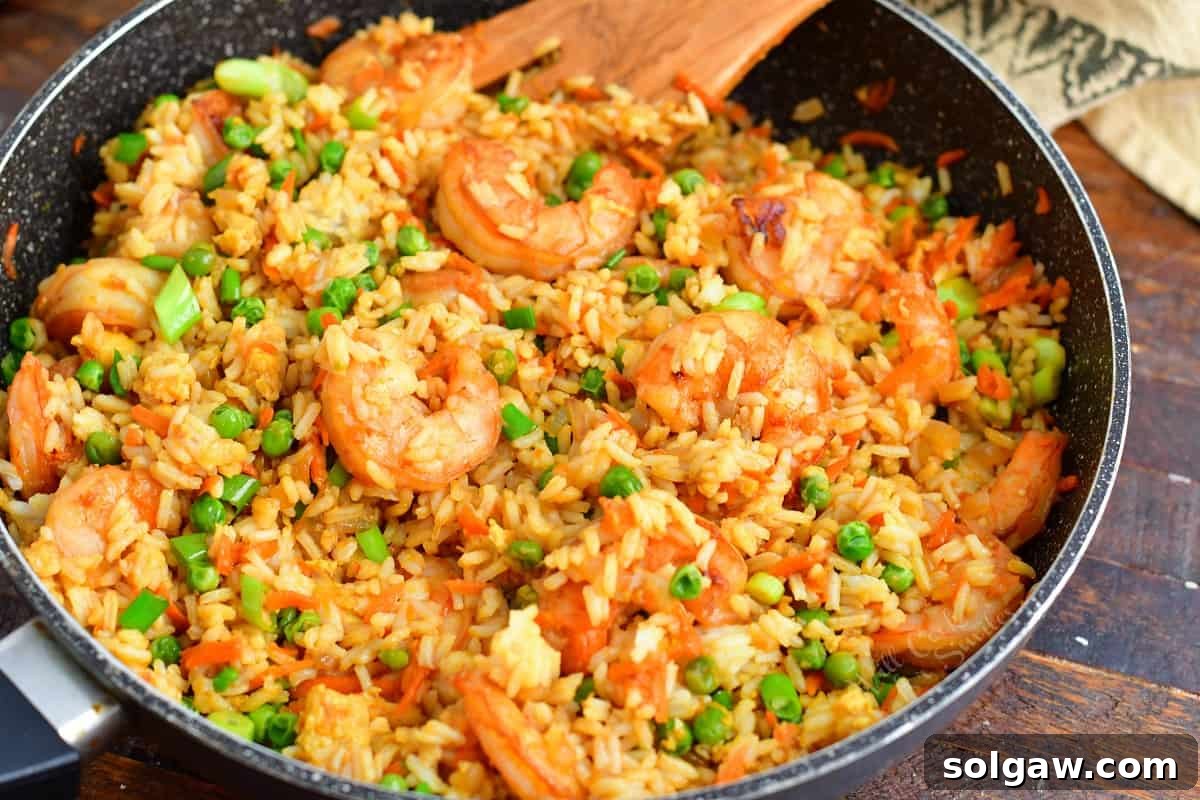
Shrimp Fried Rice Recipe
You will never need to order takeout with this amazing and easy shrimp fried rice recipe. Each bite is loaded with perfectly cooked rice, onions, carrots, peas, egg, scallions, hints of garlic and ginger and all mixed with a homemade sauce that includes soy sauce, oyster sauce, rice vinegar, and sesame oil. Fried rice is incredibly easy to make at home, and adding the shrimp to it only takes an extra 5 minutes.
Print Recipe
Pin Recipe
Rate Recipe
Ingredients
For Shrimp:
- 1 lb cleaned and deveined shrimp
- 1 tbsp low-sodium soy sauce (use GF soy or tamari if needed)
- 1 tbsp chicken broth
- 2-3 cloves of garlic (pressed)
- 2 tbsp peanut oil (for cooking)
Vegetables:
- 1-2 tbsp peanut oil (for cooking)
- 1/2 yellow onion (diced)
- 1 cup frozen peas (thawed)
- 1 medium carrot (diced)
- 3-4 garlic cloves (pressed)
- 1 tsp fresh grated ginger
- 1 tbsp low-sodium soy sauce
Eggs:
- 2 eggs
- 2 tsp low sodium soy sauce (use GF soy or tamari if needed)
Sauce:
- 1 1/2 tbsp rice vinegar
- 2 tsp sesame seed oil
- 1/3 cup soy sauce
- 2 tbsp oyster sauce
Rice:
- 4 cups cooked long grain white rice (leftover rice works great)
- 1/3 cup chopped scallions
Instructions
Before cooking:
- Prepare your ingredients first because this is a fast recipe. So dice vegetables, whisk eggs with a splash of soy sauce, and whisk together soy sauce, oyster sauce, rice vinegar, and sesame seed oil. Measure remaining ingredients.
- Make sure to peel, clean, and devein shrimp. (You can check out how to clean shrimp here.) In a bowl, mix shrimp with a tablespoon of soy sauce, pressed garlic, and a tablespoon of chicken broth.
To Cook:
- Preheat a large wok or a large non-stick cooking pan with tall sides over medium-high heat. Add oil and sear shrimp for about 2 minutes on each side. Take them out of the pan and set it aside.
- Add some more oil, lower the heat to medium, and add diced onions and carrots, stir and sauté for a few minutes.
- Stir in peas and soy sauce and cook until vegetables softened.
- Move them over to the side of the pan and add garlic and ginger to the center. Let it sauté until just fragrant and mix in with the vegetables.
- Set vegetables to the sides of the pan and pour the whisked egg mixture into the center. Cover and let it cook for a minute or so. Start to scramble the eggs and mix it with the vegetables.
- Fluff the rice and add it to the pan and mix.
- Add shrimp back into the pan and add scallions. Gently stir everything to incorporate and as you stir, pour the sauce mixture all over and stir to coat everything evenly with sauce.
- Sauté for a couple of minutes and serve.
Nutrition
Carbohydrates: 58g |
Protein: 36g |
Fat: 17g |
Saturated Fat: 3g |
Polyunsaturated Fat: 6g |
Monounsaturated Fat: 7g |
Trans Fat: 1g |
Cholesterol: 368mg |
Sodium: 2619mg |
Potassium: 442mg |
Fiber: 4g |
Sugar: 4g |
Vitamin A: 3028IU |
Vitamin C: 24mg |
Calcium: 232mg |
Iron: 5mg
Tried this recipe?
Mention @willcookforsmiles or tag #willcookforsmiles!
More Delicious Rice Dishes to Explore
If you’ve enjoyed mastering this Shrimp Fried Rice recipe, you’ll be thrilled to discover a wider world of incredible rice-based dishes. Our collection offers diverse flavors and cooking styles, perfect for expanding your culinary skills and satisfying any craving. Whether you’re seeking another quick weeknight solution, an impressive dish for guests, or a healthier twist on a classic, these recipes are sure to delight your palate and become new family favorites. Dive in and explore these fantastic options:
- Thai Fried Rice – Khao Pad: Transport your taste buds to Thailand with this fragrant and authentic fried rice, typically featuring a unique blend of Thai herbs and sauces.
- Classic Chicken Fried Rice: A timeless and beloved staple, this recipe combines tender pieces of chicken with perfectly seasoned rice and a colorful array of fresh vegetables for a comforting meal.
- Healthy Cauliflower Fried Rice: For a nutritious, low-carb alternative that doesn’t compromise on flavor, this cauliflower fried rice is an excellent choice, packed with vegetables.
- Luxurious Crab Fried Rice: Indulge in an elevated dining experience with the sweet, delicate flavor of crab meat perfectly integrated into a savory fried rice base.
- Quick Shrimp Stir Fry: While not strictly fried rice, this vibrant stir-fry features succulent shrimp and an assortment of crisp vegetables, all coated in a delectable sauce, ideal for serving alongside steamed rice.
- Garlic Shrimp Rice Bowl: A simpler yet equally satisfying option, showcasing garlicky shrimp served over a bed of fluffy rice, customizable with your favorite toppings for a complete meal.
- Tropical Shrimp Rice Bowl: For a refreshing and exotic twist, this bowl combines savory shrimp with the sweet and tangy notes of tropical fruits over rice, offering a unique and delightful flavor profile.