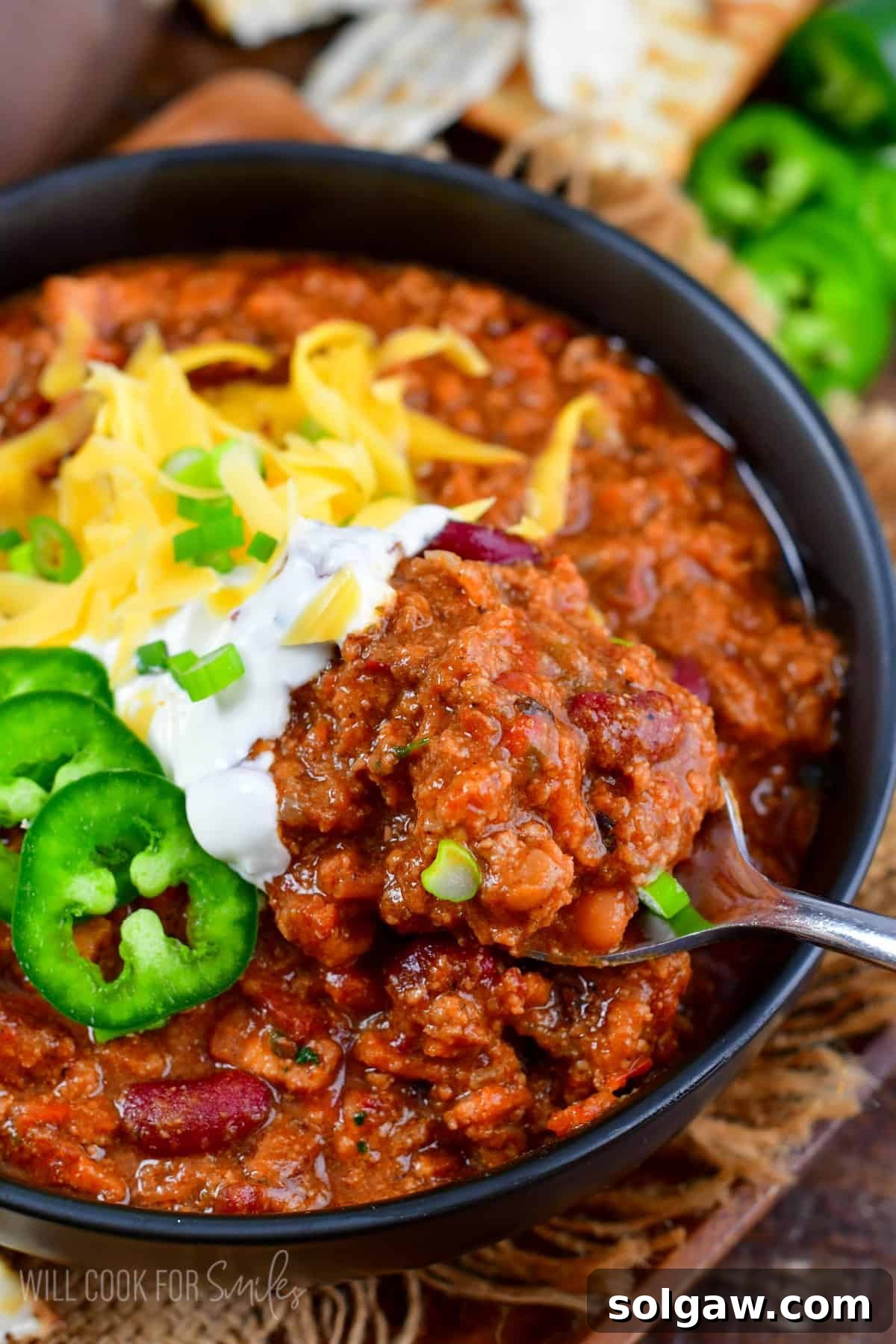

Featured Comment
“I make this every fall into winter. I made it tonight with rice. Best chili I’ve ever eaten. My husband loves it. So tasty, real comfort food. ❤️👍~Darlene”
Why This Beef Chili Recipe Works: Your Go-To Comfort Food
There’s nothing quite like a steaming bowl of homemade chili to warm you from the inside out. For years, this beef chili recipe has been a staple in my kitchen, a dish I perfected not just for its incredible flavor, but also as a clever way to introduce lean meats and an abundance of vegetables into my family’s diet. It all started from a simple need to boost iron levels for one of my children, and through countless iterations, it blossomed into our cherished family favorite. After making this dish weekly, I can confidently say this recipe is the very definition of “tried and true.”
What makes this specific beef chili recipe stand out? It’s a harmonious blend of health, versatility, and irresistible flavor. Here’s why it’s destined to become your next kitchen obsession:
- A Powerhouse of Nutrition: This chili isn’t just delicious; it’s genuinely good for you. Crafted with lean ground beef, a vibrant assortment of fresh vegetables, and protein-packed beans, it delivers a robust dose of protein, dietary fiber, and essential iron in every spoonful. It’s a complete meal that keeps you feeling satisfied and energized.
- Beans for Added Goodness: While the debate over beans in chili might rage on, I wholeheartedly advocate for them in this recipe. Beyond their delightful texture and earthy flavor, beans significantly boost the dish’s nutritional profile, contributing even more fiber and plant-based protein. They make the chili heartier and more filling, transforming it into a truly substantial meal.
- The Art of “Hidden” Vegetables: This recipe is a parent’s secret weapon. You can generously pack it with various vegetables, from classic onions and peppers to more subtle additions like carrots or zucchini, and even the pickiest eaters will happily devour it without a single complaint. The rich, savory broth and perfectly balanced spices skillfully mask the veggies, making healthy eating effortless and enjoyable.
- A Symphony of Flavors: Years of experimentation have led to a flawless combination of ingredients and a custom seasoning blend that creates an unparalleled depth of flavor. Each spice plays a vital role, building layers of savory, smoky, and subtly spicy notes that make every bite an experience. It’s a chili that tastes like it’s been simmering all day, even when it comes together with relative ease.
This beef chili is more than just a meal; it’s a warm embrace in a bowl, perfect for chilly evenings, bustling game days, or simply when you crave something truly comforting and nourishing. Its robust flavors and wholesome ingredients make it a dish you’ll return to again and again.
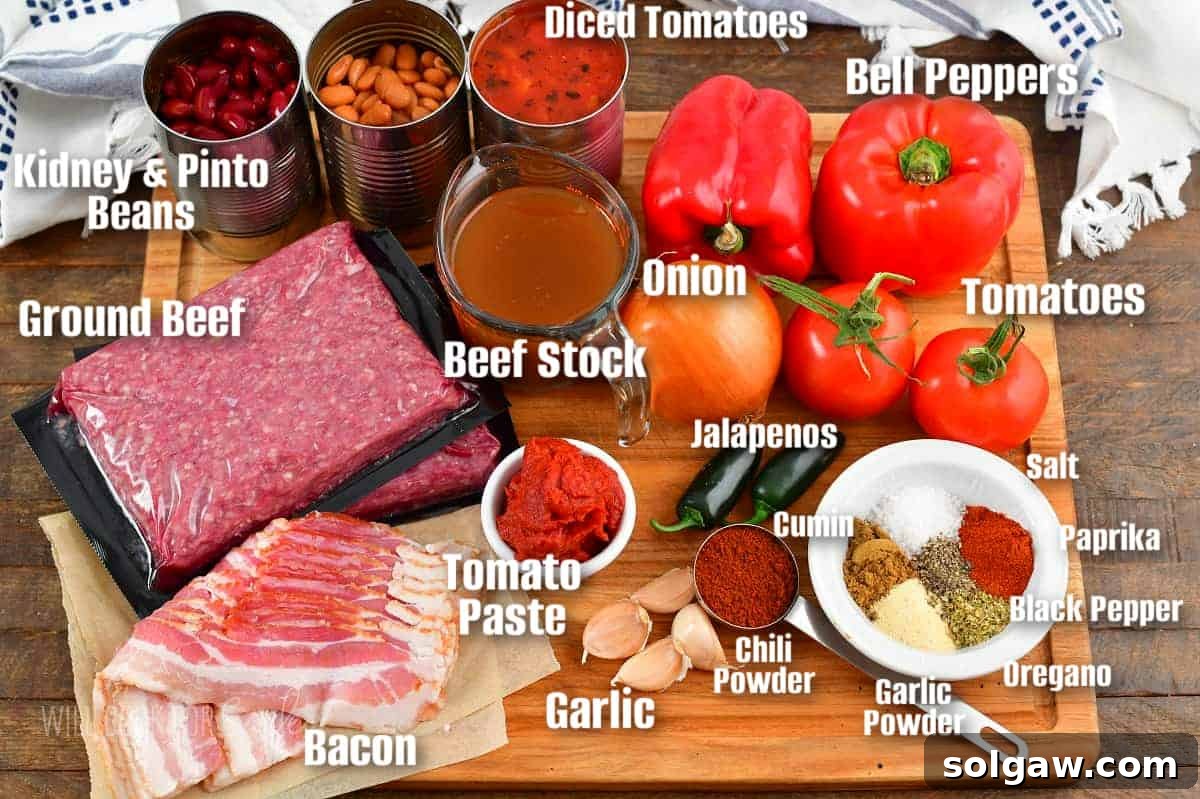
Unlocking Flavor: Key Ingredients and Smart Substitutions
Crafting the perfect beef chili comes down to selecting high-quality ingredients and understanding how each one contributes to the overall flavor profile. Through years of refining this recipe, I’ve identified several key components that make all the difference. Here’s a closer look at what you’ll need and how you can adapt them:
Bacon: The Secret to Smoky Depth
For an unparalleled depth of flavor, bacon is a non-negotiable component in this chili. It renders delicious fat that’s used to brown the beef and sauté the vegetables, infusing the entire dish with a rich, smoky foundation. It’s crucial to use “original” unflavored bacon. Avoid maple or brown sugar-cured varieties, as their sweetness can clash with the savory, spicy notes of the chili and disrupt the delicate balance of flavors we’re aiming for. If you absolutely must skip the bacon, you can start by browning your ground beef in a tablespoon or two of a neutral oil like avocado or canola, but be aware that you’ll miss out on that irreplaceable smoky essence.
Ground Beef: The Heart of the Chili
The type of ground beef you choose plays a significant role in both flavor and texture. For optimal results, I consistently recommend a ground beef with an 85%/15% lean-to-fat ratio. This balance provides enough fat to render a juicy, flavorful base without making the chili overly greasy. Beef with a lower fat content (e.g., 90/10 or leaner) can result in a tougher, drier texture and may lead to more clumps, as there’s less fat to help it break down. Conversely, beef with a higher fat content (e.g., 80/20) can make the chili too oily, requiring excessive draining. This 85/15 ratio strikes the perfect balance for a tender, savory, and well-textured chili.
Fire-Roasted Diced Tomatoes: A Layer of Complexity
These tomatoes are a game-changer, adding a subtle smoky undertone and a wonderful depth to the chili’s flavor profile. The charring process brings out a natural sweetness and complexity that plain diced tomatoes simply can’t match. If fire-roasted diced tomatoes are unavailable in your local grocery store, you can absolutely use regular canned diced tomatoes as a substitute. Just ensure they are plain, without any added spices or herbs, to maintain control over your seasoning blend. You might consider adding a tiny pinch of smoked paprika to compensate for the lost smoky flavor if using regular tomatoes.
Vegetables: Your Canvas for Health and Flavor
This chili recipe is an excellent opportunity to load up on vegetables, enhancing both nutrition and texture. I typically use onions and bell peppers as my base, but the possibilities are truly endless. Think of your chili as a blank canvas for incorporating more goodness. You can add finely diced carrots for a touch of sweetness and color, or celery for a subtle aromatic crunch. Additional vegetables that work wonderfully include more bell peppers (red, orange, or yellow for a sweeter note), zucchini, yellow squash, corn, or even hardy winter squash like butternut squash, diced small. For a fresh touch and added healthy fats, consider topping your finished chili with sliced avocado. Don’t be shy – the more veggies, the merrier, and their flavors blend seamlessly into the rich chili base.
Seasoning: The Soul of the Chili
This is where the magic truly happens, transforming simple ingredients into an explosion of flavor. My carefully curated blend of spices is designed to deliver a robust and authentic chili taste. The cornerstone is chili powder, which should be used generously. It provides the characteristic chili flavor. Complementing this, cumin adds an earthy, warm note, while dried oregano contributes a subtle herbaceousness that brightens the profile. Paprika is essential, and I highly recommend using smoked paprika if you can find it. It imparts a beautiful, deep smoky flavor that elevates the chili to another level. If smoked paprika isn’t available, regular sweet paprika works fine, though you’ll miss some of that signature smoky depth. My biggest tip for seasoning is simple but vital: always taste your chili after adding the initial seasoning blend. This allows you to adjust the salt, spice, and overall balance to your personal preference before the long simmer. Don’t be afraid to add a little more chili powder for heat or depth, or a pinch more salt to make the flavors pop.
Crafting the Perfect Bowl: How To Make Chili Step-by-Step
Making a truly exceptional beef chili is a process of layering flavors, starting with proper searing and building up to a slow, gentle simmer. Follow these steps for a chili that’s rich, complex, and deeply satisfying:
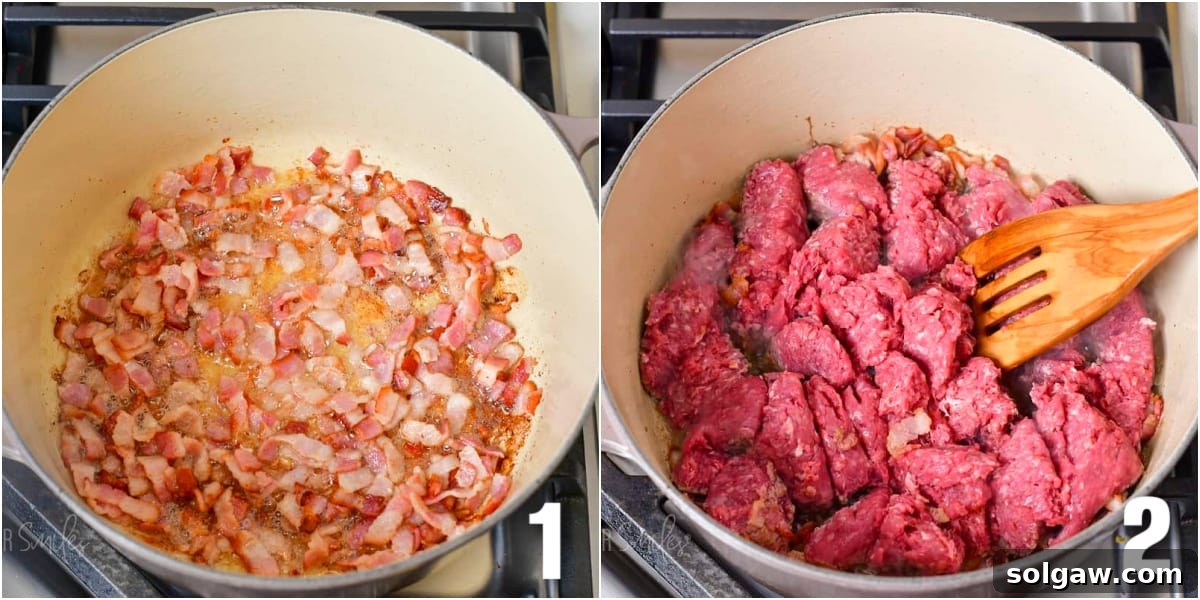
1. Sear the Bacon and Ground Beef for Maximum Flavor:
Begin by preheating a large, heavy-bottomed pot or Dutch oven over medium heat. Add the diced bacon and cook it slowly, stirring occasionally, until it’s beautifully browned and crispy, and most of its flavorful fat has rendered. This step is crucial; undercooked bacon can be chewy and unpleasant, so ensure it reaches that perfect crispness. Once done, remove the crispy bacon with a slotted spoon and set it aside, leaving the rendered fat in the pot. This bacon fat will be the foundation of your chili’s flavor. Next, add the ground beef to the hot pot. Break it up thoroughly with a spoon or potato masher as it cooks. Continue to cook, stirring and breaking up any large clumps, until the meat is mostly browned. This browning develops the rich, savory flavors through the Maillard reaction. Once browned, remove the ground beef from the pot and set it aside with the bacon. Don’t worry about any browned bits sticking to the bottom – those are flavor builders!
Expert Tip for Searing: While it might seem tempting to cook the vegetables and meat together to save time, searing them separately is a culinary game-changer for chili. Cooking meats and vegetables in distinct stages allows each component to achieve optimal browning and caramelization, concentrating their individual flavors. This technique prevents overcrowding the pot, which can lead to steaming rather than searing, ultimately resulting in a more profound and complex overall flavor in your finished chili.
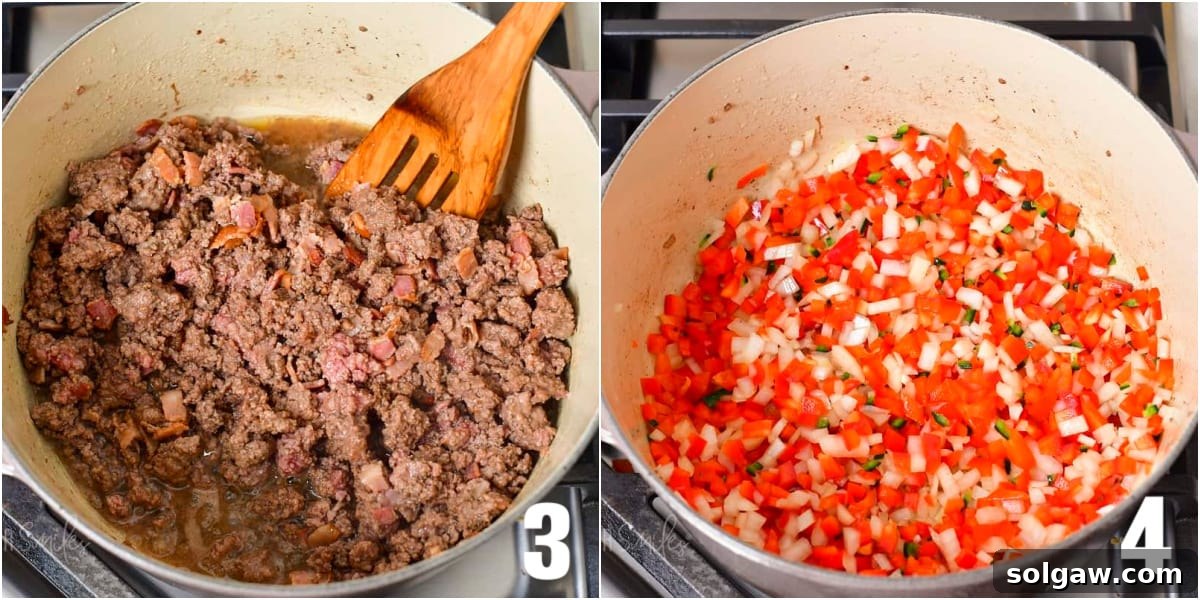
2. Sauté the Aromatic Vegetables:
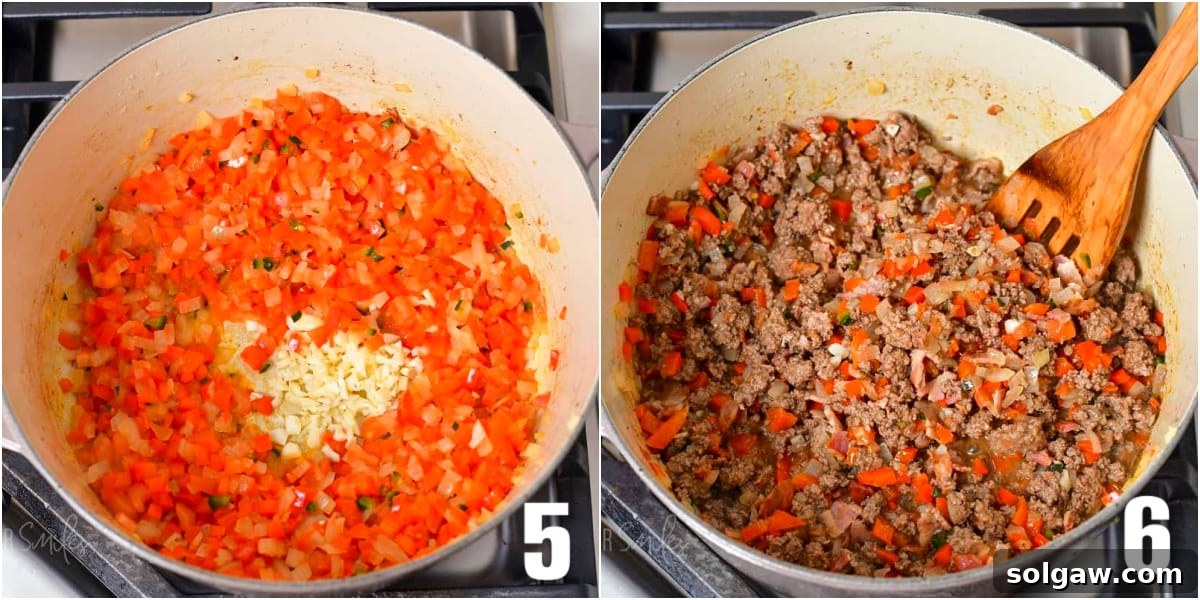
With the meats removed, you now have a flavorful base of rendered fat in your pot. If needed, add a small splash more of a neutral oil. Add the diced onions and bell peppers to the pot. Sauté them over medium heat until they become translucent and mostly softened, about 5-7 minutes. For deeper flavor, allow them to sauté mostly undisturbed for a few minutes at a time, stirring only occasionally. This allows for some golden-brown caramelization to develop, which adds a wonderful sweetness and depth. Once the vegetables are softened, push them to one side of the pot to create a small clear space in the center. Add the minced garlic to this cleared space and sauté it for just about 30-60 seconds, or until it becomes wonderfully fragrant. Be careful not to burn the garlic, as it can turn bitter very quickly. Mix the fragrant garlic into the softened vegetables. Finally, return the browned bacon and ground beef to the pot, stirring everything together to combine.
3. Introduce Beans, Tomatoes, and Seasoning:
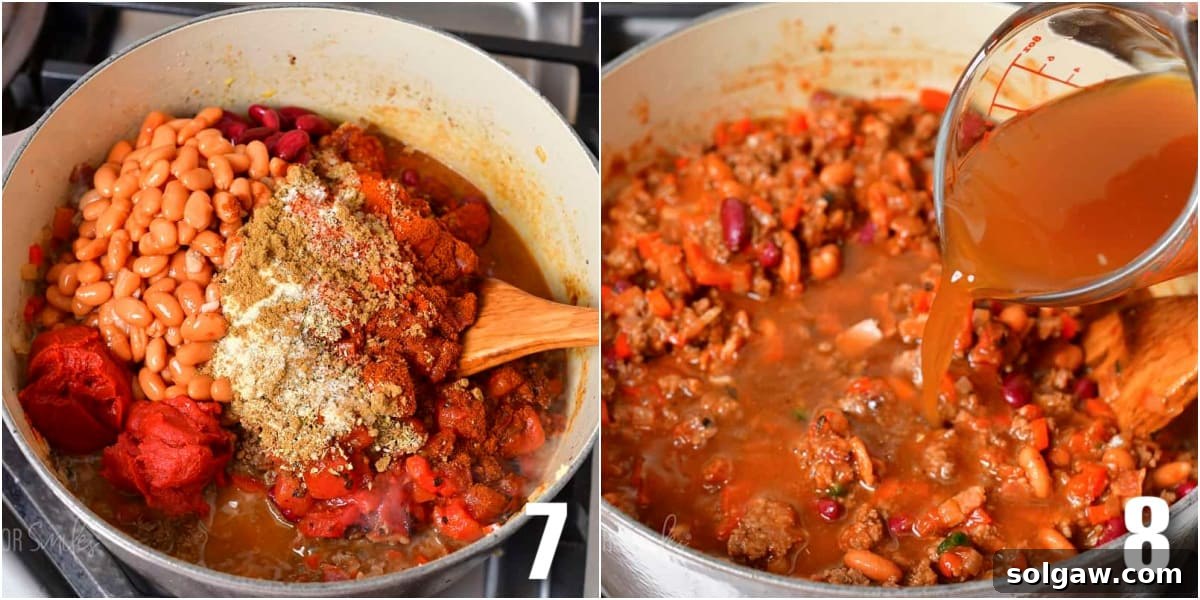
Now it’s time to build the rich, saucy base of your chili. Open and drain your canned pinto and kidney beans, then add them directly to the pot. There’s no need to rinse them; the starchy liquid clinging to the beans actually contributes more body and flavor to the chili. Next, add the canned fire-roasted diced tomatoes and the tomato paste. The tomato paste is particularly important here, as it provides a concentrated tomato flavor and helps thicken the chili. Finally, generously sprinkle in all of your carefully measured chili seasoning blend: chili powder, smoked paprika, cumin, garlic powder, onion powder, dried oregano, coarse sea salt, and black pepper. Stir all the ingredients together very well, ensuring the meats, vegetables, beans, and seasonings are evenly combined. Pour in the beef stock or broth, giving everything one last good stir.
Expert Tip for Seasoning: This is a vital moment in the chili-making process. Always take a small taste of your chili mixture after adding the seasonings and stock. This allows you to gauge the current flavor profile and adjust it to your personal preference. Do you prefer it a bit saltier? Add another pinch of salt. Craving more heat or a deeper spice? Stir in a little more chili powder or a dash of cayenne pepper. Remember, you are the chef, and a truly great chili is one that delights your own palate!
4. The Simmer: Low and Slow for Perfect Flavor:
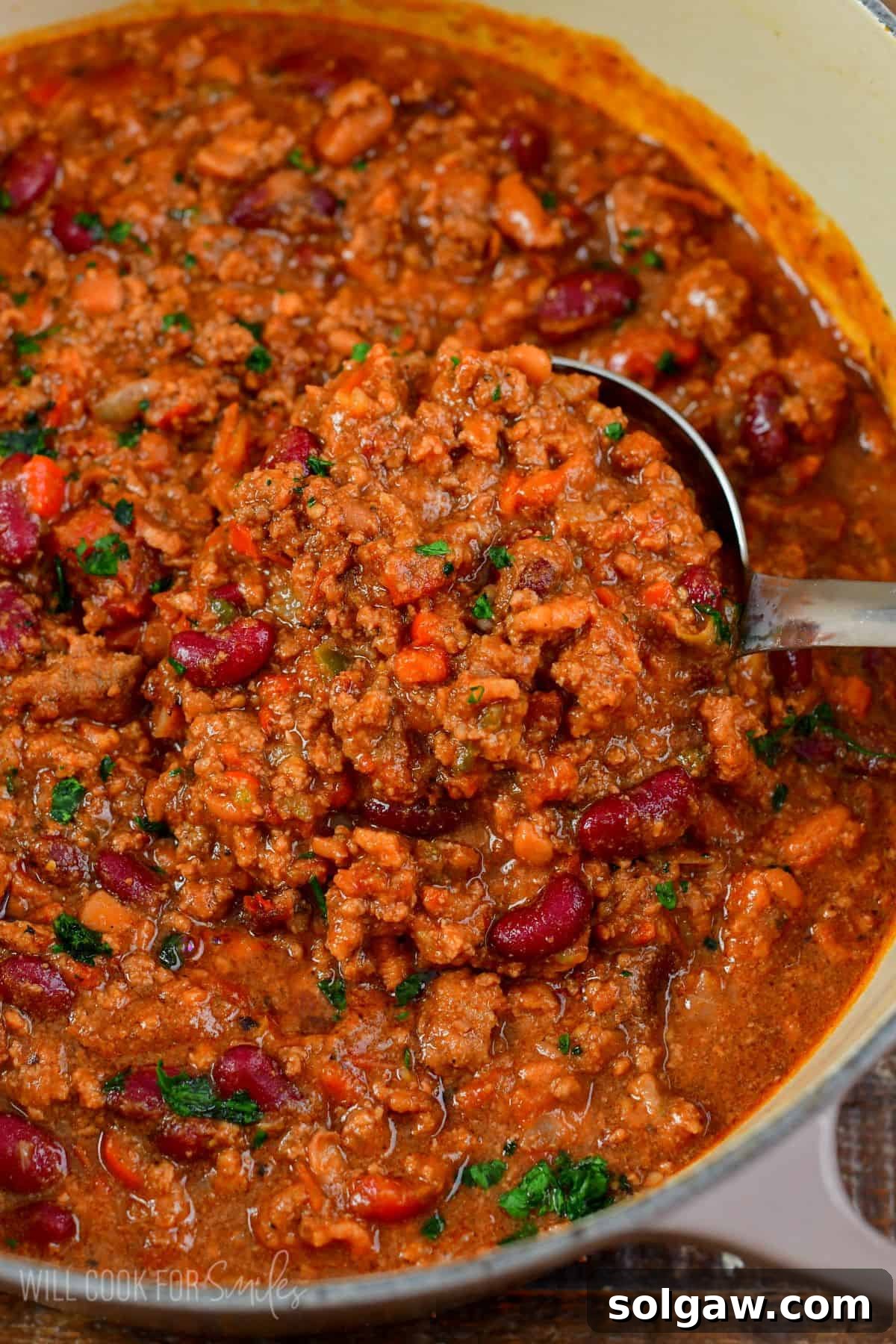
Bring the chili mixture to a gentle, low boil over medium heat. Once it reaches a simmer, immediately reduce the heat to its lowest setting. Cover the pot with a lid, but leave a small crack or slightly offset it to allow steam to escape. This controlled simmering prevents the chili from becoming too watery while still allowing the flavors to meld and deepen over time. Let your beef chili gently simmer on low heat for approximately 1 hour and 30 minutes to 2 hours. During this initial simmering phase, stir the chili every 20-30 minutes, making sure to scrape the bottom of the pot to prevent sticking and to break up any large clumps of meat that may have formed. Halfway through the cooking time (around the 45-60 minute mark), remove the lid completely and continue to cook the chili uncovered for the remaining 30-40 minutes. Cooking uncovered allows some of the liquid to evaporate, thickening the chili and further concentrating its incredible flavors. Keep stirring occasionally until your chili reaches your desired consistency and the flavors are fully developed. This patient simmering is the secret to a rich, cohesive, and utterly delicious bowl of chili.
Mastering Your Beef Chili: Flavor & Spice Control Tips
Once you’ve cooked your beef chili, a few simple tips can elevate it from great to truly unforgettable. Mastering flavor and spice is key to making this recipe your signature dish.
The Magic of Time: Chili Only Gets Better!
It’s a well-known culinary secret that chili, like many stews, tastes even better the next day. The flavors need time to fully meld and deepen. I strongly prefer to make my chili ahead of time and allow it to sit in the refrigerator overnight. During this resting period, the spices infuse more deeply into the meats and vegetables, creating a richer, more harmonious taste experience. If you can plan, make it the day before you intend to serve it – your taste buds will thank you!
Regulating Spice Levels: Your Chili, Your Heat
Controlling the heat in your chili allows you to tailor it perfectly to your preference. Whether you love a mild warmth or a fiery kick, here’s how to adjust:
- For a balanced, milder heat: Add fresh jalapeños to your vegetable sauté. For less heat, make sure to remove all seeds and the white membrane from the jalapeños before dicing, as these contain most of the capsaicin.
- For a sharper, medium spice: Opt for serrano peppers. They are noticeably hotter than jalapeños but still offer a fresh, bright flavor. Again, removing seeds and membranes will temper the heat.
- For smoky warmth and significant heat: A dash of cayenne pepper can be added during the seasoning step. Start small, as cayenne is potent, and build up to your desired level.
- For intense, fruity heat: Habanero peppers deliver a powerful punch. Use them very sparingly and with caution, especially if you’re new to their heat level. A tiny sliver can go a long way in making your beef chili extra bold.
Pro Tip for Pepper Prep: Always remember that the majority of a chili pepper’s heat resides in its seeds and the white pith (membrane) inside. For a milder chili, meticulously remove all seeds and membrane before dicing your peppers. If you desire a fiery beef chili that truly packs a punch, leave some or all of the seeds and membrane intact. It’s always best to start with a conservative amount of spicy peppers or chili powder and adjust after the chili has simmered for a while. The heat and flavor will intensify as it cooks, so a little patience can prevent an overwhelmingly spicy dish.
Serving Suggestions and Toppings:
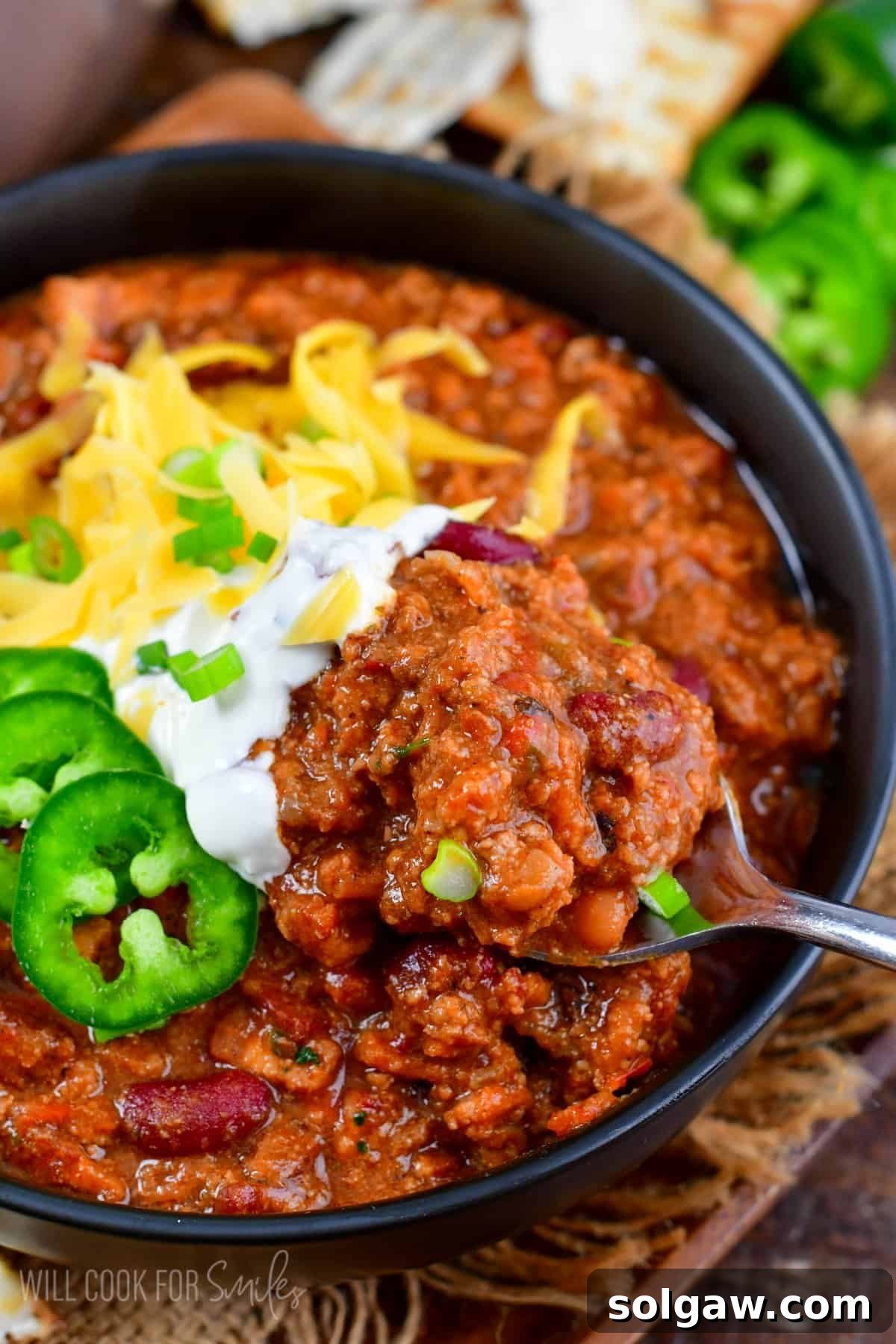
While this chili is fantastic on its own, it truly shines when served with a variety of complementary sides and toppings. Classic pairings include warm cornbread or fluffy rice, but don’t stop there! Offer a “chili bar” with an array of toppings to let everyone customize their bowl. Think shredded sharp cheddar cheese, a dollop of cool sour cream or Greek yogurt, thinly sliced green onions, fresh cilantro, finely diced red onion, or even a sprinkle of crushed tortilla chips for crunch. For an extra kick, a few dashes of your favorite hot sauce or extra sliced jalapeños (fresh or pickled) can really brighten the flavors.

Frequently Asked Questions About Beef Chili
Here are answers to some common questions about making and enjoying this hearty beef chili:
How Can I Make Chili in a Slow Cooker?
Making chili in a slow cooker is a fantastic way to achieve deep, rich flavors with minimal fuss. To adapt this recipe, start by browning the bacon in a large skillet over medium heat until crispy. Remove the bacon and then add the ground beef to the same skillet, breaking it up and cooking until browned. Transfer both the beef and bacon mixture to your Crock-Pot. In the same skillet, add a little more oil if needed, then sauté the diced onions, bell peppers, and jalapeños until softened. Stir in the minced garlic and cook until fragrant (about 30-60 seconds), then transfer this vegetable mixture to the Crock-Pot as well. Add the canned diced tomatoes, tomato paste, drained beans, beef stock, and all the seasonings to the slow cooker. Stir everything together thoroughly, cover, and cook on HIGH for 4 hours or on LOW for 6-8 hours. For best results, give it a good stir about once an hour to ensure even cooking and flavor distribution.
What’s the Best Side Dish for Chili?
The most classic and beloved sidekick for chili is undoubtedly a warm, buttery cornbread. Its slightly sweet and crumbly texture offers a wonderful contrast to the savory chili. However, you can also’t go wrong with options like a spicy jalapeño cornbread for an extra kick, soft and fluffy dinner rolls, or flaky buttermilk biscuits. Any of these breads are perfect for soaking up every last drop of the delicious chili sauce.
Can I Make Chili Without Beans?
Absolutely! If you are a staunch believer in bean-free chili, you can omit them entirely from this recipe. The chili will still be wonderfully flavorful and hearty. If you prefer to maintain the volume and texture, you can either add extra ground beef, incorporate more vegetables (like diced carrots, celery, or more bell peppers), or simply proceed without a substitution. The choice is yours!
Can I Make Chili Without the Bacon?
While the bacon adds a significant layer of smoky, savory depth and flavor to the entire dish, it can be omitted if necessary. If you skip the bacon, begin the recipe by browning the ground beef in 1-2 tablespoons of a neutral oil, such as avocado or canola oil. You might consider adding a small amount of smoked paprika to your seasoning blend to help compensate for the loss of the bacon’s smoky essence.
How Can I Make Chili Thicker?
If you prefer a thicker chili, the simplest adjustment is to either omit or reduce the amount of beef stock used in the recipe. Start with half the recommended stock, and if the chili seems too thick during simmering, you can always add a little more until you reach your desired consistency. Alternatively, you can continue to simmer the chili uncovered for a longer period at the end of the cooking process, allowing more liquid to evaporate naturally.
How Long Does Beef Chili Last in the Fridge?
When properly stored in an airtight container in the refrigerator, homemade beef chili will maintain its quality and freshness for 3-4 days. This makes it an excellent option for meal prepping throughout the week.
Storage, Freezing & Reheating Chili: Your Meal Prep Guide
This beef chili is an ideal dish for meal prepping, as it reheats beautifully and freezes exceptionally well. Here’s a detailed guide on how to store your leftover chili and freeze it for convenient future meals:
- Storing in the Refrigerator: Once your chili has cooled completely, transfer any leftovers into an airtight food storage container. Place it in the refrigerator, where it will stay fresh and delicious for 3-4 days. Always ensure it’s cooled before refrigerating to prevent bacterial growth.
- Freezing for Long-Term Storage: Chili is a fantastic candidate for freezing. To ensure maximum freshness and extend its shelf life, you’ll want to cool it down as quickly as possible after cooking. The most effective method is to place the pot of hot chili into a larger sink or container filled with ice water. Stir the chili occasionally as it cools to help it reach a safe temperature rapidly. Once thoroughly cooled, portion the chili into individual servings or family-sized portions. Freezer-safe bags are excellent for this, as you can press out all the air before sealing, which helps prevent freezer burn. Alternatively, use freezer-safe containers with tight-fitting lids. Remember to clearly label each bag or container with the contents (“Beef Chili”) and the date it was prepared. Lay freezer bags flat on a cutting board or baking sheet to freeze, creating neat, stackable portions. Properly frozen, beef chili can be stored for up to 6 months, retaining its flavor and texture.
- To Thaw and Reheat: When you’re ready to enjoy your frozen chili, the best method for thawing is to transfer it from the freezer to the refrigerator and allow it to slow-thaw overnight. Once thawed, you can reheat it gently on the stovetop over medium-low heat, stirring frequently, until it’s warmed through. You can also reheat individual portions in the microwave, stirring occasionally, until hot. If the chili seems a bit thick after thawing, you can add a splash of beef broth or water to reach your desired consistency.

PIN THIS RECIPE FOR LATER
DID YOU MAKE THIS RECIPE? PLEASE leave a 🌟 star rating! Let me know how you liked it by leaving a 📝 comment below or share and tag me on social media @willcookforsmiles. DON’T FORGET to subscribe to my newsletter!
The Best Beef Chili Recipe
Print
Pin
Video available on original source
Rate
Find Substitutions (refer to recipe content for options)
Dietary Options (refer to recipe content for options)
Ingredients
- 8 oz raw bacon
- 2 lbs ground beef 85%-15% lean to fat ratio
- 1 yellow onion
- 2 bell peppers – various colors
- 2-3 jalapeno peppers
- 2 tomatoes
- 4-6 large garlic cloves
- 14 oz can fire roasted diced tomatoes
- 4 oz tomato paste
- 16 oz can low sodium pinto beans drained
- 16 oz can low sodium kidney beans drained
- 1 cup beef stock or broth
- 2 tbsp ancho chili powder adjust if needed for spice level
- 3 tsp smoked paprika or regular
- 3 tsp cumin
- 2 tsp garlic powder
- 2 tsp onion powder
- 2 tsp dried oregano
- 1 tbsp coarse sea salt more or less to taste
- 1/2 tsp black pepper
Instructions
-
Prepare ingredients ahead of time by dicing bacon, onion, tomatoes, and peppers. Measure the stock and seasoning, drain the beans, and mince garlic.
-
Preheat a 2.5-3 quart pot over medium heat and add a little bit of oil.
-
Add diced bacon and cook until browned and most of the fat is rendered.
-
Add ground beef, season with some salt, and cook, breaking up all the clumps of meat as much as possible. Continue to cook until the meat is mostly brown. Take meats out of the pot and set aside.
-
Add diced onion, jalapenos, and bell peppers to the pot and sauté until softened.
-
Make some room in the middle and add minced garlic. Sauté until garlic is fragrant and mix it into the veggies.
-
Add meats back to the pot, stir, and add diced tomatoes, tomato paste, beans, and seasoning. Stir everything well and pour in beef stock.
-
Bring the chili mixture to a low boil and then lower the heat to low. Cover with a lid but leave a crack for the steam to escape.
-
Cook for about 1.5-2 hours and make sure to stir from time to time. Take the lid off half way through and cook the rest of the time uncovered.
Video
A recipe video would typically be embedded here.
Notes
- Storing: Store cooled leftover chili in an air-tight food storage container, in the refrigerator, for 3-4 days.
- More or less spicy: Use spicier peppers like serrano or habanero if you want spicy chili. For less spice, use young jalapenos and discard seeds and membrane.
- Additional veggies: Feel free to load your chili with veggies like carrots, celery, more bell peppers, zucchini, yellow squash, corn, winter squash, and avocado for topping.
- Beans – I like to use pinto beans and kidney beans but you can choose any variation of your favorite beans.
- Thicker chili? Omit or use less beef stock.
- No beans? You can simply omit the beans and either increase veggies and meat or just omit and don’t substitute.
Nutrition
More Delicious Chili Recipes To Try
- Instant Pot Beef Chili
- Beer Beef Chili
- Hearty Turkey Chili
- Flavorful Vegetarian Chili
Originally published on Will Cook For Smiles in January, 2019. This article has been updated and expanded for clarity and comprehensiveness.