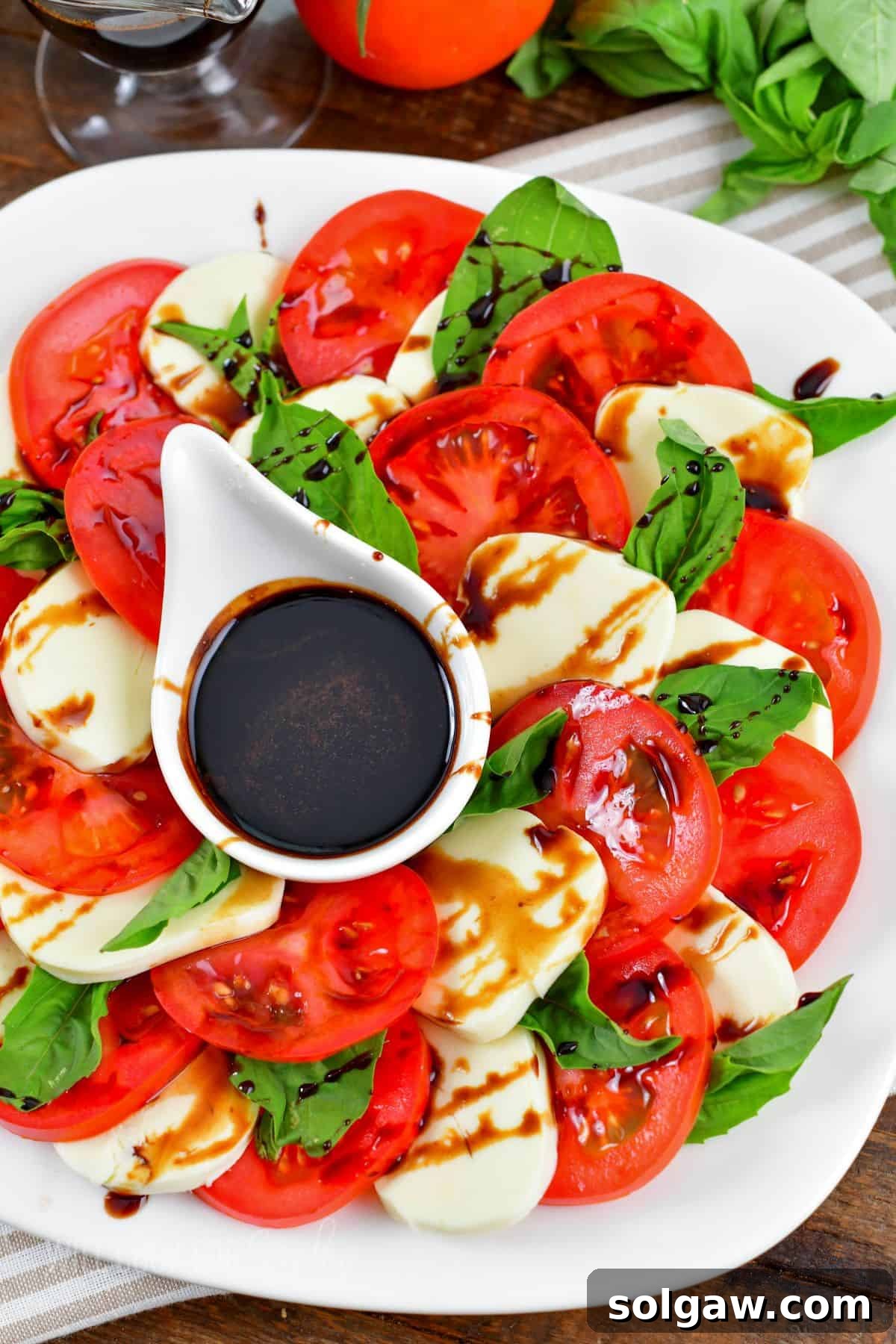
Mastering the Classic Caprese Salad with Homemade Balsamic Glaze
If you’re fortunate enough to cultivate your own tomatoes and basil, then this recipe is an absolute must-make! There’s an undeniable magic to ingredients harvested from your garden, and this Caprese salad recipe offers the perfect canvas to showcase their unparalleled freshness and vibrant flavors. More than just a dish, it’s an experience that celebrates the bounty of summer, bringing the authentic taste of Italy right to your table.
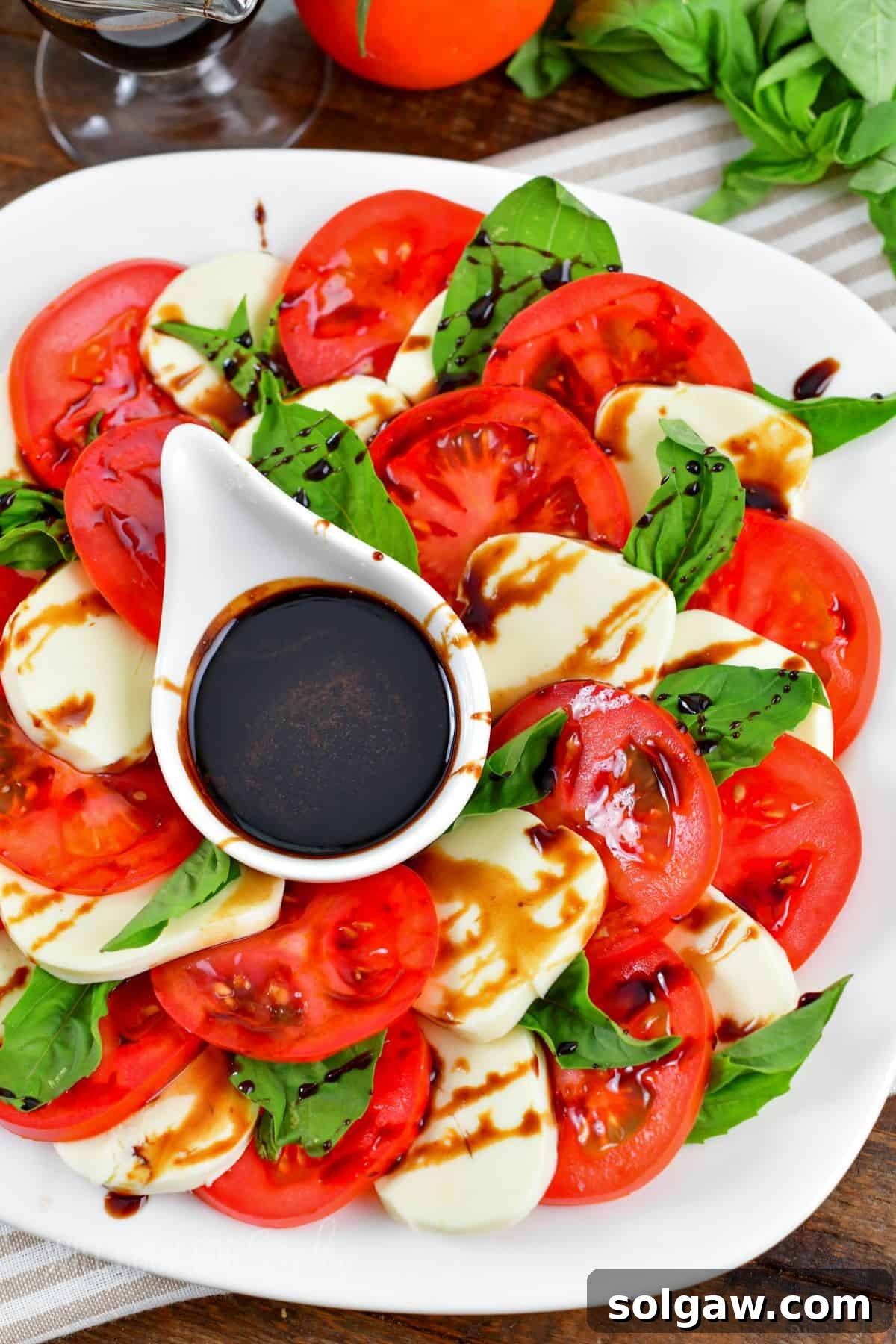
The Essence of Italian Summer: Caprese Salad Unveiled
At its heart, Caprese salad, or Insalata Caprese as it’s known in Italian, is a beautifully simple yet profoundly elegant combination of three primary ingredients: succulent tomatoes, creamy fresh mozzarella cheese, and fragrant basil leaves. Drizzled with a luscious balsamic glaze, this dish is a culinary ode to the sun-drenched island of Capri, from which it literally translates to “salad of Capri.” It embodies the spirit of effortless summer dining, requiring minimal preparation while delivering maximum flavor.
This iconic Italian salad is especially perfect for the warmer months, making it an ideal choice for quick lunches, light dinners, or impressive appetizers. By preparing Caprese salad at home, you gain the distinct advantage of hand-picking the ripest, most aromatic produce and the freshest, creamiest cheese available. This meticulous selection ensures that every single bite is bursting with brighter, more authentic flavors, often surpassing the quality of many restaurant renditions. It’s a testament to the power of fresh, quality ingredients and simple preparation.
A Glimpse into Caprese Salad’s Rich History and Cultural Significance
The origins of Caprese salad are steeped in charm and patriotism. Believed to have first appeared on the picturesque island of Capri in the 1920s, this vibrant dish was more than just a culinary creation; it was a deliberate and beautiful nod to the Italian flag. The vivid red of the tomatoes, the pristine white of the mozzarella, and the verdant green of the basil perfectly mirror the colors of the national ensign, creating a visually stunning and symbolically rich plate.
Initially a local specialty, Caprese salad truly began its ascent to worldwide recognition in the 1950s, largely thanks to a discerning hotel chef who recognized its universal appeal and introduced it to international visitors. From there, its popularity soared, becoming a beloved staple in Italian cuisine and beyond. Today, it remains a versatile favorite, equally impressive as an elegant party appetizer, effortlessly chic for a casual backyard BBQ, or conveniently packed as a refreshing and perfect picnic food option. Its timeless appeal lies in its simplicity, freshness, and the delightful harmony of its core ingredients.
Why Homemade Caprese Salad Reigns Supreme
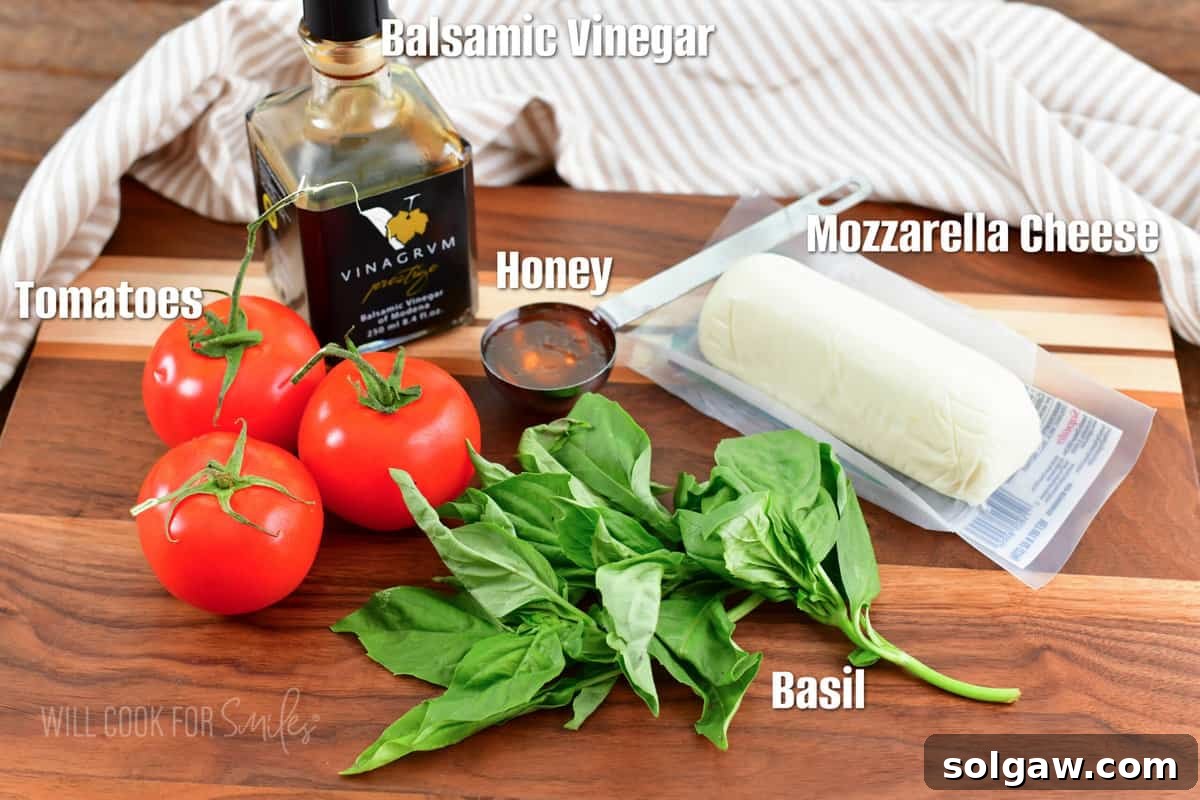
While Caprese salad is a common offering in Italian restaurants, making it at home allows for an unparalleled experience. The true magic of this dish lies in the quality of its components. When you assemble it yourself, you control every element, ensuring peak freshness and flavor that store-bought versions simply cannot match. You get to choose tomatoes at their absolute prime, often directly from a farmer’s market or your garden, guaranteeing juiciness and intense flavor. Similarly, selecting the finest fresh mozzarella means a superior creamy texture and delicate taste. This level of quality control elevates a simple salad into a gourmet delight, making every bite a celebration of fresh produce and authentic Italian flavors.
The Pillars of Flavor: Selecting Your Ingredients for the Perfect Caprese
The beauty of Caprese salad is its reliance on a few, high-quality ingredients. Each component plays a crucial role in creating the harmonious balance of flavors and textures that defines this classic dish. Choosing the right ingredients is the first and most important step towards an unforgettable Caprese experience.
Choosing the Perfect Tomatoes
The tomato is the star of Caprese salad, providing vibrant color, juicy texture, and a sweet-tangy burst of flavor. The best tasting tomatoes for Caprese are, without a doubt, **heirloom tomatoes**. These unique varieties come in a stunning array of colors, shapes, and sizes, each offering a distinct flavor profile – from sweet and fruity to rich and earthy. Their irregular beauty and complex taste make them an ideal choice, though they aren’t always readily available in standard grocery stores.
If heirloom tomatoes are hard to find, **tomatoes on the vine** are an excellent second option. These are often allowed to ripen longer, developing a richer flavor than loose tomatoes. Look for those with a deep, even color and a firm, heavy feel. Another reliable choice is **Roma tomatoes**, known for their firm flesh and lower water content, which makes them less likely to make your salad watery. For a delightful visual and textural contrast, consider adding smaller varieties like **cherry or grape tomatoes**, especially if you’re making Caprese skewers or a chopped salad. Regardless of the type, always select tomatoes that are ripe but firm, with a fragrant aroma at the stem end.
Fresh Mozzarella: The Creamy Heart
The mozzarella cheese is equally vital, contributing a delicate creaminess and a subtle, milky flavor that beautifully complements the tomatoes and basil. For an authentic Caprese, you must choose **fresh mozzarella**, ideally packed in water or brine. This preserves its soft, elastic texture and mild flavor. Options include large balls of mozzarella (perfect for slicing), smaller bocconcini (cherry-sized), or ciliegine (grape-sized), which are excellent for individual servings or skewers. Avoid the low-moisture, block-style mozzarella often used for pizzas, as it lacks the tender texture and fresh taste essential for Caprese.
When selecting, look for mozzarella that feels soft and supple to the touch. The fresher, the better, as its quality significantly impacts the overall experience. The contrast between the cool, firm tomato and the yielding, creamy mozzarella is a cornerstone of this salad’s appeal.
Aromatic Basil: The Fresh Herb
Basil is not just a garnish in Caprese salad; it’s a crucial aromatic component that ties all the flavors together. Its sweet, peppery, and slightly anise-like notes provide an invigorating freshness. Only **fresh basil leaves** should be used. Dried basil simply won’t do justice to the dish. Look for bright green leaves that are free from wilting or dark spots. Gently tear the basil leaves by hand rather than cutting them with a knife; this technique is believed to release more of their natural oils and prevent bruising, preserving their vibrant aroma and preventing discoloration.
The Sweet & Tangy Drizzle: Balsamic Vinegar
While simple Caprese salads are often dressed with olive oil, a **balsamic glaze (or reduction)** elevates the dish to another level. A good quality balsamic vinegar, reduced to a thick, syrupy consistency, adds a concentrated sweet-tart complexity that beautifully balances the freshness of the other ingredients. You can use traditional balsamic vinegar for a classic dark reduction, or opt for a white balsamic vinegar for a lighter color and slightly mellower flavor. If you’re lucky enough to find a flavored balsamic (like fig or raspberry) at a specialty store, it can add an exciting twist.
It’s worth noting that some high-grade, aged balsamic vinegars are naturally thick and syrupy, requiring no reduction. Always check the consistency of your balsamic vinegar before you start reducing it. The process of making a glaze intensifies the vinegar’s sweetness and tang, creating a visually appealing and delicious drizzle.
Essential Finishing Touches
To complete your Caprese masterpiece, a drizzle of **extra virgin olive oil** is customary. Choose a high-quality, cold-pressed olive oil for its fruity and sometimes peppery notes, which add depth without overpowering the delicate flavors. A sprinkle of flaky **sea salt** (like Maldon) and freshly ground **black pepper** are also essential. These simple seasonings enhance the natural taste of the tomatoes and mozzarella, bringing out their best qualities without masking them.
Crafting the Irresistible Balsamic Glaze
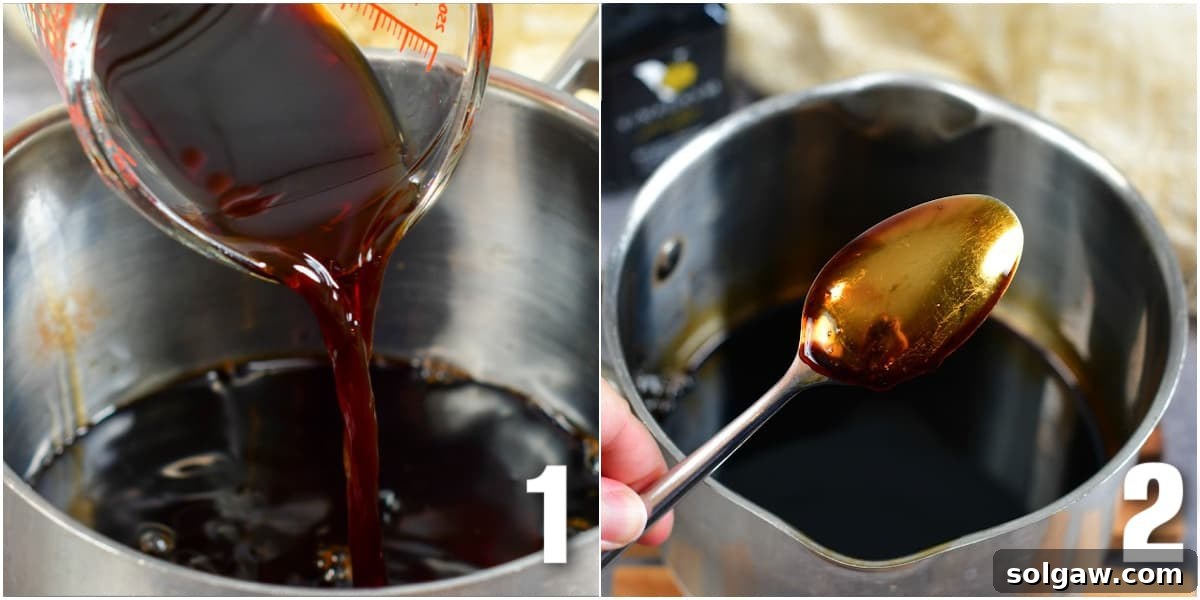
A homemade balsamic glaze is remarkably simple to make and transforms your Caprese salad from good to extraordinary. The process concentrates the vinegar’s flavor and creates a beautiful, syrupy consistency that adheres perfectly to the ingredients. To make your balsamic glaze, combine good quality balsamic vinegar with a touch of honey or sugar in a small saucepan. The honey adds a subtle sweetness that balances the vinegar’s acidity and aids in thickening.
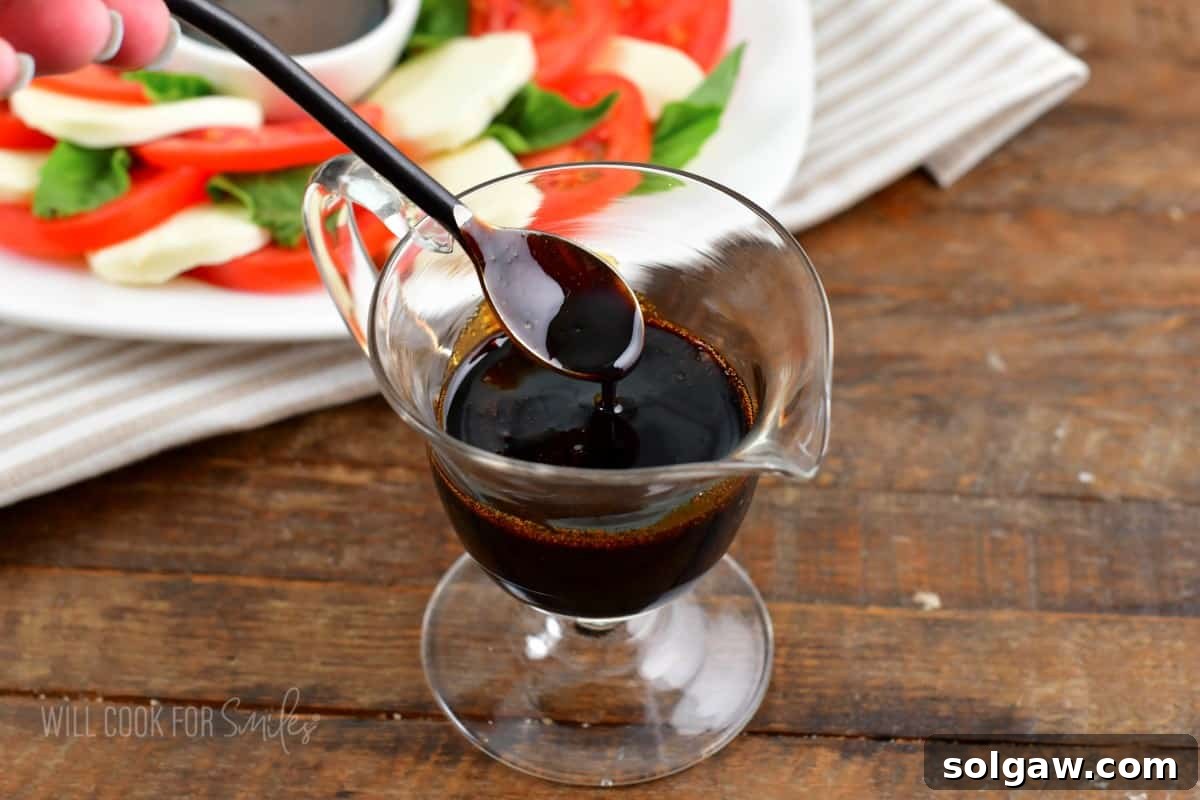
Bring the mixture to a gentle simmer over low to medium-low heat, whisking slowly but continuously until the honey dissolves. It’s crucial to maintain a gentle simmer, not a rolling boil, to prevent the sugars from scorching. Keep a close eye on the reduction, as it will thicken fairly quickly towards the end of the cooking time, typically within 7-15 minutes, depending on the heat and the amount of liquid. The most important tip to remember is **not to wait until the reduction reaches your desired consistency while it’s still hot!** Balsamic glaze continues to thicken significantly as it cools. If you wait until it looks perfectly thick in the pot, it will likely become solid or too sticky once cooled, making it difficult to drizzle. Instead, remove it from the heat when it’s thick enough to lightly coat the back of a spoon. It should have a syrupy consistency, similar to maple syrup or a light honey, at this stage. As it cools to room temperature, it will achieve that perfect, pourable glaze. If by chance it becomes too thick upon cooling, you can gently reheat it with a tiny splash of water or more balsamic vinegar to loosen it up. Conversely, if it’s too thin, return it to low heat and simmer for a few more minutes, constantly checking its consistency.
Assembling Your Elegant Caprese Salad
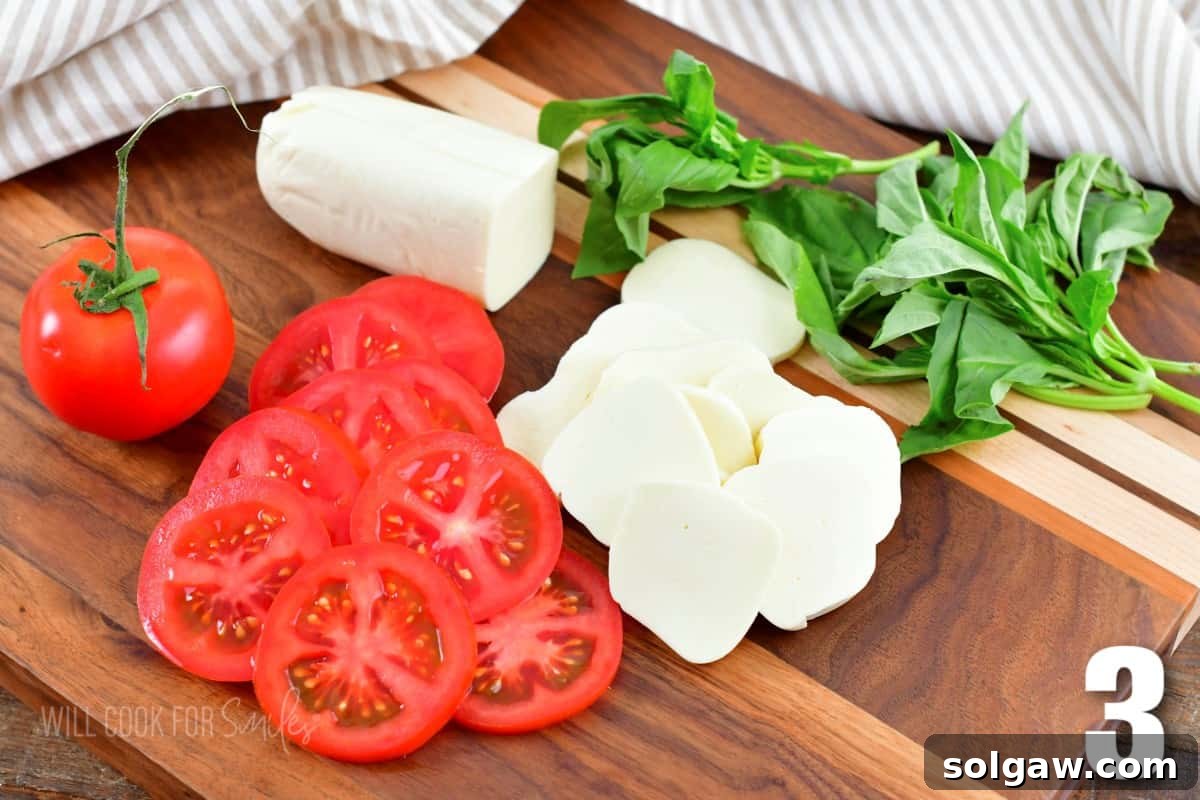
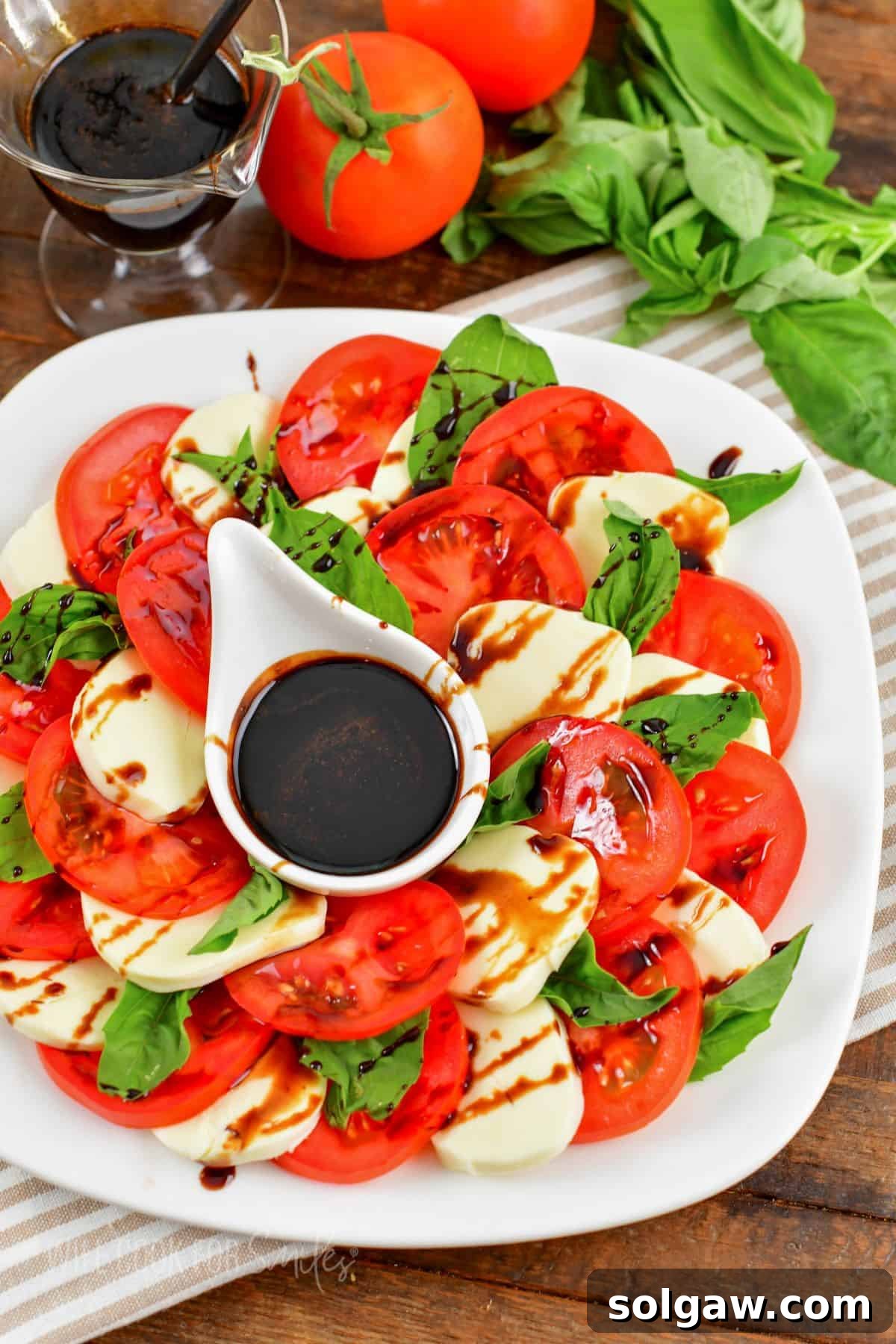
Assembling a Caprese salad is an art form in itself, emphasizing visual appeal and harmonious layering. Begin by slicing your chosen tomatoes and fresh mozzarella cheese into rounds of roughly the same thickness – aim for about ¼ to ½ inch. This uniformity ensures that each bite delivers a balanced ratio of tomato and mozzarella. Once sliced, arrange them artfully on a serving platter. A classic presentation involves alternating slices of tomato and mozzarella in an overlapping pattern, either in a single line, multiple rows, or a beautiful circular arrangement, reminiscent of a crown.
Next, integrate the fresh basil. You can either tuck whole basil leaves between the tomato and mozzarella slices for a bold visual statement and aromatic burst, or gently tear/mince the basil and sprinkle it evenly over the entire platter. Tearing basil is often preferred as it prevents bruising and releases more of its natural oils. Once your salad is arranged, generously drizzle the cooled balsamic reduction over the tomatoes and mozzarella. For an extra touch, finish with a light drizzle of high-quality extra virgin olive oil, a sprinkle of flaky sea salt, and freshly cracked black pepper. Serve any remaining balsamic reduction on the side, allowing guests to add more if they desire.
Creative Variations and Serving Ideas
While the classic Caprese salad is perfect in its simplicity, there are numerous ways to introduce exciting variations and serving styles:
- **Caprese Skewers:** Thread cherry tomatoes, small mozzarella balls (ciliegine or bocconcini), and folded basil leaves onto skewers for an easy, bite-sized appetizer.
- **Caprese Bruschetta:** Toast slices of baguette, rub with garlic, and top with chopped Caprese ingredients for a delightful crunch.
- **Caprese Pasta Salad:** Combine Caprese ingredients with cooked pasta, a light vinaigrette, and perhaps some pesto for a more substantial meal.
- **Fruit Additions:** Introduce seasonal fruits like sliced peaches, strawberries, or melon for a surprising sweet-savory twist.
- **Avocado Caprese:** Add slices of ripe avocado for an extra layer of creaminess and healthy fats.
- **Cheese Swaps:** Experiment with different fresh cheeses like burrata (for an even richer, creamier experience) or fresh goat cheese for a tangy note.
- **Herbal Enhancements:** A sprinkle of fresh oregano or a touch of chili flakes can add another dimension of flavor.
Caprese salad also pairs wonderfully with a variety of main courses. It’s a light, refreshing counterpoint to rich Italian pasta dishes and roasted meats. Here are some classic Italian entrees that make perfect companions:
- Italian Meatballs
- Bolognese Sauce
- Chicken Parmesan
- Eggplant Parmesan
- Stuffed Shells
- Lasagna
- Chicken Cacciatore
For a complete Italian dining experience, serve your Caprese salad alongside some crusty bread or focaccia to soak up the delicious juices and balsamic glaze. A light-bodied white wine or a crisp rosé would also complement the flavors beautifully.
Storage and Make-Ahead Tips for Freshness
Caprese salad is truly best enjoyed fresh, immediately after assembly, when the ingredients are at their peak. However, if you have leftovers or wish to prep components ahead of time, here are some suggestions:
Store assembled Caprese salad in an **airtight container in the refrigerator**. Properly stored, it will remain good for about 24 hours. After this period, the fresh basil and tomatoes tend to wilt and release too much water, diminishing the salad’s vibrant texture. For optimal freshness, it’s always best to assemble the salad just before serving.
The balsamic glaze, however, is a fantastic make-ahead component. Prepare it in advance and store it in a **glass jar with a secure airtight lid** in the refrigerator. If you made the glaze without adding sugar, it can be kept for months. If you **did add sugar** or honey, it will still stay good for **several weeks**. The glaze may thicken considerably in the refrigerator, so you might need to gently reheat it for a few seconds in a saucepan or microwave to achieve a pourable consistency before drizzling.
Conclusion: Embrace the Simplicity and Taste of Italy
The classic Caprese salad, especially when made with homemade balsamic glaze, is more than just a dish; it’s a celebration of simple, fresh ingredients and the rich culinary heritage of Italy. Its vibrant colors, refreshing flavors, and ease of preparation make it a perfect choice for any occasion, from a casual family meal to an elegant dinner party. By following these tips for selecting the best ingredients and mastering the balsamic glaze, you’re well on your way to creating a Caprese salad that will impress and delight everyone who tastes it. So, gather your fresh produce, embrace the simplicity, and savor the delicious taste of an authentic Italian summer.
PIN THIS RECIPE FOR LATER
DID YOU MAKE THIS RECIPE? PLEASE leave a 🌟 star rating! Let me know how you liked it by leaving a 📝 comment below or share and tag me on social media @willcookforsmiles. DON’T FORGET to subscribe to my newsletter!
Caprese Salad Recipe with Balsamic Glaze
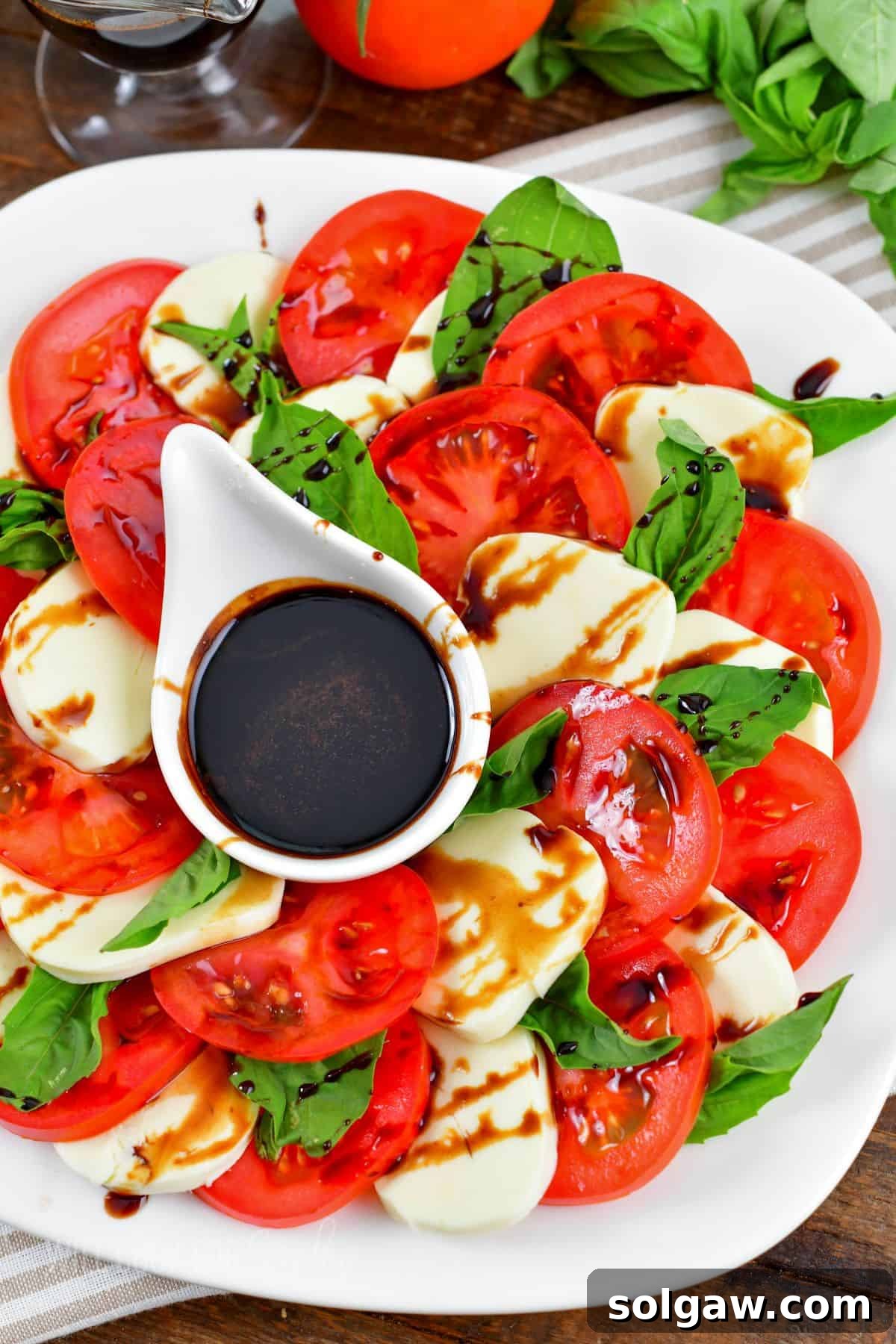
Caprese salad is a perfect summer salad because it’s a very simple and elegant Italian salad that combines just 4 ingredients: aromatic tomatoes, smooth mozzarella cheese, fresh basil, and balsamic glaze.
Ingredients
For the Caprese Salad:
- 4 tomatoes on a vine (or heirloom/Roma tomatoes)
- 8 oz fresh mozzarella cheese
- 10-12 basil leaves
For the Balsamic Reduction:
- 1/2 cup balsamic vinegar
- 1/2 tbsp honey
Instructions
Balsamic Glaze:
- Whisk balsamic vinegar and honey in a small saucepot and set the heat to medium. Bring the mixture to a simmer.
- Once it starts to simmer, turn the heat down to medium-low. Let vinegar gently simmer, stirring every minute or so, until the mixture thickens enough to coat a spoon. (This usually takes 7-10 minutes, but please note that it will start to thicken fast during the last couple of minutes, so keep an eye on it.)
Caprese Salad:
- Slice tomatoes and mozzarella cheese as close to the same thickness as you can.
- Lay out the tomato and mozzarella slices, alternating them, either in a circle or in a couple of lines.
- Either mince the basil leaves or tuck them whole in between the tomatoes and cheese. Try to spread them around evenly.
- Once the balsamic reduction cools to room temperature, drizzle it all over the tomatoes and mozzarella. (Serve remaining balsamic reduction on the side so your guests can serve themselves more if they wish.)
Notes
- Other tomato options: If you can’t get tomatoes on a vine, you can also use heirloom tomatoes or Roma tomatoes.
- Balsamic glaze thickness: Please remember that balsamic reduction becomes a lot thicker when it cools than when it is hot. So don’t wait until the reduction reaches the thickness you want, but rather until it coats the spoon.
- Storing balsamic glaze: Store balsamic glaze in a glass jar with an air-tight lid. Store it in the refrigerator for up to 3 months. You may need to reheat it for a few seconds before using.
- Storing caprese salad: You can store it in an air-tight food storage container in the refrigerator for only about a day. After that, tomato wilts too much.
Nutrition
Carbohydrates: 11g |
Protein: 9g |
Fat: 9g |
Saturated Fat: 5g |
Polyunsaturated Fat: 0.4g |
Monounsaturated Fat: 3g |
Cholesterol: 30mg |
Sodium: 246mg |
Potassium: 251mg |
Fiber: 1g |
Sugar: 9g |
Vitamin A: 974IU |
Vitamin C: 11mg |
Calcium: 206mg |
Iron: 1mg
Tried this recipe? Mention @willcookforsmiles or tag #willcookforsmiles!