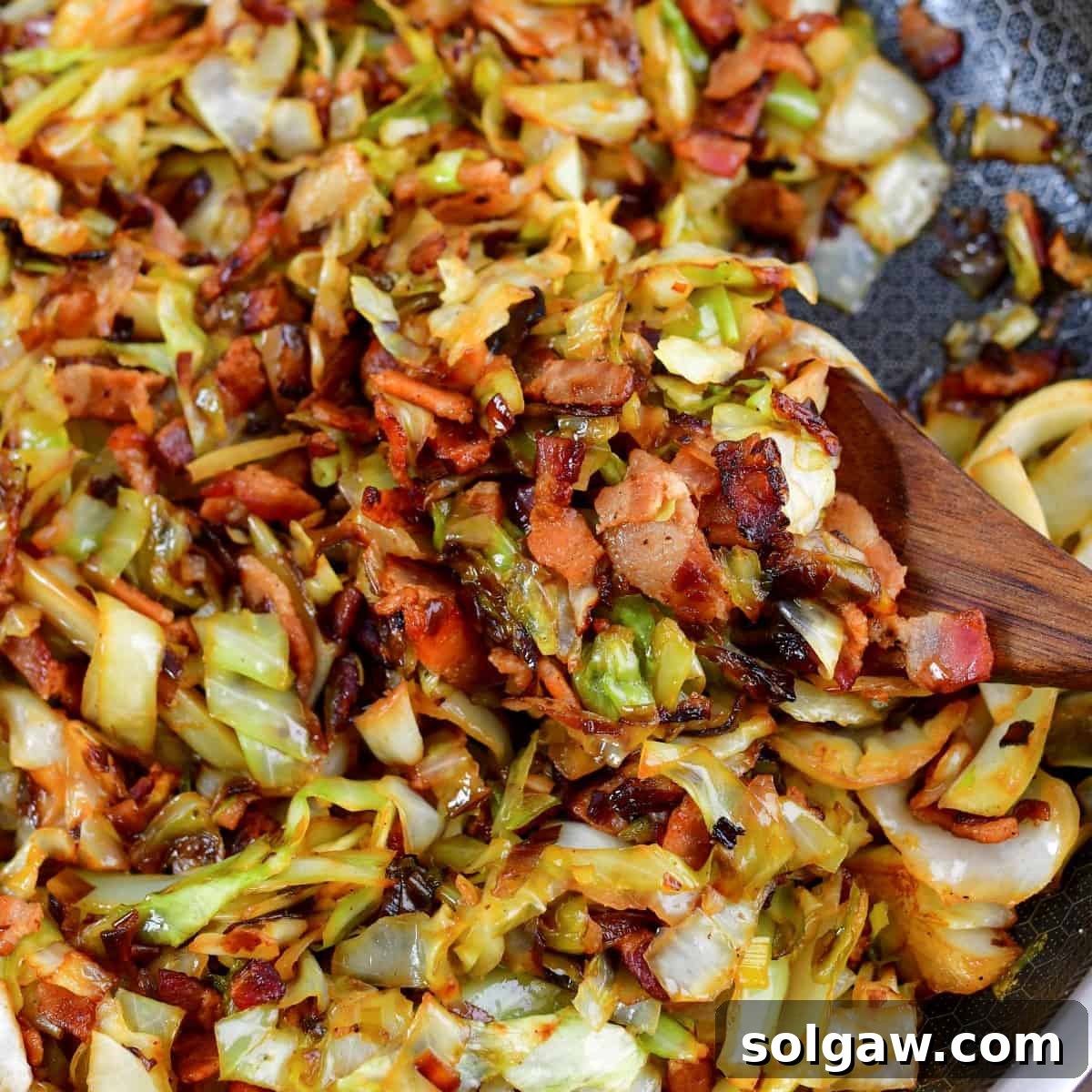
Savor the Simplicity: The Ultimate Fried Cabbage with Bacon and Leeks Recipe
Unleash an incredible flavor experience with this incredibly simple yet profoundly satisfying fried cabbage recipe. Featuring just three primary ingredients—fresh cabbage, aromatic leeks, and savory bacon—this dish is seasoned to perfection with only salt and pepper. It’s an impeccable side dish that comes together in about 30 minutes, delivering a taste that’s truly perfect, thanks to the delightful caramelization of the vegetables and the irresistible crispiness of the bacon. Prepare to elevate your weeknight meals or special occasions with a timeless Southern favorite that’s both easy to make and bursting with robust flavor.
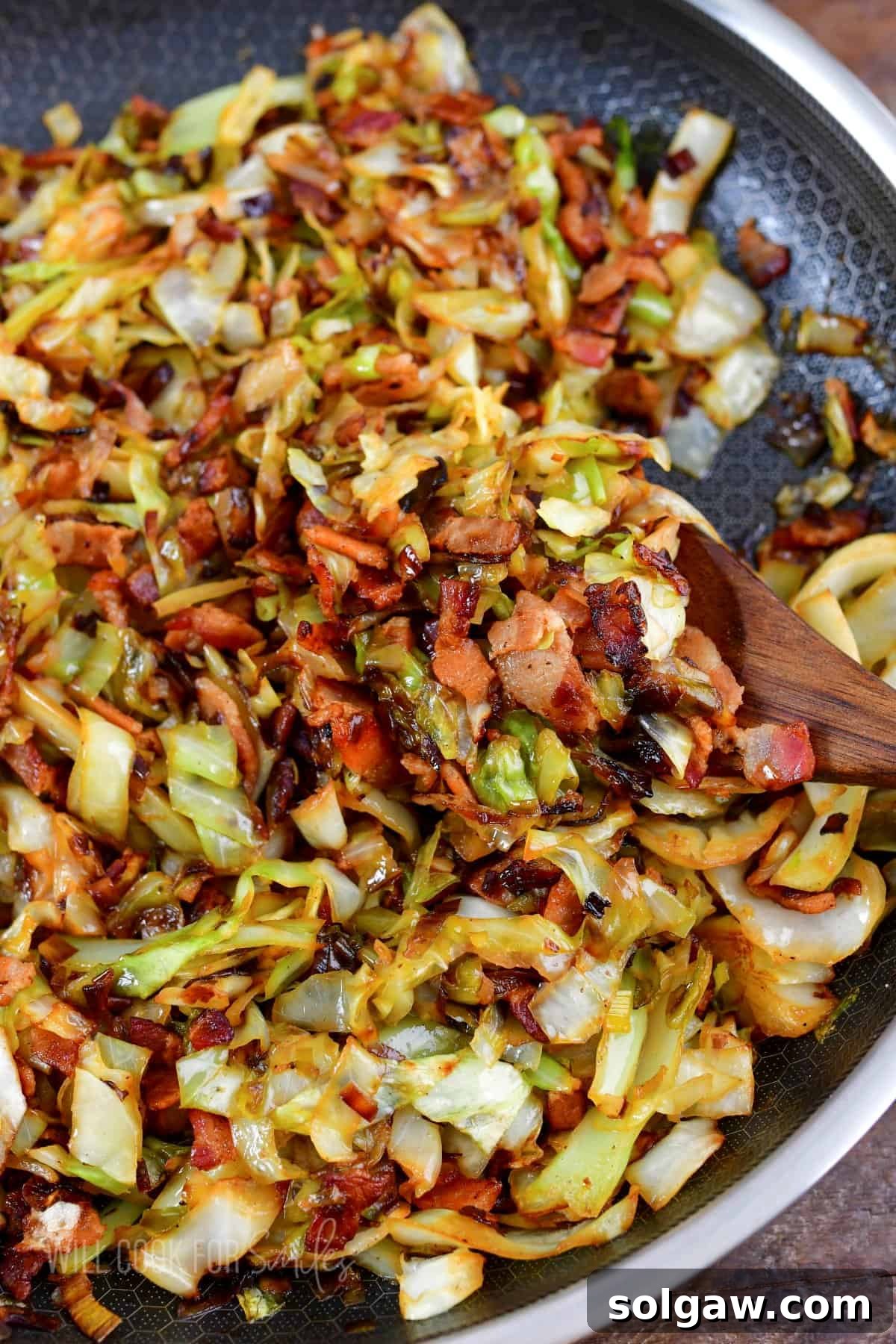
Why This Fried Cabbage Recipe Stands Out
While fried cabbage is often celebrated for its rustic simplicity, this recipe offers a delicious twist, transforming a humble vegetable into an extraordinary culinary delight. Our secret lies in the thoughtful addition of leeks and crispy bacon, which imbue the dish with layers of sophisticated flavor and texture. Leeks contribute a subtle, mellow onion essence, softer and less pungent than traditional onions, perfectly complementing the inherent sweetness of the cabbage. And, as any seasoned cook knows, bacon has a magical ability to enhance almost anything it touches, bringing a smoky, salty, and utterly irresistible crunch that makes this fried cabbage truly unforgettable.
This isn’t just another side dish; it’s a testament to how a few high-quality ingredients can create something truly spectacular. The process of sautéing the cabbage and leeks in rendered bacon fat until they become beautifully softened and slightly caramelized, combined with the golden crispness of the bacon, results in a symphony of textures and tastes. It’s a dish that feels comforting, tastes gourmet, and yet remains wonderfully straightforward to prepare, making it an ideal choice for busy weeknights or a cherished addition to a festive spread.
The Surprising Health Benefits of Cabbage
Beyond its delicious taste and versatility in the kitchen, cabbage is an often-overlooked nutritional powerhouse, offering a remarkable array of health benefits that extend far beyond its delightful flavor profile. This humble cruciferous vegetable is truly a superfood, brimming with essential vitamins, powerful antioxidants, and vital nutrients that support overall well-being. Incorporating more cabbage into your diet, especially through tasty preparations like this fried cabbage recipe, is an excellent way to boost your health.
Cabbage is notably rich in Vitamin C, a potent antioxidant crucial for bolstering your immune system. It helps protect your cells from damage caused by free radicals, supports collagen production for healthy skin, and aids in iron absorption. Furthermore, it’s an excellent source of Vitamin K, which plays a critical role in blood clotting and bone health, helping to maintain strong bones and prevent osteoporosis. A single serving of cabbage can provide a significant portion of your daily recommended intake for these essential vitamins.
But the benefits don’t stop there. Cabbage also provides a generous amount of dietary fiber, which is incredibly beneficial for your digestive system. Fiber promotes regularity, aids in nutrient absorption, and helps maintain a healthy gut microbiome, contributing to a feeling of fullness that can assist with weight management. Additionally, cabbage contains various antioxidants, including beta-carotene and anthocyanins (especially in red cabbage), which combat inflammation and may reduce the risk of chronic diseases. It’s also low in fat and calories, making it a smart choice for anyone seeking a nutritious yet satisfying addition to their meals. With all these benefits, enjoying a hearty helping of fried cabbage can be a delicious step towards a healthier lifestyle.
Featured Comment
“
I love cabbage. Even though this is fried it is still good for you. And your idea serving this with corn bread sounds so good. My mom would have loved this recipe. Her and I were the cabbage eaters in our family.” ~Kim
How To Make Perfectly Fried Cabbage: Essential Tips and Tricks
Crafting truly exceptional fried cabbage is all about technique and a few clever insights. Follow these tips and tricks to ensure your dish is flavorful, perfectly textured, and consistently delicious every time you make it.
Preparation is Key for a Quick Cook
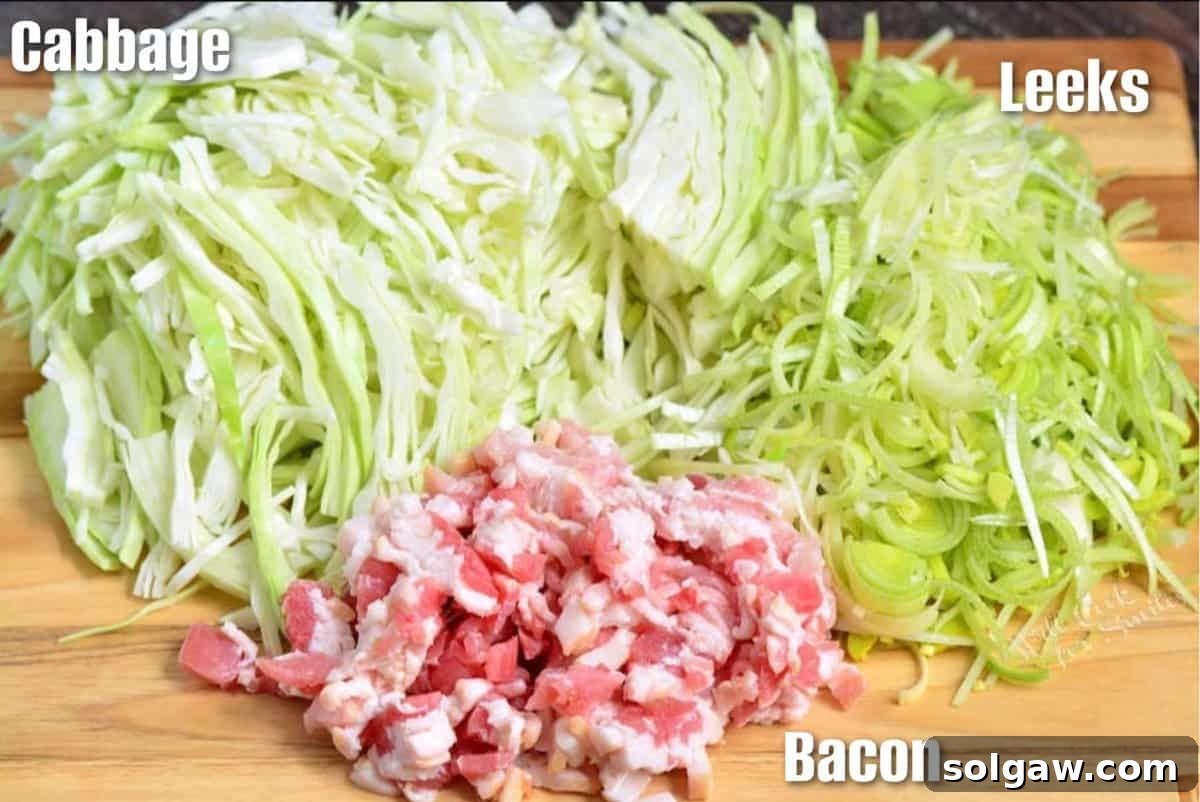
- This is a remarkably quick recipe, making it perfect for busy schedules. To ensure a smooth cooking process, always get your ingredients prepped first. Dice the bacon, thinly slice the leeks (white and light green parts only), and shred or chop your cabbage into uniform pieces. This “mise en place” approach prevents scrambling during cooking and ensures everything cooks evenly.
- Choosing the right cabbage: While green cabbage is traditional and works wonderfully, you can also experiment with Savoy cabbage for a slightly different texture and milder flavor. Ensure your cabbage is fresh and firm, with vibrant green leaves.
- Properly cleaning leeks: Leeks tend to hold dirt and sand between their layers. After trimming the dark green tops and the very bottom root end, slice the leeks lengthwise down the middle. Rinse each half thoroughly under cold running water, fanning out the layers to wash away any hidden grit. Pat them dry before slicing to prevent excess moisture from steaming your dish rather than sautéing.
Mastering the Bacon and Sauté Process
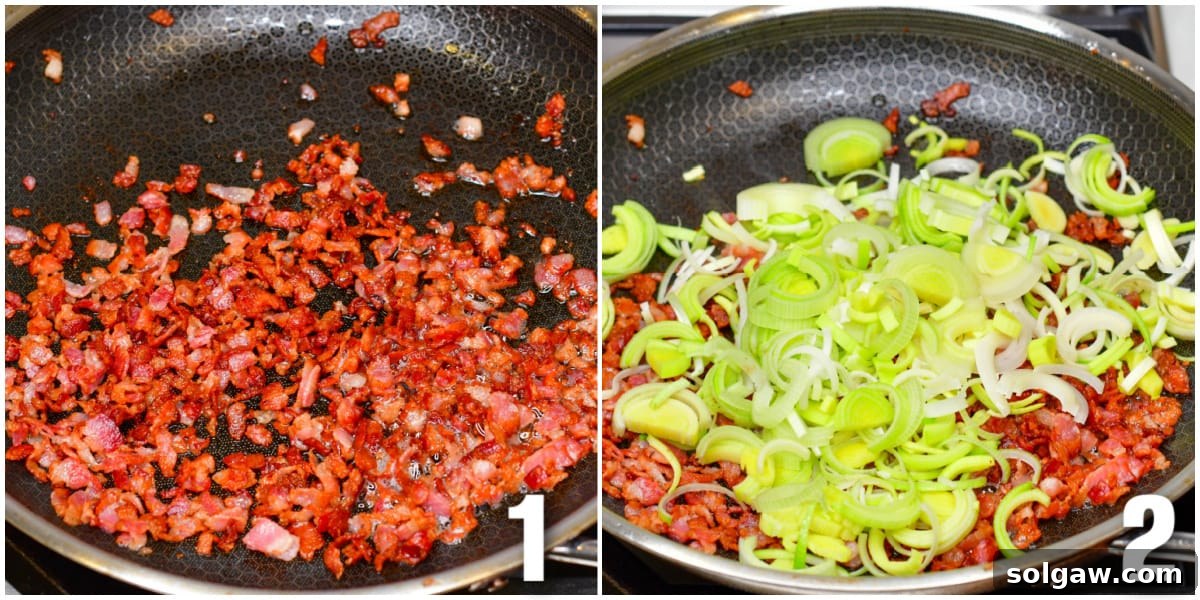
- Begin by preheating a large, heavy-bottomed cooking pan (cast iron or stainless steel works best for even heat and superior browning) over medium heat. Add your diced thick-cut bacon. The key here is to render out the fat slowly and patiently, which creates a rich, flavorful base for the vegetables.
- NOTE on oil: If you’re using a non-stick pan, you might only need a tablespoon of additional oil (like avocado or olive oil) to get started, as non-stick surfaces require less fat and thick-cut bacon often releases enough. However, for stainless steel or cast iron pans, you may need to add a bit more oil alongside the bacon to prevent sticking and encourage even browning, especially if your bacon is on the leaner side.
- Cook the bacon until it’s beautifully browned and perfectly crispy, and the fat has fully rendered. Nobody enjoys biting into soggy bacon! Use a slotted spoon to remove the crispy bacon pieces from the pan and set them aside on a paper towel-lined plate to drain. Leave most of the rendered bacon fat in the pan; this golden, flavorful oil is where all the magic comes from for cooking your leeks and cabbage.
Achieving Perfect Cabbage Texture and Flavor
- With the bacon fat heated to a shimmering state, add the sliced leeks to the pan. Sauté them gently, stirring occasionally, until the leeks are softened and translucent, which usually takes about 3-5 minutes. This allows their mild onion flavor to develop beautifully without becoming overpowering.
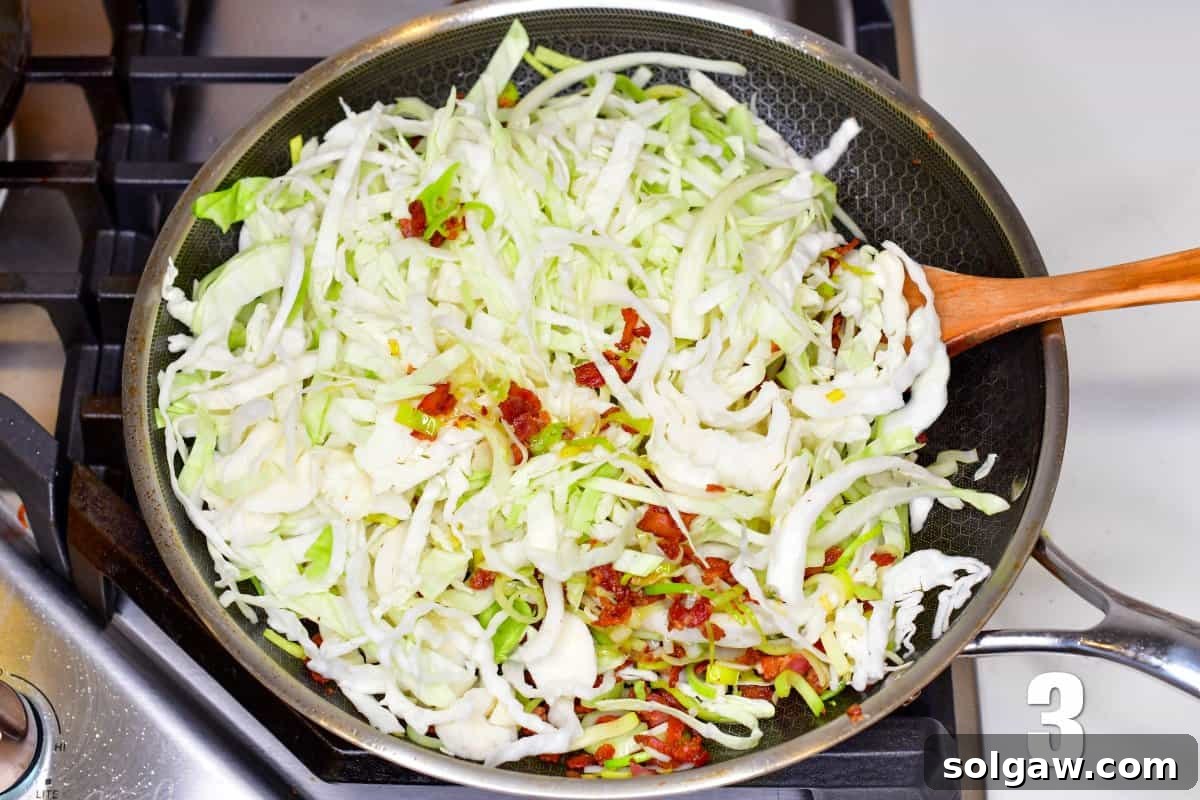
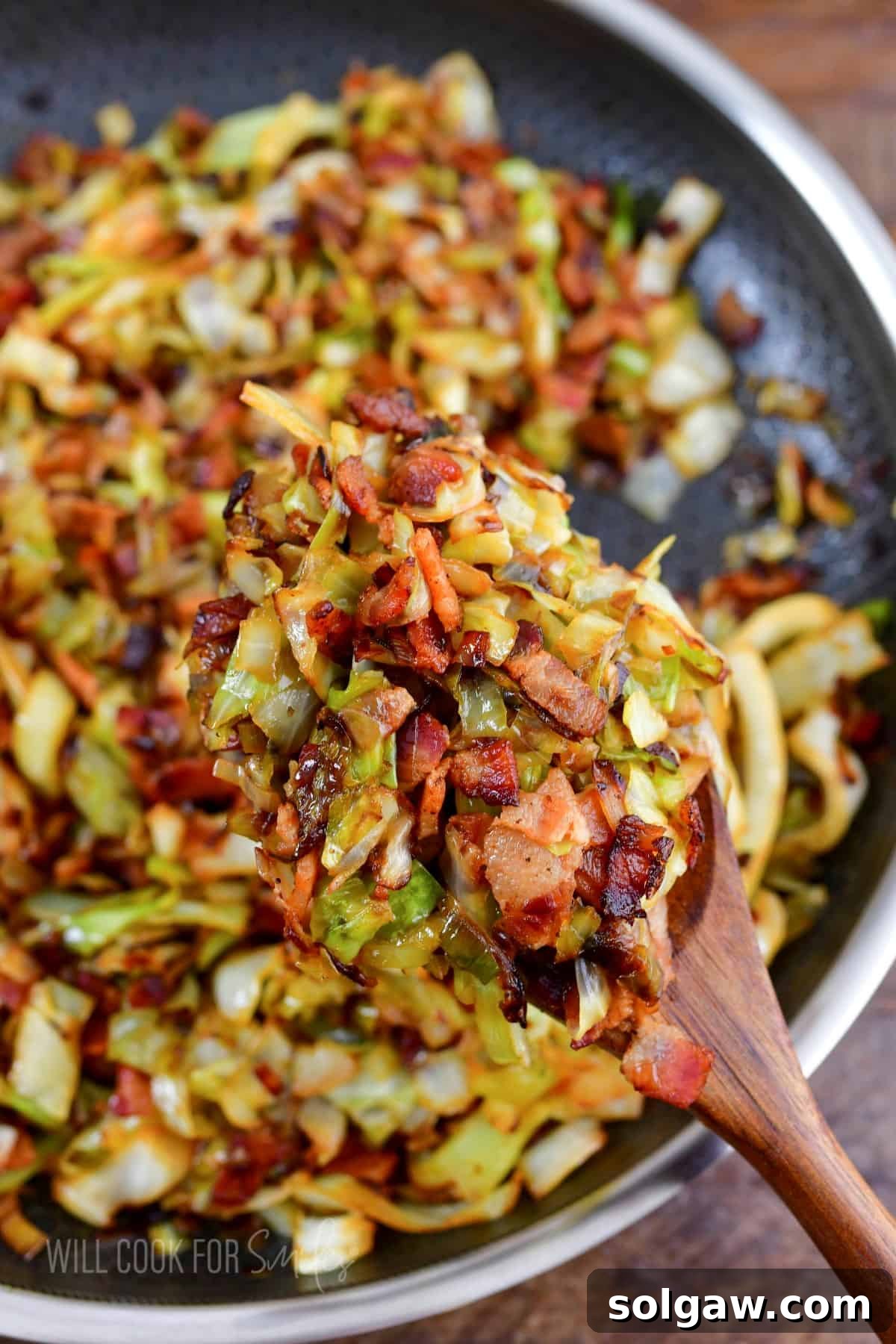
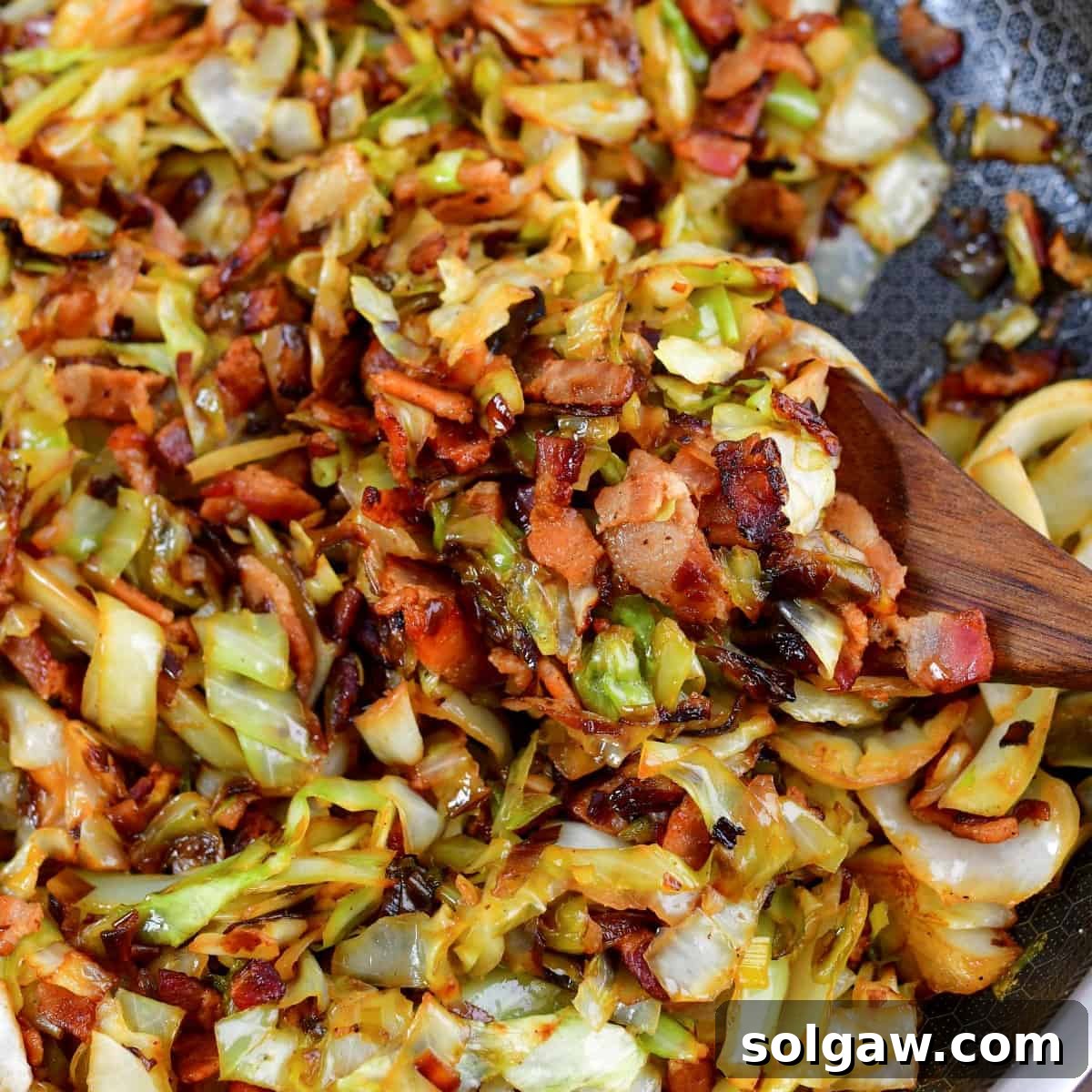
- Next, add the generously sliced cabbage to the pan. It might seem like an overwhelming amount at first, piled high in the skillet, but rest assured, it will cook down significantly as it wilts. Stir everything well to thoroughly combine the cabbage and leeks with the rendered bacon fat. Continue to sauté, stirring every few minutes to ensure the cabbage cooks evenly and softens throughout its layers. The ideal goal is tender-crisp cabbage with some appealingly browned edges.
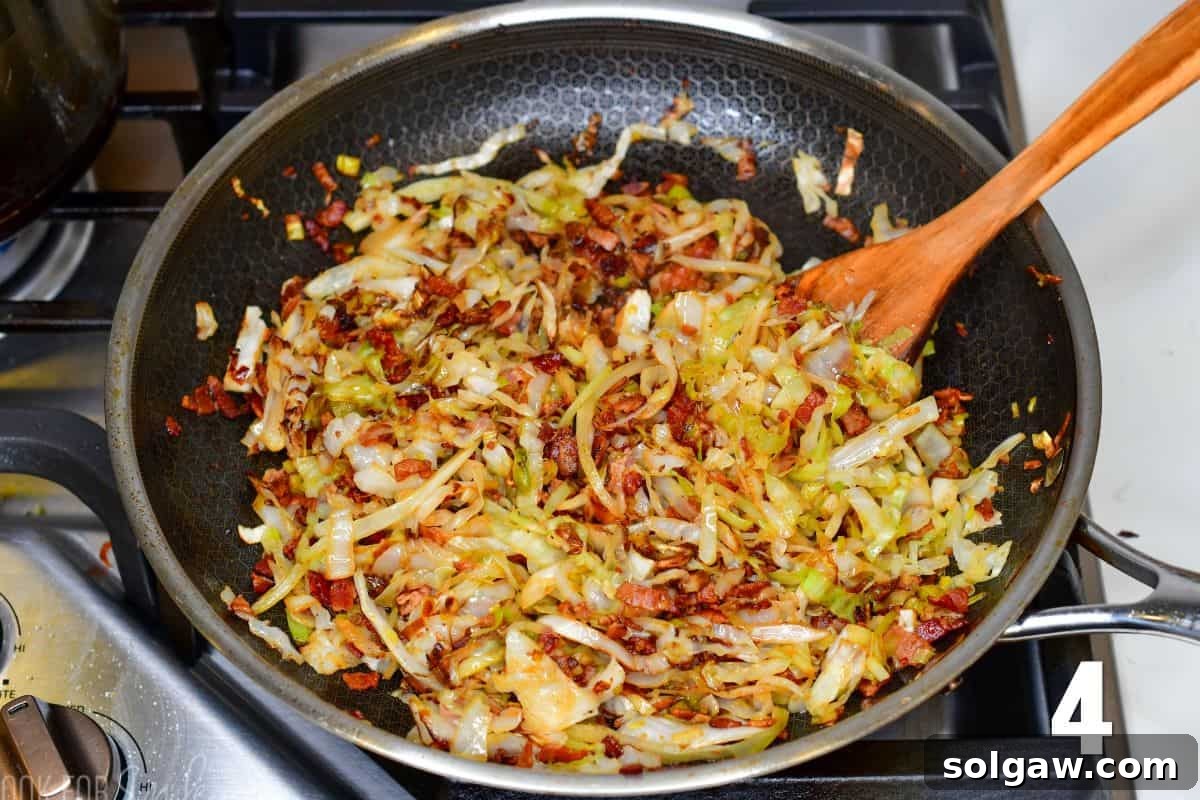
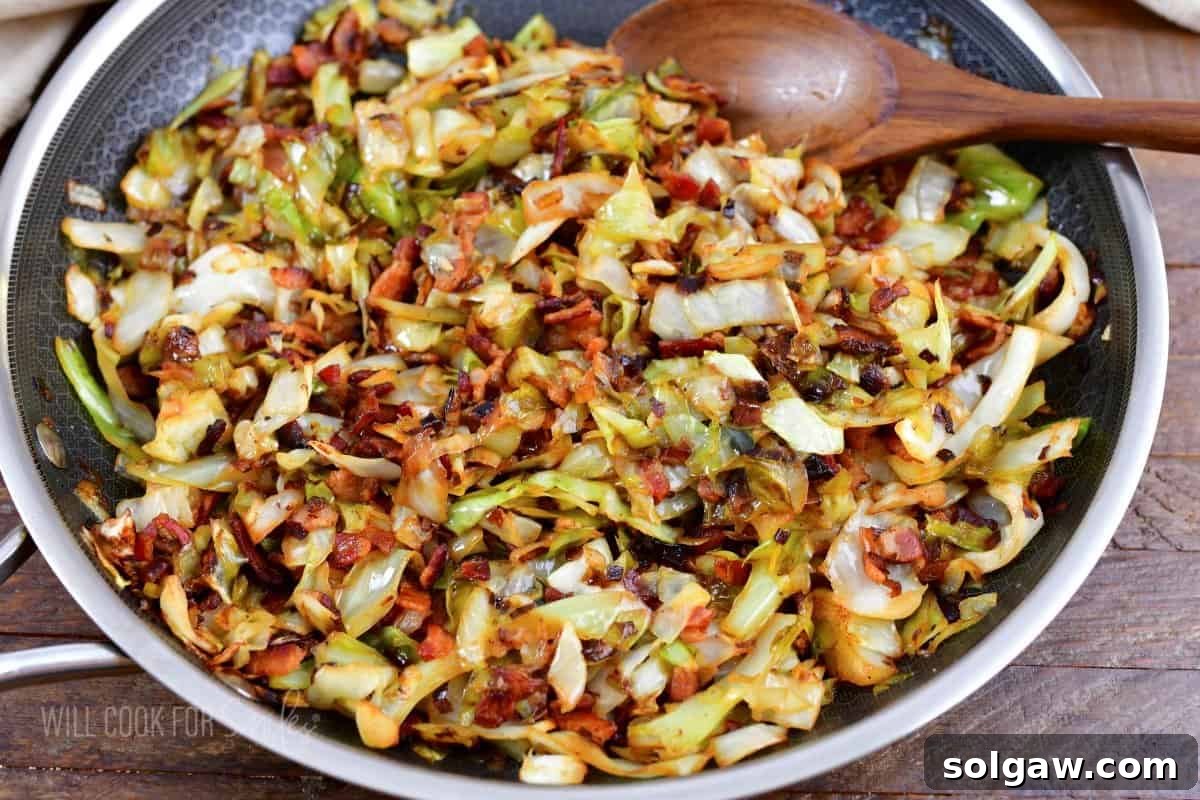
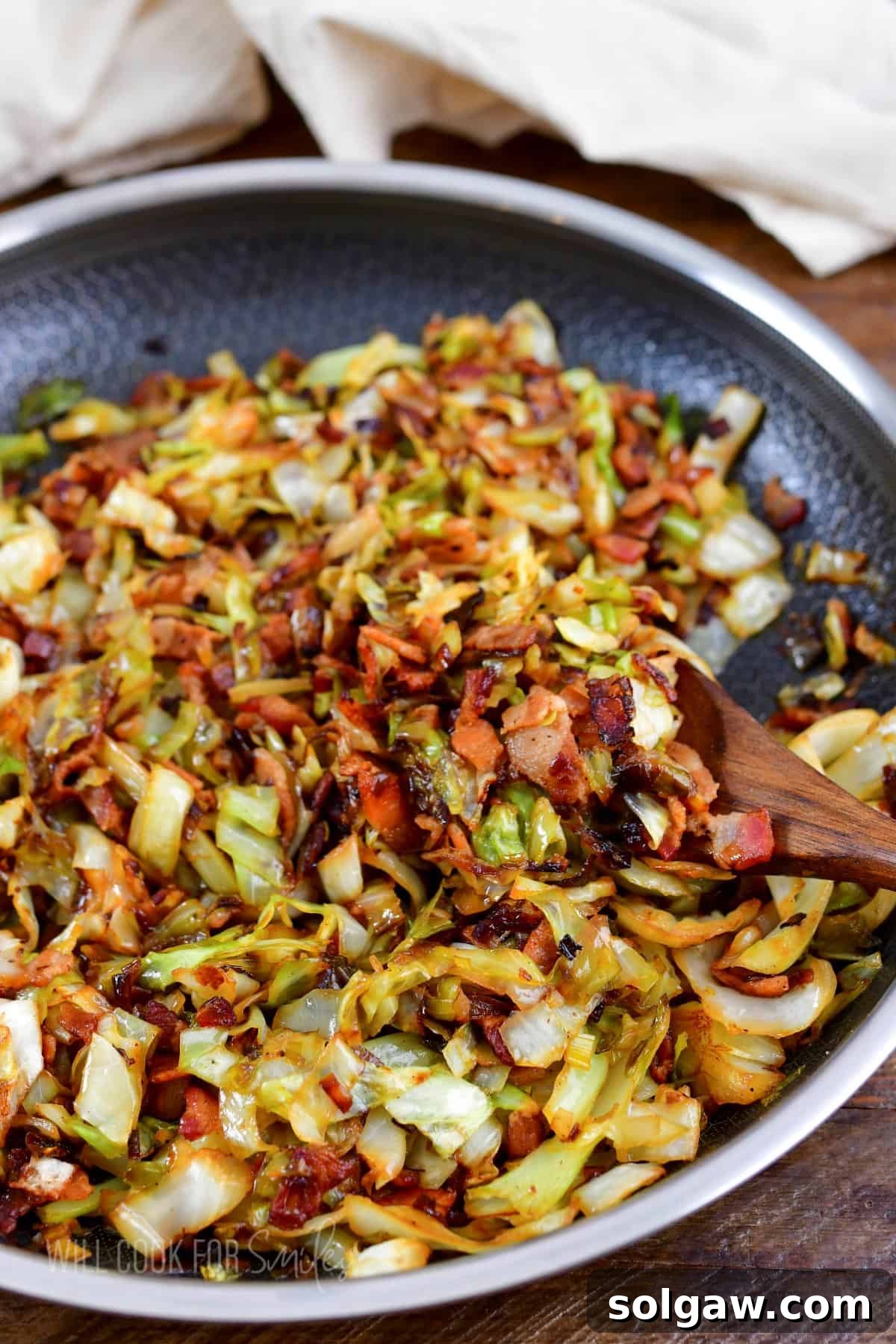
- The secret to delicious caramelization: Don’t stir too often! While occasional stirring is necessary for uniform cooking, resist the urge to constantly move the cabbage around the pan. Allowing the cabbage to sit undisturbed for a few minutes between stirs gives it a crucial opportunity to develop a lovely golden-brown sear and a rich, sweet caramelized flavor on the bottom. This browning is what truly enhances the natural sweetness and adds incredible depth to the fried cabbage. Finally, season generously with salt and freshly cracked black pepper to taste, remembering to consider the inherent saltiness of the bacon. Return the reserved crispy bacon to the pan just before serving, or sprinkle it on top for maximum crunch.
Storing and Reheating Your Fried Cabbage
One of the many appealing aspects of this fried cabbage recipe is how beautifully it stores and reheats, making it an excellent candidate for meal prepping or simply enjoying delicious leftovers. Proper storage techniques are key to preserving its wonderful flavors and textures for days to come.
- Storing. Once your fried cabbage has cooled completely to room temperature, transfer it promptly to an air-tight food storage container. Place it securely in the refrigerator. When properly stored in this manner, this flavorful side dish will remain fresh, safe to eat, and delicious for up to a week.
- Reheating. While the convenience of reheating in the microwave is perfectly acceptable for a quick warm-up, I highly recommend using a sauté pan on the stovetop for the absolute best results. Reheat the cabbage over medium heat, stirring occasionally, until it’s just heated through and fragrant. If you desire to bring back some of that delightful browning and sear, resist stirring the cabbage for a couple of minutes at a time during the reheating process. This allows direct contact with the hot pan, encouraging a fresh, caramelized layer to form, which significantly enhances both the flavor and texture. Be careful not to overheat, as this can make the cabbage overly soft.
How To Freeze Fried Cabbage for Later Enjoyment
Fried cabbage freezes surprisingly well, allowing you to prepare a larger batch and enjoy it whenever a craving strikes without additional cooking. This is a fantastic way to maximize your cooking efforts and always have a delicious, ready-to-eat side dish on hand.
- You have the option to either separate the entire cooked batch into several smaller, single-serving portions or freeze the whole batch at once, depending on your household’s needs and how you plan to use it later.
- Ensure the cooked cabbage is completely cooled to room temperature before attempting to freeze it. Transfer it into either a sturdy, freezer-friendly storage container with a tight-fitting lid or a high-quality, heavy-duty freezer zip-lock bag. If using a bag, press out as much air as possible before sealing to prevent freezer burn, which can affect texture and flavor. For containers with lids, make sure the lid forms an air-tight seal, and for extra protection against freezer burn, consider wrapping the container in an additional layer of aluminum foil.
- Always remember to label your container or bag with the date of freezing. Properly stored, frozen fried cabbage can be kept in the freezer for a good 3 to 5 months without significant loss of quality or taste.
- To thaw, the best method is to pull the frozen cabbage out of the freezer and transfer it to the refrigerator, allowing it to slow-thaw overnight. This gradual thawing process helps maintain the integrity of the cabbage’s texture.
- To reheat thawed cabbage, the most recommended method is to reheat it in a cooking pan over medium heat. Sauté it gently, stirring only as needed, just until it’s heated through. If you desire to bring back some browning, limit stirring for a couple of minutes to allow new caramelized edges to form. You can add a splash of broth or water if it seems too dry during reheating.
Delicious Pairings: What to Serve With Fried Cabbage
Fried cabbage is an incredibly versatile side dish that complements a wide array of main courses and other sides. Its savory, slightly sweet, and smoky profile, enhanced by crispy bacon and mellow leeks, makes it a perfect partner for comforting Southern classics and beyond. Here are some fantastic ideas to inspire your next meal, ensuring every bite is a harmonious blend of flavors:
- Southern Staples: Embrace its Southern roots by pairing it with classic baked goods. Serve it alongside fluffy buttermilk cornbread, which offers a delightful textural contrast and a hint of sweetness that balances the savory cabbage and bacon. Or, opt for tender homemade buttermilk biscuits, perfect for soaking up any flavorful pan juices.
- Hearty Proteins: Fried cabbage is a fantastic accompaniment to robust meat dishes. Try it alongside a succulent Instant Pot corned beef, where its earthiness provides a grounding counterpoint. It also shines with a perfectly roasted chicken (or even a spatchcock chicken for extra crispy skin!), a comforting classic meatloaf, or sizzling grilled steaks. The richness of these proteins is perfectly cut by the earthy, slightly tangy cabbage.
- Sandwich Sides: Elevate your sandwich experience by serving fried cabbage as a flavorful and satisfying side. It pairs wonderfully with juicy Cheeseburgers, adding a gourmet touch, or a hearty Irish Beer Burger. Its flavors also echo beautifully with the classic Reuben sandwich, making a cohesive meal.
- Complementary Side Dishes: For an ultimate comfort meal, combine it with other beloved sides. Think crispy roasted potatoes, creamy mashed potatoes for a hearty plate, a comforting corn casserole, fluffy baked potatoes, or a savory cornbread dressing. Each offers a unique texture and flavor that harmonizes with the fried cabbage.
- Mixed Delights: Get creative and mix fried cabbage directly into other dishes for added flavor and nutrition. It’s especially delicious when folded into mashed potatoes for a twist on the traditional Irish Colcannon, or tossed with noodles for a hearty and unique pasta dish that’s full of character.
Frequently Asked Questions About Fried Cabbage
It’s a great question, especially since cabbage itself is a highly nutritious vegetable. The main calorie and fat contribution in this dish comes from the bacon and the rendered fat. To make your fried cabbage a bit healthier without sacrificing too much flavor, you have a few excellent options:
- Substitute Bacon: Instead of traditional pork bacon, opt for turkey bacon. Turkey bacon is typically leaner and lower in saturated fat. Since turkey bacon renders less fat, you will likely need to add a healthier cooking oil, such as olive oil or avocado oil, to the pan to ensure proper sautéing of the leeks and cabbage.
- Reduce Bacon Quantity: Simply use less bacon in the recipe. Even a smaller amount will still impart a wonderful smoky flavor, but with fewer calories and less fat.
- Drain Excess Fat: After rendering the bacon fat, you can drain off some of the excess before adding the leeks and cabbage, leaving just enough to cook the vegetables without overdoing it.
- Increase Vegetable Ratio: Use more cabbage and leeks relative to the amount of bacon. This naturally increases the nutrient density and fiber of each serving while reducing the overall fat content.
- Add More Vegetables: Consider adding other quick-cooking vegetables like bell peppers or sliced carrots to further boost nutrition and volume without adding significant calories.
While bacon adds a fantastic smoky and salty element to fried cabbage, it’s certainly not a mandatory ingredient. There are many delicious alternatives you can use to tailor the dish to your dietary preferences or simply to try a new flavor profile:
- For a Vegetarian or Vegan Dish: Completely omit the bacon. Instead, use a neutral-flavored cooking oil like olive oil, avocado oil, or even coconut oil to sauté the cabbage and leeks. You can enhance the savory depth with a splash of smoked paprika, a dash of liquid smoke, or by adding sautéed mushrooms for an umami boost. This vegetarian version is also incredibly delicious when mixed with home fries for a hearty meal.
- Turkey Bacon: As mentioned for a healthier option, turkey bacon is a direct substitute that offers a similar texture and a milder smoky flavor. Remember to add extra oil for cooking as it renders less fat.
- Sausage: Various types of sausage make excellent substitutes and can bring a different character to the dish.
- Raw Sausage: Opt for raw bratwurst, Italian sausage, or chicken sausage (avoid breakfast sausage, which tends to be sweeter). Remove the casings, crumble the meat into the pan, and cook until browned before adding the vegetables.
- Smoked Sausage: If you prefer pre-cooked options, use a high-quality smoked sausage (like kielbasa or Andouille). Slice it into coins or half-moons and sauté until lightly browned and heated through before adding the vegetables. This adds a different kind of smoky richness and a satisfying chew.
- Ham or Prosciutto: Diced ham or crispy prosciutto pieces can offer a similar salty, savory punch to bacon, making for a delicious alternative.
- Smoked Ham Hocks or Pork Neck Bones: For a deeper, more traditional Southern flavor, you could simmer the cabbage with smoked ham hocks or pork neck bones. While this changes the cooking method slightly (often involving simmering before a quick fry), it imparts an unparalleled smoky depth.
Absolutely! While green cabbage is the traditional choice and provides a wonderfully sweet and tender result when fried, you can certainly experiment with other varieties to alter the flavor and texture of your dish. Each type will bring its own unique characteristics:
- Savoy Cabbage: This type has beautifully crinkly, looser leaves and a milder, slightly sweeter flavor than green cabbage. It cooks down wonderfully and offers a slightly more delicate texture, making it an excellent alternative for a more refined version of fried cabbage.
- Napa Cabbage: Also known as Chinese cabbage, Napa cabbage has a very mild flavor and tender leaves. It cooks much faster than traditional green cabbage, so you’ll need to adjust cooking times accordingly to prevent it from becoming too soft or mushy. It’s a great choice if you prefer a less assertive cabbage flavor.
- Red Cabbage: Red cabbage is vibrant and visually stunning, but it tends to be a bit tougher and has a stronger, slightly peppery flavor. It also contains anthocyanins, which are natural pigments that can cause its color to bleed and potentially turn a dull blueish hue during cooking, especially in the presence of alkaline ingredients. To help maintain its beautiful purple color, a splash of apple cider vinegar or lemon juice added at the end of cooking can be effective. It will generally require a slightly longer cooking time than green cabbage to soften properly.
- Bok Choy: While not a traditional “cabbage” in the same vein, the white stems of bok choy can be treated similarly to cabbage for a stir-fry inspired dish. They offer a crisp-tender texture and a mild, slightly sweet flavor. The green leaves will wilt quickly and add a fresh element.
Whichever cabbage variety you choose, ensure it’s fresh, firm, and thoroughly washed before preparing to ensure the best results.
PIN THIS RECIPE FOR LATER
Fried Cabbage with Bacon and Leeks
Side Dish
American, Southern
Gluten Free
10
20
30
4
556
kcal
Lyuba Brooke
Ingredients
- 2 lbs green cabbage (roughly 1 medium head, cored and thinly sliced)
- 2 large leeks (white and light green parts only, thinly sliced)
- 1 lb thick-cut bacon (cold, diced)
- 1 tbsp avocado or olive oil (optional, if needed for non-stick or lean bacon)
- Salt to taste
- Freshly cracked black pepper to taste
Instructions
-
1. Prepare Ingredients: Begin by prepping all your ingredients. Dice the cold thick-cut bacon into small, uniform pieces. Thinly slice the green cabbage after coring it. For the leeks, trim off the dark green fibrous leaves and the very bottom root end. Slice the white and light green parts lengthwise, then rinse them thoroughly under cold running water, fanning out the layers to remove any dirt. Shake off excess water and thinly slice.
-
2. Cook Bacon: Preheat a large, heavy-bottomed cooking pan (such as cast iron or stainless steel) over medium heat. Add the diced bacon. Cook, stirring occasionally, until the bacon is beautifully browned and crisp, and its fat has rendered out, typically 8-10 minutes. If using a non-stick pan, you might only need about a tablespoon of additional oil (avocado or olive) if the bacon isn’t very fatty. For other pans, you might add a bit more oil as needed.
-
3. Sauté Leeks: Using a slotted spoon, remove the crispy bacon from the pan and set it aside on a paper towel-lined plate. Leave most of the rendered bacon fat in the pan. Add the thinly sliced leeks to the hot bacon fat. Sauté the leeks, stirring gently, until they are softened and translucent, about 3-5 minutes.
-
4. Add Cabbage: Add the sliced cabbage to the pan with the softened leeks. Stir everything together thoroughly to ensure the cabbage is coated in the flavorful bacon fat.
-
5. Cook Cabbage to Perfection: Continue to sauté the cabbage, stirring every few minutes, until it softens and begins to caramelize. This usually takes 10-15 minutes, depending on your desired tenderness. For more delicious browning and sear on your cabbage, resist stirring too often; allow it to sit undisturbed for a couple of minutes between stirs to develop that rich, caramelized crust on the bottom.
-
6. Season and Serve: Season the fried cabbage generously with salt and freshly cracked black pepper to taste. Remember to account for the saltiness of the bacon. Once the cabbage reaches your desired tenderness and browning, return the crispy bacon bits to the pan and stir to combine, or sprinkle them on top just before serving. Serve hot and enjoy!
Notes
- Storing: Ensure the fried cabbage is completely cooled. Store in an air-tight container in the refrigerator for up to one week.
- Reheating: For best results, reheat in a sauté pan over medium heat until warmed through. Allowing it to sit undisturbed for a minute or two can help re-crisp some edges. Microwave reheating is also an option for convenience.
- Freezing: Cool completely. Store in a freezer-safe container or zip-lock bag, pressing out excess air. Label and freeze for 3-5 months.
- Thawing: Transfer from freezer to refrigerator and allow to slow-thaw overnight before reheating.
Nutrition
Carbohydrates: 20g |
Protein: 17g |
Fat: 45g |
Saturated Fat: 15g |
Cholesterol: 74mg |
Sodium: 800mg |
Potassium: 690mg |
Fiber: 6g |
Sugar: 8g |
Vitamin A: 1005IU |
Vitamin C: 88.4mg |
Calcium: 123mg |
Iron: 2.5mg
Tried this recipe?
Mention @willcookforsmiles or tag #willcookforsmiles!
DID YOU MAKE THIS RECIPE? PLEASE leave a 🌟 star rating! Let me know how you liked it by leaving a 📝 comment below or share and tag me on social media @willcookforsmiles. DON’T FORGET to subscribe to my newsletter!
This delightful Fried Cabbage with Bacon and Leeks recipe was originally published on Will Cook For Smiles in March 2019, and has been updated to bring you even more delicious tips and information.
More Delicious Side Dish Recipes to Try
If you loved this simple yet flavorful fried cabbage, you’re sure to enjoy these other easy-to-make side dishes:
- Perfectly Sautéed Mushrooms – A quick and savory addition to any meal, these mushrooms are seasoned to perfection and make a versatile side.
- Roasted Sweet Potatoes and Bacon – Experience the irresistible combination of sweet potatoes caramelized with maple syrup and crispy bacon, a delightful pairing for any main course.
- Roasted Brussels Sprouts with Bacon – Crispy, flavorful, and incredibly satisfying, these roasted Brussels sprouts are elevated by the savory crunch of bacon.
- Pan Roasted Brussels Sprouts – A simple yet elegant way to enjoy this nutritious vegetable, pan-roasted to tender-crisp perfection with minimal effort.
- Garlic Butter Haricot Verts (French Green Beans) – Tender-crisp and bursting with fresh garlic butter flavor, these slender French green beans are a quick and sophisticated side.