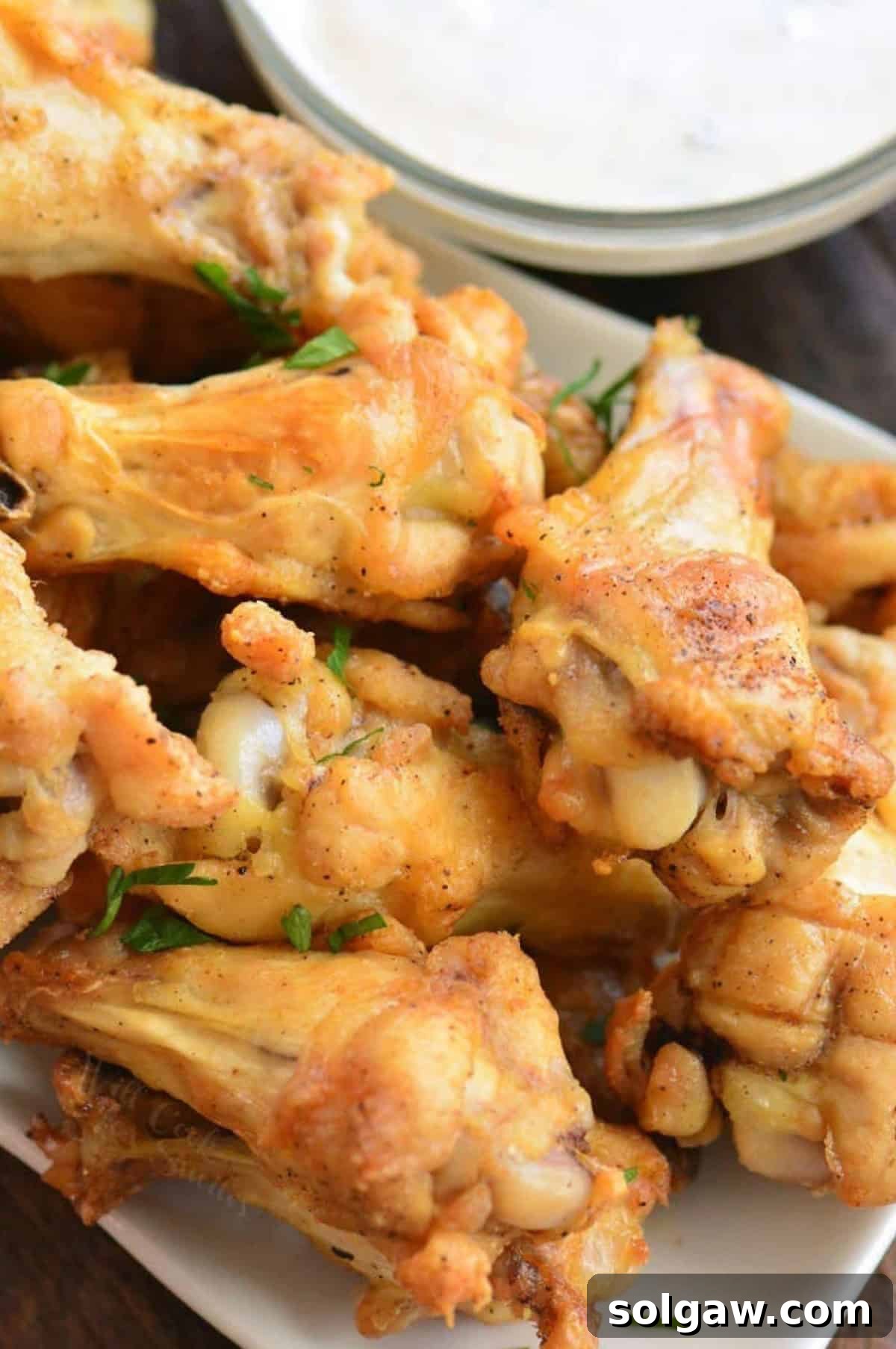
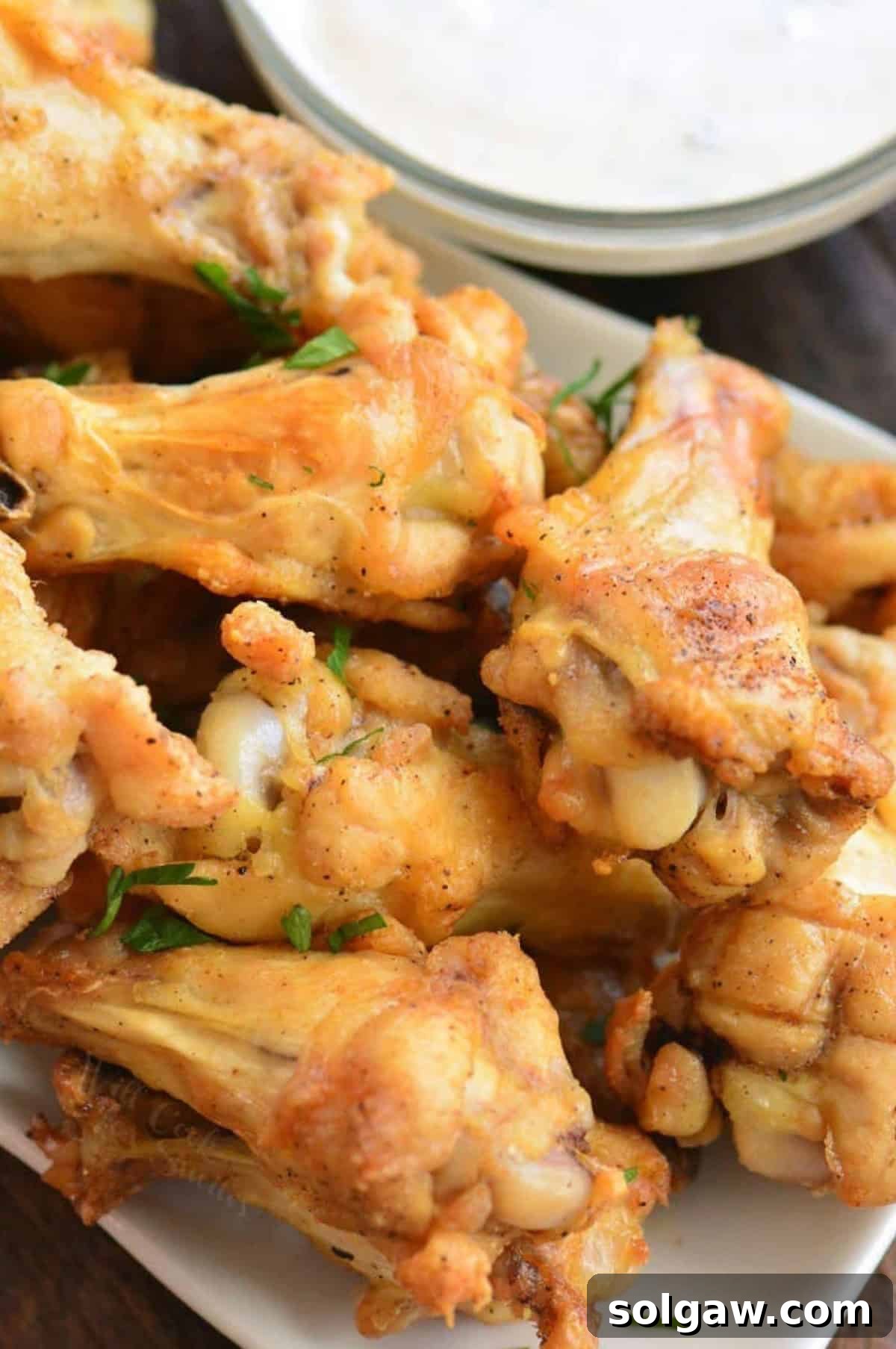
The Ultimate Guide to Crispy Baked Chicken Wings: Your Secret to Perfection
For years, I stuck to the same old routine when baking chicken wings, but I knew there had to be a better way to achieve truly crispy skin and juicy meat. My culinary quest began with a week of extensive testing, experimenting with various methods and pestering my family for their honest opinions. The result? A foolproof recipe that consistently delivers the best baked chicken wings you’ll ever make.
Through rigorous comparison, I discovered two primary contenders for crispiness: coating wings in baking powder versus simply rubbing them with oil. The clear and undeniable champion for achieving that coveted crackly skin was, without a doubt, non-aluminum baking powder. This simple ingredient makes all the difference, transforming ordinary wings into an extraordinary culinary experience.
Featured Comment
“This is the best baked chicken wing recipe by far. Thanks for sharing.” ~Donna
Why Baking Powder is Your Secret Weapon for Crispy Wings
The secret to achieving incredibly crispy baked chicken wings lies in one unassuming ingredient: baking powder. But not just any baking powder – it must be non-aluminum baking powder. This culinary hack works by raising the pH level of the chicken skin, which breaks down the proteins and helps to draw moisture to the surface. As the wings bake, this moisture evaporates, leading to a perfectly dry and brittle skin that crisps up beautifully in the oven.
Many people are hesitant about using baking powder, fearing a metallic or bitter aftertaste. This concern is valid when using baking powders that contain aluminum. However, non-aluminum baking powder avoids this issue entirely, ensuring your wings taste purely of delicious chicken and seasoning. Furthermore, non-aluminum baking powders are typically single-acting, meaning they react immediately upon contact with liquid. This immediate reaction is crucial for the moisture-drawing process that leads to superior crispiness.
I tested this method extensively, comparing it to simply oiling the wings. While oil can help with browning, it doesn’t achieve the same level of profound crispiness that baking powder does. The oil method resulted in good wings, but the baking powder method yielded truly exceptional, restaurant-quality crispy skins right from your home oven.
Prepping Your Wings: From Whole to Perfect Pieces
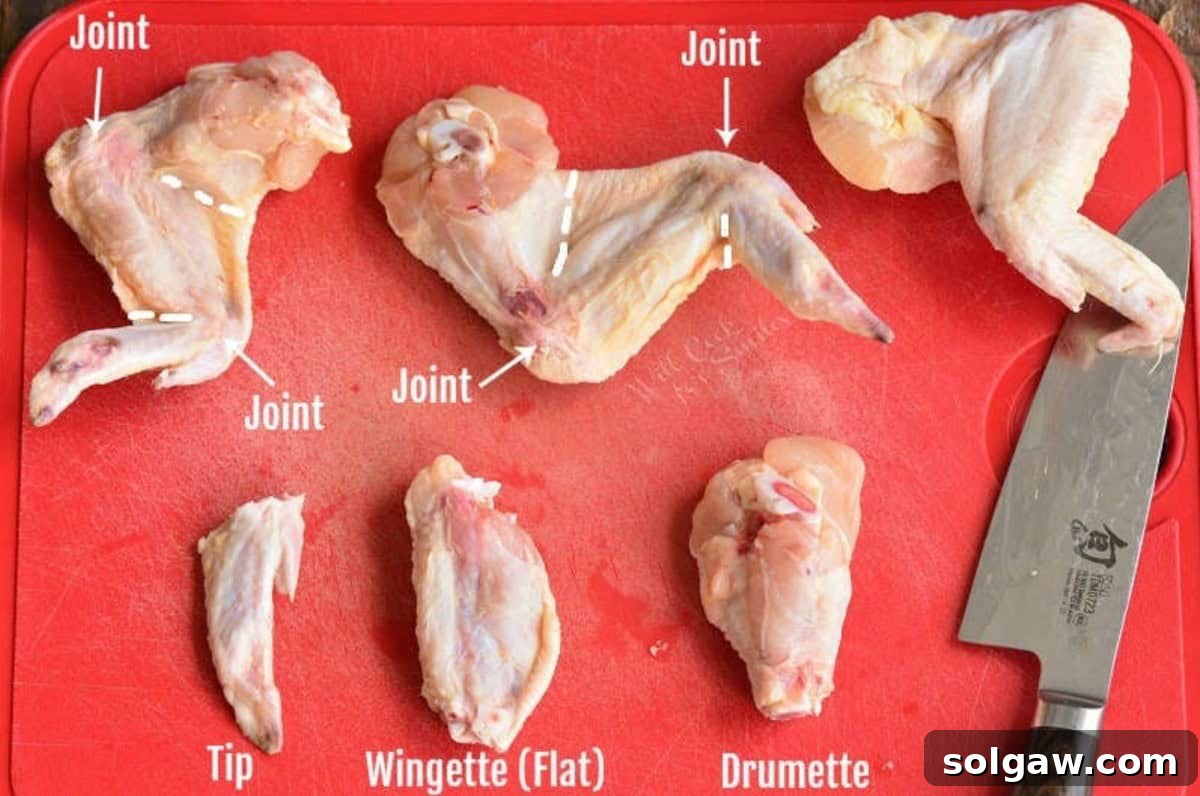
When you’re at the grocery store, you might find chicken wings sold in two forms: whole wings or already separated into flats (also known as wingettes) and drumettes. While pre-separated wings are convenient, buying whole wings can sometimes be more cost-effective, and breaking them down yourself is surprisingly easy. Plus, you get to keep the wing tips, which are excellent for making flavorful chicken stock!
Here’s a simple guide to breaking down whole chicken wings into their individual components:
- Locate the Joints: First, gently pull the wing apart at its natural bending points to clearly identify the two main joints. You’ll have one joint between the drumette and the flat, and another between the flat and the wing tip.
- Separate Drumette and Flat: Using a sharp chef’s knife or poultry shears, make a cut through the skin and meat between the drumette and the flat, guiding your knife directly into the joint. Once you hit the joint, you might need to bend the wing slightly to pop the bone out of its socket. Then, cut through any remaining meat, cartilage, and skin to fully separate the drumette from the flat.
- Separate Flat and Tip: Repeat the same process for the joint between the flat and the wing tip. Again, find the joint, make a clean cut, and separate the pieces.
- Utilize or Discard Tips: You’ll now have three distinct parts: the drumette, the flat, and the tip. While the drumettes and flats are perfect for baking, the tips are mostly bone and skin. You can either discard them or, even better, save them in a freezer bag to use later when making homemade chicken stock, adding incredible depth of flavor.
Essential Ingredients for Flavorful Wings
While the technique is crucial for crispy wings, the right ingredients form the foundation of their delicious flavor. This recipe is designed to be a versatile base, allowing you to customize with your favorite sauces or dry rubs later.
- Chicken Wings: Whether you opt for whole wings or pre-cut drumettes and flats, make sure they are fresh. If you buy whole wings, you can easily break them down following the instructions above. Keeping them whole is also an option if you prefer a larger piece of chicken, though cooking times may vary slightly.
- Non-Aluminum Baking Powder: As discussed, this is the magic ingredient for crispiness. Always ensure you’re using a non-aluminum variety to avoid any unpleasant metallic taste. It works by creating tiny bubbles on the skin’s surface and drawing out moisture, which then evaporates during baking, leaving behind an incredibly crunchy exterior.
- Basic Seasoning: My base recipe calls for salt, pepper, and garlic powder. This simple trio enhances the natural flavor of the chicken without overpowering it. The beauty of a lightly seasoned wing is its versatility; it serves as a perfect canvas for tossing in various sauces after baking, or dipping in your favorite concoction. This approach ensures maximum crispness is retained before any sauce is applied.
Step-by-Step Guide: How to Bake Crispy Chicken Wings
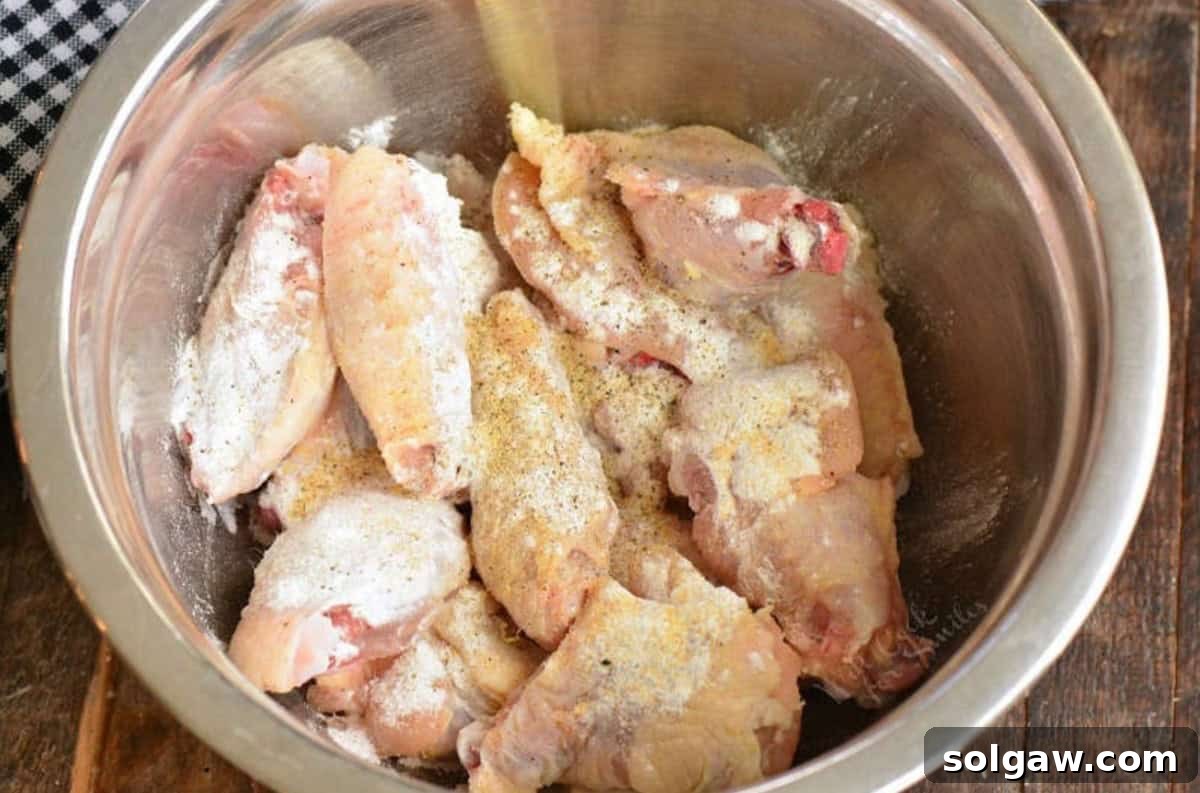
Achieving perfectly crispy, juicy baked chicken wings is simpler than you might think. Follow these steps for an amazing result:
- Prepare Your Oven and Baking Sheet: Begin by preheating your oven to 425°F (218°C). Line a sturdy baking sheet with aluminum foil. This step is vital for easy cleanup, as the foil will catch any drippings. On top of the foil, place a wire rack. Elevating the wings on a rack allows hot air to circulate all around them, ensuring even cooking and maximum crispness on all sides. Lightly grease the wire rack with a little oil or non-stick spray to prevent the wings from sticking.
- Pat Dry, Pat Dry, Pat Dry: This is perhaps the most crucial step for crispy skin. Before seasoning, use paper towels to thoroughly pat the chicken wings dry. Remove as much excess moisture as possible from every surface. Any remaining moisture will cause the wings to steam rather than roast, preventing the skin from crisping up.
- Season Evenly: In a large mixing bowl, combine your dried chicken wings with the non-aluminum baking powder, salt, black pepper, and garlic powder. Toss the wings vigorously, ensuring each piece is coated evenly with the seasoning mixture. Pay attention to ensure there are no clumps of baking powder. The even coating is essential for consistent crispiness.
- First Bake – The Initial Crisp: Arrange the seasoned chicken wings in a single, even layer on the prepared wire rack. Make sure none of the wings are touching or overlapping, as this would trap steam and hinder crisping. Place the baking sheet in the preheated oven and bake for 20 minutes. At this stage, the wings will start to render fat and develop some initial browning, but they aren’t fully crispy yet.
- Second Bake – The Flip and Final Crisp: Carefully remove the baking sheet from the oven. To ensure even crispiness on both sides, flip each wing using tongs. This step is critical for a uniformly crunchy exterior. Return the baking sheet to the oven and continue baking for an additional 15 to 20 minutes, or until the wings are golden brown and wonderfully crispy. Cooking times may vary slightly based on the size of your wings; smaller wings may need a few minutes less, while larger ones might require a few minutes more.
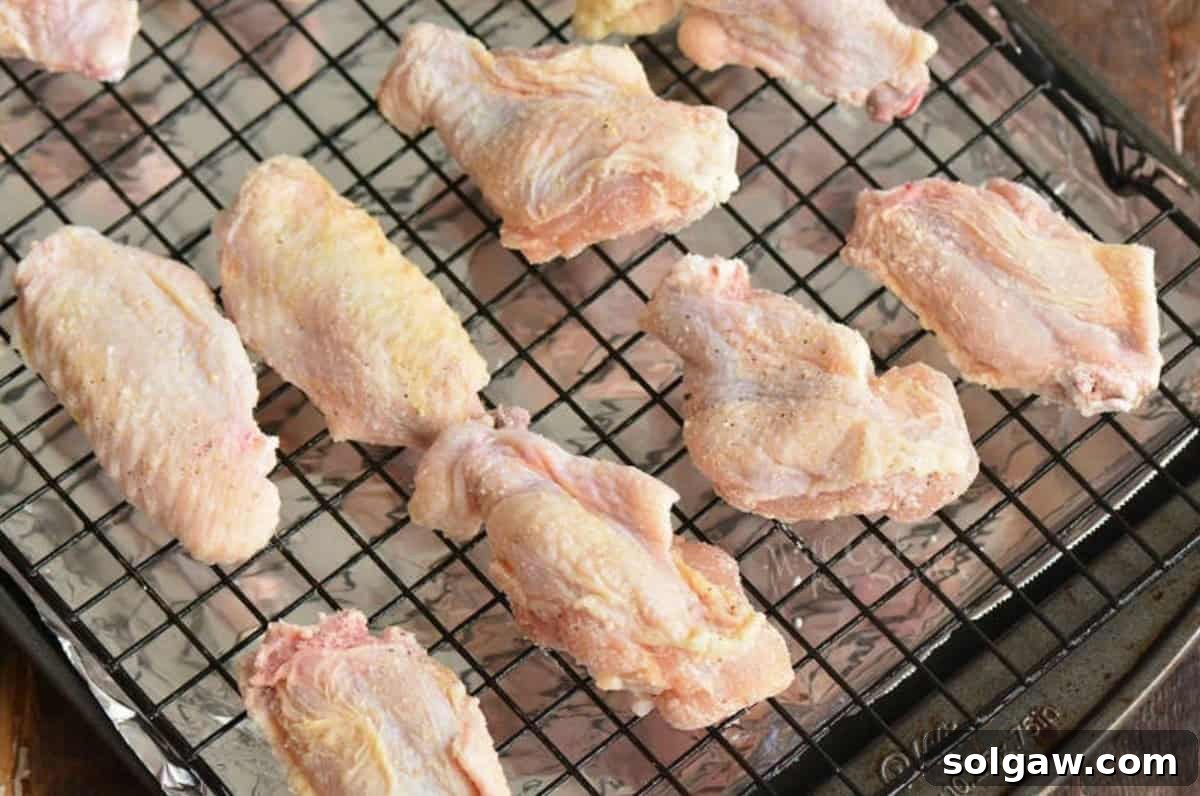
Expert Tip: For an extra boost of crispiness and a darker, more roasted appearance, you can finish your wings under the broiler. Turn your oven’s broiler to a low setting and broil the wings for just 1-2 minutes. Watch them very closely, as they can go from perfectly golden to burnt in a matter of seconds!
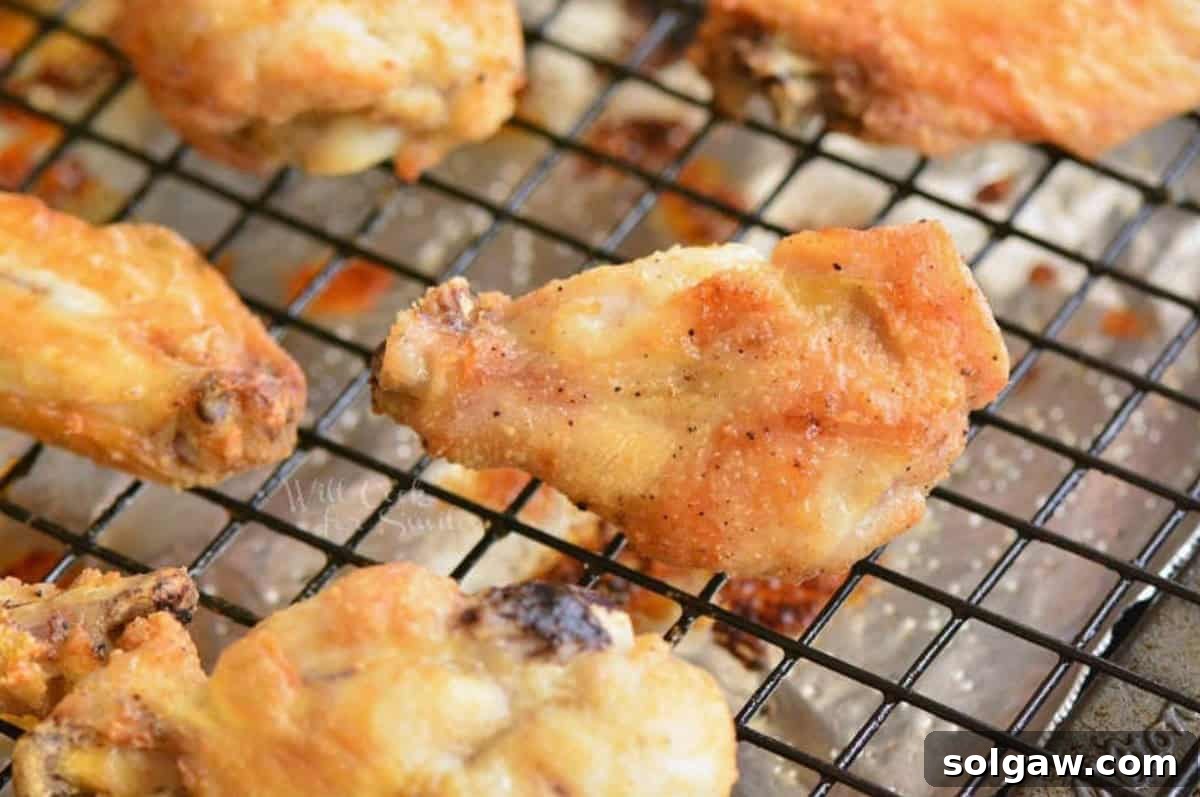
Mastering the Bake: Tips for Achieving Ultimate Crispness
Years of trial and error have led to these essential insights for truly crispy baked chicken wings:
- Baking Powder is Non-Negotiable: As highlighted, my extensive testing revealed that coating wings in non-aluminum baking powder is the undisputed champion for achieving the crispiest skin. Forget oil rubs for crispiness – baking powder is the way to go.
- Choose Non-Aluminum Baking Powder: This detail matters significantly. Regular baking powder can impart a metallic or slightly bitter aftertaste to your wings. Always opt for a brand that explicitly states “non-aluminum” for the best flavor results.
- The Power of Dryness: Seriously, pat those wings dry! Excess moisture is the enemy of crispiness. The drier the chicken skin, the better it will crisp up in the oven. Think of it as creating a blank, dry canvas for the heat to work its magic.
- Single Layer, No Crowding: When arranging wings on the wire rack, ensure they are in a single layer with a little space between each piece. Overcrowding the baking sheet will trap steam, leading to soggy rather than crispy skin. If you’re making a large batch, use two baking sheets.
Optimal Baking Temperatures and Times
How Long to Bake Chicken Wings?
The total baking time for chicken wings can vary based on their size and your desired level of crispiness. At our recommended temperature of 425°F (218°C), most chicken wings will be perfectly cooked and crispy in about 35-40 minutes.
- Size Matters: Smaller wings will naturally cook faster, often being done in around 30-35 minutes. Larger, meatier wings might require an extra 5-10 minutes, so always monitor them towards the end of the cooking time.
- Tip for Mixed Sizes: If you have a batch of wings with a wide variety of sizes, consider separating them into two groups: smaller and larger. Bake them in separate batches or on different parts of the rack, removing the smaller ones when they are done to ensure even cooking and prevent overcooking the delicate smaller pieces.
Choosing the Best Oven Temperature For Baking Wings
Through my experimentation, I’ve tested the three most commonly recommended oven temperatures for baking wings. Each offers a slightly different result, allowing you to choose based on your personal preference:
- 400°F (200°C): This temperature setting yields the least crispy skin but results in the juiciest meat. It also tends to take a few minutes longer to cook through compared to higher temperatures. If you prioritize super tender, fall-off-the-bone meat and are less concerned with extreme crispiness, this is a good option.
- 425°F (218°C): This is my personal winner and the recommended temperature for this recipe. At 425°F, you achieve a fantastic balance: the skin becomes wonderfully crispy, and the meat inside remains incredibly juicy and tender. It’s the perfect compromise for those who want both texture and succulence.
- 450°F (232°C): If your ultimate goal is the absolute crispiest skin imaginable, 450°F will deliver. However, the trade-off is that the meat in the middle can tend to be a bit drier. It also cooks a few minutes faster, so vigilance is key to prevent burning.
- A Note on Saucing: Regardless of how crispy you get the skin, remember that once you toss the baked wings in a wet sauce (like buffalo or BBQ), the crispiness will only last for a few minutes before the skin starts to absorb the sauce and soften. For prolonged crispiness, serve sauces on the side for dipping!
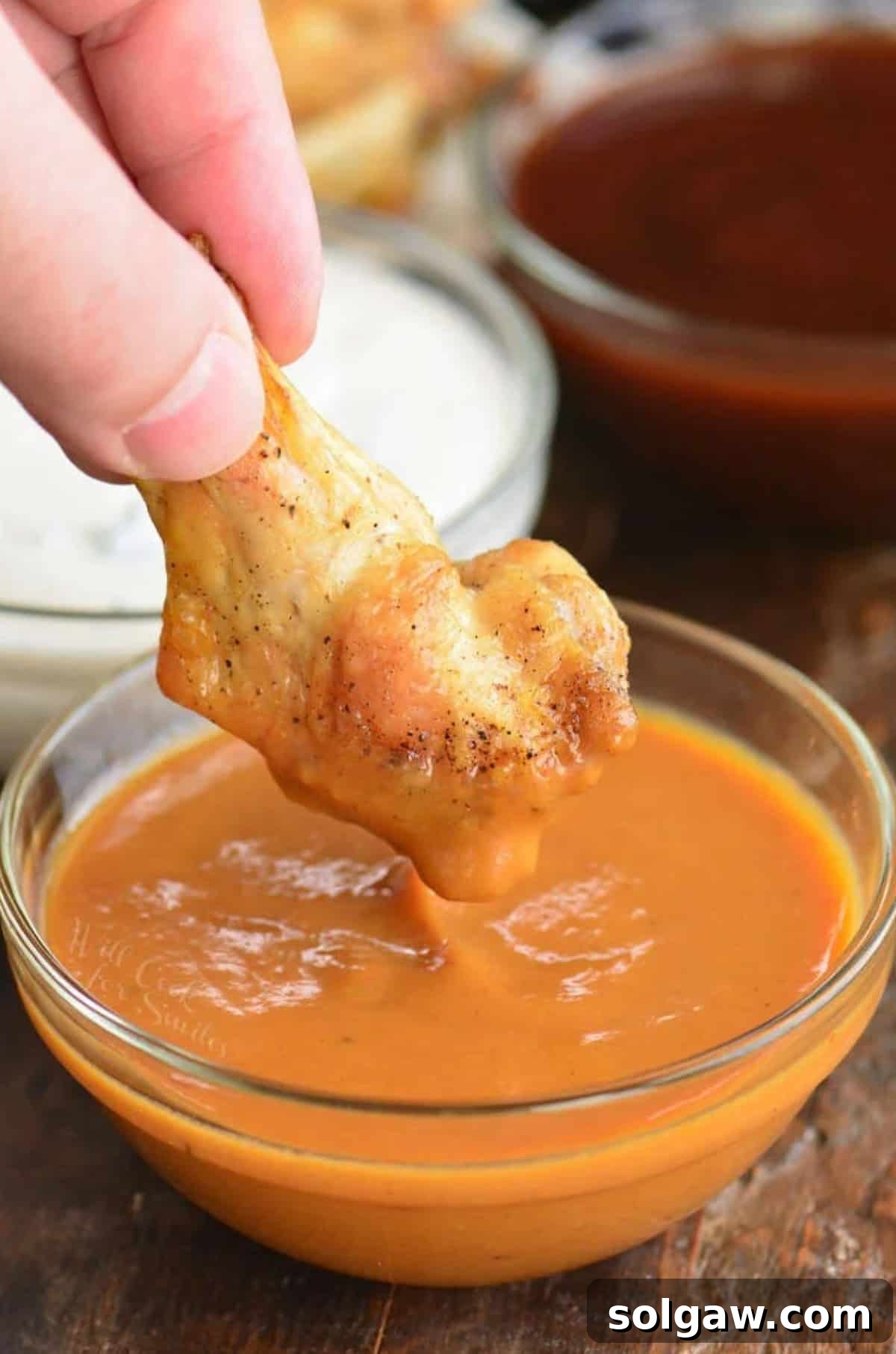
Elevate Your Wings: Sauce and Seasoning Pairings
While our base recipe creates incredibly flavorful wings on its own, half the fun of chicken wings is dressing them up! Here are some fantastic ways to customize your crispy baked wings:
- Classic Accompaniments: Don’t forget the essentials! Serve your wings alongside refreshing celery sticks and carrot sticks. They provide a cool, crisp counterpoint, especially when paired with spicy sauces, helping to “put out the fire” in your mouth.
- Popular Coating Sauces: The all-time favorites are undoubtedly buffalo sauce and classic BBQ sauce. After baking, simply toss your hot wings in your chosen sauce until evenly coated. The variety of wing sauces available is endless, from sweet and sticky to fiery hot – explore and find your favorite!
- Essential Dipping Sauces: A great wing is often paired with a great dip. Creamy ranch dressing and pungent blue cheese dressing are traditional choices that complement spicy or savory wings perfectly.
- Signature Flavor: If you’re looking for something unique, try my exquisite garlic parmesan butter sauce. You can adapt it from my air-fryer wings recipe to coat these baked beauties for a rich, savory, and irresistible finish.
- Dry Rub Delights: If you prefer to skip the sauce entirely and let the crisp skin shine, you can enhance the flavor with a dry rub. Check out my recipe for dry rub chicken wings or use my ultimate dry rub recipe for an explosion of savory spices.
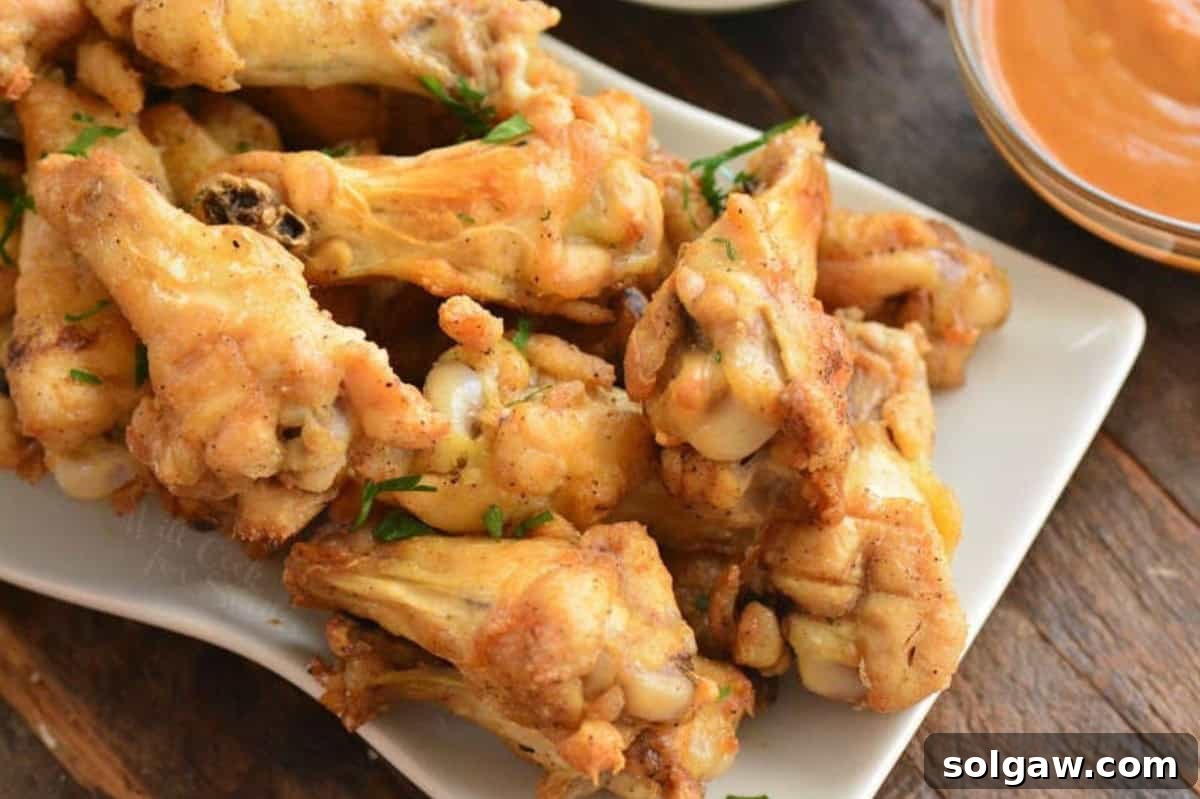
Storing and Reheating Your Delicious Leftovers
Leftover chicken wings are a rare treat, but if you happen to have some, proper storage and reheating are key to enjoying them later.
- Storing: Once cooled, transfer any leftover baked chicken wings to an airtight food storage container. Store them in the refrigerator, where they will remain fresh and delicious for 3-4 days.
- Reheating: To bring your wings back to life with maximum crispiness, avoid the microwave if possible.
- Air Fryer (Recommended): The air fryer is by far the best method for reheating chicken wings. Its rapid air circulation crisps up the skin beautifully. Reheat them at 360°F (180°C) for 3-4 minutes, flipping halfway through. Adjust time based on wing size; smaller wings might need less, larger ones slightly more.
- Oven: If an air fryer isn’t available, the oven is your next best bet. Preheat your oven to 350°F (175°C). Arrange the wings in a single layer on a wire rack set over a baking sheet and reheat for 10-15 minutes, or until heated through and crisp. Be careful not to overcook them, as this can lead to dry meat.
- Microwave: While convenient, reheating wings in the microwave will inevitably leave them soft and somewhat rubbery. This method is only advisable if you plan to immediately toss them in a generous amount of sauce, as the sauce will mask the softened skin.
Frequently Asked Questions (FAQs) About Baked Chicken Wings
Can I use frozen wings for this recipe?
Absolutely! You can use frozen chicken wings, but it’s crucial to thaw them completely in the refrigerator first. Once thawed, drain off any excess liquid that has accumulated and then thoroughly pat the wings dry with paper towels. Proceed with the recipe as instructed, ensuring they are as dry as possible before seasoning.
Do you put sauce on the wings before baking?
For this recipe, and generally for achieving crispy baked wings, no. You should always toss the *cooked* chicken wings in sauce *after* they come out of the oven. Applying sauce before baking will prevent the skin from crisping up properly; instead, the wings will steam or become soggy, and the sauce may burn.
Is it okay to bake two baking sheets of wings in one oven?
I generally do not recommend baking two sheets of wings in a standard oven simultaneously, unless you have a convection oven. A regular oven’s heat distribution isn’t always even across multiple racks, which can lead to uneven cooking and crisping. If you must use two sheets in a conventional oven, you’ll need to rotate them halfway through baking (top to bottom, and front to back) to promote more even results, and add a few extra minutes to the total baking time. This recipe’s timing is designed for one baking sheet; convection ovens, with their fan-circulated air, are better suited for multiple items as they ensure more even heating, though they might require slight temperature and timing adjustments if you’re very familiar with your oven’s convection setting.
What is the correct internal temperature for chicken wings?
While it can be challenging to get an exact reading due to the small amount of meat around the bone, the proper internal temperature for cooked chicken, including wings, is 165°F (74°C). Using an instant-read thermometer near the bone (but not touching it) on the meatiest part of the wing is the best way to ensure they are safely cooked. Visually, the meat should also be opaque, and the juices should run clear.
PIN THIS RECIPE FOR LATER
DID YOU MAKE THIS RECIPE? PLEASE leave a 🌟 star rating! Let me know how you liked it by leaving the 📝 comment below or share and tag me on social media @willcookforsmiles. DON’T FORGET to subscribe to my newsletter!
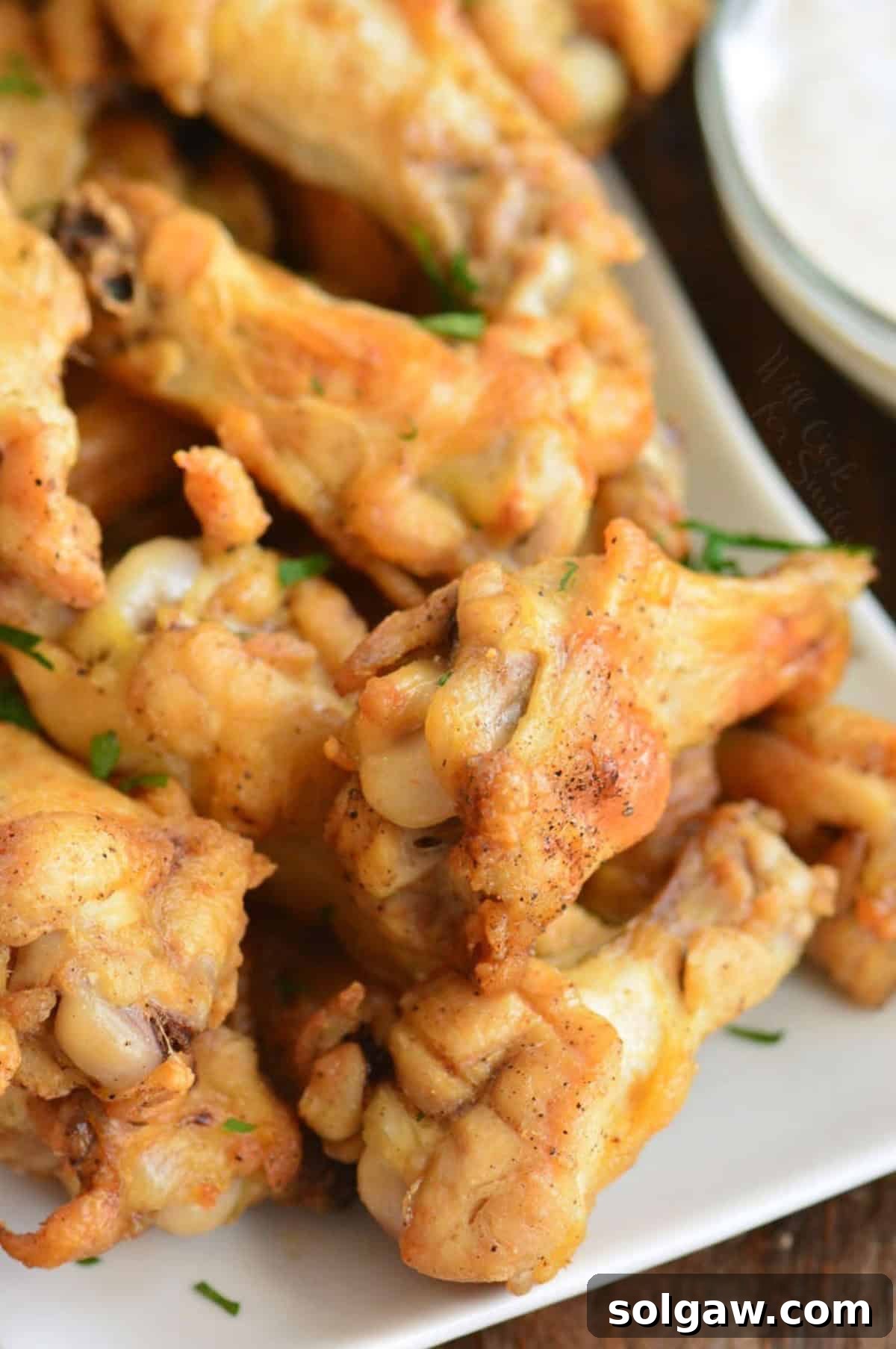
Baked Chicken Wings Recipe
Looking for the secret to perfect crispy baked chicken wings? My guide will walk you through the best temperature and timing you need for crispy skin and juicy meat. I found that a 425℉ temperature for 35-40 minutes delivers the ideal crispy-to-juicy ratio. I also have tips for what to do if you have frozen wings and different temperature options.
Print Recipe
Pin Recipe
Rate This Recipe
Ingredients
- 2 lbs* whole chicken wings or a mix of drumettes and flats
- 2 tsp non-aluminum baking powder
- 1 1/2 tsp garlic powder
- 1/2 tsp fresh cracked black pepper
- salt to taste
- oil to rub the wire rack
Instructions
- Preheat the oven to 425°F, line a baking sheet with aluminum foil to catch the drippings and place a wire rack inside the baking sheet. Rub the wire rack with some oil to prevent sticking.
- Blot the wings with a paper towel to remove any excess moisture.
- Place wings in a large mixing bowl and toss them with non-aluminum baking powder, salt, pepper, and garlic powder.
- Spread chicken wings in one even layer on the wire rack and bake for 20 minutes.
- Take the baking sheet out of the oven to turn the wings and close oven door. Flip each wing and bake for additional 15 minutes. (For small wings, bake a few minutes less and for large wings, bake a few minutes more.)
Notes
- Double the recipe: Feel free to double or triple the recipe. Make sure to still bake the wings in one even layer with a little space in between each wing.
- Storing: Store leftovers in an air-tight food storage container for 3-4 days in the refrigerator.
- Reheating: I find it best to reheat chicken wings in an air fryer. Reheat them at 360°F for 3-4 minutes, depending on size. If an air fryer is not available, you can reheat them in the oven at 350°F for 10-15 minutes.
- More flavor: Since this is the base recipe for chicken wings, feel free to toss them or dip them in sauce when done. If you don’t want sauce, you can add some more seasonings of choice or try my dry rub.
Nutrition
More Irresistible Appetizer Recipes for Game Day & Beyond
Looking for more crowd-pleasing appetizers to serve alongside your crispy baked wings? Here are some fantastic recipes that are perfect for entertaining, game day, or just a fun snack:
- Baked Chicken Wings with The Best Dry Rub
- Creamy Beer Cheese Dip
- Zesty Spicy Orange Chicken Wings
- Irresistible Bacon Wrapped Little Smokies
- Garlic Parmesan Air Fryer Chicken Wings
Originally published on Will Cook For Smiles in January 2020, this recipe has been refined and updated to bring you the best crispy baked chicken wings possible.