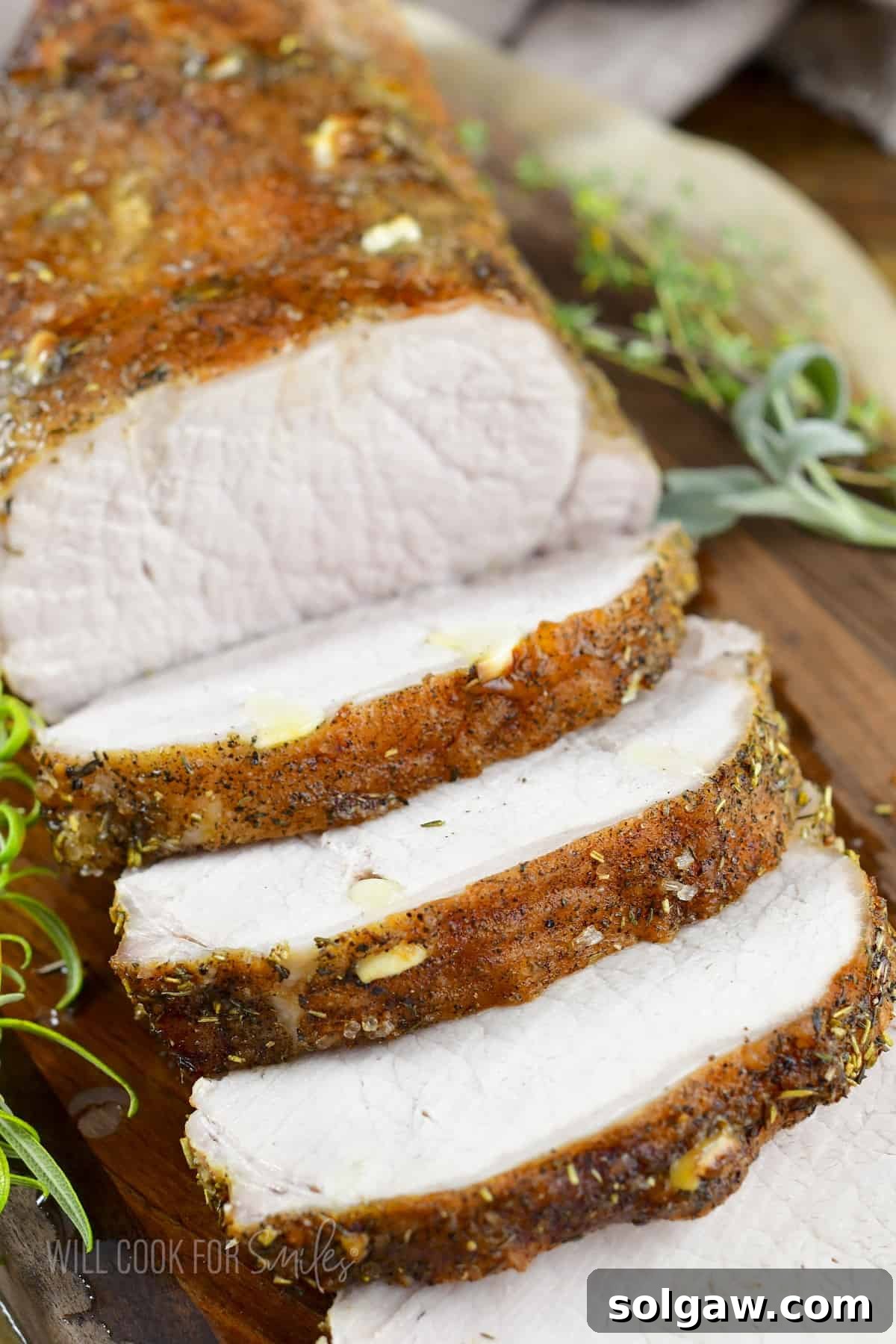
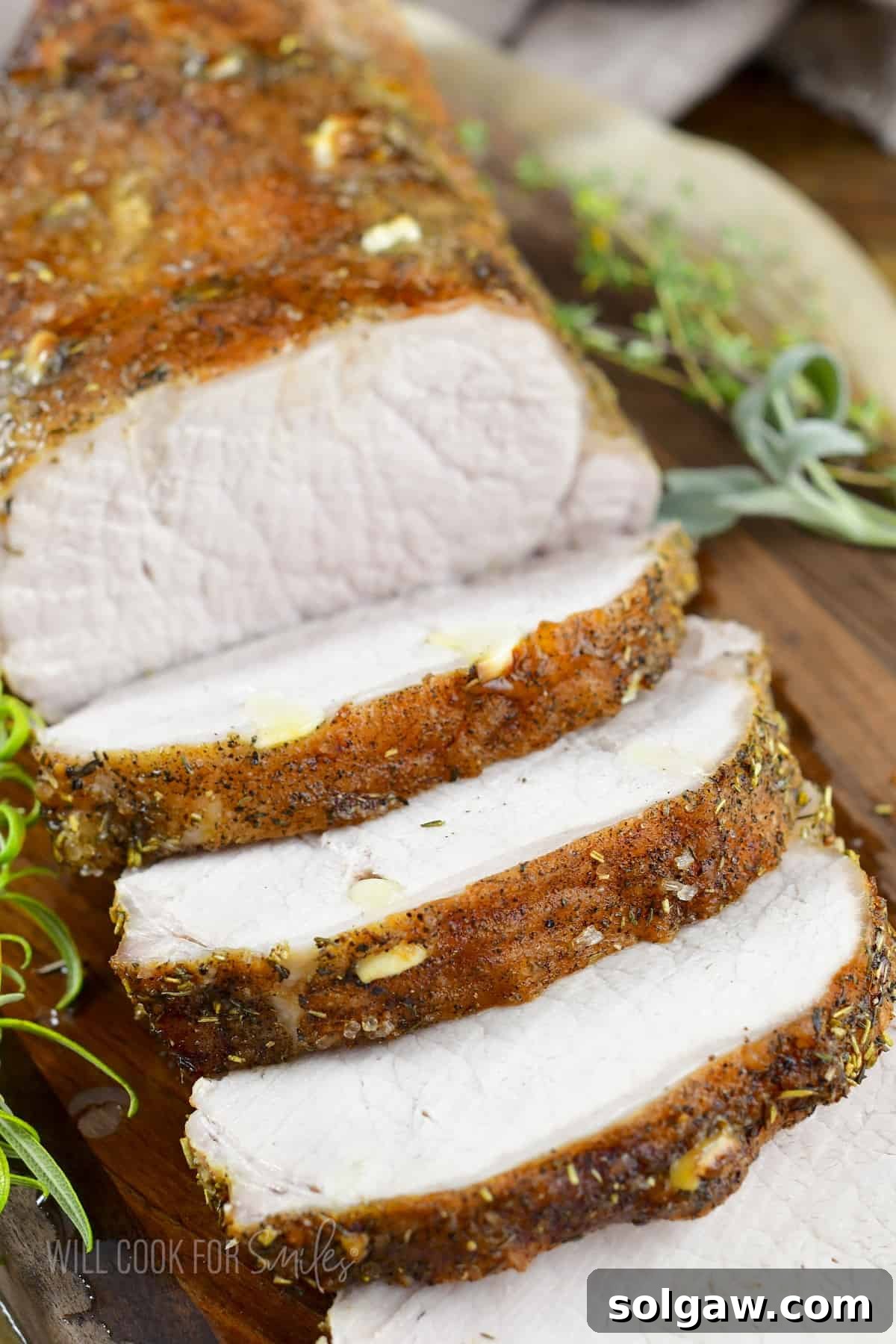
Garlic Herb Roasted Pork Loin: A Juicy & Tender Masterpiece
Pork loin is an incredibly versatile and satisfying main course, ideal for holidays, special occasions, or simply a comforting weekend family dinner. Offering a delicious alternative to chicken, it remains a lean and light meat that, when prepared correctly, can be profoundly flavorful and aromatic. This particular recipe focuses on deeply infusing the pork loin with garlic and a medley of dried herbs, ensuring every bite is tender, juicy, and bursting with savory goodness. By inserting fresh garlic slices directly into the meat, we guarantee an unparalleled depth of flavor that permeates the entire roast as it bakes.
This method not only simplifies the cooking process but also elevates the humble pork loin into a culinary star. Baking the roast on a bed of vegetables adds essential moisture and flavor, creating a robust foundation for a homemade gravy from the pan drippings. Follow this guide to achieve a perfectly roasted pork loin that will impress your family and friends with its rich taste and melt-in-your-mouth texture.
Key Ingredients for Your Perfect Pork Loin
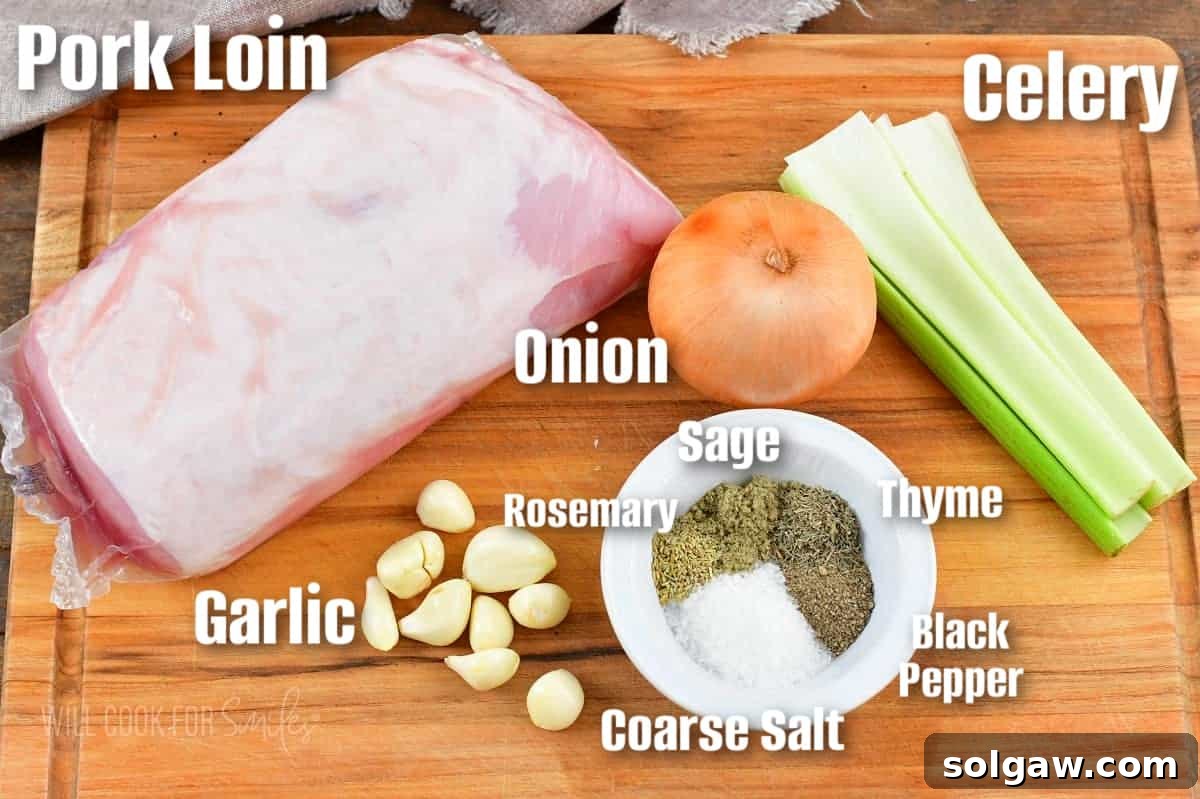
Crafting a delicious roasted pork loin starts with selecting the right ingredients. Here’s a detailed look at what you’ll need and how to choose the best:
- Pork Loin: Also known as “center cut pork loin” or “pork loin roast,” this wide, flat cut comes from the animal’s back. For best results, look for a piece weighing between 3 and 4 pounds. If your roast is slightly larger or smaller, remember to adjust your cooking time accordingly. Opt for a pork loin with a healthy pinkish-red color. Some marbling (streaks of fat) throughout the meat is desirable, as fat significantly contributes to flavor and moisture. However, avoid any cuts with dark spots on the fat, which could indicate older or less fresh meat. A slight fat cap on one side is also beneficial for keeping the roast moist during cooking.
- Veggies (for the Roasting Bed): A bed of chopped vegetables beneath the pork loin serves multiple purposes: it adds incredible flavor, provides moisture to the meat as it cooks, and promotes even heat circulation in the roasting pan. Classic choices like onions (yellow or white) and celery work wonderfully. For added sweetness and depth, consider including sliced apples or hearty carrots. Ensure the vegetables are cut into substantial chunks to create a sturdy and elevated base for the pork.
- Fresh Garlic: This recipe heavily relies on fresh garlic for its aromatic and savory impact. You’ll need a generous amount of fresh garlic cloves: some will be sliced and inserted directly into the pork loin for deep internal flavoring, while others will be halved and placed underneath the roast with the other vegetables, further infusing the meat with robust flavor from all sides. The difference fresh garlic makes compared to pre-minced or powdered garlic is immense in this application.
- Seasoning: A blend of dried herbs and basic seasonings creates the signature flavor profile of this dish. You’ll need fragrant dried herbs such as thyme, sage, and rosemary. These herbs complement pork beautifully, adding earthy and peppery notes. Alongside these, essential salt (coarse kosher or sea salt is preferred for its texture and flavor distribution) and freshly cracked black pepper will enhance all the other flavors. Don’t be shy with the seasoning; a well-coated loin is a flavorful loin.
- Olive Oil: A good quality olive oil helps the seasoning adhere to the pork and contributes to a beautiful golden-brown crust, locking in juices.
Having these fresh and high-quality ingredients ready will ensure your garlic herb roasted pork loin is a culinary success.
Step-by-Step Guide: How to Roast Pork Loin to Perfection
Achieving a perfectly juicy and tender roasted pork loin is simpler than you might think. Follow these detailed steps for a flawless result:
1. Prepare the Pork Loin for Flavor Infusion
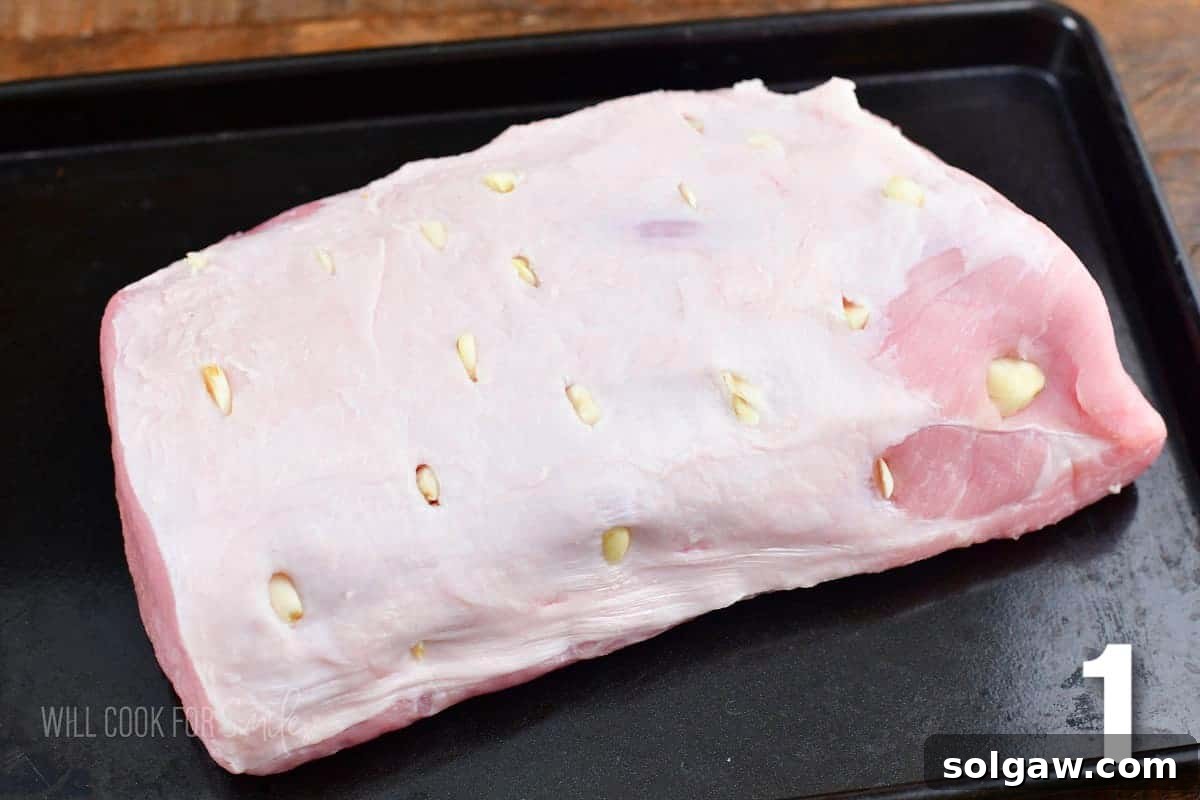
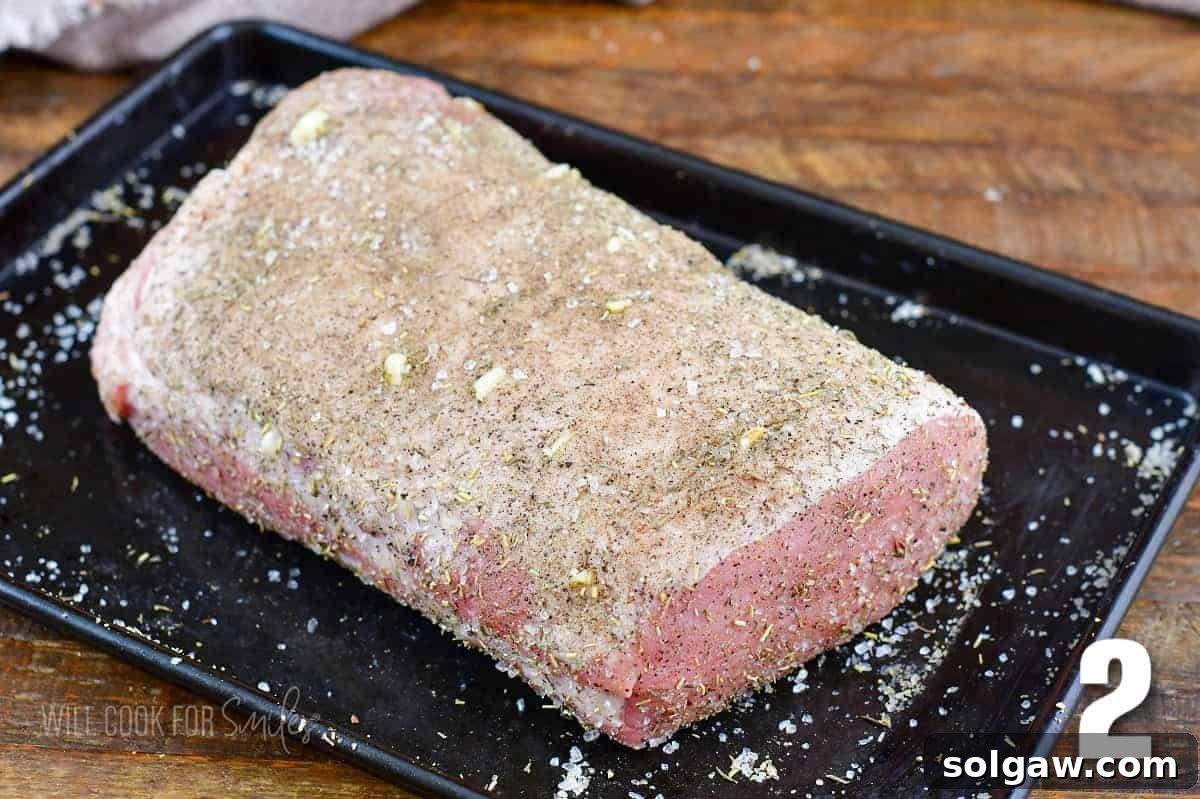
The secret to a deeply flavorful pork loin lies in this initial preparation. Begin by carefully piercing the pork loin with a small, sharp paring knife. Create slits about 1/2 to 1 inch deep, spaced evenly over the top and sides of the meat. These pockets will become the home for your flavor-packed garlic. Next, take your fresh garlic cloves and slice them into 3-4 thin pieces lengthwise. Gently fit a garlic slice into each slit, pushing it in as far as it will go. This ensures the garlic’s essence permeates the meat from the inside out as it cooks.
In a small bowl, combine your dried herbs (thyme, sage, rosemary), salt, and pepper. Mix them thoroughly to create an even blend. Now, generously pat this herb mixture all over the pork loin, covering the top, sides, and ends. Don’t just sprinkle; gently press the seasoning onto the meat to ensure it adheres well. If some seasoning falls onto your cutting board or baking sheet, pick up the pork and roll it around to capture every bit. The goal is to achieve an even coating across the entire surface for a consistently flavored crust.
2. Prepare the Roasting Pan with a Flavorful Vegetable Bed
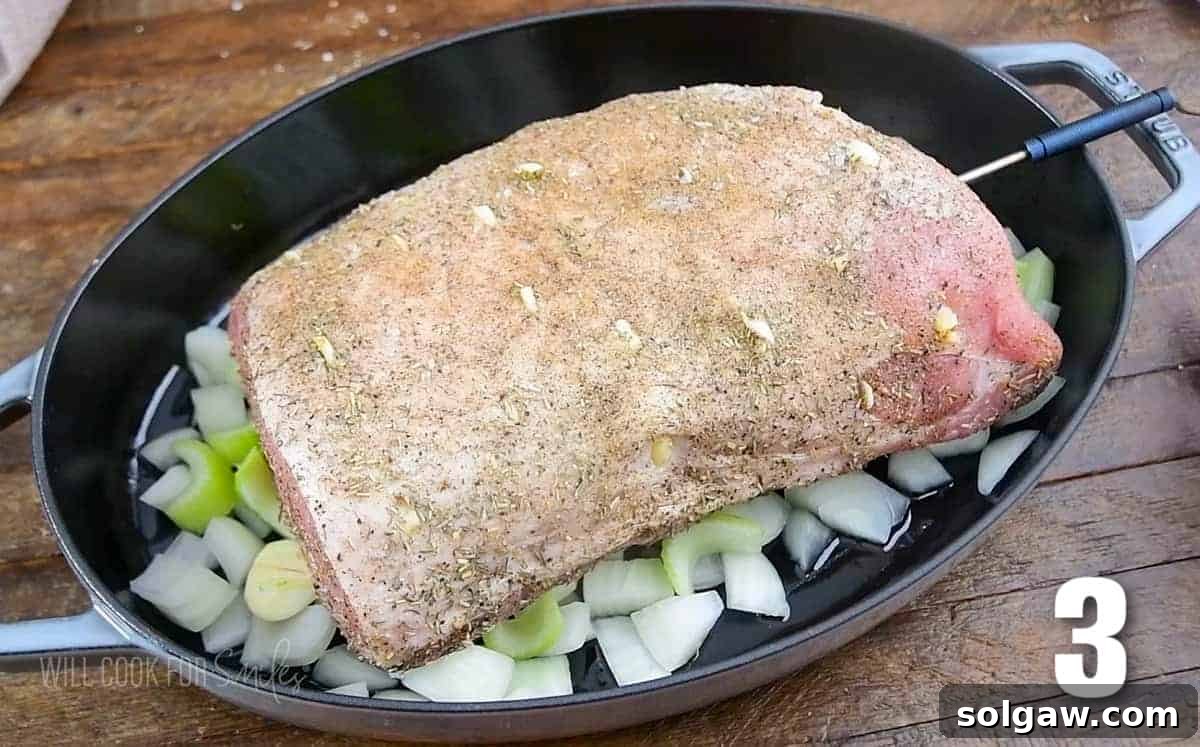
Before placing the pork, prepare your roasting pan. Lightly grease the pan with a drizzle of olive oil. Then, chop your onions and celery into large, substantial chunks. Halve the remaining garlic cloves. Spread these chopped vegetables and garlic in an even, thick layer across the bottom of the roasting pan, creating a “bed” roughly the same size as your pork loin. This layer is crucial: it elevates the meat from the pan surface, allowing for better heat circulation and preventing the bottom from steaming. More importantly, these vegetables will release moisture and incredible flavor, enriching the pan drippings and subtly infusing the pork from below. Once your vegetable bed is ready, carefully place the seasoned pork loin directly on top, ideally with the fat cap facing up if your loin has one. This ensures the fat renders down, basting the meat as it cooks.
3. Oven Roasting: The Two-Stage Temperature Method
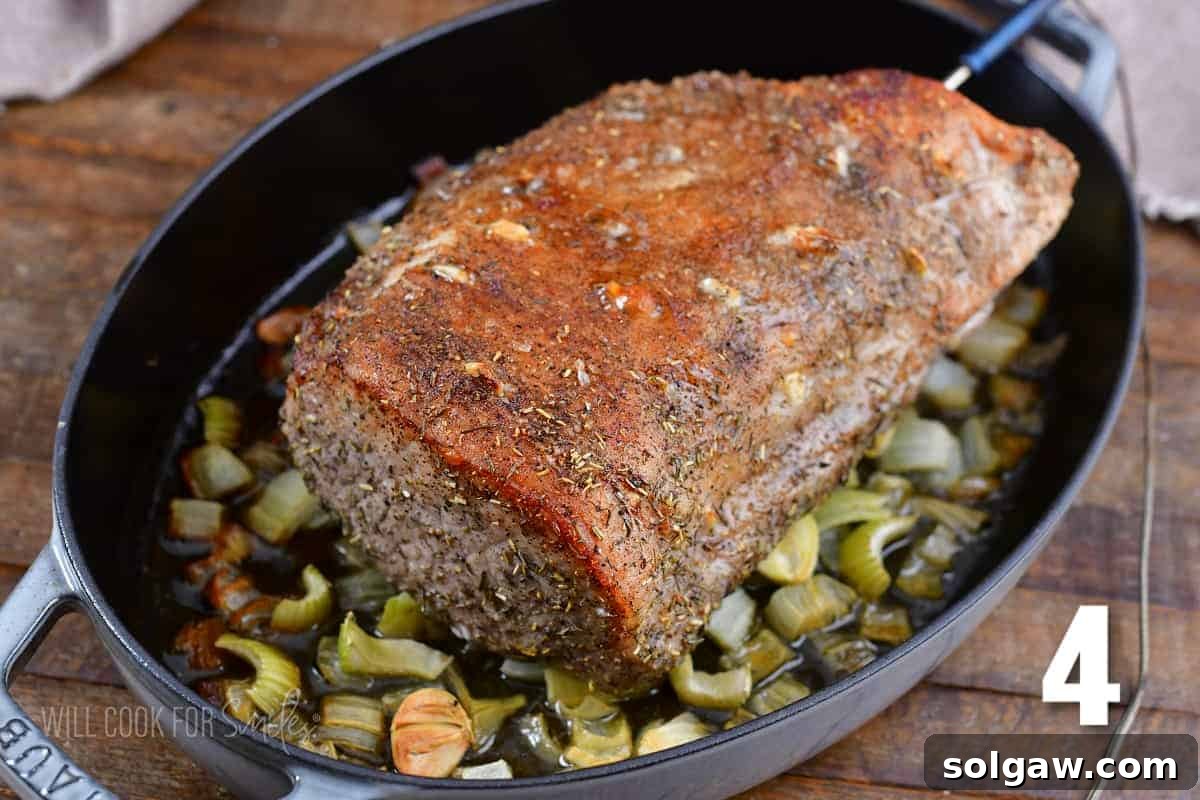
Preheat your oven to 425°F (220°C). For precise cooking, insert a leave-in meat thermometer probe into the thickest part of the pork loin, pushing it through the side end towards the center, making sure it doesn’t touch bone or go all the way through. This is the most accurate way to monitor the internal temperature and prevent overcooking.
Begin by roasting the pork loin at the high temperature of 425°F for 15 minutes. This initial high heat helps to sear the exterior of the pork, creating a delicious crust and locking in the juices. After 15 minutes, reduce the oven temperature to 350°F (175°C) without opening the oven door too much if possible. Continue cooking at this lower temperature until the internal temperature of the pork loin reaches 145°F (63°C). Cooking time can vary depending on the size of your roast, but generally, estimate about 20-25 minutes per pound after the initial high-heat sear. For a 4-pound pork loin, this usually totals approximately 1 hour and 20 minutes to 1 hour and 40 minutes.
Remember to Rest the Meat! This step is critical and often overlooked. Once the pork loin reaches 145°F, remove it from the oven and transfer it to a clean cutting board or platter. Loosely tent it with a sheet of aluminum foil. Allow the pork to rest for at least 15-20 minutes. Resting gives the meat fibers a chance to relax and redistribute the juices that have condensed in the center during cooking. Skipping this step will result in juices running out when you slice, leaving you with drier meat. Use this resting time to prepare your side dishes, a complementary sauce, or, as we’ll discuss next, a phenomenal pan gravy!
PRO TIP: Do not discard the flavorful cooking juices and roasted vegetables from your roasting pan! These pan drippings are liquid gold and form the perfect base for an incredibly delicious homemade gravy. The juices that accumulate during the meat’s resting period should also be added. Check the recipe card below for detailed instructions on how to make this savory pan drippings gravy.
4. Crafting the Perfect Pan Drippings Gravy (Optional but Highly Recommended)
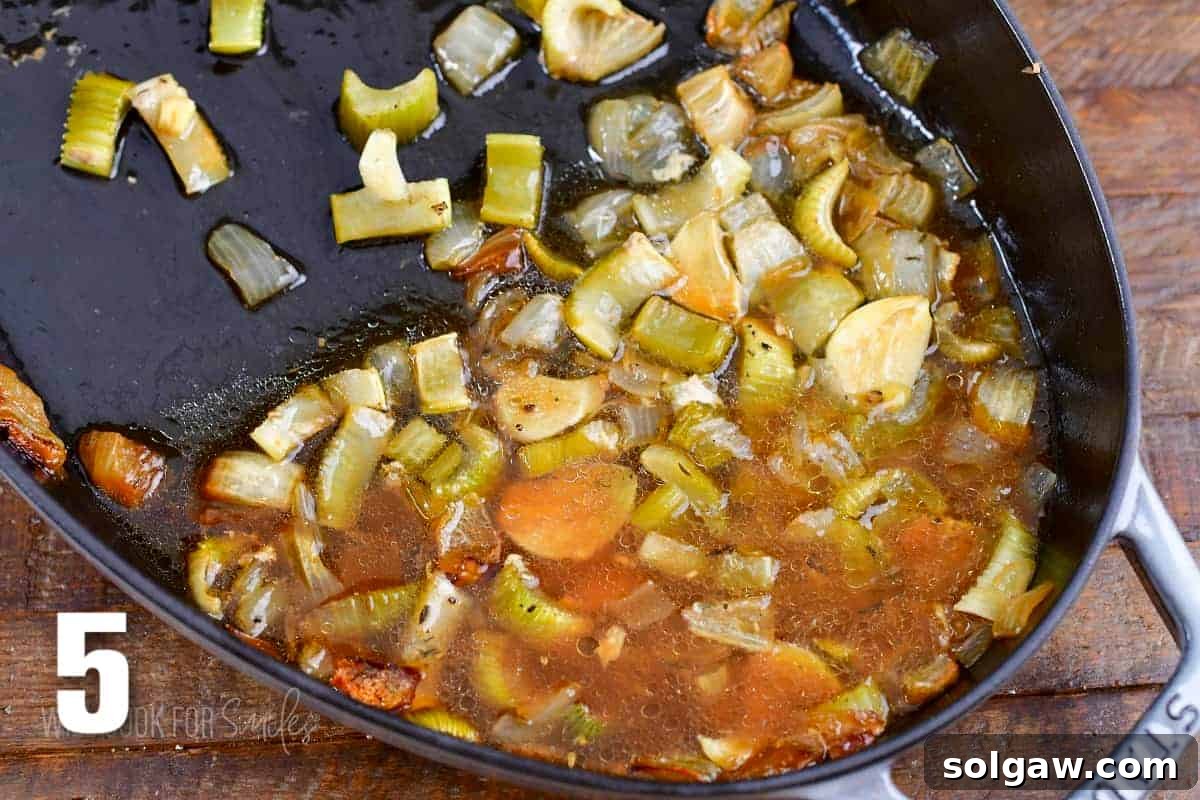
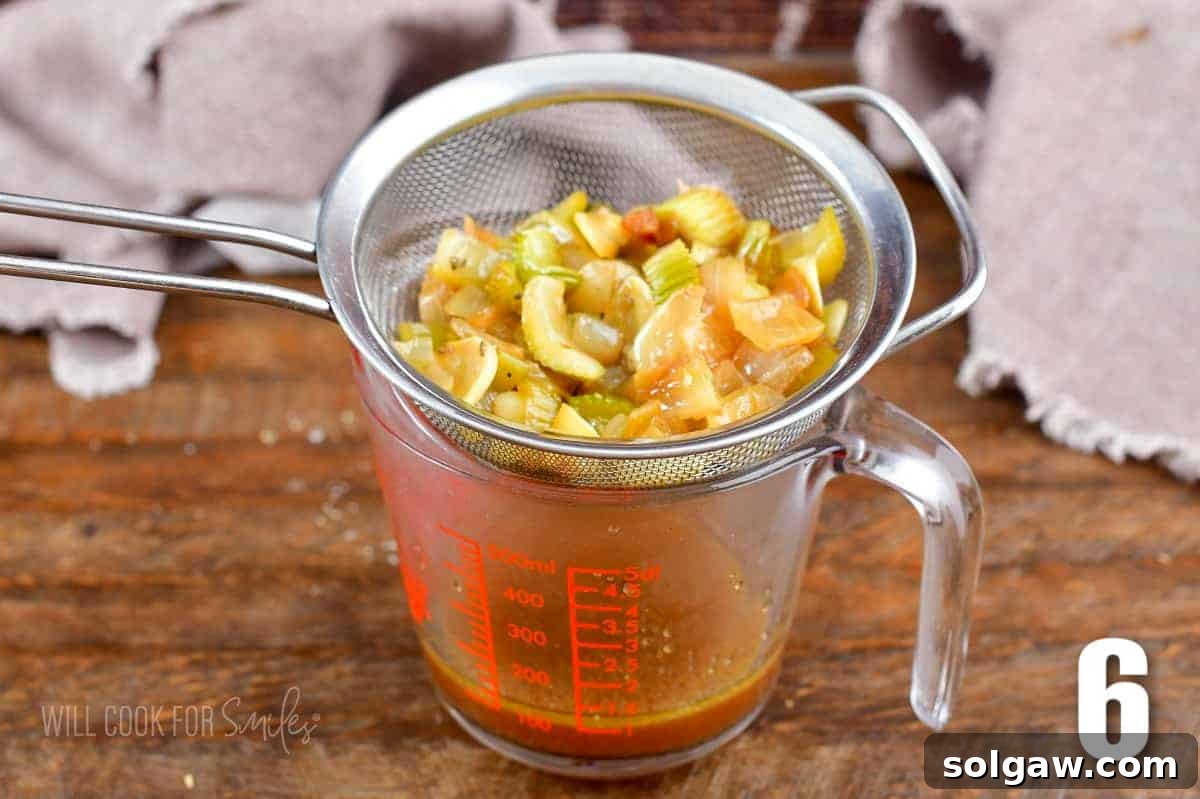
The pan drippings from your roasted pork loin are a treasure trove of flavor, providing the ideal foundation for a rich and savory gravy. This optional step truly elevates the meal.
To begin, carefully strain all the pan drippings and cooked vegetables from the roasting pan through a fine-mesh strainer into a heat-proof measuring cup. Use the back of a spoon to press down on the vegetables in the strainer, extracting every last drop of flavorful liquid. Discard the spent vegetables. Once the pork has finished resting, add any accumulated juices from the resting platter to the strained pan drippings. If you find you don’t have at least 2 cups of combined drippings, supplement with low-sodium chicken or vegetable broth to reach the desired volume.
For the gravy, you’ll need 4 tablespoons of unsalted butter and 1/4 cup of all-purpose flour (or a gluten-free all-purpose flour blend for a gluten-free option). Melt the butter in a medium saucepan over medium heat. Once melted and bubbling, whisk in the flour and cook for 1-2 minutes, stirring constantly, to create a smooth roux. This step cooks out the raw flour taste.
Gradually whisk in the strained pan drippings mixture, a little at a time, ensuring no lumps form. Continue whisking until the gravy is smooth and begins to thicken. Bring the mixture to a low simmer, stirring occasionally, and cook for an additional 2-3 minutes, or until it reaches your desired consistency. Taste the gravy and adjust seasoning with salt and pepper as needed. A touch of extra black pepper can enhance its flavor beautifully. Remove from heat and serve warm alongside your sliced pork loin.
When is Pork Loin Truly Done Cooking?
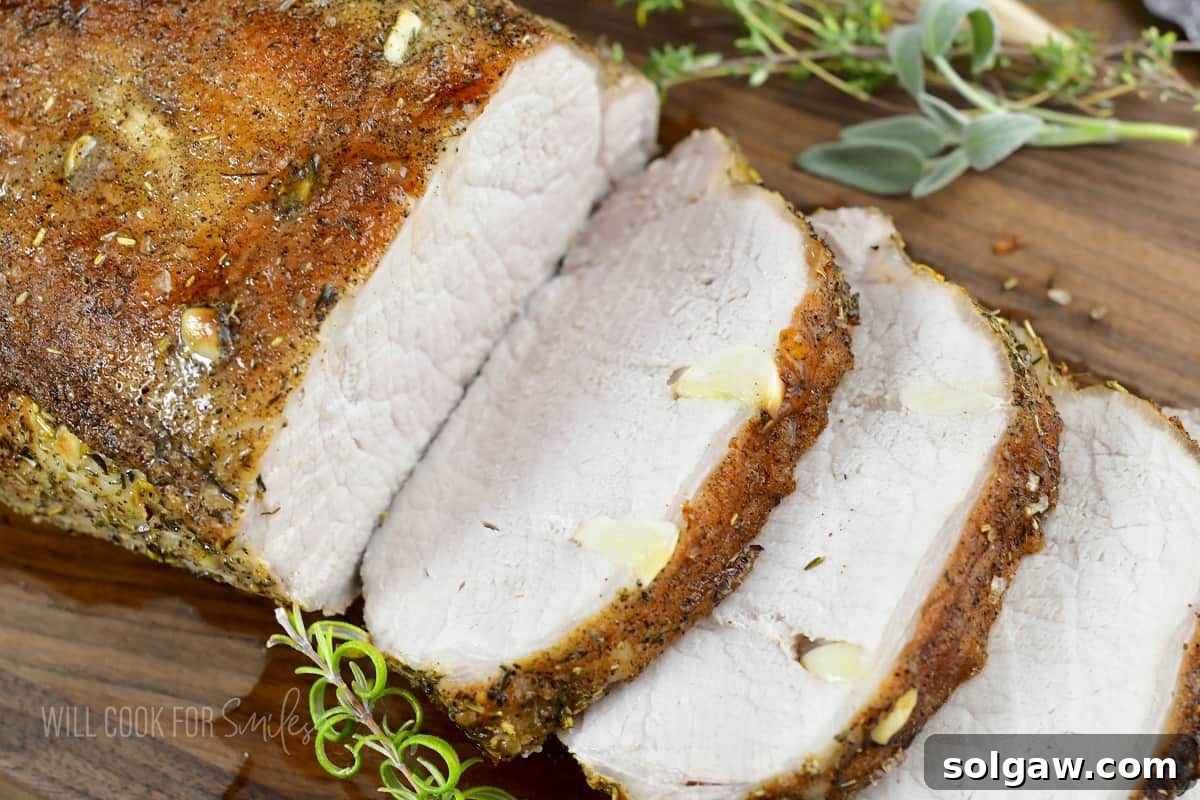
The most important factor for a tender and juicy pork loin is cooking it to the correct internal temperature without overdoing it. According to USDA guidelines, pork loin is safely cooked when it reaches an internal temperature of 145°F (63°C) in the thickest part of the meat.
The best and most reliable way to determine doneness is by using a high-quality meat thermometer. An instant-read digital thermometer is invaluable here. Insert the probe into the center of the loin, ensuring it doesn’t touch any bone, which can give an inaccurate reading. Relying solely on cooking time can be misleading, as every cut of pork can vary slightly in size and density, affecting how quickly it cooks.
It’s crucial not to overcook pork loin, as it is a lean cut and will quickly become dry and tough if cooked past its ideal temperature. When properly cooked, your pork loin will be wonderfully tender, juicy, and may still show a slight hint of pink in the very center. Do not be alarmed by this faint pink hue! As long as the thermometer registers 145°F, it is perfectly safe and indicates a perfectly cooked, succulent roast.
Expert Roasting Tips and Tricks for Success
Elevate your roasted pork loin with these tried-and-true tips:
- Low and Slow for Tenderness: Pork loin, being a leaner cut than pork tenderloin, benefits greatly from a two-stage roasting process. Starting with a higher temperature for a quick sear followed by a longer cook at a lower temperature (like 350°F) ensures the meat cooks gently and remains tender. Resist the urge to rush the process by constantly increasing the oven temperature, as this can lead to a dry exterior and undercooked interior.
- Garlic Infusion is Key: Don’t skip stuffing fresh garlic cloves directly into the meat. This technique is a game-changer, infusing the pork with incredible flavor from the inside out, far beyond what a surface rub alone can achieve.
- Elevate with Large Veggie Chunks: Chopping your onion, celery, and other root vegetables into large pieces (1-2 inches) is strategic. These substantial chunks create a natural rack, lifting the pork loin slightly off the bottom of the roasting pan. This promotes even airflow around the roast, preventing the bottom from getting soggy and contributing to a more uniform cook. It also helps in producing cleaner, more flavorful pan drippings.
- Gravy is Gold: Always save those precious pan drippings! After roasting, strain the drippings and the cooked vegetables through a fine mesh strainer. Press down on the vegetables to extract all their delicious juices. Combine these concentrated juices with any liquid accumulated while the pork rested. This liquid forms the foundation of an unbelievably delicious pan drippings gravy – a perfect accompaniment to your tender pork.
- Easy Cleanup with Foil: For a hassle-free cleanup, consider lining your roasting pan with heavy-duty aluminum foil before adding the vegetables and pork. This simple step can save you significant scrubbing time.
- Don’t Forget to Rest: As emphasized, allowing the pork loin to rest, tented loosely with foil, for 15-20 minutes after cooking is non-negotiable. This crucial step allows the meat fibers to reabsorb juices, ensuring a supremely moist and tender result when sliced.
Frequently Asked Questions About Roasting Pork Loin
Here are answers to some common questions about preparing a delicious pork loin:
How Much Pork Loin Should I Estimate Per Person?
A good rule of thumb for estimating pork loin is to plan for approximately 1/2 pound (about 225g) per person when serving it as a main course with various side dishes. For those with heartier appetites or if you’re hoping for leftovers, you can increase this to 3/4 pound (about 340g) per person. A typical 3-4 pound pork loin from the store should comfortably feed 6-8 people. When feeding a larger crowd, don’t hesitate to ask your butcher for a custom-sized roast.
What Temperature is Best to Roast Pork Loin?
For the most tender and juicy results, a two-stage roasting method is highly recommended. Begin by preheating your oven to 425°F (220°C) and roast the pork loin at this temperature for an initial 15 minutes. This high heat helps to develop a flavorful crust. After the initial sear, reduce the oven temperature to 350°F (175°C) and continue baking until the internal temperature of the pork reaches 145°F (63°C). This gentle, lower-temperature finish ensures even cooking and prevents the meat from drying out.
Can I Marinate Pork Loin?
Absolutely! While this recipe focuses on an herb rub and garlic infusion, marinating pork loin for a few hours or even overnight can add extra moisture and flavor. Acidic marinades (containing citrus juice, vinegar, or yogurt) help tenderize the meat, while savory marinades (like soy sauce, Worcestershire, or herbs in oil) infuse it with delicious flavor. Just be sure to pat the loin very dry before applying any rubs or roasting to ensure a good sear.
How Do I Store and Reheat Leftover Pork Loin?
Store any leftover roasted pork loin in an airtight container in the refrigerator for 3-4 days. To reheat without drying it out, slice the pork and place the slices in an oven-safe dish with a splash of chicken broth or water. Loosely cover the dish with aluminum foil and reheat in a 300°F (150°C) oven until just warmed through, typically 10-15 minutes. Avoid high heat or microwave reheating if possible, as it can quickly make the pork tough and dry.
Serving Suggestions for Your Garlic Herb Roasted Pork Loin
This simply seasoned garlic herb pork loin is incredibly versatile and pairs beautifully with a wide array of side dishes. Here are some delicious ideas to complete your meal:
- Potato Delights:
- Creamy Mashed Potatoes: A classic, comforting choice to soak up that delicious gravy.
- Crispy Home Fries: For a heartier, savory accompaniment.
- Cheesy Hashbrown Casserole: A rich and satisfying side for a special meal.
- Roasted Baby Potatoes: Tossed with rosemary and olive oil, they echo the flavors of the roast.
- Lighter Alternatives:
- Fluffy Mashed Cauliflower: A low-carb yet equally creamy alternative to mashed potatoes.
- Quinoa or Couscous: Light grains that can be flavored with herbs and lemon.
- Vibrant Vegetables:
- Italian Roasted Asparagus: Simple, elegant, and bright.
- Sautéed Green Beans with Garlic: A quick and flavorful green vegetable.
- Whole Roasted Cauliflower: A stunning and flavorful vegetable centerpiece.
- Glazed Carrots: Sweet and tender, they complement the savory pork beautifully.
- Creamed Spinach: A rich and indulgent green side.
- Bread & Grains:
- Crusty Artisan Bread: Perfect for sopping up gravy.
- Wild Rice Pilaf: A flavorful and satisfying grain option.
Choose your favorites to create a perfectly balanced and unforgettable meal!
PIN THIS RECIPE FOR LATER
DID YOU MAKE THIS RECIPE? Please leave a 🌟 star rating! Let me know how you liked it by leaving a 📝 comment below or share and tag me on social media @willcookforsmiles. DON’T FORGET to subscribe to my newsletter!
Garlic Pork Loin Recipe
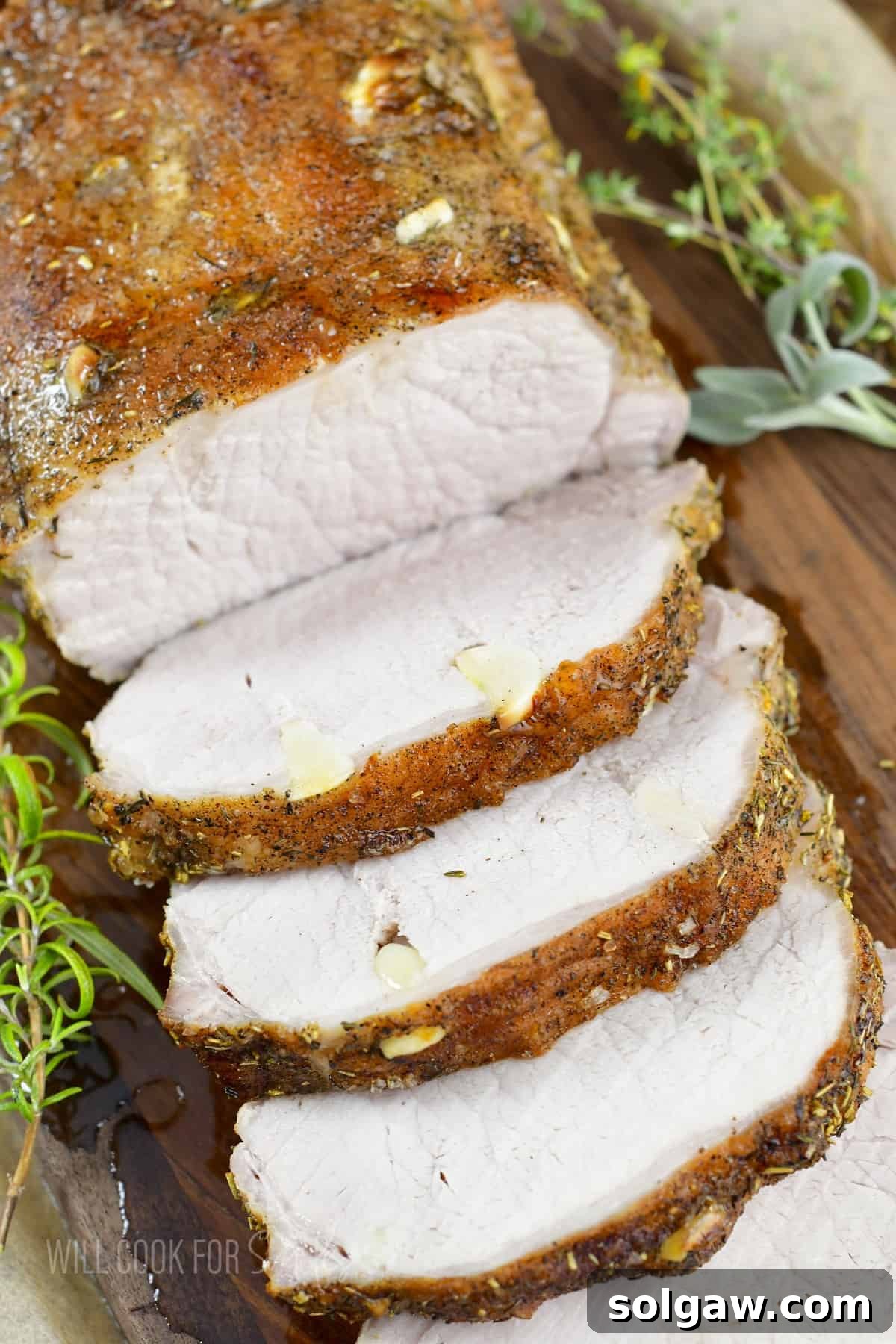
An easy way to prepare a succulent pork loin is to roast it in the oven with abundant garlic and fragrant herbs. This method yields a wonderfully juicy and tender pork loin, baked on a bed of savory vegetables for enhanced flavor and moisture. Infused with fresh garlic cloves and coated in an aromatic herb rub, the resulting pan drippings can be transformed into a delectable gravy, making it a perfect centerpiece for any gathering.
Pin Recipe
Ingredients
- 3.5-4 lb pork loin
- 4-6 garlic cloves, sliced (for stuffing)
- 2 tsp dried ground thyme
- 2 tsp dried sage
- 1 1/2 tsp dried crushed rosemary
- 1 tbsp coarse kosher or sea salt (more or less to taste)
- 1 tsp fresh cracked black pepper (more or less to taste)
- 2 Tbsp olive oil
- 1 yellow onion, chopped into large chunks
- 2-3 celery ribs, chopped into large chunks
- 3-4 garlic cloves, halved (for roasting bed)
Instructions
- Preheat oven to 425°F (220°C). Drizzle olive oil into a roasting pan large enough to comfortably fit the pork loin. (Tip: For easy cleanup, you can line the roasting pan with foil.)
- Chop onion and celery into large chunks (approx. 1-inch pieces). Halve 3-4 garlic cloves lengthwise. Spread these vegetables in an even, thick layer in the middle of the roasting pan, forming a bed for the pork.
- In a small bowl, combine dried thyme, sage, crushed rosemary, salt, and pepper. Mix well.
- Prepare the Pork: Using a small paring knife, pierce holes in the pork loin in several places over the top and sides, about 1/2 to 1-inch deep. Slice 4-6 garlic cloves lengthwise into 3-4 slices and push one slice into each hole.
- Place the pork loin on a rimmed baking sheet for easy seasoning. Sprinkle the herb and seasoning mixture over the pork, then pat it all over the top and sides, ensuring an even coating.
- Place the seasoned pork loin, fat cap up (if present), onto the prepared vegetable bed in the roasting pan. Insert a leave-in digital meat thermometer probe through the side of the pork towards the center, ensuring it avoids bone.
- Baking Pork Loin: Bake at 425°F (220°C) for 15 minutes. Then, reduce the oven temperature to 350°F (175°C) and continue baking until the internal temperature reaches 145°F (63°C). This typically takes an additional 60-90 minutes, depending on the roast size. (For a 4-pound pork, total bake time is usually about 1 hour 20 minutes to 1 hour 40 minutes. Always prioritize internal temperature over time.)
- Once the pork reaches 145°F, remove it from the oven and transfer it to a clean platter. Loosely tent it with foil and let it rest for 15-20 minutes before slicing.
- *Note: Save all accumulated cooking juices from the pan and from resting the pork to make a delicious gravy. If you don’t have enough juices, add some chicken broth.
- (Optional) To Make Pan Drippings Gravy: Strain the pan drippings (and cooked veggies) from the roasting pan through a fine mesh strainer into a measuring cup. Press on the veggies to extract all juices. Discard solids. Combine all strained juices from the pan and the resting pork. If you have less than 2 cups of liquid, add enough chicken stock to reach 2 cups.
- In a saucepan, melt 4 tbsp butter over medium heat. Whisk in 1/4 cup all-purpose flour until smooth and blended, cooking for 1-2 minutes.
- Gradually whisk in the pan drippings mixture. Continue whisking until smooth and it comes to a low simmer and thickens. Season with salt and 1/4 tsp (or more) black pepper to taste. Cook for a couple more minutes, stirring slowly, then remove from heat.
Notes
- How much pork loin per person: When serving with sides, estimate about 1/2 lb. (225g) per person. For larger appetites or leftovers, plan up to 3/4 lb. (340g) per person.
- Storing: Store any leftovers in an airtight container in the refrigerator for 3-4 days.
- Reheating: To prevent drying, reheat sliced pork loosely wrapped in aluminum foil pockets in a 300°F (150°C) oven until just heated through. Avoid high heat or microwaving.
Nutrition
More Delicious Pork Recipes to Try
If you loved this garlic herb roasted pork loin, explore more of our family-favorite pork dishes for your next meal:
- Apple Maple Dijon Pork Roast
- Crispy Pork Cutlets
- Flavorful Stuffed Pork Chops
- Roasted Pork Tenderloin with a Savory Pork Rub
- Brown Sugar Dijon Pork Tenderloin
- Classic Roast Pork
We truly adore pork loin in our family! Be sure to try our other beloved recipes like Stuffed Pork Loin and a comforting Pot Roasted Pork Loin complete with its own rich gravy.
Originally published on Will Cook For Smiles in October, 2017.