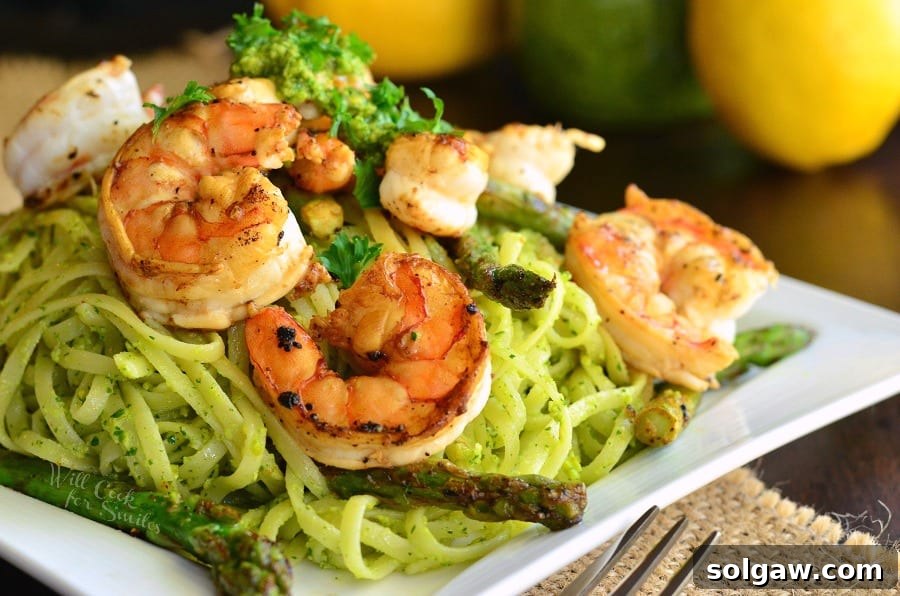
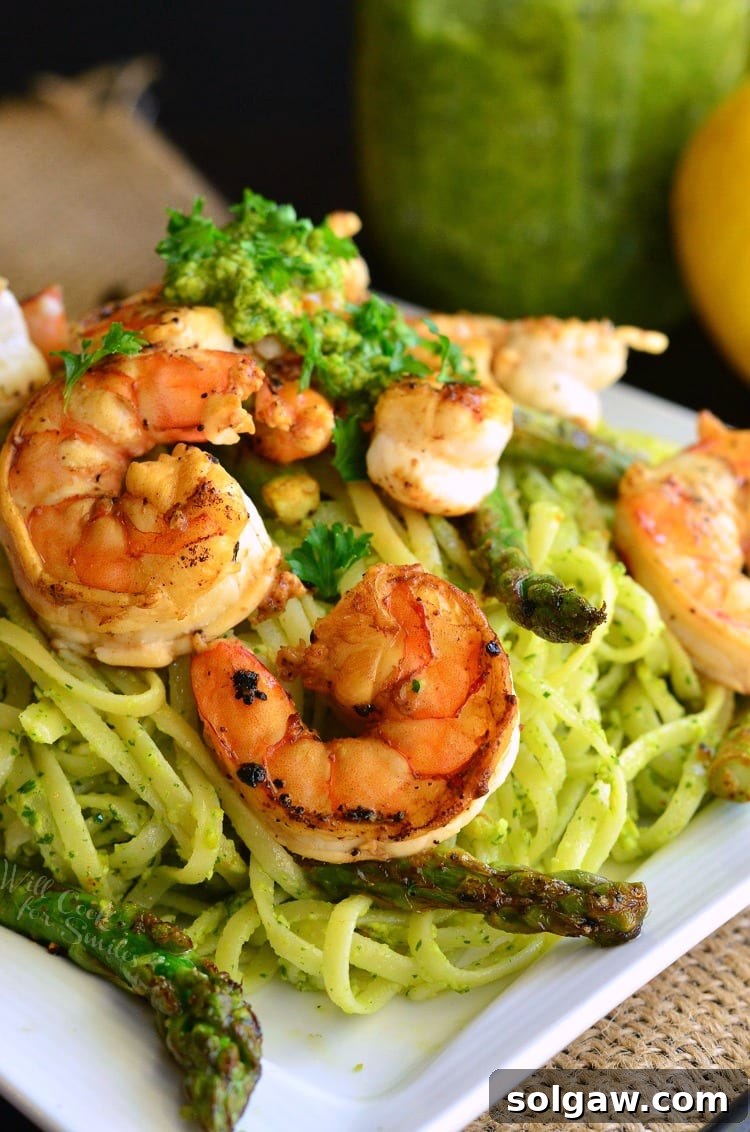
Lemon Pistachio Pesto Linguine with Shrimp and Asparagus: Your Ultimate Spring Pasta Dish
Embrace the vibrant flavors of spring with this exquisite Lemon Pistachio Pesto Linguine, a dish that effortlessly combines elegance with simplicity. If you’re seeking a pasta recipe that breaks away from the ordinary and celebrates fresh, seasonal ingredients, you’ve found your new favorite. This isn’t just any pesto pasta; it’s a culinary journey that elevates traditional flavors with a unique, nutty twist and the bright zest of lemon. Imagine perfectly cooked linguine coated in a creamy, peppery pistachio pesto, tossed with tender-crisp asparagus and juicy, sautéed shrimp. It’s a symphony of textures and tastes, designed to bring a touch of gourmet dining to your table in under 30 minutes.
Springtime cooking is all about embracing fresh produce and lighter, brighter meals. This recipe captures that essence beautifully, making it an ideal choice for a quick weeknight dinner, a romantic date night, or a delightful brunch for special occasions like Easter or Mother’s Day. Forget heavy sauces and complicated preparations; this dish prioritizes bold, clean flavors and a straightforward cooking process, proving that delicious and impressive meals don’t have to be time-consuming.
Why This Lemon Pistachio Pesto Pasta is Uniquely Special
While classic pesto pasta holds a special place in our hearts, sometimes a delightful variation is in order. This lemon pistachio pesto pasta offers a refreshing and sophisticated departure from the traditional basil pesto, introducing a captivating blend of ingredients that truly makes it stand out. Here’s what makes this spring pasta a must-try:
- Effortlessly Quick and Easy: From the moment you start chopping to the first delicious bite, this entire meal is ready in approximately 30 minutes. It’s the perfect solution for busy evenings when you crave a homemade, flavorful dish without spending hours in the kitchen.
- Celebrates Fresh Spring Flavors: This dish is a true ode to spring. The bright, tangy notes of fresh lemon zest and juice awaken the palate, perfectly complementing the subtle bitterness of tender asparagus and the sweet succulence of shrimp. Each component sings of the season, creating a harmonious and invigorating taste experience.
- A Delicious and Distinct Twist on Pesto: Unlike conventional basil pesto, this recipe features creamy pistachios and peppery arugula. Pistachios lend a richer, more buttery, and distinctly nutty flavor profile, while arugula adds a pleasant, slightly spicy kick. This combination results in a pesto that is wonderfully creamy and more complex than its traditional counterpart.
- Light yet Incredibly Satisfying: Designed to be both wholesome and fulfilling, this pasta dish offers a satisfying meal without relying on heavy cream sauces. The lean protein from the shrimp, coupled with the fresh vegetables and healthy fats from the pesto, leaves you feeling nourished and content, not weighed down.
- Elegant Appearance, Simple Preparation: Despite its restaurant-quality presentation, this dish is remarkably simple to prepare. The vibrant green of the pesto, the delicate pink of the shrimp, and the verdant asparagus create an inviting visual appeal that’s perfect for entertaining guests or treating yourself to a special meal at home.
- Incredibly Versatile Pesto: The homemade lemon pistachio arugula pesto is a true star on its own. While it’s phenomenal with pasta, don’t limit its potential! This versatile sauce can be used as a delectable bread dip, a flavorful sandwich spread, or drizzled generously over grilled chicken, fish, or roasted vegetables. You’ll quickly discover countless ways to incorporate its fresh, vibrant taste into your cooking.
Essential Ingredients and Thoughtful Substitutions
Crafting the perfect Lemon Pistachio Pesto Linguine begins with understanding each ingredient’s role and knowing when and how to make effective substitutions. Here’s a deeper dive into the key components of this delightful dish:
- Pasta: Any long pasta shape, such as linguine, fettuccine, spaghetti, bucatini, or angel hair, pairs beautifully with this pesto. Their elongated strands are ideal for catching and holding the rich sauce, ensuring every bite is flavorful. For a fun alternative, shorter pasta shapes like penne or fusilli can also work, especially if you prefer a chunkier sauce.
- Shrimp: You can use either fresh or frozen shrimp, but for the best results, opt for large or extra-large shrimp (around 16-20 count per pound). Larger shrimp have a greater forgiving margin, reducing the chance of overcooking and becoming rubbery. If using frozen shrimp, remember to thaw them completely and pat them very dry with paper towels before marinating. This crucial step helps achieve a beautiful sear and prevents them from steaming in the pan. Always choose peeled and deveined shrimp for convenience.
- Lemon Zest & Juice: Fresh lemon is indispensable in this recipe, acting as the primary brightening agent for both the pesto and the shrimp. The zest provides intense aromatic oils, while the juice adds a tangy acidity that cuts through the richness of the pesto. Pro Tip: Always zest your lemon before you juice it! It’s significantly easier to extract the zest from a firm, whole lemon than from one that has already been juiced.
- White Balsamic Vinegar: This ingredient offers a subtle, sweet, and floral acidity that enhances the shrimp without overpowering its delicate flavor or darkening its color. If white balsamic is unavailable, a good quality regular balsamic vinegar can be used (though it will slightly darken the shrimp), or white wine vinegar makes an excellent alternative.
- Asparagus: For optimal flavor and texture, select medium-thickness asparagus stalks. Avoid the super thick, woody ones, which can often be tough and chewy. Look for firm, bright green stalks with tightly closed tips. Snap off the woody ends, as these are unpalatable.
- Pistachios: The star of our unique pesto! Ensure you use shelled and unsalted pistachios. While shelling your own can be a labor of love, pre-shelled pistachios are widely available and save considerable time. If you can only find salted pistachios, be sure to significantly reduce or omit any additional salt in your pesto recipe and always taste as you go.
- Arugula: This leafy green is a game-changer for the pesto, contributing a wonderful peppery, slightly bitter bite that beautifully contrasts with the creamy pistachios and bright lemon. Its distinctive flavor sets this pesto apart from traditional basil varieties, adding depth and a sophisticated edge.
- Olive Oil: The quality of your olive oil matters here, especially for the pesto. Use a good quality extra virgin olive oil that you enjoy the flavor of, as it contributes significantly to the pesto’s overall taste and texture. Always taste your olive oil before adding it to ensure it isn’t bitter or rancid. For cooking the shrimp and asparagus, a neutral vegetable oil or a regular olive oil is sufficient.
- Parmesan Cheese: For the best consistency and most authentic flavor, always grate Parmesan cheese fresh from the block. Pre-grated cheeses often contain anti-caking agents that prevent them from melting smoothly and can result in a bland, sometimes chalky, texture. Freshly grated Parmesan integrates seamlessly into the pesto, adding a salty, umami depth.
You’ll find the complete list with precise measurements in the detailed recipe section below!
Expert Tips for Achieving Perfect Results
Follow these expert tips to ensure your Lemon Pistachio Pesto Linguine with Shrimp and Asparagus turns out absolutely perfect every time:
- Toast Your Pistachios for Enhanced Flavor: This simple step makes a huge difference! Spread your shelled pistachios in a dry skillet over medium heat and toast them for 3-5 minutes, stirring occasionally. They should become wonderfully fragrant and take on a slightly golden hue. Allow them to cool completely before incorporating them into your pesto. Toasting intensifies their nutty flavor, adding an extra layer of depth to the sauce.
- Prevent Pesto Oxidation: Pesto can sometimes turn brown due to exposure to air. To keep your homemade lemon pistachio pesto vibrantly green, employ these simple tricks: press a piece of plastic wrap directly onto the surface of the pesto, pushing out any air bubbles, or pour a thin layer of good quality olive oil over the top before storing it. The lemon juice in this recipe also naturally helps slow down oxidation.
- Maximize Pesto Versatility: Remember that this homemade Lemon Pistachio Pesto is incredibly versatile and delicious beyond just pasta! Get creative and use it as a flavorful dip for crusty bread, spread it onto sandwiches for an instant flavor boost, dollop it into scrambled eggs, or drizzle it generously over grilled chicken, fish, or roasted vegetables. It even makes a fantastic base for a unique pizza or stirred into a potato salad.
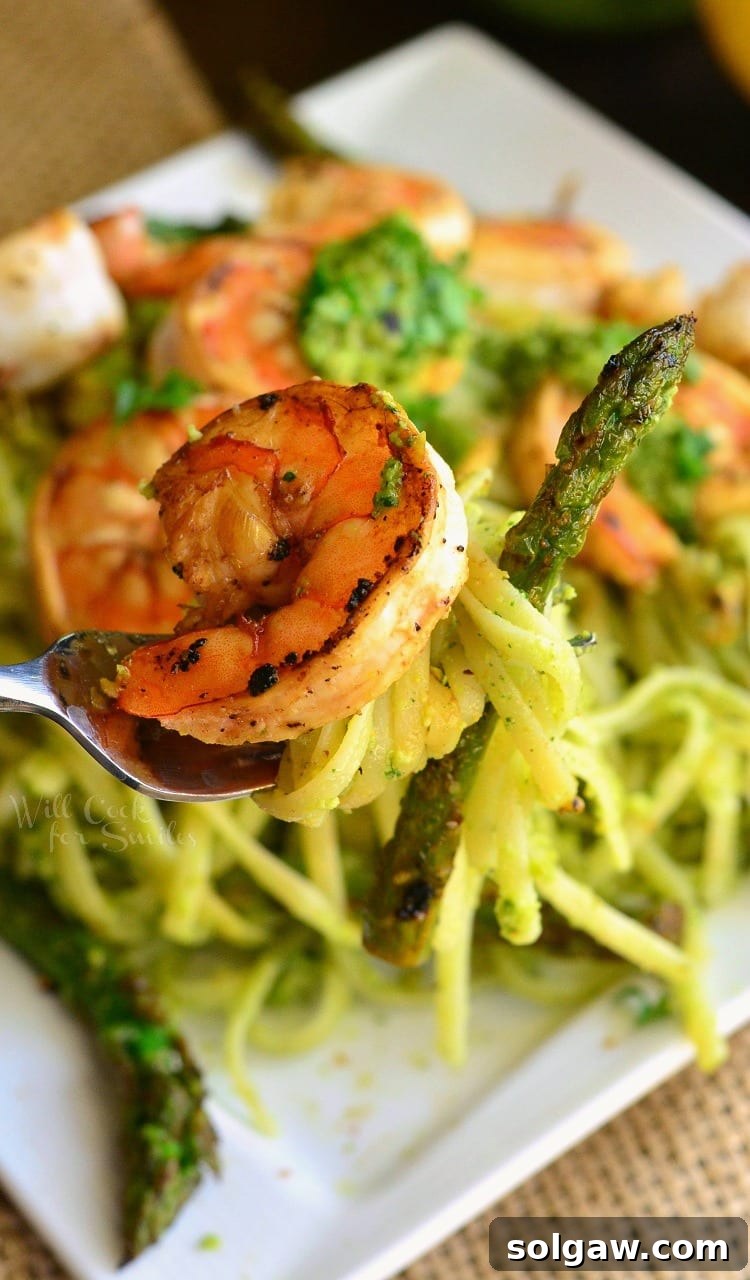
- Never Overcook Your Shrimp: Shrimp cook remarkably fast – typically just 2-3 minutes total, depending on their size. Overcooked shrimp quickly become rubbery, tough, and unpleasant to eat. Remove them from the heat as soon as they turn opaque throughout. A perfectly cooked shrimp will form a loose “C” shape; if it curls into a tight “O” shape, it’s overcooked.
- Mind the Marination Time for Shrimp: While marinating shrimp in acidic liquids like lemon juice and vinegar adds wonderful flavor, don’t let them sit for more than 15-20 minutes. Prolonged exposure to acid will begin to “cook” the shrimp (similar to ceviche), leading to a mushy texture.
- Pat Shrimp Very Dry Before Cooking: For the best possible sear and a golden-brown crust, ensure your shrimp are thoroughly patted dry with paper towels before they hit the hot pan. Excess moisture will cause them to steam rather than sear, hindering that desirable texture.
- Always Reserve Pasta Water: Before draining your cooked pasta, scoop out about a cup of the starchy pasta cooking water. This liquid is a secret weapon! The starches in the water help to emulsify the pesto sauce, binding it to the pasta and creating a silky-smooth, cohesive texture that coats every strand beautifully. Add it gradually, a tablespoon at a time, until your sauce reaches the desired consistency.
Delightful Serving Suggestions
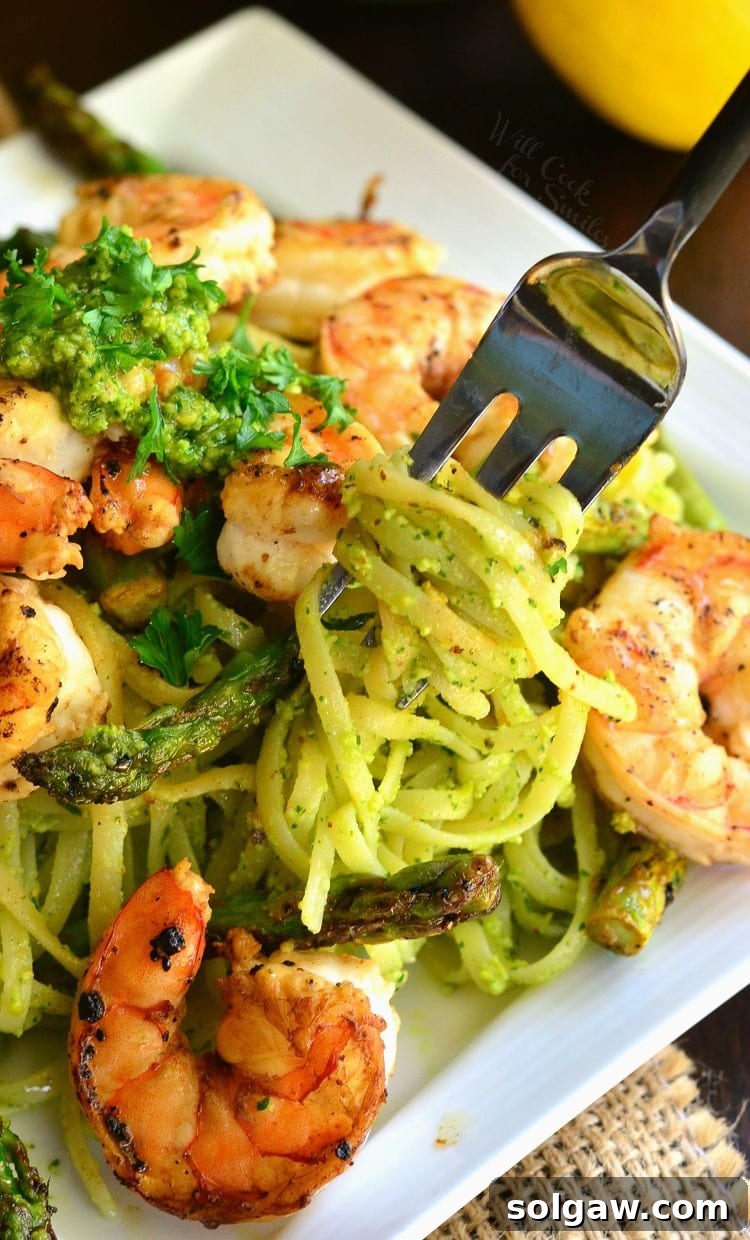
This Lemon Pistachio Pesto Linguine with Shrimp and Asparagus is a versatile dish, perfect for enhancing any occasion, from a casual weeknight dinner to a festive gathering. Its fresh flavors and elegant presentation make it suitable for date nights at home, spring entertaining, or even special holiday brunches like Easter or Mother’s Day, as well as relaxed summer dinner parties on the patio. Here are some ideal accompaniments to complete your meal:
- Breads:
- Crusty Garlic Bread: An absolute classic, perfect for soaking up every last drop of the delicious pesto sauce. The savory garlic perfectly complements the bright pasta.
- Warm Ciabatta or Focaccia: These rustic breads offer a wonderful texture and mild flavor that won’t compete with the pasta, making them excellent choices for dipping.
- Garlic Parmesan Breadsticks: A fun and flavorful option, adding an extra cheesy, garlicky crunch to your meal.
- Salads:
- Simple Arugula Salad with Balsamic Vinaigrette: A light and peppery arugula salad, dressed with a classic balsamic vinaigrette, provides a refreshing counterpoint to the richness of the pesto.
- Caprese Salad: The fresh mozzarella, ripe tomatoes, and fragrant basil in a Caprese salad offer a delightful contrast of flavors and colors, embodying the spirit of fresh Italian cuisine.
- Caesar Salad with Homemade Croutons: A crisp, tangy Caesar salad with crunchy homemade croutons adds a satisfying element and a familiar, comforting side.
- Wine Pairing: A crisp white wine is an ideal companion for this dish, enhancing its bright and fresh characteristics. Consider these excellent choices:
- Pinot Grigio: Known for its light body, crisp acidity, and notes of green apple and citrus, it perfectly complements the lemon and seafood.
- Sauvignon Blanc: With its vibrant acidity and herbaceous, sometimes grassy notes, Sauvignon Blanc will beautifully echo the arugula and asparagus.
- Vermentino: This Italian white wine offers a lovely salinity and notes of citrus and bitter almond, a fantastic pairing for pesto and seafood.
- Dry Rosé: A dry rosé, especially one with bright berry and citrus notes, provides a refreshing and versatile option that works well with the varied flavors of the dish.
Streamlined Make-Ahead Instructions
This recipe is wonderfully suited for meal preparation and entertaining, allowing you to enjoy fresh flavors with minimal last-minute effort. The key to making this dish ahead lies in preparing the pesto in advance.
- Pesto Preparation: The lemon pistachio pesto can be made up to 5 days ahead of time. Store it in an airtight glass jar in the refrigerator. To prevent oxidation and maintain its vibrant green color, always cover the surface of the pesto with a thin layer of olive oil or press plastic wrap directly onto its surface, eliminating any air exposure.
- Freezing Pesto: For longer storage, pesto freezes beautifully! Transfer the prepared pesto into ice cube trays, freeze until solid, then pop out the frozen cubes and transfer them to an airtight freezer bag. It will keep well in the freezer for up to 3 months. Thaw the desired amount in the refrigerator overnight before use. This method is perfect for having quick pesto portions on hand for future meals.
- Asparagus Preparation: To save time on the day of cooking, you can trim and cut your asparagus stalks up to one day in advance. Store the prepared asparagus in an airtight container or a plastic bag in the refrigerator.
Proper Storage for Leftovers
Ensure your delicious leftovers maintain their quality with these storage guidelines:
Leftover Pasta with Shrimp and Asparagus:
- Store any leftover pasta in an airtight container in the refrigerator for up to 2-3 days.
- Please note that as the pasta sits, it will naturally absorb some of the pesto sauce. When reheating, you might want to add a splash of olive oil, chicken broth, or even some of the reserved pasta cooking water (if you saved some) to help loosen the sauce and restore its creamy texture.
- Reheat gently in a skillet over medium-low heat, stirring occasionally, until warmed through. Alternatively, you can microwave it in 30-second intervals, stirring between each, until heated evenly.
- While the pasta itself stores well, the shrimp are best enjoyed within 1-2 days for optimal texture and flavor, as they can become a bit firmer over time.
Leftover Pesto (Stored Separately):
- If you have extra pesto that wasn’t mixed with pasta, store it separately in an airtight glass jar in the refrigerator for up to 1 week.
- Always cover the surface with plastic wrap pressed directly onto the pesto or a thin layer of olive oil to prevent discoloration from air exposure.
Frequently Asked Questions About This Recipe
Absolutely! Freezing pesto is a fantastic way to preserve its fresh flavor for future meals. Simply portion the pesto into ice cube trays or other small freezer-safe containers, and once frozen solid, transfer the cubes to an airtight freezer bag. It will keep beautifully for up to 3 months. When you’re ready to use it, just thaw the desired amount in the refrigerator overnight. This method is incredibly convenient for quickly adding fresh pesto to weeknight pasta dishes, sandwiches, or even soups.
Arugula provides a distinctive peppery bite that truly elevates this pesto. However, if you’re not a fan or can’t find it, you have a few excellent options. You can use all fresh basil for a more traditional pesto flavor profile, or try a combination of half basil and half fresh Italian parsley for a slightly milder yet still herbaceous taste. If you omit arugula, you might want to add a pinch of freshly ground black pepper to the pesto to introduce a subtle warmth and spice that mimics arugula’s peppery notes.
Yes, this recipe can easily be adapted to be dairy-free. Simply omit the Parmesan cheese from the pesto recipe entirely. The pistachios and olive oil contribute plenty of creaminess and richness, so the pesto will still be incredibly flavorful and satisfying. You can also opt for a high-quality dairy-free Parmesan alternative if you prefer to maintain a cheesy flavor profile. You might be surprised how little you miss the dairy!
Pesto tends to oxidize and turn brown when exposed to air. While the fresh lemon juice in this recipe offers some natural protection, here are additional steps you can take:
- Olive Oil Layer: Store the pesto with a thin layer of olive oil poured directly over its surface. This creates a barrier that prevents air from reaching the pesto.
- Plastic Wrap Contact: For even better protection, press a piece of plastic wrap directly onto the surface of the pesto in its container, ensuring no air bubbles are trapped underneath.
- Chill Food Processor: A lesser-known trick is to chill your food processor bowl and blade in the freezer for 10-15 minutes before making the pesto. This helps keep the ingredients cooler during processing, which can further slow down oxidation.
Leftover pesto is a true culinary gem! Its versatility makes it a fantastic addition to numerous dishes:
- Sandwich Spread: Elevate your turkey, chicken, or veggie sandwiches by spreading a layer of pesto.
- Breakfast Boost: Stir it into scrambled eggs or spread it on avocado toast for a vibrant morning meal.
- Dip for Snacks: Serve it as a delicious dip for fresh bread, crackers, or an assortment of raw vegetables.
- Flavor Enhancer: Stir a spoonful into hot soups or stews for an instant boost of fresh herbaceous flavor.
- Drizzle over Proteins & Veggies: It’s amazing drizzled over grilled chicken, baked fish, roasted vegetables, or even a simple baked potato.
- Salad Dressing Base: Whisk it with a little more olive oil and lemon juice for a quick and flavorful salad dressing.
- Pasta Salad Ingredient: Mix it into cold pasta salad for a refreshing twist.
- Pizza Sauce Alternative: Use it as a vibrant base instead of traditional tomato sauce on your homemade pizzas.
- Marinade: Incorporate it into a marinade for chicken, fish, or pork.
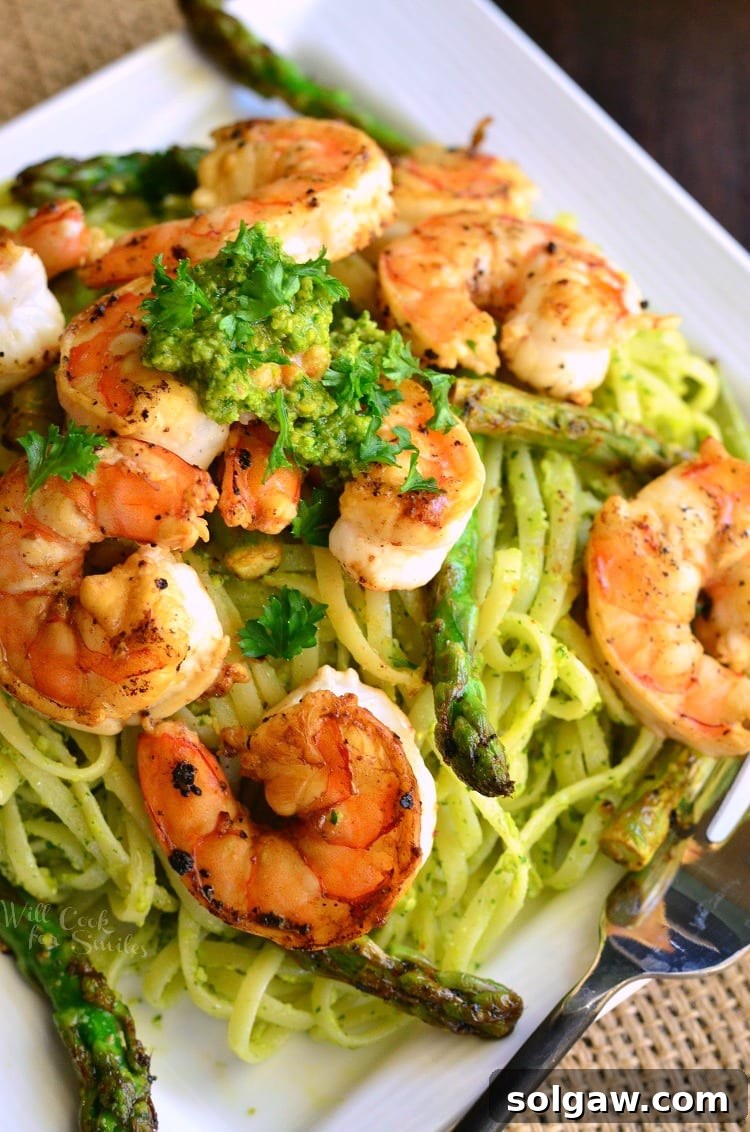
We hope you thoroughly enjoy creating and savoring this delightful Lemon Pistachio Pesto Linguine with Shrimp and Asparagus. Its fresh, vibrant flavors and straightforward preparation are sure to make it a cherished addition to your recipe collection. Don’t forget to connect with us! If you made this recipe, please leave a 🌟 star rating and share your thoughts in the 📝 comment section below. You can also share your culinary creations on social media by tagging @willcookforsmiles. For more delicious recipes and cooking tips, make sure to subscribe to our newsletter!
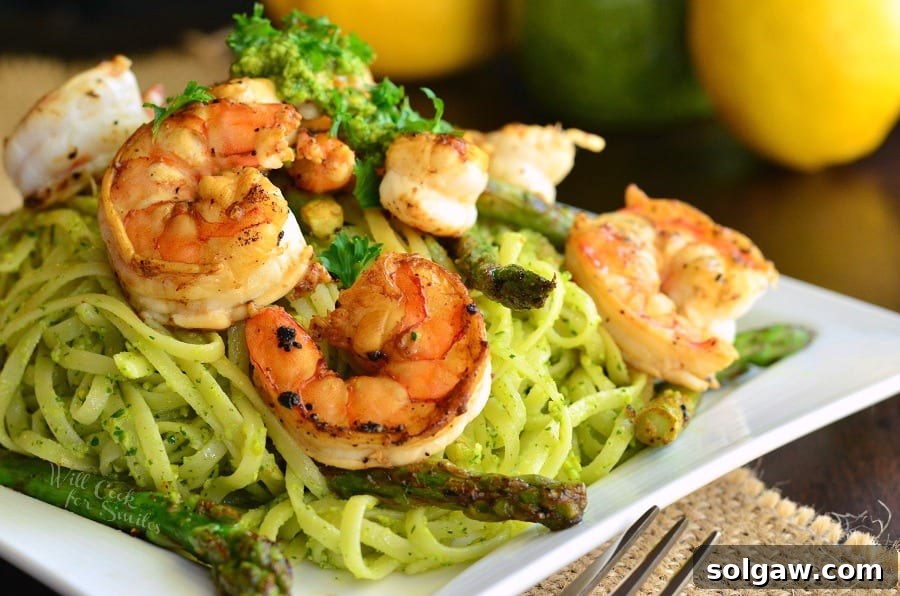
Lemon Pistachio Pesto Linguine with Shrimp and Asparagus
Print Recipe
Pin Recipe
Ingredients
For the Lemon Pistachio Pesto:
- 1 cup shelled, unsalted pistachios
- 2 cups arugula packed
- 1/2 cup fresh Italian parsley packed
- 2 1/2 oz Parmesan cheese block, freshly grated
- 1/2 lemon – zest
- 2 tbsp lemon – juice
- 1 cup good quality olive or avocado oil
- 1/2 tsp coarse sea salt or kosher salt to taste
For the Pesto Pasta with Shrimp and Asparagus:
- 4 tbsp Lemon Pistachio Pesto from above recipe
- 8 oz dry linguine or another long pasta of choice
- 1 lb large shrimp peeled and deveined
- 1 1/2 Tbsp lemon juice
- 1 1/2 Tbsp white balsamic vinegar
- Salt to taste
- 1/2 lb medium asparagus trimmed
- 1 Tbsp lemon juice
- 1/2 tsp Garlic powder
- Salt to taste
Instructions
-
Prepare the Pesto: In a food processor or blender, combine the shelled pistachios, arugula, Italian parsley, and Parmesan cheese. Pulse until the ingredients are coarsely chopped. Then, add the olive oil, lemon zest, and lemon juice. Blend until the mixture is completely smooth and creamy. Taste and adjust salt as needed. Add more olive oil if you desire a thinner consistency.
-
Cook the Pasta: Bring a large pot of salted water to a rolling boil. Add the linguine and cook according to package directions until al dente. Before draining, remember to reserve about 1 cup of the starchy pasta cooking water. Drain the pasta and set it aside.
-
Marinate the Shrimp: While the pasta is cooking, ensure your shrimp are peeled, deveined, and thoroughly patted dry. In a small bowl, combine the cleaned shrimp with 1 1/2 tablespoons of lemon juice, white balsamic vinegar, and a pinch of salt. Mix well to coat the shrimp and let it marinate for a few minutes while you prepare the asparagus. Do not marinate for more than 15-20 minutes.
-
Prepare the Pan: Preheat a large skillet or non-stick cooking pan over medium-high heat. Add a couple of tablespoons of vegetable oil or regular olive oil.
-
Sauté the Asparagus: Trim the woody ends off the asparagus and chop the stalks into approximately 2-inch pieces. Add the asparagus to the preheated pan. Season with 1 tablespoon of lemon juice, garlic powder, and salt to taste. Stir well and cook for 3-5 minutes, or until the asparagus starts to soften and becomes tender-crisp.
-
Cook the Shrimp: Discard any excess liquid from the marinated shrimp and add the shrimp to the pan with the asparagus. Cook for 1-2 minutes until the shrimp turns opaque on one side, then flip them. Continue cooking for another 1-2 minutes until they are opaque throughout and form a loose “C” shape. Immediately remove the shrimp and asparagus from the pan to prevent overcooking.
-
Combine and Serve: In a large bowl, or back in the pot you cooked the pasta in, thoroughly mix the cooked linguine with 4 tablespoons of the lemon pistachio pesto. Add a splash of the reserved pasta water, a tablespoon at a time, to achieve your desired sauce consistency, ensuring the pasta is beautifully coated. Plate your pesto pasta and generously top each serving with the sautéed shrimp and asparagus. Serve immediately and enjoy!
Notes
Substitution Suggestions:
- Pistachios: For a different nutty flavor, you can substitute pine nuts, walnuts, or cashews in the pesto.
- Arugula: If arugula is not to your taste, you can use all fresh basil, or a combination of half basil and half Italian parsley for a milder, more traditional pesto flavor.
- Shrimp: This dish is equally delicious with other proteins like grilled chicken, pan-seared scallops, or flaky salmon. For a vegetarian option, simply omit the shrimp entirely.
- Asparagus: Feel free to swap asparagus for other seasonal spring vegetables such as sugar snap peas, fresh green peas, or thinly sliced zucchini ribbons.
- White Balsamic Vinegar: White wine vinegar is an excellent and readily available substitute if white balsamic is not on hand.
- Linguine: Any long pasta shape (like spaghetti or fettuccine) will work wonderfully. Shorter pasta shapes such as orecchiette or fusilli are also good alternatives.
- Dairy-Free: To make this recipe dairy-free, simply omit the Parmesan cheese from the pesto or use a high-quality dairy-free alternative.
Storage Guidelines:
- Leftover Pasta: Store in an airtight container in the refrigerator for 2-3 days. When reheating, add a splash of water, broth, or olive oil to rehydrate the sauce.
- Pesto Alone: Store unused pesto in an airtight container in the refrigerator for up to 1 week, covering the surface with a thin layer of olive oil or plastic wrap to prevent oxidation. For longer storage, freeze pesto in ice cube trays for up to 3 months.
- Make Ahead: The pesto can be prepared up to 5 days in advance. Asparagus can be trimmed and cut one day prior to cooking.
Creative Uses for Leftover Pesto: Don’t let any pesto go to waste! Use it as a delicious sandwich spread, a dip for fresh vegetables and bread, or an instant flavor booster for scrambled eggs.
Nutrition
More Inspiring Recipes to Explore
If you loved this Lemon Pistachio Pesto Linguine, you’ll surely enjoy these other delicious recipes. Expand your culinary repertoire with more pasta and shrimp dishes, perfect for any occasion:
Explore More Pasta Recipes:
- Classic Pesto Pasta with Homemade Pesto: If you’re a purist, revisit the beloved traditional basil pesto pasta, a timeless favorite that’s always satisfying.
- Vibrant Pasta Primavera: Another fantastic spring option, this pasta dish is loaded with a colorful array of roasted seasonal vegetables for a fresh and wholesome meal.
- Bright Lemon Pepper Chicken Pasta: Craving bright lemon flavors but prefer chicken over shrimp? This zesty fettuccine is a delightful choice.
- Indulgent Lobster Pasta: For those special occasions, treat yourself to a rich and creamy seafood pasta featuring luxurious lobster.
Discover More Irresistible Shrimp Recipes:
- Classic Shrimp Scampi: Dive into the timeless combination of tender shrimp, zesty lemon, and savory garlic butter, typically served over pasta.
- Creamy Shrimp Alfredo: Indulge in a rich and velvety Parmesan cream sauce paired with perfectly cooked, juicy shrimp for a truly decadent experience.
- Quick Sautéed Shrimp: Master the art of simple garlic butter shrimp in just 10 minutes – a versatile and speedy protein for any meal.
- Flavorful Blackened Shrimp: For a kick of spice, try this Cajun-style shrimp, seasoned with bold spices and seared to perfection.