
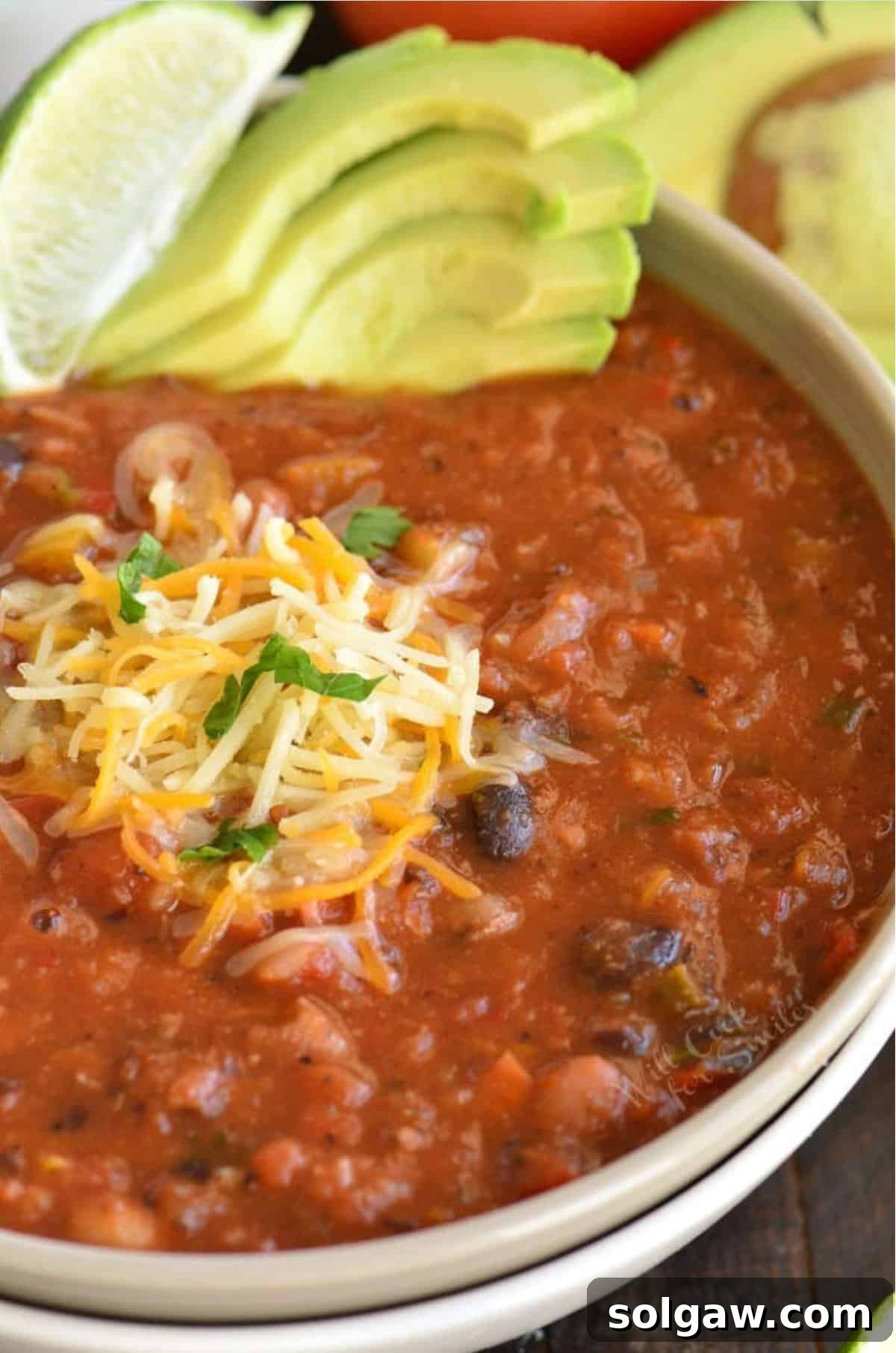
The Ultimate Vegetarian Chili: A Flavorful and Hearty Meatless Masterpiece
Prepare to be amazed by this incredibly flavorful and hearty vegetarian chili recipe! Forget any preconceived notions about meatless meals lacking substance or taste; this dish proves that plant-based chili can be just as satisfying and comforting as its traditional counterparts. Packed with vibrant vegetables, a trio of beans, and a meticulously balanced blend of aromatic spices, this vegetarian chili is a culinary delight that will impress even the most devoted carnivores. It’s not just delicious; it’s also a healthy, naturally gluten-free, and easily adaptable vegan option, making it perfect for diverse dietary needs and preferences.
A warm, steaming bowl of this vegetarian chili offers a symphony of textures and flavors. Each spoonful delivers a delightful combination of tender beans, perfectly cooked vegetables, and a rich, savory broth infused with a complex array of spices. The beauty of this recipe lies in its balanced composition, where neither the beans nor the vegetables overwhelm the other, creating a harmonious and deeply satisfying eating experience. Whether you’re seeking a nutritious weeknight dinner, a crowd-pleasing potluck dish, or a cozy meal to warm you up, this vegetarian chili is sure to become a beloved staple in your recipe collection.
Unrivaled Flavor and Heartiness: You Won’t Miss the Meat
Many assume that vegetarian chili might compromise on the rich flavor or substantial heartiness typically associated with meat-based versions. However, this recipe shatters that stereotype. We achieve an astonishing depth of flavor and satisfying texture through a thoughtful combination of fresh vegetables, an abundance of three different types of beans, and a generous application of carefully selected seasonings. The result is a chili that is robust, deeply savory, and incredibly filling – a true comfort food experience without the meat.
The secret to its exceptional taste lies in the perfect ratio of ingredients. We layer flavors by sautéing aromatics to perfection, allowing the vegetables to release their natural sweetness, and then building the spice profile. Using both canned and fresh tomatoes adds a unique dimension; the canned varieties contribute a rich, concentrated tomato base, while the fresh tomatoes provide a burst of bright sweetness and a vibrant, garden-fresh essence that elevates the overall taste. This thoughtful approach ensures every bite is packed with deliciousness, making it a fantastic alternative to traditional beef chili.
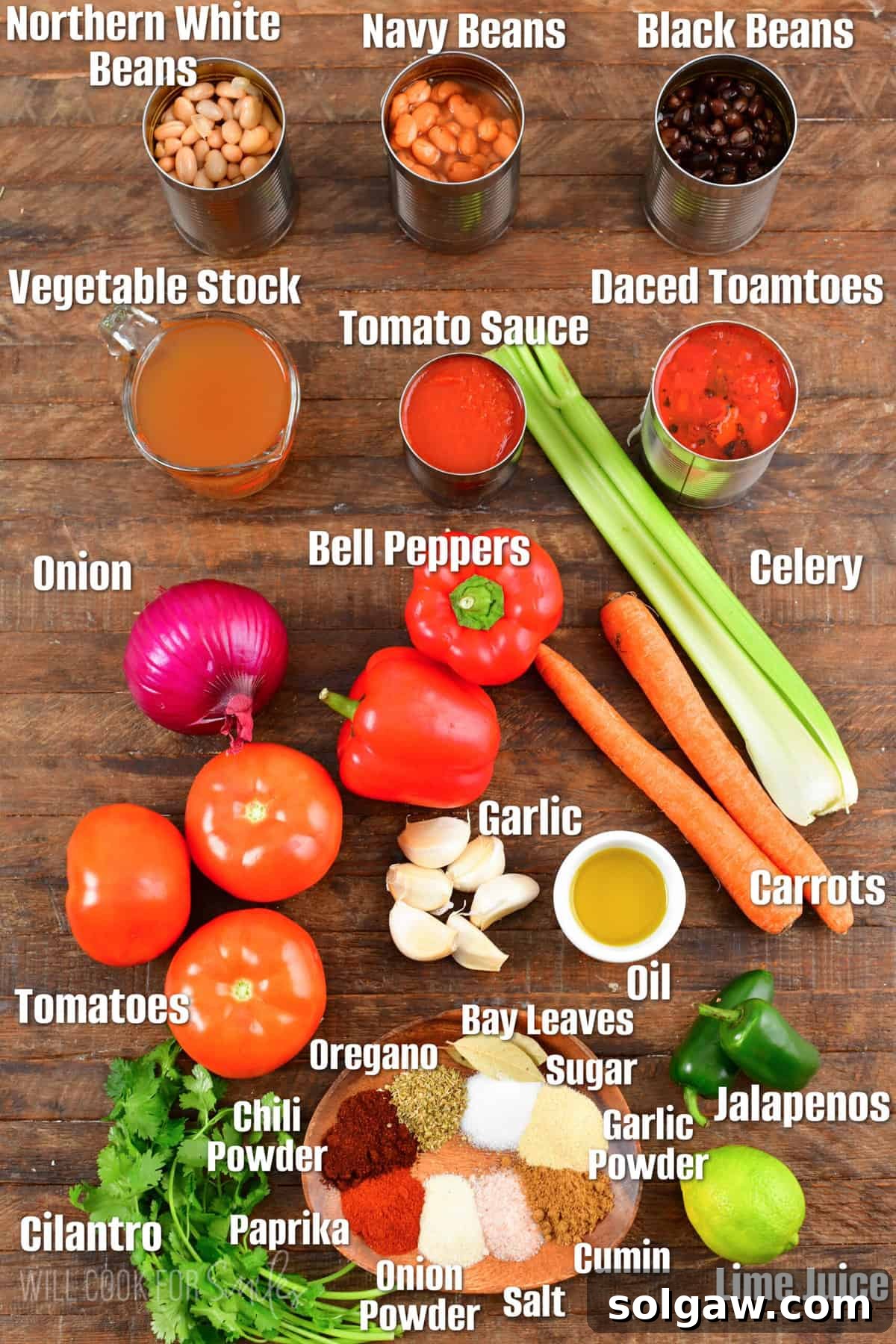
Essential Ingredients and Clever Substitutions for Your Chili
Creating an outstanding vegetarian chili begins with selecting the right ingredients and understanding how to adapt them to your pantry and palate. This section delves into the core components that make this chili so special, along with valuable substitution tips to ensure your cooking experience is always flexible and rewarding.
Vegetables: The Foundation of Flavor
This recipe is an excellent opportunity to load up on nutritious vegetables. We start with chili classics like onions, carrots, celery, bell peppers, and fresh tomatoes, which build a robust flavor base. However, the possibilities for customization are endless. Feel free to incorporate other seasonal vegetables you enjoy or have on hand. Consider adding:
- Corn: Adds a pop of sweetness and texture.
- Zucchini or Yellow Squash: Contributes a tender bite and lightens the chili.
- Winter Squash: Varieties like pumpkin, acorn, or butternut squash add a creamy texture and a subtle, earthy sweetness, perfect for a richer, more autumnal chili. Roasting them first can enhance their flavor significantly.
- Mushrooms: Sliced mushrooms can add an umami depth that mimics a savory, meaty texture.
- Sweet Potatoes: Diced sweet potatoes offer another layer of sweetness and make the chili even more filling.
Beans: The Heart of the Matter
Beans are the star of this vegetarian chili, providing essential protein, fiber, and that satisfying hearty texture. We use a trio of beans to create a varied texture and flavor profile. Softer beans are often preferred for chili as they tend to meld better with the other ingredients, unlike tougher kidney beans which might stand out more. It is crucial to always drain canned beans thoroughly before adding them to the pot to remove excess liquid and sodium. However, rinsing is not always necessary for chili, as the residual starchy liquid can sometimes contribute to a thicker consistency.
For this recipe, we recommend using three different types for maximum impact, but feel free to mix and match based on availability and preference:
- Pinto Beans: Offer a creamy texture and earthy flavor.
- Black Beans: Contribute a darker color, robust flavor, and slightly firmer texture.
- Northern White Beans or Cannellini Beans: Provide a milder taste and a wonderfully soft, buttery texture that blends beautifully into the chili.
- Kidney Beans: While often firmer, they are a classic chili bean and can be used for their distinctive shape and flavor.
- Chickpeas: A great addition for a different texture and nutty flavor.
Seasoning: Crafting the Perfect Spice Blend
The seasoning is where the magic truly happens, transforming simple vegetables and beans into an extraordinarily flavorful chili. Don’t be shy with your spices; a generous hand ensures a rich and complex taste. Our foundational blend includes:
- Chili Powder: The backbone of any good chili, providing a warm, earthy flavor. Experiment with different varieties like smoky chipotle or mild ancho chili powder for unique undertones.
- Cumin: Adds a distinctive earthy, warm, and slightly pungent flavor that is quintessential to chili.
- Oregano: Provides a peppery, slightly bitter, and aromatic note.
- Paprika: Contributes color and a sweet, peppery flavor. Smoked paprika can add a wonderful smoky depth, while sweet or classic paprika offers a milder profile.
- Garlic Powder & Onion Powder: Enhance the natural flavors of the fresh garlic and onions, adding an extra layer of savory goodness.
- Sugar: A touch of white granulated sugar is vital to balance the acidity from the tomatoes and other acidic ingredients, bringing out the sweetness of the vegetables and creating a more rounded flavor.
- Salt: Essential for enhancing all the other flavors. Always taste and adjust to your preference.
Adjusting the Spice Level
Chili wouldn’t be chili without a little heat! You have complete control over the spiciness of your dish:
- For Spicier Chili: Opt for older jalapeños, which often have visible stress lines or “veins” on their skin, indicating more capsaicin (heat). Leaving the seeds and white membranes intact is also key, as this is where the majority of the heat resides. For an even bigger kick, swap jalapeños for spicier peppers like serrano peppers. A dash of cayenne pepper or a pinch of red pepper flakes can also amplify the heat.
- For Milder Chili: Choose younger jalapeños with smooth, unblemished skin. Always remove the seeds and white membranes, as this significantly reduces the heat. You can also reduce the amount of chili powder or omit any additional spicy ingredients. For a very mild chili, consider using only bell peppers and no jalapeños.
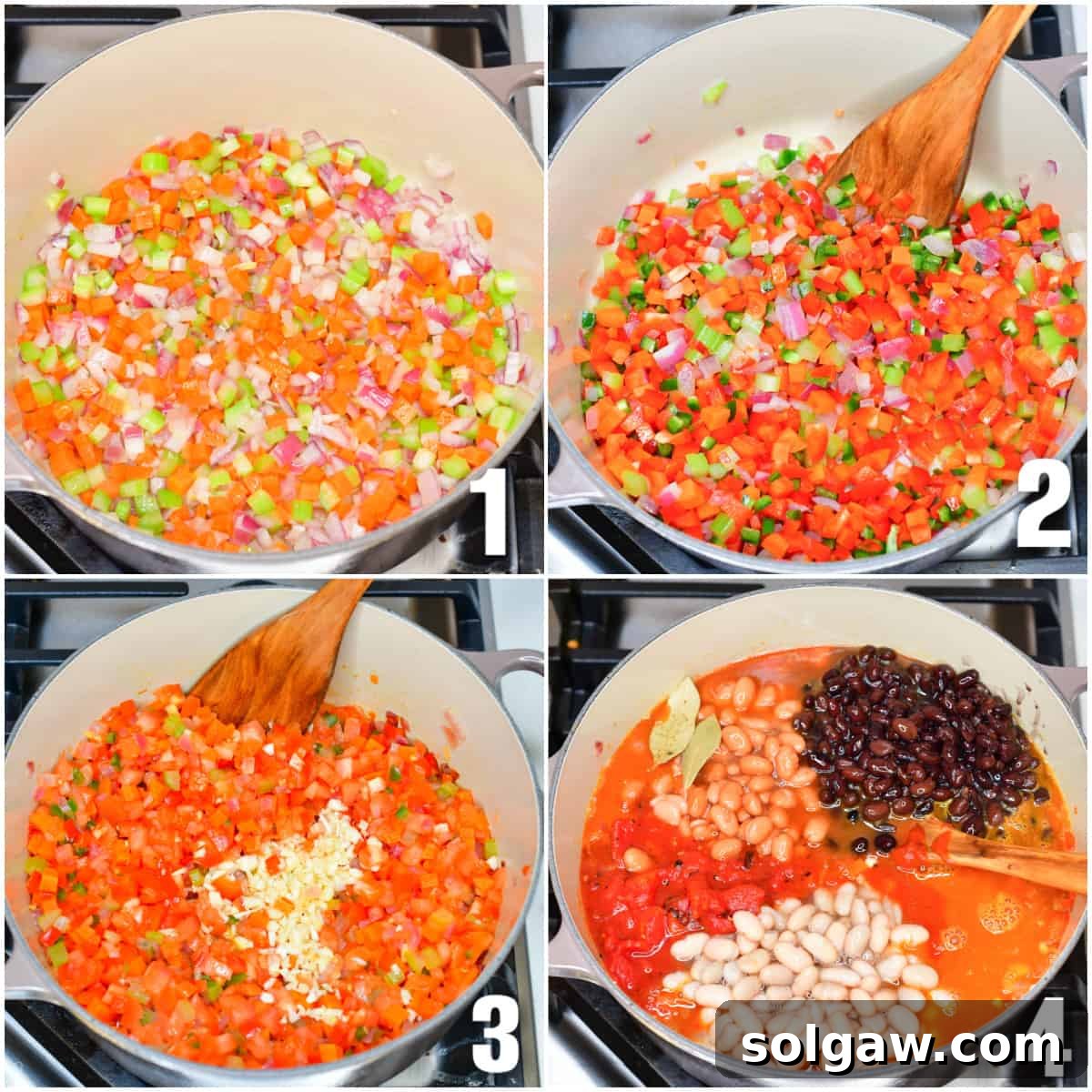
Step-by-Step Guide: Crafting Your Vegetarian Chili
Making this robust vegetarian chili is a straightforward process that yields incredibly delicious results. Follow these detailed steps to ensure a perfectly cooked and flavorful dish every time.
- Prepare Your Ingredients: Before you begin cooking, it’s highly recommended to have all your ingredients prepped. Dice all your vegetables (onions, carrots, celery, bell peppers, fresh tomatoes, jalapeños). Measure out your vegetable stock and all the spices. Open and drain the liquid from all canned beans and tomatoes. This “mise en place” approach makes the cooking process smooth and enjoyable.
- Sauté the Aromatics: Begin by preheating a large Dutch oven or heavy-bottomed pot over medium heat. Add the canola oil. Once shimmering, add the diced onions, carrots, and celery. Sauté these aromatic vegetables for about 5-7 minutes, stirring occasionally, until they begin to soften and become translucent. This initial step builds the foundational flavors for your chili.
- Add Remaining Vegetables: Next, introduce the diced bell peppers, jalapeños (adjusting quantity based on desired spice level), and fresh tomatoes to the pot. Continue to cook for another 5-8 minutes, stirring frequently, until all the vegetables are tender and slightly softened. The goal is to cook them down adequately so they integrate smoothly into the chili.
- Infuse with Garlic: Create a small clearing in the center of the softened vegetables in the pot. Add the minced garlic to this spot and let it sauté for about 30 seconds to 1 minute, until it becomes wonderfully fragrant. Be careful not to burn it. Once fragrant, stir the garlic into the rest of the vegetables.
- Layer in the Spices: Generously sprinkle all the measured chili powder, smoked paprika, oregano, cumin, garlic powder, onion powder, sugar, and salt over the cooked vegetables. Mix everything thoroughly, ensuring the spices coat all the ingredients evenly. Sauté the spice mixture for another 1-2 minutes. This brief toasting of the spices enhances their aroma and deepens their flavor profile significantly.
- Combine Wet Ingredients and Beans: Pour in the vegetable stock, tomato sauce, the three types of drained canned beans, and the canned fire-roasted diced tomatoes. Add the bay leaves to the pot. Stir all the ingredients together very well, ensuring everything is evenly distributed. At this stage, taste the chili and adjust the seasoning if needed. You might want a little more salt, a pinch more sugar, or extra chili powder to suit your taste.
- Simmer to Perfection: Bring the entire mixture to a gentle simmer over medium heat. Once simmering, reduce the heat to low, cover the pot with a lid, but leave a small crack for steam to escape. Allow the chili to cook for approximately 30-40 minutes. Stir occasionally to prevent sticking and ensure even cooking. This simmering period allows all the flavors to meld and deepen beautifully.
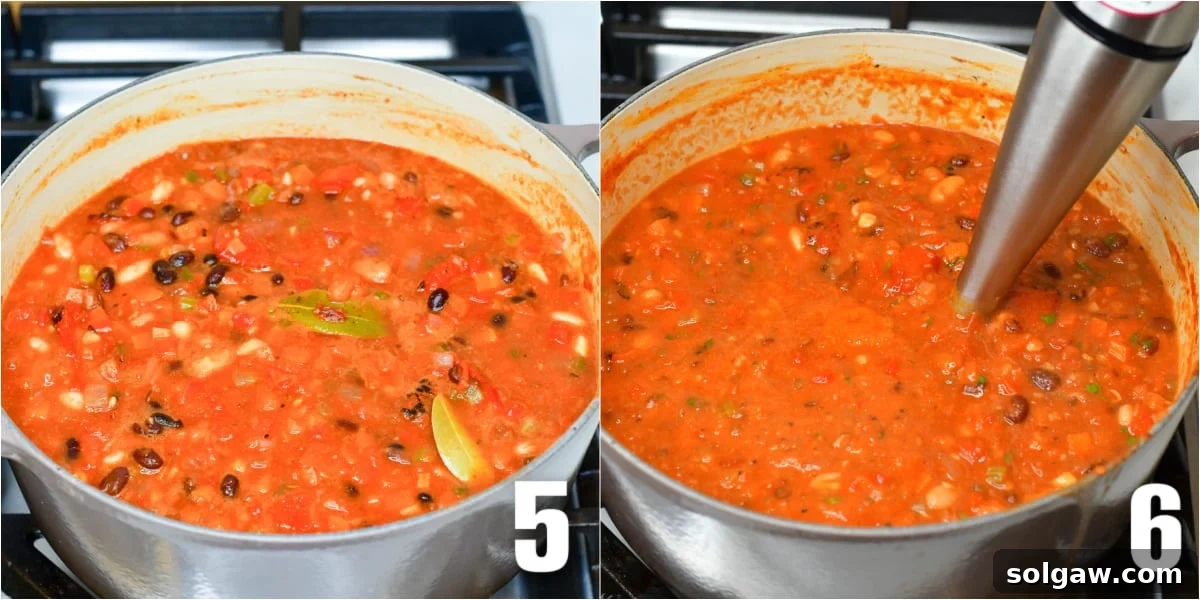
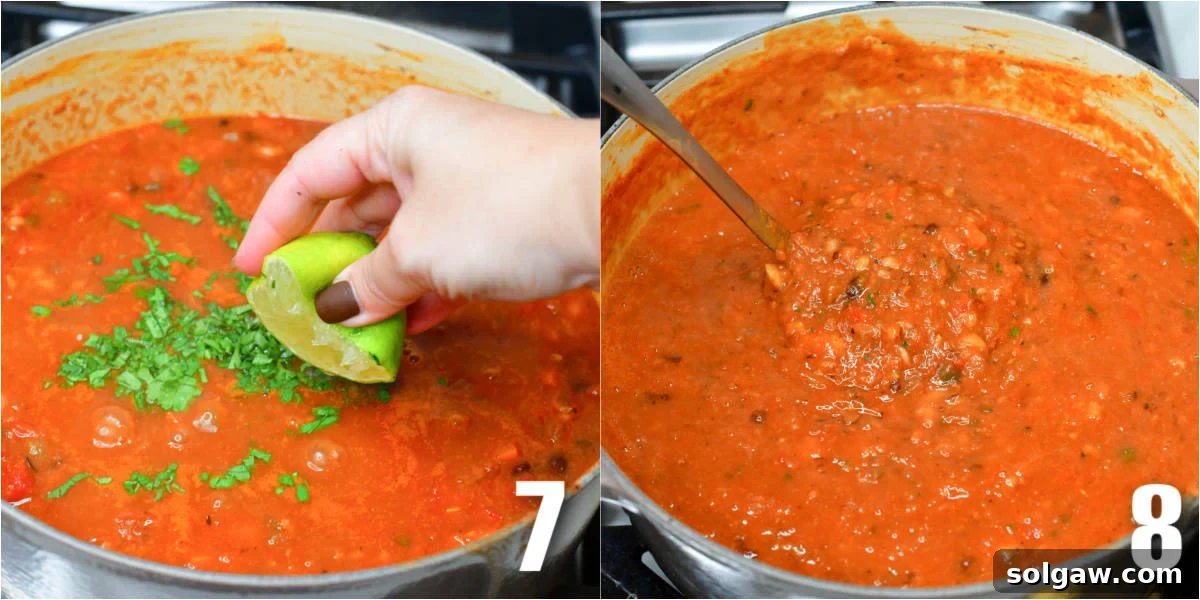
- Create the Perfect Texture: For a wonderfully thick and hearty chili with a combination of smooth and chunky textures, use an immersion blender and pulse the chili a few times directly in the pot. Avoid over-blending; the goal is to break down some of the beans and vegetables to create body, while leaving plenty of whole pieces for texture. If you don’t have an immersion blender, carefully scoop out about one-third to one-half of the chili into a regular blender or food processor, pulse until partially smooth, and then return it to the pot, stirring to combine.
- Finish with Freshness: Carefully remove and discard the bay leaves from the chili. Stir in the fresh minced cilantro and the juice from one lime. The cilantro adds a bright, herbaceous note, and the lime juice provides a crucial zest that cuts through the richness, brightening all the flavors in the chili. Serve hot and enjoy!

Versatile Cooking Methods: Slow Cooker & Instant Pot
This vegetarian chili recipe is incredibly versatile and can be adapted to various cooking methods, making it perfect for busy weeknights or leisurely weekend cooking. Beyond the stovetop, you can prepare this delicious chili in a slow cooker or an Instant Pot, each offering unique benefits to suit your schedule and preferences.
Slow Cooker Method: Set It and Forget It
The slow cooker is ideal for developing deep, rich flavors with minimal effort. While it adds an extra step, I highly recommend sautéing the vegetables first on the stovetop. This crucial step caramelizes the aromatics and significantly enhances the overall flavor profile of your chili, which is harder to achieve directly in a slow cooker.
- Sauté First: In a large pan on your stovetop, follow the initial steps of the main recipe to sauté the onions, carrots, celery, bell peppers, jalapeños, fresh tomatoes, and garlic until softened and fragrant. Sprinkle in the spices and sauté for another minute or two to bloom their flavors.
- Transfer and Combine: Carefully transfer all the sautéed vegetables and spices into your slow cooker insert.
- Add Remaining Ingredients: Pour in the vegetable stock, tomato sauce, all three types of drained beans, and canned diced tomatoes. Add the bay leaves. Stir everything together very well to ensure all ingredients are evenly distributed.
- Cook: Secure the lid on your slow cooker. Cook on the LOW setting for approximately 6 hours, or on the HIGH setting for about 3 hours. The longer cooking time on low often results in a more intensely flavored chili.
- Finish: Once cooked, remove the bay leaves. Stir in the fresh minced cilantro and lime juice. If desired, use an immersion blender for a few quick pulses to achieve your preferred chili texture.
Instant Pot Method: Fast and Flavorful
For a quick yet incredibly flavorful chili, the Instant Pot is your best friend. Its pressure cooking capabilities significantly reduce cooking time while still infusing all the ingredients with rich taste.
- Sauté in Pot: Use the “Sauté” function on your Instant Pot. Add the canola oil, then sauté the onions, carrots, celery, bell peppers, jalapeños, fresh tomatoes, and minced garlic directly in the Instant Pot liner until they are softened and fragrant. Sprinkle in the spices and sauté for an additional minute.
- Deglaze and Add Ingredients: Press “Cancel” to turn off the sauté function. Pour in a small amount of vegetable stock (about half a cup) and use a wooden spoon to scrape up any browned bits from the bottom of the pot – this is crucial to prevent a “Burn” error and adds flavor.
- Combine: Add the remaining vegetable stock, tomato sauce, all drained beans, canned diced tomatoes, and bay leaves to the Instant Pot. Stir everything together gently.
- Pressure Cook: Secure the lid on the Instant Pot, ensuring the sealing ring is properly in place. Turn the steam release valve to the “Sealing” position. Select the “Manual” or “Pressure Cook” setting and set the cooking time to 10 minutes on High Pressure. It will take about 10-15 minutes for the pot to come to pressure before the cooking time begins.
- Release Pressure: Once the cooking cycle is complete, allow a Natural Pressure Release (NPR) for 10 minutes. This means letting the pressure release on its own without intervention. After 10 minutes, carefully switch the steam release valve to the “Venting” position for a Quick Release (QR) of any remaining pressure.
- Finish: Open the lid once the float valve has dropped. Remove the bay leaves. Stir in the fresh minced cilantro and lime juice. Use an immersion blender if you prefer a thicker, slightly smoother texture.
Always consult your specific pressure cooker manual for exact controls and safety guidelines.

Make Ahead and Freeze: Perfect for Meal Prep
Vegetarian chili is an outstanding candidate for meal prep and freezing, making it incredibly convenient for future quick and healthy meals. Preparing a large batch and freezing portions means you’ll always have a delicious, homemade meal ready when time is short.
- Cool Quickly: The most important step for safe freezing is to cool the chili as quickly as possible. Transfer the hot chili into smaller, shallow containers, or place the entire pot of chili into a larger basin filled with ice and water (creating an ice bath). Stir the chili occasionally as it cools to help dissipate the heat evenly. Aim to cool it to room temperature within two hours.
- Portion and Package: Once thoroughly cooled, portion the chili into individual servings or family-sized amounts. The best method for freezing chili is using heavy-duty zip-top freezer bags. Pour the chili into the bags, leaving about an inch of headspace to allow for expansion during freezing.
- Remove Air: Before sealing, press out as much air as possible from the bags. This prevents freezer burn and helps maintain the chili’s quality and flavor. Seal the bags tightly.
- Label and Date: Always label each bag with the date and contents (“Vegetarian Chili”). This helps you keep track of your freezer inventory and ensures you consume the chili within its optimal freshness window.
- Freeze Flat: Lay the filled and sealed bags flat on a baking sheet or cutting board in the freezer. Once frozen solid, the flat portions can be easily stacked to save space in your freezer.
- Storage Duration: Frozen vegetarian chili maintains its best quality for up to 2-3 months. Beyond this, it will still be safe to eat but might experience a slight decline in texture or flavor.
- Thawing: To thaw, simply transfer a frozen bag of chili from the freezer to the refrigerator overnight. Place the bag on a large plate or in a bowl to catch any condensation or drips as it thaws. Avoid thawing at room temperature for food safety reasons.
- Reheating: Once thawed, reheat the chili gently on the stovetop over medium-low heat, stirring occasionally until heated through. You can also microwave individual portions. Add a splash of vegetable broth or water if the chili seems too thick after thawing.
Creative Ways to Top and Serve Your Vegetarian Chili
Serving vegetarian chili isn’t just about the bowl; it’s about the entire experience! The right toppings and serving suggestions can elevate your chili from a simple meal to a gourmet delight. Here are some of the best ways to customize and enjoy your hearty vegetarian chili:
Delicious Toppings Bar
Set up a toppings bar to let everyone personalize their bowl. The variety of textures and flavors will make your chili even more exciting:
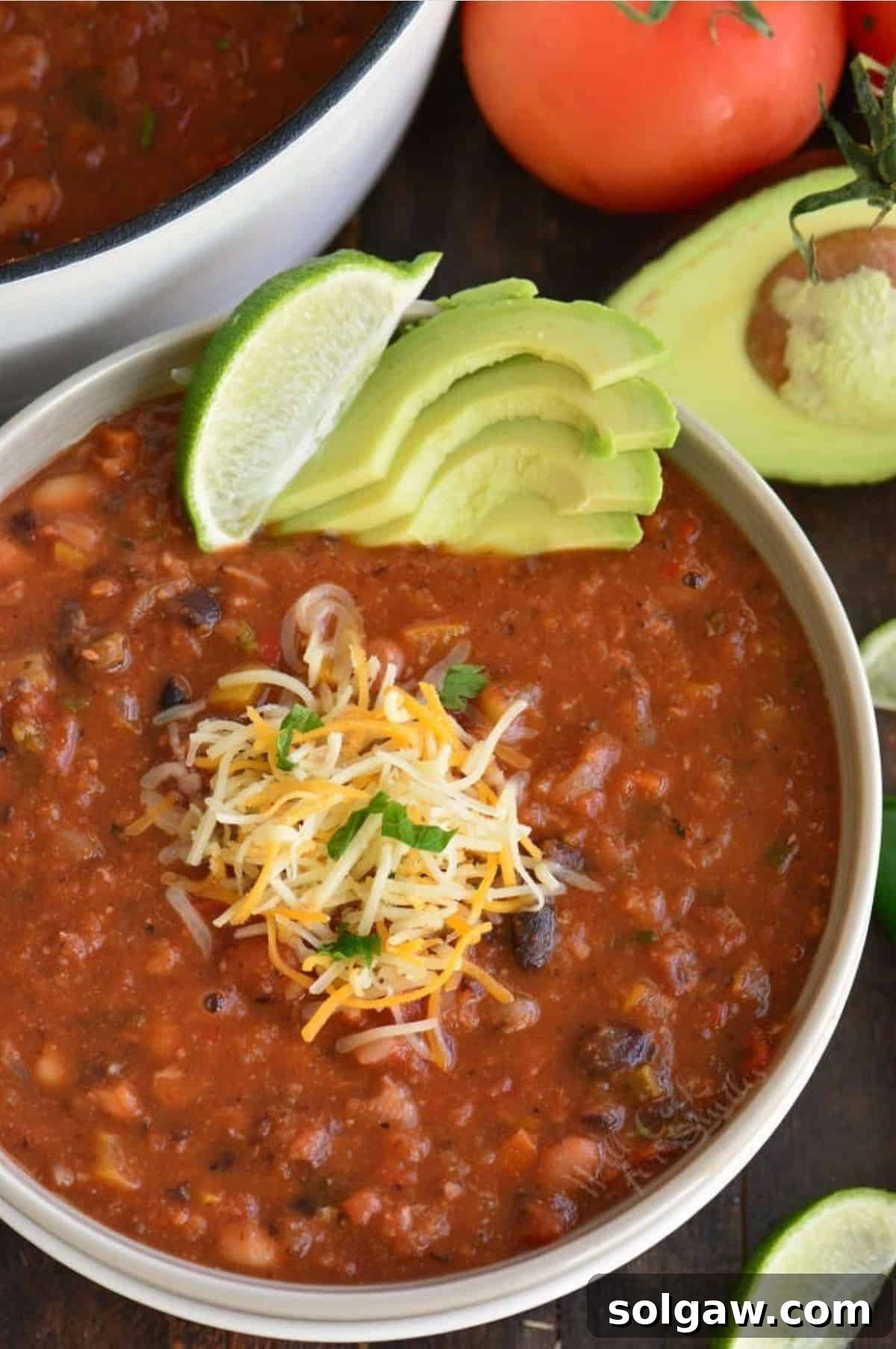
- Creamy Additions: Sliced avocado, a dollop of sour cream (or a vegan sour cream alternative for a plant-based option), or a swirl of plain Greek yogurt for added tang and creaminess.
- Cheesy Goodness: A generous sprinkle of shredded cheddar cheese or a blend of your favorite cheeses. For a vegan version, use a dairy-free shredded cheese alternative.
- Fresh & Zesty: An extra squeeze of fresh lime juice for brightness, fresh minced cilantro for herbaceous notes, or chopped green onions (scallions) for a mild oniony bite.
- Crunch & Texture: Crispy tortilla strips or crushed tortilla chips add a satisfying crunch.
- Extra Veggies: Finely diced fresh red onions, tomatoes, or jalapeños (if you like extra heat) can add a burst of raw freshness.
Perfect Pairings: What to Serve Alongside
Chili pairs wonderfully with a variety of breads and sides, perfect for soaking up every last bit of that rich broth:
- Hearty Breads: Serve with warm potato dinner rolls, classic buttermilk cornbread, or a spicy jalapeño cornbread for an extra kick.
- Flaky Biscuits: Light and fluffy buttermilk biscuits or savory jalapeño cheddar buttermilk biscuits are excellent for dipping.
- Simple Sides: A fresh green salad with a light vinaigrette can provide a refreshing contrast to the richness of the chili.
Beyond the Bowl: Innovative Serving Ideas
Don’t limit your vegetarian chili to just a bowl! It’s incredibly versatile and can be transformed into other exciting meals:
- As a Dip: Turn your chili into a fantastic dip by serving it warm with sturdy tortilla chips, crackers, or an assortment of fresh veggie sticks like carrots, celery, and bell peppers. It’s a crowd-pleasing appetizer!
- Creative Topping: Use the chili as a savory topping for a variety of dishes:
- Nachos: Spoon it over a bed of tortilla chips with cheese and your favorite nacho toppings.
- Tacos or Burritos: Use it as a hearty filling for vegetarian tacos or burritos.
- Baked Potatoes: A classic chili topping for fluffy baked potatoes or sweet potatoes.
- Hot Dogs or Fries: A delicious, unconventional topping for vegetarian hot dogs or loaded chili cheese fries.
- Pasta Dishes: Serve it over macaroni or other pasta shapes for a comforting chili mac.
Why This Vegetarian Chili is a Must-Try
This vegetarian chili is more than just a recipe; it’s a celebration of vibrant, wholesome ingredients coming together to create a dish that’s incredibly satisfying and universally appealing. Here’s why you should make it a staple in your kitchen:
- Health Benefits: Loaded with fresh vegetables and three types of beans, this chili is a powerhouse of fiber, vitamins, and minerals. It’s naturally low in saturated fat and cholesterol, contributing to a heart-healthy diet.
- Dietary Inclusivity: Being naturally gluten-free and vegan, it caters to a wide range of dietary needs without compromising on flavor or texture. It’s an excellent choice when cooking for a diverse group of eaters.
- Budget-Friendly: Made with readily available and affordable pantry staples, this chili offers fantastic value, allowing you to feed a crowd without breaking the bank.
- Weeknight Friendly & Meal Prep Dream: While it simmers for a bit, the active prep time is minimal, making it suitable for weeknight dinners. Its excellent freezing capabilities also make it perfect for batch cooking and meal prepping for the week ahead.
- Customizable: From the choice of vegetables and beans to the level of spice and the array of toppings, this chili is highly adaptable. You can truly make it your own based on what you have and what you love.
- Flavor Development: The careful layering of spices and the slow simmering process allow the flavors to deepen and meld, resulting in a rich, complex taste that will leave you craving more.
Whether you’re new to vegetarian cooking or a seasoned plant-based enthusiast, this chili promises a deeply rewarding culinary experience. Its comforting warmth and hearty nature make it an ideal dish for any season, bringing joy and deliciousness to your table.
PIN THIS RECIPE FOR LATER
DID YOU MAKE THIS RECIPE? Please leave a star rating! Let me know how you liked it by leaving a comment below or share and tag me on social media @willcookforsmiles. DON’T FORGET to subscribe to my newsletter!
Vegetarian Chili Recipe

This Vegetarian Chili is a flavorful and hearty meatless masterpiece, loaded with fresh vegetables, three kinds of beans, and aromatic spices. It’s gluten-free, vegan-friendly, healthy, and satisfying for everyone!
Course: Dinner, Main Course
Cuisine: American
Diet: Gluten Free, Vegan (with dairy-free toppings)
Prep Time: 15 minutes
Cook Time: 45 minutes
Total Time: 1 hour
Servings: 8
Calories: 262 kcal per serving
Author: Lyuba Brooke
Ingredients
- 3 tbsp canola oil
- 1 red onion, diced
- 2 large carrots, diced
- 3 celery ribs, diced
- 2 tomatoes on a vine, diced
- 2 bell peppers (any color), diced
- 1-2 jalapeños, seeded and minced (adjust to taste)
- 6 garlic cloves, minced
- 14.5 oz can fire roasted diced tomatoes
- 15 oz can pinto beans, drained
- 15 oz can black beans, drained
- 15 oz can northern white beans or cannellini beans, drained
- 8 oz tomato sauce
- 1 cup vegetable stock
- 2 bay leaves
- 1 tbsp chipotle chili powder (or regular chili powder, adjust to taste)
- 2 tsp smoked paprika
- 1 tsp oregano
- 2 tsp cumin
- 2 tsp garlic powder
- 1 tsp onion powder
- 1 1/2 tsp white granulated sugar
- 1 1/2 tsp salt (more or less to taste)
- 2 tbsp fresh minced cilantro
- Juice from 1 lime
Instructions
- Prepare Ingredients: Dice all vegetables, measure stock and seasoning. Open and drain liquid from all canned beans.
- Sauté Aromatics: Preheat a Dutch oven over medium heat with canola oil. Sauté diced onions, carrots, and celery until softened (5-7 minutes).
- Add Remaining Veggies: Add diced bell peppers, jalapeños, and fresh tomatoes. Cook for a few minutes until slightly softened.
- Infuse with Garlic: Make a well in the center, add minced garlic. Sauté until fragrant (30-60 seconds), then mix with other vegetables.
- Toast Spices: Sprinkle all dry seasonings (chili powder, paprika, oregano, cumin, garlic powder, onion powder, sugar, salt) over the vegetables. Mix well and sauté for 1-2 minutes to enhance flavors.
- Combine Liquids & Beans: Pour in vegetable stock, tomato sauce, drained beans, and canned fire-roasted diced tomatoes. Add bay leaves and mix thoroughly. Taste and adjust seasoning as needed.
- Simmer: Bring the mixture to a simmer, then reduce heat to low. Cover the pot, leaving a small crack for steam. Cook for 30-40 minutes, stirring occasionally.
- Achieve Desired Texture: Remove bay leaves. Use an immersion blender to pulse the chili a few times. This blends some beans and vegetables, creating a thicker, richer texture while keeping chunks. (Alternatively, blend half the chili in a food processor and return to the pot).
- Finish with Freshness: Stir in fresh minced cilantro and the juice from 1 lime. Serve hot with your favorite toppings.
Notes
- Storing: Store cooled chili in an airtight container in the refrigerator for 4-5 days.
- Freezing: Cool chili completely. Portion into zip-top freezer bags, pressing out air. Freeze flat for up to 2-3 months. Thaw overnight in the refrigerator.
- Spiciness: Increase heat with older jalapeños (with veins) and their seeds, or serrano peppers. Reduce heat with younger jalapeños (smooth skin) and by discarding seeds.
Nutrition (per serving)
Calories: 262kcal | Carbohydrates: 42g | Protein: 12g | Fat: 7g | Saturated Fat: 1g | Sodium: 1158mg | Potassium: 958mg | Fiber: 12g | Sugar: 8g | Vitamin A: 4562IU | Vitamin C: 59mg | Calcium: 124mg | Iron: 5mg
Tried this recipe? Mention @willcookforsmiles or tag #willcookforsmiles!
Explore More Easy Chili Recipes
If you loved this vegetarian chili, you might enjoy exploring other delicious and easy chili recipes from our collection:
- Instant Pot Chili
- White Chicken Chili
- The Best Classic Chili Recipe
- Hearty Pumpkin Chili
- Creamy White Turkey Chili
- Flavorful Turkey Chili
Originally published on Will Cook For Smiles in January 2020, this recipe continues to be a favorite!