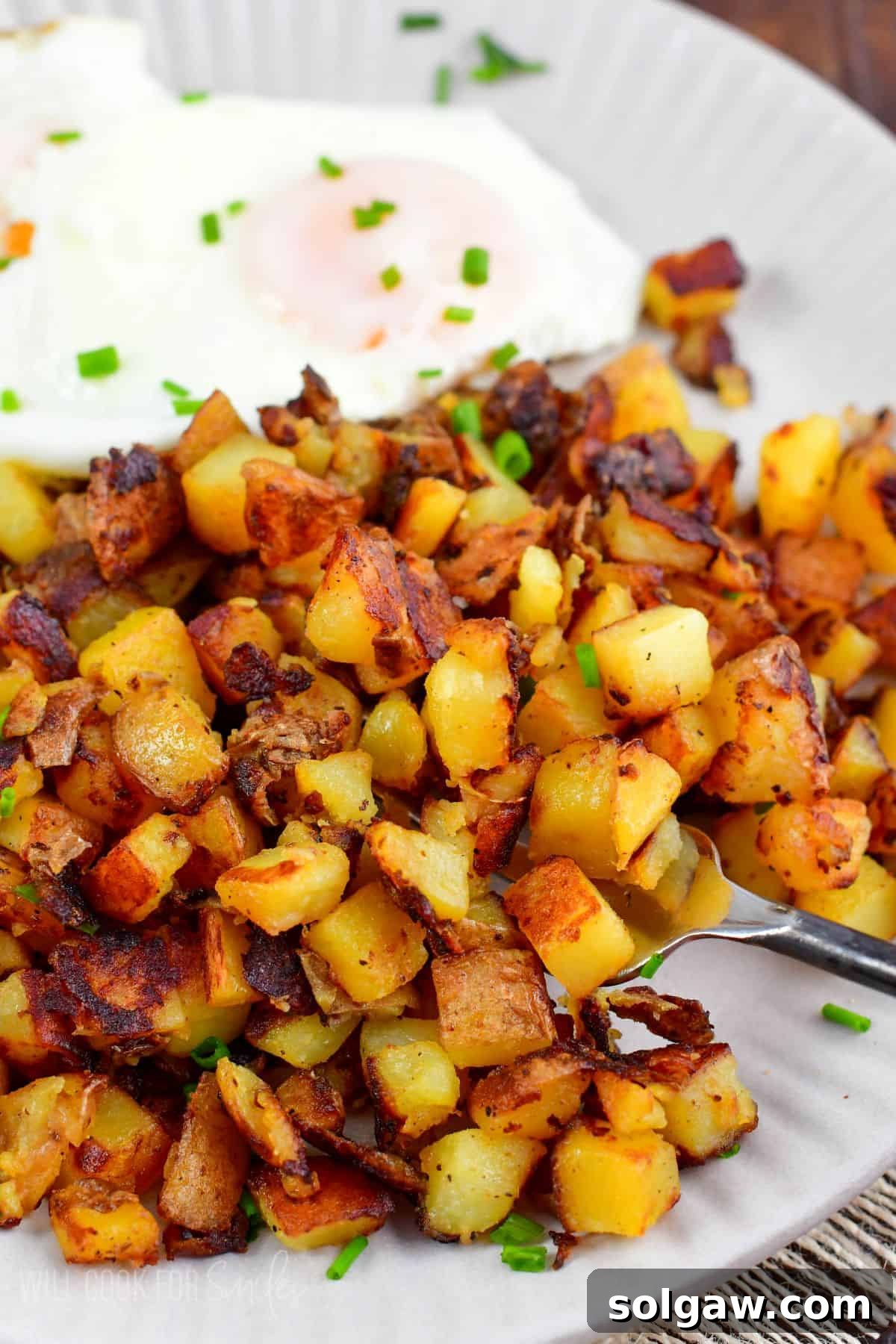
Few dishes evoke the comfort and joy of a hearty meal quite like a plate of perfectly prepared home fries. For me, this classic potato side dish has been a culinary cornerstone since my earliest days in the kitchen. Learning to cook home fries was my very first venture into stove-top magic, and it quickly became my absolute favorite way to enjoy potatoes. Over the years, I’ve experimented with countless methods, potato varieties, and flavor profiles to achieve that ideal balance of crispy exterior and fluffy interior. Now, I’m thrilled to share all the secrets I’ve uncovered to help you create the most irresistible homemade home fries every single time.
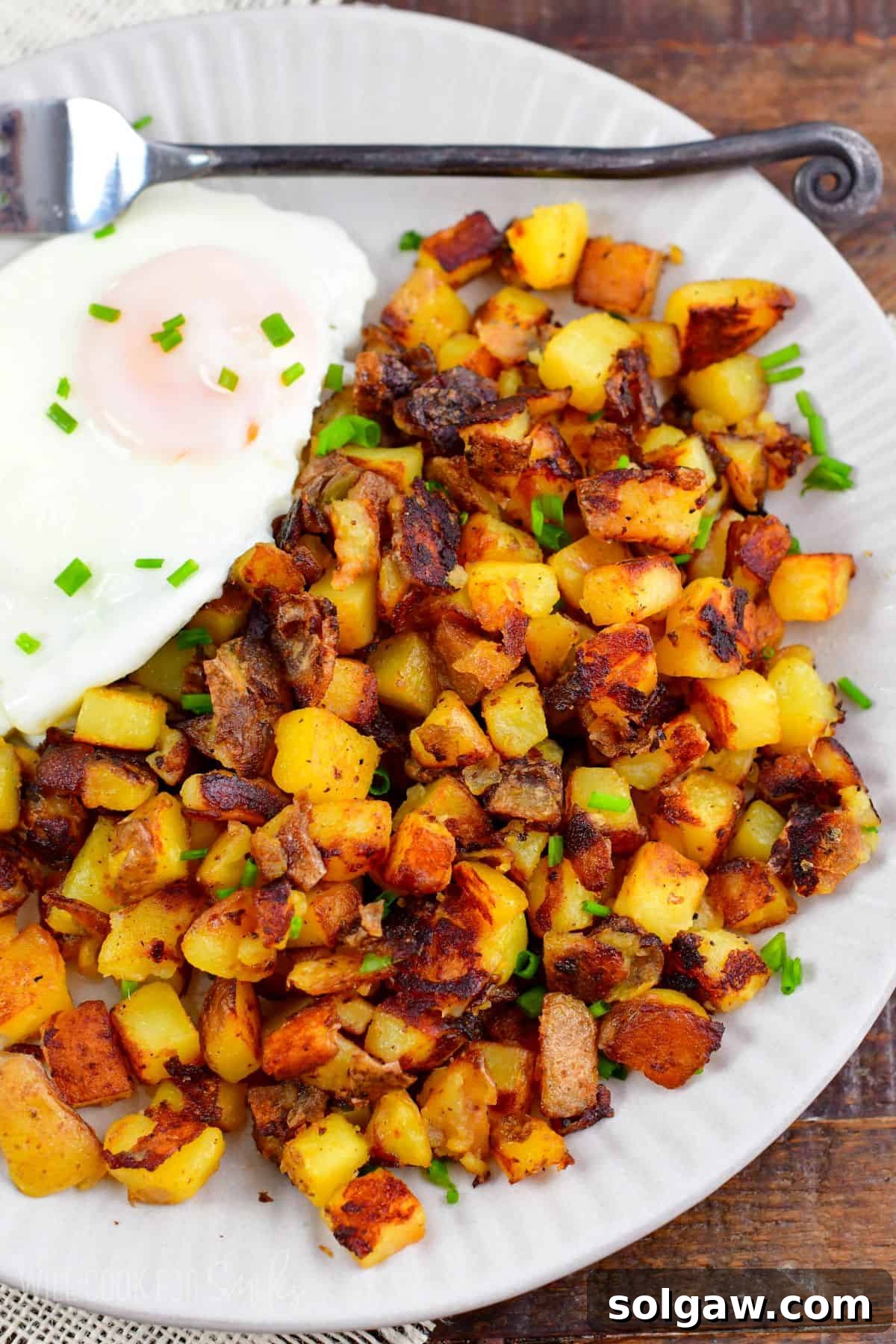
The Ultimate Guide to Crispy Homemade Home Fries
Home fries are more than just a side dish; they’re a versatile canvas for flavor, a comforting staple, and a delightful addition to any meal, be it breakfast, brunch, or dinner. Achieving that perfect texture—golden brown and crisp on the outside, wonderfully soft and tender on the inside—is an art form, but one that is easily mastered with a few key techniques. This comprehensive guide will walk you through everything you need to know, from selecting the best potatoes to mastering the cooking process, ensuring your homemade home fries are always a resounding success.
Why Homemade Home Fries are the Best
While restaurant home fries can be delicious, making them at home offers unparalleled advantages. You control the ingredients, ensuring freshness and quality. You can customize the seasonings to your exact preference, from simple salt and pepper to a complex blend of herbs and spices. Moreover, the satisfaction of creating such a beloved dish from scratch is incredibly rewarding. Plus, with the tips and tricks shared here, you’ll find that homemade home fries are not only superior in taste and texture but also surprisingly simple to prepare.
Quick Overview and Essential Tips for Perfect Home Fries
Before diving into the full recipe, here are some critical points that will set you up for success:
- Choose the Right Potato: My absolute top recommendation for home fries is using Yukon Gold potatoes. Their slightly sweet flavor and naturally creamy texture make them unparalleled for achieving that desired tender-crisp result. Red potatoes are a close second.
- Consider Parboiling: While not strictly necessary, parboiling your potatoes beforehand is a game-changer. It significantly reduces cooking time and helps create that supremely soft interior while promoting a crispier exterior.
- Excellent for Meal Prep: This recipe is fantastic for making ahead! You can parboil the potatoes days in advance, store them, and have them ready to cook in a flash when you’re craving fresh home fries.
- Invest in Non-Stick Cookware: To avoid frustration with potatoes sticking to the pan, I highly recommend using a good quality non-stick skillet. This allows for easier flipping and ensures an even golden crust.
- Don’t Skimp on Oil: Plenty of oil is crucial for achieving that beautiful crispiness and preventing sticking. Don’t be shy!
- Preheat Your Pan: Always remember to preheat your pan thoroughly before adding oil and potatoes. A hot pan is key to a good sear and preventing the potatoes from absorbing too much oil and becoming greasy.
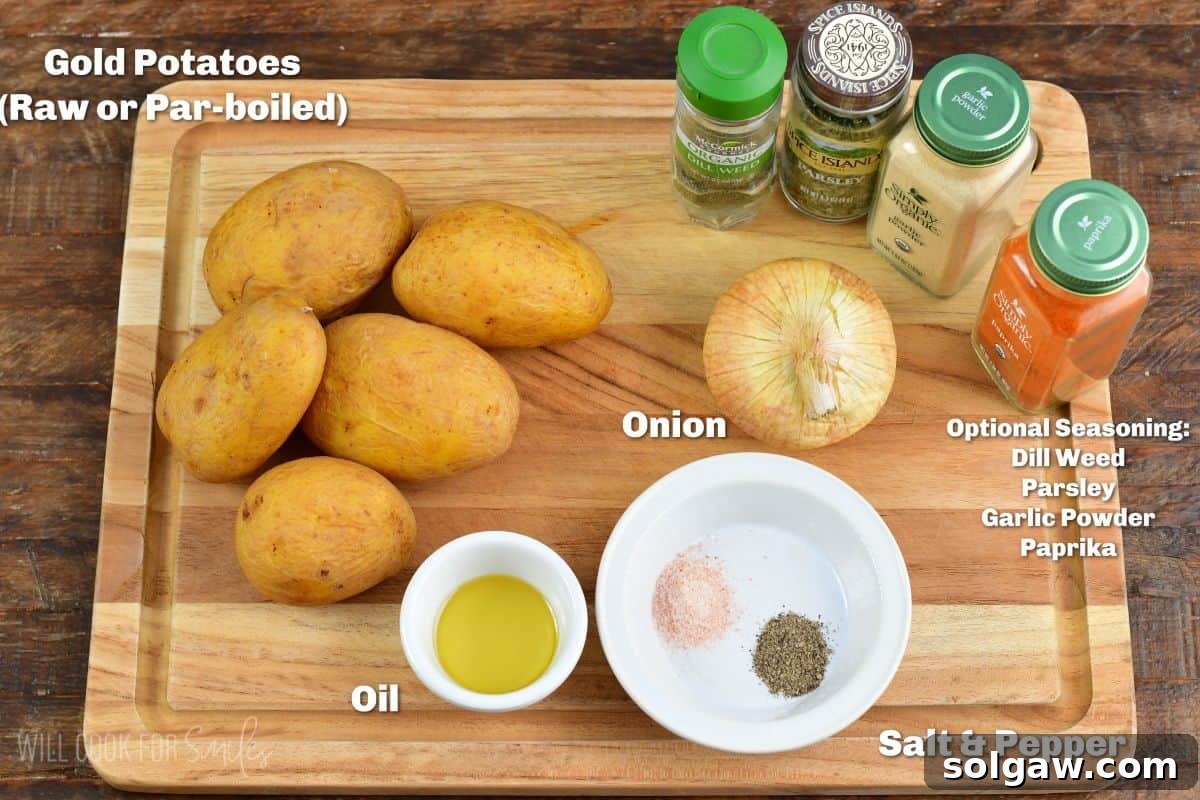
Key Ingredients for Unforgettable Home Fries
Crafting the perfect plate of home fries starts with understanding your ingredients and how they contribute to the final flavor and texture.
Choosing the Right Potatoes
I cannot stress enough how vital potato choice is for stellar home fries. I’ve personally tried nearly every type available, and Yukon Gold potatoes consistently deliver the best results in terms of both taste and texture. They boast a slightly sweet, buttery flavor and a creamy, tender flesh that crisps up beautifully on the outside.
- Gold Potatoes (Yukon Gold): The champion choice. Their moderate starch content allows them to become wonderfully tender inside while holding their shape for a crisp exterior. Their subtle sweetness adds another layer of deliciousness.
- Red Potatoes: A very close second. Red potatoes offer a similar waxy texture to Yukon Golds, which prevents them from becoming mushy. The main difference lies in their flavor profile, which is less sweet and more earthy compared to gold potatoes. They still yield fantastic crispy home fries.
- Russet (Idaho) Potatoes: I strongly advise against using Russet potatoes for home fries. While great for baking or mashing, their high starch content makes them prone to falling apart and becoming overly mealy or crumbly when pan-fried, making it difficult to achieve that desirable crispy-tender balance.
Essential Seasoning & Flavor Boosters
Seasoning is where you can truly make home fries your own. Start with the basics and then feel free to explore. The goal is to enhance the natural potato flavor without overwhelming it.
- Basic Seasoning: A generous amount of salt and freshly cracked black pepper is non-negotiable. Potatoes love salt, and it helps draw out moisture for better crisping.
- Herbal Flavors: For a fresh, aromatic touch, incorporate dried parsley and/or dill weed. These herbs add a bright, classic home fries flavor. Freshly chopped chives or scallions make an excellent garnish after cooking.
- Savory Punch: Elevate your seasoning with staples like garlic powder, onion powder, and/or paprika. These powders distribute evenly and provide a deep, savory background. Smoked paprika can add a wonderful depth.
- A Touch of Spice: If you enjoy a kick, a pinch of crushed red pepper flakes or a dash of cayenne pepper will provide a pleasant warmth. Adjust to your personal heat preference.
Adding Veggies for Extra Flavor and Texture
Incorporating other vegetables not only adds flavor but also visual appeal and a delightful mix of textures. It’s an easy way to make your home fries a more complete dish.
- Onions: I highly recommend adding a small yellow onion, finely diced or thinly sliced. As they cook, onions caramelize, adding a wonderful sweetness and savory depth that pairs perfectly with potatoes. Add them partway through cooking the potatoes so they soften but don’t burn.
- Bell Peppers: Many people love the addition of colorful bell peppers (red, green, or yellow). They add a fresh, slightly sweet flavor and a lovely crunch. Dice them similarly to your potatoes for even cooking.
Oil Selection for Searing
The type and amount of oil you use are crucial for achieving that perfect golden crisp. Opt for oils with a high smoke point.
- Avocado Oil: My personal preference due to its high smoke point and neutral flavor.
- Vegetable Oil or Canola Oil: Excellent and readily available options, also with high smoke points.
- Olive Oil: While it can be used, extra virgin olive oil has a lower smoke point, so a lighter olive oil would be better if you choose this option.
- Bacon Fat: For an incredible savory flavor boost, especially for breakfast home fries, render some bacon and use the fat!
Mastering the Home Fry Technique: Step-by-Step
Follow these detailed steps to achieve consistently delicious and perfectly textured home fries. Each stage plays a vital role in the final outcome.
Prepping Your Potatoes: To Parboil or Not to Parboil?
This is one of the most debated steps in home fry preparation, and understanding its impact is key.
- The Parboiling Advantage: Parboiling (partially boiling) potatoes before frying offers significant benefits. It jump-starts the cooking process, ensuring the potato interiors become tender quickly. This means less time frying, which in turn leads to a fluffier inside and a faster, more consistent crisp on the outside. Parboiled potatoes also hold their shape better during frying.
- How to Parboil: Start by cleaning your potatoes thoroughly; there’s no need to peel them if you like the skin on. Place whole, cleaned potatoes in a pot and cover with cold water. Add about a tablespoon of coarse salt to the water for flavor. Bring the water to a rolling boil, then reduce the heat to a gentle simmer to prevent boiling over. Cook for 5-7 minutes. The exact time will depend on the size of your potatoes; you want them to be slightly tender but still firm, not fully cooked or mushy. Drain the water and immediately transfer the potatoes to a cutting board to cool completely. Cooling is crucial, as it firms up the potatoes and makes them much easier to cut into perfect cubes without crumbling.
- Make-Ahead Tip: Parboiled and cooled potatoes can be stored in an airtight container in the refrigerator for up to 3-4 days, making morning prep a breeze!
- Cooking from Raw Potatoes: You can absolutely make home fries from raw potatoes. The main difference will be in cooking time and a slightly different texture. Raw potatoes will be crispier on the outside and still soft inside, but the interior texture might be smoother rather than crumbly-fluffy. If using raw, ensure they are washed and patted completely dry before cutting. Be prepared for a longer cooking time, as they need to cook through entirely in the pan.
The Perfect Cut
Whether parboiled or raw, consistency in your potato cubes is paramount for even cooking.
- Cut potatoes into small, uniform cubes, approximately 1/2 inch thick. If you prefer smaller pieces or want them to cook faster, you can cut them slightly smaller. Uniformity ensures every piece cooks at the same rate, preventing some from burning while others remain raw.
- For raw potatoes, wash the skin well before cutting.
Pan & Oil: The Foundation of Crispness
A properly heated pan and sufficient oil are fundamental for achieving that coveted crispy exterior.
- Preheat the pan first! Place your non-stick cooking pan over medium heat and allow it to heat up for a few minutes before adding anything. This step creates a hot surface that immediately begins to sear the potatoes, preventing them from sticking and becoming soggy.
- Once hot, add a generous amount of your chosen oil (2-3 tablespoons for 2 lbs of potatoes is a good starting point). Ensure the bottom of the pan is well coated. Lower the heat slightly to medium-low or medium, depending on your stove’s intensity, before adding the potatoes. You will raise the heat later to crisp.
The Covered Cook: Achieving Inner Tenderness
This stage is all about cooking the potatoes through and creating that soft, creamy, and fluffy interior.
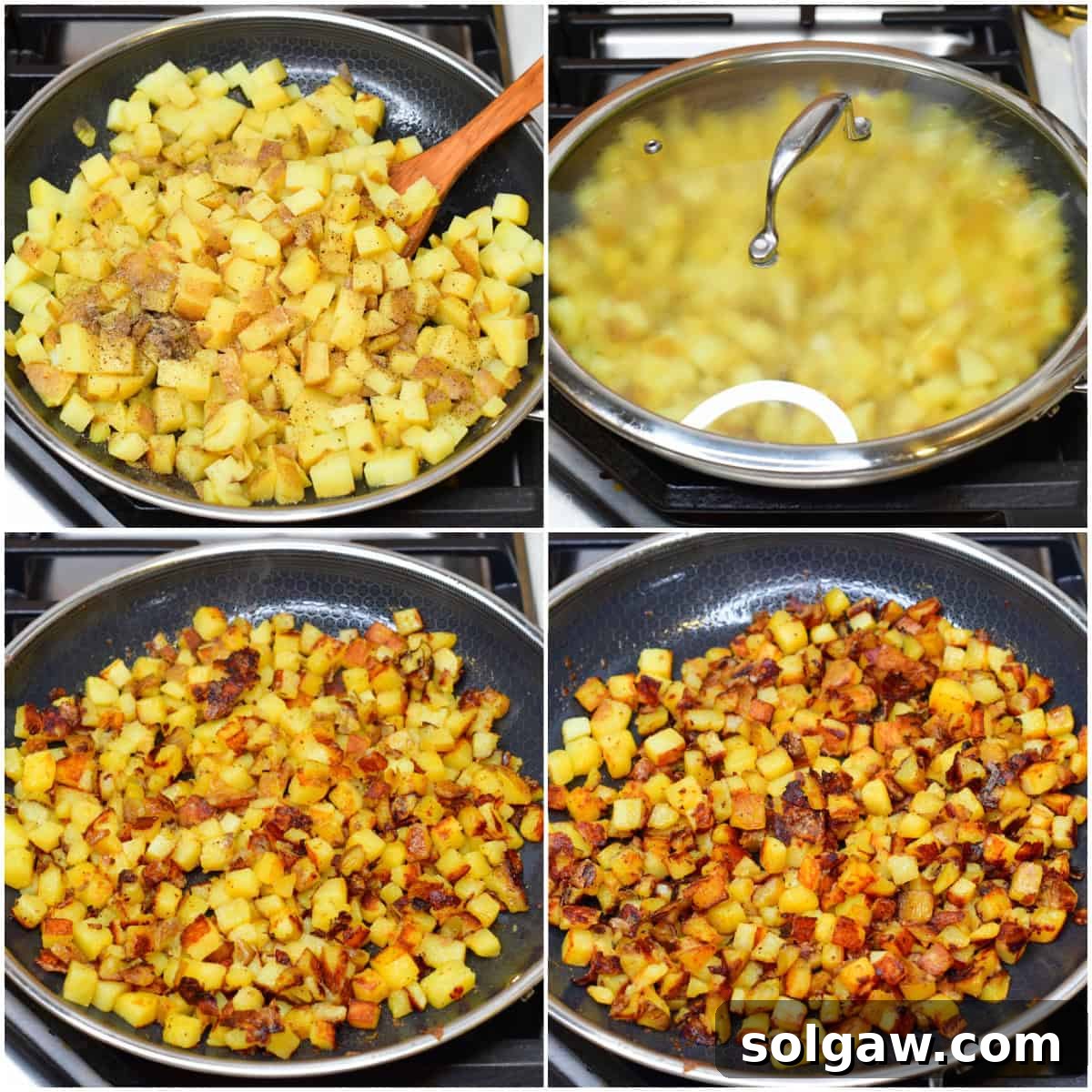
- Add the cut potatoes to the preheated, oiled pan. Season them generously with salt and pepper, and any other dry seasonings you desire (garlic powder, onion powder, paprika). If adding onions or bell peppers, add them now.
- Stir everything to coat the potatoes and vegetables evenly.
- Cover the pan with a lid. This traps steam, which helps cook the potatoes thoroughly and quickly, making them tender on the inside without drying out.
- Cook for 10-15 minutes (less if parboiled, more if raw), stirring occasionally every 3-5 minutes to prevent sticking and ensure even cooking. Continue until the potatoes are tender when pierced with a fork.
The Uncovered Crisp: Golden Perfection
Once the potatoes are tender, it’s time to create that irresistible golden-brown crust.
- When the potatoes are tender, remove the lid from the pan.
- Increase the heat back to medium or slightly above medium. This higher heat allows the moisture to evaporate and the potatoes to sear.
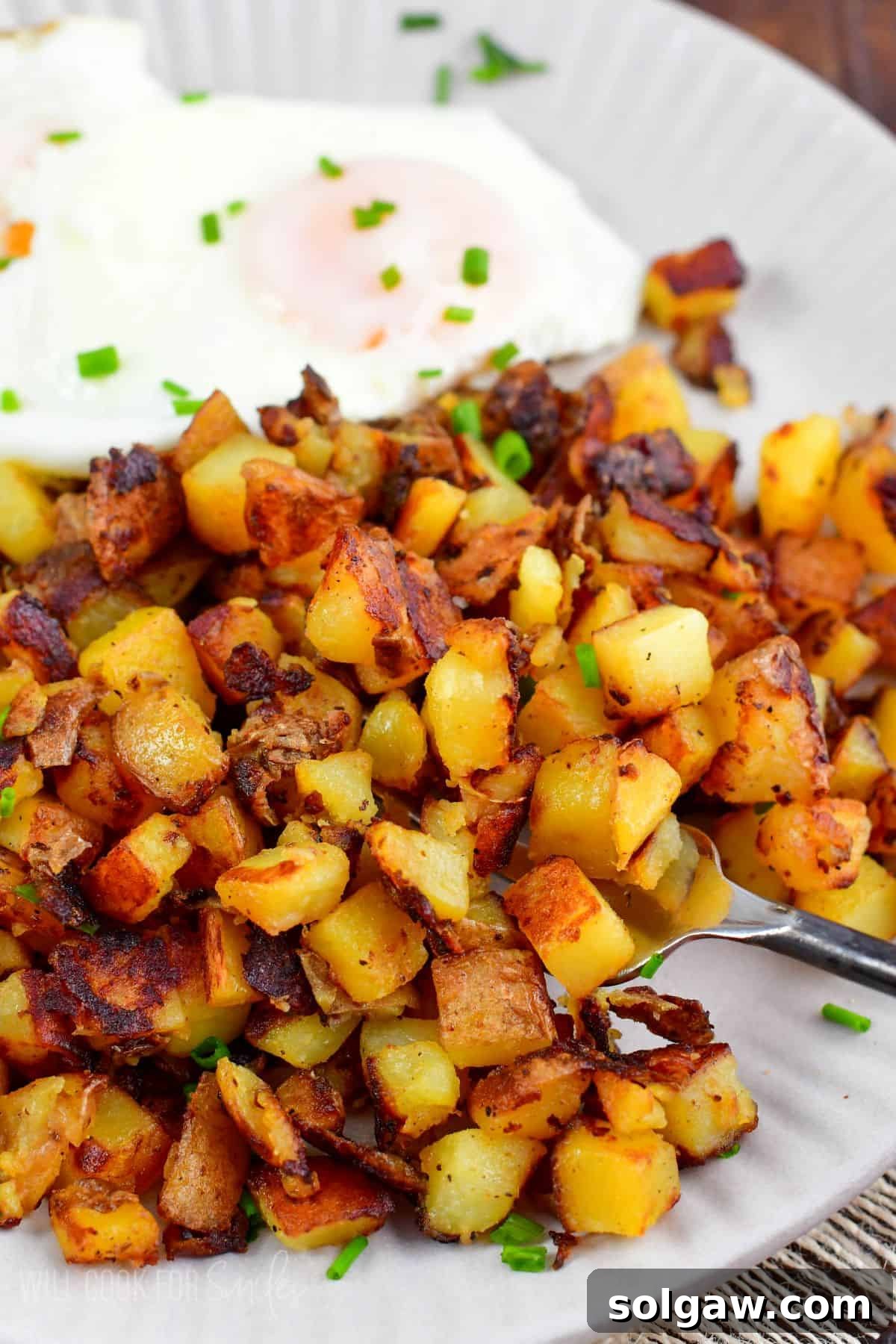
- Cook uncovered for another 5-10 minutes, or until the potatoes are beautifully golden brown and crispy on all sides.
- PRO TIP: Resist the urge to stir constantly! Give the potatoes time to sear and develop a crust before stirring. Stirring too frequently will prevent them from browning. Stir every 2-3 minutes, allowing a golden crust to form on one side before flipping to brown another.
Tips and Tricks for Next-Level Home Fries
Elevate your home fry game with these additional insights:
- Don’t Overcrowd the Pan: Cooking too many potatoes at once will steam them rather than fry them, leading to soggy results. If you’re making a large batch, cook in two separate batches or use a larger pan.
- Use Plenty of Oil: As mentioned, sufficient oil is essential. If the pan looks dry, add a little more during the crisping stage.
- Drain Excess Moisture: After parboiling, ensure potatoes are thoroughly drained and cooled. If starting with raw, pat them very dry. Excess moisture is the enemy of crispiness.
- Season in Layers: Season with salt during parboiling (if applicable) and again when they hit the pan. A final sprinkle of salt after cooking can also brighten flavors.
- Fresh Herbs at the End: If using fresh herbs like parsley or chives, stir them in right before serving for maximum flavor and vibrant color.
Serving Suggestions: Beyond Breakfast
While home fries are undeniably a breakfast icon, their versatility allows them to shine at any meal.
- The Classic Breakfast: Pair them with your favorite style of eggs (fried, scrambled, poached), crispy bacon, savory sausage, or a slice of buttered toast. For a complete brunch spread, serve them alongside quiches or frittatas.
- Dinner Side Dish: These crispy potatoes make an excellent accompaniment to grilled steaks, roasted chicken, or juicy burgers. They’re a fantastic alternative to mashed potatoes or plain roasted vegetables.
- Loaded Home Fries: Turn them into a meal! Top hot home fries with melted cheese, cooked bacon bits, sour cream, and chopped green onions for a delicious loaded potato dish. A fried egg on top makes it a perfect breakfast-for-dinner option.
- Garnish Ideas: A sprinkle of fresh chives or finely chopped scallions adds a burst of color and a mild oniony flavor. A dollop of ketchup, hot sauce, or a spicy aioli on the side is always a welcome addition.
Troubleshooting Common Home Fry Issues
Even seasoned cooks can encounter challenges. Here’s how to tackle common home fry problems:
- Soggy Potatoes:
- Too much moisture: Ensure potatoes are very dry before frying. Parboiling helps, but proper cooling and draining are critical.
- Not enough oil: Oil conducts heat and creates crispness. Don’t be afraid to use enough.
- Overcrowding the pan: This lowers the pan temperature and causes potatoes to steam. Cook in batches if necessary.
- Insufficient searing time: You need enough time over medium-high heat for the crust to develop.
- Burnt Outside, Raw Inside:
- Heat too high: Reduce heat after initial sear to cook through gently. Increase again for crisping.
- Uneven cutting: Some pieces will cook faster than others. Aim for uniform cubes.
- Not parboiled: If cooking from raw, they take longer. Ensure initial cooking phase (covered) is sufficient.
- Lack of Flavor:
- Insufficient seasoning: Potatoes are bland without enough salt and other spices. Be generous!
- Adding seasoning too late: Dry seasonings adhere better when added early in the cooking process.
Home Fries Recipe
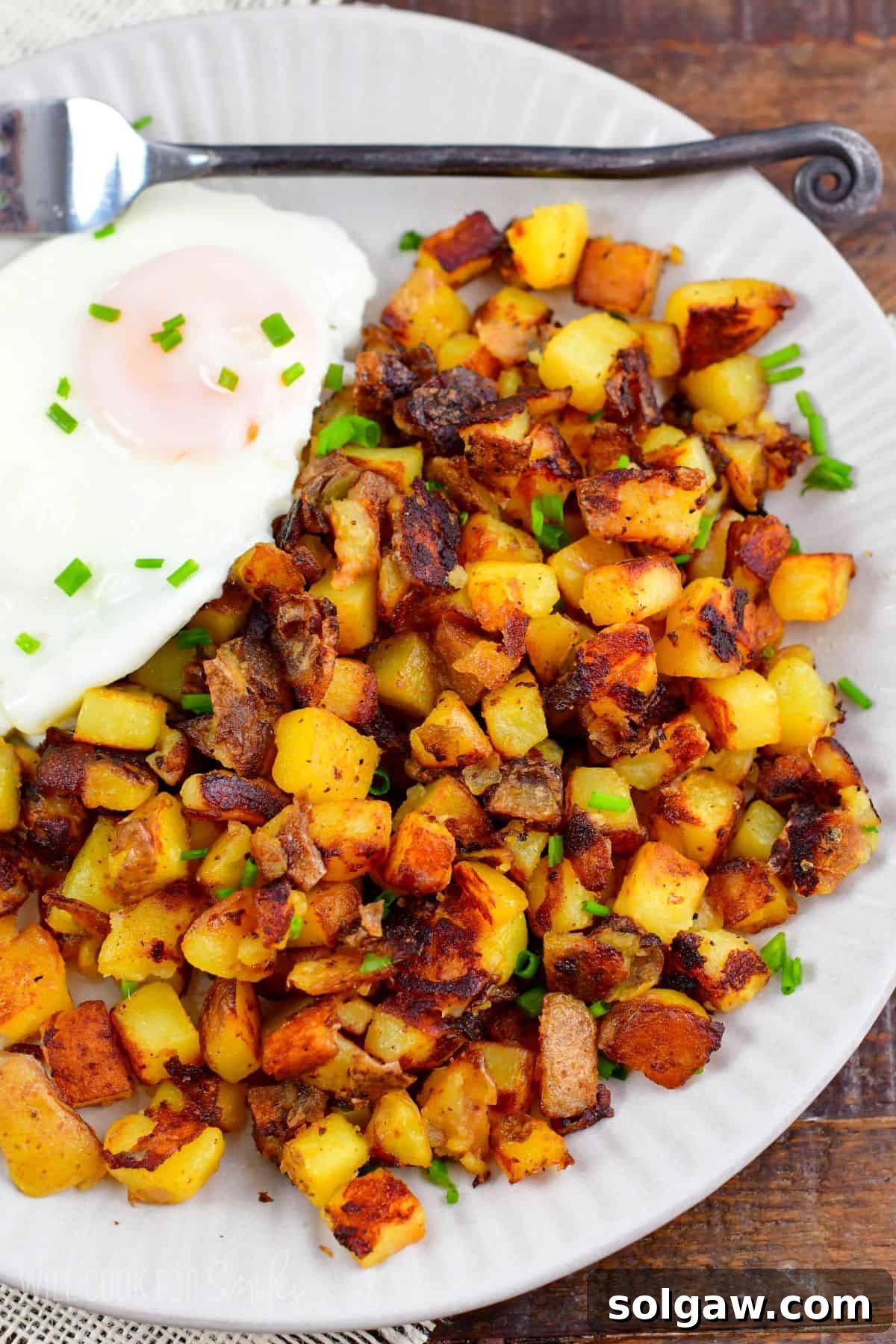
Home fries is an easy potato side dish that are perfectly crispy on the outside and soft and fluffy on the inside. Great for breakfast and dinner alike!
5 from 3 votes
Print Recipe
Pin Recipe
Rate this Recipe
Course: Breakfast, Dinner, Side Dish |
Cuisine: American |
Diet: Gluten Free
Prep Time: 5 minutes |
Cook Time: 25 minutes |
Total Time: 30 minutes
Servings: 4 |
Calories: 248kcal
Author: Lyuba Brooke
Ingredients
- 2 lbs gold potatoes (Yukon gold)
- 1 small yellow onion
- 2-3 tbsp avocado oil or vegetable oil, or canola oil
- salt
- cracked black pepper
Optional seasoning:
- Paprika
- garlic powder
- cayenne pepper
- dried parsley
- dried dill weed
Instructions
-
No need to peel potatoes, simply wash each one with a soft scrub sponge.
To parboil potatoes:
-
PRO TIP: I recommend parboiling potatoes whole because it’s easy to overcook potatoes to where they will crumble and be too mushy. If potatoes are over-cooked, it will be hard to cut into cubes.
-
Place cleaned potatoes in the pot and fill with cold water. Add about a tablespoon of coarse salt to the pot. Bring water to boil and reduce the heat so it doesn’t boil over.
-
Cook for 5-7 minutes. (Note: exact time will depend on the size of the potatoes, you just want to soften them, not cook through.)
-
Drain off water, place potatoes onto a cutting board and let them cool before cutting. (You can also store cooled potatoes in the refrigerator and cook another day.)
Cooking Home Fries:
-
Raw potatoes: You can make home fries from using raw potatoes as well. Simply wash potatoes first and pat them dry. Proceed with the cooking steps. (Note, it will take longer to cook.)
-
Cut potatoes into small cubes that are about 1/2 inch thick. (You can even go smaller to cook potatoes faster.)
-
Preheat a cooking pan over medium heat and add some oil.
-
Lower the heat a little and add cut potatoes. Season it well. Stir and cover with a lid. Let potatoes cook, stirring occasionally, until tender.
-
Once potatoes are tender, take off the lid, raise the heat back to medium or slightly above, and cook potatoes uncovered for a few minutes to give it a crispy browned sear.
-
PRO TIP: don’t stir too often! Give potatoes time to sear between stirring.
Notes
- Best Potatoes: gold potatoes are the best in taste and texture. Red potatoes come as a close second with a very similar texture but the taste of red potatoes is a little different. Gold potatoes have a very slight sweetness to them, while red potatoes don’t. Idaho potatoes actually work the worst so I do not recommend using it for home fries.
- Adding flavors: to add some herbal flavors with dried parsley and/or dill weed. For more seasoning punch, try adding some garlic powder, onions powder, and/or paprika. If you want spice, add a little crushed red pepper flakes or a pinch of cayenne pepper. If you’d like, try to add bell peppers to your home fried potatoes.
- Storing and reheating: Store leftover fries in a refrigerator, in a food storage container with a lid. Reheat it anytime in a preheated pan with a little bit of oil. Start reheating with a lid on to heat them through and then, take off the lid and cook a few more minutes to crisp the sides.
Nutrition
Calories: 248kcal |
Carbohydrates: 42g |
Protein: 5g |
Fat: 7g |
Saturated Fat: 1g |
Polyunsaturated Fat: 1g |
Monounsaturated Fat: 5g |
Sodium: 15mg |
Potassium: 995mg |
Fiber: 5g |
Sugar: 3g |
Vitamin A: 5IU |
Vitamin C: 47mg |
Calcium: 34mg |
Iron: 2mg
Tried this recipe?
Mention @willcookforsmiles or tag #willcookforsmiles!
More Delicious Potato Recipes To Try
If you love home fries, you’ll surely enjoy these other fantastic potato-based recipes:
- Gourmet Truffle Fries
- Classic Potato Pancakes
- Hearty Corned Beef Hash
- Flavorful Mashed Potato Cakes
- Simple Roasted Fingerling Potatoes
Originally published on Will Cook For Smiles in October 2019.