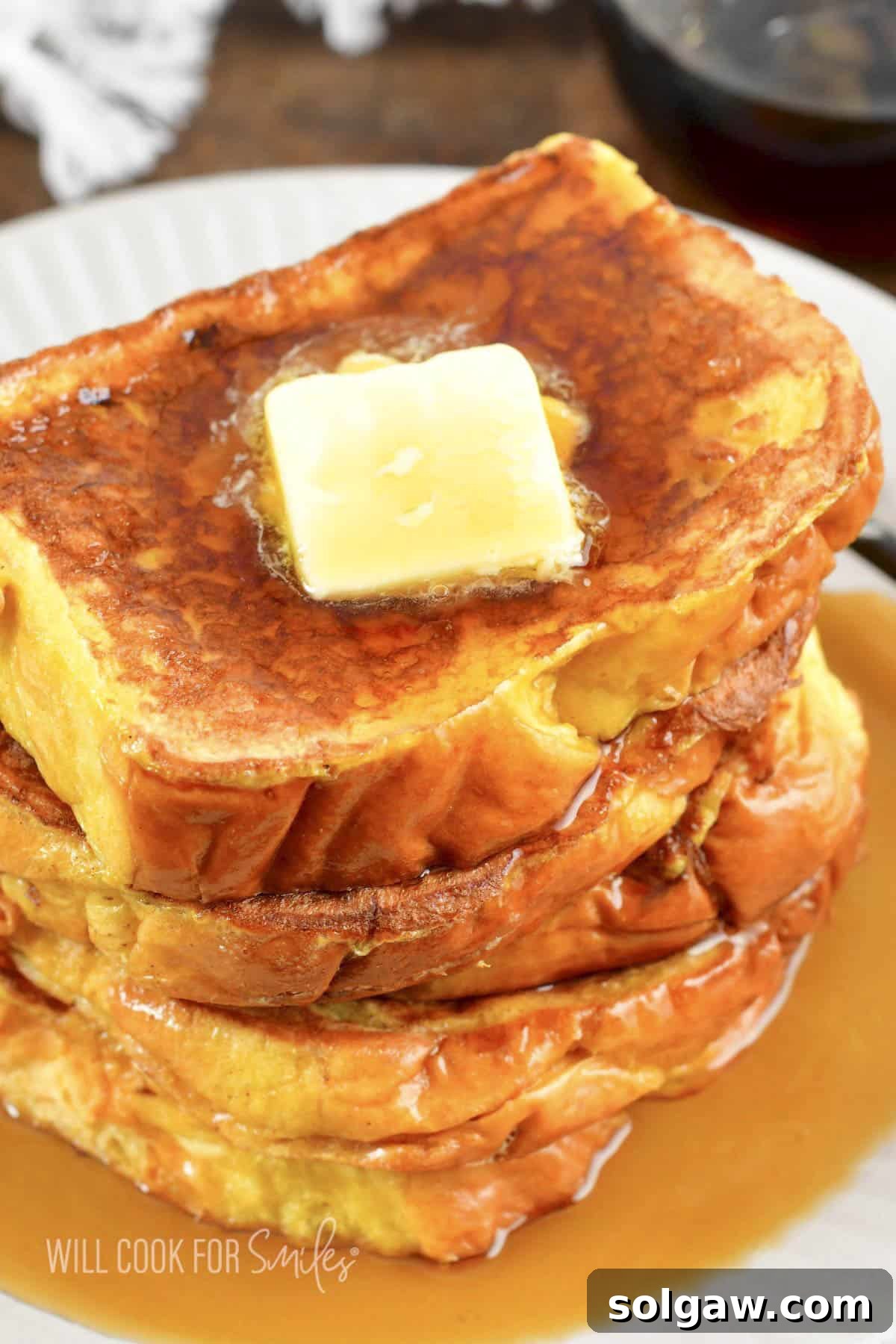
The Ultimate Classic French Toast Recipe: Fluffy Perfection Every Time
Embark on a culinary journey to craft the absolute best French Toast you’ve ever tasted. Forget soggy centers or bland flavors; this recipe, perfected over countless hours of testing and tweaking, guarantees a golden, fluffy, and incredibly delicious outcome. It’s not just a recipe; it’s a meticulously developed method designed for foolproof results, making it a beloved staple for breakfast and brunch enthusiasts everywhere. Discover the secrets to achieving restaurant-quality French Toast right in your own kitchen, starring the unparalleled Brioche bread.
This classic breakfast delight transforms simple ingredients into an extraordinary experience. We’ll delve into why particular ingredients matter, especially the bread, and provide comprehensive tips to ensure your French Toast is perfectly cooked, moist inside, and beautifully caramelized outside. Whether you’re a seasoned chef or a beginner, this guide will empower you to create a memorable meal that will have everyone asking for seconds.
Why This French Toast Recipe Stands Above the Rest
My French toast recipe has been a consistent favorite among readers for years, and for good reason. It proves that with carefully selected ingredients and a refined technique, you can achieve extraordinary results in just minutes. This isn’t just another recipe; it’s a culinary philosophy rooted in simplicity and quality.
- A Mastered Method: I dedicated weeks to perfecting this recipe, experimenting with various breads and custard ratios until I found the ideal combination. This extensive testing ensures a consistently flawless result, making it incredibly easy to follow and enjoy. Every step has been optimized for flavor, texture, and ease of preparation.
- The Unrivaled Bread Choice: Brioche bread is truly the star of this recipe. Its rich, buttery flavor and delicate, airy texture make it the perfect canvas for soaking up the sweet egg custard. Unlike other breads, Brioche maintains its structure beautifully, resulting in a French Toast that is incredibly soft and flavorful without becoming overly dense or soggy.
- Effortlessly Simple & Highly Adaptable: While Brioche is highly recommended for its superior qualities, this recipe is crafted to be flexible. Minor adjustments can allow you to use other quality breads like Challah or a French baguette, offering versatility for different preferences or ingredient availability.
- Fast and Foolproof: Designed for efficiency, this recipe minimizes prep time without compromising on quality. You’ll spend less time in the kitchen and more time enjoying a luxurious breakfast or brunch.
Essential Ingredients: Quality Makes the Difference
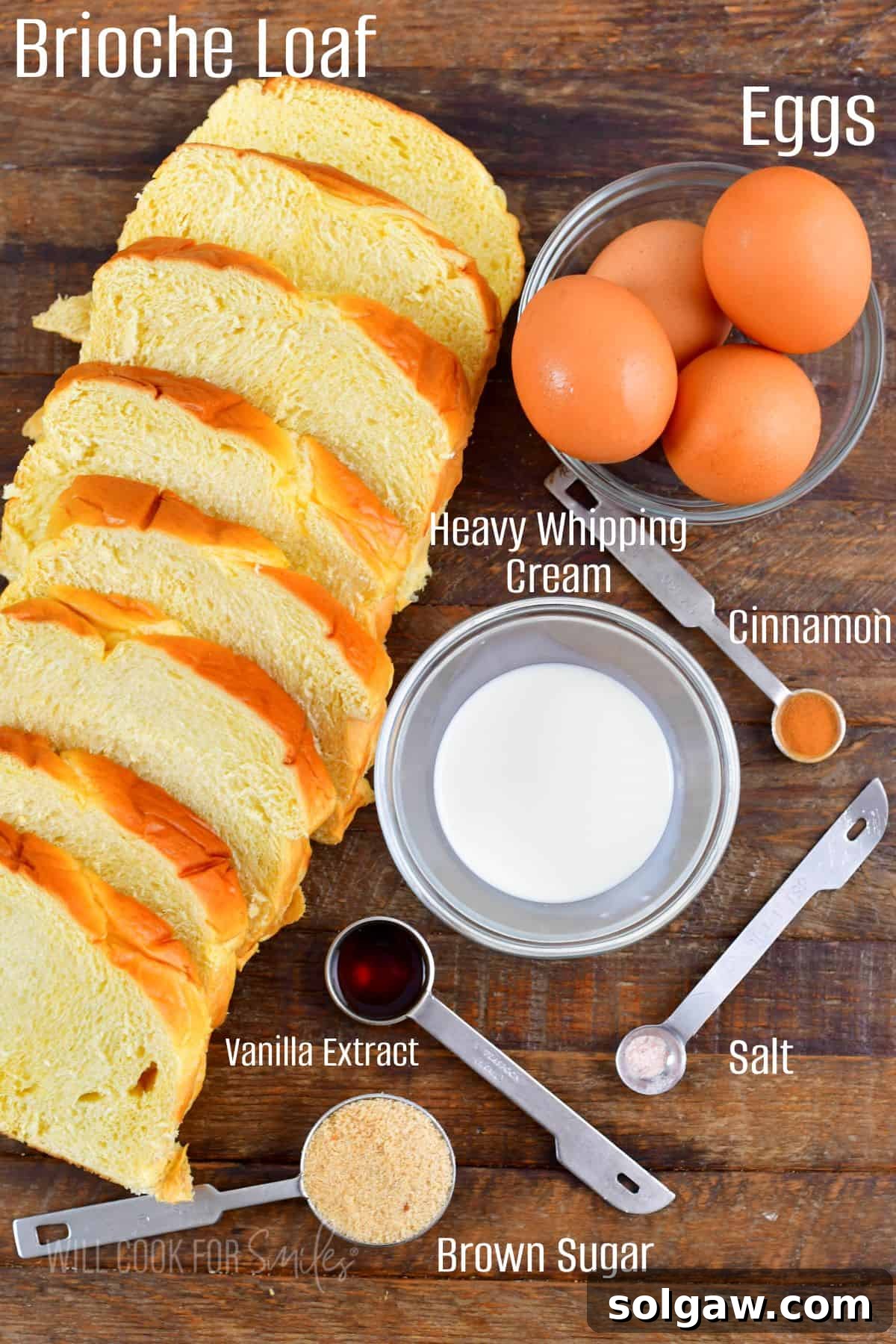
While French Toast seems straightforward, the quality of just a few key ingredients elevates it from good to exceptional. This recipe relies on four primary components, with two being particularly crucial for achieving that perfect, creamy texture and rich flavor.
- The Unquestionable Bread: Brioche! Trust me on this. After extensive testing with various types of bread, Brioche consistently comes out on top. Its high butter and egg content provide an inherently rich flavor, while its fine, fluffy crumb allows it to absorb the custard beautifully without falling apart or becoming overly saturated. This results in a French Toast that is tender and moist on the inside, with a perfectly golden, slightly crisp exterior.
- Heavy Whipping Cream for Unmatched Creaminess: For the most luxurious and creamy texture in your custard, heavy whipping cream is non-negotiable. Its higher fat content creates a thicker, richer egg mixture compared to milk, which often leads to a watery custard. A thicker custard adheres better to the bread and takes slightly longer to soak in, resulting in a superior final texture that’s custardy throughout. If heavy whipping cream is unavailable, half-and-half is the next best substitute, offering a good balance of richness without being too thin.
- Eggs: The Binding Foundation: Large, fresh eggs are vital for the custard. They provide the structure and help bind the other ingredients, creating that signature custardy interior when cooked. Ensure they are well whisked with the cream and flavorings for a smooth, uniform mixture.
- Flavor Enhancers: Vanilla, Brown Sugar & Cinnamon: A touch of pure vanilla extract adds warmth and depth to the flavor profile. Brown sugar, with its subtle molasses notes, contributes to a richer sweetness and helps with caramelization. Cinnamon is optional but highly recommended for its classic aromatic contribution, perfectly complementing the sweet and eggy flavors. A pinch of salt balances the sweetness and enhances all the other flavors.
Dairy/Lactose-Free Options
For those with dietary restrictions, delicious French Toast is still within reach:
- Lactose-Free: If you’re only avoiding lactose, a lactose-free half-and-half can be a direct substitute for heavy whipping cream, maintaining a similar richness.
- Dairy-Free: For a completely dairy-free option, unsweetened oat milk is highly recommended. Its natural thickness and creamy consistency closely mimic heavy cream and blend seamlessly into the custard without imparting an overpowering flavor. Almond milk can also work, but oat milk generally provides a richer mouthfeel.
Exploring the Best Bread Options for French Toast
While Brioche holds the crown for the ultimate French Toast, understanding the characteristics of other popular bread choices can help you adapt the recipe or explore different flavor profiles. Each bread brings its own unique qualities to the table, impacting both texture and taste.
- Brioche: The Gold Standard: This rich, egg- and butter-laden bread is inherently soft and delightfully fluffy. Its delicate crumb is exceptionally good at absorbing the sweet egg mixture without becoming mushy, leading to an interior that’s beautifully custardy. The natural sweetness and buttery notes of Brioche contribute significantly to the overall flavor of the dish, creating a truly decadent French Toast experience. It’s the ideal choice for those seeking ultimate tenderness and a rich, golden finish.
- French Baguette: A Versatile Contender: A good quality French baguette is surprisingly excellent for French Toast, especially if you prefer a slightly firmer texture or are making stuffed French toast, where its structural integrity is beneficial. While it soaks up the egg mixture effectively, it does so less quickly and easily than Brioche due to its denser nature. This means you’ll need to allow a bit more soaking time for the custard to penetrate thoroughly. Its less sweet profile also makes it a great candidate for both sweet and savory French Toast variations.
- Challah: A Classic Choice with Considerations: Challah, a traditional Jewish braided bread, ranks third among the top choices. Its texture is denser and generally a bit drier than Brioche, which means it will require longer soaking times to ensure the custard reaches the center. Furthermore, Challah typically lacks the inherent sweetness of Brioche, so you might consider adding a little extra sugar to your egg mixture or compensating with sweeter toppings. Despite these points, Challah still yields a delicious French Toast with a satisfying chewiness and an appealing golden crust.
- Breads to Generally Avoid (or use with caution): While almost any bread can be turned into French Toast, some are less ideal. Standard white sandwich bread can become overly soggy and lack flavor. Very dense, rustic breads might struggle to absorb enough custard, leading to dry spots. Sourdough, while flavorful, might introduce too much tanginess for a classic sweet French Toast. The key is finding a bread that balances structure with absorption capacity.
Expert Tips for Crafting the Perfect French Toast
Achieving consistently perfect French Toast goes beyond just good ingredients; it involves mastering a few key techniques. Follow these expert tips to ensure every slice is golden, custardy, and incredibly delicious:
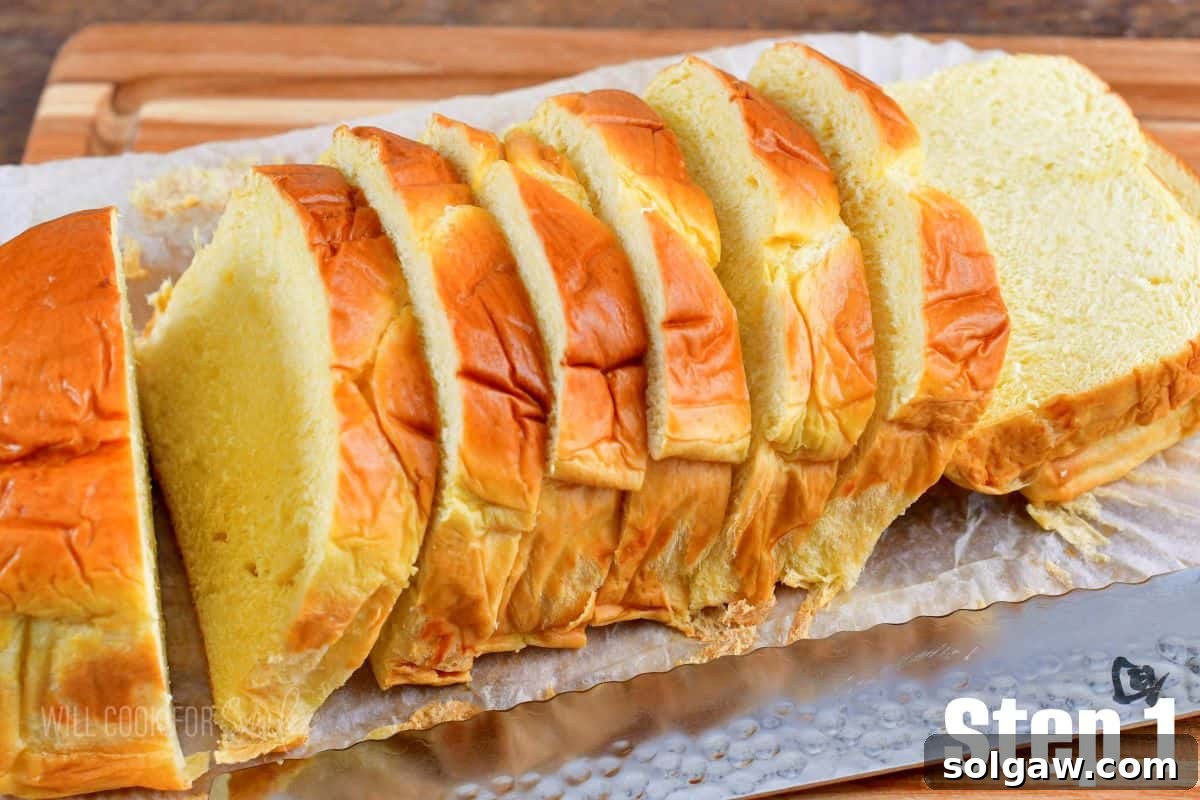
- Slice Your Own Bread for Ideal Thickness: Avoid pre-sliced bread if possible. Buying a whole loaf and slicing it yourself allows you to control the thickness, which is crucial for texture. Aim for slices that are generously thick, ideally between 1 and 1 1/4 inches. This thickness ensures that the bread can absorb enough custard to become moist and flavorful without collapsing or becoming too soggy during cooking. Thinner slices tend to cook too quickly and can dry out.
- Mind the Custard Ratio: Resist the temptation to over-soak the bread or use too much cream in your custard. While you want a rich mixture, excessive liquid can lead to soggy French Toast that struggles to cook through evenly. The provided recipe balances the ingredients perfectly for optimal absorption and texture.
- Thoroughly Preheat Your Pan: Always preheat your cooking pan or griddle completely before you begin battering and cooking the bread. A properly heated surface ensures an immediate sizzle and promotes a beautiful, even golden-brown crust, preventing the French Toast from sticking and cooking unevenly.
- Maintain Medium-Low Heat: Patience is key when cooking French Toast. Avoid turning the heat up higher than medium. In fact, a setting slightly lower than medium is often ideal. The exterior of French Toast cooks relatively quickly, and if the heat is too high, the outside will burn before the inside custard has a chance to cook through and set properly. Lower heat allows for gentle cooking, ensuring both the crust and the custardy interior are perfectly done.
- Stay Attentive During Cooking: French Toast cooks quickly, typically requiring only 3-4 minutes per side. Do not walk away! Stay close to the stove and monitor the browning. Use a large pan or griddle to cook several slices at once, maximizing efficiency without overcrowding. Overcrowding can lower the pan’s temperature and lead to steaming rather than searing.
- Even Heat Distribution on a Griddle: If you’re using a griddle, ensure it is thoroughly preheated and that the heat is distributed evenly across its surface. A common pitfall with griddles is uneven heating, which can result in some French Toast slices cooking faster or browning more than others. Adjust heat zones if your griddle allows, or rotate slices for consistent results.
Knowing When Your French Toast Is Perfectly Cooked
Determining the doneness of French Toast is crucial for avoiding a raw, runny interior or an overcooked, dry result. Here’s how to tell when your French Toast has reached its custardy perfection:
- Observe the Center’s Rise: As your French Toast slices cook, particularly after you’ve flipped them to the second side, pay attention to the center of the bread. You should notice it subtly rising or puffing up. This visible expansion is a key indicator that the egg custard absorbed into the middle of the slice is actively cooking and setting.
- Check for Deflation and Firmness: Once the center has risen, continue cooking briefly until you see it gently deflate. At this point, carefully and lightly touch the center of the French Toast with your finger (be cautious, it will be hot!). It should feel firm to the touch, indicating that the egg mixture has fully cooked through and set, rather than feeling squishy or liquid. A perfectly cooked slice will have a soft, custardy texture throughout, encased in a beautiful golden crust.
Storing and Freezing French Toast for Later Enjoyment
While fresh French Toast is undeniably best, you can certainly prepare it ahead of time or save any delicious leftovers. Keep in mind that the texture of reheated French Toast, while still enjoyable, may not be identical to a freshly cooked batch.
- Cool Completely: Before storing, ensure your cooked French Toast has cooled completely to room temperature. Storing warm French Toast can create condensation, leading to sogginess and potentially affecting its texture.
- Refrigeration: For short-term storage, place the cooled French Toast slices in an airtight container or a resealable bag. They will keep well in the refrigerator for up to 3 days. To reheat, you have several excellent options: a toaster or toaster oven will restore some crispiness, an air fryer offers similar results, and a microwave provides a quick way to warm them through, though it may result in a softer texture.
- Freezing for Longer Storage: To enjoy French Toast months down the line, freezing is an excellent option. Arrange cooled slices in a single layer on a baking sheet and freeze until solid. Once frozen, stack them with parchment paper in between slices to prevent sticking, then transfer to an airtight freezer container or a heavy-duty zip-top bag. French Toast can be frozen for up to 3 months. Thaw overnight in the refrigerator or reheat directly from frozen in a toaster oven or air fryer for best results.
PIN THIS RECIPE FOR LATER
If you’ve whipped up this French Toast using my trusted recipe and found these insights valuable, please consider leaving a 🌟 star rating! Your feedback is incredibly helpful. Share your thoughts and tell me how much you loved it by leaving a 📝 comment below.
The Best French Toast Recipe
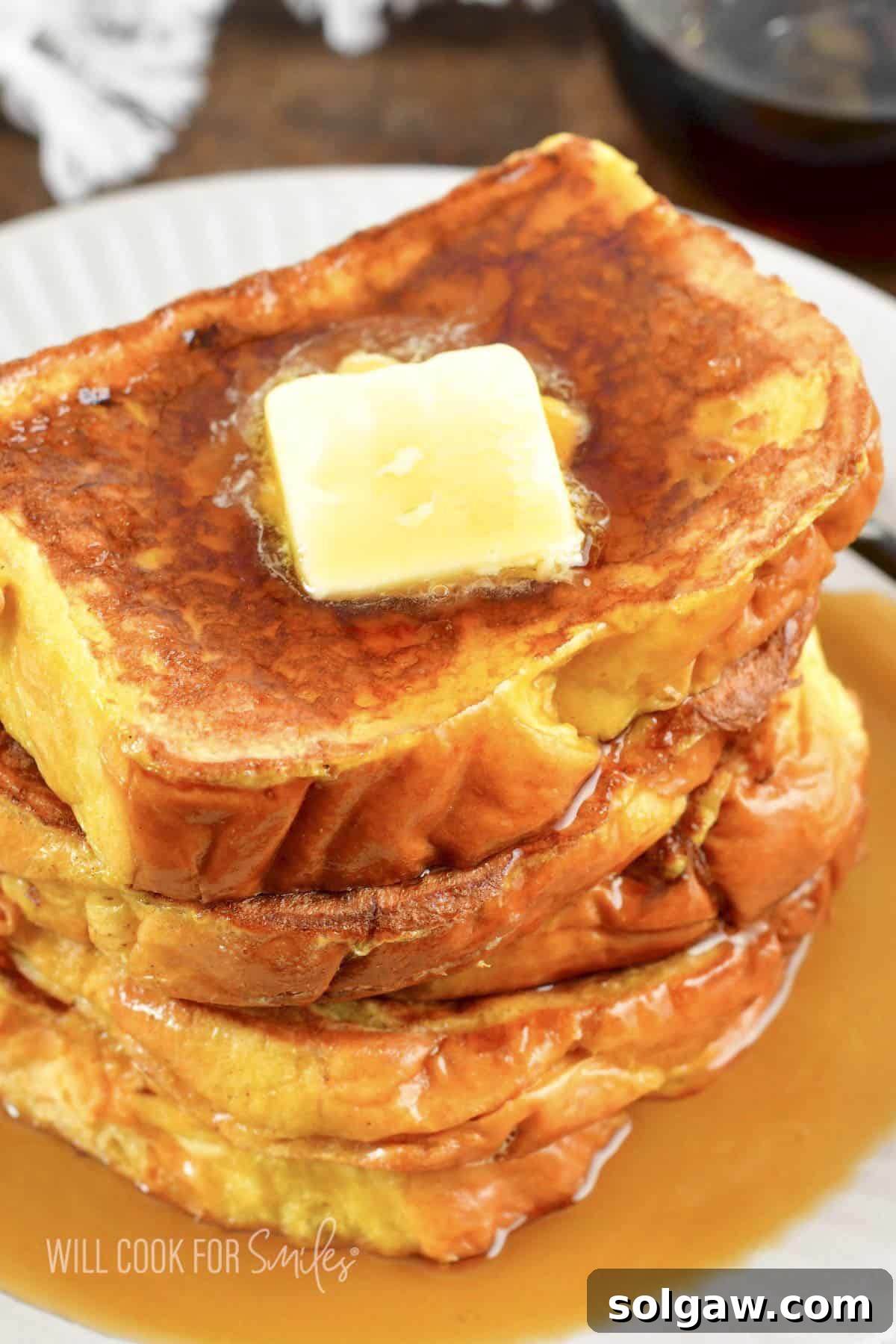
This French Toast is an absolute hit at every brunch party! Featuring thick slices of Brioche bread soaked in a sweet egg custard with a hint of cinnamon, this easy and luscious recipe has been reviewed hundreds of times and boasts an impressive 4.75-star rating.
Print Recipe |
Pin Recipe
Find Substitutions |
Dietary Options
Course: Breakfast
Cuisine: American
Prep Time: 5 minutes
Cook Time: 15 minutes
Total Time: 20 minutes
Servings: 4
Calories: 359 kcal
Author: Lyuba Brooke
Ingredients
- 8 oz loaf of Brioche bread (8 slices, about 1-inch thick)
- 4 large eggs
- 1/4 cup heavy whipping cream
- 1 tsp pure vanilla extract
- 1 tbsp brown sugar, packed
- 1/2 tsp cinnamon (optional)
- Pinch of salt
- Oil or butter for cooking
Instructions
- Important Note: This egg mixture is perfectly portioned to batter approximately 8 slices of Brioche bread, each between 3/4 and 1 1/4 inch thick. If using a denser bread like French baguette, it may cover 10-12 slices, or about 6 slices of Challah. Remember, denser breads require slightly longer soaking times.
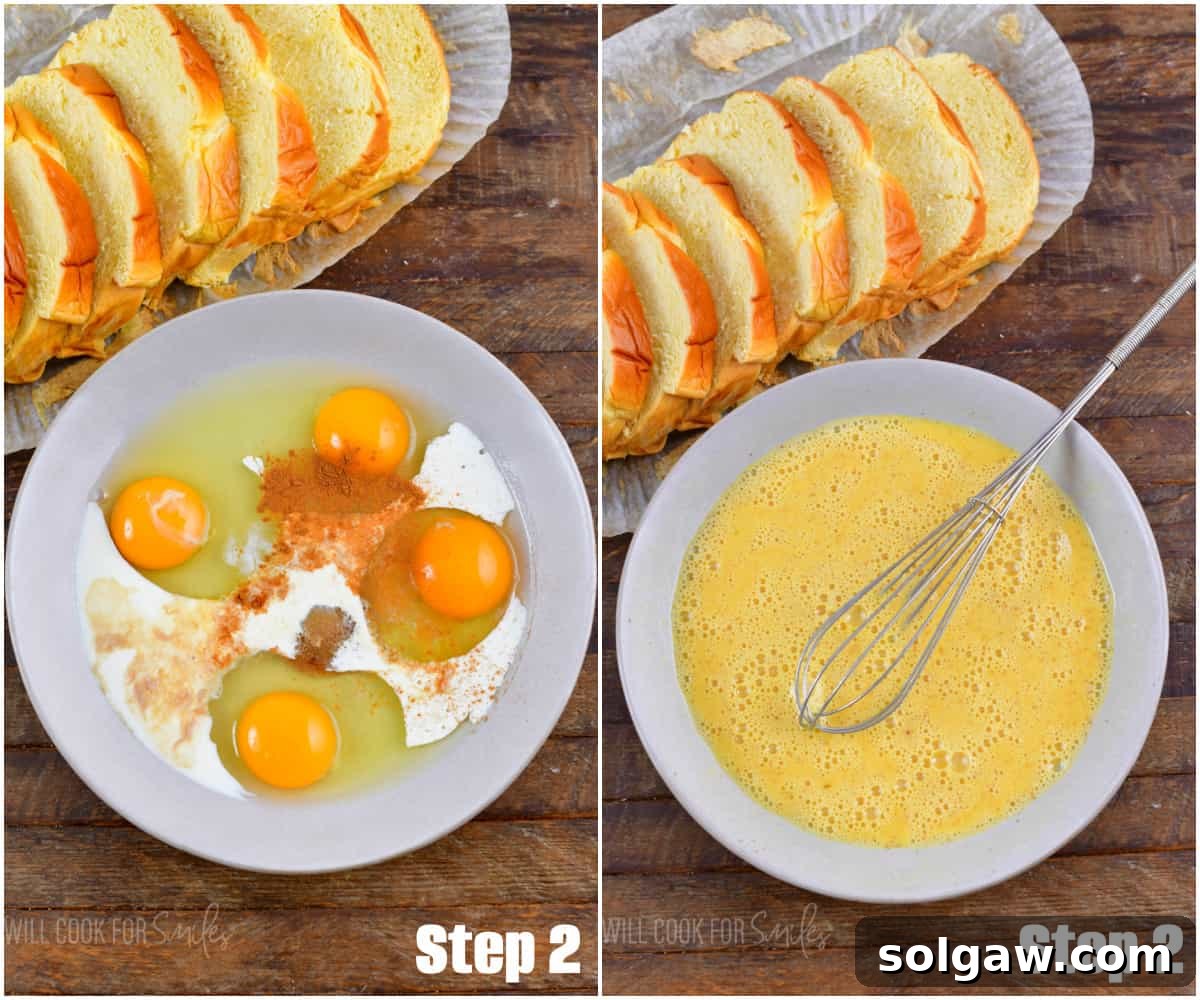
- Begin by slicing your Brioche loaf into generous pieces, each approximately 1 inch thick. Consistent thickness is key for even cooking.
- In a deep, wide bowl (which will make dipping easier), combine the eggs, heavy whipping cream, pure vanilla extract, brown sugar, cinnamon (if you’re using it), and a pinch of salt. Whisk vigorously until the mixture is completely smooth and well-combined. Set this custard aside.
- Place a large cooking pan or griddle over medium to medium-low heat. Allow it to preheat thoroughly. Once hot, add a small amount of cooking oil or butter and spread it evenly across the surface.
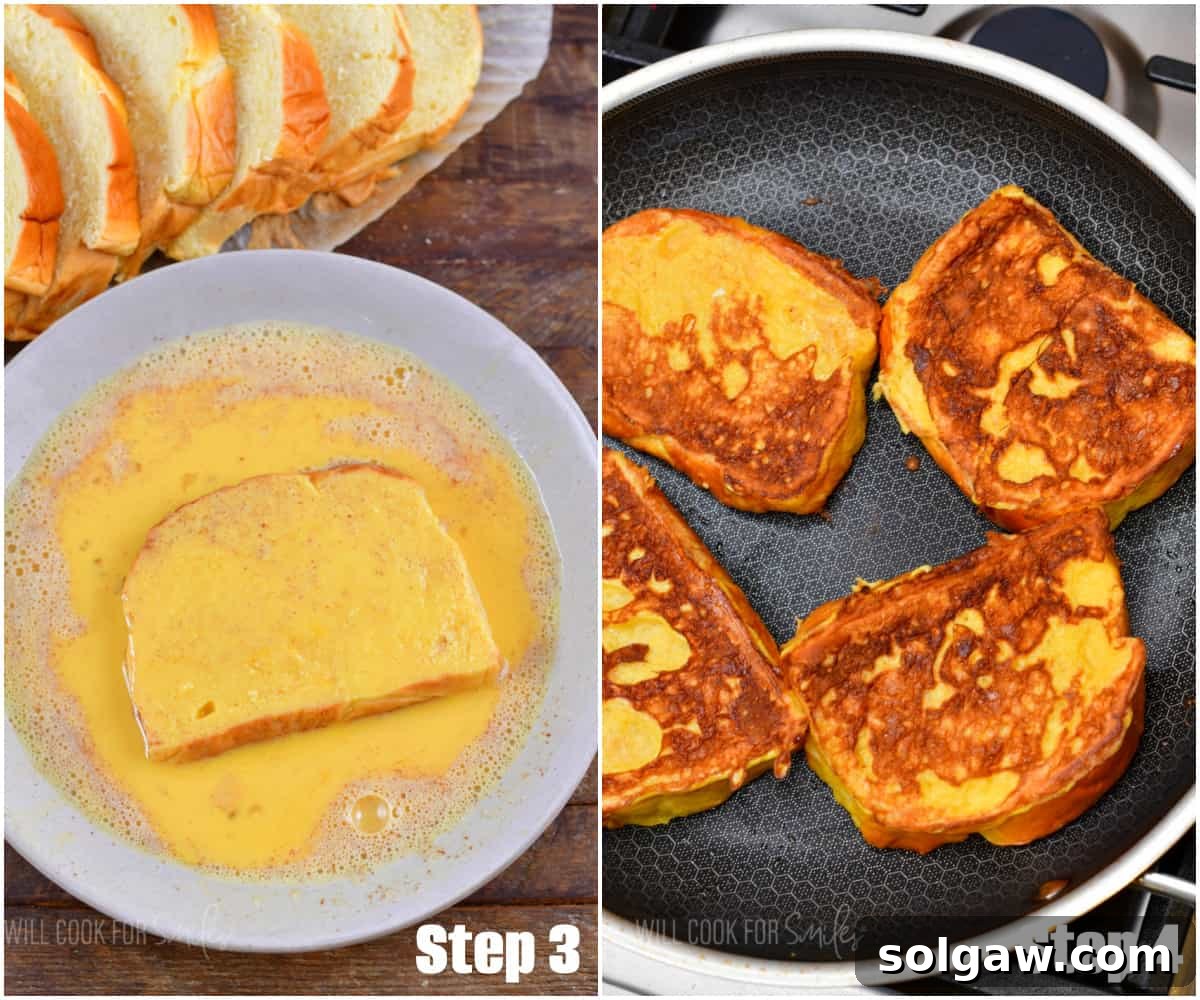
- Carefully dip each slice of bread into the prepared egg mixture. Flip the bread back and forth for about 15 seconds. Brioche, with its soft texture, absorbs the custard quite quickly.
- Tip: Only batter as many slices as can comfortably fit into your pan without overcrowding. If you need to cook in multiple batches, batter the remaining bread just before adding it to the pan to prevent it from becoming overly saturated.
- Place the soaked slices into the preheated pan. Cook for 3-4 minutes on each side, or until each side achieves a beautiful golden-brown color and the edges are slightly crisp. Repeat this process for any remaining slices.
- Expert Doneness Tip: Once you flip the French Toast to its uncooked side, watch for the center of the bread slice to subtly rise. This indicates that the egg inside is cooking. Continue cooking until the center gently deflates. Gently touch the center with your finger; it should feel firm, not squishy, signaling that the custard is fully set.
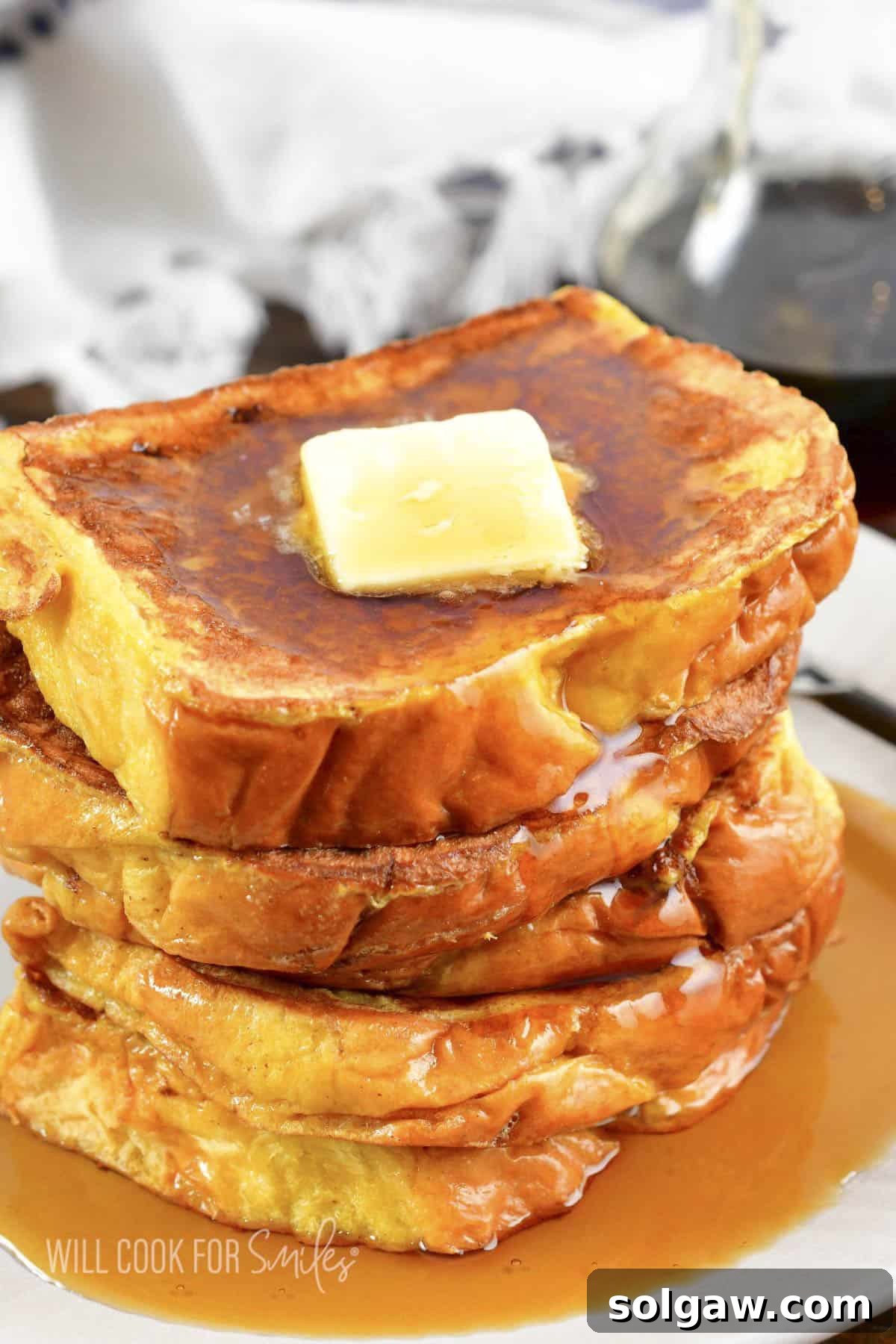
- Serve your glorious French Toast immediately. Garnish with a generous drizzle of warm maple syrup, a dusting of powdered sugar, fresh berries, whipped cream, or any of your favorite toppings. Enjoy!
Video Tutorial
A video demonstration of this recipe is available to guide you through each step for visual learners.
Recipe Notes
- Bread Choice: As highlighted, Brioche is the ultimate winner for its rich flavor and perfect texture absorption.
- Alternative Breads: Challah and French baguette are excellent alternatives, though they may require longer soaking times due to their denser crumb.
- Heavy Whipping Cream: This ingredient is crucial for the rich, creamy consistency of the custard. If unavailable, use half-and-half as a substitute; avoid using lower-fat milk, as it can result in a watery custard.
- Dietary Alternatives: For a lactose-free option, lactose-free half-and-half works wonderfully. For a dairy-free alternative, unsweetened oat milk is highly recommended due to its naturally thick and creamy consistency, which complements the dish well.
Nutrition Information (Per Serving)
Carbohydrates: 29g |
Protein: 12g |
Fat: 21g |
Saturated Fat: 11g |
Cholesterol: 276mg |
Sodium: 326mg |
Potassium: 60mg |
Sugar: 3g |
Vitamin A: 890IU |
Calcium: 64mg |
Iron: 1.3mg
Tried this recipe?
Mention @willcookforsmiles or tag #willcookforsmiles!
Explore More Delicious Breakfast & Brunch Recipes
If you’ve enjoyed mastering this classic French Toast, you’ll love these other fantastic breakfast and brunch ideas from our collection. Expand your culinary repertoire and delight your family and friends with these crowd-pleasing dishes:
- Indulgent Pumpkin French Toast: A seasonal twist on the classic, perfect for autumn mornings.
- Bright Orange Creamsicle Stuffed French Toast: A vibrant, citrus-infused stuffed French Toast that tastes like sunshine.
- Effortless French Toast Casserole: Ideal for feeding a crowd or preparing ahead, this casserole version is always a hit.
- Exotic Coconut Stuffed and Crusted French Toast: A tropical escape in every bite, with a delightful crispy coconut coating.
- Comforting Apple Pie Stuffed French Toast: Enjoy the warm, familiar flavors of apple pie baked into your favorite breakfast.
Originally published on Will Cook For Smiles on February 12, 2019. This article has been updated and enhanced for clarity, SEO optimization, and an improved reader experience.