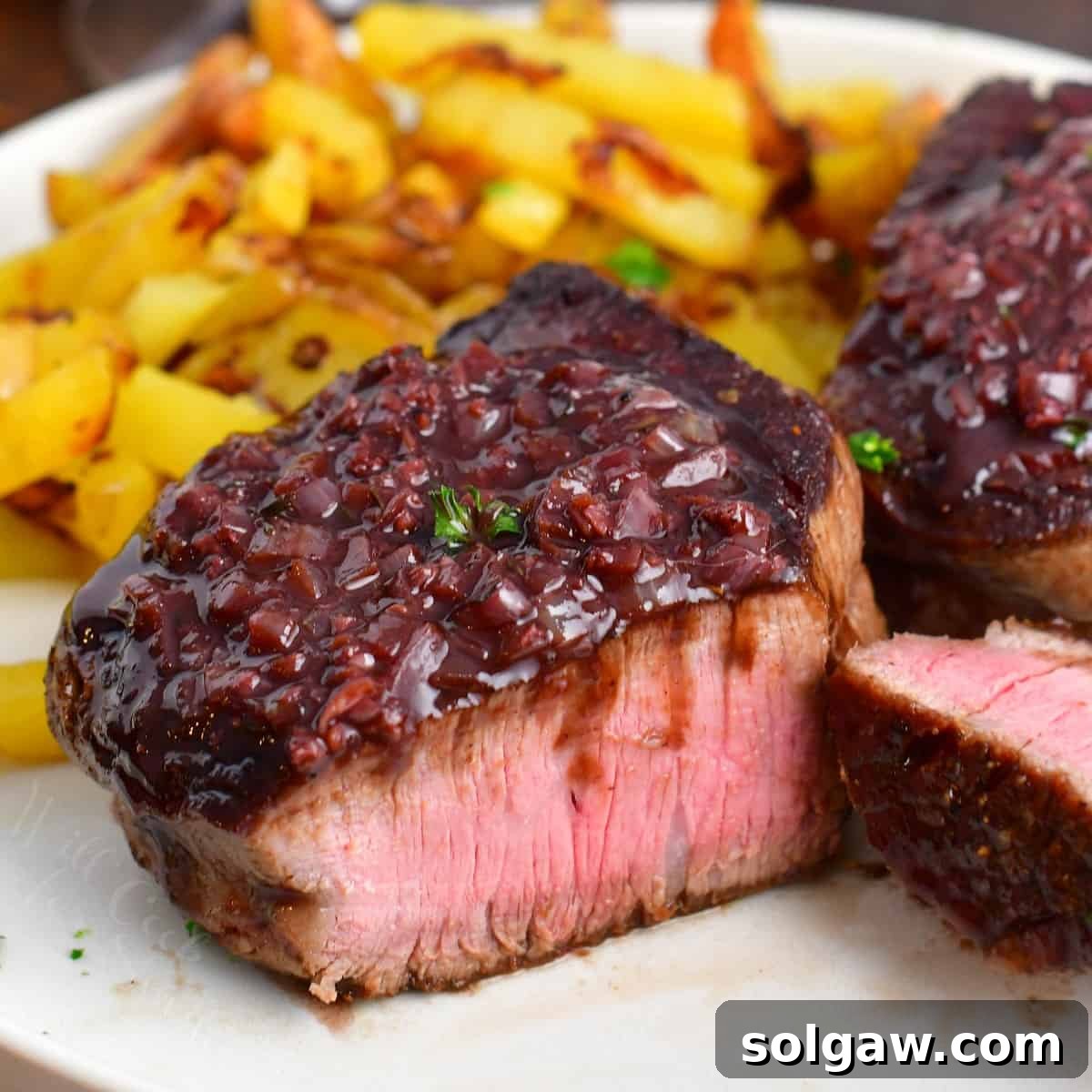
Mastering the Art of Red Wine Steak Sauce: A Gourmet Guide
Elevate your home cooking with a luxurious homemade red wine steak sauce. This rich, sophisticated accompaniment is surprisingly easy to prepare and transforms any steak dinner into a gourmet experience. Crafted from bold, aromatic ingredients like shallots, fresh garlic, quality cognac, robust red wine, and savory beef stock, this sauce is designed to perfectly complement your favorite cuts, whether it’s a tender filet mignon, a juicy ribeye, or any other steak you cherish. Get ready to impress your taste buds and your guests with this exquisite culinary addition.
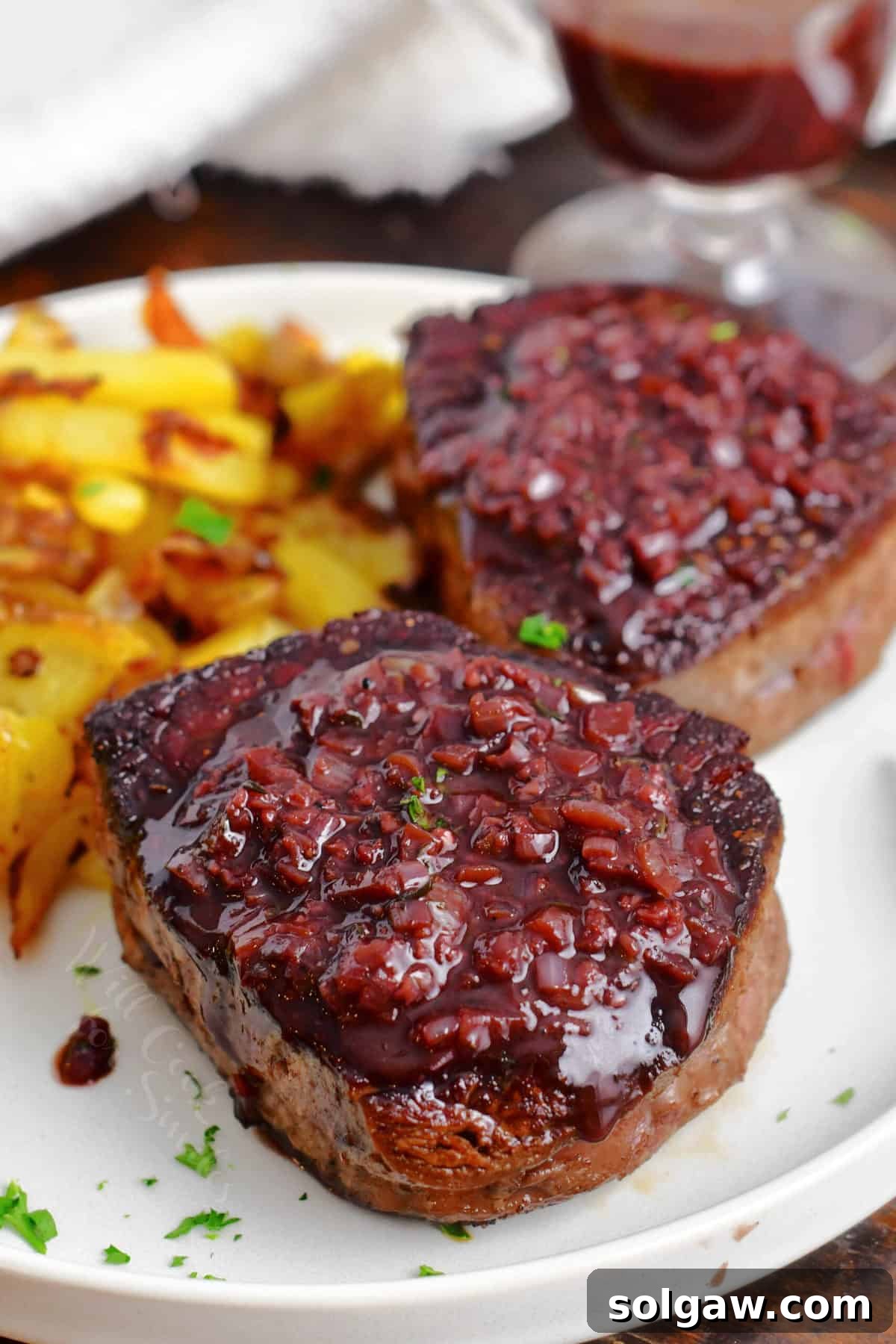
Table of Contents
What is Red Wine Steak Sauce?
At its heart, a red wine steak sauce is a classic French-inspired sauce, often referred to as a reduction sauce. This culinary technique involves gently simmering a liquid until a significant portion of its water content evaporates. As the liquid reduces, its inherent flavors become intensely concentrated, and its texture thickens to a luxurious, velvety consistency. While reductions are versatile and can enhance everything from soups to dressings and stews, they truly shine in sauces, especially when paired with rich meats like steak.
The Magic of Reduction in Cooking
The process of reduction is a cornerstone of classical cuisine, designed to deepen and enrich the flavor profile of any liquid. For our red wine steak sauce, this means transforming simple ingredients into a complex, nuanced sauce that coats your palate with layers of flavor. By slowly simmering the red wine, cognac, and beef stock, we allow the aromatic compounds to meld and intensify, resulting in a sauce that’s far greater than the sum of its parts. This isn’t just about thickening; it’s about concentrating the essence of each component, creating a symphony of savory, sweet, and tangy notes that are unparalleled.
Why This Sauce is a Game-Changer
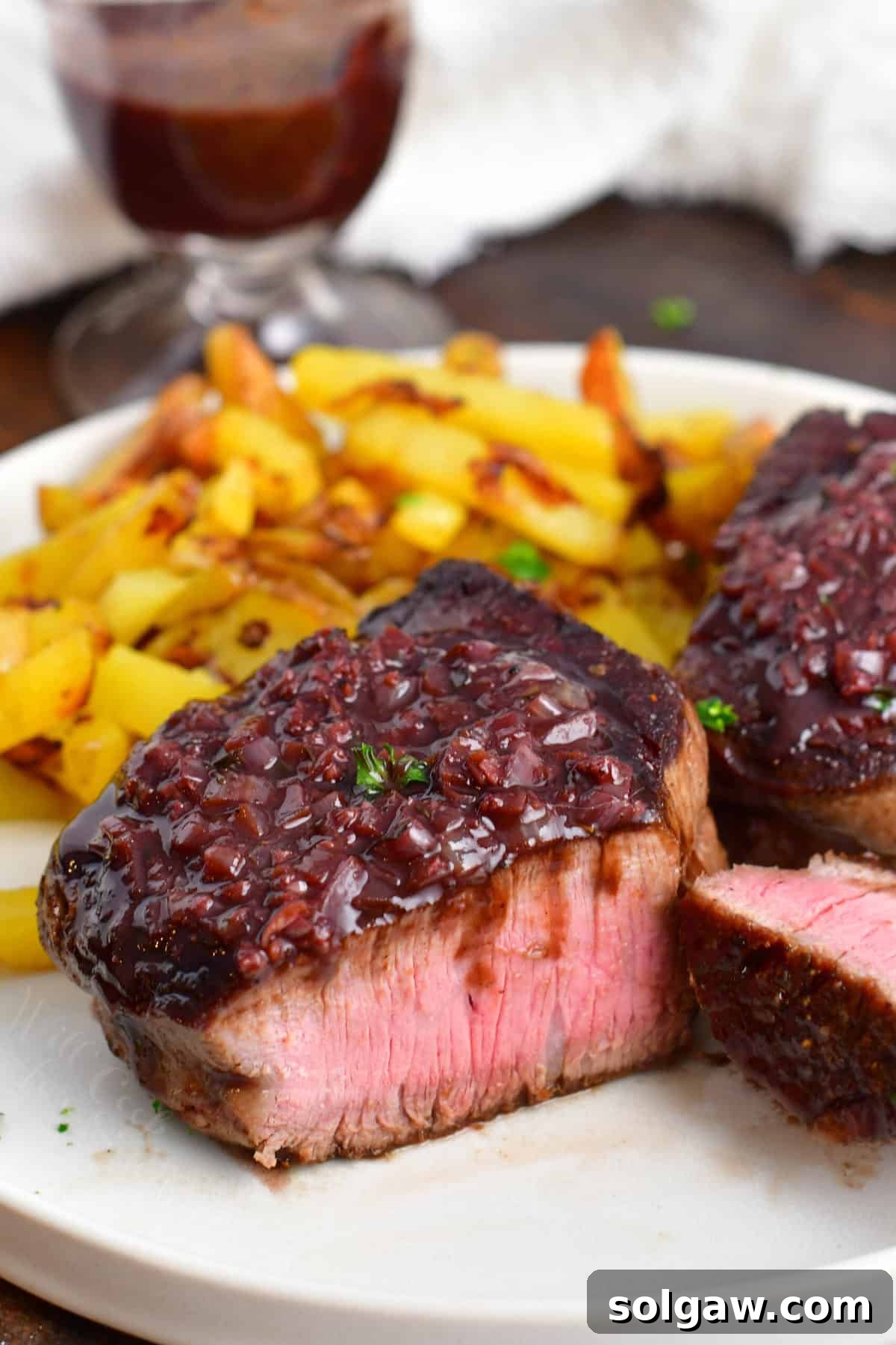
This exquisite red wine steak sauce has the power to elevate even the most humble cut of steak to a Michelin-star-worthy dish. Its rich profile and complex ingredients are wonderfully complementary to the robust flavors of a perfectly cooked steak. While filet mignon is often my preferred choice for this sauce due to its tender texture, the beauty of this recipe lies in its versatility. It truly can be served with any cut of steak you prefer, enhancing its natural taste and adding an unforgettable gourmet touch to your meal.
Serving your pan-seared steaks or grilled favorites with this incredible red wine sauce is the ultimate way to elevate your culinary experience at home. The most appealing aspect, aside from its undeniable deliciousness, is the sheer simplicity of its preparation. Despite its sophisticated taste and appearance, this elegant red wine sauce demands only about twenty minutes of your time from start to finish, making it perfect for both weeknight dinners and special occasions.
Essential Ingredients for Red Wine Steak Sauce
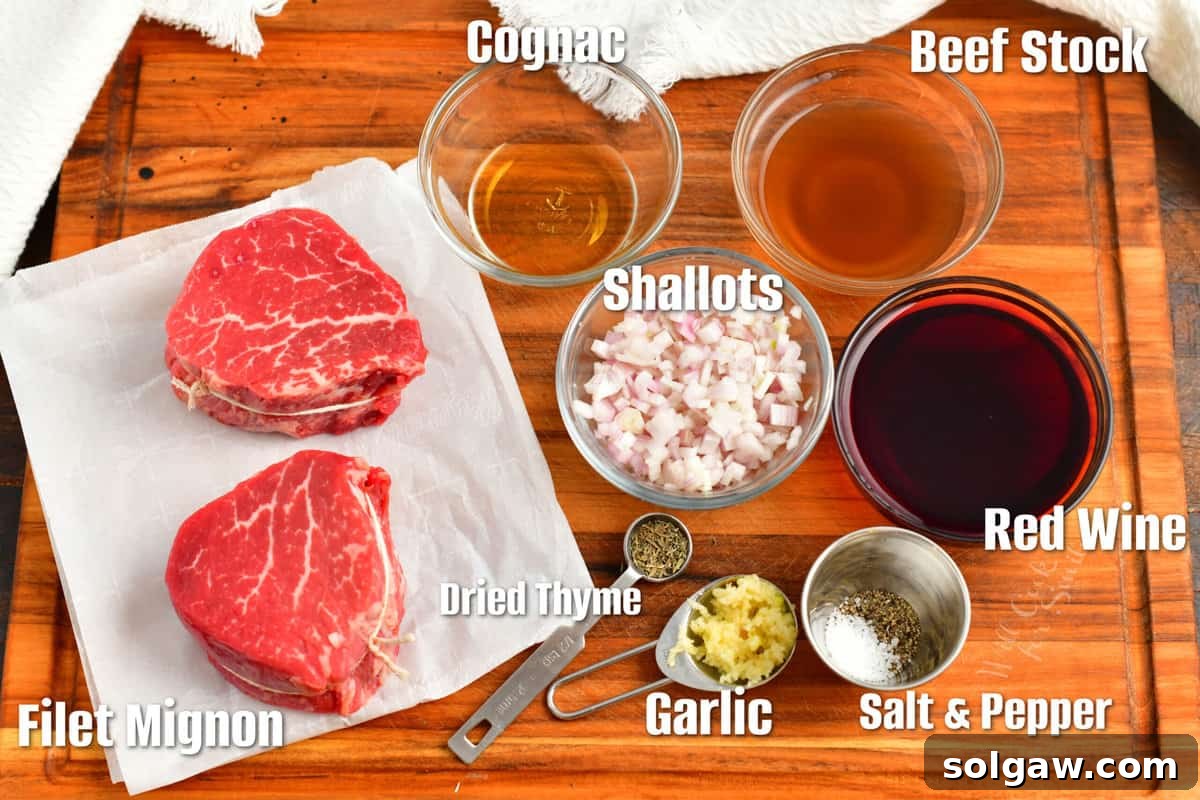
The secret to a truly spectacular red wine steak sauce lies in selecting high-quality ingredients that build layers of flavor. Here’s a breakdown of what you’ll need and why each component is crucial:
- Oil: Opt for a neutral oil with a high smoke point, such as avocado oil or vegetable oil. This ensures you can achieve a good sear on your steak without burning the oil, and it won’t interfere with the delicate flavors of the sauce.
- Shallots: Shallots are irreplaceable in this recipe. Their delicate texture and unique flavor profile—a sublime blend of sweet onion and mild garlic—provide a foundational aromatic base that perfectly balances the richer, bolder ingredients in the sauce. Unlike regular onions, shallots offer a more refined taste that beautifully complements the red wine.
- Fresh Garlic Cloves: For the most vibrant and pungent garlic flavor, always use fresh garlic cloves. Pre-minced garlic, while convenient, often lacks the brightness and depth that freshly minced garlic provides, which is essential for a sauce of this caliber.
- Cognac: Investing in a good quality cognac is highly recommended. You don’t need the most expensive bottle on the shelf, but steer clear of the cheapest options. Cognac adds a layer of fruity, oaky complexity and a subtle sweetness that truly elevates the sauce. It contributes a depth of flavor that no other spirit can quite replicate.
- Red Wine: The cornerstone of this sauce! Choose a rich and full-bodied red wine that you would genuinely enjoy drinking. Crucially, avoid any sweet wines; dry or off-dry varieties work best. My top recommendations include a nice Zinfandel, Malbec, or Pinot Noir. These varietals offer a pleasant balance of fruitiness without being overly dry, and their full body ensures a robust flavor in the finished sauce. The quality of your wine will directly impact the depth and character of your sauce.
- Beef Stock: For a deeper, more savory foundation, always use high-quality beef stock over mere broth. Better yet, if you have homemade beef stock available, it will provide an unparalleled richness and gelatinous texture that enhances the mouthfeel of the sauce.
- Unsalted Butter: Used at the very end, unsalted butter is vital for achieving that luxurious, glossy finish and enriching the sauce’s texture. Using unsalted butter allows you complete control over the final seasoning of your sauce.
In addition to these sauce ingredients, you will need 2 to 4 of your favorite steaks. The instructions provided in the recipe card are tailored for filet mignon, so remember to make any necessary adjustments if you plan to use a different cut of steak to ensure optimal cooking results.
Refer to the detailed recipe card below for precise measurements and quantities of each ingredient.
Step-by-Step Guide: How to Make Red Wine Steak Sauce
Preparing Your Steaks for Perfection
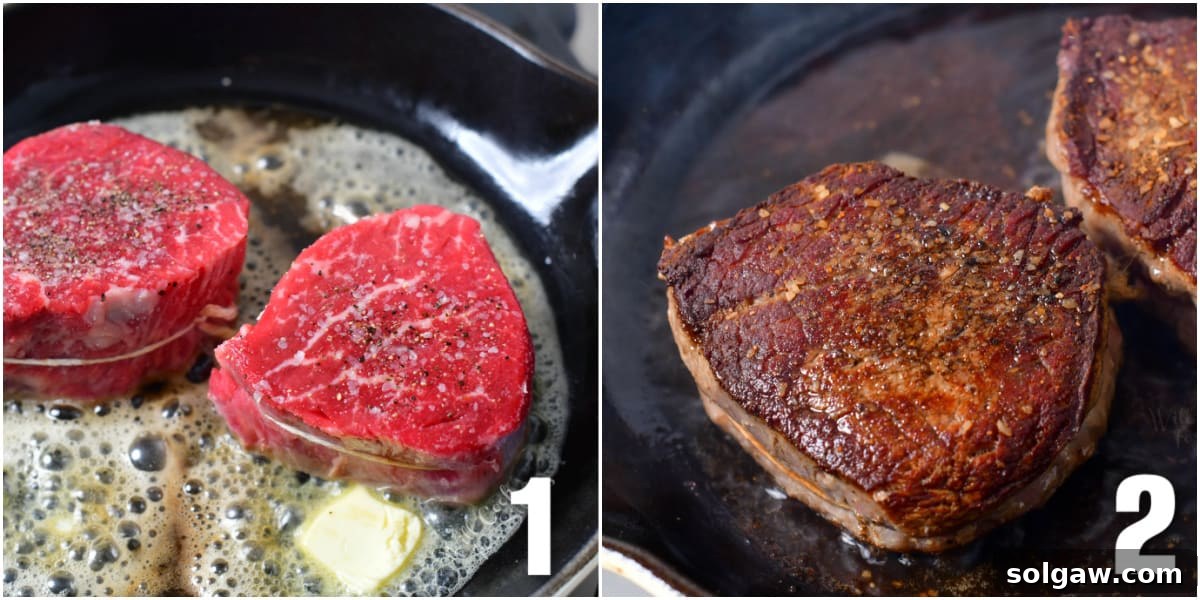
To ensure a truly exceptional steak dinner, start with perfectly cooked steaks. This sauce is designed to be made in the same pan used to sear your meat, allowing it to absorb all those delectable fond (browned bits) and infuse the sauce with even more flavor. Here’s how to prepare your steaks:
- Room Temperature: Always take your steaks out of the refrigerator at least 30-45 minutes before cooking. This allows them to come closer to room temperature, ensuring more even cooking.
- Pat Dry: Using paper towels, thoroughly pat each steak dry. Moisture on the surface will steam the meat instead of searing it, preventing that coveted crispy crust.
- Season Generously: Just before cooking, season your steaks liberally on all sides with kosher coarse salt and freshly cracked black pepper. Don’t forget the edges!
- Preheat Your Pan: Heat a heavy-bottomed skillet (cast iron is ideal) over medium-high heat for 3-5 minutes until it’s smoking slightly. This intense initial heat is crucial for a beautiful sear.
- Sear the Steaks: Add your neutral oil to the hot pan, then carefully place the seasoned steaks. Sear for 3-4 minutes per side, undisturbed, to form a rich, golden-brown crust. If cooking filet mignon, you might tie them with twine to help maintain their shape.
- Finish Cooking: Reduce the heat to medium. Continue cooking, flipping the steaks every minute or so, until they reach your desired internal temperature. A digital meat thermometer is your best friend here.
- Rest: Once cooked, immediately remove the steaks from the pan and let them rest on a cutting board for at least 5-10 minutes. This allows the juices to redistribute throughout the meat, resulting in a tender, juicy steak.
Crafting the Unforgettable Red Wine Sauce
Now for the star of the show! The real magic happens when you build the sauce directly in the pan where the steaks were cooked, capturing all those flavorful browned bits (fond) left behind.
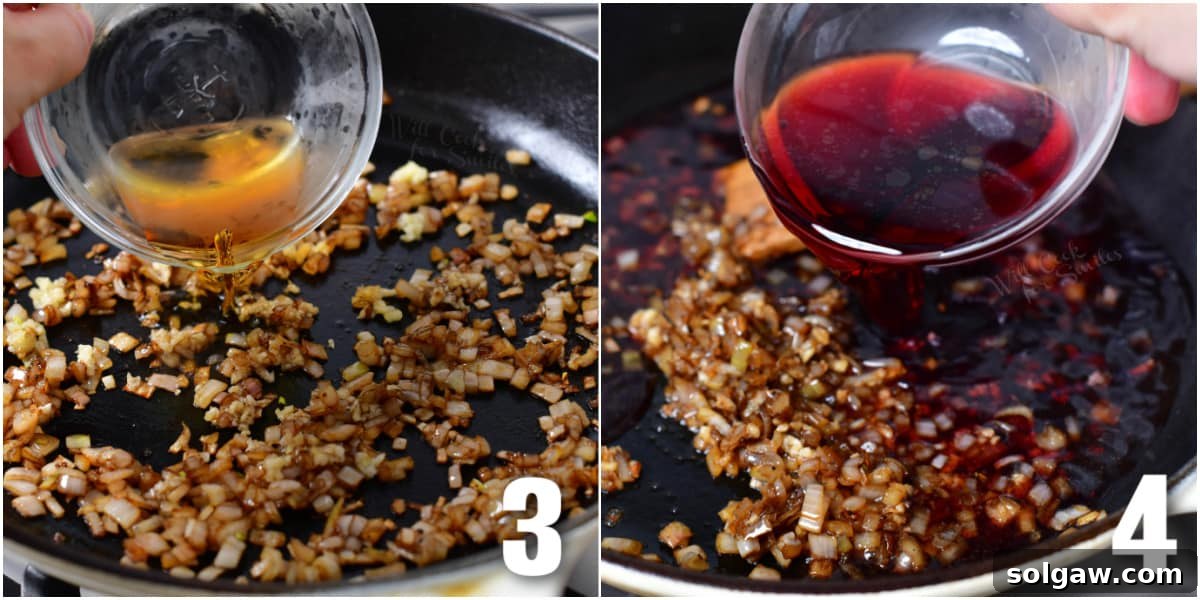
- Sauté Aromatics: After removing your rested steaks, return the pan to medium-high heat. If needed, add a small amount of fresh oil. Add the finely diced shallots and cook, stirring occasionally, until they are beautifully softened and caramelized to a rich brown color. This browning develops deep, sweet flavors. Stir in the minced garlic and cook for just a few seconds until it becomes wonderfully fragrant – be careful not to burn it.
- Deglaze with Cognac: Carefully pour in the cognac. Be mindful of potential flames if using a gas stove (move the pan off the heat briefly if unsure). Allow the cognac to simmer vigorously, scraping up any browned bits from the bottom of the pan with a wooden spoon. Continue simmering until the liquid has reduced by half, concentrating its flavor.
- Introduce Red Wine: Next, pour in the chosen red wine. Stir well, ensuring all the remaining fond is dissolved into the liquid. Let it simmer gently but steadily until the red wine has also reduced by approximately half. This step further deepens the complexity and body of the sauce.
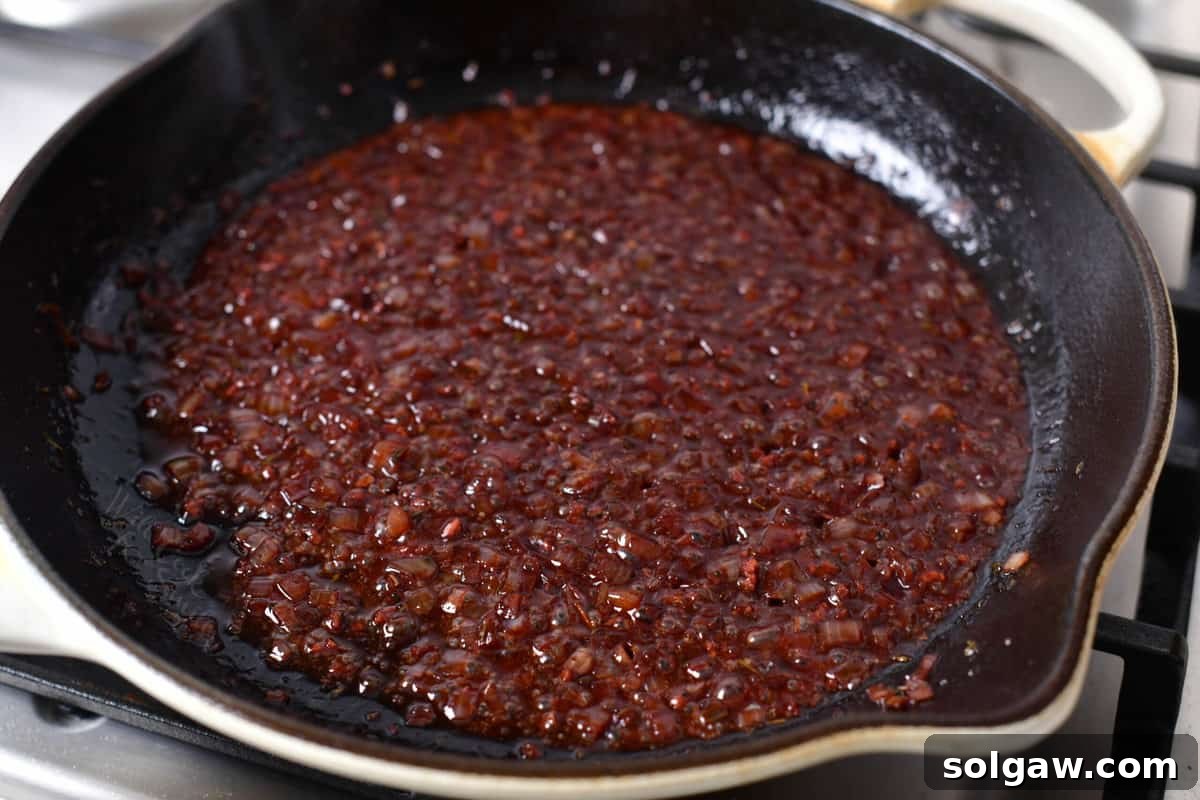
- Build the Base: Stir in the beef stock, dried thyme, a dash of salt, and freshly cracked black pepper. Continue to simmer the sauce for another few minutes, allowing it to reduce slightly more and thicken to your desired consistency. Taste and adjust seasoning as needed.
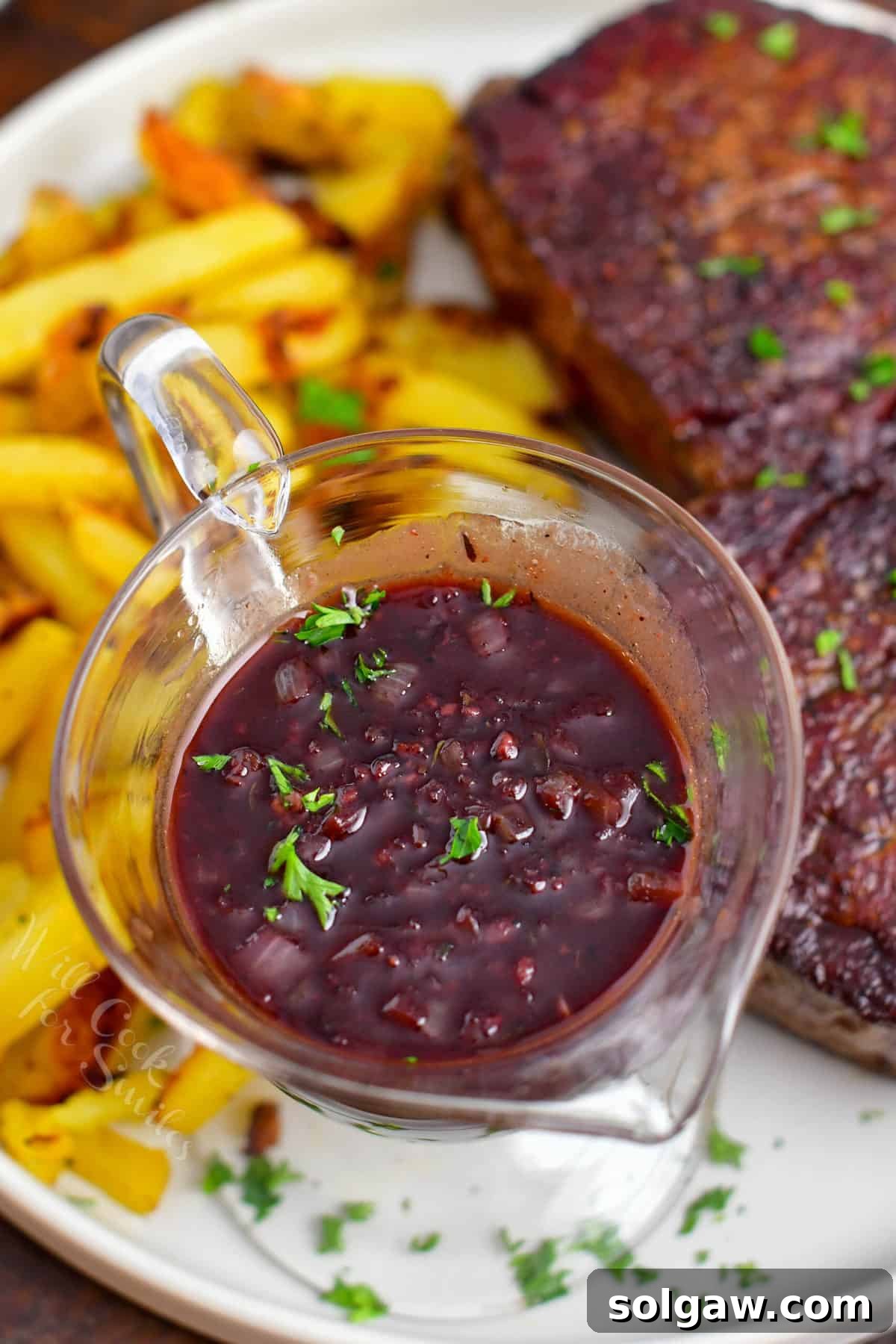
- Finish with Butter: Remove the pan from the heat. This is a crucial step for achieving that signature restaurant-quality finish. Add the unsalted butter to the sauce and stir continuously until it has completely melted and incorporated. The butter will emulsify into the sauce, giving it a beautiful, glossy sheen and an incredibly smooth, rich texture.
Transfer the finished red wine steak sauce into a warm sauceboat or drizzle it directly over your rested, sliced steaks. Prepare for an unforgettable dining experience!
Pro Tips for the Ultimate Steak Sauce
Achieving a truly exceptional red wine steak sauce, one that rivals your favorite restaurant, comes down to a few key techniques and thoughtful choices. Here are some expert tips to ensure your sauce is perfect every time:
- Choose the Right Pan: A heavy-bottomed skillet is essential, and a cast iron pan is the gold standard. Its superior heat retention and even distribution are crucial for getting a perfect sear on the steak and for building a flavorful fond at the bottom of the pan. While stainless steel can work, there’s a higher risk of food sticking if not properly managed. The fond is absolutely vital for the sauce’s flavor.
- Quality Ingredients Matter: This cannot be stressed enough. The flavor of your sauce is a direct reflection of the quality of your ingredients. Use a red wine that you would genuinely enjoy drinking – if you wouldn’t drink it, don’t cook with it! Don’t skip the cognac; it adds a unique layer of complexity. Always opt for rich beef stock over thin beef broth, and fresh garlic and shallots are non-negotiable for their vibrant aromatics.
- Don’t Rush the Reduction: Patience is key. Allow the cognac and red wine to simmer steadily until they’ve reduced by half. This isn’t just about thickening; it’s about concentrating the alcohol and developing deeper, more mellow flavors. Rushing this step will result in a sauce that lacks depth.
- Baste the Meat (Optional but Recommended): For an extra layer of richness and an even more beautiful crust, consider basting your steak with butter during the last minute or two of cooking. Add a tablespoon or two of unsalted butter to the pan along with a sprig of rosemary or thyme and a crushed garlic clove. Tilt the pan and spoon the melted, fragrant butter over the steak repeatedly. This technique helps achieve a gorgeous golden color and infuses the meat with incredible flavor.
- Always Finish with Butter: This is a non-negotiable step for a truly professional sauce. Once you remove the sauce from the heat, stir in a knob of cold unsalted butter. This process, known as “monter au beurre,” emulsifies the butter into the sauce, giving it a velvety texture, a brilliant glossy sheen, and a richer flavor without making it greasy.
- Deglaze in the Same Pan: The browned bits (fond) left in the pan after searing your steak are liquid gold. Making the sauce in the same pan allows you to deglaze these caramelized bits, dissolving them into the sauce and infusing it with unparalleled depth and savory notes. Never clean the pan between cooking the steak and making the sauce!
- Taste and Adjust: Always taste your sauce before serving. Seasoning is a personal preference. Add more salt or pepper as needed, or a tiny pinch of sugar if the wine was particularly acidic. A squeeze of lemon juice at the end can also brighten the flavors.
Frequently Asked Questions About Red Wine Steak Sauce
If you find yourself with any delicious leftover red wine steak sauce, first allow it to cool completely to room temperature. Then, transfer it to an airtight container and refrigerate it. It will keep well for up to 2-3 days. This makes it perfect for enhancing any leftover steak or for searing a fresh batch of meat the following day. It’s also surprisingly delicious drizzled over roasted chicken or steamed vegetables, adding a gourmet touch to everyday meals!
The best red wine for steak sauce is one that is rich and full-bodied, but crucially, NOT sweet. The sugars in sweet wines will concentrate too much during reduction and can make your sauce cloyingly sweet rather than savory and balanced. I highly recommend varieties like a nice Zinfandel, Malbec, or Pinot Noir. These wines offer a beautiful depth of fruit, a pleasant acidity, and a very subtle hint of sweetness that rounds out the sauce perfectly without overpowering it. Always choose a wine you would be happy to drink on its own.
The possibilities are endless, but certain side dishes truly shine with a rich red wine steak sauce. My absolute favorite pairing is creamy Mashed Potatoes. They are a classic for a reason – their smooth texture perfectly soaks up every last drop of that incredible sauce, ensuring not a single bit of flavor goes to waste. Beyond mashed potatoes, a variety of roasted or steamed vegetables are fantastic choices, such as asparagus, green beans, or roasted root vegetables. Roasted potatoes are another hearty option. If you prefer a different starch, consider elegant rice dishes like creamy Parmesan rice or aromatic rice pilaf. For a lighter touch, a simple green salad with a vinaigrette can offer a refreshing contrast.
Yes, you absolutely can! Preparing the sauce in advance can be a great time-saver, especially when entertaining. Simply follow all the steps up to the point where you finish with butter. Let the sauce cool completely, then store it in an airtight container in the refrigerator for up to 2-3 days. When you’re ready to serve, gently reheat the sauce over low heat, stirring occasionally. Once it’s warm, remove it from the heat and then stir in the fresh unsalted butter to get that beautiful glossy finish just before serving. This ensures the sauce is vibrant and fresh for your meal.
While cognac adds a unique depth, if you don’t have it on hand, you can use other brandies or even a fortified wine like Port or Sherry (dry, not sweet). For a non-alcoholic substitute, you could try a small amount of concentrated unsweetened grape juice or balsamic vinegar, but be aware that the flavor profile will differ slightly without the alcohol. The key is to find something that adds a layer of complexity and a touch of acidity and sweetness to balance the richness of the wine and beef stock.
More Exquisite Steak Dinners to Explore
If you loved this red wine steak sauce, you’ll surely enjoy these other fantastic steak recipes, each offering a unique flavor profile to tantalize your palate:
- Steak Pizzaiola with Linguine: A delightful Italian-American classic featuring tender steak in a vibrant tomato sauce.
- Steak Diane: A retro yet elegant dish with pan-fried steak served with a rich, creamy mushroom sauce.
- Ribeye Steaks with Sautéed Mushrooms and Onions: A timeless combination that highlights the natural flavors of a well-marbled ribeye.
- Ribeye with Amazing Creamy Steak Sauce: For those who prefer a decadent, smooth cream-based sauce with their steak.
PIN THIS RECIPE FOR LATER
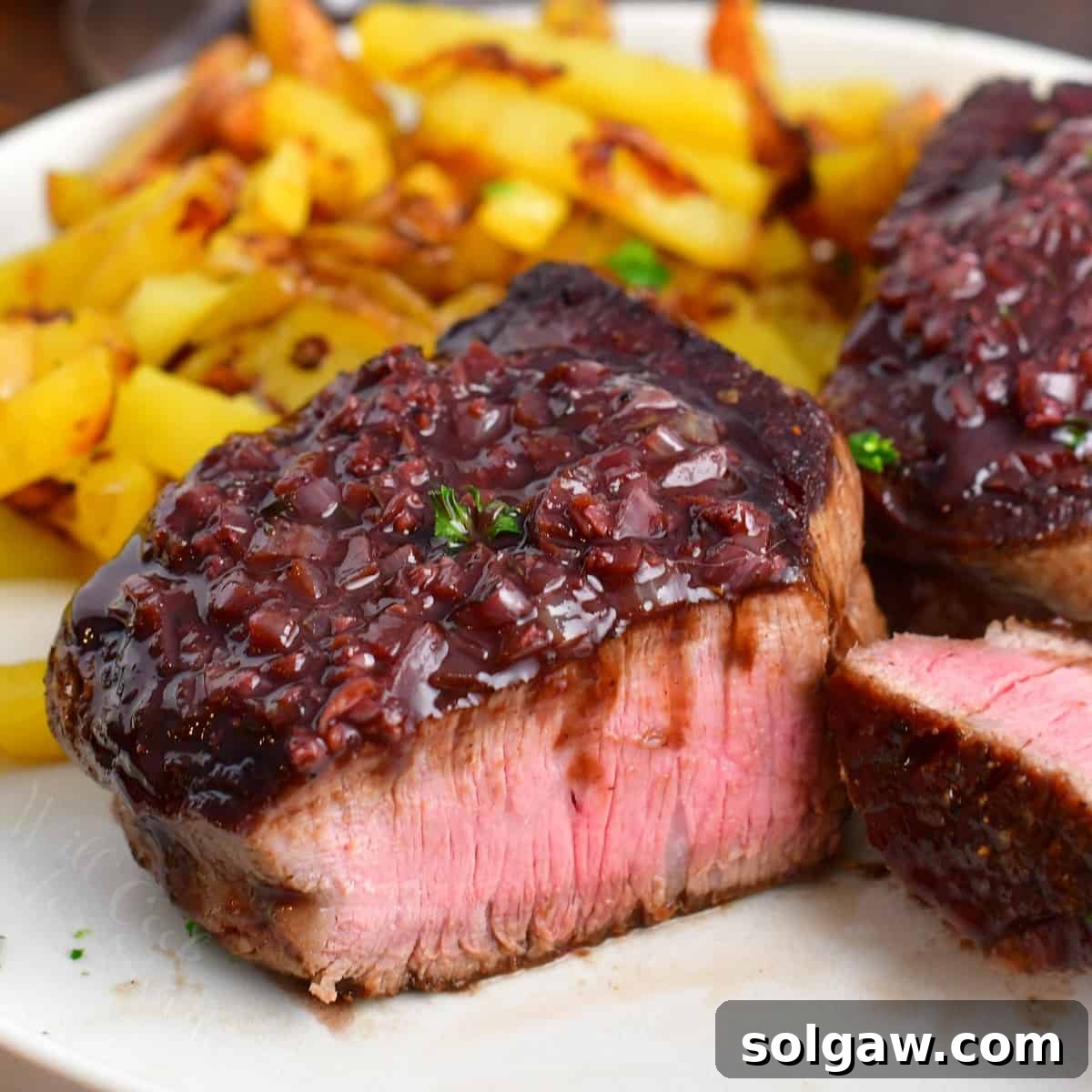
Red Wine Steak Sauce
This incredibly easy-to-make red wine steak sauce, crafted with just a few simple ingredients, is the perfect way to turn a perfectly seared filet mignon into an elegant, fancy meal right in the comfort of your own home.
Pin Recipe
- Course:
- Main Course
- Cuisine:
- American
- Diet:
- Gluten Free
- Prep Time:
- 5 minutes
- Cook Time:
- 15 minutes
- Total Time:
- 20 minutes
- Servings:
- 4
- Calories:
- 134 kcal
- Author:
- Lyuba Brooke
Ingredients
For the Steaks:
- 2-4 Filet mignon steaks (or any other favorite steaks)
- 2 tbsp canola oil (or other neutral high-heat oil)
- Kosher coarse salt, to taste
- Freshly cracked black pepper, to taste
For the Red Wine Sauce:
- 1 tbsp canola oil
- 1-2 shallots, finely minced (depending on size)
- 3 garlic cloves, minced
- 2 tbsp cognac
- 3/4 cup rich, full-bodied red wine (e.g., Zinfandel, Malbec, Pinot Noir – NOT sweet)
- 1/4 cup beef stock (preferably homemade)
- 1/4 tsp dried thyme
- Salt, to taste
- Freshly cracked black pepper, to taste
- 1 1/2 tbsp unsalted butter, cold (to finish the sauce)
Instructions
Before Cooking:
- Take steaks out of the refrigerator and remove from packaging 30-45 minutes before cooking. Let them rest on a cutting board to come closer to room temperature.
- Prepare and measure all your ingredients (mise en place) before you begin cooking.
Cook the Steaks:
- If using filet mignon: Tie a string of cooking twine around each steak to help it maintain its shape during searing. Tie it firmly but not so tight that it cuts into the meat. Trim off any long string ends. (This step is not necessary for other steak cuts.)
- Use a paper towel to thoroughly pat each steak dry on all sides.
- Preheat a heavy-bottomed skillet (such as cast iron) over medium-high heat for 3-5 minutes, until very hot and just smoking. (Heating times may vary depending on your stove.)
- Season steaks generously with salt and pepper on all sides, including the edges.
- Add 2 tbsp oil to the hot pan and spread it around.
- Carefully add the seasoned steaks to the pan and let them cook undisturbed for 3-4 minutes per side to achieve a beautiful sear.
- Lower the heat to medium. Continue cooking and flipping the steaks every minute or so until they reach your desired internal temperature. Use a digital meat thermometer for accuracy.
- Once cooked to your preference, remove the steaks from the pan and set them aside on a clean cutting board to rest for 5-10 minutes. Resting allows the juices to redistribute, ensuring a tender and juicy steak.
Make the Red Wine Sauce:
- Increase the heat back to medium-high on the same skillet where you cooked the steaks. If needed, add about 1 tbsp more oil.
- Add the minced shallots to the pan and cook, stirring occasionally, until they are completely softened and beautifully browned. Stir in the minced garlic and cook for just a few seconds until fragrant, being careful not to burn it.
- Pour in the cognac. Bring to a simmer and gently scrape any browned bits (fond) from the bottom of the pan with a wooden spoon. Continue to simmer until the cognac has reduced by half.
- Pour in the red wine, stir well, and continue to simmer until it has also reduced by about half, concentrating its flavors.
- Stir in the beef stock, dried thyme, and season with salt and freshly cracked black pepper to taste. Let the sauce simmer for another few minutes, allowing it to reduce and thicken slightly more. Remove from heat.
- Finally, mix in the cold unsalted butter until it is completely melted and incorporated. This will give your sauce a beautiful glossy finish and a rich, velvety texture.
- Serve the luxurious red wine steak sauce immediately over your rested, sliced steaks. Enjoy!
Notes
- Nutrition Notes: Please be aware that the nutritional value provided is calculated only for the red wine steak sauce. The nutritional information for your meal will vary depending on the type and size of steak you choose.
- Choosing the Right Wine: Always use a rich, full-bodied red wine that you enjoy drinking, such as Zinfandel, Malbec, or Pinot Noir. It’s crucial to avoid any sweet wines, as they can make the sauce overly sugary once reduced.
- The Butter Finish: Don’t skip the final step of stirring in cold unsalted butter once the sauce is off the heat. This “monter au beurre” technique is essential for achieving that characteristic glossy sheen and smooth, rich texture that elevates the sauce to restaurant quality.
- Deglazing for Flavor: The browned bits at the bottom of the pan after cooking your steak are packed with flavor. Making the sauce in the same pan allows these to be incorporated into the sauce through deglazing, adding significant depth.
Nutrition (Sauce Only)
Carbohydrates: 3g |
Protein: 1g |
Fat: 8g |
Saturated Fat: 3g |
Trans Fat: 1g |
Cholesterol: 11mg |
Sodium: 33mg |
Potassium: 117mg |
Fiber: 1g |
Sugar: 1g |
Vitamin A: 135IU |
Vitamin C: 1mg |
Calcium: 14mg |
Iron: 1mg
Mention @willcookforsmiles or tag #willcookforsmiles!