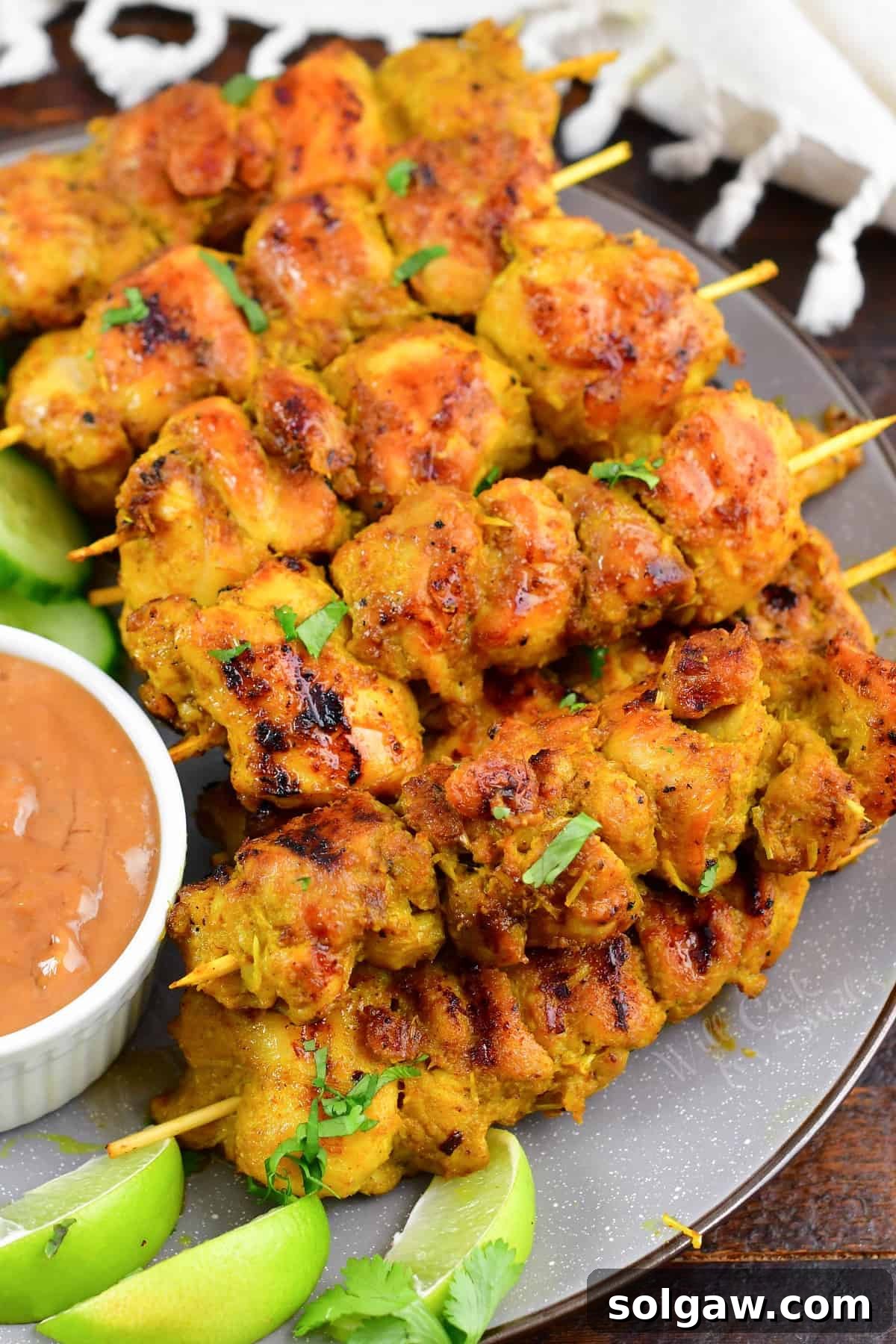
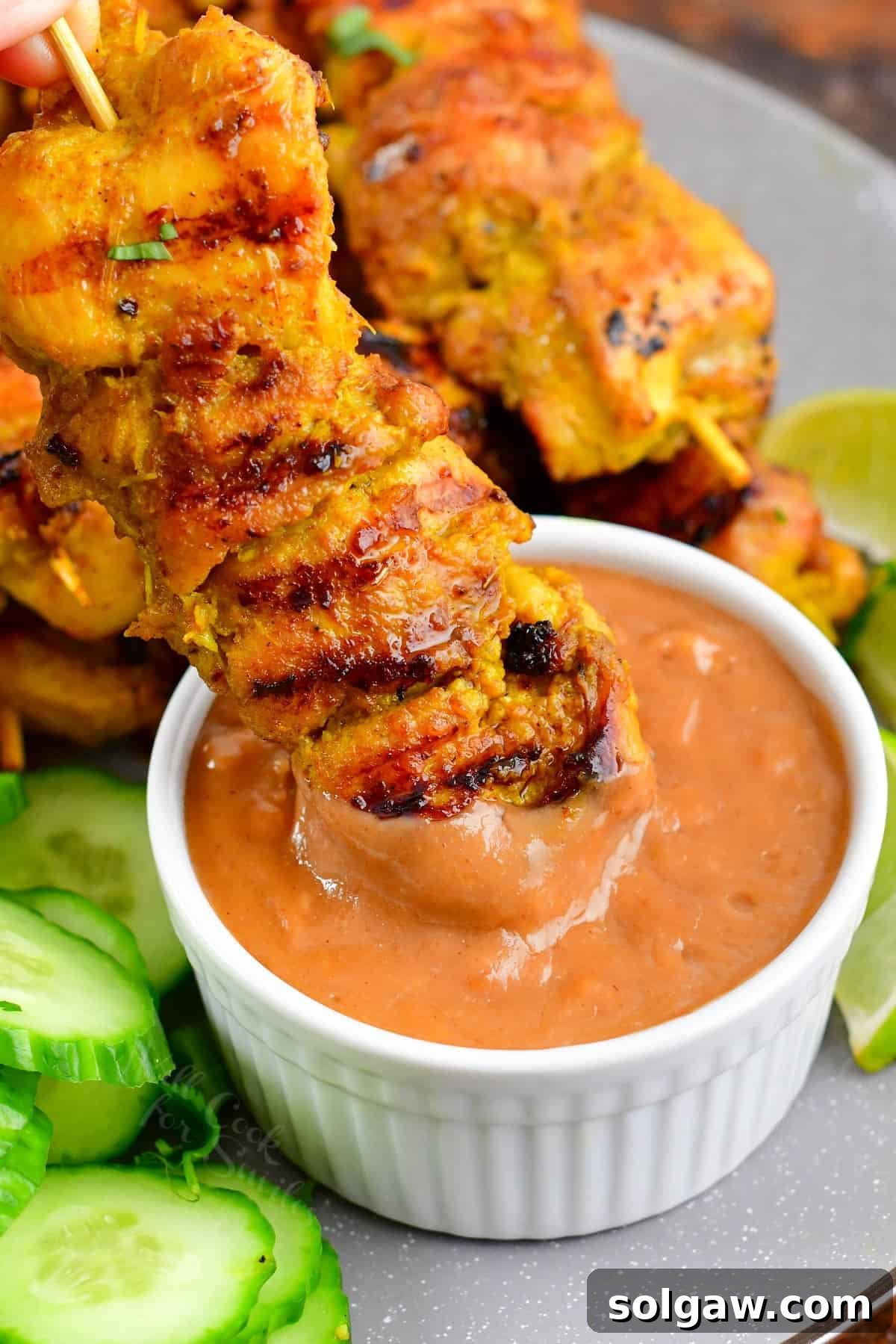
Authentic Thai Chicken Satay with Homemade Peanut Sauce
Embark on a culinary journey to Southeast Asia with this incredible recipe for Thai Chicken Satay, perfectly complemented by a rich, homemade peanut sauce. This dish is a true masterpiece of flavors and aromas, bringing the vibrant essence of Thai cuisine right to your kitchen. Imagine succulent pieces of chicken, marinated in an aromatic blend of exotic spices and fresh herbs, then grilled until golden brown and tender. Each bite is a symphony of savory, sweet, and tangy notes, further elevated by a creamy, irresistible peanut dipping sauce. Whether you’re hosting a gathering, looking for an exciting appetizer, or craving a flavorful main course, this Thai Chicken Satay recipe promises to delight your taste buds and impress your guests.
What Is Thai Chicken Satay: A Culinary Delight
Thai Chicken Satay is more than just a dish; it’s an experience for the senses. From the moment you lay eyes on it, you’ll be captivated by its vibrant yellow-orange hue, a testament to the powerful turmeric and other spices in its marinade. The aroma alone is enough to make your mouth water, hinting at the deliciousness to come. But it’s the taste that truly seals its reputation: a harmonious blend of savory chicken, aromatic spices, and a delicate sweetness that leaves a lasting impression.
The magic of chicken satay lies in its meticulously crafted marinade. This flavorful concoction is a cornerstone of Thai and Southeast Asian cooking, featuring a bold array of traditional ingredients. Coconut milk provides a creamy base and tenderizes the chicken, while fish sauce adds a crucial umami depth. Fresh lemongrass, ginger, and garlic infuse the meat with bright, zesty, and pungent notes. Ground spices like cumin, turmeric, and coriander contribute earthy warmth and that characteristic golden color. This blend transforms ordinary chicken into an extraordinary appetizer, making it one of the most flavorful dishes you’ll ever grill.
While often associated with Thailand, the concept of “satay” actually originated in Indonesia, where it is a national dish. Over time, it spread throughout Southeast Asia, evolving with local ingredients and culinary traditions in countries like Malaysia and Thailand. “Satay” specifically refers to skewered, marinated, and grilled meat, typically served with a dipping sauce. This adaptability has made satay a beloved staple across diverse cultures, each adding its unique twist while retaining the core elements of flavor and preparation.
No Thai Chicken Satay experience is complete without its iconic companion: peanut sauce. This sweet and savory dip is an essential part of the dish, providing a luscious counterpoint to the grilled chicken’s smoky, spiced flavors. The rich, creamy texture and complex taste of homemade peanut sauce elevate the satay from delicious to truly unforgettable. Once you taste this pairing, you’ll understand why it’s a combination you’ll want to recreate again and again.
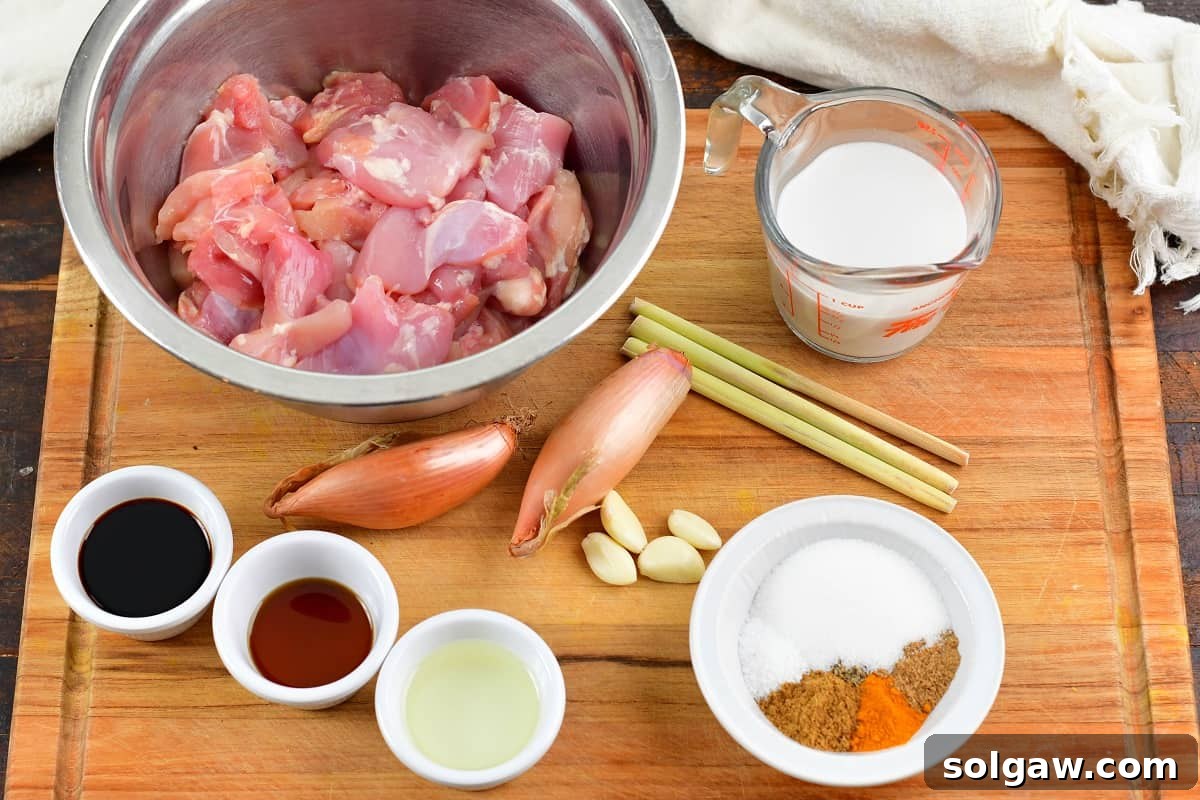
Important Ingredients Notes and Substitutions for Perfect Satay
Achieving authentic Thai Chicken Satay relies heavily on using the right ingredients and understanding their specific roles. Here are some crucial notes and potential substitutions to guide you:
- Unsweetened Coconut Milk: This is a non-negotiable ingredient for the marinade. It provides richness, helps tenderize the chicken, and creates that characteristic creamy texture. Ensure you pick up unsweetened coconut milk, typically found in cans in the Asian or baking aisle. The sweetened variety is primarily for desserts or blended drinks and will alter the savory balance of your satay.
- Lemongrass Stalks: For the best flavor, always opt for fresh lemongrass. When preparing it, remember to use only the white and light green parts of the stalk. These lower sections are the most tender and flavorful. Discard the tougher, darker green parts. If fresh lemongrass is unavailable, you can use dried lemongrass. For every fresh stalk, use about half the amount of dried lemongrass, and rehydrate it in warm water for approximately 20 minutes before adding it to your marinade.
- Chicken Thighs: While chicken breast can be used, boneless, skinless chicken thighs are highly recommended. They are naturally juicier and more flavorful, holding up better to grilling without drying out, resulting in a more succulent satay.
- Ginger vs. Galangal: This recipe calls for fresh ginger, which provides a lovely spicy, aromatic note. In some traditional Thai recipes, galangal (a relative of ginger with a sharper, more citrusy flavor) is used. If you have access to fresh galangal and prefer a more pungent, traditional flavor, you can substitute it for the ginger.
- Gluten-Free Option: To make this delicious recipe suitable for a gluten-free diet, the only required adjustment is to substitute regular soy sauce with gluten-free soy sauce or tamari. All other ingredients are naturally gluten-free.
- Fish Sauce: Do not skip the fish sauce! While its aroma can be strong on its own, it’s a cornerstone of Southeast Asian cuisine, providing an essential savory, umami depth that cannot be replicated. It blends seamlessly into the marinade, enhancing all the other flavors without being overpowering.
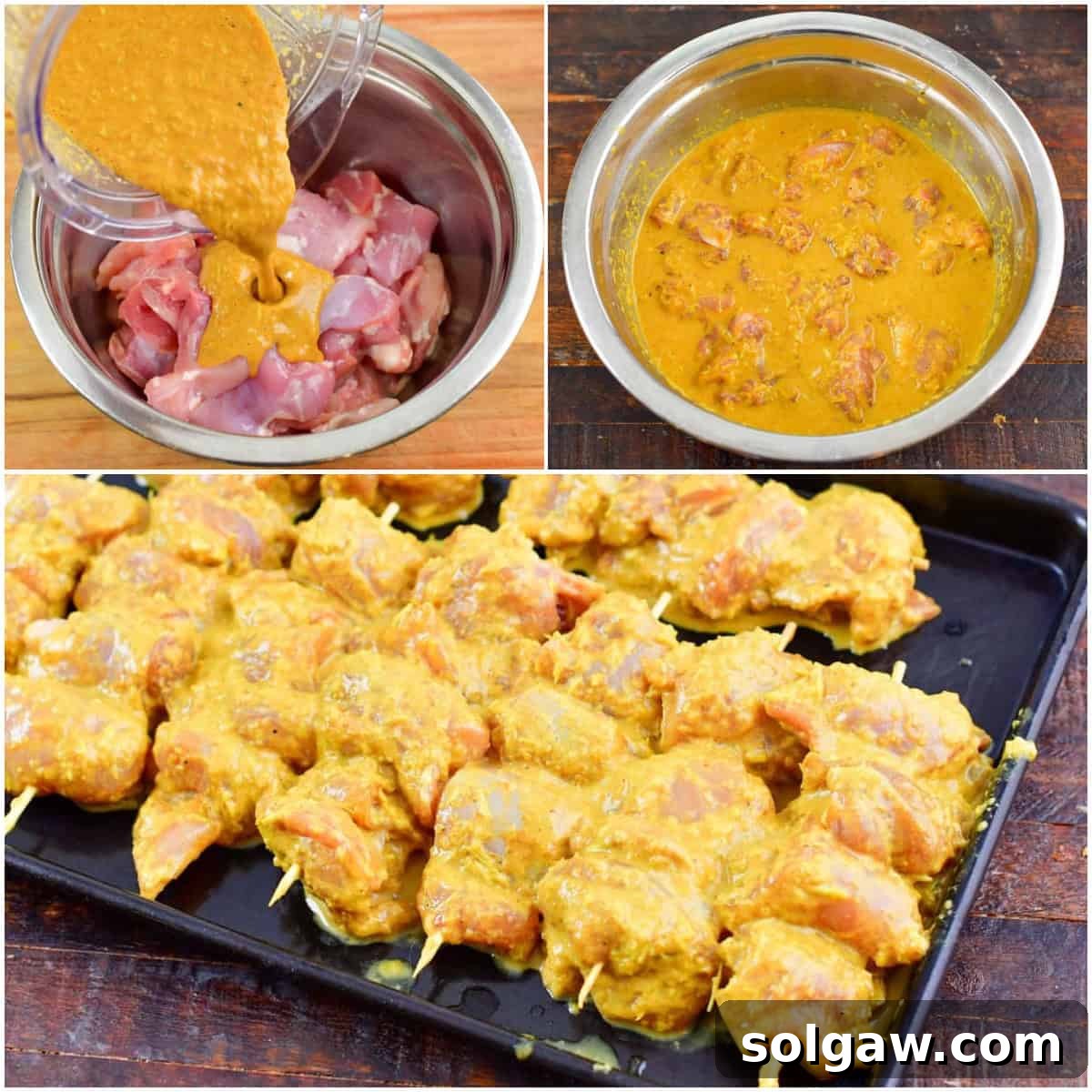
How to Make Thai Chicken Satay: A Step-by-Step Guide
Making homemade Thai Chicken Satay might seem like a gourmet endeavor, but with this simple, step-by-step guide, you’ll find it surprisingly easy and incredibly rewarding. The key to its deep flavor lies in proper marination and careful grilling.
The Flavorful Marinade Preparation
- Blend the Aromatics: Begin by combining all the marinade ingredients in a food processor or a high-speed blender. This includes the unsweetened coconut milk, garlic cloves, shallots, the white parts of lemongrass stalks, ground turmeric, ground cumin, salt, white pepper, ground coriander, granulated sugar, low sodium soy sauce, fish sauce, and vegetable oil. Pulse and blend until the mixture is completely smooth and forms a fragrant paste. The smoother the marinade, the better it will adhere to the chicken and infuse its flavors.
- Prepare the Chicken: Take your boneless, skinless chicken thighs and cut them into uniform 1 to 1.5-inch pieces. This size is ideal for skewering and ensures even cooking. If there is any excess fat, you can trim it off to your preference. Place the cut chicken pieces into a non-reactive mixing bowl, such as glass or ceramic.
- Marinate for Maximum Flavor: Pour the freshly blended marinade over the chicken in the bowl. Use your hands or a spoon to thoroughly mix the chicken, ensuring every piece is fully coated in the aromatic marinade. Cover the bowl tightly with plastic wrap or a lid to prevent air exposure. Refrigerate the marinated chicken for a minimum of 6 hours, and ideally for 8 to 12 hours. This extended marination time is crucial for the chicken to absorb all the wonderful flavors and become incredibly tender.
Skewering and Grilling to Perfection
- Prepare the Skewers: If you are using wooden skewers, it’s essential to soak them in water for at least 30-45 minutes before cooking. This prevents them from burning on the grill and keeps them from splintering when you skewer the chicken.
- Skewer the Chicken: Once the chicken has finished marinating, it’s time to thread it onto the prepared skewers. Take 3-4 pieces of marinated chicken and carefully thread them onto each skewer. The exact number will depend on the size of your chicken pieces and your skewers. As you skewer, you can gently shake off any excess marinade, but avoid squeezing it off, as you want a good coating for flavor and moisture.
- Grill the Satay: Preheat your grill to medium-high heat. Once hot, place the chicken skewers on the grill. Cook each side for 2-3 minutes, or until it turns a beautiful golden-brown with slight charring. Rotate the skewers a quarter turn after each side is cooked, ensuring all four sides are evenly grilled. The internal temperature of the chicken should reach 165°F (74°C) to be safely cooked through.
Homemade Peanut Sauce: The Perfect Dip
- Combine Sauce Ingredients: In a small saucepan, combine all the ingredients for the peanut sauce: unsweetened coconut milk, creamy peanut butter, rice vinegar, low sodium soy sauce, fresh lime juice, white granulated sugar, ground ginger, and one minced garlic clove.
- Whisk and Simmer: Place the saucepan over medium to medium-low heat. Begin whisking the mixture slowly. Continue to whisk until the sauce becomes completely smooth and all ingredients are well combined. As it heats, keep whisking gently. As soon as the sauce starts to simmer, remove it from the heat immediately. Overcooking can cause the sauce to become too thick or separate. Serve the warm peanut sauce alongside your freshly grilled chicken satay skewers.
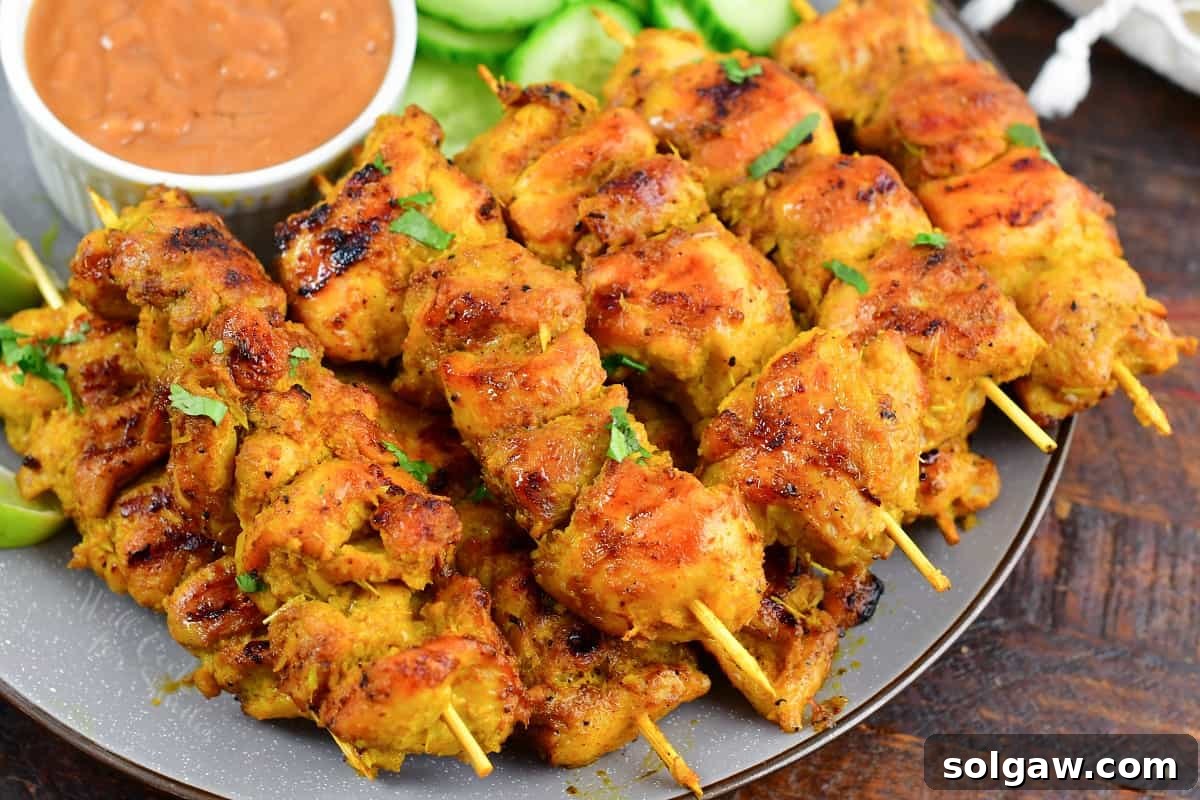
How to Serve Thai Chicken Satay for Any Occasion
Thai Chicken Satay is incredibly versatile and can be enjoyed in various ways, making it suitable for any occasion, from casual appetizers to a satisfying dinner.
As an Appetizer
The traditional way to serve Thai Chicken Satay is as a delightful appetizer. Arrange the warm, grilled skewers on a platter with a generous bowl of the homemade peanut sauce for dipping. For an authentic touch and to cut through the richness, serve with fresh cucumber slices or a light, refreshing cucumber salad. A sprinkle of fresh cilantro and a wedge of lime for squeezing add extra vibrancy and aroma.
As a Hearty Main Course
While often an appetizer, Thai Chicken Satay makes a fantastic dinner dish. To transform it into a more substantial meal, consider serving it alongside:
- Sticky Coconut Rice: The creamy sweetness of coconut rice perfectly complements the savory satay. Its sticky texture is also excellent for soaking up any extra peanut sauce.
- Jasmine Rice: A classic pairing, steamed jasmine rice provides a neutral base that allows the satay’s complex flavors to shine.
- Fresh Salad: A simple green salad with a light vinaigrette or a vibrant Asian-inspired slaw can add freshness and crunch.
- Stir-fried Vegetables: A side of quickly stir-fried bell peppers, snap peas, and carrots can complete the meal with added nutrition and color.
No matter how you choose to serve it, Thai Chicken Satay is sure to be a crowd-pleaser, delivering an unforgettable taste of Southeast Asia.
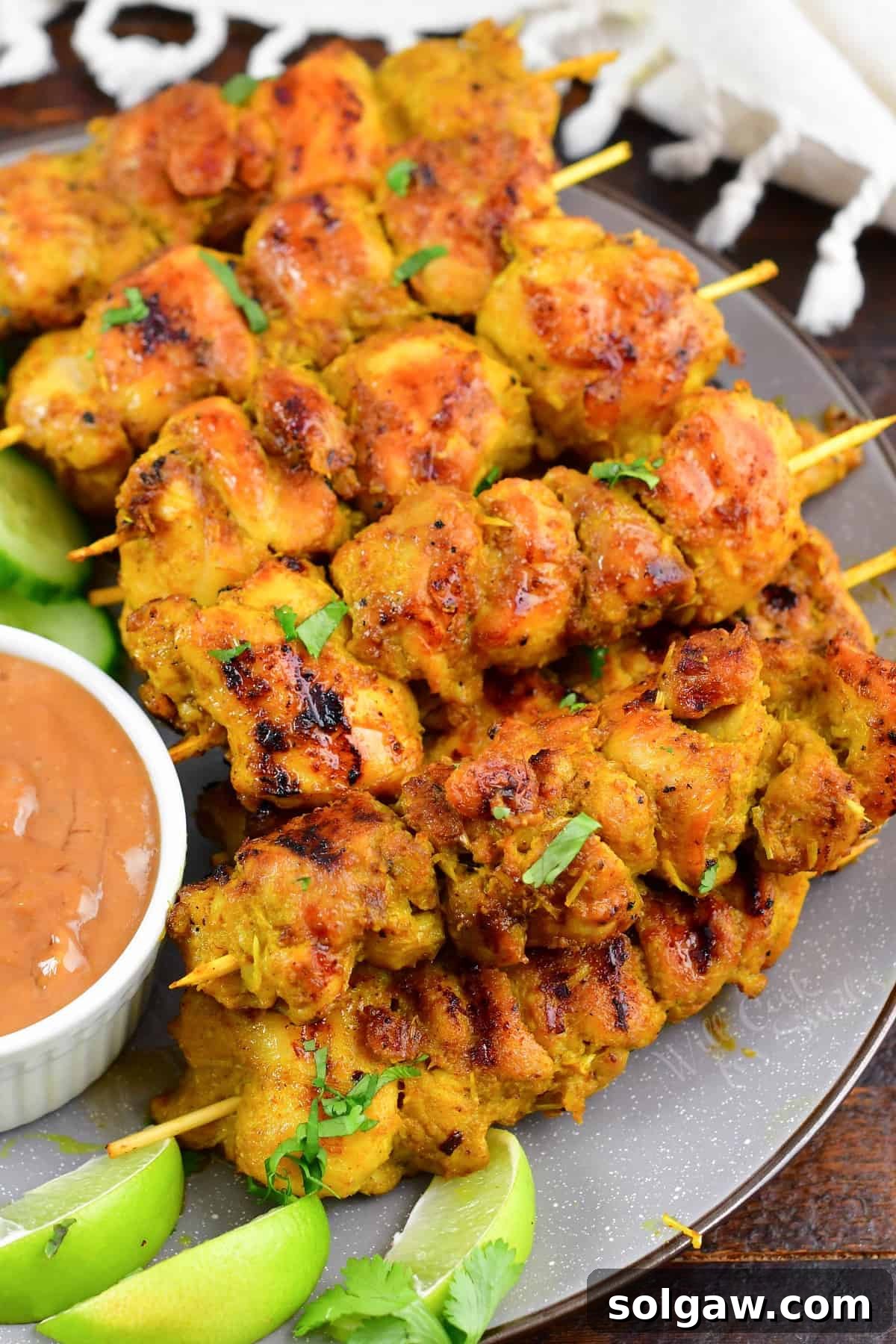
We hope you enjoy crafting and savoring this authentic Thai Chicken Satay! It’s a recipe that promises vibrant flavors and a wonderfully satisfying culinary experience. Don’t forget to share your creations and tell us how much you loved it!
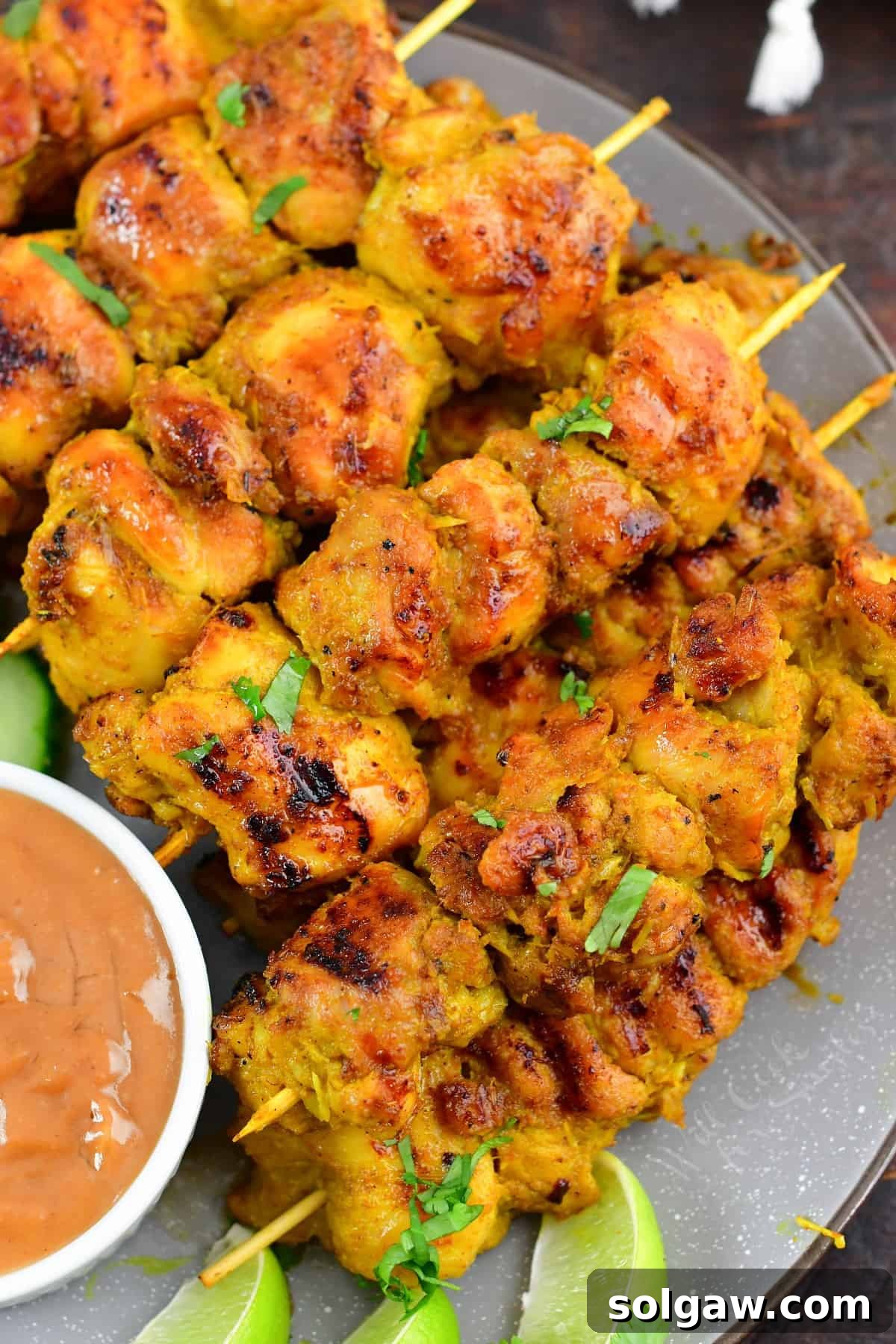
Chicken Satay Recipe with Peanut Sauce
Print
Pin
Ingredients
- 2-2.5 lbs boneless, skinless chicken thighs, cut into 1-1.5 inch pieces
For the Marinade:
- 3/4 cup unsweetened coconut milk
- 2 garlic cloves, peeled
- 2 shallots, peeled
- 3 lemongrass stalks, white part only, roughly chopped
- 2 tsp ground turmeric
- 2 tsp ground cumin
- 1/2 tsp salt
- 1/4 tsp white pepper
- 1 1/2 tsp ground coriander
- 2 tbsp white granulated sugar
- 3 tbsp low sodium soy sauce use gluten free soy sauce or tamari if needed
- 2 tbsp fish sauce
- 3 tbsp vegetable oil
For the Peanut Sauce:
- 1/2 cup unsweetened coconut milk
- 1/2 cup creamy peanut butter
- 2 tbsp rice vinegar
- 2 tbsp low sodium soy sauce
- 2 tbsp fresh lime juice
- 1 tbsp white granulated sugar
- 1 tsp ground ginger
- 1 garlic clove, minced
Instructions
Step 1: Marinate the Chicken (allow 6-12 hours)
-
In a food processor or a powerful blender, combine all ingredients listed under “Marinade” until the mixture is completely smooth. This ensures a consistent flavor profile for the chicken.
-
Cut the boneless, skinless chicken thigh meat into uniform pieces, approximately 1 to 1.5 inches in size. Trim off any excess fat if desired. Place the prepared chicken pieces into a non-reactive metal or glass mixing bowl.
-
Pour the blended marinade over the chicken in the bowl. Mix thoroughly, ensuring every piece of chicken is well coated with the marinade. Cover the bowl tightly to make it air-tight and refrigerate for a minimum of 6 hours, or ideally for 8 to 12 hours, to allow the flavors to fully infuse.
Step 2: Cook the Chicken
-
If using wooden skewers, remember to soak them in water for 30-45 minutes prior to cooking. This prevents them from burning on the grill.
-
When you are ready to cook, thread 3-4 pieces of marinated chicken onto each soaked skewer. The exact number will depend on the size of your chicken pieces and your preference for skewer fullness. Gently shake off any loose excess marinade, but do not try to remove all of it.
Preheat your grill to medium-high heat. Place the skewered chicken on the hot grill. Grill each side for 2-3 minutes, rotating the skewers a quarter of the way as each side achieves a beautiful golden-brown color. Continue until all four sides are cooked and the chicken reaches an internal temperature of 165°F (74°C).
-
Serve the perfectly cooked chicken satay skewers immediately with the homemade peanut sauce and fresh cucumber slices or a light cucumber salad.
Step 3: Prepare the Peanut Sauce
-
In a small saucepot, combine all the ingredients listed under “Peanut Sauce.” Place the pot over medium to medium-low heat.
-
Begin to whisk the sauce slowly and continuously. Whisk until the sauce is completely smooth and evenly heated. As soon as the sauce starts to gently simmer around the edges, immediately remove it from the heat. This prevents it from becoming too thick or oily. Serve warm.
Notes
Nutrition
More Thai-Inspired Recipes to Explore
If you loved this Thai Chicken Satay, you’ll surely enjoy exploring more vibrant flavors from Southeast Asia. Here are some other delicious Thai-inspired chicken and rice dishes to try:
- Thai Cashew Chicken (Gai Pad Med Mamuang)
- Thai Basil Chicken (Pad Krapow Gai)
- Thai Fried Rice (Khao Pad)
- Thai Basil Fried Rice
- Classic Pad Thai Noodles