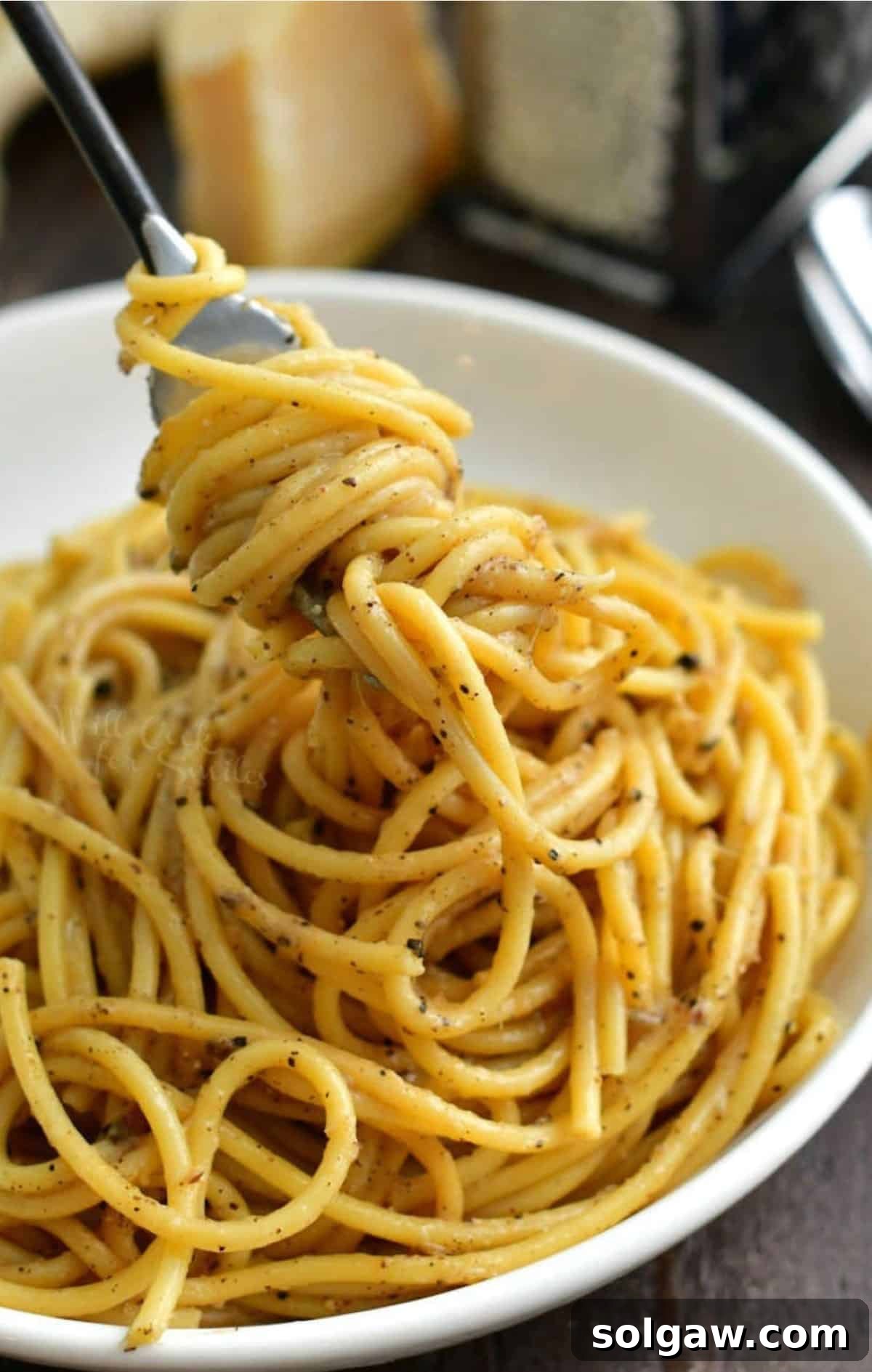
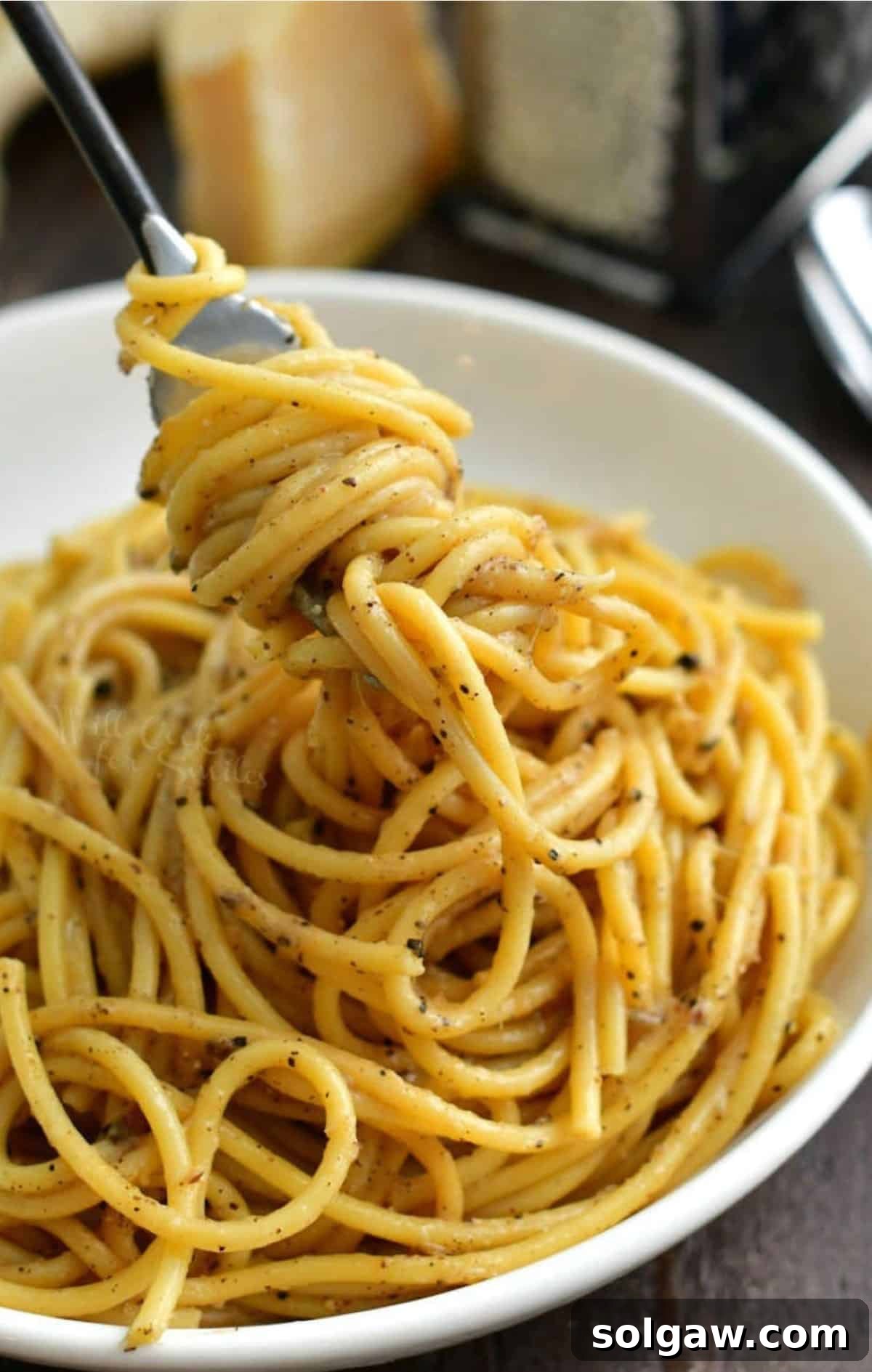
In the vast and wonderful world of Italian cuisine, few dishes capture the essence of simplicity and profound flavor quite like Cacio e Pepe. This Roman classic, whose name literally translates to “cheese and pepper,” is an absolute marvel. It’s a quick weeknight dinner hero, offering an incredibly flavorful, fast, and easy meal that delivers ultimate comfort with every bite of cheesy, peppery pasta. What’s even better? You likely already have the three main ingredients in your pantry. Think of it as a sophisticated, intensely flavorful Italian take on mac and cheese, but with a much more elegant name and a surprisingly complex profile.
The Enduring Appeal of Cacio e Pepe: A Quick Dive
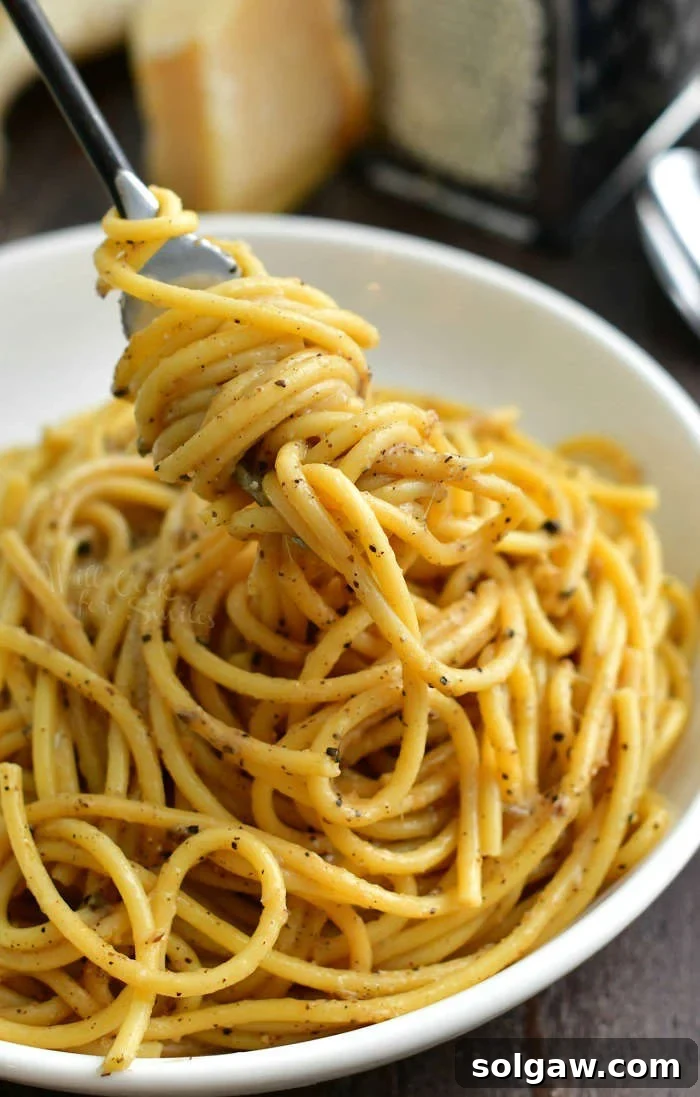
Cacio e Pepe stands out for its deceptively simple ingredient list and the rich, smooth sauce it creates. Unlike creamy, dairy-heavy pasta dishes, Cacio e Pepe achieves its luscious texture through a brilliant culinary trick. It’s a zesty pasta coated with a smooth, flavorful cheese sauce, and remarkably, you only need three core ingredients to bring this masterpiece to life.
- What it is: Cacio e Pepe, pronounced “kah-cheeoh eh peh-peh,” is a classic Roman pasta dish primarily composed of Pecorino Romano cheese, black pepper, and pasta. Its elegance lies in its minimalism.
- The Secret to Success: The culinary magic behind preventing the cheese from clumping and achieving that desirable smooth sauce lies in the starchy hot water leftover from cooking the pasta. This technique is not just for Cacio e Pepe; it’s a game-changer for many pasta dishes, ensuring a silky, non-dry finish. We’ll delve deeper into this crucial step later!
- Time-Efficient: Despite its gourmet taste, Cacio e Pepe can be prepared in just about 20 minutes. However, mastering the technique is key, so paying close attention to the tips and instructions is vital for optimal results.
The Holy Trinity: Unpacking the Three Essential Ingredients
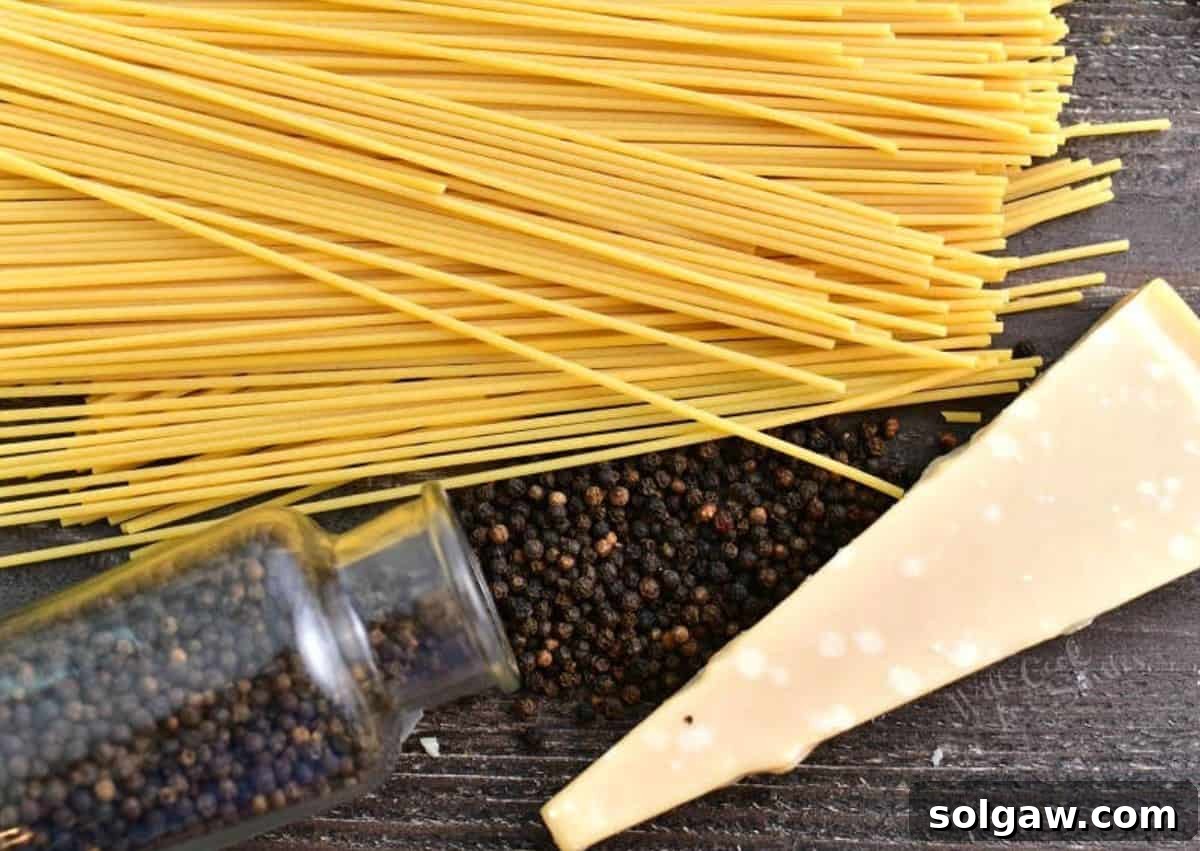
The beauty of Cacio e Pepe lies in its reliance on only a handful of high-quality ingredients. Choosing the right type and quality for each component is paramount to achieving the dish’s authentic flavor and texture. Let’s explore each one in detail:
- Pasta – The Foundation:
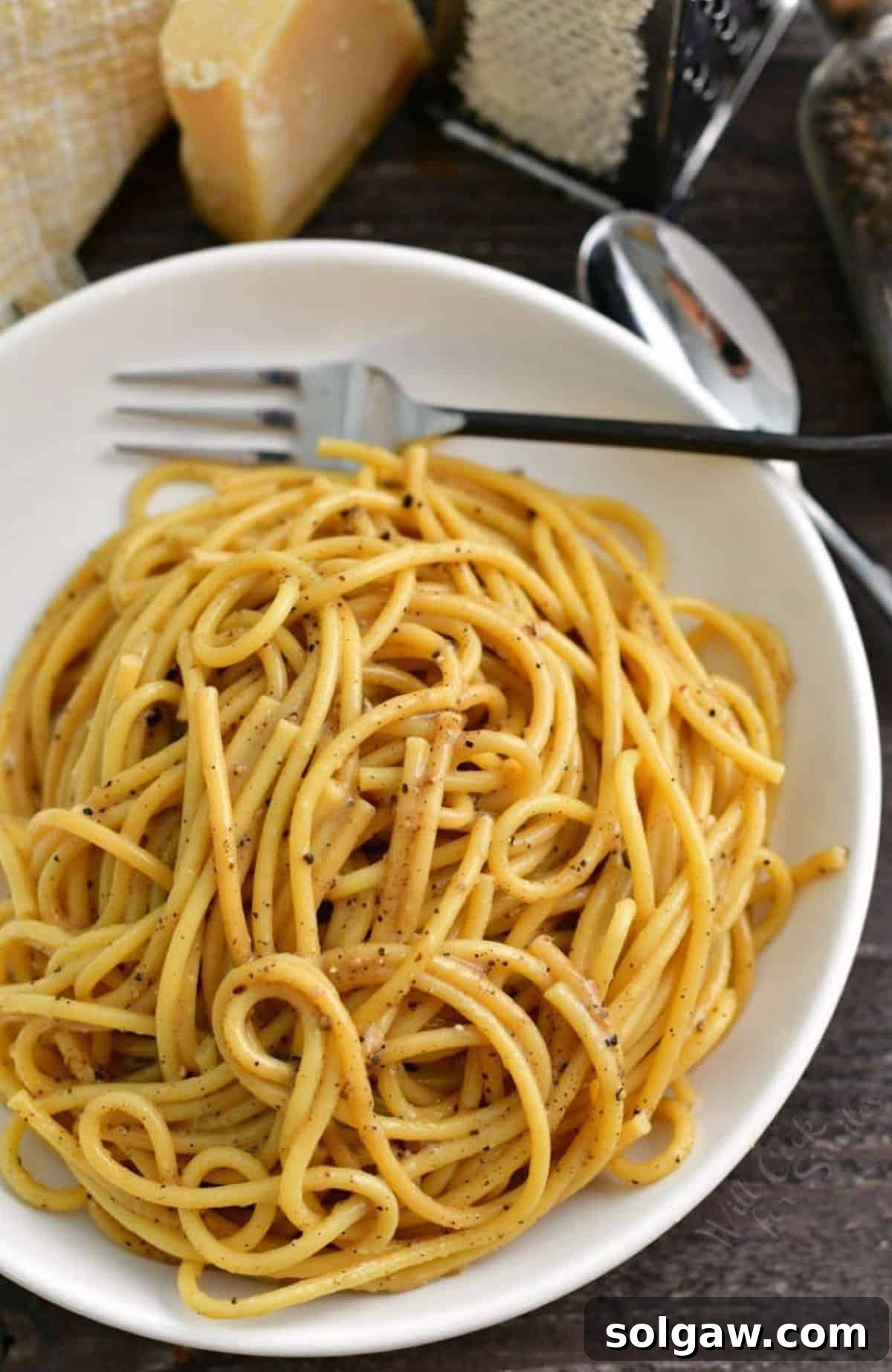
- The ideal pasta for Cacio e Pepe is bucatini. This long, hollow pasta is thicker than spaghetti and boasts a rougher surface, which is absolutely perfect for the cheese and pepper sauce to cling to evenly, ensuring every strand is deliciously coated.
- Another excellent choice is artisan linguine. Look for varieties that have a visibly rough texture, as this characteristic helps the sauce adhere beautifully.
- If bucatini or artisan linguine are hard to find, a good quality spaghetti can be used. While it might not capture the sauce quite as effectively as bucatini, it still delivers a satisfying result. The key is to select a brand known for its texture.
- Pecorino or Parmesan – The Soul of the Sauce:
- For an authentic Roman Cacio e Pepe, Pecorino Romano is the cheese of choice. Its distinct strong, tangy, and salty flavor profile is irreplaceable and gives the dish its characteristic punch.
- If Pecorino Romano isn’t available, high-quality Parmesan (Parmigiano-Reggiano) is a suitable alternative, offering a slightly milder, nuttier flavor. While it won’t be exactly the same, it will still yield a delicious pasta.
- The Golden Rule for Cheese: Regardless of your choice, the most crucial step is to buy a block of cheese and grate it yourself, by hand. Pre-grated cheeses, even from the deli, often contain anti-caking agents (like cellulose) that prevent them from melting smoothly, leading to a clumpy, grainy sauce rather than the desired silky emulsion.
- Grating Technique: Use the side of your box grater with the rough, protruding holes to grate the cheese into a fine, almost dust-like consistency. This fine grate significantly increases the surface area of the cheese, allowing it to melt quickly and seamlessly into the smooth sauce.
- Peppercorns – The Spice and Aroma:
- You absolutely need whole black peppercorns for this dish. Pre-ground pepper simply won’t deliver the vibrant, fresh flavor required.
- Flavor Elevation: For the most intense and aromatic pepper flavor, take the extra step to toast the peppercorns in a dry, hot skillet for a few minutes until they become fragrant and begin to slightly smoke. This process awakens their essential oils, deepening their flavor profile.
- Grinding: After toasting, grind the peppercorns on a coarse setting in a pepper grinder. The coarse grind provides a delightful textural contrast and visual appeal in the finished dish.
Mastering the Technique: Expert Tips for a Flawless Cacio e Pepe
While Cacio e Pepe boasts minimal ingredients, its success hinges on mastering a few key techniques. These tips will elevate your dish from good to truly exceptional, ensuring a creamy, non-clumpy, and intensely flavorful experience.
- Always Grate Cheese by Hand: This cannot be stressed enough. Avoid any pre-grated cheese. A block of Pecorino Romano or Parmesan, freshly grated on the rough side of a box grater, will melt into a beautifully smooth sauce. Remember to grate it finely, almost like dust, for the best results. A cheese grater holder can save your knuckles!
- Don’t Fully Drain the Pasta: Instead of pouring all the pasta water down the drain, keep it close! A minute or two before your pasta is al dente, start preheating your serving pan. Transfer the pasta directly from the boiling pot to the pan using a pasta ladle or tongs. It should be piping hot and slightly wet, carrying some of that precious starchy water with it. This method ensures the pasta retains heat and has just the right amount of moisture for the sauce to emulsify.
- Cook Side by Side for Efficiency: For ultimate convenience and to ensure perfect timing, cook your pasta and prepare your pepper mixture on adjacent burners. This allows for a quick and seamless transfer of the hot pasta from pot to pan, which is crucial for the sauce’s consistency.
- Harness the Power of Starchy Pasta Water: This is your “secret weapon.” The water left after cooking pasta is rich in starches, which are essential for creating a smooth, emulsified sauce that coats every strand. Ladle some of this hot, starchy water into your pan with the toasted pepper, and most importantly, mix a generous amount with your finely grated cheese in a separate bowl to create a smooth paste before combining it with the pasta.
- Toast Your Peppercorns: While it might seem like an extra step, toasting whole peppercorns in a dry skillet before grinding them makes a world of difference. This process releases their aromatic oils, resulting in a much richer, smokier, and more fragrant flavor profile that profoundly impacts a dish with so few ingredients.
- Pre-Mix Grated Cheese and Pasta Water: This is the ultimate hack to prevent clumpy cheese. Combine your finely grated cheese with a few tablespoons of hot, starchy pasta water in a separate bowl. Whisk or stir vigorously until it forms a smooth, thick paste. This pre-emulsification step ensures that when the cheese mixture meets the hot pasta and pepper, it instantly becomes a silky sauce rather than separating into gritty clumps. Add more pasta water a tablespoon at a time if needed to achieve the desired consistency.
The Secret to a Silky, Non-Clumpy Sauce: Understanding Emulsification
The most common pitfall when making Cacio e Pepe is a clumpy or grainy sauce. Achieving that signature smooth, creamy coating without any added cream is the hallmark of a perfectly executed dish. The good news is, it’s entirely achievable with two primary techniques:
- Finely Grated Cheese is Non-Negotiable: As mentioned, cheese needs to be grated as finely as possible – almost like a powder. This maximizes the surface area, allowing it to melt rapidly and evenly when introduced to heat and liquid. Coarsely grated or pre-shredded cheese takes longer to melt and is more prone to separating and clumping due to the uneven melting process and potential anti-caking agents.
- The Power of Starchy Pasta Water: This is the true magic ingredient. When pasta cooks, it releases starches into the water. This starchy water acts as a natural emulsifier. When combined with the finely grated cheese and the fat from the cheese, it binds everything together into a cohesive, smooth sauce. Without enough starch, the cheese fat can separate, leading to an oily, clumpy mess. The warmth of the pasta water also helps the cheese melt gently without seizing.
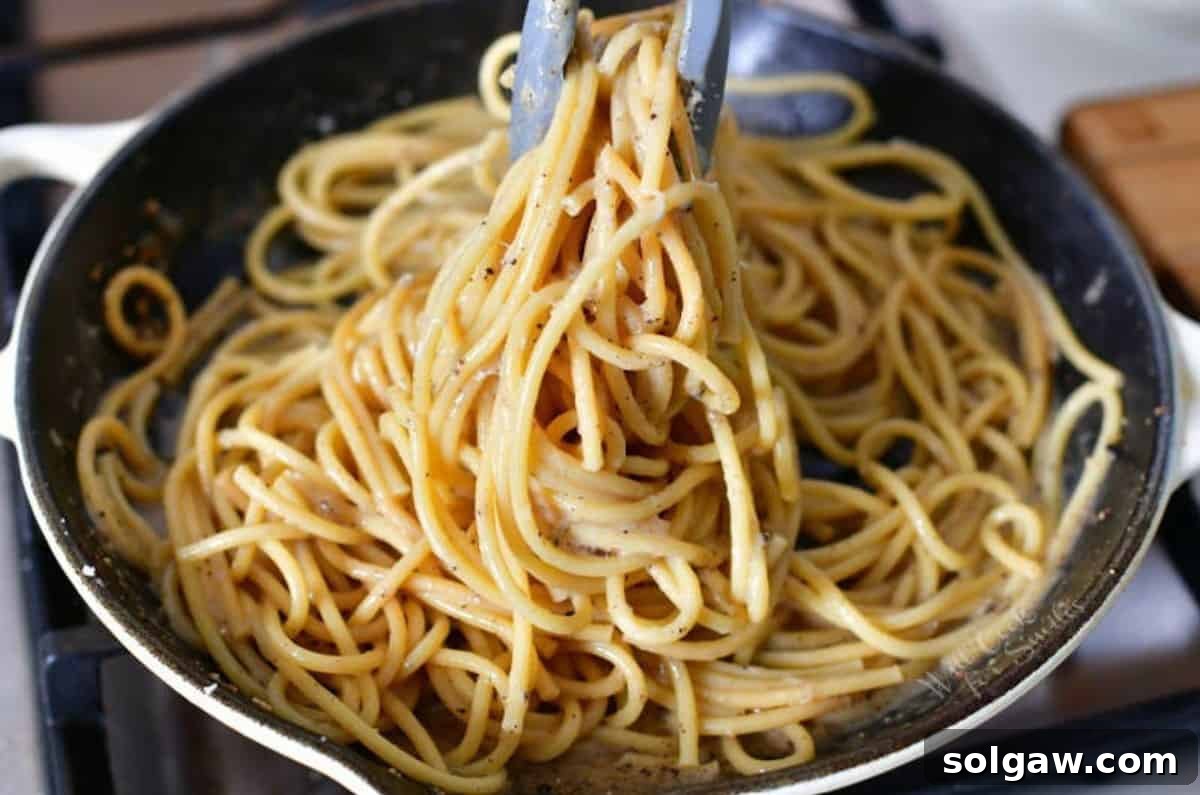
- The Emulsification Process: By pre-mixing the finely grated cheese with a small amount of hot, starchy pasta water in a separate bowl, you create a smooth, thick paste or slurry. This step allows the cheese to begin melting and incorporating with the starch before it even touches the pasta. When this pre-emulsified mixture is then added to the hot pasta and pepper in the pan, along with a little more pasta water, it quickly forms a stable, silky sauce that clings beautifully to the pasta. The key is gentle, continuous stirring or tossing to ensure everything combines seamlessly.
Loved this recipe? Please leave a star rating and let me know your thoughts by commenting below! Share your creations on social media and tag @willcookforsmiles. Don’t forget to subscribe to my newsletter for more delicious recipes!
Cacio e Pepe Recipe
Average rating: 5 stars from 3 votes
Print Recipe
Pin Recipe
Main Course
Italian
10 minutes
10 minutes
20 minutes
4
(serves 2-4)
515
kcal
Lyuba Brooke
Ingredients
-
12
oz
bucatini pasta* -
1/2
tbsp
whole peppercorns
(add a little more if you desire extra spice) -
2
cups
freshly grated Pecorino or Parmesan cheese
(hand-grated from the block, approximately 6 oz in weight) -
1/4 – 2/3
cup
starchy pasta cooking water
Instructions
Prepare the Cheese:
-
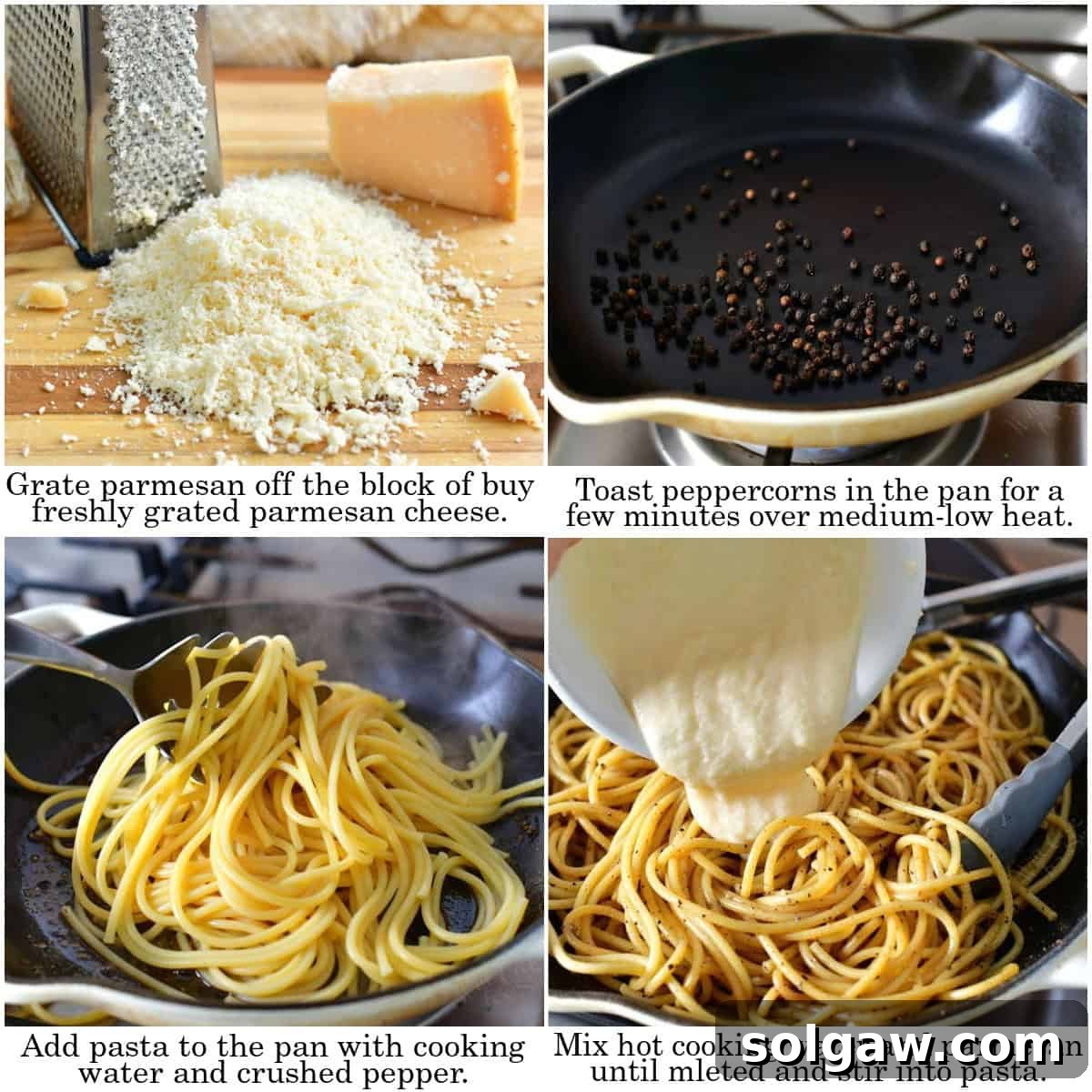
Using the side of a box grater with rough, protruding holes, grate your chosen block of cheese into a fine, dust-like consistency. This fine texture is critical for ensuring the cheese melts into a smooth, clump-free sauce.
-
Transfer the grated cheese into a bowl and set it aside, ready for later use.
Toast and Grind Peppercorns:
-
Place a dry cooking pan (the same one you’ll use for the pasta) over medium heat and allow it to preheat for a couple of minutes.
-
Add the whole peppercorns to the hot pan. Toast them for a few minutes, gently shaking the pan occasionally to prevent burning, until they become fragrant and you might see a wisp of smoke. This step significantly enhances their flavor and aroma.
-
Transfer the toasted peppercorns into a pepper grinder and grind them to a coarse setting. Set aside.
Cook Pasta and Assemble:
-
Boil a large pot of salted water. Add the bucatini pasta and cook according to package directions until it is perfectly al dente (this typically takes 6-8 minutes, depending on the brand).
-
Approximately 2 minutes before the pasta is expected to be ready, place your preheated pan (the one used for toasting peppercorns) over medium heat.
-
Add the coarsely ground pepper to the pan. Ladle about 1/2 cup of the hot, starchy pasta cooking water from the pot into the pan with the pepper. Gently shake or stir to combine and let it simmer for a moment.
-
Once the pasta is al dente, use a pasta fork or tongs to spoon and transfer the cooked pasta directly from the pot into the pan with the pepper mixture. Allow most of the water to drip off, but a slight amount of residual moisture is beneficial.
-
In the bowl with your finely grated cheese, add about 1/2 ladle of the starchy pasta cooking water. Mix it thoroughly with a fork or whisk until the cheese is completely melted and forms a smooth, thick paste. If needed, add a little more pasta water, a tablespoon at a time, until you reach the desired consistency.
-
Scrape the smooth cheese sauce directly into the pan with the pasta and pepper. Toss vigorously and continuously until all the pasta strands are thoroughly coated with the creamy, silky cheese and pepper sauce. The heat from the pasta and the remaining pasta water will help create the perfect emulsion.
-
Serve your homemade Cacio e Pepe immediately, garnished with extra fresh black pepper or cheese if desired. Enjoy the simplicity and depth of this classic Italian dish!
Video
A video demonstration for this recipe would typically appear here, illustrating each step for visual guidance.
Notes
- Gluten-Free Option: You can easily adapt this recipe by using gluten-free pasta. Many gluten-free pasta varieties naturally have a rougher surface, which can be beneficial for sauce adhesion. Look for a gluten-free spaghetti you enjoy, or try brands known for their excellent texture, such as Tinkyada, which often closely mimics traditional pasta.
- Pasta Choices: As highlighted, bucatini pasta is the top recommendation due to its thickness and rough surface, ideal for capturing the rich cheese sauce. Alternatively, artisan linguine with a textured surface also works wonderfully. If these are unavailable, standard spaghetti is a perfectly acceptable substitute.
- Cheese Varieties: For the most authentic and robust flavor, Pecorino Romano cheese is highly recommended, prized for its strong, tangy, and salty notes. However, a good quality Parmesan (Parmigiano-Reggiano) can be used as a milder yet still delicious alternative if Pecorino is not on hand. Remember the importance of hand-grating fresh cheese from a block for optimal melting.
Nutrition
Calories:
515
kcal
|
Carbohydrates:
66
g
|
Protein:
29
g
|
Fat:
14
g
|
Saturated Fat:
8
g
|
Cholesterol:
34
mg
|
Sodium:
806
mg
|
Potassium:
252
mg
|
Fiber:
3
g
|
Sugar:
3
g
|
Vitamin A:
391
IU
|
Calcium:
615
mg
|
Iron:
2
mg
Tried this recipe?
Mention @willcookforsmiles or tag #willcookforsmiles!
More Easy Recipes to Discover
If you loved the simplicity and flavor of Cacio e Pepe, you’re in for a treat! Explore more delightful and straightforward recipes from my kitchen that promise to bring joy to your table without complicated steps or endless ingredient lists. Whether you’re craving seafood, comforting one-pot meals, or vibrant seasonings, there’s something here for every pasta and flavor enthusiast.
- Shrimp Pesto Pasta
- Instant Pot Spaghetti
- Lobster Pasta
- Peppercorn Sauce
- Lemon Pepper Seasoning
This recipe was originally published on Will Cook For Smiles in July 2020.