The Ultimate Guide to Crafting Restaurant-Quality Chicken Kiev at Home
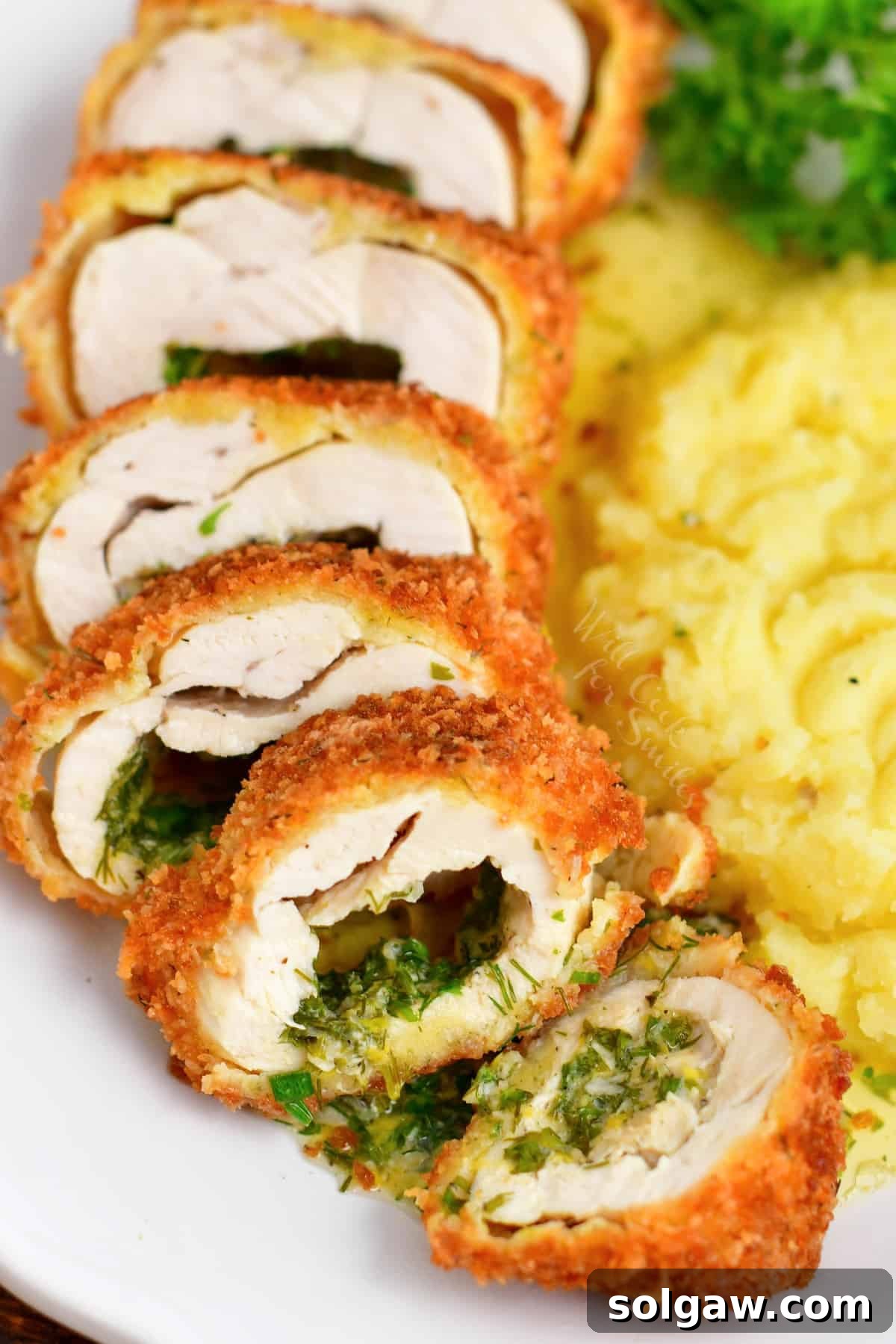
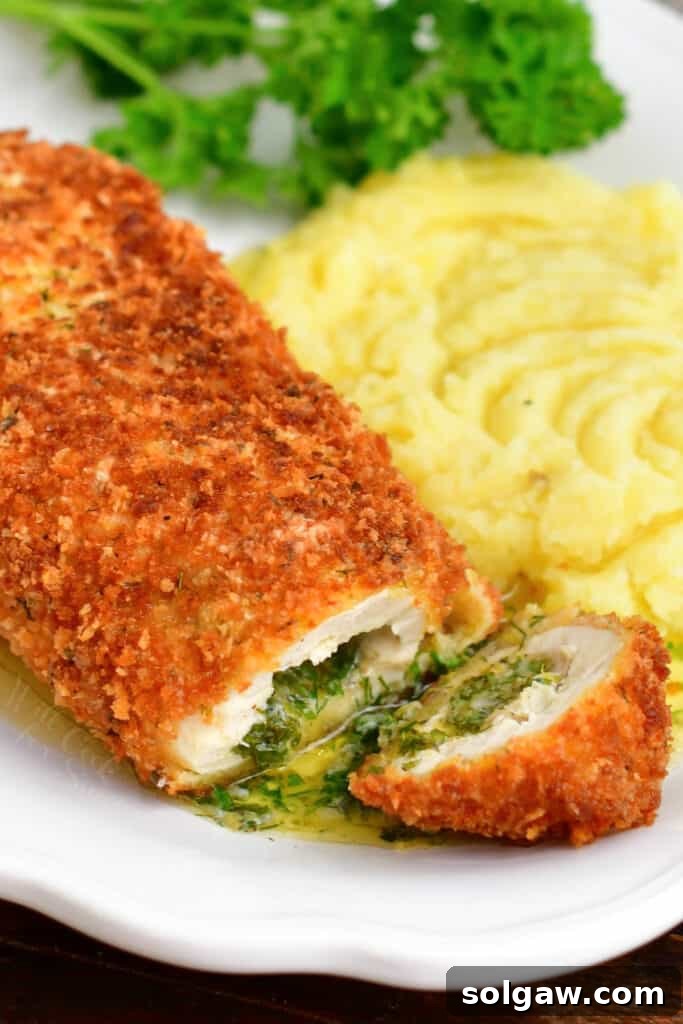
Chicken Kiev is more than just a dish; it’s a culinary experience. Imagine tender, succulent chicken, lovingly rolled around a core of intensely flavorful herb butter, then encased in a golden, unbelievably crispy breading. This classic Eastern European masterpiece promises an impressive and comforting dinner, particularly when your guests cut into its crunchy exterior to reveal a delightful burst of warm, aromatic butter. With our detailed guide, including step-by-step instructions and vibrant photos, you’ll learn how to master this exquisite dish right in your own kitchen.
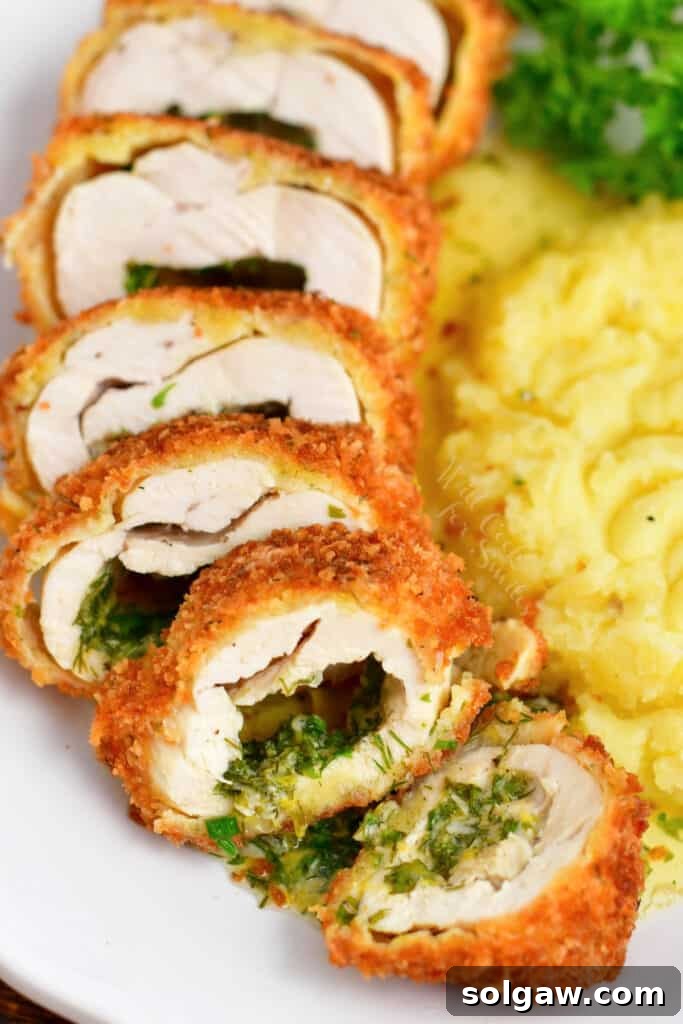
There are certain meals that transcend the ordinary, transforming a simple dinner into a memorable occasion. For me, that meal is often Chicken Kiev. This dish is truly extraordinary, delivering unbelievably tender, juicy chicken infused with the rich, aromatic flavors of garlic and fresh herbs. The combination of its shatteringly crispy breading and the luxurious, buttery center in every single bite is pure culinary magic. It’s a dish that consistently wows and satisfies, making it a perfect choice for special gatherings or when you simply crave something truly comforting and exceptional.
One of the many reasons Chicken Kiev holds such a special place is its universal appeal. Both kids and adults adore this elevated “fried chicken.” It’s much more than just a simple piece of poultry; it’s an adventure of textures and tastes, an exciting surprise waiting within its golden crust. The anticipation of that buttery burst adds an element of fun and delight that makes it a consistent crowd-pleaser.
At first glance, the recipe for homemade Chicken Kiev might seem a bit daunting, with several steps involved. But please, don’t let that deter you! This is a perfectly achievable recipe for home cooks, and I’m here to guide you through every stage. A fantastic secret to making it even easier is that you can prepare many components of this dish ahead of time. I often spread the process over two days, making the cooking day much more relaxed and enjoyable. While there are a few distinct steps, each one is straightforward and simple to execute. The real trick to mastering Chicken Kiev – and the secret to ensuring that glorious butter stays securely inside – lies in specific techniques that I’m thrilled to share with you below.
What Is Chicken Kiev? A Delicious History
Chicken Kiev is a renowned dish rooted in Eastern European culinary traditions, particularly popular in Ukrainian and Russian cuisine, tracing its fame back to the late 1800s. At its heart, this delectable chicken dish features a thin fillet of chicken breast, typically stuffed with a rich, savory butter, then meticulously breaded and fried until it achieves a perfect golden-brown crispness.
While today’s popular versions often include a fragrant herb and garlic compound butter, the original recipe was believed to be a bit simpler, utilizing plain butter. The precise origins of Chicken Kiev are still a subject of culinary debate, with several captivating theories vying for recognition. It is widely accepted that it originated somewhere in Eastern Europe, but the exact birthplace remains a mystery.
Two of the most popular origin stories connect the dish to either a prestigious hotel in Kiev, where it was a signature offering, or to the significant influence of a celebrated French chef in St. Petersburg, Russia. Russian cuisine, in particular, has historically drawn heavily from French culinary techniques and aesthetics, and Chicken Kiev indeed showcases many sophisticated French elements in its preparation and presentation. Regardless of its exact genesis, Chicken Kiev has evolved into a beloved classic, cherished for its unique combination of textures and flavors.
Essential Tips for Perfect Chicken Kiev: The Secret to No Leaks!
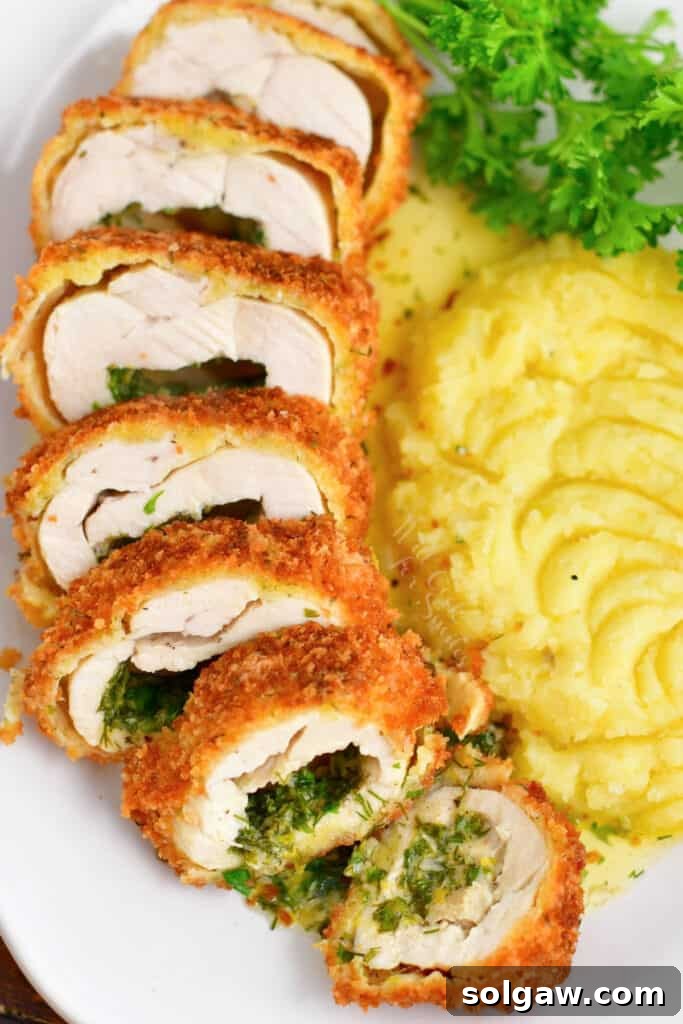
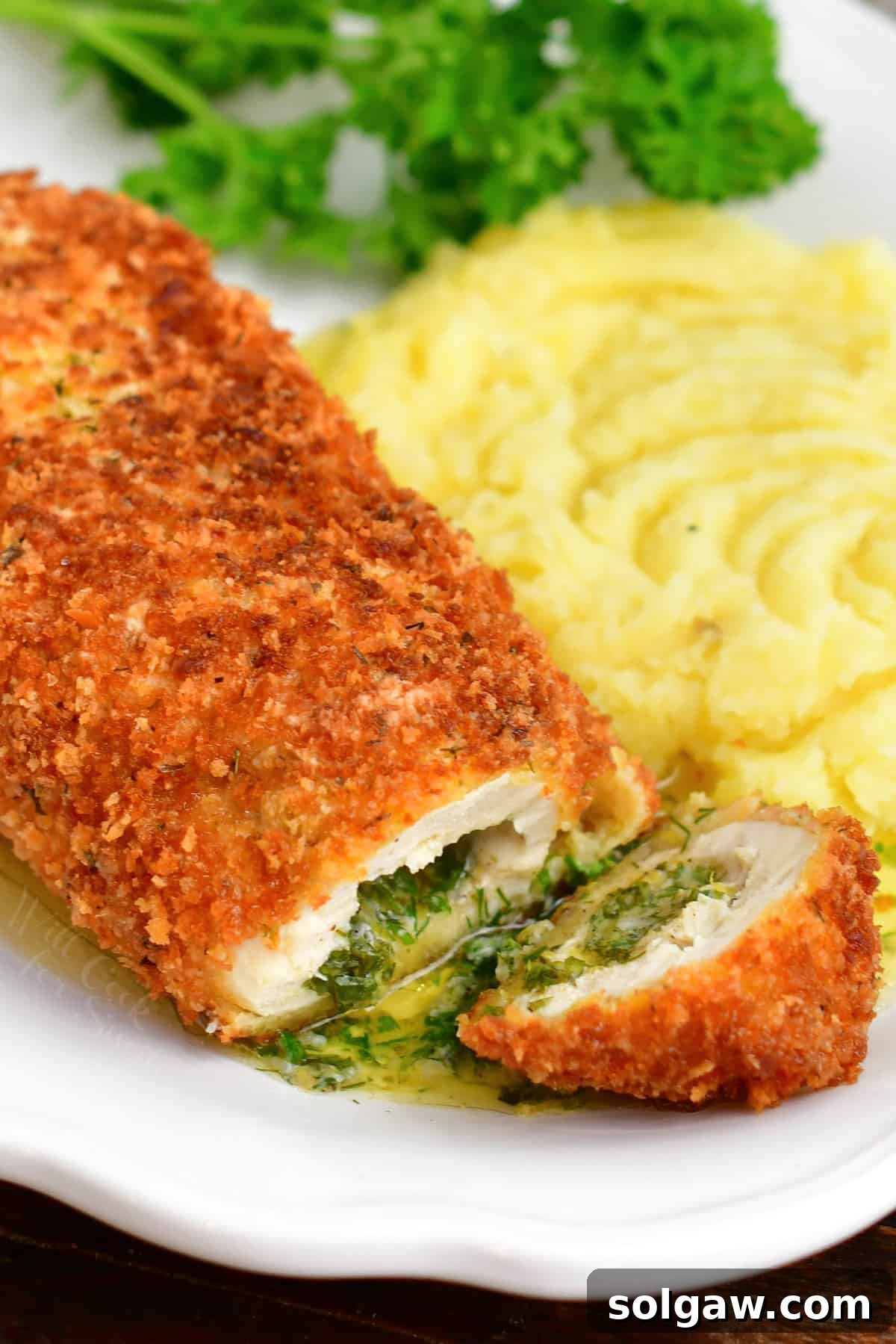
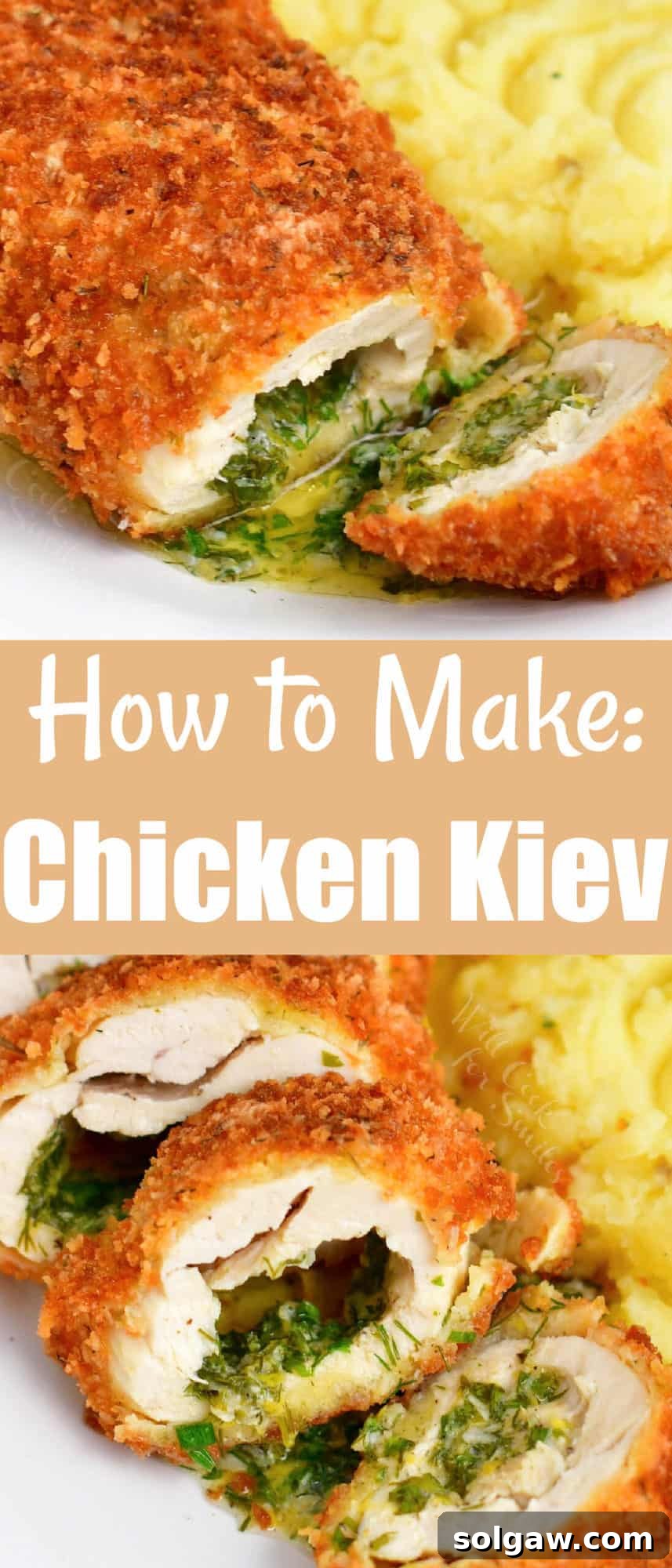
As I mentioned, the absolute key to this exquisite stuffed chicken recipe is successfully retaining all of that glorious compound butter inside the chicken. It’s not just about the incredible taste of the melted butter; it’s also about the unforgettable experience of slicing open the crunchy, golden exterior and witnessing the beautiful, aromatic butter pour out. It’s a moment that never fails to impress!
Here are my top secrets and detailed tips to ensure your Chicken Kiev is a triumph, free from any butter leaks:
- Achieve Ultra-Thin Chicken Fillets for a Seamless Roll: Start by butterflying your chicken breast carefully. Then, place it in a zip-top bag and use the flat side of a meat tenderizer (never the spiked side, as it can tear the meat) to pound it evenly. Aim for a thickness slightly less than ¼-inch but not thinner than 1/8th of an inch. If it’s too thin, it becomes fragile and prone to tearing, which compromises the butter seal. Pounding also helps tenderize the chicken, ensuring a melt-in-your-mouth texture.
- Roll it Tight for a Leak-Proof Pocket: This step is critical for butter containment. Once your chicken is pounded thin and the butter is placed, carefully tuck in the shorter sides of the chicken as you begin to roll from one of the longer edges. Apply light but firm pressure to create a very tight, leak-proof pocket. Immediately after rolling, wrap each piece tightly with plastic wrap. This compression helps the chicken hold its cylindrical shape and further seals the edges, preventing any butter escape during cooking.
- Thorough Chilling is Non-Negotiable: Do not skip this step! Allowing the rolled chicken to chill in the refrigerator for at least 2 hours is paramount. This crucial chilling time allows the compound butter to firm up significantly and helps the chicken breast maintain its tightly rolled shape. A firm butter core is much less likely to melt out prematurely during frying. In fact, you can easily prep these the night before and cook them the next day, making it an excellent make-ahead meal. However, avoid leaving them in the refrigerator for more than 24 hours to ensure freshness.
- Double Breading for Maximum Crispness and an Ironclad Seal: This technique serves two vital purposes. First, it creates an extra-crispy, satisfying crunch on the outside of your Chicken Kiev. Second, and equally important, the double layer of breading acts as a robust seal, adding a protective barrier that significantly minimizes the chances of the butter leaking out during the intense heat of frying and baking. Ensure each layer is well-adhered before moving to the next.
How To Make Homemade Chicken Kiev: Step-by-Step Perfection
Embark on your journey to create this magnificent dish with confidence. Here’s how to make Chicken Kiev, combining an initial fry for golden crispness with a finish in the oven for thorough cooking.
1. Form the Compound Herb Butter
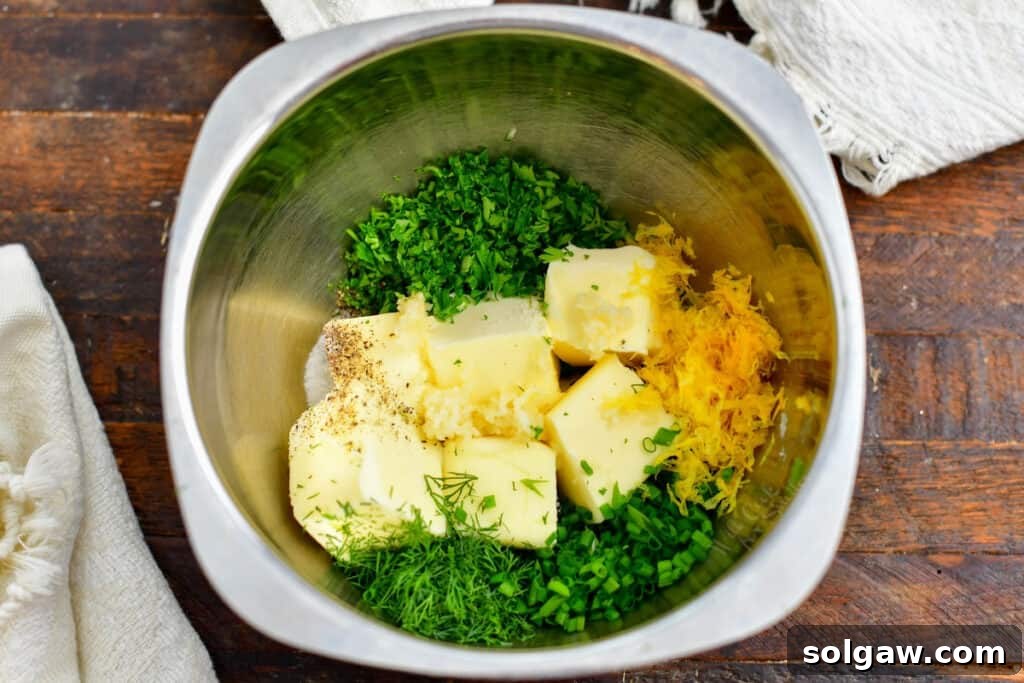
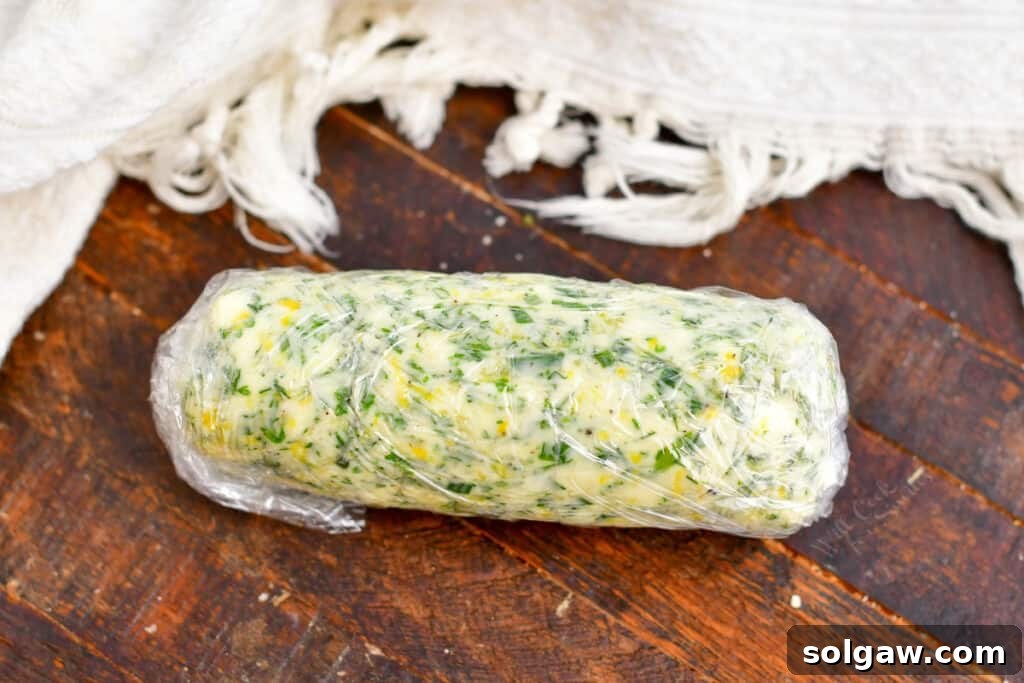
Begin by taking your unsalted butter out of the refrigerator approximately 30-45 minutes before you start, allowing it to soften to room temperature. In a mixing bowl, combine the softened butter with minced fresh herbs (such as parsley, chives, and dill), pressed garlic, and the zest of one lemon. Season generously with salt and black pepper. Use a fork or a spatula to thoroughly incorporate all the ingredients, ensuring the herbs and garlic are evenly distributed throughout the butter. This creates the intensely flavorful core of your Chicken Kiev.
Once mixed, transfer the butter mixture onto a sheet of plastic wrap. Carefully roll it into a compact log shape, about 1-inch in diameter. Wrap it tightly in the plastic wrap, twisting the ends to secure. Place this butter log into the freezer for about 15-20 minutes while you prepare the remaining ingredients. This quick chill will help the butter firm up, making it easier to handle and less likely to leak.
2. How to Butterfly Chicken Breast
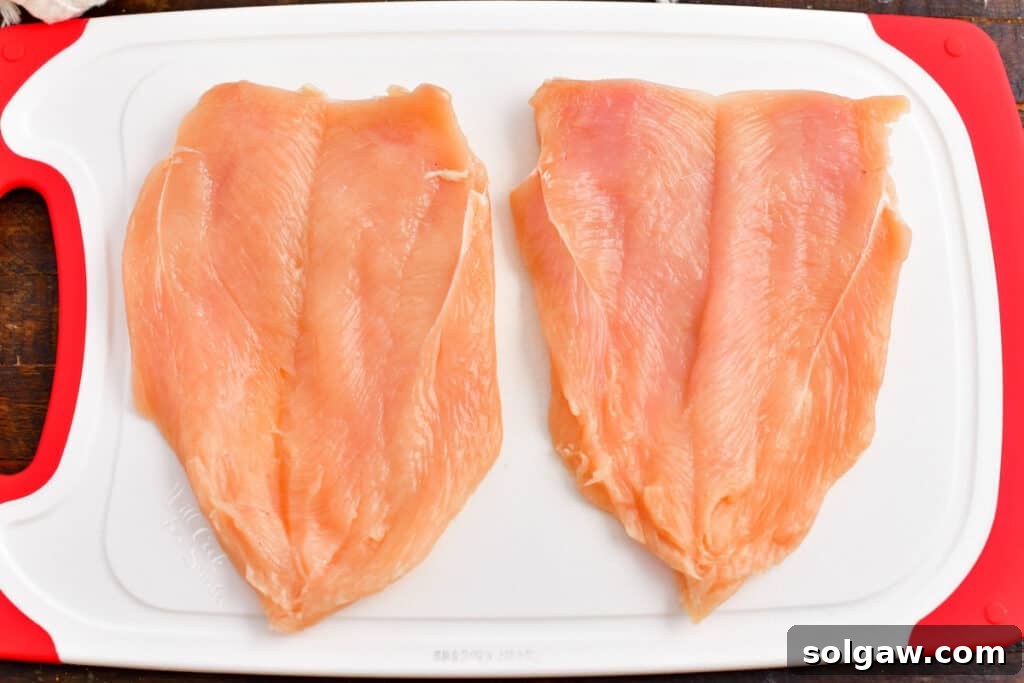
To butterfly a chicken breast, place it flat on your cutting board. Gently place the palm of your hand on top of the breast, holding it firmly in place. With a sharp knife, carefully slice horizontally through the thickest part of the chicken breast, starting from one long side. Continue slicing until you are just short of cutting all the way through the other side. This allows you to open the chicken breast like a book, creating two thinner, connected halves that resemble butterfly wings.
3. Pound Them Thin for Even Cooking
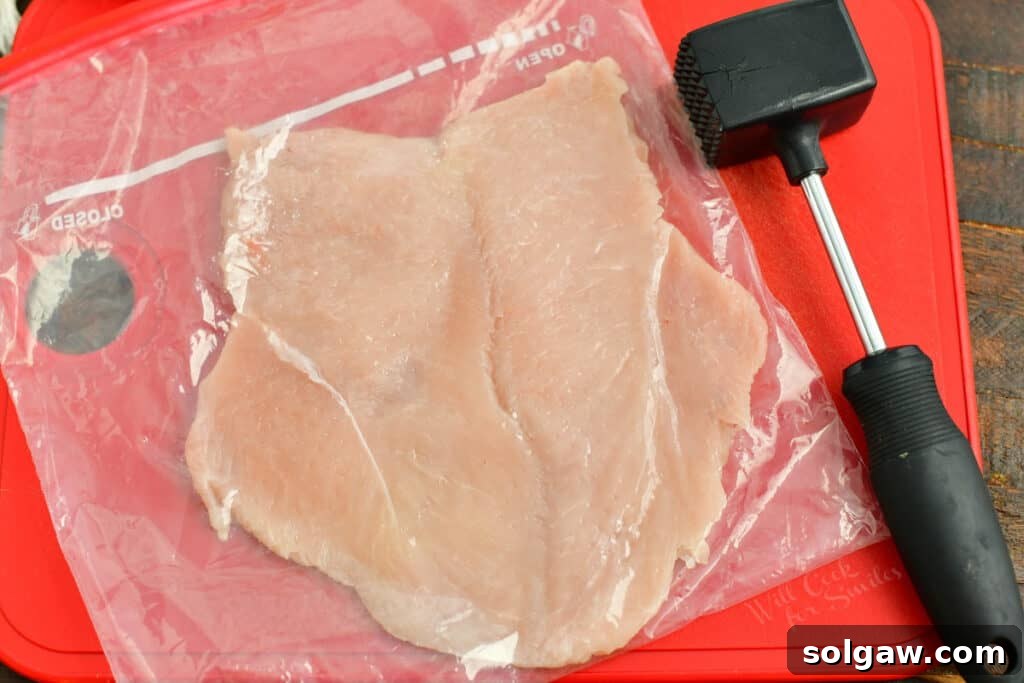
Once butterflied, slide each chicken fillet into a large zip-top bag. This step is crucial for hygiene, as it prevents raw chicken juices from splattering around your kitchen. Using the flat side of a meat tenderizer (avoid the textured or spiked side, which can tear the delicate meat), gently pound each piece of chicken. Work from the center outward to the edges, striving for an even thickness. The goal is to get the chicken between ¼-inch and 1/8th of an inch thick – not too thin that it tears easily, but thin enough to roll securely around the butter. This uniform thickness also ensures the chicken cooks evenly.
Repeat this process for all chicken breasts. After pounding, carefully remove each flattened fillet from the bag and place it onto its own square of plastic wrap, ready for seasoning and stuffing.
4. Stuff with Flavorful Butter
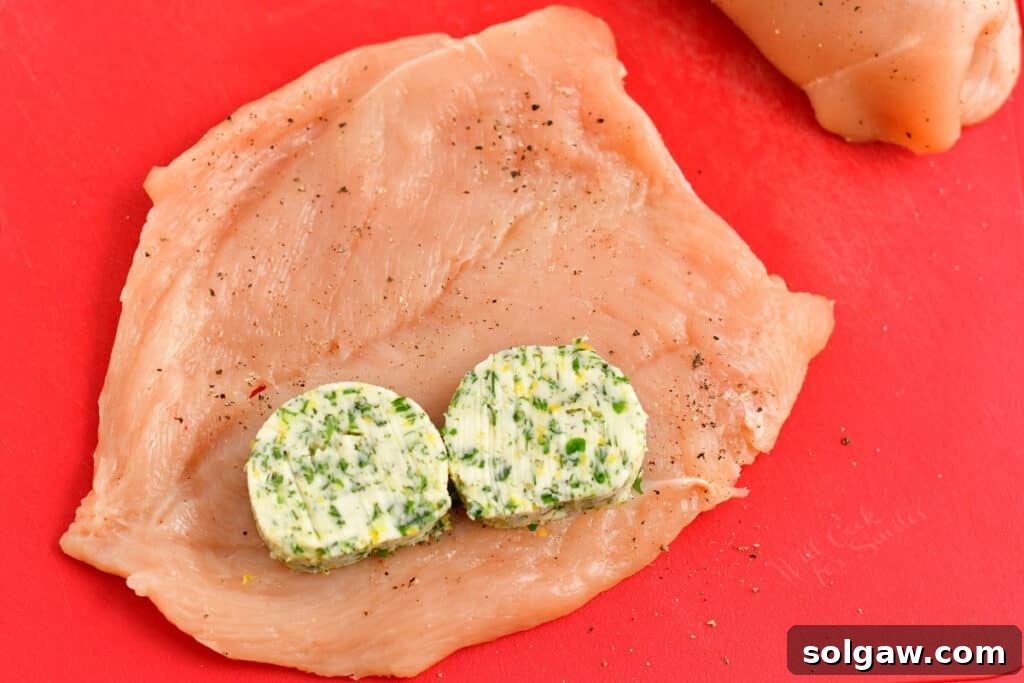
Before adding the butter, make sure to season both sides of each flattened chicken breast generously with salt and black pepper. Take the chilled compound butter log from the freezer and unwrap it. Slice the butter into 8 evenly sized rounds. You will use two slices of butter per chicken breast. Place two butter slices, side-by-side, near one of the longer edges of each seasoned chicken fillet. Positioning it closer to one edge helps create a tighter roll.
5. Roll into Leak-Proof Pockets and Chill
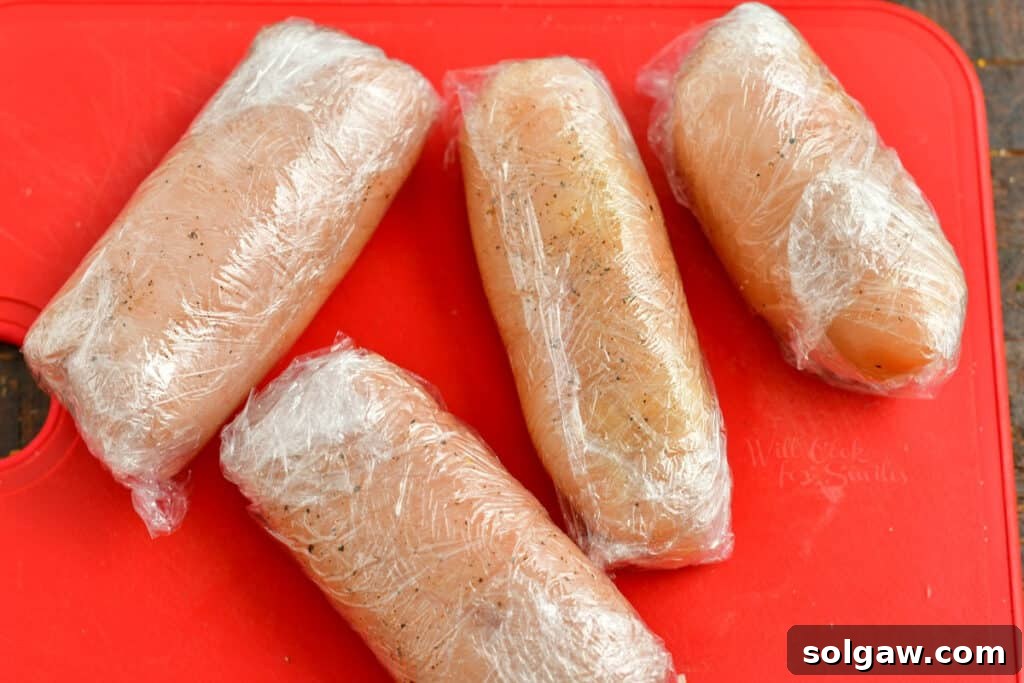
Now, it’s time to create those perfect, leak-proof pockets. Gently tuck the nearest edge of the chicken over the butter. Then, carefully begin to roll the chicken, using light but firm pressure, ensuring it holds together. As you roll, remember to tuck in the shorter sides of the chicken to completely enclose the butter. This is vital for preventing butter leakage during cooking. The goal is to form a compact, cylindrical shape. Be careful not to tear the chicken as you roll!
Once rolled, tightly wrap each chicken pocket in its individual piece of plastic wrap. This step helps compress and maintain its shape during chilling. Repeat this process for all chicken breasts. Place all the tightly wrapped chicken rolls into the refrigerator to chill for at least 2 hours, or even overnight. This extended chilling period is crucial as it allows the butter to firm up completely and helps the chicken hold its form, creating a much more stable pocket that resists leakage when cooked. You can prepare the chicken the night before and cook it the next day, just ensure it’s cooked within 24 hours.
6. Prep the Breading Station
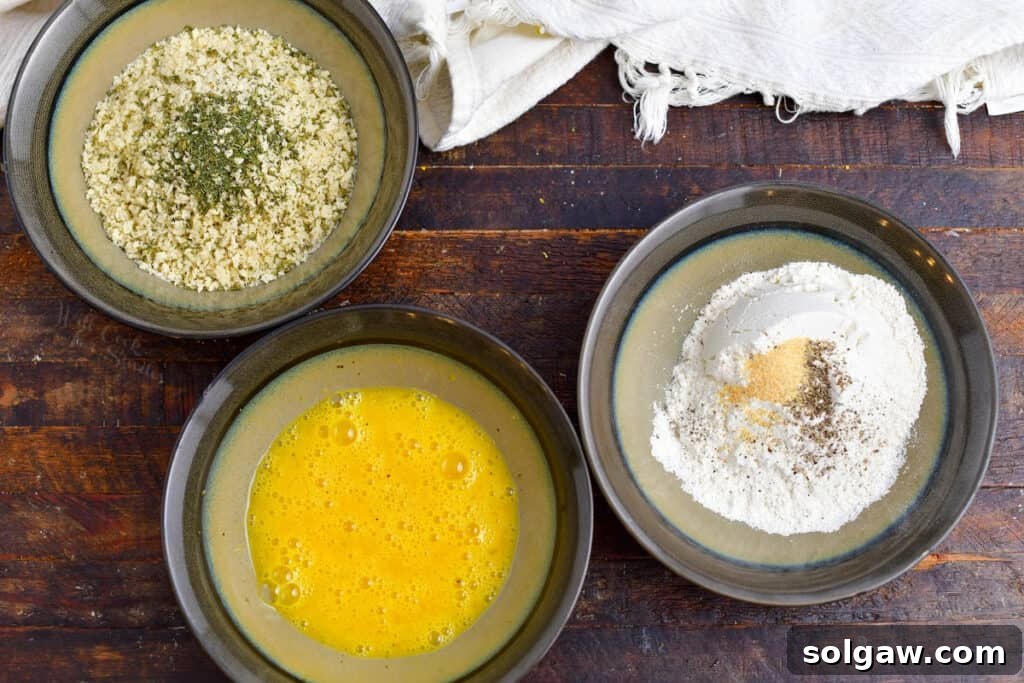
For a successful breading process, set up three shallow and wide bowls or dishes. In the first bowl, add all-purpose flour and season it with a pinch of salt, black pepper, and garlic powder. In the second bowl, whisk together the eggs with a dash of salt and pepper to create an egg wash. In the third bowl, combine Panko bread crumbs with dried parsley, a touch of dried dill weed (optional), and a light seasoning of salt and pepper. Remember to season each component lightly to build layers of flavor without over-salting the final dish.
7. Double Breading for a Golden Crunch
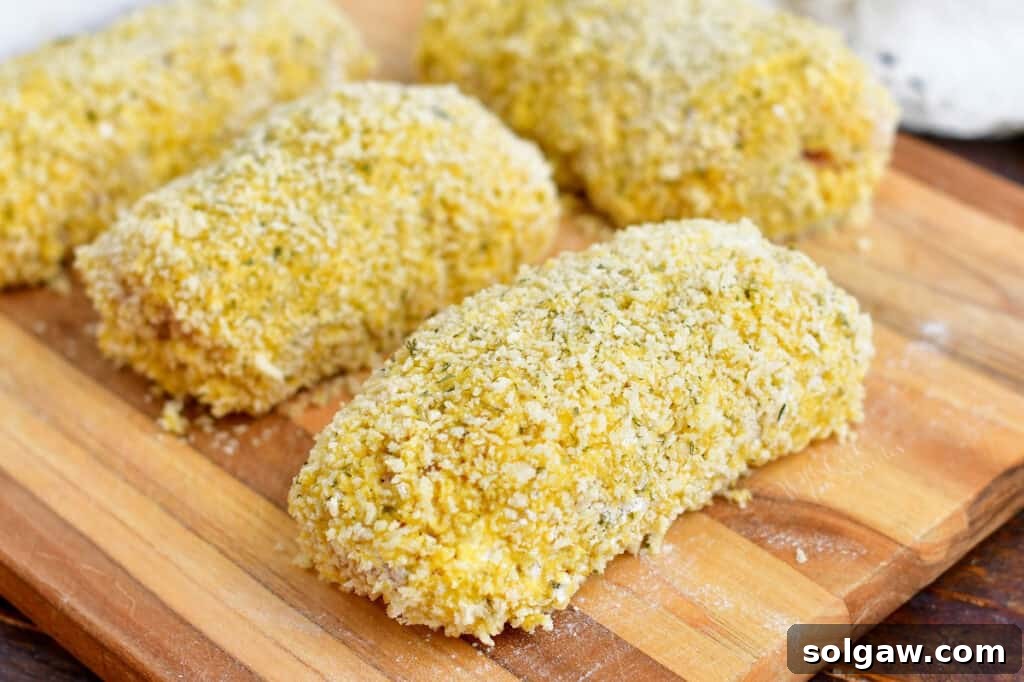
Working with one chicken pocket at a time, carefully unwrap it from the plastic. Begin the double-breading process: first, dredge the chicken thoroughly in the seasoned flour, ensuring it’s completely coated. Shake off any excess. Next, dip it into the whisked egg mixture, allowing any extra to drip off. Finally, roll and press it into the Panko bread crumbs, ensuring a thick, even coating. Use your hands to gently press the Panko firmly onto the chicken, especially around the seams, to create a strong seal.
For the second layer, immediately repeat the entire process: dip back into the flour, then the egg, and finally, coat generously with Panko crumbs again. Press gently but firmly with your hands to ensure everything adheres well to the surface. This double-breading technique is key to achieving that signature crispy exterior and provides an extra layer of protection against butter leakage. Set the fully breaded chicken aside and repeat with the remaining pieces.
8. The Initial Fry: Golden Exterior

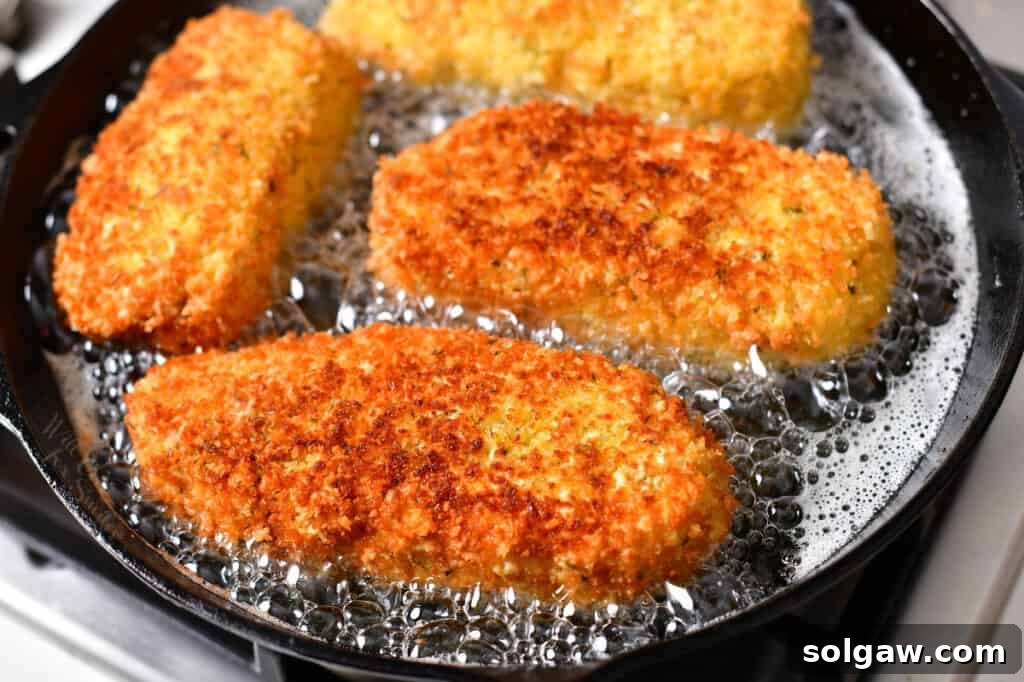
Preheat your oven to 350°F (175°C). In a large, heavy-bottomed skillet or Dutch oven, add 2-3 cups of canola oil (or another neutral high-smoke point oil) to a depth of about 1-2 inches. Heat the oil over medium-high heat until it reaches 350°F (175°C). Use a cooking thermometer to verify the temperature. Line a rimmed baking sheet with aluminum foil and place a wire rack on top – this will be used for baking.
Carefully lower the breaded chicken into the hot oil using long metal tongs, ensuring not to overcrowd the pan. You only need to fry them for a few minutes on each side, just until the outside is a deep, rich golden brown and crispy. This initial fry develops the beautiful color and crunch. Remove the chicken from the oil and immediately transfer it to the prepared wire rack on the baking sheet.
9. Bake Until Done: Cooked Through Perfection
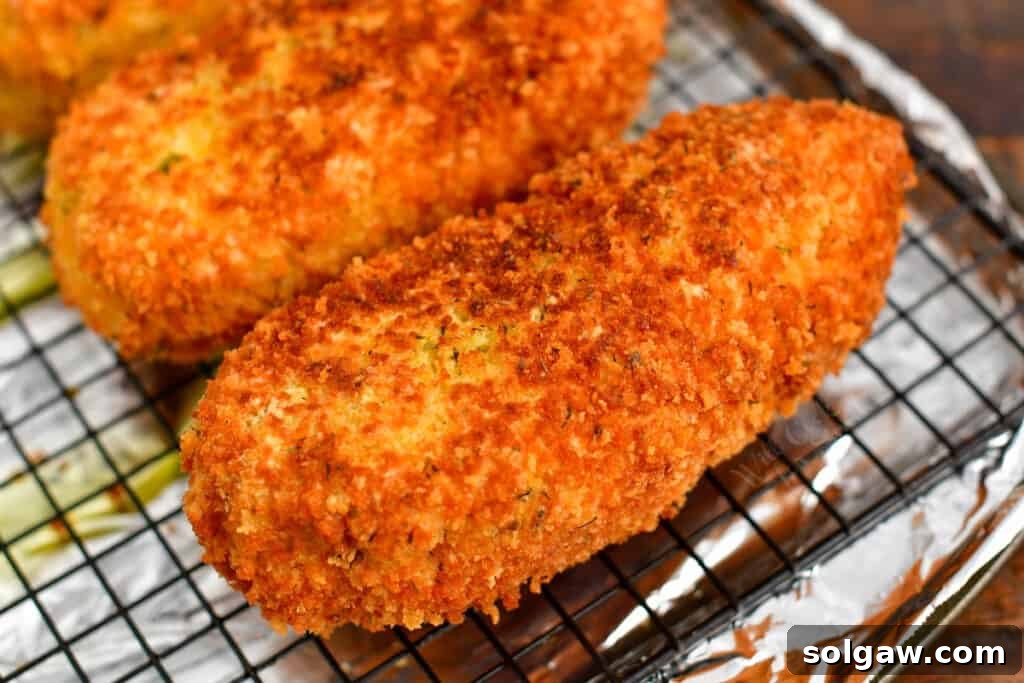
Place the baking sheet with the fried chicken Kiev into the preheated oven. Baking on a wire rack is essential, as it allows air to circulate around the chicken, keeping the bottoms just as crisp as the tops. Bake for 20-24 minutes. The exact baking time may vary slightly depending on the initial size and thickness of your chicken breasts.
A key challenge with Chicken Kiev is checking for doneness. Since piercing the chicken with a thermometer would cause the precious butter to leak out, you’ll need to judge based on the chicken breast size and your experience. If you used smaller chicken breasts (e.g., less than 6 oz each), you might need to reduce the compound butter slightly to prevent overstuffing and bake for a shorter time, perhaps 15-20 minutes. The exterior should be deeply golden and the chicken should feel firm to the touch. Once baked, let the Chicken Kiev rest for a few minutes before serving to allow the juices to redistribute.
Serving Suggestions: What to Pair with Chicken Kiev
Chicken Kiev is a rich and flavorful main course that pairs beautifully with a variety of side dishes to create a well-rounded and satisfying meal. Here are some delectable suggestions:
- Creamy Mashed Potatoes: Without a doubt, perfectly whipped mashed potatoes are the ultimate pairing for this comforting chicken dish. Their smooth, buttery texture perfectly complements the crispy chicken and helps to soak up any glorious herb butter that escapes.
- Other Potato Options: If mashed potatoes aren’t your preference, consider roasted potatoes seasoned with rosemary and garlic, crispy potato wedges, or even a rich potato gratin or scalloped potatoes for an extra layer of indulgence.
- Roasted or Steamed Vegetables: To balance the richness of the Chicken Kiev, a side of fresh, vibrant vegetables is ideal. Roasted asparagus, green beans almandine, glazed carrots, or a colorful medley of bell peppers and zucchini would all be excellent choices. Our Ratatouille recipe offers a fantastic, flavorful vegetable accompaniment that rounds out the meal perfectly.
- Fresh Salads: A light, crisp salad can provide a refreshing contrast to the hearty main course. A simple blend of fresh greens with a bright citrus vinaigrette or a classic Caesar salad would be a wonderful addition, cutting through the richness with its tang and freshness.
- Simple Rice Pilaf: For a lighter carbohydrate option, a fluffy rice pilaf or even plain steamed rice can serve as a neutral base, allowing the flavors of the Chicken Kiev to shine.
Storing and Reheating Leftovers
If you happen to have any delicious Chicken Kiev leftovers (a rare occurrence!), proper storage and reheating are key to enjoying them again. Store any cooled portions in an airtight food storage container in the refrigerator. Properly stored, Chicken Kiev will remain fresh for 3 to 4 days.
To reheat, while it’s challenging to fully recapture that exact freshly made crispness, you have a couple of options. For convenience, you can reheat it in a microwave until it’s heated through. However, for a better texture, I recommend reheating in the oven. Preheat your oven to 300-325°F (150-160°C) and place the chicken on a wire rack over a baking sheet. Bake for 15-20 minutes, or until thoroughly heated, which will help to crisp up the breading slightly more than a microwave. You should still retain a good bit of that satisfying crunch!
MORE DELICIOUS EASTERN EUROPEAN INSPIRED RECIPES
If you loved the flavors of Chicken Kiev and are eager to explore more rich and comforting Eastern European dishes, here are a few more recipes you simply must try:
- Creamy Russian Mushroom Julienne: This popular Russian side dish is incredibly versatile. It can be served on its own, or as a rich, savory sauce for grilled meats, roasted vegetables, or even pasta. It features tender mushrooms and aromatic shallots cooked in a luscious cream sauce, then baked with a golden layer of shredded mozzarella on top. It’s pure indulgence!
- Hearty Russian Borscht: For a truly comforting and filling meal, you cannot go wrong with a robust beet soup. Our version of Russian Borscht is packed with tender cuts of beef and an abundance of fresh vegetables, ensuring you stay warm and satisfied on the chilliest of nights. Trust me, this is the best borscht recipe you will ever have, brimming with deep, earthy flavors and a vibrant hue.
Chicken Kiev
Print
Pin
Video
Rate
Ingredients
- 4 boneless skinless chicken breasts (6-8 oz. each)*
- Salt
- Black pepper
Compound butter:
- 8 tbsp unsalted butter softened
- 3 garlic cloves pressed
- 3 tbsp fresh minced parsley
- 2 tbsp minced chives
- 2 tbsp fresh minced dill weed
- 1 lemon – zest only
- Salt
- Black pepper
Breading:
- 4 eggs
- 3 cups Panko bread crumbs
- 1 cup all purpose flour
- 1 1/2 tsp garlic powder
- 1 tbsp dried parsley
- 1/2 tbsp dried dill weed optional
- Salt
- Black pepper
Oil for frying:
- 2-3 cups canola oil
Instructions
-
Note: You can make compound butter ahead of time and keep in the fridge for up to a month or in a freezer for up to 3 months. Make sure to wrap it tightly in plastic wrap and place it into a zip-lock bag for storing.
Compound butter:
-
Take butter out of the refrigerator and let it sit on the counter for 30-45 minutes. Make sure it is softened first so it’s easy to mix with other ingredients.
-
Mix butter with minced herbs, garlic, lemon zest, salt, and pepper. Use a fork to mix and make sure that all ingredients are evenly incorporated with butter.
-
Spread butter in a log-like shape on top of a sheet of plastic wrap and wrap it up tight into a log.
-
Place into the freezer for about 15 minutes while preparing the chicken.
Chicken:
-
To butterfly chicken breasts: place the chicken breast onto the cutting board place your hand on top, make sure to slightly bend your fingers up and not curl or angle them down. Slice through the center of the chicken all the way to the other side but not cutting it in half.
-
Open the chicken like a book (or butterfly wings…hence the name) and place it flat into a zip-lock bag.
-
Use the flat side of the meat tenderizer to pound the chicken, working from the center outward to the edges. Make sure the meat is between 1/4 and 1/8 of an inch but not thinner or it will top. Also, make sure not to hit too hard so it doesn’t break the meat.
-
Take the chicken breast out carefully and set aside. Repeat with remaining chicken breasts.
-
Season the chicken with salt and pepper on both sides.
Wrap the chicken and butter:
-
Take butter out of the freezer and out of the wrap. Slice the butter log into 8 even slices. You will use 2 per chicken breast.
-
Place chicken breast onto a slice of plastic wrap. Make sure there is enough of plastic wrap to wrap the chicken tightly in a couple of layers.
-
Place two slices of butter, one next to another, onto one side of the chicken breast and start rolling the butter and chicken together, tucking the sides in as you roll. Once you have a tight chicken pocket, roll it in plastic wrap tightly.
-
Repeat with the other three chicken breasts and butter.
-
Place rolled chicken into the refrigerator for at least 2 hours or overnight.
-
NOTE: you can prepare the chicken the night before and then, batter and cook it the next day. Just don’t exceed 24 hours before cooking the chicken.
Batter the chicken:
-
Preheat the oven to 350° and add oil to the large skillet for frying. Preheat the oil to 350°. Line a rimmed baking sheet with aluminum foil and place a wire rack inside.
-
Prepare three shallow and wide bowls for battering the chicken. In one bowl, whisk together eggs with some salt and pepper. In another bowl, whisk together flour with some salt, pepper, and garlic powder. In a third bowl, mix together Panko bread crumbs with dried herbs, and some salt and pepper. (Make sure to only use a little salt and pepper in each mixture so it’s not overly salted!)
-
Take chicken out of the refrigerator and carefully unroll it from the plastic wrap. Work carefully to batter the chicken but not disturb the tight roll. Dredge chicken rolls in flour first, then egg mixture and the Panko crumbs. Press it in with your hands and repeat, dredging it in flour first, then in egg, and then in Panko mixture. Press with your hands and set aside. Repeat with remaining chicken rolls.
-
Make sure the oil is heated to 350° and carefully add battered chicken using long metal tongues. (Be very careful not to press too hard and not scrape any batter off the chicken.)
-
Fry chicken for about 3-4 minutes on each side, until deep golden. Take it out of the oil and place onto the prepared baking pan, on top of the wire rack.
-
Bake for 20-24 minutes, depending on how large were your chicken breasts.
-
(Since you can’t pierce the chicken to check internal temperature, you have to judge by the size of your chicken breasts. If you used chicken breasts that are smaller than 6 oz. each, you may need to use less compound butter inside and bake them for 15-20 minutes.)
Video
Notes
Nutrition
Originally published on Will Cook For Smiles on April 2, 2011. Updated February 15, 2021.