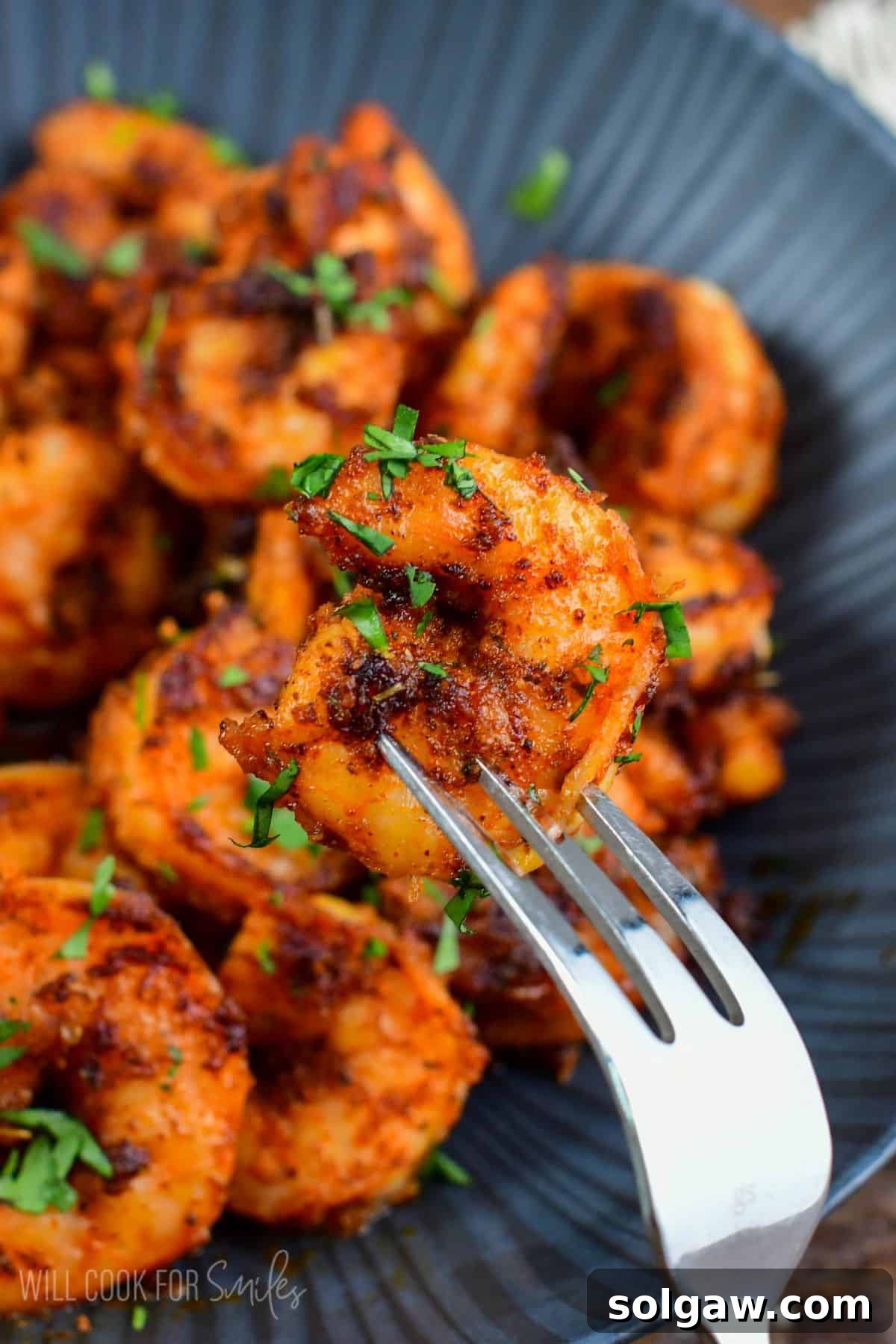
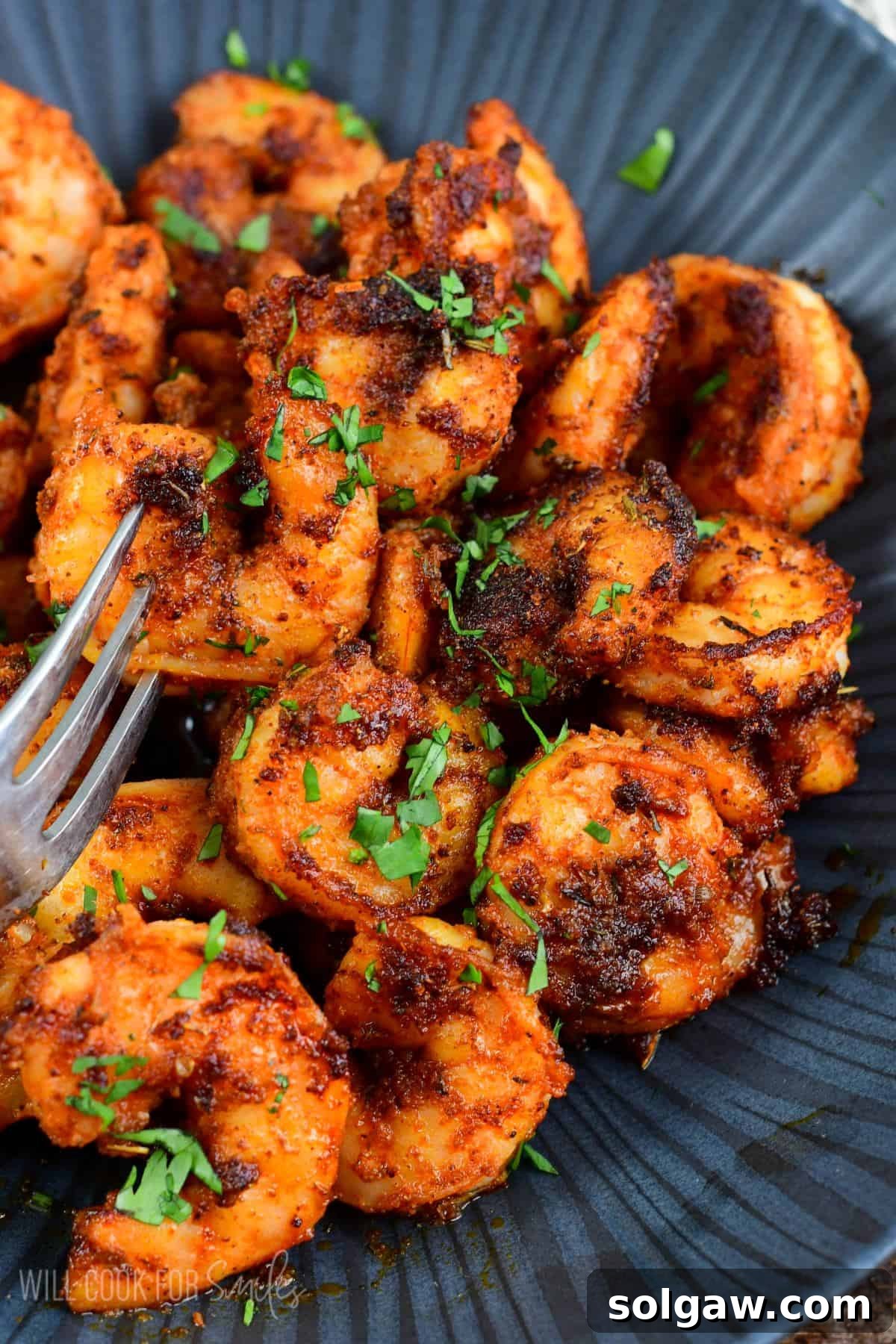
Unlocking the Flavor: Your Ultimate Guide to Perfect Blackened Shrimp
Embark on a culinary journey to the heart of Louisiana with this incredible blackened shrimp recipe! Blackened shrimp isn’t just a dish; it’s an experience—a symphony of spicy, smoky, and buttery flavors that comes together in mere minutes. Perfect for a quick weeknight dinner, a vibrant salad topping, or a sophisticated appetizer, this recipe guarantees mouth-watering results every time. Learn the secrets to achieving that perfect crust and juicy interior, mastering the art of homemade blackening seasoning, and discovering versatile ways to enjoy this Cajun classic.
What Exactly is Blackened Shrimp? A Deep Dive into this Iconic Culinary Technique
The term “blackened” often conjures images of heavily charred food, but in the culinary world, it refers to a distinct cooking method and a unique spice blend, both pioneered by the legendary Chef Paul Prudhomme. Originating from the vibrant Cajun and Creole kitchens of Louisiana, blackening is a technique designed to create an intense, flavorful crust on meat or seafood while keeping the interior moist and tender. It’s a testament to the bold flavors and innovative spirit of Southern cooking.
At its core, blackening involves three key elements:
- The Spice Blend: This is where much of the signature flavor comes from. A well-balanced blackening seasoning typically includes a robust mix of paprika, garlic powder, onion powder, dried thyme, dried basil, dried oregano, black pepper, salt, and a kick of cayenne pepper. Over the years, countless chefs and home cooks have developed their own variations, but the essence remains a potent, aromatic dry rub.
- Butter Immersion: Before hitting the heat, the protein—in this case, shrimp—is generously dredged in melted unsalted butter. This isn’t just for flavor; the butter plays a crucial role in adhering the spices to the shrimp and facilitating the browning process without causing the spices to burn immediately.
- High-Heat Searing: The magic happens in a screaming hot pan, traditionally a heavy cast-iron skillet. The extreme temperature causes the butter to brown rapidly and the spices to toast, forming a dark, savory crust (the “blackened” effect) that locks in moisture and infuses the shrimp with deep, complex flavors. Despite the high heat, shrimp cooks incredibly fast, often ready in just 4-6 minutes, making it an ideal choice for this swift cooking method.
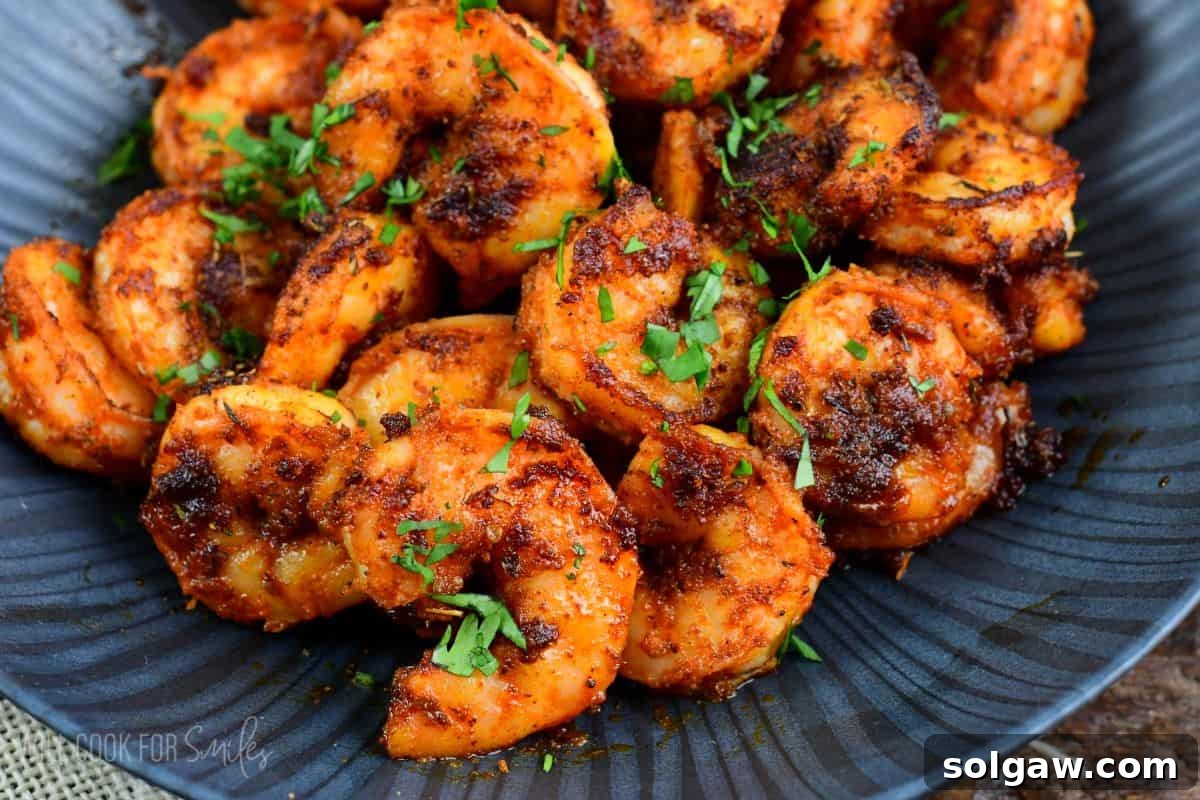
The result is a dish that is far from burnt. Instead, it boasts a rich, almost mahogany-colored exterior, bursting with a harmonious blend of spices, contrasting beautifully with the sweet, succulent shrimp within. It’s this perfect balance that makes blackened shrimp a truly unforgettable culinary delight.
Essential Ingredients: What You Need & Why it Matters
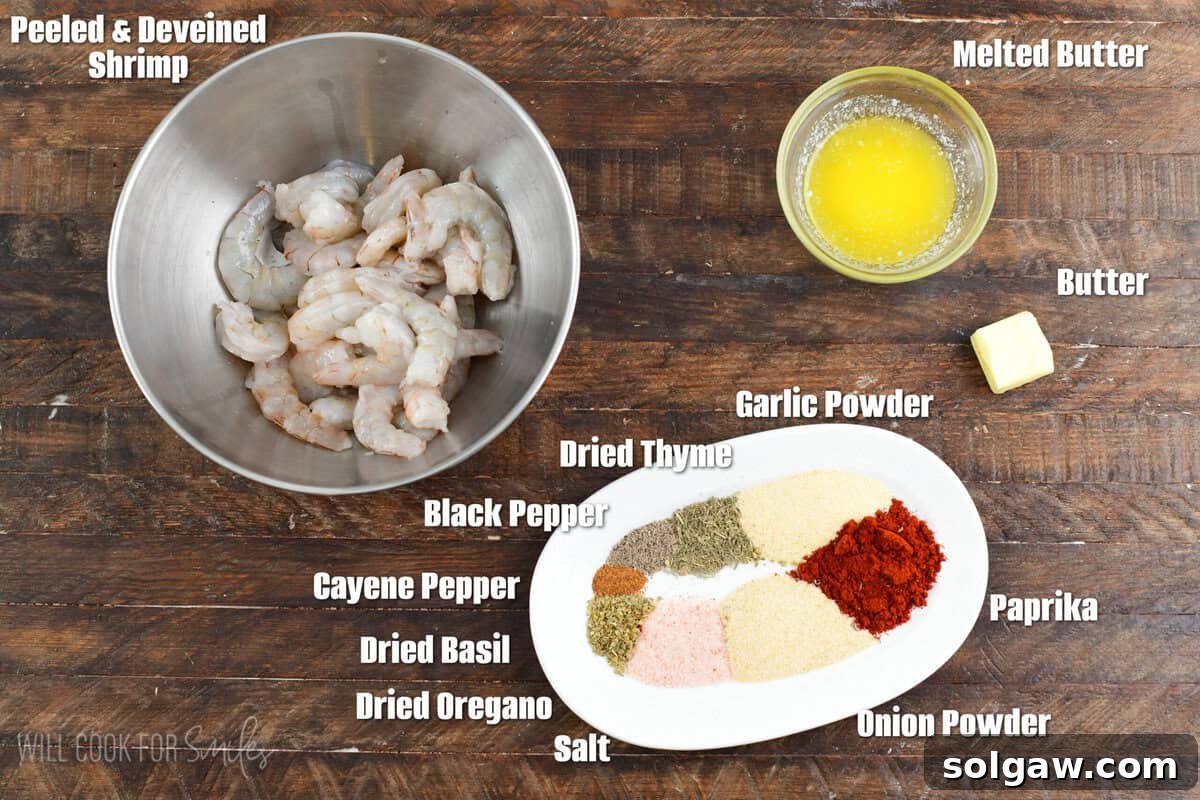
Creating truly exceptional blackened shrimp starts with understanding your ingredients. While the recipe is simple, selecting and preparing the right components will elevate your dish from good to extraordinary. The three basic pillars of this recipe are shrimp, blackening seasoning, and butter.
Choosing the Perfect Shrimp: Fresh vs. Frozen, Size, and Preparation
The star of our dish, shrimp, requires careful consideration. My top recommendation is always to opt for large, extra-large, or even jumbo shrimp. Why the emphasis on size? Shrimp is a delicate protein that cooks exceptionally quickly. Smaller shrimp are much easier to overcook, leading to a rubbery texture. Larger shrimp offer a more forgiving cooking window, ensuring a tender, juicy result every time.
- Fresh vs. Frozen: You can absolutely use either frozen or fresh shrimp, depending on availability. If using frozen shrimp, proper thawing is crucial. Always thaw frozen shrimp slowly in the refrigerator, ideally in its original packaging, overnight or for up to two days. Avoid rapid thawing methods under hot water, as this can affect texture and flavor. Fresh shrimp should be cooked within 24 hours of purchase for the best quality.
- Peel and Devein: This step is non-negotiable. You must peel and devein your shrimp before cooking. The dark line running along the back of the shrimp is its digestive tract, and removing it significantly improves both taste and presentation. Whether you leave the tails on or remove them is a matter of personal preference. Leaving them on can add a touch of elegance and provide a convenient handle for eating, especially if serving as an appetizer.
- Pat Dry: Regardless of whether you use fresh or thawed frozen shrimp, thoroughly pat them dry with paper towels before seasoning. Excess moisture can prevent the spices from adhering properly and hinder the formation of that desirable blackened crust.
Crafting the Ideal Blackening Seasoning
While store-bought options are available, making your own blackening seasoning blend is remarkably easy and allows you to customize the flavor profile to your liking. My recipe provides a simple yet potent blend, and you can easily scale it up to create a larger batch for future use. Store any homemade seasoning in an airtight glass jar in a cool, dark place, and it will remain fresh for months.
- Homemade Blend: Our blend features a balanced combination of paprika (for color and mild sweetness), garlic powder and onion powder (for aromatic depth), dried thyme, basil, and oregano (for herbaceous notes), and of course, black pepper, salt, and cayenne pepper for that essential spicy kick.
- Adjusting the Spice: The heat level in this recipe primarily comes from cayenne pepper. If you prefer a milder flavor, reduce the amount of cayenne. For those who crave extra heat, feel free to increase it incrementally. Remember, it’s easier to add more spice than to take it away!
- Store-Bought Seasoning: If opting for a commercial blend, be mindful of the salt content. Many pre-made seasonings contain a significant amount of salt. Always taste your seasoning before adding it to the shrimp, and adjust any additional salt in the recipe accordingly to avoid over-salting your dish.
The Role of Butter
Butter is not just a flavor enhancer here; it’s integral to the blackening process.
- Unsalted Butter is Key: Always use unsalted butter. Since the blackening seasoning already contains salt, using unsalted butter gives you precise control over the final sodium content of your dish.
- Plant-Based Alternative: For those with dairy sensitivities or following a vegan diet, plant-based butter works wonderfully as a substitute, ensuring everyone can enjoy this flavorful dish.
Mastering the Technique: How to Make Perfect Blackened Shrimp
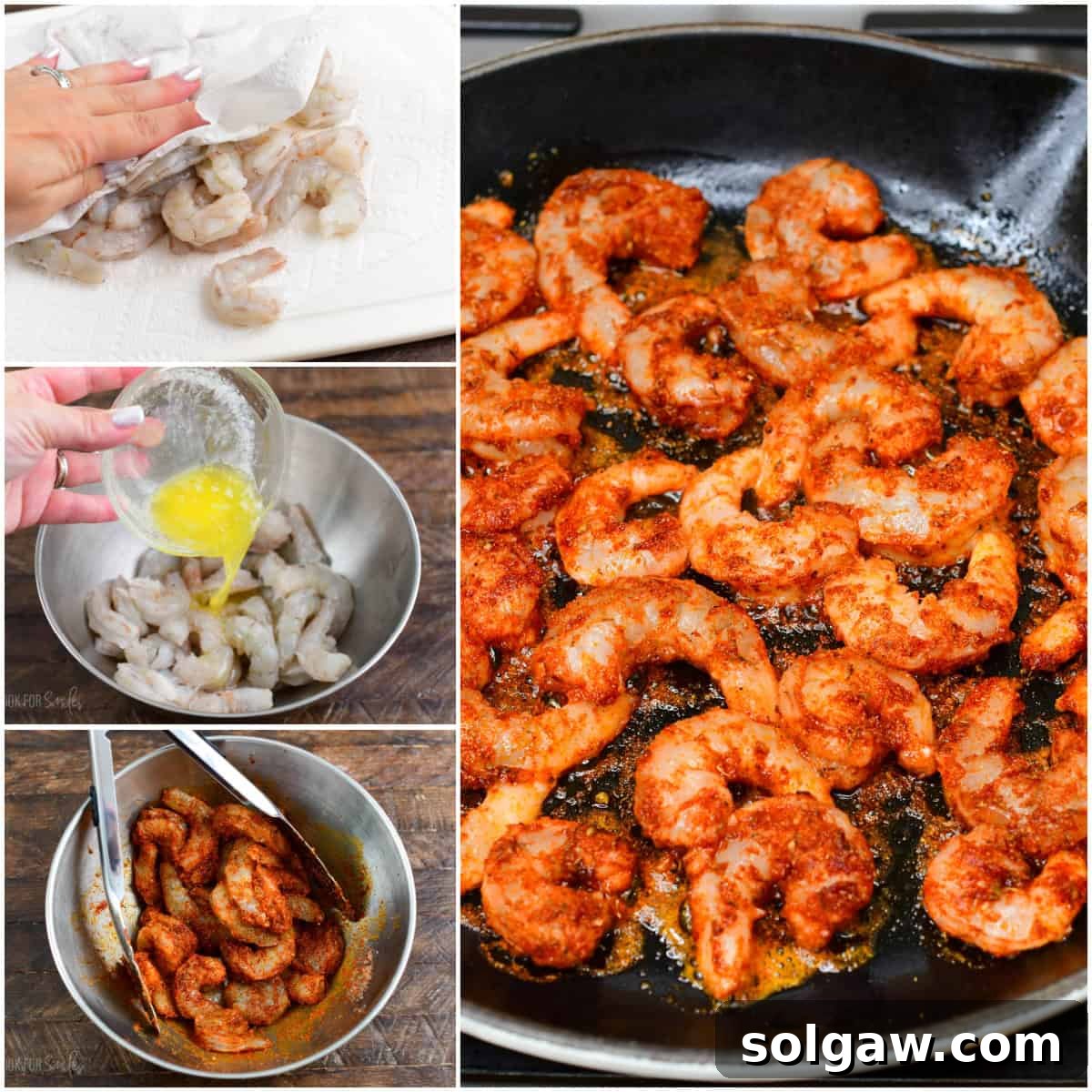
Once your ingredients are prepped, the actual cooking process for blackened shrimp is incredibly straightforward and fast. The key lies in proper preparation and maintaining a high heat. Follow these steps for succulent, perfectly seasoned shrimp every time:
- Preparation is Paramount:
Begin with thawed, peeled, and deveined shrimp. If your shrimp are cold from the refrigerator, let them sit on the counter for a few minutes to come closer to room temperature. Cold shrimp can cause the butter to solidify, preventing the seasoning from adhering evenly and resulting in uneven cooking. While the shrimp are warming, start preheating your skillet over medium-high heat. A cast iron skillet is highly recommended for its ability to retain and distribute heat evenly.
- Mix the Seasoning:
In a small bowl, combine all the ingredients for your homemade blackening seasoning (paprika, garlic powder, onion powder, dried oregano, dried basil, dried thyme, salt, black pepper, and cayenne pepper). Whisk them together thoroughly to ensure an even distribution of flavors.
- Butter and Season the Shrimp:
In a separate mixing bowl, add your thoroughly patted-dry shrimp. Pour the melted unsalted butter over the shrimp and toss gently until each piece is evenly coated. Next, sprinkle the prepared blackening seasoning generously over the buttered shrimp. Toss again until every shrimp is beautifully coated with the dark, aromatic spice blend. This double layer of butter and seasoning is crucial for developing that characteristic blackened crust.
- Sear to Perfection:
Once your skillet is smoking hot (you should see a faint wisp of smoke), add a tablespoon of butter to the pan. It will melt very quickly, so be ready. Immediately place the seasoned shrimp into the preheated skillet in a single layer, ensuring they do not overcrowd or overlap. Overcrowding will lower the pan’s temperature and cause the shrimp to steam rather than sear, preventing the blackened crust from forming. You’ll hear an immediate sizzle and smell the enticing aroma of the spices. Sear the shrimp for approximately 1.5 to 2 minutes per side. Cook until they turn pink and opaque throughout. The key is to remove them from the heat immediately once they are cooked through to prevent overcooking, which can make them tough and rubbery. Shrimp cook quickly, so stay attentive!
- Serve Immediately:
As soon as the shrimp are cooked, transfer them from the hot pan to a serving dish. Blackened shrimp are best enjoyed fresh off the skillet, when their crust is at its crispiest and the interior is at its most tender. Garnish with fresh parsley or a squeeze of lemon if desired, and serve with your favorite sides.
Chef Lyuba’s Essential Tips for Blackened Shrimp Success
Achieving restaurant-quality blackened shrimp at home is surprisingly easy, but a few expert tips can make all the difference. These insights will help you avoid common pitfalls and ensure your shrimp are perfectly seasoned and cooked every time:
- The Unbeatable Cast Iron Skillet: While other pans can work, a cast iron skillet is truly the champion for blackening. Its superior heat retention and even heat distribution are unmatched, allowing you to achieve that intense, flavorful crust without burning the spices. Ensure your cast iron skillet is well-seasoned for optimal non-stick performance and flavor.
- Room Temperature Shrimp for Even Coating: Never start with cold shrimp directly from the refrigerator. Cold shrimp will cause the melted butter to solidify upon contact, preventing the blackening seasoning from adhering evenly. This results in an inconsistent crust and can even lead to under-seasoned spots. Let your thawed and cleaned shrimp rest on the counter for about 10-15 minutes to come closer to room temperature before buttering and seasoning.
- Dry Shrimp is Happy Shrimp: Before coating your shrimp in melted butter, it is absolutely essential to pat them thoroughly dry with paper towels. Any residual moisture on the surface of the shrimp will create steam in the hot pan, hindering the browning and crisping process. A dry surface allows the butter and spices to form a beautiful crust.
- Preheat, Preheat, Preheat! (And Then Some): This cannot be stressed enough. A properly preheated pan is the secret to successful blackening. It takes longer than you think for a cast iron skillet to reach the necessary searing temperature. Aim for medium-high heat, and let it preheat for a solid 5-7 minutes. You should see a faint wisp of smoke just before you add the butter. This extreme heat is what instantly sears the shrimp, creating that signature blackened crust in a matter of seconds per side. Don’t rush this step!
- Don’t Overcrowd the Pan: Cook the shrimp in batches if necessary. Overcrowding the skillet will drop the pan’s temperature significantly, causing the shrimp to steam rather than sear. This will result in a soggy crust and a less flavorful outcome. Give each shrimp enough space to make direct contact with the hot surface of the pan.
- Watch for Opacity, Not Color: While the exterior will darken significantly, don’t rely solely on visual cues for doneness. Shrimp cooks very quickly, typically turning opaque pink throughout when done. Overcooked shrimp become tough and rubbery, so remove them from the heat as soon as they reach this opaque stage.
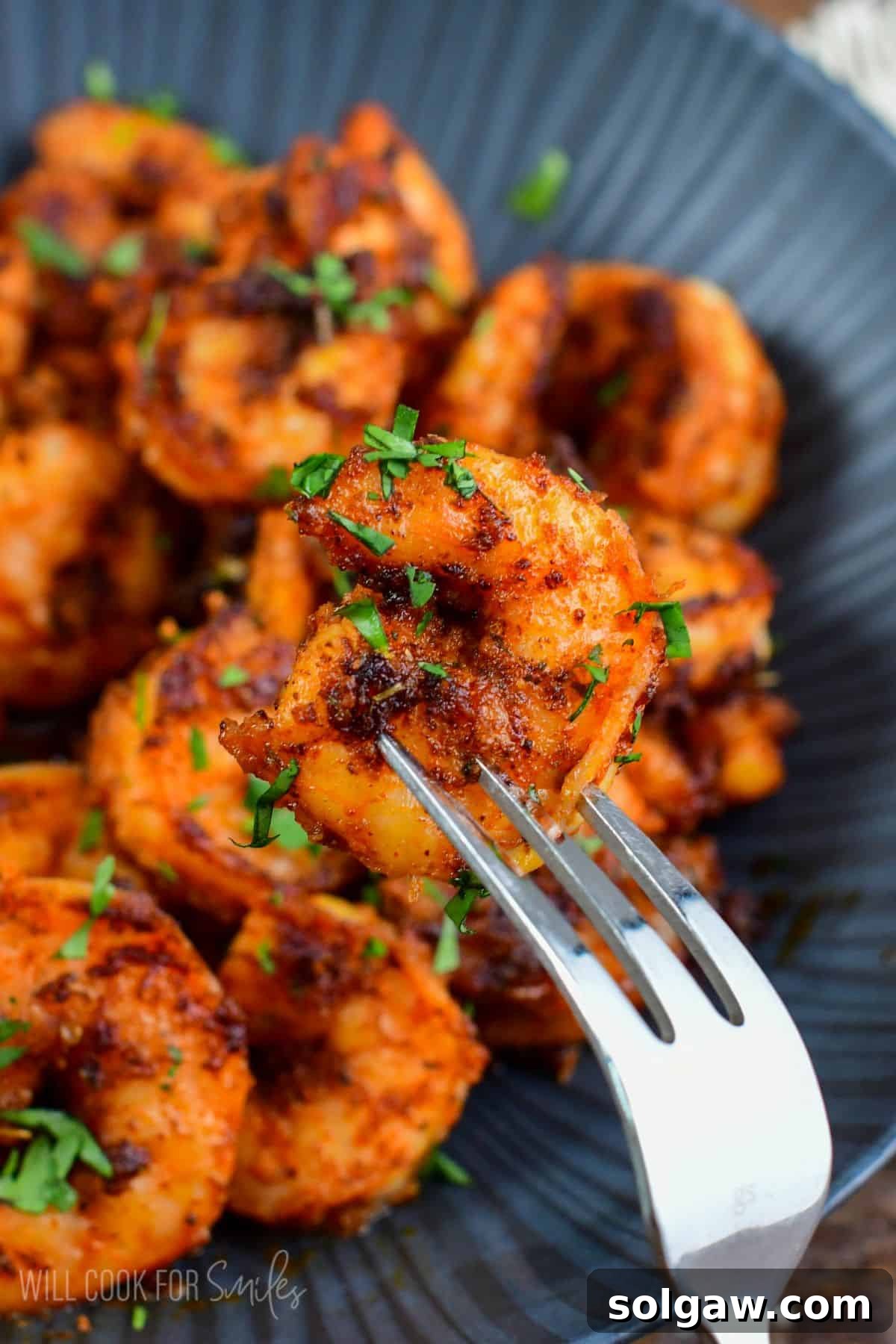
Serving Suggestions for Blackened Shrimp
Blackened shrimp’s bold flavor and quick cooking time make it incredibly versatile. Here are some delightful ways to enjoy your perfectly cooked shrimp:
- Classic Main Course: Serve alongside fluffy rice (white, brown, or dirty rice) and a fresh green salad or steamed vegetables like asparagus or green beans for a complete and satisfying meal.
- Tacos and Wraps: Elevate your taco night by using blackened shrimp as a flavorful filling. Pair with crunchy cabbage slaw, a creamy avocado crema, and a squeeze of lime.
- Pasta Perfection: Toss the shrimp with your favorite pasta, a light garlic butter sauce, a creamy Alfredo, or a spicy tomato sauce for a quick and impressive pasta dish.
- Salad Star: Add a punch of protein and flavor to your salads. Blackened shrimp is excellent in a Caesar salad, a vibrant Cobb salad, or a simple mixed greens salad with a vinaigrette.
- Rice Bowls: Create customized power bowls with a base of rice, black beans, corn, avocado, and a generous topping of blackened shrimp.
- Appetizer Extravaganza: Serve them hot with a dipping sauce like remoulade, cocktail sauce, or a spicy aioli for an irresistible appetizer.
- Grit Power: For a true Southern comfort dish, serve your blackened shrimp over a bed of creamy, cheesy grits.
Blackened Shrimp Recipe FAQs
This dish offers a delightful and noticeable heat without being overly spicy or overwhelming to the palate. The primary sources of warmth are black pepper and, most significantly, cayenne pepper. The recipe calls for 1/4 tsp of cayenne, which typically results in a medium spice level. If you prefer a milder taste, reduce the cayenne to 1/8 tsp or just a pinch. For those who love a fiery kick, gradually increase it to 1/2 tsp or more. Remember to add cayenne in small increments, as its potency can quickly escalate the heat!
Yes, grilling is a fantastic alternative for blackened shrimp, adding an extra layer of smoky flavor. However, it requires careful attention to prevent the seasoning from burning due to direct high heat. I recommend cooking the shrimp slightly further from the hottest part of the grill. For easier handling and to prevent individual shrimp from falling through the grates, it’s best to skewer them. If using wooden skewers, soak them in water for at least 30 minutes beforehand to prevent burning. Grill for approximately 2 minutes per side, adjusting the time based on the size of your shrimp and the intensity of your grill’s heat. Watch closely!
Absolutely! The oven provides a less hands-on approach for cooking blackened shrimp, though it won’t achieve the same intense crust as a screaming hot skillet. To cook in the oven, spread the seasoned shrimp in a single layer on a baking sheet lined with parchment paper. Bake at 400°F (200°C) for about 8-10 minutes, or until the shrimp are pink and opaque throughout. Keep an eye on them to avoid overcooking.
Slow thawing is always the best method for preserving the texture and quality of seafood and meats. For frozen shrimp, transfer them from the freezer to the refrigerator in their original packaging, allowing them to thaw overnight or for up to two days. This gradual process minimizes cell damage, ensuring the shrimp remain tender. While some rapid thawing methods exist, I generally do not recommend thawing seafood in a sink at room temperature unless you are well-versed in food safety protocols, as temperatures can quickly enter the “danger zone” for bacterial growth.
Storing and Reheating Your Blackened Shrimp
If you happen to have any leftovers of this delicious dish, proper storage and reheating are key to maintaining its quality:
- Storage: Store cooked blackened shrimp in an airtight container in the refrigerator for 2-3 days. Beyond this timeframe, the texture and flavor can degrade.
- Reheating: The best way to reheat shrimp without making it rubbery is in a preheated cooking pan (cast iron works well!) with a tiny bit of butter or oil over medium heat. Sauté for just about a minute or two, stirring frequently, until heated through. Be careful not to cook it further, just warm it up. The microwave can be used in a pinch, but it’s more likely to make the shrimp tough.
- Do Not Freeze Cooked Shrimp: While you can start with frozen uncooked shrimp, it’s generally not recommended to freeze cooked shrimp. The delicate texture of shrimp tends to become unpleasantly mushy or rubbery once thawed after being cooked and then frozen again. Enjoy them fresh or within the refrigerated storage window.
Expand Your Culinary Horizons: More Recipes to Savor
If you’ve fallen in love with the bold flavors of blackened shrimp, there’s a whole world of Cajun and Creole-inspired dishes waiting for you. The blackening technique can be applied to various proteins, delivering equally delightful results:
- For another incredible seafood experience, try my blackened salmon and blackened tilapia recipes. Both are incredibly easy to prepare and yield rich, flavorful fish perfect for any meal.
- Looking for a fun and zesty meal idea? These blackened fish tacos are super easy, packed with flavor, and make for a perfect Taco Tuesday celebration.
- If you’re a fan of heartier, spicy Cajun or Creole food, my authentic jambalaya recipe is a must-try. It’s a comforting and robust dish that embodies the spirit of Louisiana cuisine.
- Dive into the vibrant flavors of the South with this bright and spicy Cajun shrimp recipe, featuring juicy shrimp seasoned with authentic Cajun spices, cooked with smoky bacon, and bathed in a chunky tomato and vegetable sauce. You can also take those amazing flavors outdoors with Cajun grilled shrimp, perfect for summer barbecues.
DID YOU MAKE THIS RECIPE? Please leave a 🌟 star rating! Let me know how you liked it by leaving a 📝 comment below or share and tag me on social media @willcookforsmiles. DON’T FORGET to subscribe to my newsletter for more delicious recipes!
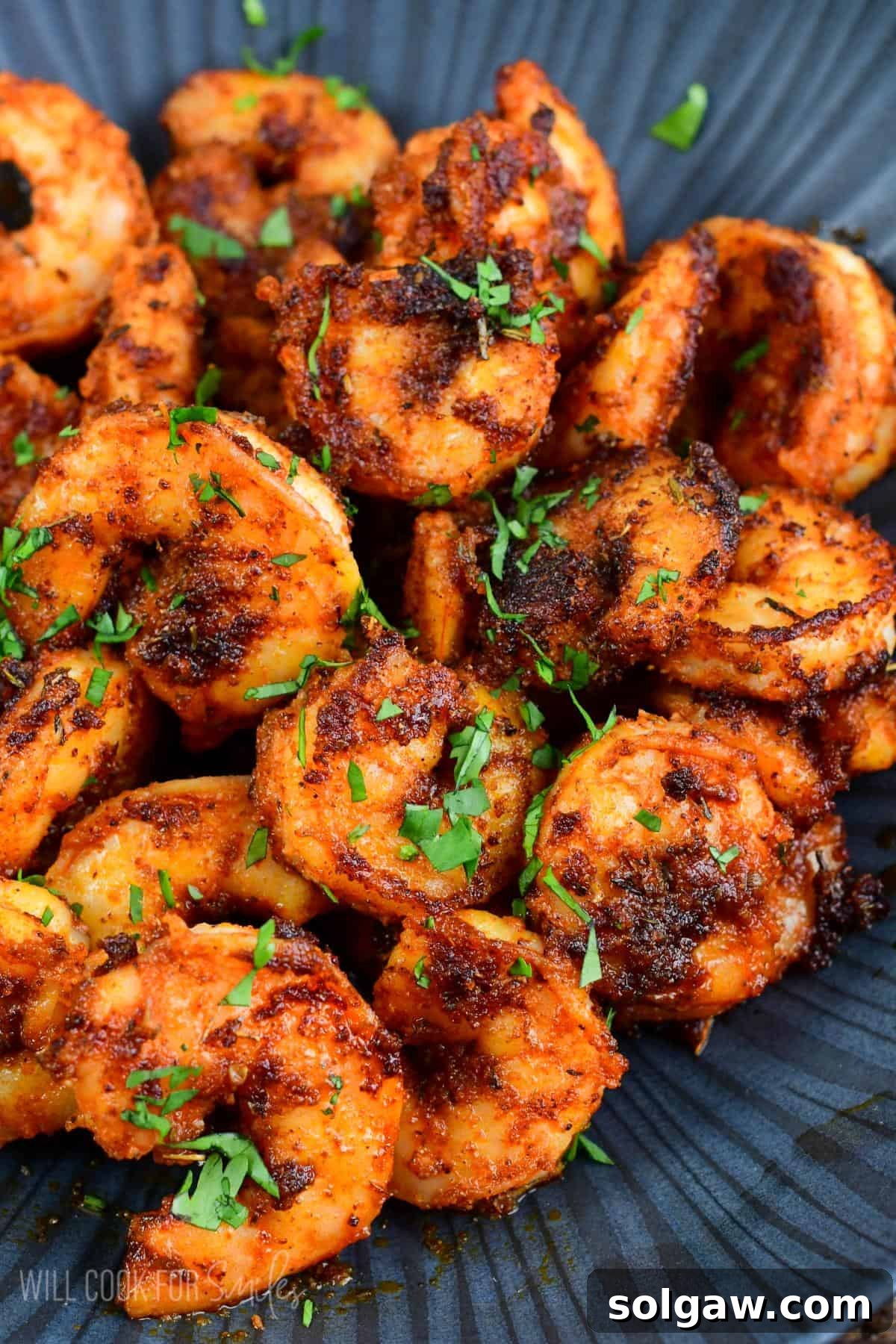
Blackened Shrimp Recipe
Blackened shrimp is a spicy, buttery, and incredibly easy shrimp recipe that features bold flavors of homemade blackening seasoning. It comes together in about 15 minutes, making it perfect for a quick and flavorful meal. You can use either frozen or fresh shrimp and serve it on salads, tacos, wraps, rice bowls, or pastas.
Print Recipe
Pin Recipe
Watch Video
Rate This Recipe
Ingredients
- 1 lb uncooked shrimp (large, extra large, or jumbo size)
- 2 tbsp unsalted butter (melted, for coating shrimp)
- 1 tbsp unsalted butter (for cooking)
Blackening Seasoning:
- 1 tbsp paprika
- 2 tsp garlic powder
- 2 tsp onion powder
- 1/2 tsp dried oregano
- 1/2 tsp dried basil
- 1 tsp dried thyme
- 1 tsp salt
- 1/4 tsp black pepper
- 1/4 tsp cayenne pepper (add more if you desire spicier shrimp)
Instructions
- If using shrimp in shells, start by peeling and deveining them thoroughly. This step is essential for both hygiene and taste. (Detailed instructions here).
- Expert Tip: Ensure your shrimp are not cold when you begin seasoning. Let them rest on the counter for a few minutes if they’ve just come from the refrigerator. Cold shrimp can cause the melted butter to solidify, preventing the seasoning from adhering evenly.
- While preparing the shrimp, place a cast iron skillet (or heavy-bottomed pan) over medium-high heat and begin preheating. A well-heated pan is crucial for a perfect sear.
- Pat the cleaned and deveined shrimp completely dry with paper towels. Transfer them to a mixing bowl.
- In a separate small bowl, combine all the ingredients for the blackening seasoning. Mix thoroughly until well blended.
- Pour the 2 tablespoons of melted unsalted butter over the shrimp in the mixing bowl. Toss gently to coat each shrimp evenly.
- Generously sprinkle the mixed blackening seasoning over the buttered shrimp, tossing again to ensure every piece is thoroughly and evenly coated with the spice blend.
- Confirm your pan is smoking hot before cooking. Add the remaining 1 tablespoon of butter to the preheated skillet. It will melt and brown very quickly. Immediately place the seasoned shrimp into the hot skillet in a single layer, making sure they do not overlap or overcrowd the pan. Cook in batches if necessary to avoid steaming.
- Sear the shrimp until they turn pink and opaque on one side, typically 1.5-2 minutes. Flip them to the other side and cook for another 1.5-2 minutes, until they are entirely pink and opaque throughout. The total cooking time will be around 4-5 minutes, depending on the shrimp size. Avoid overcooking!
- As soon as the shrimp are fully cooked, immediately remove them from the pan to prevent them from becoming tough. Serve hot with your favorite accompaniments or over pasta.
Video
Notes
Plant-based butter: If you need to make this recipe lactose-free or dairy-free, simply use a good quality plant-based butter as a direct substitute. It works just as effectively in achieving that rich, buttery flavor and crust.
Adjusting spice level: The provided 1/4 tsp of cayenne pepper will give you a pleasant medium heat. For a noticeably milder flavor, reduce the cayenne pepper to about 1/8 tsp, or even just a pinch. If you’re a true spice enthusiast and want more heat, incrementally increase the cayenne to 1/2 tsp or slightly more. Remember, cayenne is potent, so always add in small amounts and taste as you go to find your perfect spice level.
Nutrition
Calories: 411kcal |
Carbohydrates: 7g |
Protein: 48g |
Fat: 21g |
Saturated Fat: 11g |
Cholesterol: 617mg |
Sodium: 3084mg |
Potassium: 320mg |
Fiber: 2g |
Sugar: 1g |
Vitamin A: 2301IU |
Vitamin C: 10mg |
Calcium: 355mg |
Iron: 7mg
Tried this recipe? Mention @willcookforsmiles or tag #willcookforsmiles!