
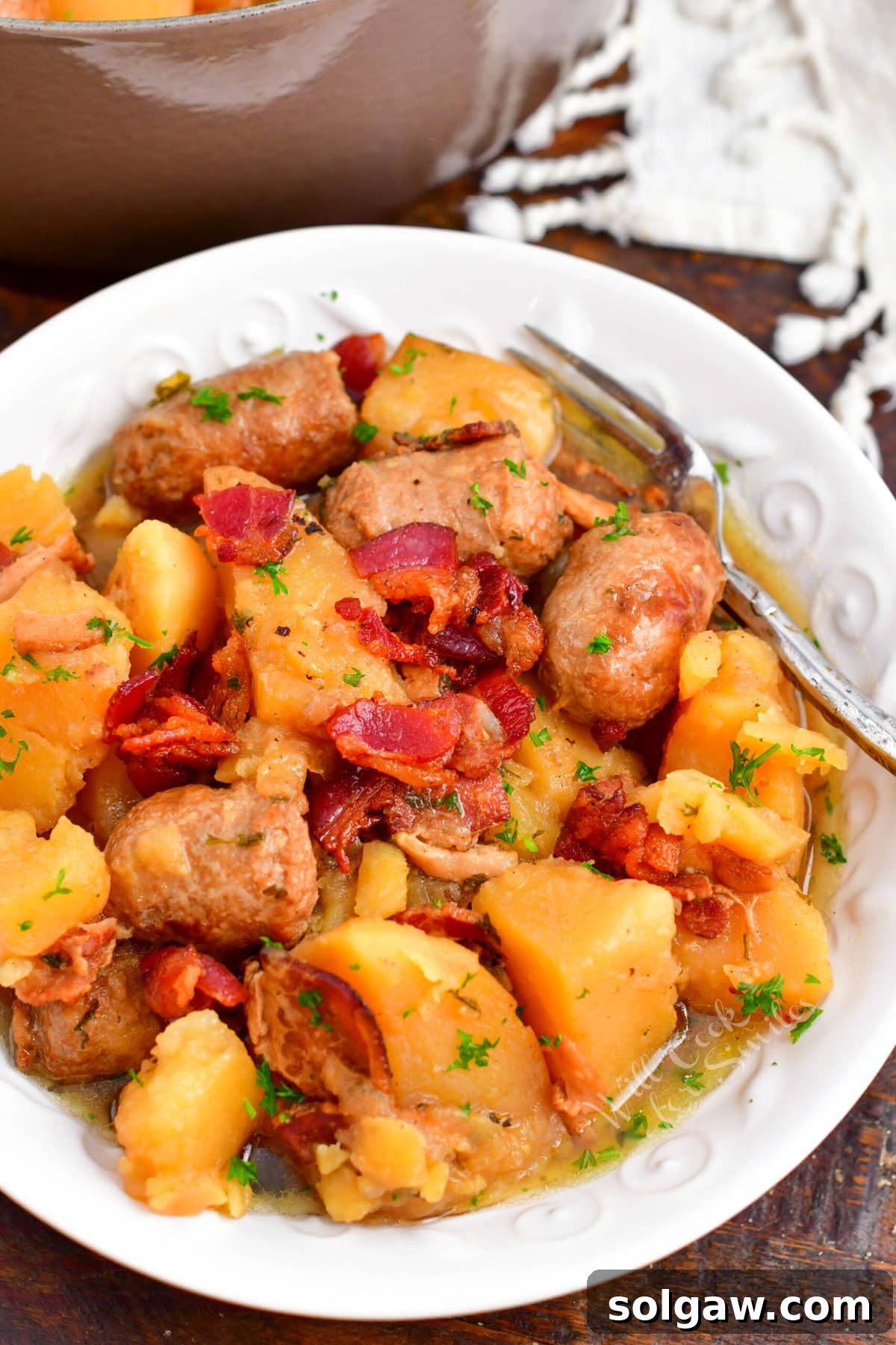
Welcome to the definitive guide for crafting an authentic Dublin Coddle – a heartwarming Irish sausage and potato stew that epitomizes comfort food. This traditional dish, prepared using the revered braising method, transforms simple ingredients into an incredibly tender, richly flavored meal. By slowly cooking bacon, plump Irish sausages, hearty potatoes, and a medley of fresh herbs in the oven, you achieve a depth of flavor and texture that is truly unparalleled. Once you experience the magic of a properly prepared Dublin Coddle, you’ll understand why it’s a beloved staple in Irish homes and a fantastic way to celebrate Irish heritage, particularly around St. Patrick’s Day. It’s more than just a meal; it’s a taste of Irish tradition that promises to satisfy your soul and leave you craving more.
Unveiling the Charm of Dublin Coddle: A Traditional Irish Treasure
You might be asking yourself, “What exactly is a Dublin Coddle?” Despite being a remarkably flavorful and deeply traditional Irish dish, it surprisingly doesn’t receive the widespread recognition it deserves outside of Ireland. We’re here to change that! Imagine a dish so comforting, so deeply rooted in history, that it feels like a warm hug in a bowl. That’s Dublin Coddle. It’s the perfect centerpiece for a St. Patrick’s Day celebration, ideally served with a slice of rustic soda bread to soak up all its delicious juices.
The term “coddle” itself is quite fascinating. It’s traditionally used to describe a dish made from leftovers, meaning there isn’t one single, rigid recipe for it. This flexibility is part of its charm and historical significance, allowing families to adapt it based on available ingredients. While countless “coddles” could technically be created, the essence of the “coddling” cooking method primarily dictates a slow, gentle cooking process. This prolonged simmer or braise allows the flavors to meld beautifully and the ingredients to achieve an exquisite tenderness.
The Dublin Coddle recipe, specifically, has evolved to incorporate a beloved combination of ingredients: crispy bacon, savory pork sausages, starchy russet potatoes, and aromatic fresh herbs, all simmered in a flavorful broth. This particular rendition is widely considered to be an exemplary version, capturing the authentic spirit and taste of a true Dublin Coddle.
Featured Comment
“
OMG! This is my new favorite recipe! It is so good!”
Essential Ingredients: Tips and Savory Substitutions for Your Dublin Coddle
Crafting the perfect Dublin Coddle begins with selecting the right ingredients. Each component plays a vital role in building the robust, satisfying flavors that define this traditional Irish stew. Here’s a closer look at the key players and some helpful tips for your culinary journey:
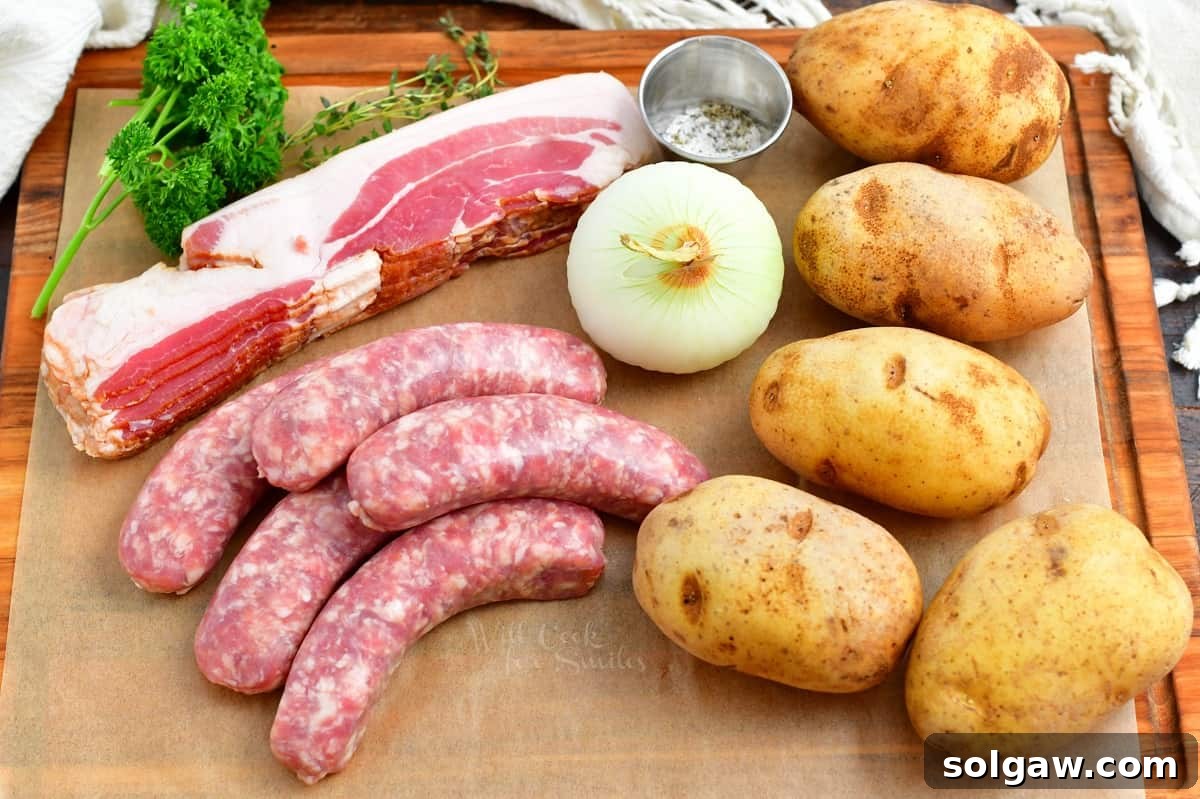
- Bacon: For an authentic and deeply flavorful Dublin Coddle, rich pork bacon is your best bet. Its fat renders beautifully, providing a crucial base of flavor for the entire stew. While traditional streaky bacon works wonderfully, don’t hesitate to experiment with smoked varieties like maple or applewood flavored bacon for an added layer of complexity. These variations can introduce a subtle sweetness or smokiness that complements the other ingredients beautifully.
- Pork Sausage: The choice of sausage is paramount for a truly traditional Dublin Coddle. Fresh, mild pork sausage is highly recommended. The goal is to use a sausage that contributes to the overall savory profile without overpowering the other delicate flavors of the dish. While some have found success with Bratwurst-style sausages, it’s crucial to avoid strongly seasoned varieties like Italian sausage, which typically contain fennel or other bold spices that don’t align with the classic Coddle taste. Opt for a simple, good quality pork sausage.
- Russet Potatoes: When it comes to potatoes, russets are non-negotiable for achieving the ideal texture in your Coddle. Their high starch content ensures they become wonderfully soft, crumbly, and pleasantly tender when slow-cooked, absorbing the rich flavors of the broth and meats. Other potato varieties, such as waxy red or yellow potatoes, might hold their shape too much and not break down in the same desirable way, leading to a different eating experience. Stick with russets for that authentic, melt-in-your-mouth potato texture.
- Onions: A sweet onion is ideal for its mild flavor that caramelizes beautifully, adding a subtle sweetness and aromatic depth to the stew without being overly pungent.
- Garlic: Freshly minced garlic provides an essential aromatic foundation, enhancing the savory notes of the meats and broth.
- Chicken Stock: This forms the liquid base of the stew. Opt for a good quality chicken stock or broth to ensure a rich, savory backdrop for all the ingredients. You can also use vegetable broth for a slightly lighter flavor profile.
- Herbs: Fresh thyme and parsley are classic choices, bringing a bright, earthy freshness to the heavy, hearty stew. Bay leaves contribute a subtle, almost medicinal aroma that is traditional in many slow-cooked dishes. Using fresh herbs will always yield the best flavor, but dried herbs can be used in a pinch (remember to use about 1/3 the amount of dried herbs compared to fresh).
- Salt and Black Pepper: Essential for seasoning and balancing all the flavors. Always taste and adjust as you go!
Crafting Dublin Coddle: A Step-by-Step Guide to Traditional Perfection
Making Dublin Coddle is a labor of love, but the slow cooking process ensures a deeply rewarding result. Follow these steps to create a truly unforgettable Irish stew:
- Preparation is Key: Before you even think about turning on the heat, take the time to prepare all your ingredients. This mise en place ensures a smooth and enjoyable cooking process. Chop your bacon into bite-sized pieces, slice your pork sausages into two or three manageable sections, peel and quarter your russet potatoes, and mince your garlic. Having everything ready beforehand will make assembly a breeze.
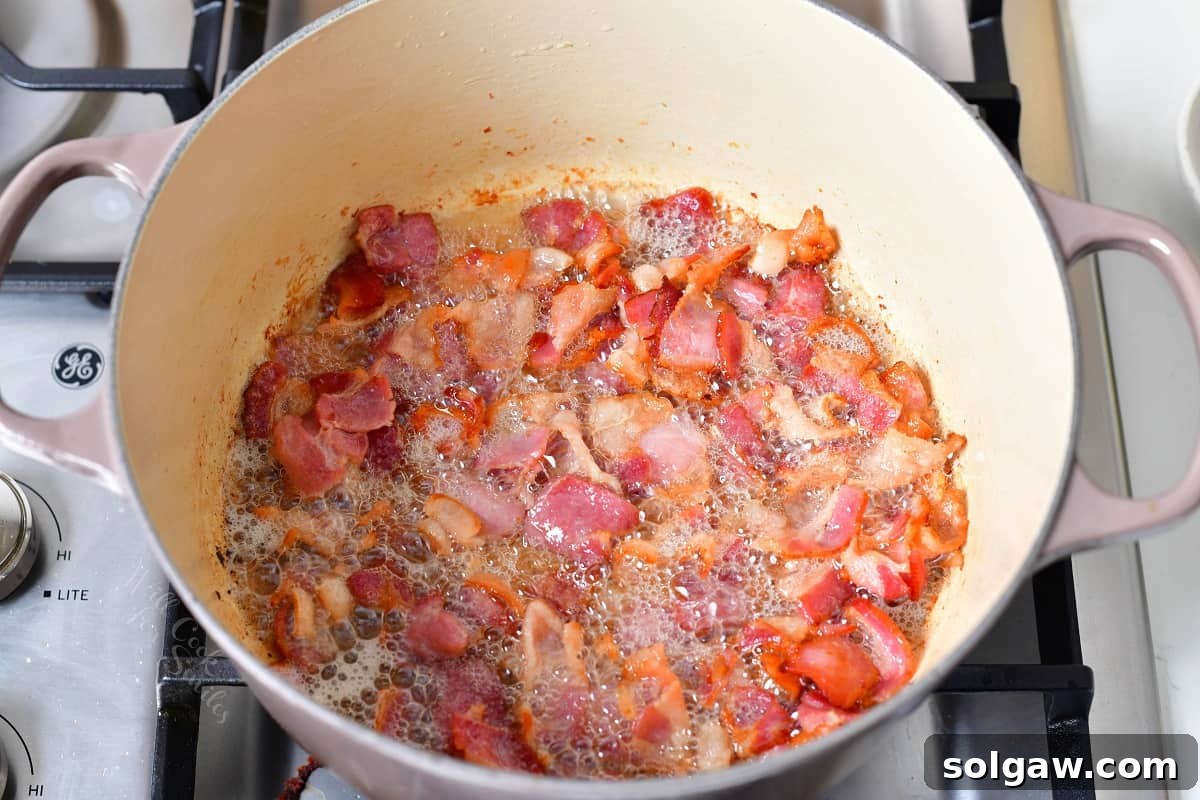
- Render the Bacon: Begin by preheating a heavy-bottomed pot or Dutch oven over medium-high heat. Add a touch of canola oil if your bacon is very lean, then add the chopped bacon. Cook until the fat is beautifully rendered and the bacon pieces are crispy and golden. Once cooked, remove the bacon from the pot, but crucially, leave all that flavorful bacon grease behind. This rendered fat is the foundation of your Coddle’s rich taste.
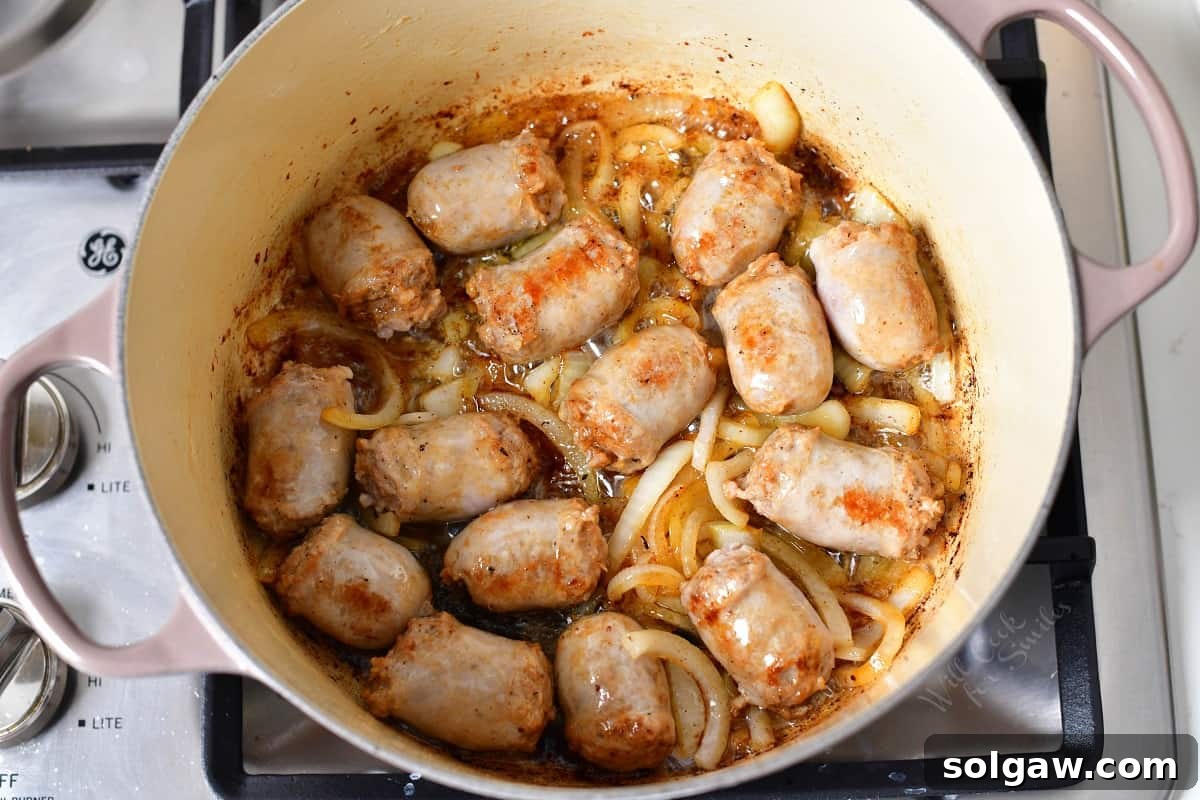
- Sauté Onions and Sear Sausage: Add the sliced sweet onions to the pot, stirring them in the bacon fat until they soften and turn translucent. Then, add the pork sausage pieces. Arrange the sausages so they are directly touching the bottom of the pot. This is vital for developing a beautiful, savory brown crust. Sear the sausages for several minutes on each side, flipping them as needed, until they are nicely browned all over. This step adds immense flavor and texture that cannot be skipped.
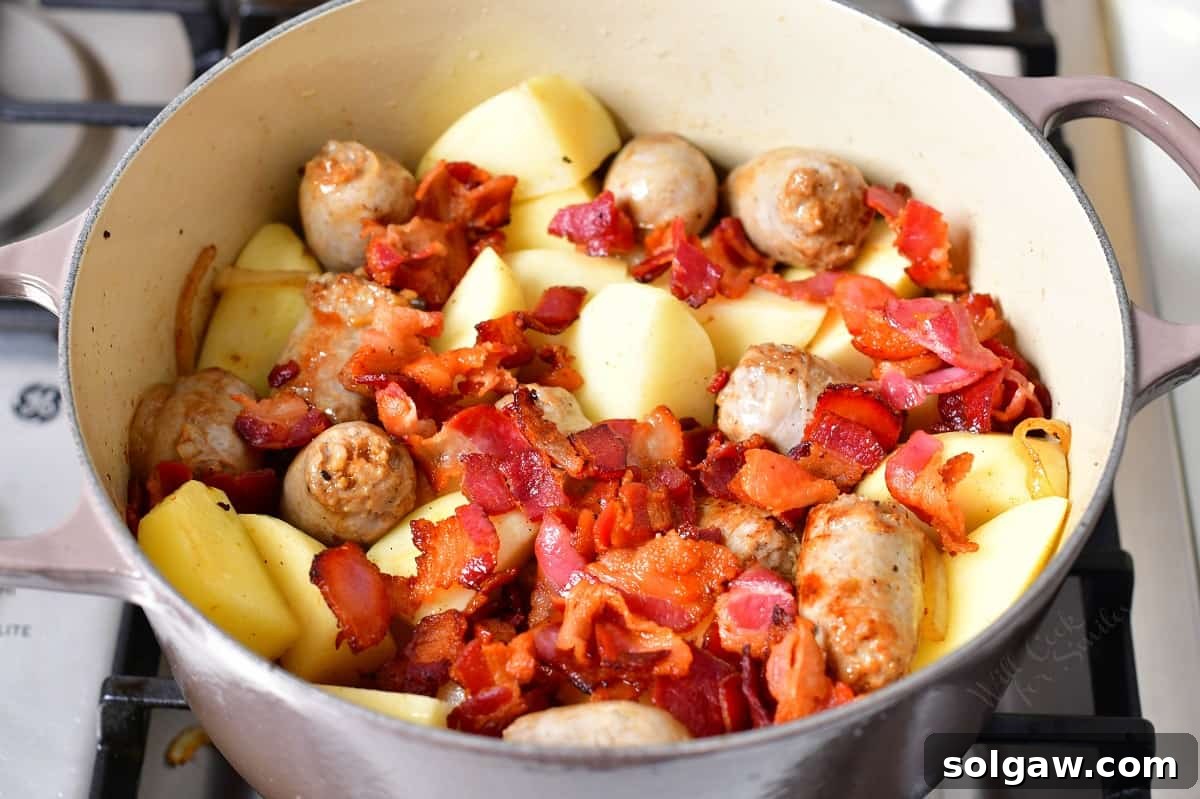
- Combine and Layer: Once the sausages are seared, return the cooked bacon to the pot, along with the quartered russet potatoes. Gently toss all the ingredients together to ensure they are evenly distributed. PRO TIP: For an extra special touch, reserve a handful of the crispiest bacon pieces. These can be used later as a delicious garnish when serving, adding a lovely textural contrast and burst of flavor to each bowl of Coddle.
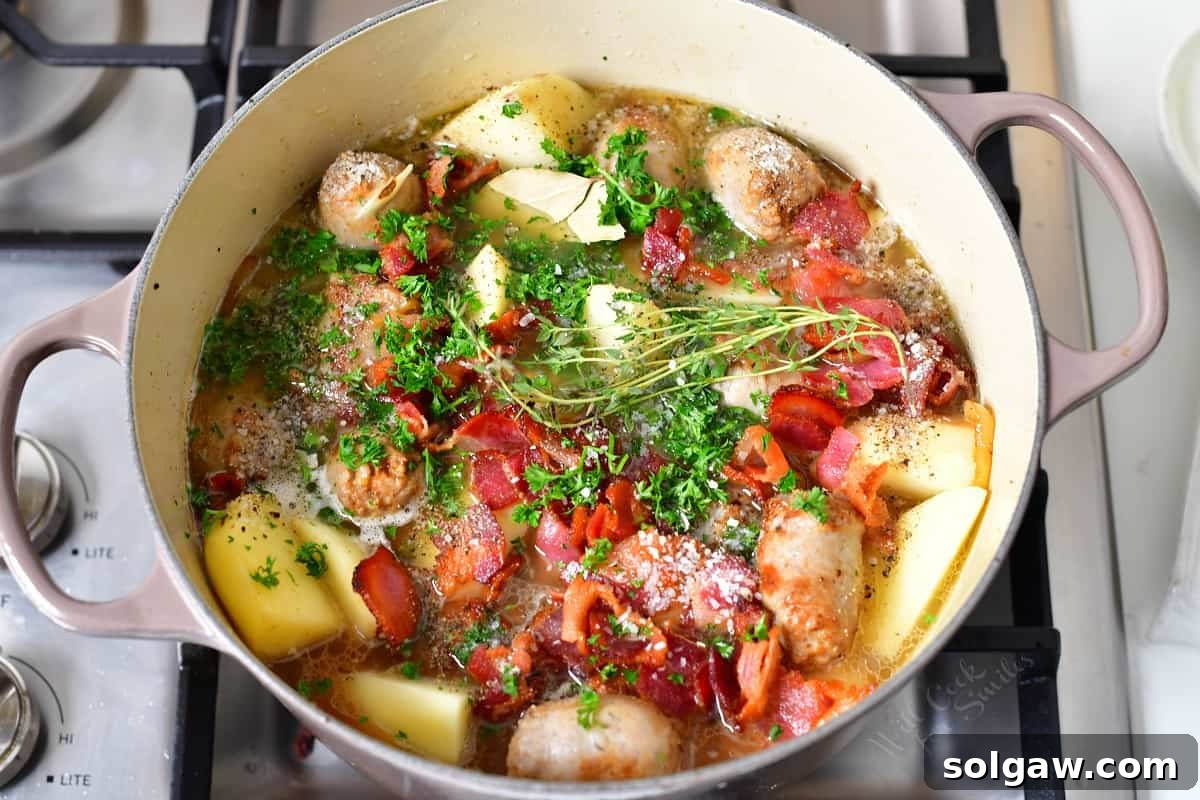
- Season and Simmer: Pour in the chicken stock, ensuring it mostly covers the ingredients. Add your minced garlic, fresh thyme sprigs, chopped parsley, bay leaves, and season generously with salt and freshly ground black pepper. Stir everything thoroughly to combine all the wonderful flavors. Bring the mixture to a gentle simmer on the stovetop.
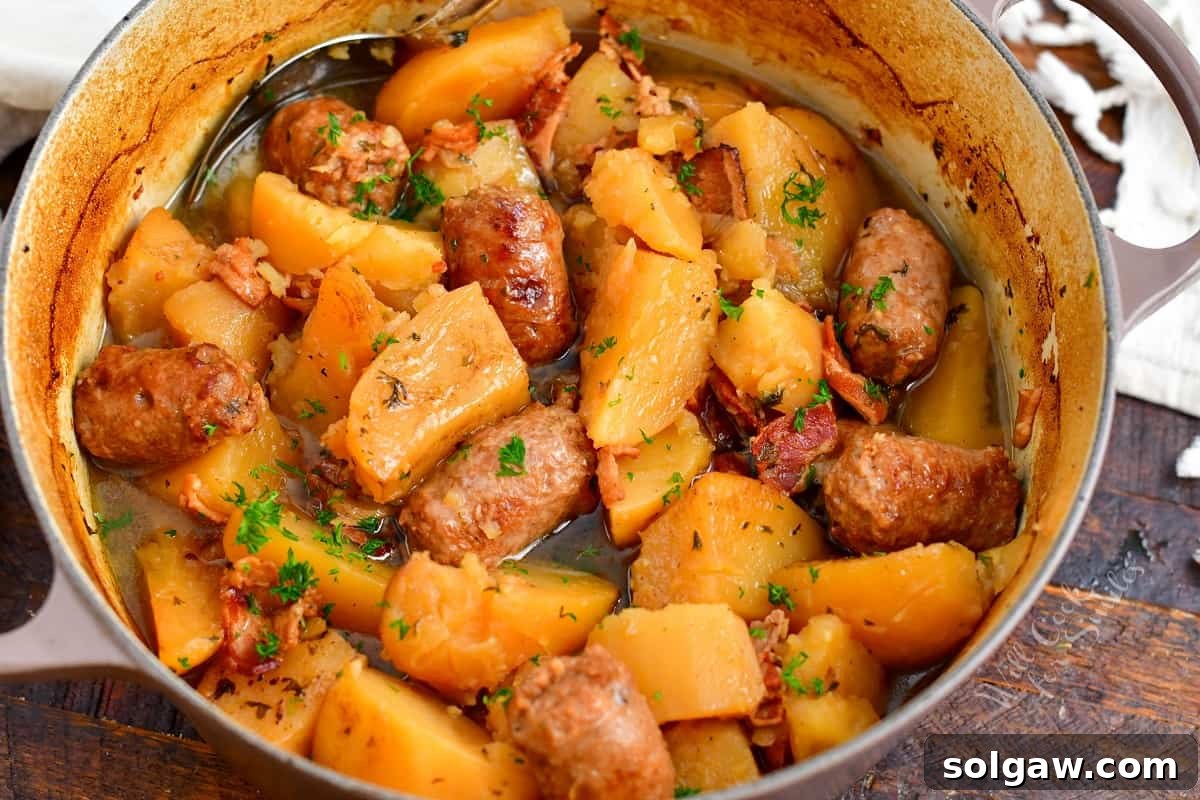
- The Slow Cook: This is arguably the most crucial step for an authentic Dublin Coddle – the slow cooking process. Preheat your oven to 300°F (150°C). Cover your Dutch oven tightly with its lid and carefully transfer it to the preheated oven. Allow it to braise slowly for approximately 2.5 to 3 hours. This extended, gentle heat is what transforms the humble ingredients into a rich, cohesive, and incredibly tender stew. The slow cooking ensures the potatoes become creamy, the sausages absorb the broth, and all the flavors marry perfectly.
- Maintain Moisture: Around the 2-hour mark, take a quick peek at your Coddle. If you notice a significant reduction in liquid and feel it’s becoming too dry, don’t hesitate to add another ½ to 1 cup of chicken stock to the pot. This prevents the Coddle from drying out and ensures all ingredients remain submerged and tender. Continue cooking until the potatoes are fork-tender and the flavors are deeply developed.
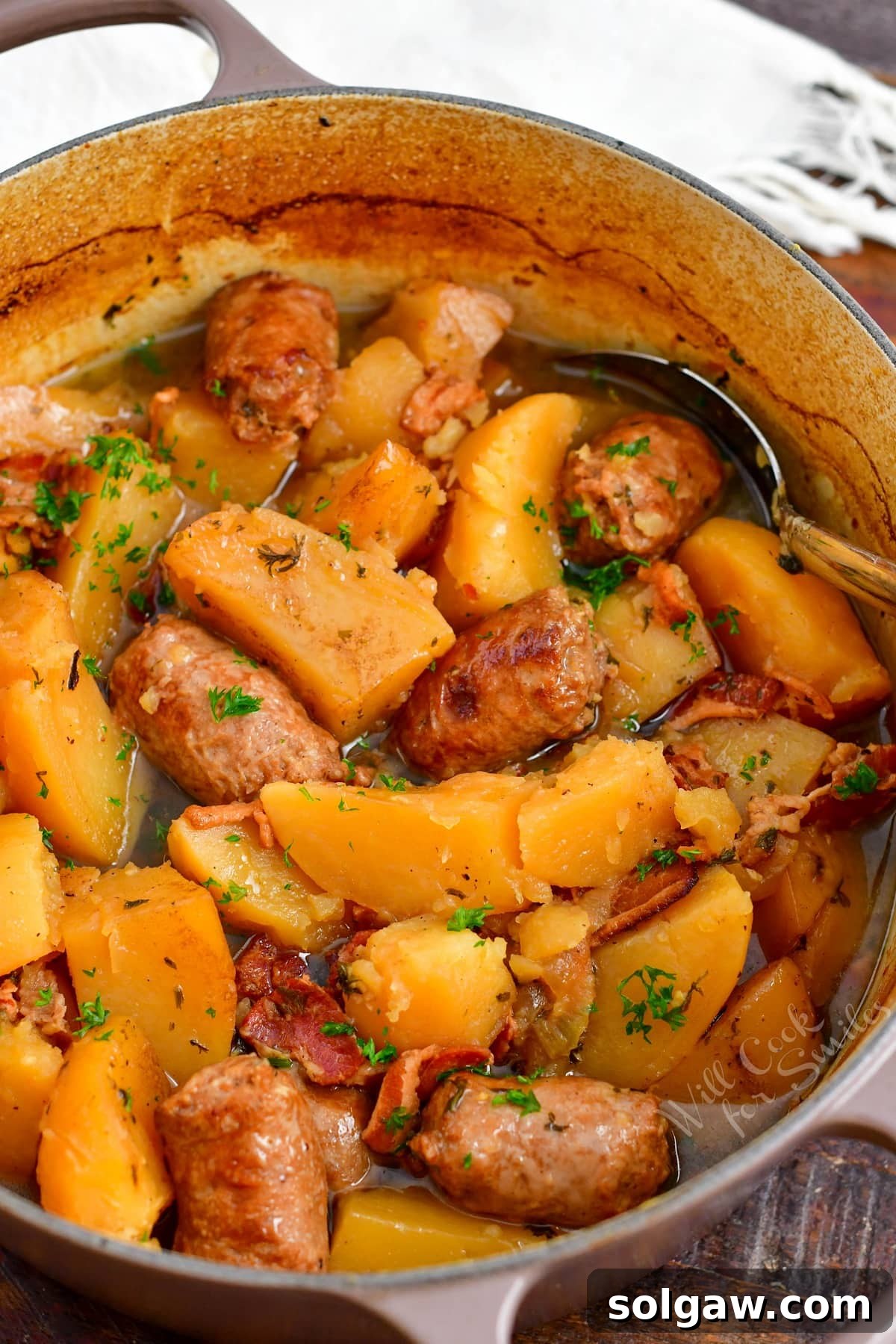
Versatile Cooking Methods: Adapting Your Dublin Coddle Experience
While oven-braising in a Dutch oven is the traditional and arguably best method for Dublin Coddle, yielding the most tender results and deepest flavors, this versatile dish can also be adapted for other popular cooking appliances. Each method offers a slightly different profile but still delivers a delicious outcome, making it accessible for various lifestyles and kitchen setups.
- Dublin Coddle in the Slow Cooker: For those busy days when you want a hands-off approach, the slow cooker is an excellent choice. To maximize flavor, it’s highly recommended to still sear the sausage and cook the bacon in a separate pan on the stovetop before transferring. This critical step builds a foundational layer of rich flavor that slow cooking alone cannot replicate. Once the meats are prepped, combine them with the onions, potatoes, stock, and herbs in your slow cooker. Cook on low for approximately 5-6 hours, or on high for 3-4 hours, until the potatoes are tender and the flavors have fully melded. The slow cooker method results in a very tender stew with minimal evaporation.
- Dublin Coddle in the Instant Pot: If speed is a priority, the Instant Pot can significantly reduce cooking time while still producing a flavorful Coddle. Start by using the Instant Pot’s “sauté” setting. First, sauté the bacon until crisp, then remove it, leaving the rendered fat. Next, sauté the sliced onion until softened, followed by searing the pork sausage pieces until browned. Once all the searing is complete, return the bacon to the pot along with the potatoes, chicken stock, fresh herbs, garlic, salt, and pepper. Turn off the sauté setting. Secure the lid, ensuring it locks, and set the steam release valve to the sealed position. Cook on manual high pressure for 20 minutes. After the cooking cycle, allow for a natural pressure release for 10 minutes. This crucial step helps tenderize the ingredients further and prevent the potatoes from becoming mushy. Finally, perform a quick release of any remaining pressure before carefully opening the lid.

PIN THIS RECIPE FOR LATER
DID YOU MAKE THIS RECIPE? PLEASE leave a 🌟 star rating! Let me know how you liked it by leaving the 📝 comment below or share and tag me on social media @willcookforsmiles. DON’T FORGET to subscribe to my newsletter!

Dublin Coddle Recipe
★
★
★
★
Print Recipe
Pin Recipe
Ingredients
- 1 tbsp canola oil
- 1 lb raw bacon
- 1 sweet onion, sliced
- 1-1.5 lbs raw pork sausage, cut into 2-3 pieces each
- 3 lbs russet potatoes, peeled and quartered
- 3-4 garlic cloves, minced or pressed
- 3 cups chicken stock (with extra ½ to 1 cup on hand if needed)
- 3-4 sprigs of fresh thyme (or about 1 tsp dried thyme)
- 2 tbsp minced fresh parsley (or 1 tbsp dried parsley)
- 2 bay leaves
- Salt to taste
- Black pepper to taste
Instructions
Prepare ingredients:
-
Chop bacon into small pieces. Cut each sausage into two or three pieces. Peel and quarter the potatoes. Peel and mince or press the garlic.
-
Measure out all remaining ingredients, ensuring everything is within easy reach.
Sauté the meats:
-
Preheat your oven to 300°F (150°C). Place a large Dutch oven or heavy-bottomed pot over medium-high heat on your stovetop.
-
Add canola oil (if needed) and the chopped bacon to the Dutch oven. Sauté the bacon until it’s crispy and its fat has rendered. Remove the cooked bacon pieces, setting them aside for later, but leave the rendered bacon grease in the pot.
-
Add the sliced onion to the pot with the bacon grease and stir until softened. Then, add the pork sausage pieces. Arrange the sausages so they are in direct contact with the bottom of the pot to ensure good searing. Let them sear for a couple of minutes on each side until nicely browned, flipping as needed.
-
Return the cooked bacon to the pot, reserving a small amount of crispy bacon if you wish to use it for garnish. Add the quartered russet potatoes.
-
Pour in the chicken stock. Add the fresh herbs (thyme, parsley, bay leaves), minced garlic, salt, and pepper. Stir all the ingredients together gently to combine, then bring the mixture to a gentle simmer on the stovetop.
Finish in the oven:
-
Cover the Dutch oven tightly with its lid and carefully transfer it to your preheated oven.
-
Allow the Coddle to cook slowly for 2½ to 3 hours, or until the potatoes are fork-tender and the flavors are fully developed.
Approximately 2 hours into the cooking time, check the liquid level. If you feel too much liquid has evaporated and the Coddle appears dry, add another ½ to 1 cup of chicken stock to maintain moisture and prevent sticking.
Video
Notes
- Storing: Leftover Dublin Coddle can be stored in an airtight food storage container in the refrigerator for up to 5 days. Its flavors often deepen and improve overnight!
- Reheating: For individual portions, simply reheat in the microwave until thoroughly warm. For larger quantities, transfer the desired amount to a small sauce pot and reheat over medium-low heat on the stovetop, stirring occasionally, until heated through. If the stew appears too thick, you can add a splash of chicken stock or water during reheating.
Nutrition
Originally published on Will Cook For Smiles in March 2021.
More Hearty St. Patrick’s Day & Irish Recipes!
If you’ve fallen in love with the comforting flavors of Dublin Coddle, you’re in for a treat! Irish cuisine is rich with hearty, soul-satisfying dishes perfect for any occasion, especially St. Patrick’s Day. Explore these other traditional recipes to continue your culinary journey through Ireland:
- Classic Irish Stew: A foundational dish featuring tender lamb or beef, potatoes, carrots, and onions, simmered in a rich broth.
- Irish Beer Burger: A flavorful twist on a classic burger, infused with the robust notes of Irish stout.
- Colcannon (Irish Mashed Potatoes): Creamy mashed potatoes blended with cabbage or kale, often served as a side or a light meal.
- Bangers and Mash: A British and Irish pub classic featuring succulent sausages served alongside fluffy mashed potatoes and often a rich onion gravy.
- Irish Potato Pancakes (Boxty): Crispy and delicious pancakes made from grated and mashed potatoes, a versatile and delightful dish.
Each of these recipes brings a unique taste of Ireland to your table, perfect for celebrating heritage or simply enjoying a comforting home-cooked meal. Sláinte!