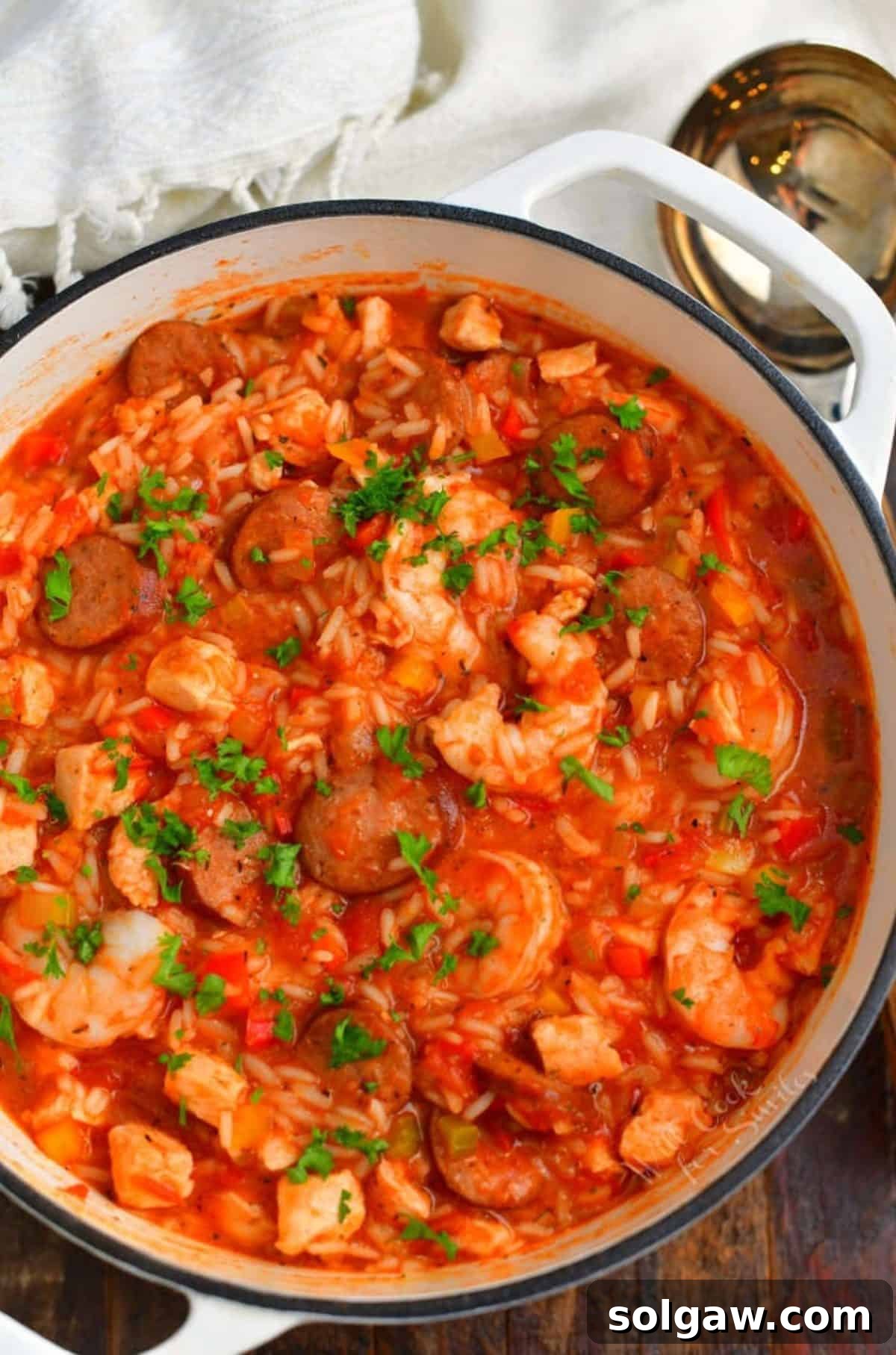
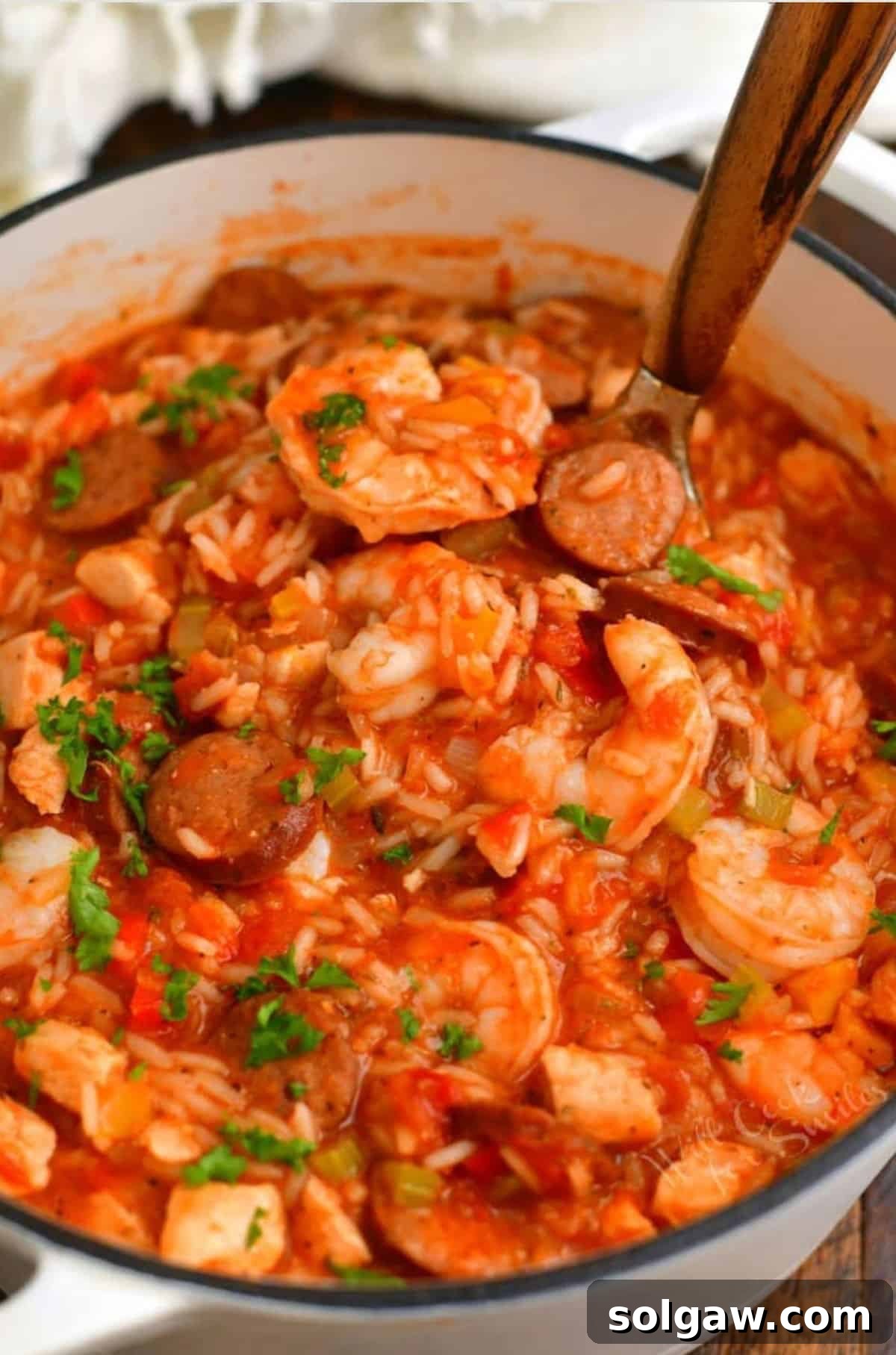
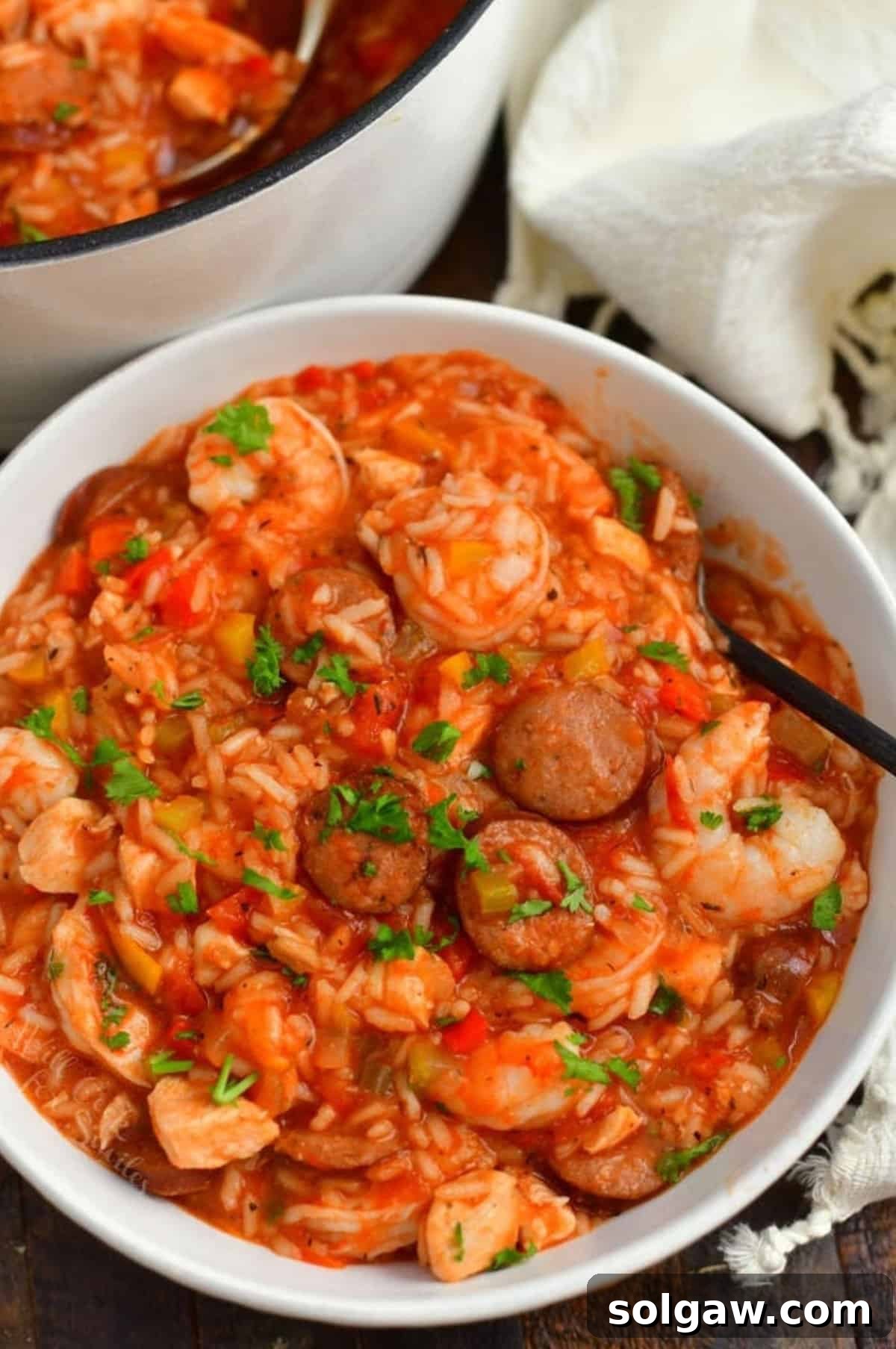
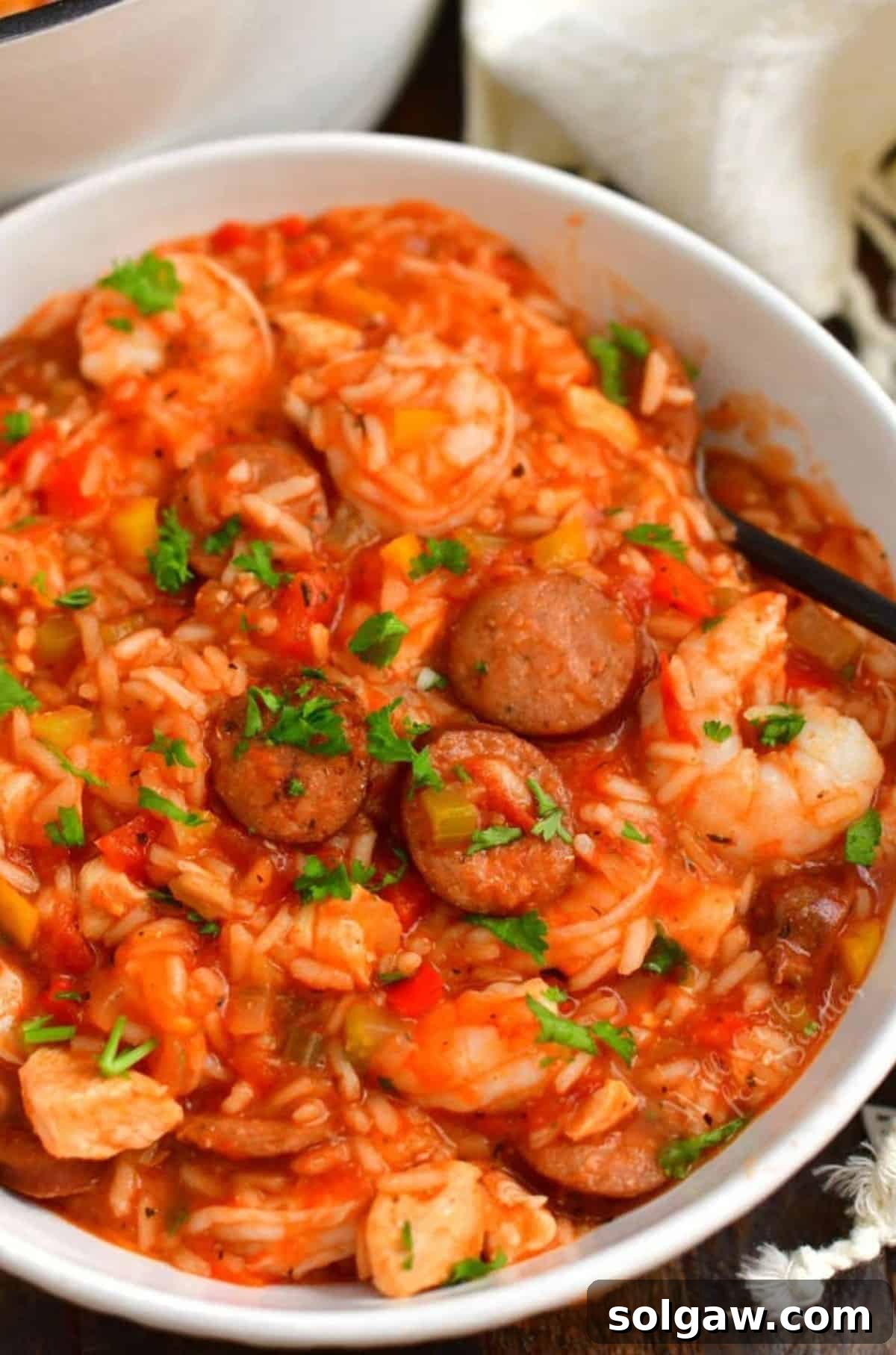
Welcome to the ultimate guide for crafting a truly authentic and incredibly flavorful Jambalaya recipe, a cornerstone of New Orleans cuisine. This iconic, spicy one-pot dish, brimming with succulent chicken, savory sausage, and plump shrimp, is more than just a meal; it’s a celebration of Louisiana’s rich culinary heritage. Each spoonful offers a harmonious blend of tender long-grain rice, aromatic vegetables, robust Cajun seasoning, a kick of hot sauce, and a luscious tomato broth. Prepare to embark on a culinary journey that brings the vibrant spirit of the bayou right into your kitchen with this easy-to-follow, homemade Jambalaya recipe.
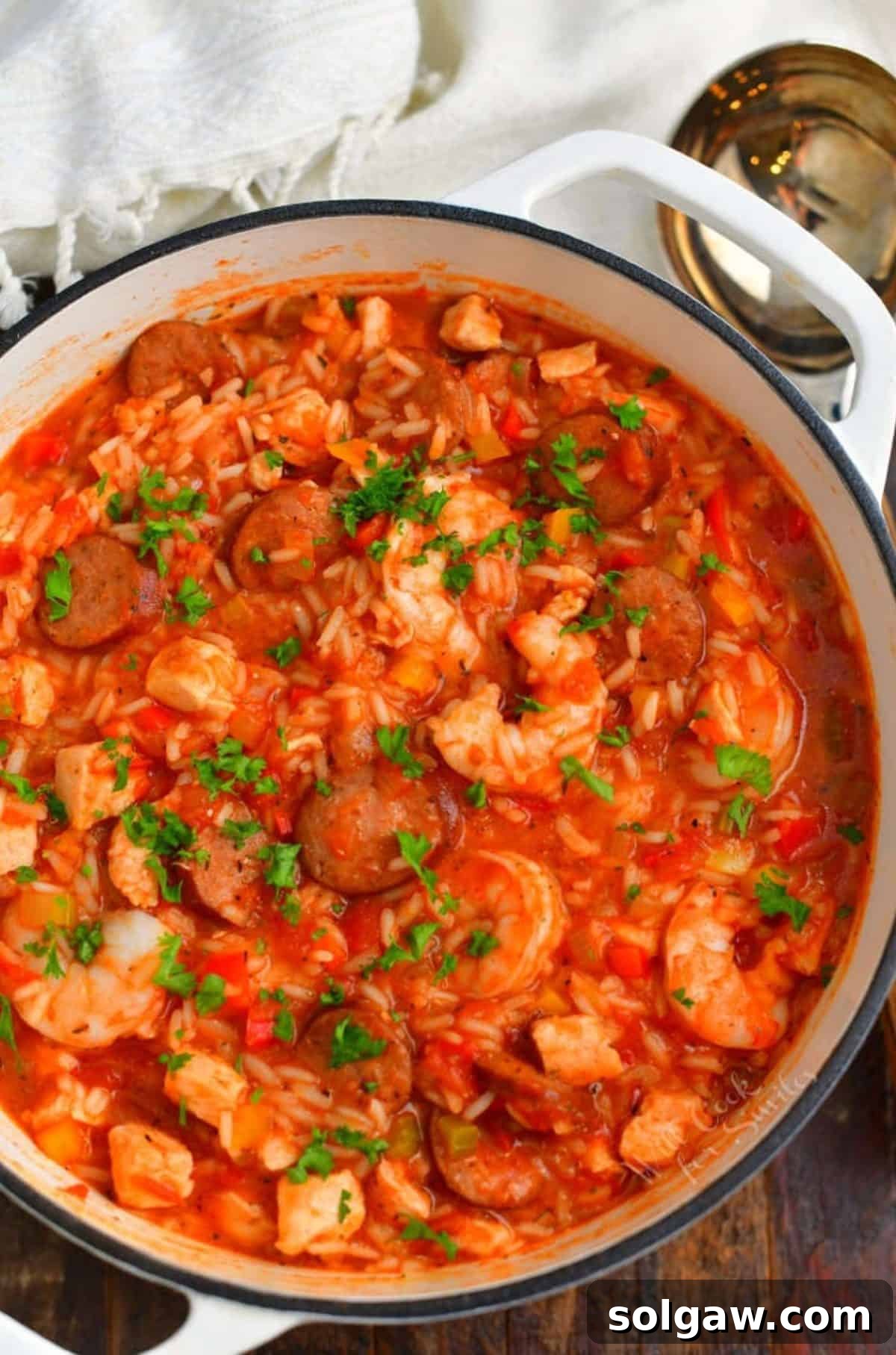
Table of Contents
- The Story of Jambalaya: A New Orleans Classic
- Key Ingredients for the Best Jambalaya
- How to Make Jambalaya: Step-by-Step
- Recipe FAQs: All Your Jambalaya Questions Answered
- Mastering the Spice Level in Your Jambalaya
- Storing and Reheating Instructions
- What to Serve with Jambalaya
- More Louisiana-Inspired Recipes To Try
The Story of Jambalaya: A New Orleans Classic
Jambalaya, a truly wonderful dish bursting with flavor, is a hearty and savory rice-based meal cooked in a single pot with a medley of vegetables and piquant Cajun seasonings. Its roots run deep in the vibrant culinary landscape of New Orleans, though the precise origins of its creation are somewhat shrouded in history. Many culinary historians agree that Jambalaya emerged from the necessity and creativity of Spanish settlers in Louisiana, who, lacking saffron for paella, adapted their traditional rice dishes using local ingredients and techniques. This fusion led to the development of two distinct styles: Creole Jambalaya, found more commonly in New Orleans, and Cajun Jambalaya, originating from the rural areas of Louisiana.
The cultural significance of Jambalaya goes beyond its delicious taste. It represents the rich tapestry of cultures that have influenced Louisiana, from African and French to Spanish and Native American. It’s a communal dish, often prepared in large batches for gatherings, festivals, and family celebrations, embodying the spirit of hospitality and conviviality inherent in Southern culture. Each family often has its own cherished rendition, passed down through generations, making every pot of Jambalaya a unique expression of heritage and flavor.
Key Ingredients for the Best Jambalaya
To truly capture the essence of this Louisiana classic, selecting the right ingredients is paramount. The most common and essential meats to include in a traditional Jambalaya are andouille sausage, tender chicken, and succulent shrimp. Andouille sausage is particularly crucial; it’s a smoky, spicy pork sausage that is a staple in both Creole and Cajun cooking. Its robust flavor and satisfying texture are indispensable for an authentic taste profile. If you’re sensitive to spice, don’t fret! You can easily substitute it with another high-quality smoked sausage that is less spicy or entirely mild, such as kielbasa or a mild smoked pork sausage, without sacrificing too much of the smoky depth.
No authentic Jambalaya is complete without the “Holy Trinity” of vegetables: diced onion, bell peppers (often green, but red or yellow can add sweetness), and celery. These three ingredients form the aromatic base of countless Cajun and Creole dishes, providing a foundation of flavor that is both fresh and deeply savory. Complementing this trinity are long-grain white rice, which absorbs all the delicious liquids and flavors; a generous amount of Cajun seasoning, a blend of spices like paprika, cayenne pepper, garlic powder, and onion powder; and a dash (or more!) of your favorite hot sauce. Embrace the vibrant flavors and spices, as they are central to the dish’s character. However, remember that you are the chef, so feel free to adjust the heat level to suit your palate.
How to Make Jambalaya: Step-by-Step
Creating a delicious pot of Jambalaya is a straightforward process, especially since it’s a one-pot meal. Follow these steps for a perfect outcome every time:
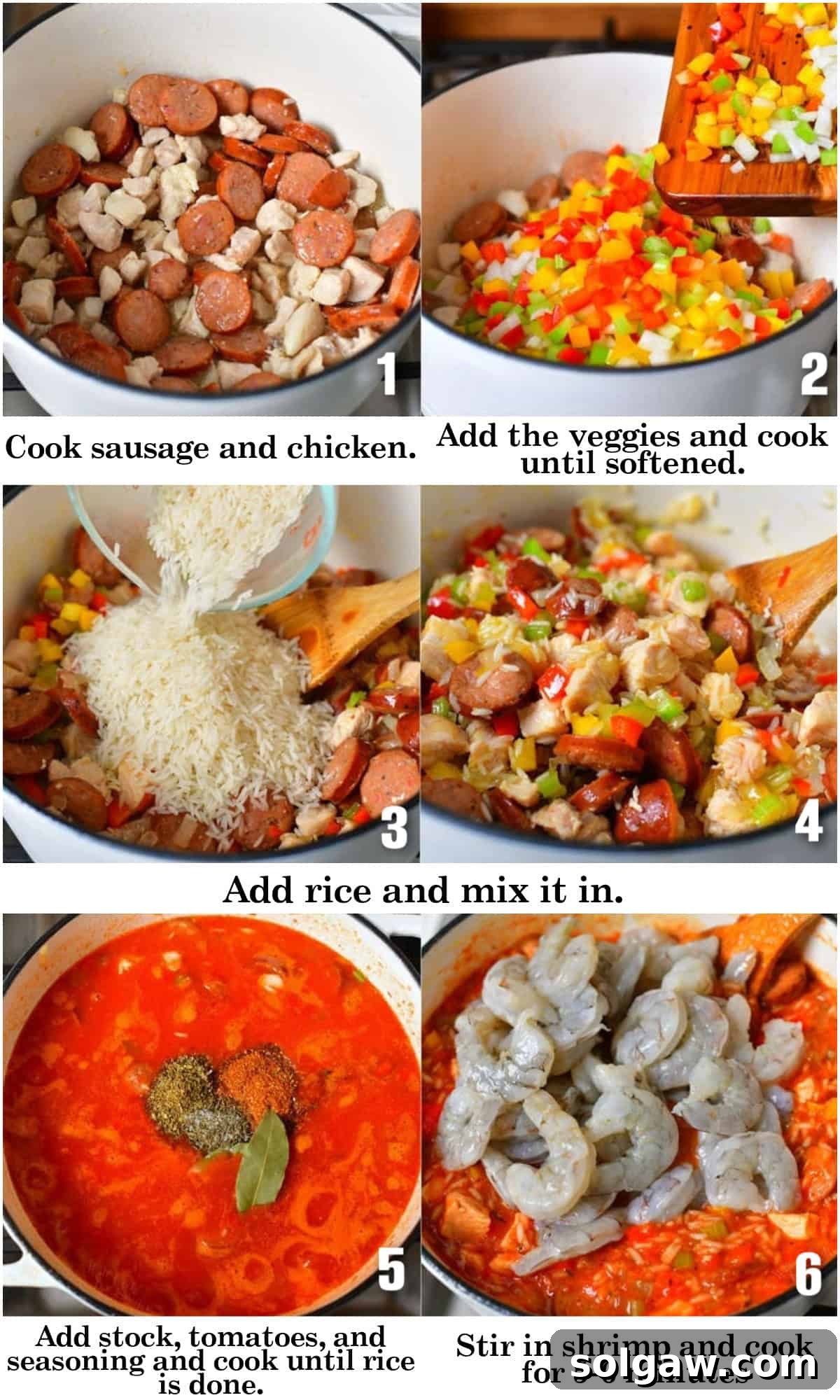
- Step 1: Sear the Meats – Begin by preheating a large Dutch oven or a heavy-bottomed pot over medium heat with a tablespoon or two of oil. Add your sliced andouille sausage and chicken pieces. Sear them until they are beautifully golden brown and caramelized. This crucial step is what builds the foundational flavor, creating rich fond at the bottom of the pot. If the pot gets too crowded, sear the meats in batches to ensure proper browning, then set them aside.
- Step 2: Sauté the Holy Trinity – Once the meats are browned, if you removed them, add a little more oil if needed. Then, add the diced onion, bell peppers, and celery to the pot. Sauté these “Holy Trinity” vegetables until they soften, typically 5-7 minutes. They will absorb the delicious browned bits from the meat, further enriching the flavor base.
- Step 3: Toast the Rice – Stir in the uncooked long-grain white rice with the softened vegetables. Cook for a couple more minutes, stirring constantly, to lightly toast the rice grains. This helps prevent the rice from becoming sticky and enhances its nutty flavor.
- Step 4: Build the Liquid Base – Pour in the chicken stock and crushed tomatoes. Add your Cajun seasoning, dried oregano, dried thyme, bay leaves, and salt. Stir everything thoroughly to combine, ensuring all ingredients are well distributed. Bring the mixture to a gentle simmer over medium-high heat.
- Step 5: Simmer to Perfection – Once the mixture is simmering, reduce the heat to low, cover the pot with a lid, and allow it to cook. It’s essential to let the rice absorb the liquid and become tender, which usually takes about 18-20 minutes. Leave a tiny crack in the lid for steam to escape to prevent excess pressure and ensure even cooking.
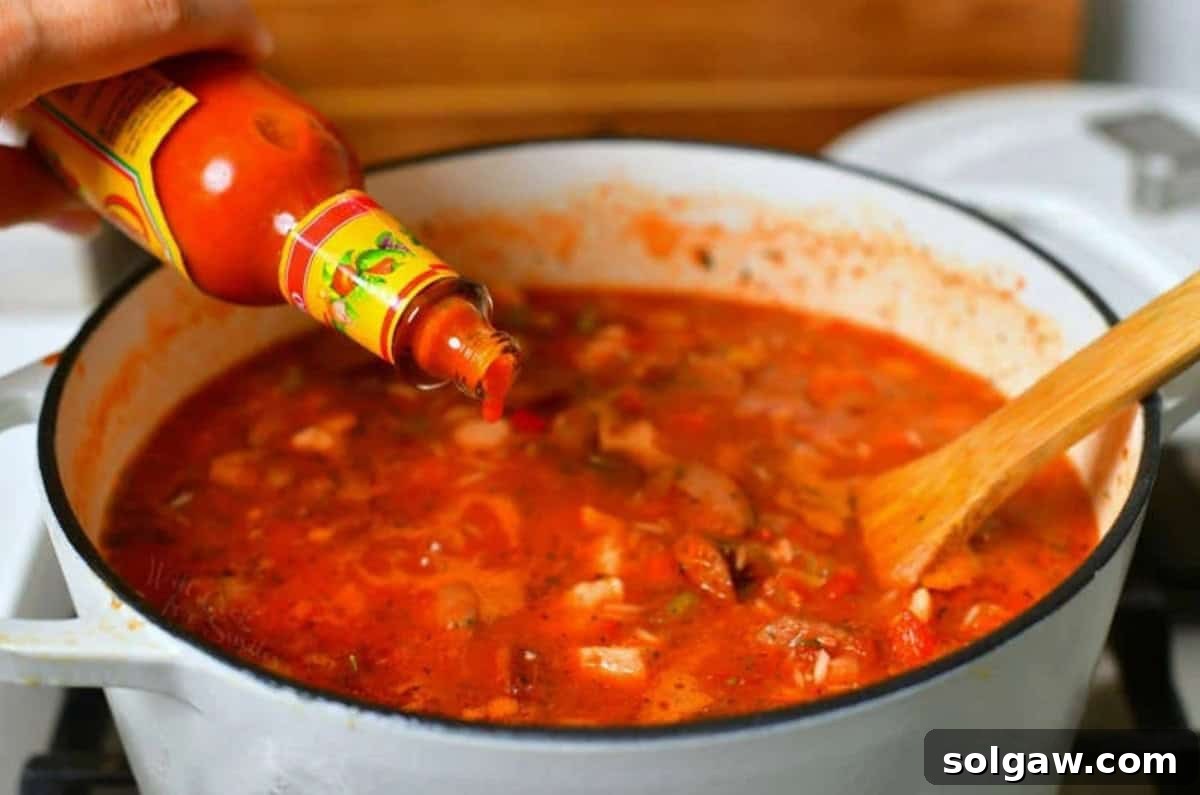
- Step 6: Adjust Spice and Add Shrimp – After the rice is tender, stir in a couple of dashes of hot sauce. Mix it in well and taste the Jambalaya. This is your chance to adjust the spice level to your preference – add more hot sauce if you desire an extra kick.
- Step 7: Cook the Shrimp – Finally, mix the raw shrimp directly into the hot Jambalaya. Cover the pot with the lid again and let it cook for approximately 5-6 minutes. The residual heat will perfectly cook the shrimp, turning them pink and opaque. Larger shrimp might take slightly longer, while smaller ones will cook faster.
- Step 8: Garnish and Serve – Before serving, garnish your delicious homemade Jambalaya with a sprinkle of fresh chopped parsley. This adds a touch of freshness and vibrant color to the hearty dish.
Recipe FAQs: All Your Jambalaya Questions Answered
Understanding the distinction between these two beloved Louisiana styles is key to appreciating Jambalaya’s diversity:
Creole Jambalaya: Often referred to as “red Jambalaya,” this style is characteristic of New Orleans and typically includes tomatoes or a tomato-based broth, giving it a reddish hue. The cooking process often begins by sautéing the “Holy Trinity” (onion, celery, bell peppers) first, then adding the meats, followed by the rice, tomatoes, broth, and seasonings. Everything then simmers together until the rice is perfectly cooked. Creole cuisine, with its French, Spanish, and African influences, is generally more refined and urban, often incorporating richer stocks and a wider variety of ingredients.
Cajun Jambalaya: Also known as “brown Jambalaya,” this style originates from the more rural, swampy regions of Louisiana. It typically omits tomatoes, giving it a browner tint derived from the initial searing and caramelization of the meats. The process usually starts by browning the sausage and chicken first, creating a deep fond (caramelized bits) at the bottom of the pot, which adds immense flavor to the entire dish. Vegetables are then added to scrape up these flavorful bits. Cajun cuisine is often described as more rustic and utilizes ingredients readily available in the countryside, focusing on hearty, robust flavors.
Personally, I enjoy a delightful combination of both styles. The rich meat-browning process from Cajun tradition adds profound depth of flavor, while the addition of tomatoes, a hallmark of Creole Jambalaya, helps to meld all the complex flavors together into a cohesive and incredibly satisfying dish.
While both Jambalaya and Gumbo are quintessential Louisiana dishes, they differ significantly in their consistency and preparation methods:
Gumbo: Gumbo is fundamentally a thick, savory soup or stew. It almost always begins with a roux (a mixture of fat and flour cooked until it reaches a desired color and nutty flavor), which serves as a thickener and flavor base. Gumbo typically contains a rich stock, the “Holy Trinity,” and various meats (chicken, sausage, seafood) or vegetables. The rice in gumbo is usually cooked separately and served either alongside the soup or directly in the bowl, absorbing the flavorful broth. Gumbo’s texture is much looser and saucier, meant to be eaten with a spoon.
Jambalaya: In contrast, Jambalaya is more of a stew-like rice casserole. The rice is cooked directly with all the other ingredients in the same pot, absorbing all the liquids and flavors as it cooks. The result is a much drier, cohesive dish where the rice is fully integrated with the meats and vegetables, rather than serving as a separate accompaniment. While both dishes share many common ingredients and a spicy kick, their overall structure and eating experience are quite distinct.
Mastering the Spice Level in Your Jambalaya
One of the beauties of making Jambalaya at home is the ability to perfectly tailor its spice level to your personal preference. You have two primary control points for adjusting the heat: your choice of sausage and the amount of hot sauce you add.
- Sausage Selection: As mentioned, Andouille sausage is the traditional choice and naturally carries a significant kick. Its distinct smokiness and peppery heat are integral to authentic Cajun and Creole flavors. However, if you or your dining companions prefer a milder experience, don’t hesitate to substitute it with a less spicy or even mild smoked pork sausage. Brands like kielbasa or other smoked sausages offer a similar texture and smoky essence without the intense heat, allowing the other flavors to shine through more gently.
- Hot Sauce Customization: Hot sauce is another authentic touch and your ultimate tool for controlling the heat. Start with the recommended 2-4 dashes, then taste and add more incrementally until you reach your desired level of spiciness. Popular choices like Tabasco or Louisiana hot sauce offer a sharp, vinegary heat, while others like Crystal or Frank’s RedHot provide a slightly milder, more rounded spice. For a milder dish, you can even omit the hot sauce entirely, relying solely on the inherent spice from the Cajun seasoning and andouille sausage (if used). Always remember to taste as you go to ensure a perfectly balanced flavor and heat profile.
Storing and Reheating Instructions
Jambalaya is often just as delicious, if not more so, the next day, as the flavors have more time to meld and deepen. Proper storage and reheating are key to enjoying your leftovers safely and deliciously.
- Storing: To maintain freshness and prevent bacterial growth, ensure any leftover Jambalaya is cooled to room temperature within two hours of cooking. Once cooled, transfer it to an airtight food storage container. You can even store it in the original cooking pot if it has a tight-fitting lid. Properly stored in the refrigerator, Jambalaya will remain fresh and safe to eat for up to 4 days. For longer storage, you can freeze Jambalaya in airtight containers or heavy-duty freezer bags for up to 3 months. Thaw overnight in the refrigerator before reheating.
- Reheating: Jambalaya reheats beautifully. While the rice may become slightly softer as it continues to absorb liquid, the robust flavors will remain intact and often even more pronounced.
- Microwave: For individual portions, transfer the desired amount to a microwave-safe dish. Add a splash of chicken stock or water (about a tablespoon per cup of Jambalaya) to rehydrate the rice. Cover and microwave on high for 1-2 minutes, stirring halfway through, until thoroughly heated.
- Stovetop: To reheat a larger batch, transfer it to a pot or Dutch oven and place it over medium-low heat on the stove. Add a bit more chicken stock or water as needed, especially if the rice appears dry. Cover the pot with a lid and stir occasionally to prevent sticking and ensure even heating. Continue cooking until the Jambalaya is piping hot throughout. Adding extra liquid helps to restore moisture and prevents the rice from drying out during reheating.
What to Serve with Jambalaya
Jambalaya is a complete meal in itself, packed with protein, vegetables, and carbohydrates. However, if you’re looking to round out your feast, here are some excellent pairings that complement its rich flavors:
- Cornbread: A classic Southern accompaniment, warm cornbread (especially skillet cornbread) is perfect for soaking up any lingering juices and adds a comforting texture contrast.
- Green Salad: A simple, crisp green salad with a light vinaigrette offers a refreshing counterpoint to the rich, spicy flavors of Jambalaya.
- Crusty French Bread: Like cornbread, a fresh baguette or other crusty bread is ideal for scooping up every last bit of deliciousness from your plate.
- Collard Greens or Braised Greens: Southern-style greens, cooked until tender with a smoky ham hock or bacon, provide a traditional and flavorful side.
- Fried Okra: For another taste of the South, crispy fried okra adds a unique texture and savory element.
- Sweet Potato Fries: The subtle sweetness of sweet potato fries can offer a delightful balance to the spicy kick of the Jambalaya.
More Louisiana-Inspired Recipes To Try
If you loved this Jambalaya, you’re sure to enjoy these other vibrant Louisiana-inspired dishes:
- Smoked Sausage and Shrimp Jambalaya with Quinoa
- Cajun Grilled Shrimp
- Cajun Shrimp & Rice
- Cajun Shrimp Dip
- Cajun Shrimp and Grits
DID YOU MAKE THIS RECIPE? Please leave a 🌟 star rating! Let me know how you liked it by leaving a 📝 comment below or share and tag me on social media @willcookforsmiles. DON’T FORGET to subscribe to my newsletter!
Jambalaya Recipe
Print
Pin
Video
Rate
Ingredients
- 2 tbsp canola oil or avocado oil, olive oil, or vegetable oil
- 1 lb chicken thigh or breast meat, cut into 1-inch pieces
- 12-14 oz andouille sausage, sliced into 1/2-inch rounds
- 1 yellow onion, diced
- 2 bell peppers (any color), diced
- 2 celery ribs, diced
- 1 cup uncooked long grain white rice
- 28 oz can fire roasted crushed tomatoes
- 1 1/2 cups chicken stock
- 2 tsp Cajun seasoning
- 2 tsp dried oregano
- 1/2 tsp dried thyme
- 1 tsp salt more or less to taste
- 2 bay leaves
- 2-4 dashes hot sauce (such as Tabasco or Louisiana Hot Sauce)
- 1 lb raw shrimp, peeled and deveined
- fresh parsley for garnish, chopped
Instructions
-
Preheat a large Dutch oven or heavy-bottomed pot (ensure it’s large enough for all ingredients) over medium heat and add 2 tablespoons of oil.
-
Add the sliced andouille sausage and chicken pieces. Sear them until they are deeply browned and caramelized on all sides. This browning creates a rich fond (flavorful browned bits) at the bottom of the pot. If your pot is too crowded, sear the meat in two batches to ensure proper caramelization, then set the seared meats aside temporarily.
-
If you removed the meat, add it back to the pot along with the diced onion, bell peppers, and celery. Stir and cook for 5-7 minutes, scraping up any browned bits from the bottom of the pot, until the vegetables have softened and become aromatic.
-
Stir in the uncooked long-grain rice and continue to cook for 2-3 minutes, stirring occasionally, allowing the rice to lightly toast. This step helps the rice cook more evenly and prevents it from becoming mushy.
-
Pour in the chicken stock and crushed tomatoes. Add the Cajun seasoning, dried oregano, dried thyme, bay leaves, and salt. Stir everything thoroughly to ensure all ingredients are well combined and the spices are evenly distributed. Bring the mixture to a vigorous simmer over medium-high heat.
-
Once it begins to simmer, reduce the heat to low, cover the pot tightly with a lid, and cook for 18-20 minutes, or just until the rice is tender and most of the liquid has been absorbed. It’s helpful to leave a tiny crack in the lid to allow some steam to escape, which helps prevent overcooking and promotes perfectly fluffy rice.
-
Stir in 2-4 dashes of hot sauce, mixing it in well. Taste the Jambalaya and add more hot sauce if you prefer a spicier kick. NOTE: Remember that andouille sausage is already spicy, so when you bite into it, you’ll experience that heat!
-
Gently fold the raw, peeled, and deveined shrimp into the Jambalaya. Cover the pot again with the lid and cook for approximately 5-6 minutes, or until the shrimp are pink and opaque. The exact cooking time will vary slightly depending on the size of your shrimp.
-
Remove the bay leaves. Garnish the finished Jambalaya with a sprinkle of fresh chopped parsley just before serving for a burst of color and freshness. Enjoy your homemade, authentic Jambalaya!
Video
Notes
- Storing: Make sure to store any leftovers in the refrigerator. You can use the same pot it was cooked in or transfer it into another air-tight food storage container. Make sure to cool jambalaya to room temperature first. Properly stored, it will be good for up to 4 days. Alternatively, freeze in an airtight container for up to 3 months.
- Reheating: Jambalaya is good reheated too. Rice will be softer because it tends to absorb a lot of liquid, but the flavors will still be there. You can reheat individual portions in the microwave (add a splash of stock/water, cover, and heat until warm) or reheat the whole pot on the stove, over medium-low heat. When reheating on the stove, cover the pot with the lid and stir from time to time. If the rice absorbed too much liquid and seems dry, you can add a little more chicken stock while reheating to restore moisture.
Nutrition
Originally published on Will Cook For Smiles in August 2020.