Classic Coq au Vin: An Authentic French Chicken Stew Recipe
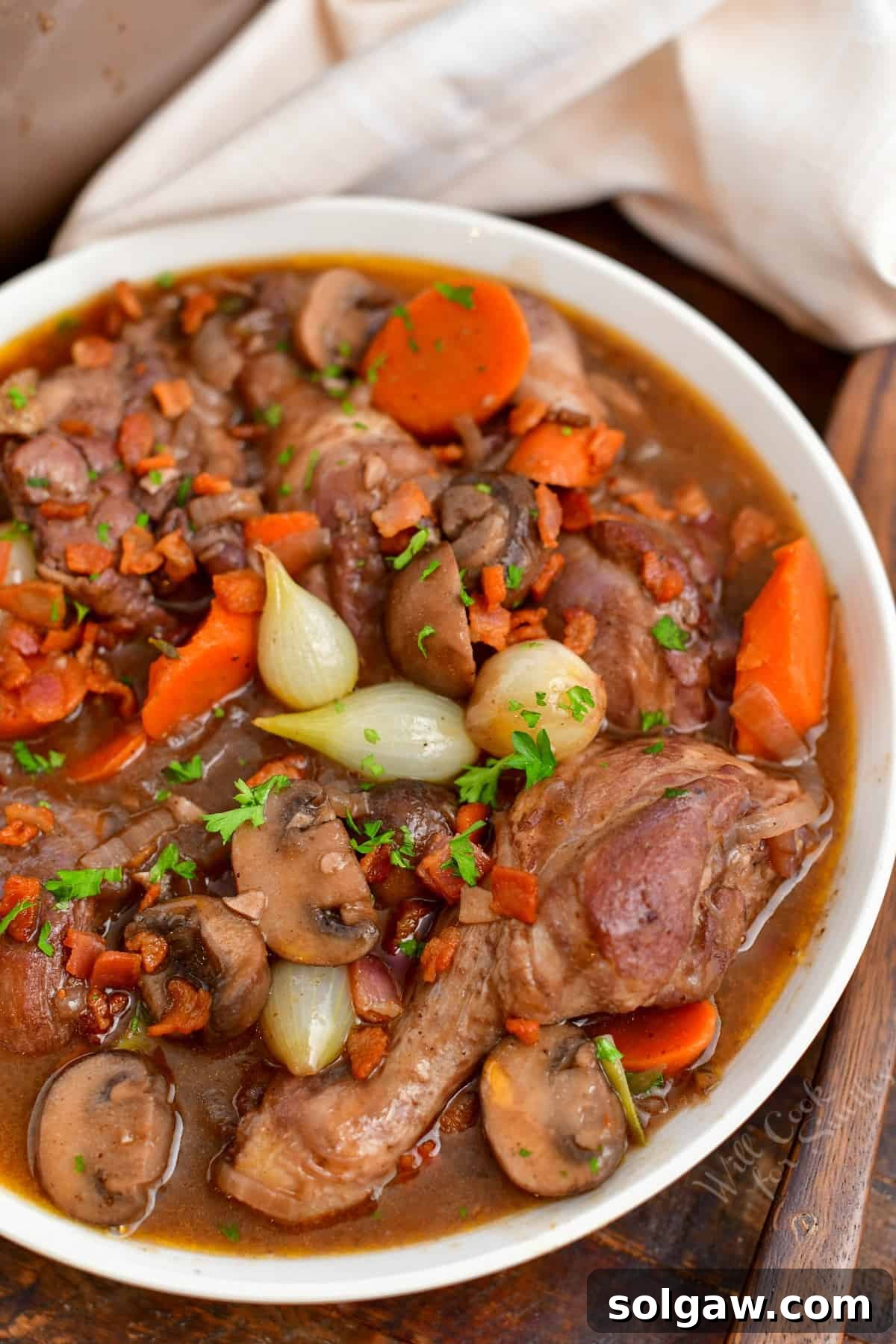
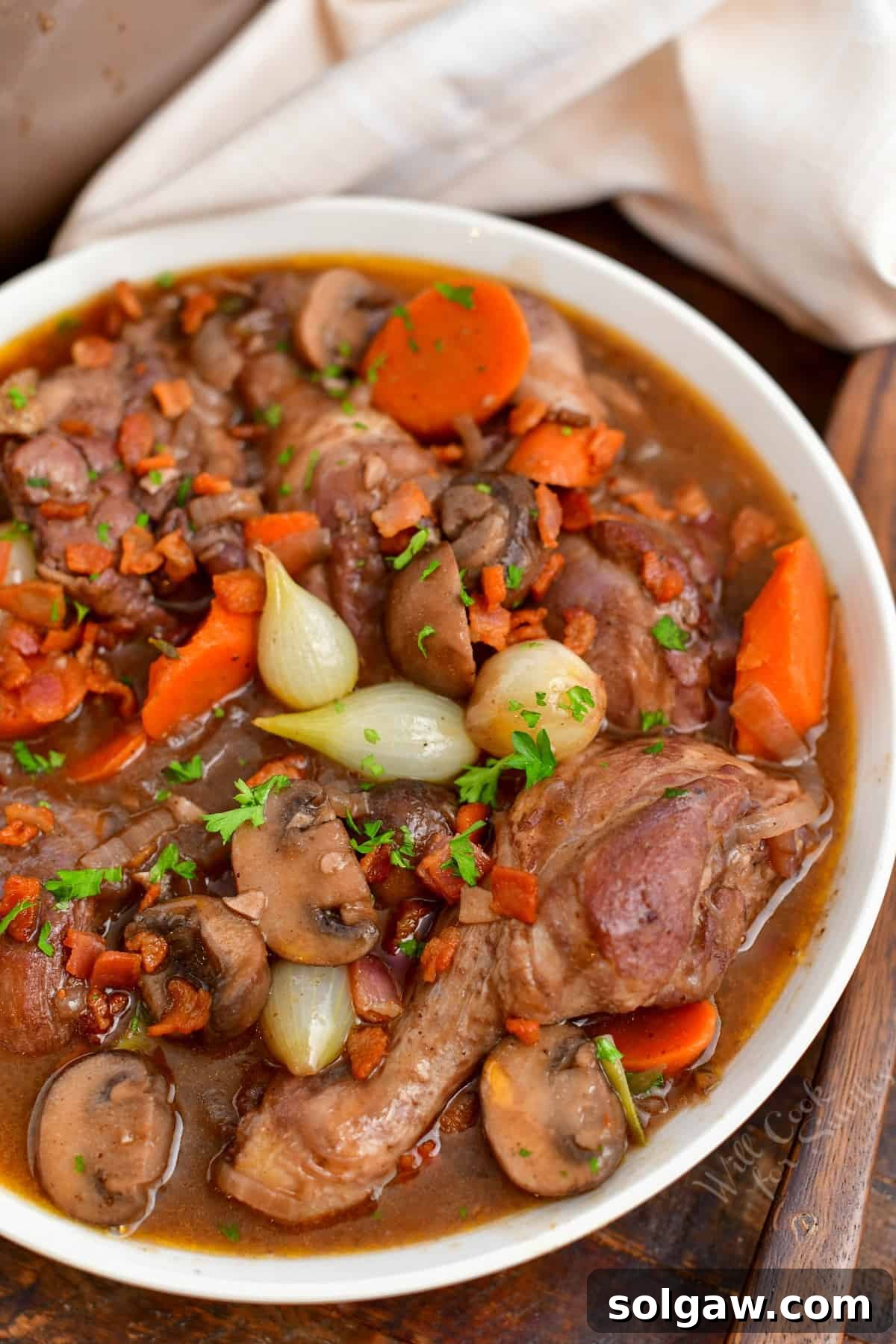
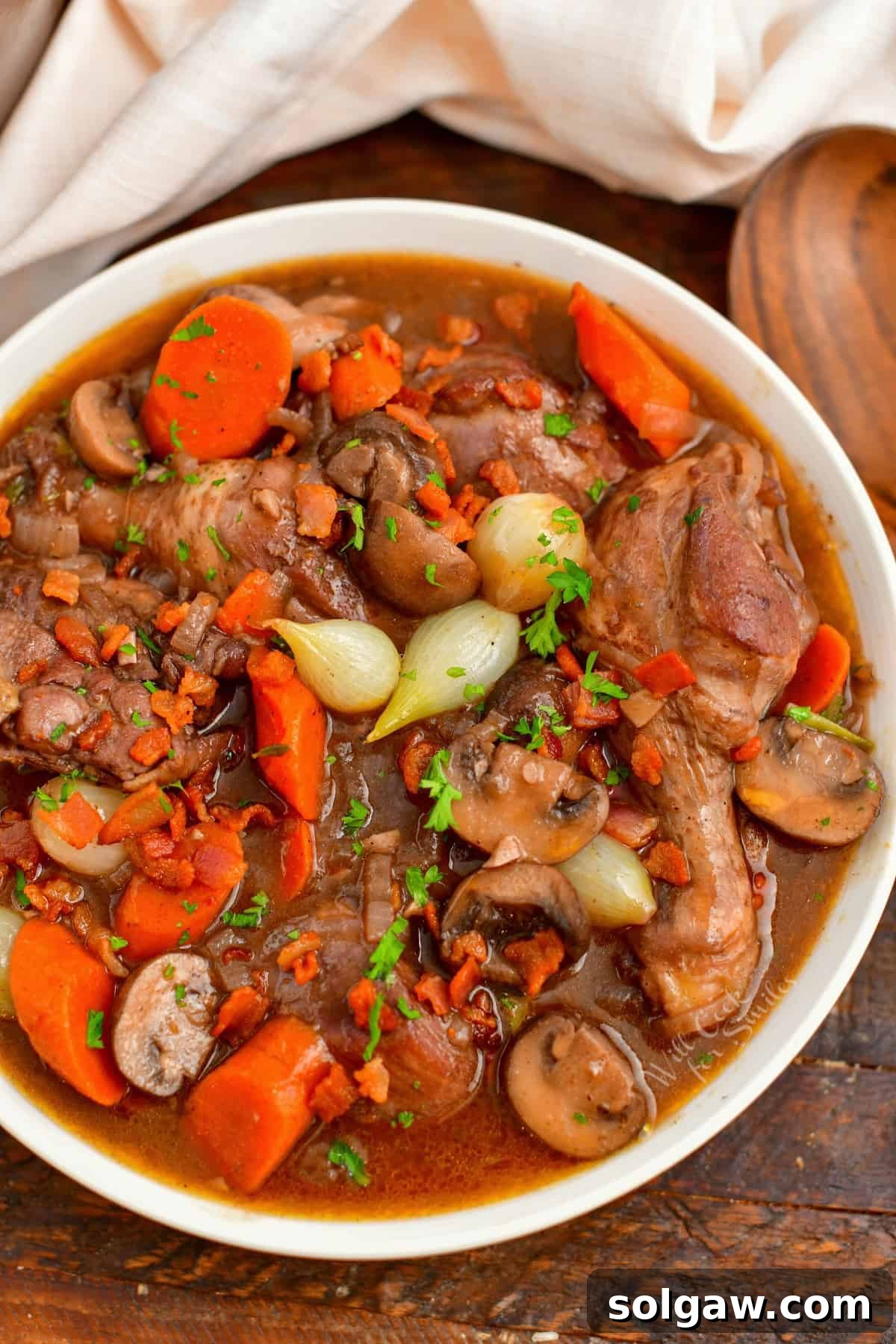
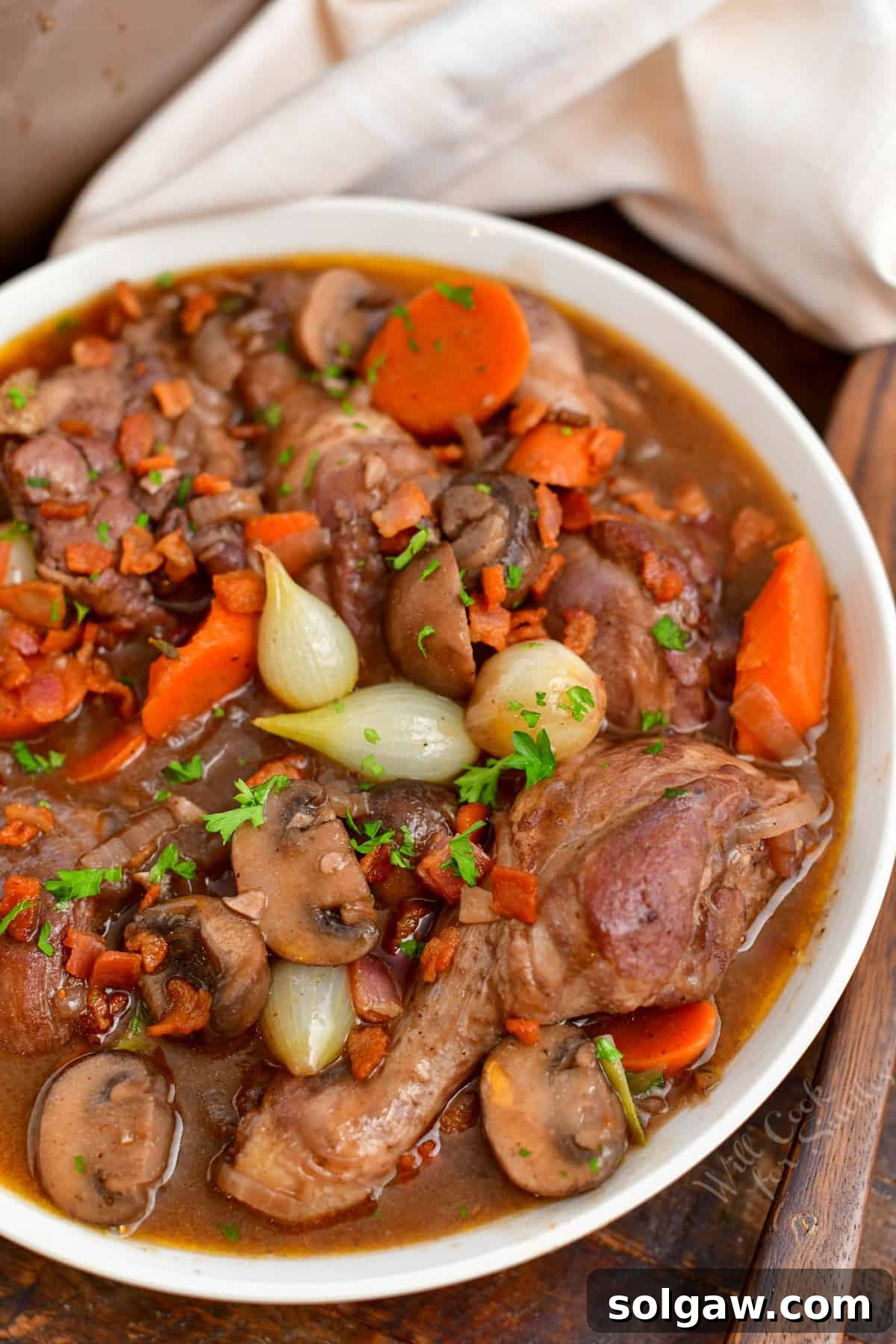
Step into the heart of French culinary tradition with Coq au Vin, an exquisite and deeply flavorful stew that has graced tables for centuries. This iconic dish translates literally to “rooster in wine,” a nod to its humble origins, though today it’s most commonly prepared with tender chicken. Our rendition elevates this classic, combining succulent braised chicken pieces, aromatic mirepoix, earthy mushrooms, sweet pearl onions, and fresh herbs, all simmered to perfection in a luxuriant red wine sauce. The addition of smoky bacon not only infuses the stew with an incredible depth of flavor but also provides delightful crispy bits for an irresistible garnish, truly sending it over the top!
If you savor the rich flavors of French-inspired cooking, you might also enjoy our recipes for Creamy Chicken Fricassee and hearty Beef Short Ribs in Red Wine Sauce. These dishes share the same spirit of slow-cooked perfection and profound taste that defines French gastronomy.
Creating this magnificent dish involves a symphony of flavors that come together in perfect harmony. Each step in the preparation of Coq au Vin is crucial, building layers of savory goodness that culminate in a truly unforgettable meal. Understanding and executing these key techniques will ensure a deeply satisfying and authentic experience.
One fundamental technique is the meticulous searing of the chicken in rich fat. Traditionally, lard was employed, but the rendered fat from bacon not only serves the same purpose beautifully but also infuses the chicken with an irresistible smoky undertone. This initial browning is vital for developing the foundational flavors of the stew. Equally important is the step of marinating the chicken in wine, which tenderizes the meat and allows it to absorb the complex notes of the Burgundy or Pinot Noir.
Furthermore, the methodical process of sautéing the vegetables in layers until they achieve a golden hue establishes the aromatic bedrock for your sumptuous sauce. Every action, from crisping the bacon to deglazing the pan with cognac, contributes significantly to the overall depth and complexity of the final Coq au Vin. Do not be tempted to skip these essential stages, as they are the very soul of this beloved French classic!
What is Coq au Vin? Unraveling the French Classic
The name “Coq au Vin” literally translates from French as “rooster in wine.” Historically, this rustic French chicken stew was indeed prepared using older, tougher roosters, which necessitated a lengthy braising period in acidic wine to tenderize the meat. This tradition has evolved, and today, most Coq au Vin recipes utilize younger, more readily available chicken, typically dark meat cuts like thighs and drumsticks, which still benefit immensely from the slow cooking in a rich wine-based sauce.
The core components of an authentic Coq au Vin are simple yet profound: premium chicken (often bone-in for maximum flavor), rendered bacon fat (or lard, traditionally), a high-quality dry red wine (such as Burgundy or Pinot Noir), and a vibrant medley of vegetables including carrots, onions, mushrooms, and pearl onions. The stew is often finished with fresh herbs like thyme and parsley, and crucially, a beurre manié to achieve its signature velvety texture.
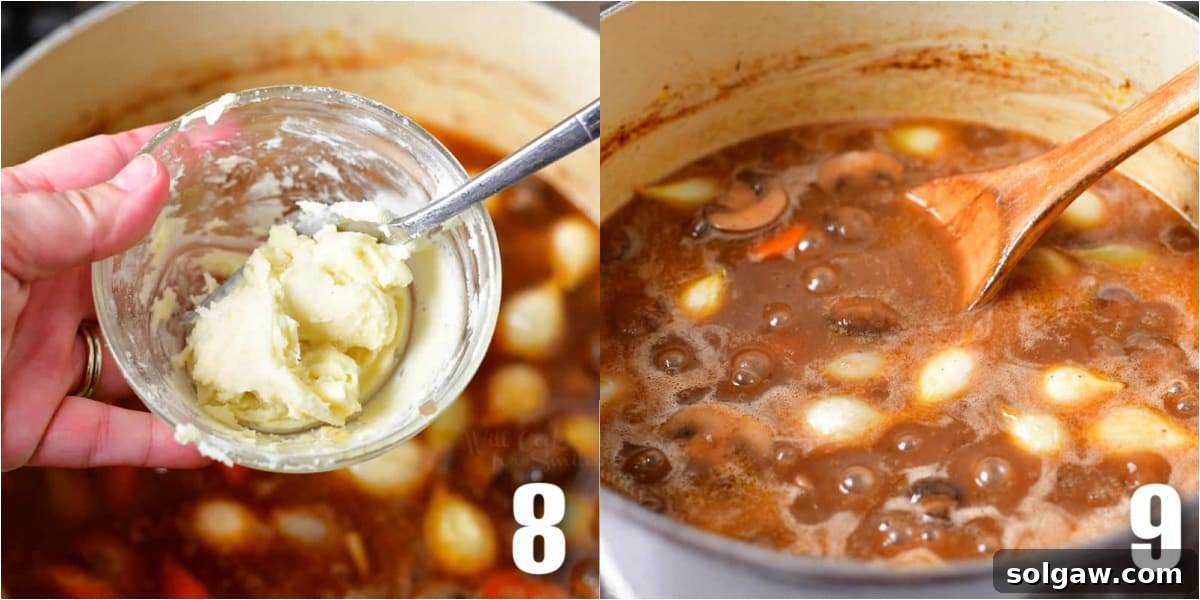
Beurre manié, a culinary secret weapon, is a thickening agent akin to a roux but prepared distinctly. Instead of cooking flour and butter over heat, beurre manié is made by simply mashing equal parts softened butter and all-purpose flour together in a bowl with a fork until a smooth paste forms. Once this mixture is achieved, it is gently stirred into the warm simmering sauce, allowing the flour to disperse and thicken the liquid without forming lumps. This method provides a luscious, silken finish to the sauce, ensuring every spoonful is rich and comforting.
Beyond its ingredients, Coq au Vin is a celebration of slow cooking, allowing flavors to meld and deepen over time. It embodies the essence of French comfort food, transforming simple ingredients into a sophisticated and satisfying meal perfect for chilly evenings or special gatherings. It’s a dish that rewards patience and attention to detail, promising a culinary journey to the French countryside with every bite.
Ingredient Spotlight: Crafting Your Coq au Vin
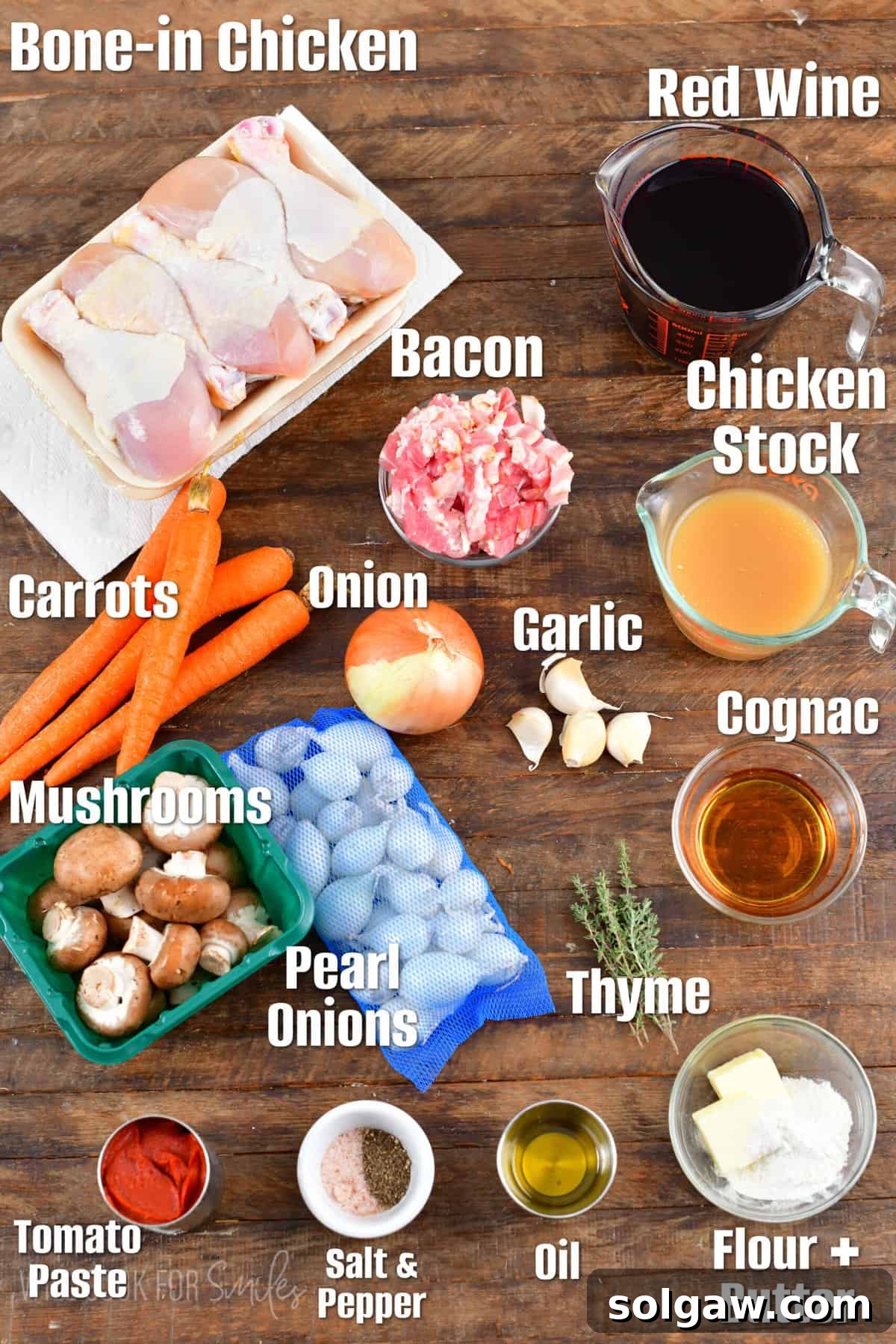
Each ingredient plays a vital role in creating the harmonious flavors of Coq au Vin. Selecting fresh, high-quality components is the first step towards an unforgettable dish.
- Chicken: While a whole chicken is the traditional choice, allowing for a mix of dark and white meat, I personally favor sticking to the dark meat exclusively—specifically bone-in chicken thighs and drumsticks. Dark meat offers superior flavor and a more forgiving texture, ensuring it remains tender throughout the lengthy braising process without drying out, a common issue with white meat. If you do opt for a whole bird, consider learning how to break down a whole chicken yourself for optimal results.
- Wine: The choice of wine is paramount, as it forms the very soul of this stew. Historically, Burgundy wines were the original choice, and they continue to be an excellent option for their robust, earthy notes. However, a good quality Pinot Noir makes for a superb and widely accessible substitution, lending beautiful fruit and spice characteristics without overwhelming the dish. Remember the golden rule: if you wouldn’t drink it, don’t cook with it! Avoid anything labeled “cooking wine” or overly sweet varieties, as their flavors will concentrate and detract from the dish.
- Stock: A small amount of chicken stock helps to mellow the intensity of the wine, creating a more balanced and rounded sauce. I often prepare a large batch of homemade chicken stock to keep on hand for recipes like this, but a good quality, low-sodium store-bought chicken stock will work perfectly well if time is a factor.
- Vegetables: The foundation of flavor begins with mirepoix, a classic French aromatic base of onions and carrots. While celery is traditionally part of mirepoix, I often omit it in my Coq au Vin to allow other flavors to shine, but you are absolutely welcome to include it. Beyond the mirepoix, essential vegetables include savory mushrooms (baby bellas or cremini are excellent choices) and delicate pearl onions, which add a subtle sweetness and charming texture.
- Bacon: Bacon is indispensable for this recipe. It provides the initial fat for searing the chicken and vegetables, imparting a deep, smoky flavor into the entire stew. Be sure to crisp your bacon thoroughly and save the rendered bits—they make a fantastic crunchy garnish to sprinkle over the finished Coq au Vin, adding both texture and an extra layer of savory taste.
- Cognac: A splash of Cognac (or good quality brandy) is added during the deglazing process. This step is not just for theatrics; it significantly elevates the dish by intensifying the rich aromas and adding a layer of complex, slightly sweet, and fruity notes to the sauce. It truly brings a gourmet touch to the stew.
- Herbs: Fresh thyme and parsley are the quintessential herbs for Coq au Vin. Thyme sprigs are added during the braising process, infusing the sauce with its earthy, peppery notes, while fresh chopped parsley is sprinkled at the end, providing a bright, fresh counterpoint and visual appeal.
- Beurre Manié: This simple mixture of equal parts softened butter and flour is crucial for achieving the desired velvety consistency of the rich wine sauce at the end of cooking. It thickens the sauce without needing to cook off excess liquid, ensuring a perfect balance of flavors.
For precise measurements and detailed instructions, please refer to the comprehensive recipe card below.
Mastering Coq Au Vin: A Step-by-Step Guide
PRO TIP: Efficiency is key in the kitchen, especially with a layered dish like Coq au Vin. Embrace mise en place by having all your ingredients chopped, measured, and ready in advance. Begin by marinating the chicken for at least 30 minutes; this crucial step can happen while you prepare the rest of your ingredients, ensuring a smooth and enjoyable cooking process.
1. Prepare and Marinate the Chicken
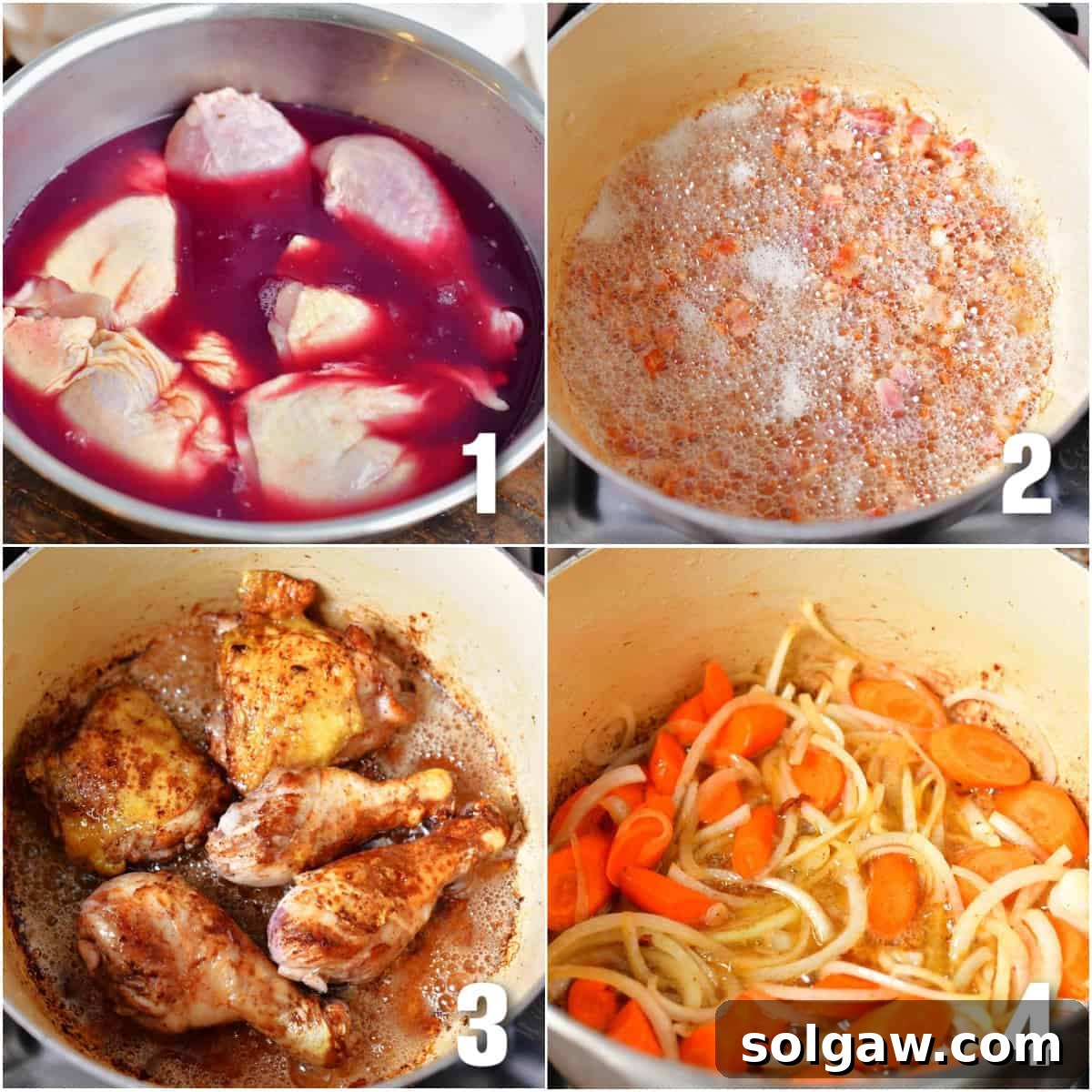
If using a whole chicken, begin by breaking it down into individual pieces, separating dark meat (thighs and drumsticks) from white meat if desired. In a large, non-reactive bowl (glass or stainless steel is ideal to prevent metallic flavors), combine the red wine and chicken stock. Gently nestle the chicken pieces into this mixture, ensuring they are mostly submerged (or turn them halfway through if not fully covered). Allow the chicken to marinate for a minimum of 30 minutes at room temperature, or up to 2 hours in the refrigerator for deeper flavor. After marinating, carefully remove the chicken, allowing any excess wine mixture to drip back into the bowl; reserve this flavorful liquid for later use in the sauce.
2. Render Bacon and Sear Chicken
Preheat a large Dutch oven or heavy-bottomed pot over medium-high heat. Add the diced bacon and cook until it is beautifully crispy and most of its fat has rendered. Using a slotted spoon, carefully remove the crispy bacon bits from the pot and set them aside to use as a garnish later. Leave the rendered bacon fat in the pot—this will be your flavor base!
Pat the marinated chicken pieces thoroughly dry with paper towels. This step is critical for achieving a golden-brown, crispy skin. Season the chicken generously with salt and freshly cracked black pepper on all sides. Working in batches to avoid overcrowding the pot (which would steam the chicken instead of searing it), sear the chicken pieces in the hot bacon fat. Start skin-side down and cook for 3-5 minutes until deeply golden, then flip and sear the other sides for another 3-4 minutes. Transfer the seared chicken to a clean plate and set aside.
3. Sauté the Aromatic Vegetables
In the same Dutch oven, with the remaining bacon fat, add the sliced yellow onion and chopped carrots. Sauté over medium heat, stirring occasionally, until they begin to soften and turn golden brown. Resist the urge to stir constantly, allowing the vegetables to develop a rich color and caramelization. Next, add the mushrooms and continue to sauté until they release their moisture and also begin to brown, approximately 5-7 minutes. Create a small well in the center of the vegetables, add the minced garlic, and cook for just 30-60 seconds until fragrant—be careful not to burn it.
Deglaze the pan by pouring in the Cognac (or brandy). Use a wooden spoon to scrape up any browned bits (fond) from the bottom of the pot. These bits are packed with flavor and are essential for a rich sauce. Allow the Cognac to simmer for a minute or two until slightly reduced.
4. Braise the Coq au Vin
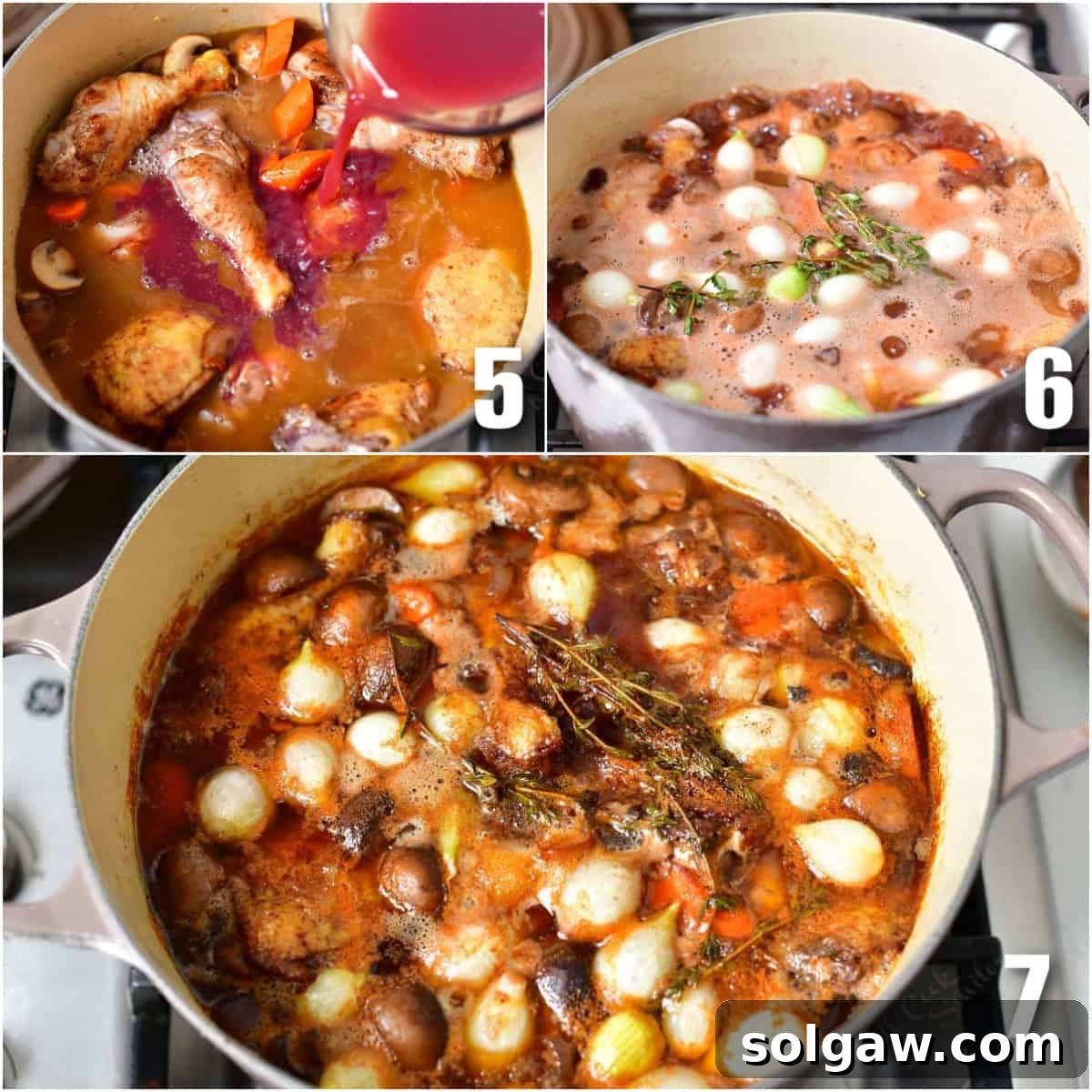
Return the seared chicken pieces to the Dutch oven, nestling them among the sautéed vegetables. Whisk the tomato paste into the reserved wine and chicken stock mixture until fully incorporated, then pour this flavorful liquid over the chicken and vegetables in the pot. Add the pearl onions and fresh thyme sprigs. Stir gently to combine all ingredients, then bring the mixture to a gentle simmer over medium heat. Let it simmer for 10-15 minutes, allowing the flavors to meld and the alcohol to cook off slightly.
Reduce the heat to low, cover the Dutch oven with its lid, leaving a small crack to allow steam to escape. Allow the Coq au Vin to gently simmer and braise for approximately 1 hour, or until the chicken is fork-tender and easily pulls away from the bone. Once cooked, carefully remove the chicken from the pot and set it aside on a clean plate. Discard the spent thyme sprigs from the sauce.
5. Thicken the Sauce and Finish
While the chicken rests, prepare the beurre manié. In a small bowl, combine the softened unsalted butter and all-purpose flour. Using a fork, mash and blend the two ingredients thoroughly until a smooth, uniform paste is formed (this should take about a minute). Raise the heat under the Dutch oven to medium. Gradually stir the beurre manié into the simmering sauce in the pot, whisking continuously until it is completely incorporated. Allow the sauce to simmer for another few minutes, stirring occasionally, until it visibly thickens to a rich, glossy consistency that coats the back of a spoon.
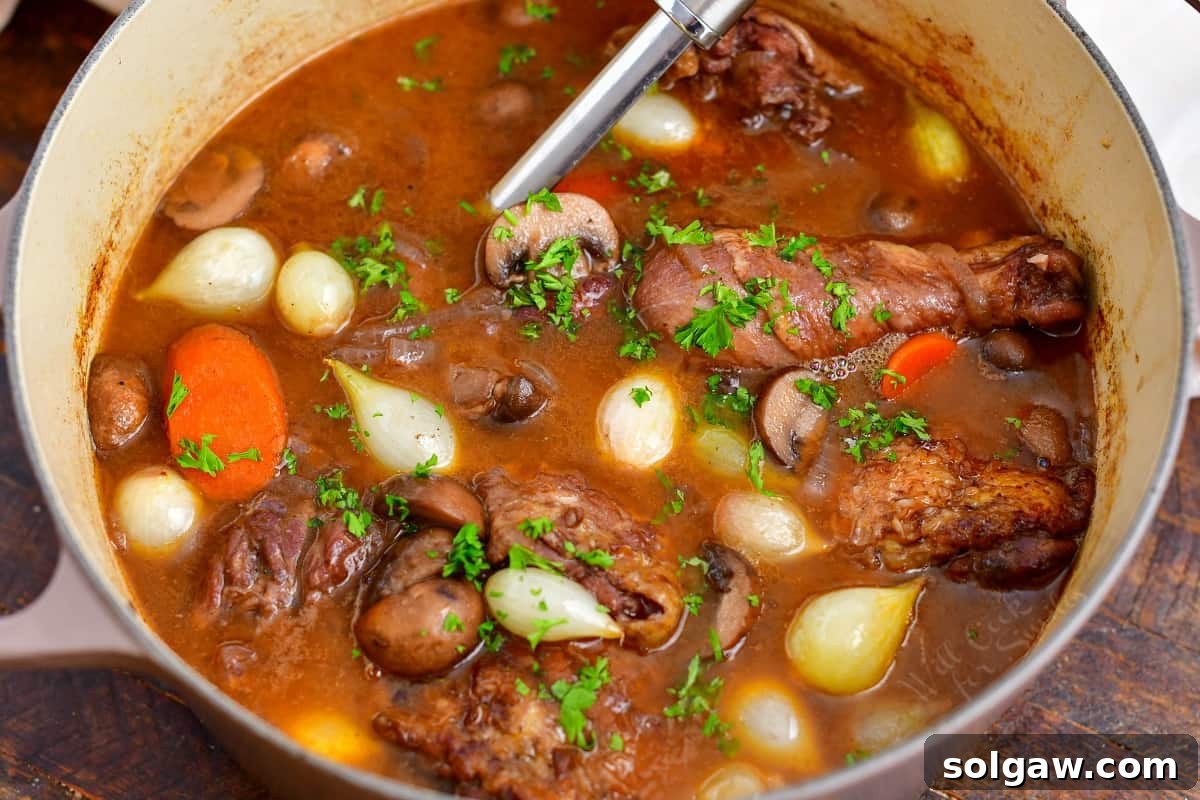
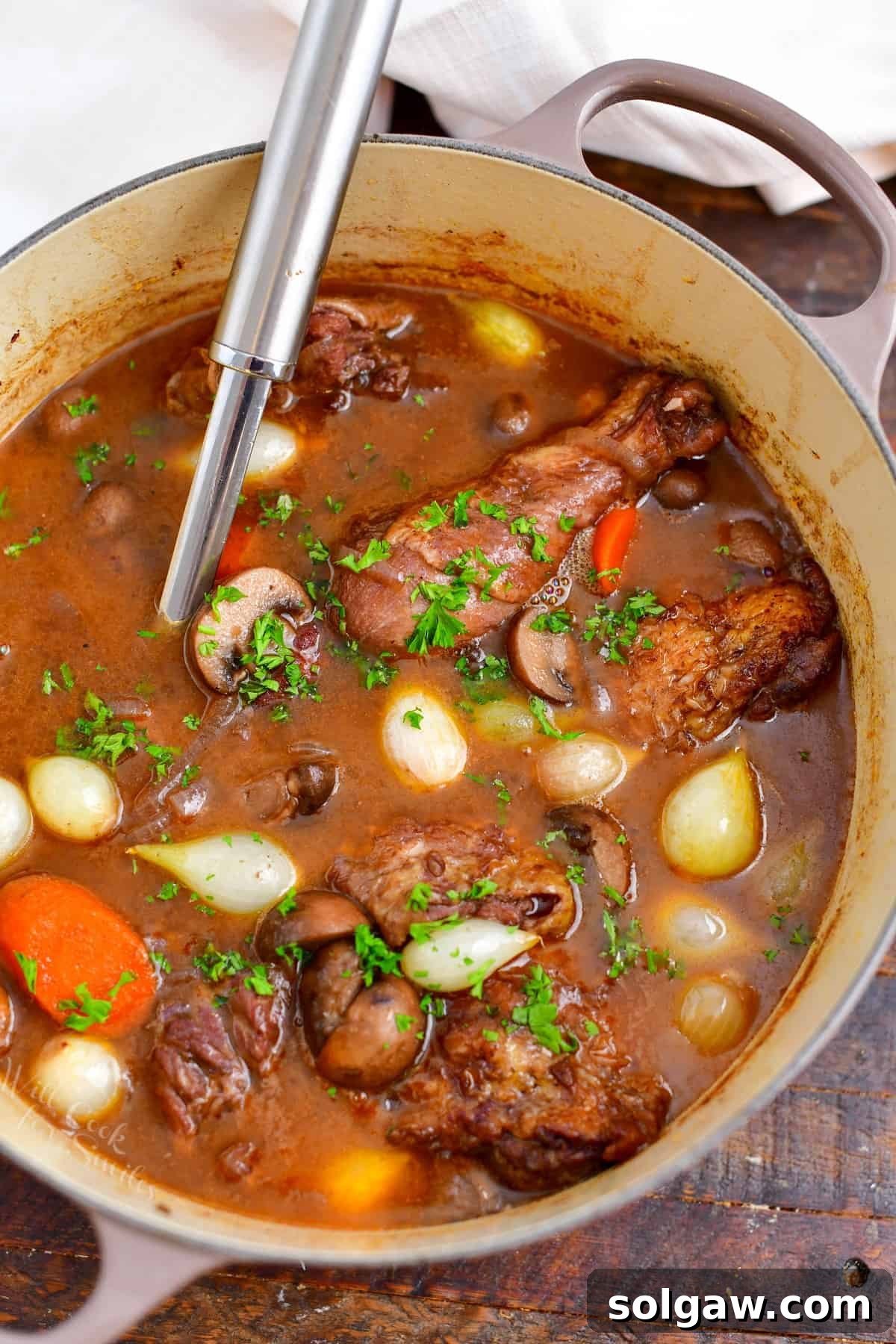
Finally, return the tender braised chicken pieces to the pot, nestling them back into the thickened sauce. Allow it to warm through for 2-3 minutes. Transfer the glorious Coq au Vin to a large serving dish or individual bowls. Garnish generously with the reserved crispy bacon bits and a sprinkle of fresh chopped parsley for both flavor and visual appeal. Serve immediately and prepare to be transported to France!
Coq au Vin FAQs: Your Questions Answered
For pairing, a complementary red wine is almost always the ideal choice. To match the rich and hearty nature of Coq au Vin, opt for robust wines that stand up to its flavors without overpowering them. Excellent choices include a full-bodied Red Burgundy (such as a Gevrey-Chambertin or Nuits-Saint-Georges), a fruity Beaujolais (specifically Cru Beaujolais like Morgon or Moulin-à-Vent), or a savory Côtes du Rhône. These wines echo the flavors within the dish, creating a truly harmonious dining experience.
When it comes to cooking, the rule remains: choose a wine you would enjoy drinking! The wine’s flavor concentrates significantly during cooking, so a low-quality or unpleasant wine will negatively impact the entire dish. A traditional French Burgundy is the classic choice, offering deep, earthy notes. However, a good quality Pinot Noir is a fantastic and widely available alternative, contributing bright fruit and subtle spice. Crucially, always avoid sweet wines, as their sugars will caramelize and make the sauce cloyingly sweet rather than savory and complex.
Making Coq au Vin gluten-free is quite simple, as there is only one ingredient that typically contains gluten: the flour used for the beurre manié to thicken the sauce. You can easily substitute regular all-purpose flour with an equal amount of gluten-free all-purpose flour blend (ensure it’s a blend suitable for thickening, often containing rice flour or tapioca starch). All other ingredients in this recipe—chicken, wine, stock, vegetables, bacon, cognac, herbs, and butter—are naturally gluten-free. However, it’s always wise to double-check product labels to confirm, especially for stocks or processed ingredients.
Absolutely, Coq au Vin is an excellent dish for making ahead! In fact, many connoisseurs argue that it tastes even better on the second day, as the flavors have more time to meld and deepen. You can prepare the entire dish, allow it to cool completely, then refrigerate it in an airtight container for up to 3-4 days. To reheat, gently warm it on the stove over medium-low heat until heated through, or microwave individual portions. This makes Coq au Vin a perfect choice for entertaining or meal prepping.
While the wine is central to Coq au Vin’s traditional flavor, you can adapt it for an alcohol-free version. Replace the red wine with an equal amount of high-quality, unsweetened cranberry juice mixed with extra chicken stock and a splash of red wine vinegar to mimic the acidity. You can also use a non-alcoholic red wine, but ensure it’s dry and flavorful. For the Cognac, a small amount of apple juice or non-alcoholic brandy extract can be used as a substitute, though the overall flavor profile will naturally be different from the traditional recipe.
Secrets to the Best Coq Au Vin
- Maximize Flavor with Dark Meat: For the most succulent and flavorful Coq au Vin, prioritize bone-in dark meat (thighs and drumsticks). The bones contribute collagen and richness to the sauce, and dark meat is naturally more tender and less prone to drying out during long braising times. If you insist on using white meat, add seared chicken breasts only during the last 30 minutes of cooking to prevent them from becoming tough.
- Embrace the Marinade: This step is non-negotiable for enhancing chicken flavor and tenderness. Combine your chicken with wine and broth and let it marinate while you tackle other preparations, like dicing bacon and chopping vegetables. Aim for at least 30 minutes, but a few hours or even overnight in the refrigerator will yield an even more profound depth of flavor.
- Choose the Right Marinating Vessel: When marinating raw meat, particularly with acidic liquids like wine, it is paramount to use a non-reactive bowl. Glass, ceramic, or stainless steel are ideal choices. Avoid aluminum, cast iron, or other reactive metals, as they can interact with the acid in the wine, imparting an unpleasant metallic taste or discoloration to your food. Plastic, while non-reactive, is generally not recommended for raw meat due for hygiene reasons and potential absorption of odors.
- Cook with Quality Wine: A cardinal rule in French cooking: if you wouldn’t drink it, don’t cook with it! This is especially true for Coq au Vin, where wine is not merely an ingredient but the very heart of the sauce. A cheap or poor-quality wine will concentrate its undesirable characteristics, negatively impacting the entire dish. Invest in a decent, dry red wine that you genuinely enjoy; its rich, complex notes will beautifully infuse the stew.
- Don’t Waste the Bacon Bits: After rendering the bacon fat, resist the urge to discard those delicious crispy pieces. Save them! These golden morsels make an exceptional, textural garnish when sprinkled over the finished Coq au Vin just before serving. They add a delightful crunch and an extra burst of savory, smoky flavor that truly sends the dish over the top.
- The Power of Deglazing: When sautéing vegetables and searing chicken, flavorful browned bits (fond) will stick to the bottom of your pot. When you add the Cognac and then the wine mixture, make sure to scrape up all those bits with a wooden spoon. This deglazing process releases concentrated flavors back into your sauce, adding immense depth and complexity.
- Patience is a Virtue: Coq au Vin is a braised dish that thrives on slow, gentle cooking. Do not rush the simmering process. Allowing the stew to bubble slowly for the recommended time ensures the chicken becomes incredibly tender and the sauce develops its full, rich character. Good food takes time!
Storing and Reheating Coq au Vin
One of the many charms of Coq au Vin is that it tastes even better the next day! The flavors have ample time to deepen and meld, creating an even more harmonious and delicious experience. To store leftovers, allow the dish to cool completely to room temperature (within 2 hours) before transferring it to an airtight container. It will keep beautifully in the refrigerator for up to 3 to 4 days.
When reheating, you have a couple of excellent options. For the entire batch, gently warm it on the stove over medium-low heat, stirring occasionally, until it’s heated through. If reheating individual portions, the microwave works well; simply heat in short bursts, stirring between each, until piping hot. Add a splash of stock or wine if the sauce seems too thick.
Coq au Vin also freezes exceptionally well. Once the dish has cooled completely, transfer it to freezer-safe airtight containers or heavy-duty freezer bags, removing as much air as possible to prevent freezer burn. It can be stored in the freezer for up to 3 months. To enjoy, thaw slowly overnight in the refrigerator before reheating gently on the stove or in the microwave as described above.
Perfect Pairings: What to Serve with Coq au Vin
Coq au Vin, with its rich, savory sauce, practically begs for a starchy accompaniment to soak up every last drop of its deliciousness. Classic choices abound:
- Potatoes: Creamy Mashed Potatoes are a perennial favorite, their smooth texture providing a wonderful contrast to the tender chicken. Crispy Oven-Roasted Potatoes or simple boiled potatoes tossed with butter and parsley also work beautifully.
- Grains: Beyond potatoes, hearty grains are an excellent choice. Fluffy white rice, nutty brown rice, ancient grains like quinoa, or toothsome farro would all provide a superb base for the rich sauce. A classic French baguette is also a must for sopping up any remaining sauce!
- Healthier Options: For those seeking a lighter alternative to potatoes, consider creamy Mashed Cauliflower. Its subtle flavor and similar texture make it a delightful, low-carb substitute.
- Green Vegetables: To balance the richness of the stew, a simple side of fresh green vegetables is highly recommended. Steamed green beans (haricots verts), asparagus, or roasted broccoli are fantastic additions.
- Salad: A crisp, refreshing green salad with a light vinaigrette makes for an elegant counterpoint, cutting through the richness and adding a fresh element to the meal.
No matter your choice, ensure your accompaniment is ready to absorb the incredible flavors of your homemade Coq au Vin!
Explore More Comfort Food Recipes
- Classic Ratatouille: A vibrant, rustic vegetable stew from Provence.
- Brown Butter Roasted Potatoes with Bacon and Pearl Onions: A savory side dish bursting with flavor.
- Portobello Scalloped Potatoes Au Gratin: An earthy, cheesy twist on a beloved comfort classic.
- Rich Au Jus: The perfect savory dipping sauce for roasts and sandwiches.
- The Best Scalloped Potatoes: A creamy, cheesy, and utterly irresistible potato casserole.
- Boneless Short Ribs in Red Wine Sauce: Fork-tender beef in a rich, reduction sauce.
PIN THIS RECIPE FOR LATER
Coq au Vin Recipe
Print
Pin
Video
Rate
Find Substitutions |
Dietary Options
Ingredients
- 2 tbsp olive oil
- 1/2 lb bacon, uncooked (diced)
- 3 lb bone-in chicken leg and thigh meat (or 4 lb whole chicken, broken down)
- 2 cups Burgundy red wine or Pinot Noir (dry)
- 1 cup chicken stock
- Salt, to taste
- Cracked black pepper, to taste
- 1 small yellow onion, sliced
- 3 medium carrots, chopped
- 8 oz baby bella mushrooms, cut in half
- 3-4 cloves of garlic, minced
- 1/4 cup cognac or brandy
- 1 tbsp tomato paste
- 6-8 sprigs of fresh thyme
- 8-10 oz pearl onions, peeled
- 2 tbsp unsalted butter, softened
- 2 tbsp all-purpose flour* (use gluten-free if needed)
- 1/2 tbsp fresh parsley, chopped (for garnish)
Instructions
Prepare the chicken:
- Break down the whole chicken if using.
- Combine red wine and chicken stock in a large mixing bowl (metal or glass) and add chicken. Arrange it so chicken is mostly covered and set aside.
- Prepare all the vegetables, dice bacon, and measure remaining ingredients.
Sear bacon and chicken:
- Preheat a large Dutch oven over medium-high heat and add oil. Add diced bacon into the pot and cook it until bacon is crispy.
- While bacon is cooking, take chicken out of the wine mixture, let all excess wine drip off back into the bowl, and pat the chicken dry with a paper towel. Place chicken on a cutting board and season it with salt and pepper on all sides.
- Take out the crispy bacon pieces and set them aside. Leave bacon grease in the pot.
- Sear chicken in the pot in batches so it doesn’t get overcrowded. Sear it skin side down first for a few minutes and then turn it over and sear on the other side until golden brown.
- Take seared chicken out of the pot and set aside.
Sear vegetables:
- Add sliced onion and carrots into the pot, mix, and let them sear for a few minutes undisturbed, until start to golden.
- Add mushrooms, stir, and sear until all vegetables started to get golden.
- Make a little well in the center and add pressed garlic. Sauté for a few seconds, until it’s fragrant.
- Pour in cognac, let it simmer, and stir everything together.
- Add chicken back into the pot.
- Whisk in tomato paste into the wine mixture in a measuring bowl and pour the mixture into the pot.
- Add pearl onions, some more salt and pepper and thyme sprigs.
- Lower the heat to medium and bring the mixture to simmer. Simmer for 10-15 minutes.
- Lower the heat to low. Cover the pot with a lid but leave a small crack for steam to escape. Cook the chicken for about an hour.
- Take chicken out of the pot carefully and set aside.
- In a small bowl, mix together softened butter and flour with a fork by mashing it together and mixing until completely combined.
- Stir the flour mixture into the pot until completely incorporated and let it simmer for a couple of minutes until thickened.
- Return chicken to the pot and cook a couple more minutes for the chicken to heat through.
- Take off heat and garnish with some fresh parsley.
- You can sprinkle the crispy bacon on top of coq au vin as you serve it.
Video
A video demonstration of this recipe may be available on the original blog post, offering visual guidance for each step of the preparation.
Notes
- Make it Gluten Free: There is only one glutenous ingredient in this dish, that is the flour that is used to thicken the sauce. You can simply substitute regular all purpose flour for gluten free all purpose flour. All other ingredients should already be gluten free, but double check the packaging to be safe.
- Wine Pairing: Red wine is usually the number one choice to compliment coq au vin. You will want to choose deep, rich wines to go with this hearty dish, like Red Burgundy, Beaujolais, Côtes du Rhône.
Nutrition
Tried this recipe?
Mention @willcookforsmiles or tag #willcookforsmiles!
Originally published on Will Cook For Smiles in January, 2021.
DID YOU MAKE THIS RECIPE? Please leave a ⭐ star rating! Let me know how you liked it by leaving the 📝 comment below or share and tag me on social media @willcookforsmiles. DON’T FORGET to subscribe to my newsletter!