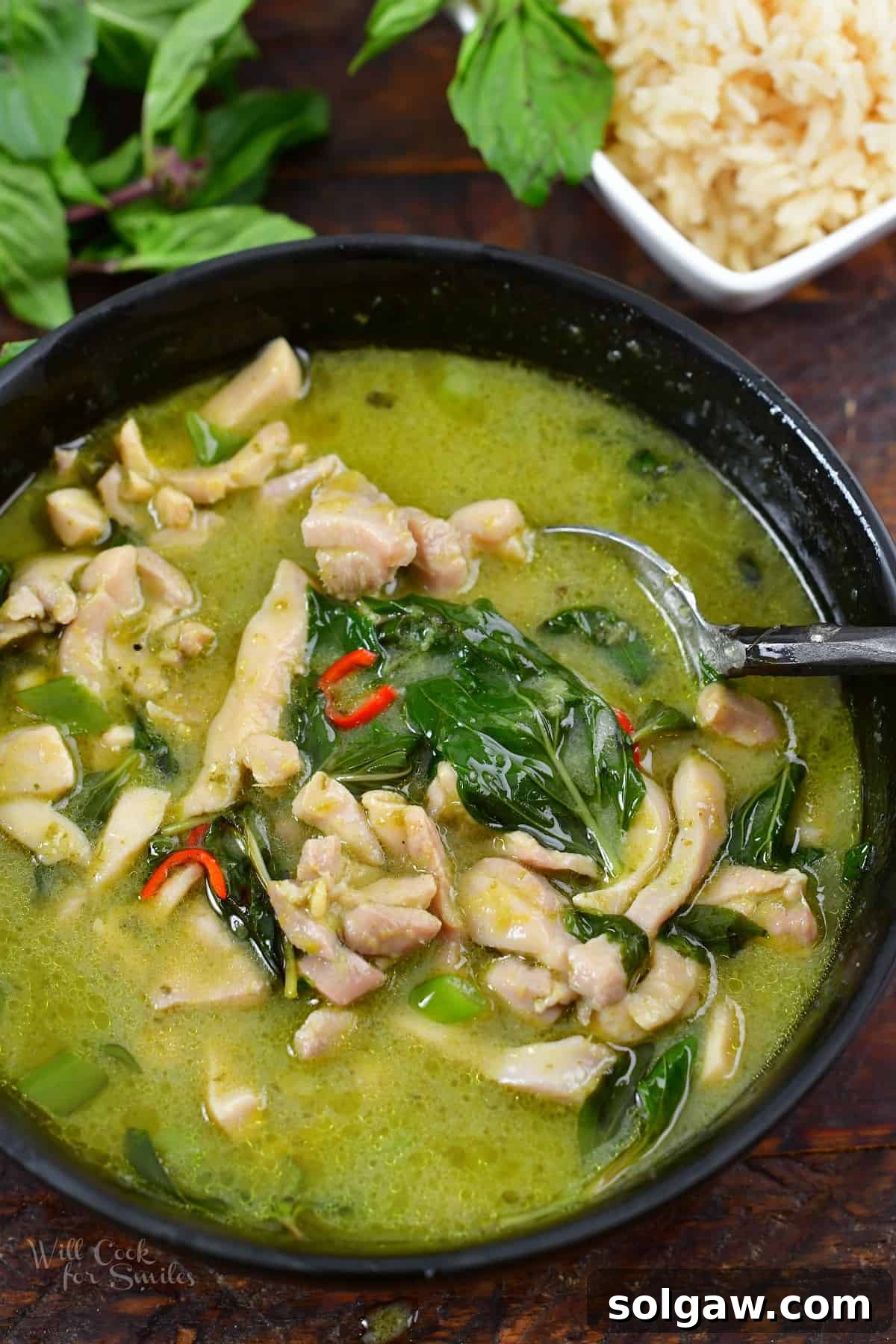
Authentic Thai Green Chicken Curry (Gaeng Khiao Wan Gai)
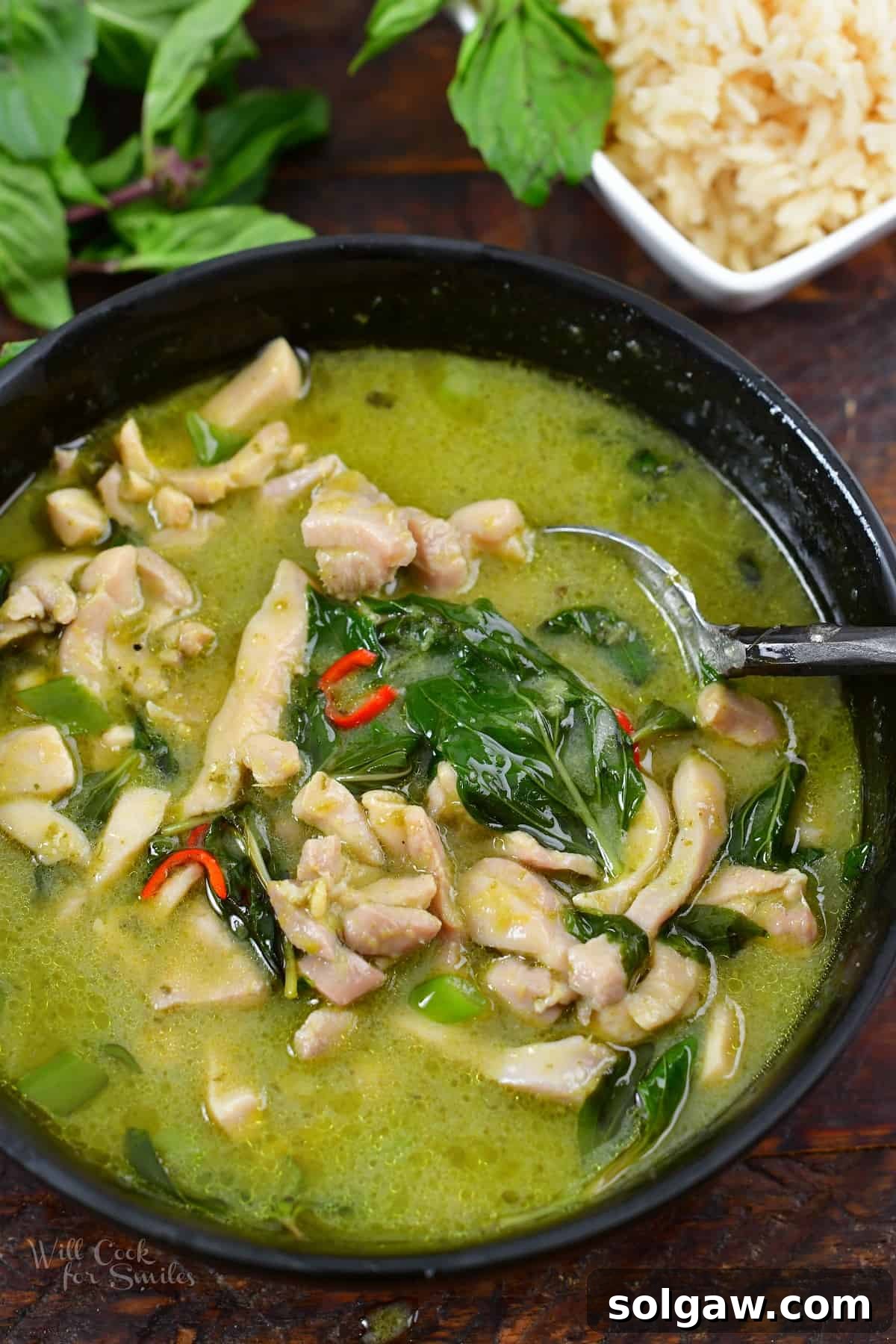
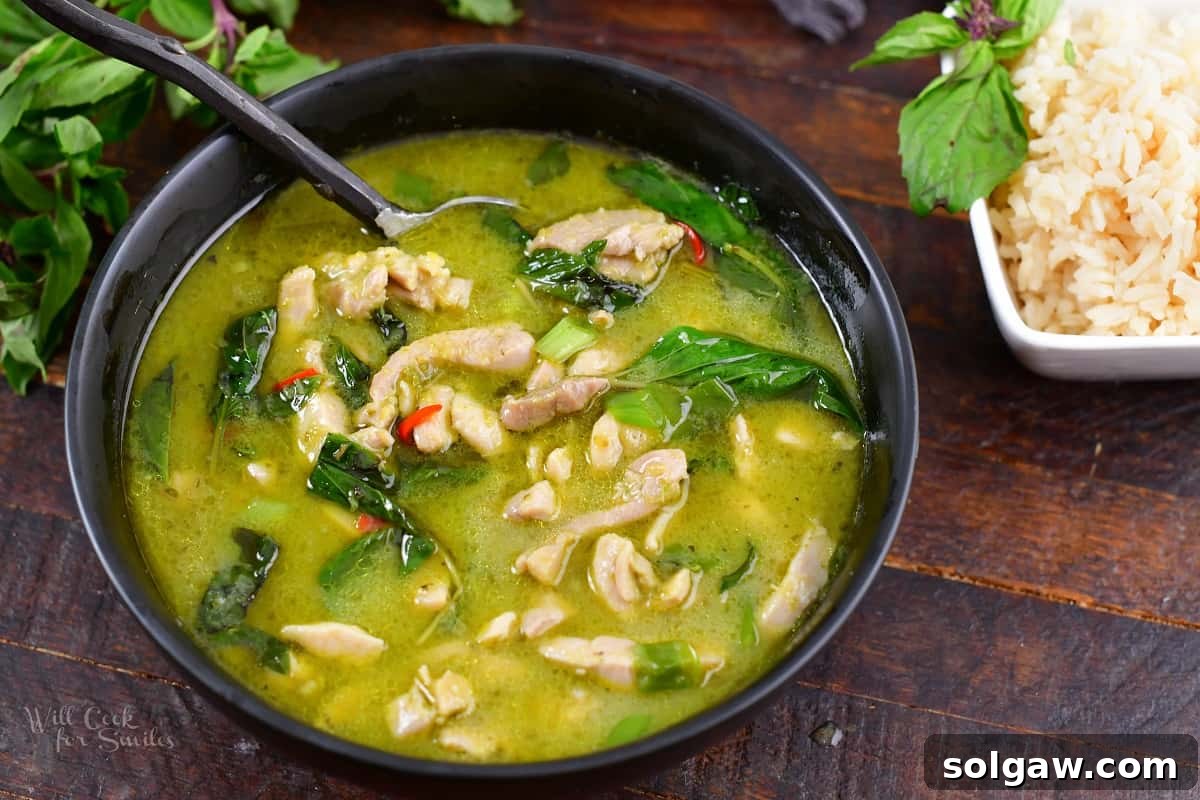
Embark on a culinary journey to Thailand from the comfort of your kitchen with this incredible recipe for Authentic Thai Green Chicken Curry. Known as Gaeng Khiao Wan Gai, meaning “sweet green curry with chicken,” this vibrant and aromatic dish is a cornerstone of Thai cuisine, beloved for its complex layers of flavor. It perfectly balances the fiery kick of green chilies with the creamy sweetness of coconut milk and an array of fragrant herbs. Forget takeout; in under an hour, you can create a restaurant-quality meal that is both deeply comforting and bursting with fresh, exotic tastes. This guide will walk you through everything you need to know to master this classic, from selecting the finest ingredients to simple techniques that unlock its full potential.
What Is Thai Green Curry (Gaeng Khiao Wan)?
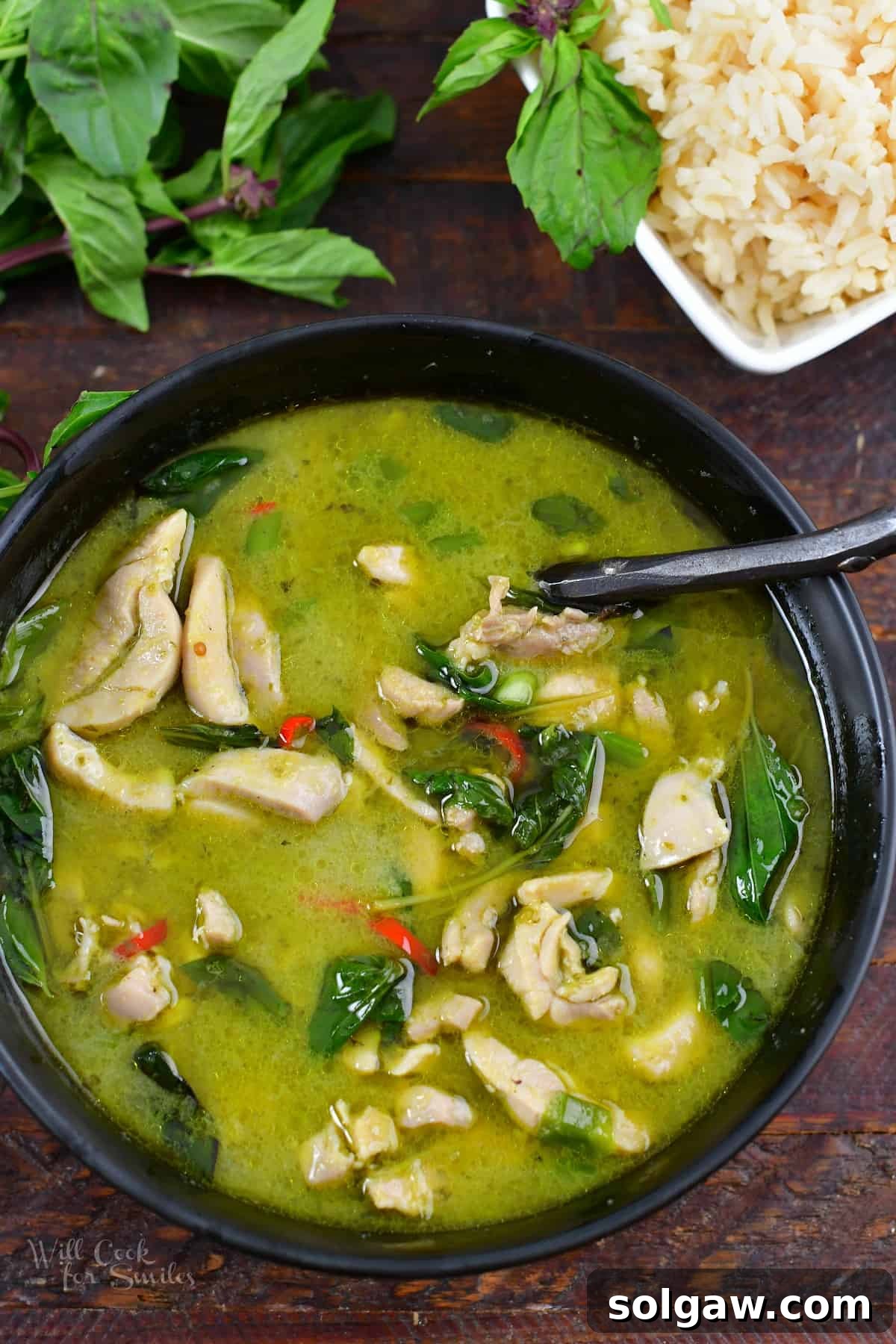
Gaeng Khiao Wan, often simply called Green Curry, stands out as one of Thailand’s most popular and iconic curry dishes. Originating from the central plains of Thailand, its name directly translates to “sweet green curry,” a poetic nod to its harmonious blend of intense heat and creamy, sweet undertones. The signature green hue comes from a rich paste made with fresh green chilies, combined with a symphony of aromatic herbs and spices like lemongrass, galangal, kaffir lime zest, cilantro roots, and garlic. Unlike some other Thai curries that are thicker and richer, green curry typically has a lighter, more liquid consistency, making it wonderfully soupy and perfect for soaking up with jasmine rice. This dish offers incredible versatility, allowing you to customize the spice level and incorporate your favorite proteins and a colorful assortment of vegetables.
What truly sets Thai Green Curry apart is its dynamic flavor profile. Each spoonful delivers a captivating dance between spicy, sweet, savory, and herbaceous notes. The coconut milk provides a luxurious base, while fish sauce adds a crucial umami depth. Fresh ingredients like kaffir lime leaves and Thai basil are folded in at the end, infusing the curry with their vibrant aromas and contributing to its signature freshness. It’s a dish that warms the soul and tantalizes the taste buds, making it a perfect choice for a flavorful weeknight dinner or an impressive meal for guests.
Crafting the Perfect Green Curry: Key Ingredients and Essential Tips
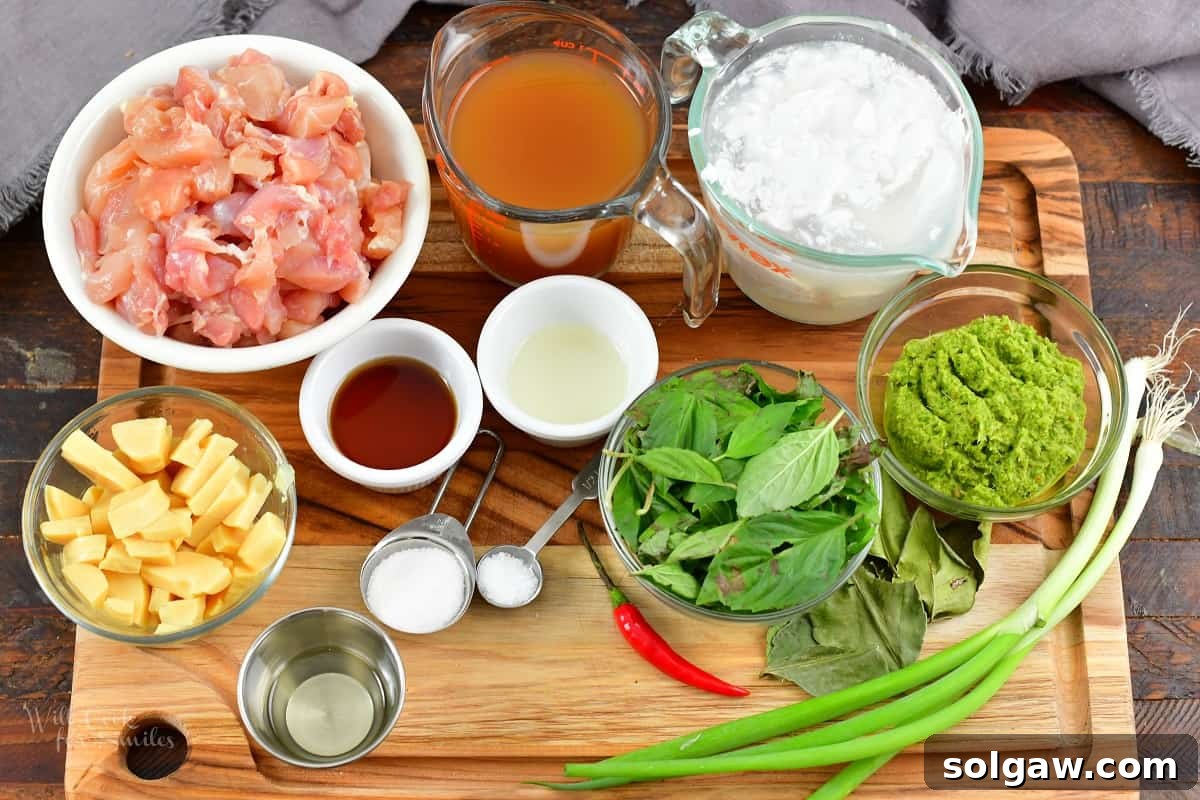
The secret to an outstanding Thai Green Curry lies in the quality and freshness of its ingredients. Each component plays a vital role in building the complex flavors that define this beloved dish. Understanding these ingredients, along with some essential tips and potential substitutions, will elevate your homemade curry to new heights.
- Green Curry Paste: The Heart of the Dish
While I always advocate for the unparalleled flavor of homemade green curry paste, I understand that time constraints can make store-bought a convenient alternative. Homemade paste offers a brighter, fresher, and more intense flavor due to the freshly ground herbs and spices. If opting for store-bought, always check the ingredient list for authenticity and avoid brands with excessive artificial additives. A good quality store-bought paste will still provide a strong flavor base, which you can further enhance, as discussed below. Remember, the paste is the soul of your curry, so choosing wisely is key. - Coconut Milk: Creaminess and Balance
Crucial for achieving that rich, creamy texture and balancing the curry’s heat, coconut milk is indispensable. Ensure you use unsweetened, full-fat coconut milk specifically intended for cooking. The “sweetened” variety is often used for beverages and frozen cocktails and will drastically alter the flavor profile of your savory curry. Full-fat coconut milk lends a velvety consistency and a deeper flavor, which is essential for developing the luxurious base of the curry. Light coconut milk can be used if you prefer a less rich dish, but it may result in a thinner consistency and slightly less intense flavor. - Kaffir Lime Leaves: An Aromatic Essential
These unique, double-lobed leaves are paramount for imparting an unmistakable citrusy and floral aroma that defines Thai cuisine. While fresh kaffir lime leaves are ideal, they can be challenging to find outside of Asian markets. Fortunately, frozen or dried varieties work wonderfully and are more readily available. Before adding them to your curry, gently bruise or tear the leaves to release their potent essential oils, allowing their distinctive fragrance to fully infuse the dish. Always remember to remove them before serving, as they are not meant to be eaten. - Chicken: Your Protein Choice
Boneless, skinless chicken breast or thigh meat are the most common and versatile choices for green curry. Chicken thighs tend to be more forgiving and remain juicier during cooking, while breasts offer a leaner option. Regardless of your choice, ensure the chicken is cut into bite-sized pieces for even cooking. For those looking for alternatives, pork, beef, shrimp, or even firm tofu can be excellent substitutes, adapting the cooking time accordingly. Always trim any excess fat from the chicken to maintain a clean flavor. - Thai Basil: The Finishing Herb
The fresh, peppery, and slightly anise-like notes of Thai basil are critical for the authentic flavor of green curry. While “holy basil” (Kra Pao) is the truly traditional choice for some Thai dishes, standard Thai basil (Horapha) is widely available and provides the characteristic flavor. “Pepper basil” is another variation offering a similar profile. If you absolutely cannot find Thai basil, Italian sweet basil can be used as a last resort, but be aware that the flavor will be significantly different and less authentic. Add it at the very end of cooking to preserve its delicate aroma and vibrant color. - Thai Chili Peppers: Controlling the Heat
Fresh red Thai chili peppers, often called bird’s eye chilies, are the primary source of heat in green curry beyond the paste itself. Their intensity can vary, so taste a tiny piece if you’re unsure. You have full control over the spice level here: add more for a fiery experience, or fewer for a milder dish. Remember that the green curry paste already contains chilies, so adjust cautiously to achieve your desired level of spiciness without overwhelming the other delicate flavors. You can also deseed them for less heat.
Beyond Chicken: Exploring Vegetable Varieties for Your Green Curry
One of the beauties of Thai Green Curry is its adaptability to incorporate a wide array of vegetables, making it a complete and wholesome meal. While some vegetables are traditionally favored, feel free to experiment with what’s fresh and available to you. The key is to select vegetables that complement the rich curry base without overpowering it, and to cook them just until tender-crisp to retain their texture and nutritional value.
- The most traditional and common vegetable you’ll find in authentic Thai Green Curry is Thai eggplant. These small, round, or oval eggplants have a slightly bitter taste and firm texture that holds up well in the curry. However, they are not always easy to source in Western supermarkets.
- If Thai eggplants are elusive, you can successfully substitute them with small Japanese or Indian eggplants, which offer a similar texture and absorb the curry’s flavors beautifully. Ensure they are cut into bite-sized pieces.
- Beyond eggplant, the possibilities are vast. Consider adding crisp bamboo shoots (canned or fresh), which provide a delightful crunch. Bell peppers (red, green, or yellow) offer sweetness and color. Tender shiitake mushrooms add an earthy depth, while sweet snow peas or garden peas contribute a pop of freshness. For additional texture and mild flavor, include small florets of baby corn or crisp green beans. Other excellent choices that complement green curry well include broccoli florets, zucchini slices, or thinly sliced carrots. The goal is about 5 ounces of mixed vegetables to ensure a balanced dish.
Step-by-Step Guide: How to Make Authentic Thai Green Chicken Curry
Creating a delicious Thai Green Chicken Curry at home is a rewarding experience. Follow these steps carefully to ensure a flavorful and perfectly balanced dish, brimming with authentic Thai tastes.
- Prepare All Ingredients (Mise en Place): Before you begin cooking, it’s crucial to have all your ingredients prepped and ready. Chop the chicken, slice the vegetables, measure out your curry paste, coconut milk, and other seasonings. This “mise en place” ensures a smooth cooking process, as Thai curries cook relatively quickly and require quick additions.
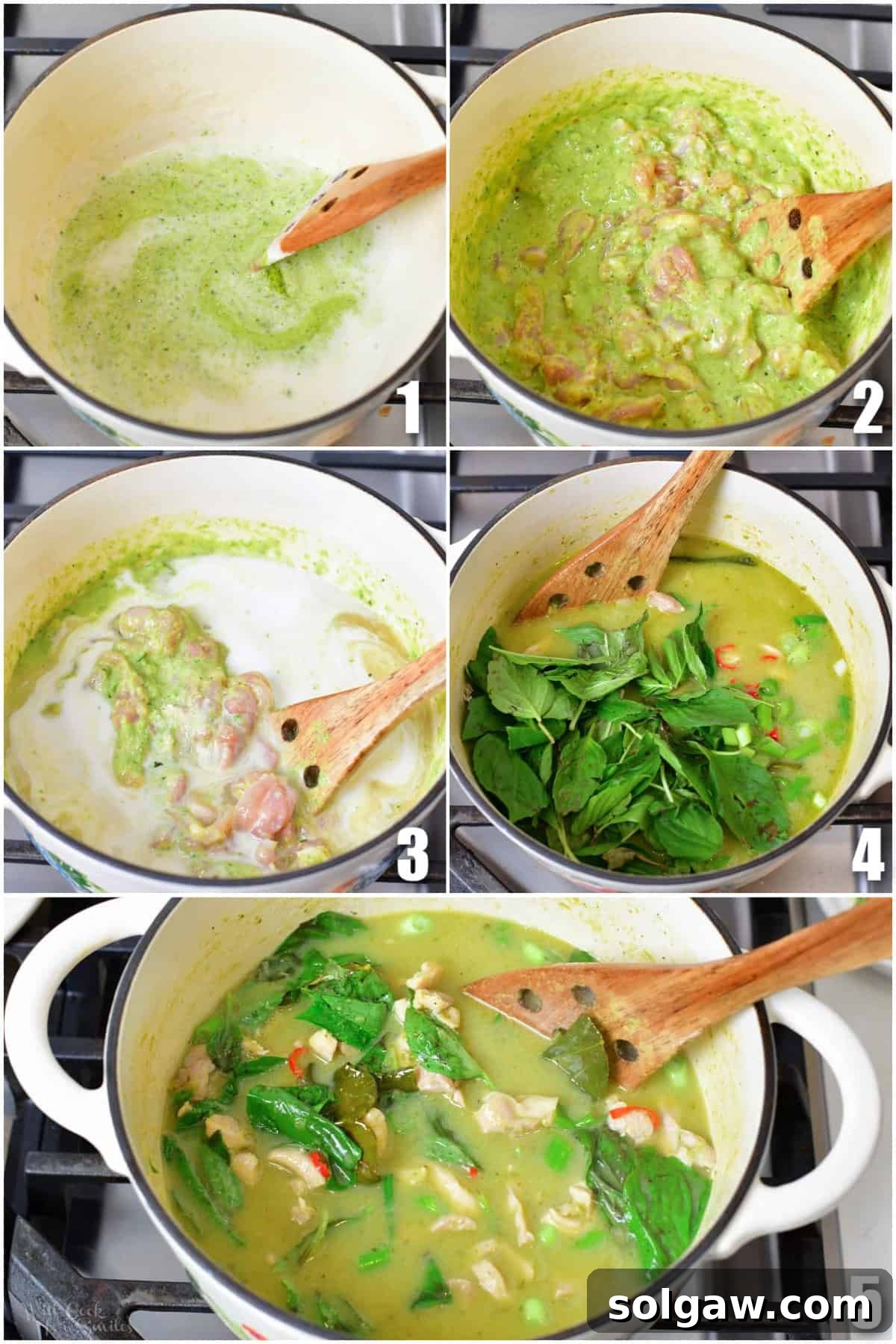
- Begin with Coconut Milk: Heat a 2.5-3 quart saucepot over medium heat. Add approximately three-quarters of your unsweetened coconut milk to the pot. Bring it to a gentle simmer, stirring slowly and constantly. The goal here is to allow the coconut milk to reduce slightly and thicken, which helps to separate the coconut oil, intensifying its rich flavor – a technique known as “breaking the coconut milk.” This process usually takes just a few minutes.
- Bloom the Curry Paste: Once the coconut milk has visibly thickened, stir in the green curry paste. Continue to simmer and stir for a minute or two, allowing the paste to “bloom” in the coconut oil. This step is essential for releasing the full fragrance and flavor of the spices in the paste, preventing a raw or underdeveloped taste in your final curry.
- Introduce Chicken and Liquids: Add your chopped chicken pieces to the pot, stirring to coat them thoroughly with the curry paste mixture. Pour in the chicken stock (or broth) and the remaining coconut milk. Reduce the heat to medium-low and let the curry gently simmer. Continue cooking until the chicken is almost fully cooked through, becoming tender and infused with the curry’s flavors. This usually takes about 10-15 minutes, depending on the size of your chicken pieces.
- Add Remaining Ingredients and Vegetables: Once the chicken is nearly done, stir in the salt, sugar, about half of the fish sauce, the kaffir lime leaves (bruised or torn), and your chosen vegetables. Continue to cook for a few more minutes, ensuring the vegetables soften to your preferred tenderness without becoming mushy. Different vegetables may require varying cooking times, so add heartier ones first if you’re using a mix.
- Finish with Fresh Aromatics: In the final moments of cooking, stir in the fresh Thai basil leaves, sliced scallions, and any additional sliced Thai chili peppers if you desire more heat and a fresh chili crunch. Add the remaining fish sauce and the fresh lime juice. Stir everything gently to combine.
- Final Simmer: Let the curry cook for just another couple of minutes to allow the fresh basil and other aromatics to release their flavors into the broth. Then, remove the pot from the heat immediately to preserve the vibrant flavors of the fresh herbs.
Mastering Store-Bought Green Curry Paste: Tips for Enhanced Flavor
While homemade green curry paste offers an unparalleled depth of flavor, store-bought paste is a convenient and perfectly acceptable option for busy weeknights. However, not all commercial pastes are created equal. To ensure the best possible flavor for your green curry, it’s worth putting a little effort into selection and enhancement.
Choosing the Best Store-Bought Paste: In the interest of saving time, you may choose to use store-bought Thai curry paste. There are some brands that are notably better than others. For the most authentic and best-tasting option, I highly recommend purchasing your paste from an Asian food market. These stores typically carry a wider selection of higher-quality, more traditional brands that often contain fewer preservatives and artificial ingredients. Read the labels carefully; look for pastes with a short ingredient list that includes familiar Thai aromatics. You might need to try a few different brands to discover which one best suits your palate.
Enhancing the Flavors: To elevate the taste of jarred curry paste, which can sometimes lack the vibrant punch of fresh ingredients, you can “bloom” it. Sautéing the paste in a little coconut oil or the thick part of the coconut milk for a minute or two before adding other liquids helps to toast the spices and release their full aroma. Furthermore, feel free to add fresh aromatics that might be less prominent in store-bought versions. Consider grating in extra fresh galangal or ginger, mincing additional garlic, or adding a teaspoon of lemongrass paste. A splash of extra lime juice at the end can also brighten the overall flavor. These small additions can make a significant difference, transforming a good store-bought paste into a truly exceptional curry.
DID YOU MAKE THIS RECIPE? Please consider leaving a star rating and a comment below to share your experience! Your feedback is greatly appreciated. Don’t forget to subscribe to our newsletter for more delicious recipes!
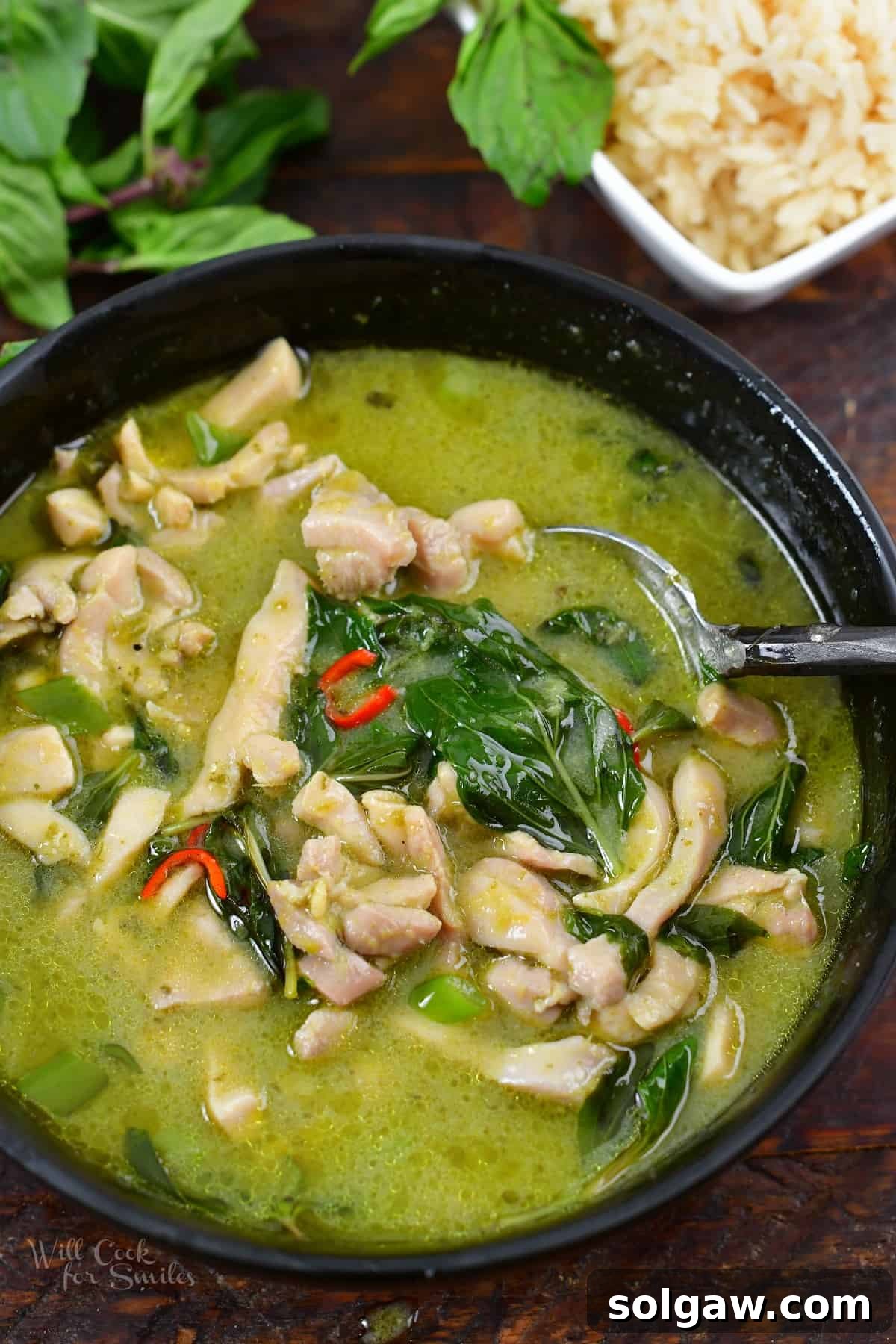
Thai Green Curry Recipe (Chicken)
Main Course
Thai
Gluten Free
10
20
30
4
556
kcal
Lyuba Brooke
Ingredients
-
1/2
cup
green curry paste -
1
cup
chicken stock or broth -
13
oz
can unsweetened coconut milk -
3
tbsp
fish sauce -
2
tsp
pure cane sugar -
1/2-1
tsp
coarse salt
to taste -
6-8
kaffir lime leaves* -
1.25-1.5
lbs
boneless, skinless chicken thigh meat
fat removed and chopped into small pieces -
1/2
cup
fresh Thai basil
packed -
2
tsp
fresh lime juice -
1-2
red Thai chili peppers -
3-4
scallions stalks
Optional vegetables (about 5 oz)**:
- Thai eggplant, or Indian eggplant, or Japanese eggplant
- Bell pepper (any color)
- Sweet peas or snow peas
- Bamboo shoots (canned or fresh)
- Shiitake mushrooms, baby corn, and/or green beans
To serve:
-
2
cups
cooked Jasmine rice
Instructions
-
Ensure all your ingredients are prepared and measured beforehand. This includes chopping chicken and vegetables, and having all sauces and spices within reach. Organizing your ingredients will make the cooking process much smoother and enjoyable.
-
Heat a 2.5-3 quart saucepot over medium heat. Add approximately 3/4 of the coconut milk to the pot. Allow it to simmer gently while stirring slowly and continuously. Continue this process until the coconut milk begins to reduce and slightly thicken, which signifies the “breaking” of the coconut milk, enhancing its flavor and texture. This step typically takes only a few minutes.
-
Once the coconut milk has thickened, add the green curry paste to the pot. Stir it thoroughly into the simmering coconut milk and let it cook for a few seconds. This process, known as blooming the paste, helps to release the full spectrum of its aromatic flavors and oils.
-
Stir in the chicken pieces, chicken broth, and the remaining coconut milk. Reduce the heat to medium-low. Allow the curry to simmer gently, cooking until the chicken is tender and fully cooked through. This step ensures that the chicken absorbs the rich flavors of the curry base.
-
Once the chicken is cooked, incorporate the salt, sugar, half of the fish sauce, the kaffir lime leaves (remember to bruise them first for maximum aroma), and all the vegetables you plan to use. Continue to cook for several more minutes, allowing the vegetables to soften to your desired tenderness while still retaining a slight bite.
-
Finally, stir in the fresh Thai basil leaves, chopped scallions, and any extra sliced Thai chili peppers for an added kick and garnish. Also, add the rest of the fish sauce and the fresh lime juice at this stage to brighten the flavors.
-
Let the curry gently simmer for just two more minutes to allow the fresh herbs to fully infuse, then remove from heat. Serve immediately.
Serving:
-
Thai Green Curry is traditionally and best served alongside fluffy Jasmine rice, which perfectly complements the curry’s rich flavors and soupy consistency. It is important to remember that this curry is intended to be soupy, not a thick sauce, so do not attempt to reduce or thicken it excessively.
(Note: Kaffir lime leaves are used for aroma and are typically too fibrous and tough to eat. You can easily discard them from your bowl before consuming.)
Notes
**Vegetables: Aim for approximately 5 ounces of your preferred vegetables. Traditional Thai eggplant is ideal for this curry due to its unique texture and slightly bitter notes, but it can be hard to find. Excellent substitutes include small Japanese or Indian eggplants, which are often more accessible. Other versatile options that pair wonderfully with green curry include bamboo shoots (for crunch), various bell peppers (for color and sweetness), shiitake mushrooms (for umami depth), sweet snow peas or regular peas, baby corn, and green beans. Feel free to mix and match based on your preferences and what’s in season.
Coconut milk: Always use unsweetened, 100% full-fat coconut milk for cooking. Avoid the sweetened varieties often found near cocktail mixers, as they will alter the intended savory flavor of your curry. Full-fat milk contributes significantly to the richness and authentic texture.
Pure cane sugar: If pure cane sugar is not available, standard granulated white sugar can be used as a direct substitute without significantly impacting the overall flavor balance. The sugar helps to round out the spice and salt.
Storing leftovers: Any leftover Thai Green Curry can be stored in an airtight food storage container in the refrigerator for up to 3 days. Reheat gently on the stovetop or in the microwave, adding a splash of water or coconut milk if the sauce has thickened too much.
Nutrition
Calories:
556
kcal
|
Carbohydrates:
36
g
|
Protein:
34
g
|
Fat:
31
g
|
Saturated Fat:
22
g
|
Polyunsaturated Fat:
2
g
|
Monounsaturated Fat:
4
g
|
Trans Fat:
1
g
|
Cholesterol:
136
mg
|
Sodium:
1579
mg
|
Potassium:
758
mg
|
Fiber:
4
g
|
Sugar:
9
g
|
Vitamin A:
4953
IU
|
Vitamin C:
10
mg
|
Calcium:
97
mg
|
Iron:
4
mg
Tried this recipe?
Mention @willcookforsmiles or tag #willcookforsmiles!
More Thai Delights to Explore at Home
If you’ve enjoyed the rich flavors of this Thai Green Curry, you’re in for a treat with the vast and vibrant world of Thai cuisine. There are countless other dishes that capture the essence of Thailand’s culinary traditions, perfect for expanding your home cooking repertoire. From fiery stir-fries to delicate salads, each recipe offers a unique blend of sweet, sour, salty, and spicy notes.
- Pad Thai: The ultimate classic Thai noodle dish, renowned for its perfectly balanced sweet, sour, and savory flavors with tender noodles and crisp vegetables.
- Chicken Satay: Skewers of marinated chicken grilled to perfection, served with a rich and creamy peanut dipping sauce – a fantastic appetizer or light meal.
- Thai Basil Fried Rice (Khao Pad Krapow): A quick and satisfying stir-fried rice dish packed with aromatic Thai basil, chilies, and your choice of protein, offering a delightful spicy kick.
- Thai Cashew Chicken (Gai Pad Med Mamuang): A popular stir-fry featuring tender chicken, crunchy cashews, and an assortment of vegetables in a savory, slightly sweet sauce.