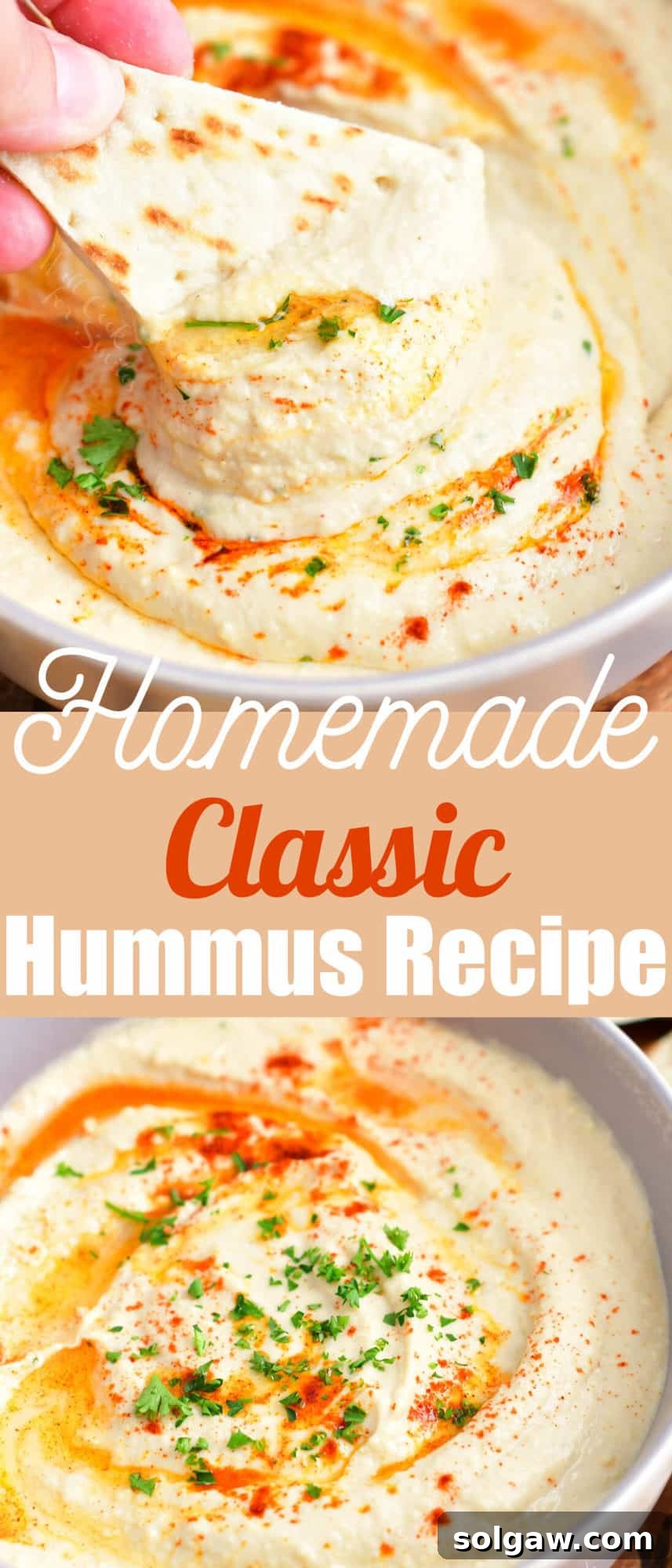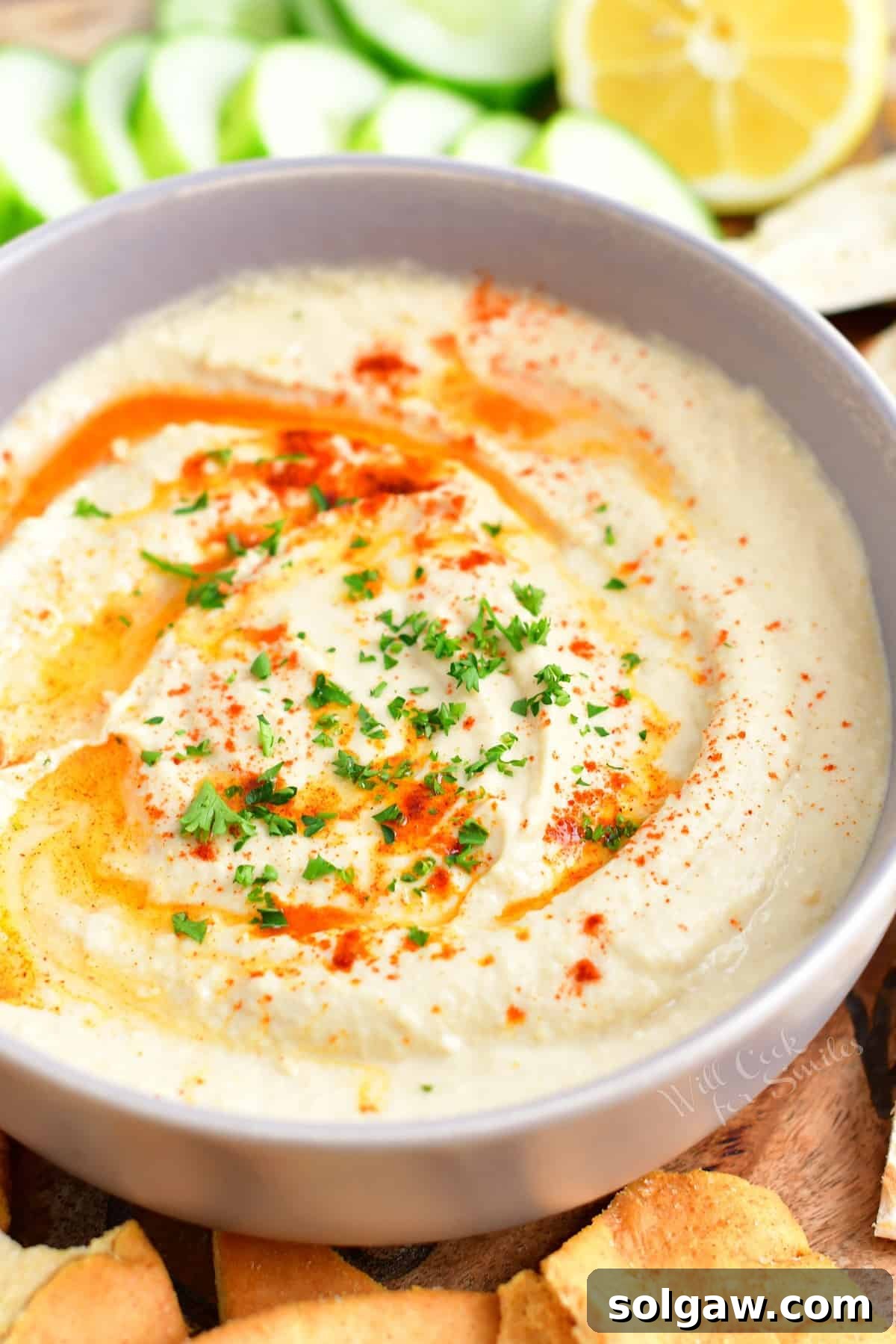
Embrace the rich flavors and creamy texture of a truly **classic homemade hummus**! This **protein-packed chickpea dip** is not just an appetizer; it’s a culinary staple loved worldwide. Forget store-bought options; our **easy hummus recipe** transforms simple, traditional ingredients like chickpeas and tahini into an **irresistibly smooth and flavorful dip** that will delight any crowd. Get ready to elevate your snacking and entertaining with the freshest **Middle Eastern dip** you can make!
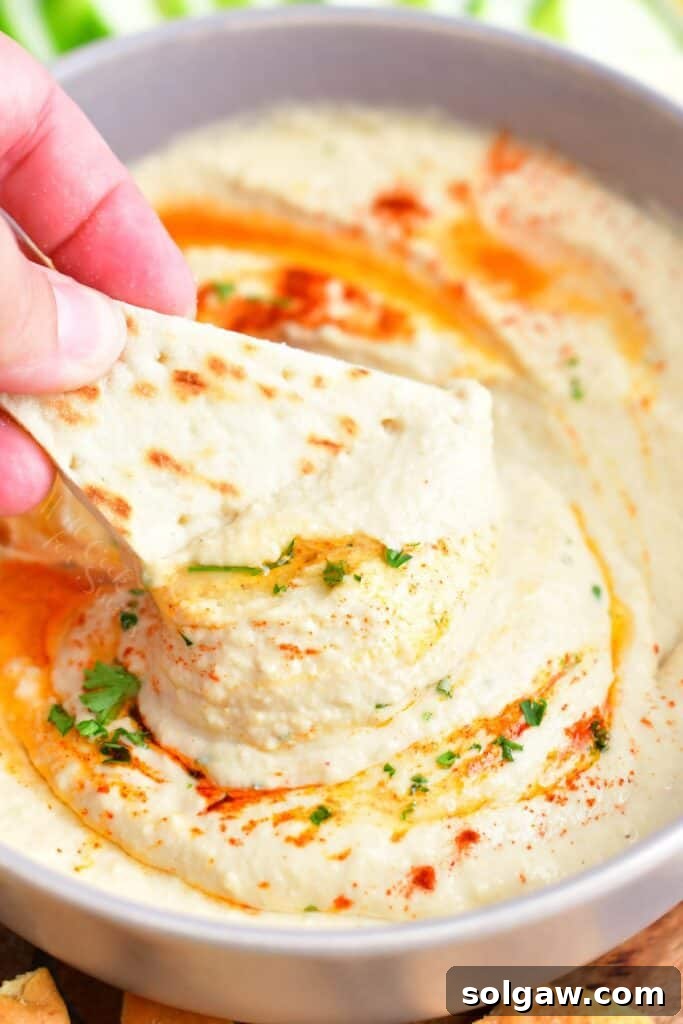
Mastering the Art of Homemade Hummus: Your Go-To Classic Recipe
In a world of fleeting food trends, some culinary delights stand the test of time, becoming timeless classics. Hummus is undeniably one of them. Far from a mere “fad,” this creamy, savory **chickpea dip** has transcended cultures and cuisines to become a globally cherished staple. Its enduring popularity is a testament to its versatility, nutritional benefits, and incredibly satisfying flavor profile. Whether served at sophisticated gatherings, casual potlucks, or as a healthy snack, hummus consistently delivers a delicious experience.
While the convenience of store-bought hummus is undeniable, it often pales in comparison to the vibrant taste and superior texture of a freshly prepared batch. Making **homemade hummus** is a simple yet profoundly rewarding endeavor. This recipe promises a creamy, luscious dip with a delicate nutty undertone from the tahini, brightened by a zesty hint of fresh lemon juice, and a subtle warmth from aromatic spices. It’s an authentic taste that commercial varieties simply can’t replicate. Once you experience the unparalleled freshness and depth of flavor of **homemade classic hummus**, you’ll find yourself reaching for your food processor instead of the supermarket shelf.
Beyond its incredible taste, crafting your own hummus offers complete control over ingredients, allowing you to tailor it to your preferences or dietary needs. It’s a foundational recipe that’s perfect on its own, yet also serves as a fantastic base for delicious variations, such as a robust Roasted Garlic and Dill Hummus or a fiery Spicy Harissa Hummus. However, when it comes to serving guests or simply enjoying a truly satisfying dip, this **classic hummus recipe** remains my unwavering choice. It’s universally loved and always a hit!
The Ancient Roots: Tracing Hummus’s Rich History and Origin
To truly appreciate hummus, one must understand its deep historical and cultural significance. This beloved spread and dip has roots stretching back centuries, primarily in the Middle East. While many cultures lay claim to its invention, historical records suggest that early forms of hummus can be traced all the way to 13th-century Egypt. The word “hummus” itself is Arabic for “chickpeas,” highlighting the central ingredient that has nourished generations.
Known as “hummus bi tahini” (chickpeas with tahini), this dish evolved over time, becoming a cornerstone of Levantine cuisine and a staple across the Middle East, North Africa, and the Mediterranean. It’s more than just food; it’s a symbol of hospitality, shared meals, and cultural heritage. Its journey from ancient tables to modern global popularity underscores its universal appeal and delicious simplicity. Hummus isn’t a fleeting trend; it’s a culinary icon that has shaped meal traditions for centuries and continues to captivate palates worldwide.
Unveiling the Health Powerhouse: Nutritional Benefits of This Chickpea Dip
Beyond its exquisite taste, hummus offers a remarkable array of health benefits, making it one of the most nourishing dips you can enjoy. The star ingredient, chickpeas (also known as garbanzo beans), is a nutritional powerhouse:
- High in Protein: Chickpeas are an excellent plant-based source of protein, crucial for muscle repair, growth, and overall bodily functions. This protein content, combined with fiber, contributes significantly to satiety, helping you feel fuller for longer and potentially aiding in weight management.
- Rich in Dietary Fiber: Loaded with both soluble and insoluble fiber, hummus promotes healthy digestion, prevents constipation, and supports a balanced gut microbiome. Fiber also plays a key role in regulating blood sugar levels and lowering cholesterol.
- Abundant in Vitamins and Minerals: Chickpeas provide essential vitamins like Folate (Vitamin B9), which is vital for cell growth and function, and Vitamin B6. They also offer important minerals such as potassium, iron, magnesium, and phosphorus, all contributing to various aspects of health, from nerve function to bone density.
- Heart-Healthy Fats: The addition of tahini (sesame paste) and extra virgin olive oil introduces healthy monounsaturated and polyunsaturated fats. These fats are known to support cardiovascular health, reduce inflammation, and help with the absorption of fat-soluble vitamins.
- Moderate in Calories: Despite being rich in nutrients, hummus is a moderately caloric dip that can fit well into a balanced diet. Its high protein and fiber content ensure that a modest serving can be incredibly satisfying, making it a smarter choice than many other high-fat, low-nutrient appetizers.
So, next time you dip a pita into this creamy delight, rest assured that you’re not just indulging in deliciousness, but also nourishing your body with a genuinely beneficial and wholesome food.
Essential Ingredients for the Best Homemade Hummus
Crafting the perfect **classic homemade hummus** requires only a handful of fresh, high-quality ingredients. This recipe focuses on simplicity, ensuring an authentic and deeply satisfying flavor without unnecessary additions.
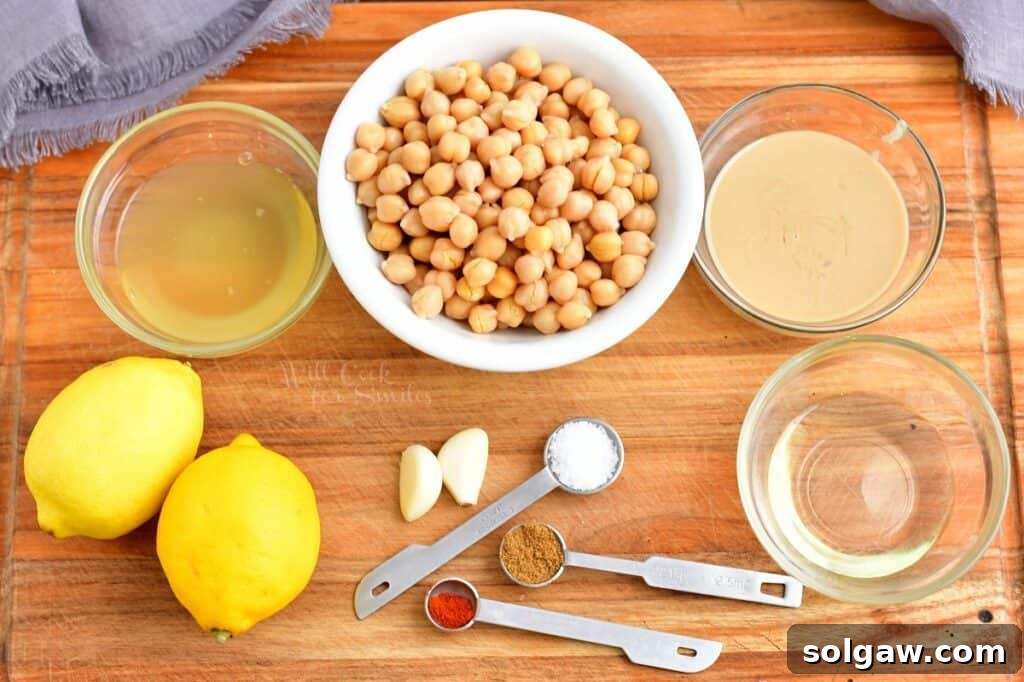
- Chickpeas: The foundation of any great hummus. One standard 15-16 oz can of chickpeas (garbanzo beans) is all you need for this recipe. If you prefer to use dried chickpeas, soak them overnight and cook until very tender. Always remember to thoroughly rinse canned chickpeas under cold water before use to remove excess sodium and improve flavor. Crucially, reserve a portion of the canning liquid!
- Chickpea Liquid (Aquafaba): This often-overlooked secret ingredient is the key to achieving ultra-creamy, light, and airy hummus. Instead of plain water, using the starchy liquid from the can helps emulsify the dip and adds a subtle richness. We’ll reserve approximately 1/2 cup, adjusting as needed during blending to reach the perfect consistency.
- Fresh Lemon Juice: Bright, zesty, and essential for balancing the richness of the tahini and chickpeas. This recipe calls for 3 tablespoons of freshly squeezed lemon juice, which typically requires about 1.5 to 2 medium lemons. Always opt for fresh over bottled lemon juice, as the latter can have an artificial, sometimes metallic, taste that detracts from the hummus’s fresh profile.
- Tahini: A thick, creamy paste made from ground sesame seeds, tahini is indispensable for authentic hummus. It provides a unique nutty, earthy flavor and contributes significantly to the signature smooth texture. High-quality tahini will have a looser consistency and a milder, less bitter taste. Remember to stir it well before measuring, as the oil often separates.
- Garlic Cloves: Fresh garlic adds a pungent, aromatic kick. In this classic recipe, garlic should complement, not overpower, the other flavors. We recommend 2-3 small cloves, minced. For a milder garlic flavor, you can briefly sauté the garlic before adding, or for a deeper, sweeter garlic note, consider using roasted garlic instead of raw.
- Olive Oil: Essential both for blending and as a luscious drizzle for serving. Use a good quality extra virgin olive oil; its fruity, slightly peppery notes will enhance the overall flavor. Taste your olive oil beforehand to ensure it isn’t too bitter, as this can affect the final taste of your hummus.
- Ground Cumin: This warm, earthy spice adds depth and a distinctly Middle Eastern aroma to the hummus, complementing the nutty tahini and fresh lemon. Just a half teaspoon is enough to weave its magic and tie all the flavors together.
- Salt: A critical flavor enhancer that brings out the best in all the other ingredients. Start with 1/2 teaspoon and adjust to taste. Remember that canned chickpeas often contain some sodium, so taste before adding too much. For a low-sodium version, you can omit the added salt entirely or reduce it significantly.
- Paprika: Primarily used as a garnish, a dash of vibrant red paprika adds visual appeal and a subtly sweet, warm flavor to the finished hummus. Smoked paprika can also be used for a deeper, more robust flavor profile.
Understanding Tahini: The Soul of Authentic Hummus
Tahini is far more than just another ingredient; it’s the creamy, nutty soul of traditional hummus. This versatile paste is made from finely ground, toasted sesame seeds, offering a distinctive flavor that is both earthy and slightly bitter, yet incredibly rich. Its consistency can range from thick and pasty to smooth and pourable, depending on the brand and how well it has been stirred.
Don’t let any leftover tahini go to waste! It’s a remarkably versatile ingredient that can elevate a wide array of dishes. Beyond hummus, tahini is a staple in many Middle Eastern and Mediterranean recipes. Drizzle it over falafel, gyros, or grilled vegetables. Whisk it into salad dressings for a creamy, savory base, or create rich sauces for meat and fish. For those with a sweet tooth, tahini also shines in desserts; try swirling it into chocolate brownies, cookies, or even smoothies for an unexpected depth of flavor. Store opened tahini in the refrigerator to maintain its freshness and prevent it from becoming rancid.
Your Step-by-Step Guide to the Creamiest Homemade Hummus
Making **homemade hummus** is surprisingly quick and simple, especially with a good food processor or high-speed blender. Follow these steps to achieve a perfectly smooth and flavorful dip every time:
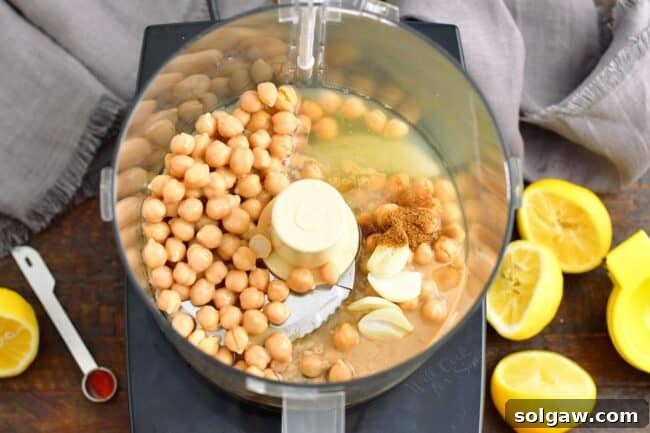
- Prepare the Chickpeas: Begin by opening your can of chickpeas. Drain the liquid into a separate bowl, making sure to **reserve approximately 1/2 cup of this chickpea juice**. Rinse the chickpeas thoroughly under cold running water until any foam subsides. This helps remove excess sodium and can improve the texture.
- Combine Ingredients: Transfer the rinsed chickpeas, the reserved 1/2 cup of chickpea liquid, fresh lemon juice, tahini, minced garlic cloves, olive oil, ground cumin, and salt into the bowl of your food processor or high-speed blender.
- Blend Until Smooth: Process the ingredients on high speed. You’ll need to stop occasionally to scrape down the sides of the bowl with a spatula, ensuring all ingredients are fully incorporated. Continue blending until the mixture is completely smooth and creamy. This may take a few minutes. The key to truly smooth hummus is patience and thorough blending; you want absolutely no lumps remaining. If the hummus appears too thick, add an additional tablespoon or two of the reserved chickpea liquid (or cold water) until your desired consistency is reached.
- Taste and Adjust: Once blended, taste the hummus and adjust the seasoning as needed. You might want to add more salt, a squeeze of extra lemon juice for brightness, or a pinch more cumin for warmth. This step is crucial for customizing the flavor to your liking.
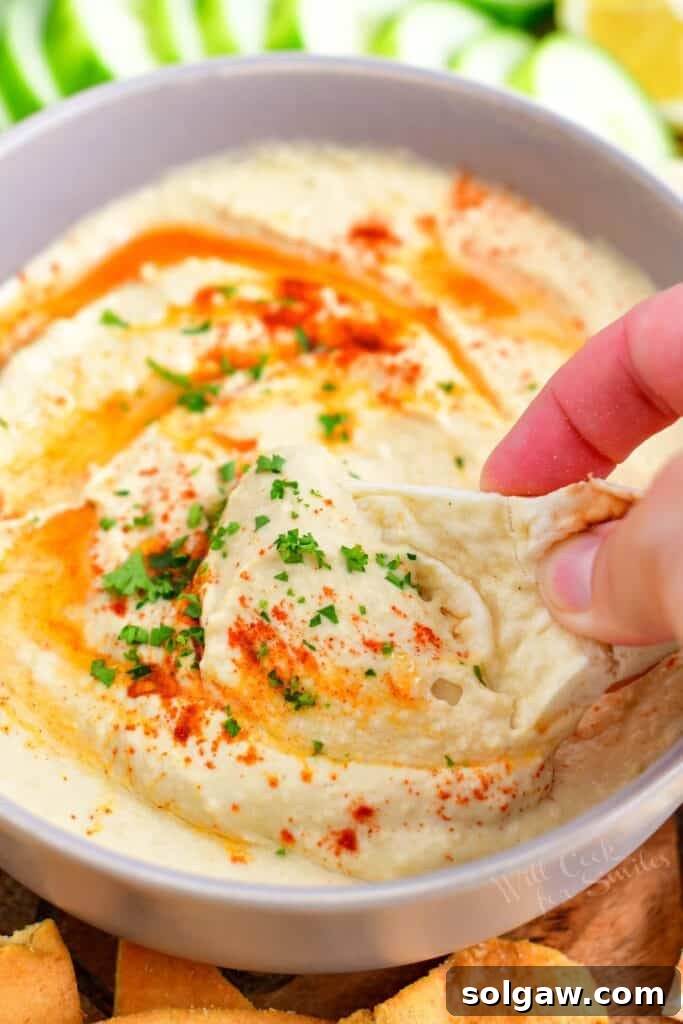
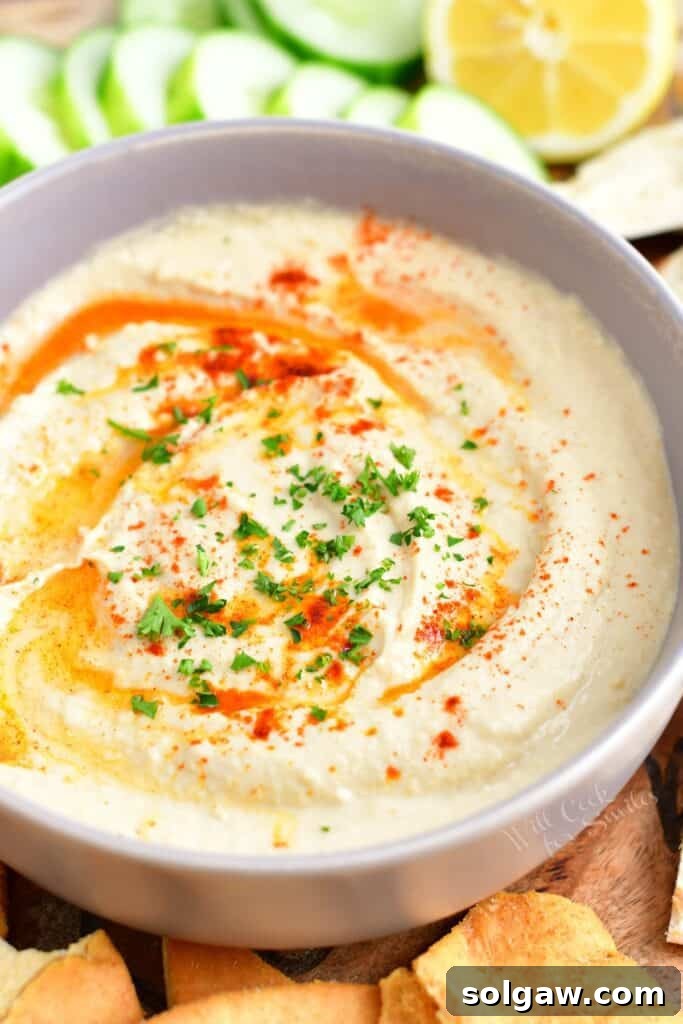
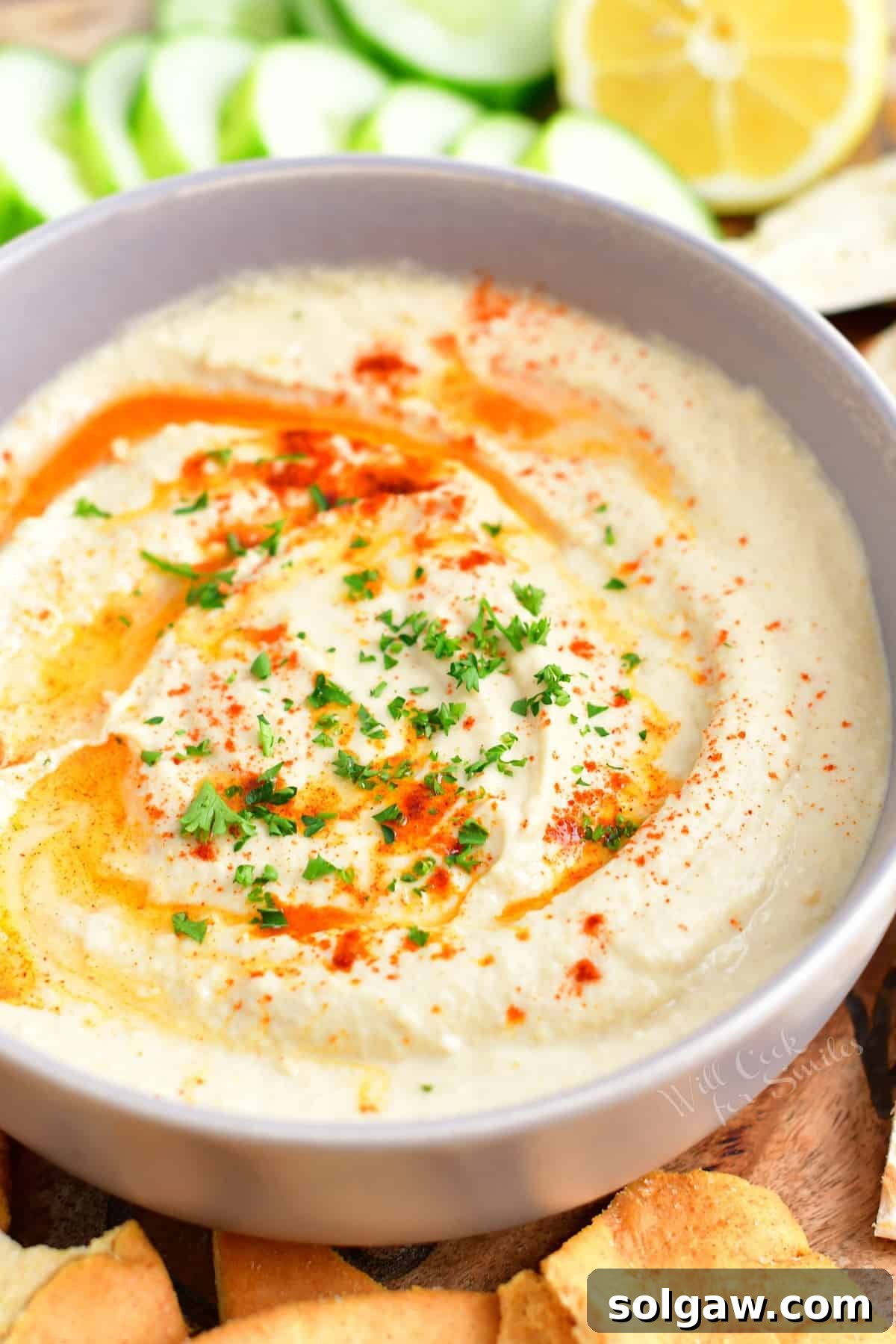
- Serve and Garnish: Transfer your freshly made hummus into your favorite serving bowl. For an elegant presentation and an extra layer of flavor, drizzle generously with good quality extra virgin olive oil. Finish with a sprinkle of vibrant red paprika. You can also add fresh herbs like chopped parsley, a dash of sumac, or a few toasted pine nuts for added texture and visual appeal.
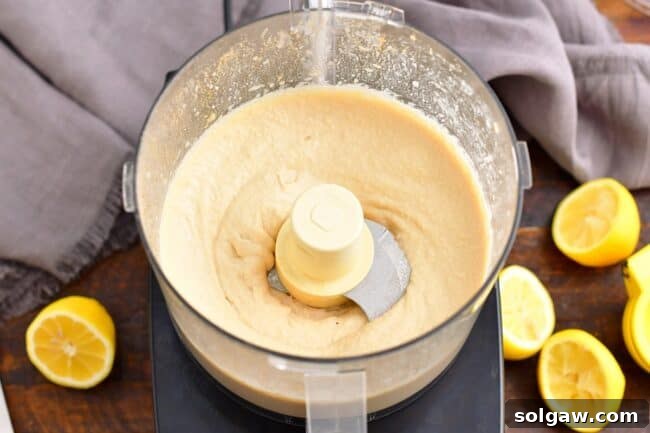
Enjoy your delicious homemade hummus immediately with warm pita bread, fresh vegetables, crackers, or as a spread in sandwiches and wraps. It’s perfect for parties, snacks, or a healthy addition to any meal!
Serving Suggestions and Storage Tips for Your Homemade Hummus
Now that you’ve mastered the art of making the perfect **homemade hummus**, let’s talk about how to best enjoy and store it. The beauty of this **versatile chickpea dip** lies in its adaptability, fitting seamlessly into various meals and occasions.
Creative Serving Ideas:
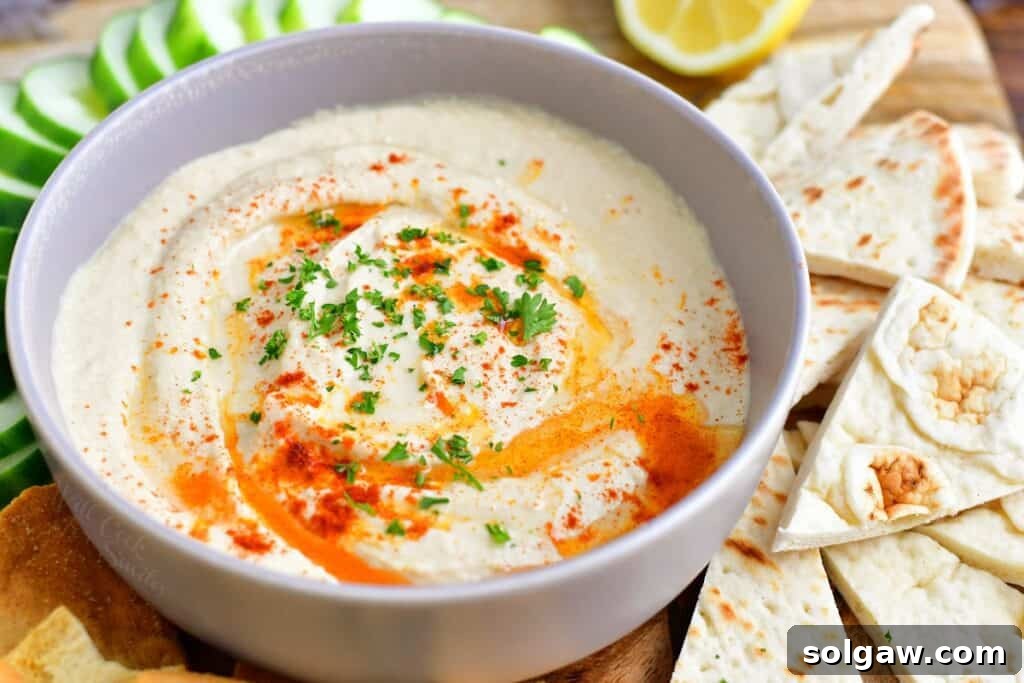
- Classic Dipping: The most popular way to enjoy hummus is as a dip. Serve it with warm pita bread, pita chips, fresh vegetable sticks (carrots, celery, cucumber, bell peppers), or crunchy crackers.
- Elevate Your Mezze Platter: Hummus is an essential component of any Middle Eastern mezze spread. Pair it with falafel, olives, dolmas, feta cheese, and other dips like baba ghanoush for an impressive appetizer board.
- Spread it On: Use hummus as a healthy and flavorful spread for sandwiches, wraps, and burgers. It adds creaminess and a boost of protein and fiber.
- Beyond the Dip: Incorporate hummus into bowls – think grain bowls with roasted vegetables, grilled chicken, or falafel. It also makes a fantastic base for salad dressings when thinned with a little extra lemon juice or water.
- Garnish for Impact: Always finish your hummus with a final flourish. A generous swirl of extra virgin olive oil, a sprinkle of paprika (sweet or smoked), fresh chopped parsley, or a dash of sumac will enhance both its flavor and presentation. For added texture, consider toasted pine nuts, a few whole chickpeas, or even a drizzle of chili oil.
Storage Tips:
To keep your **homemade hummus** fresh and delicious, proper storage is key:
- Refrigeration: Store any leftover hummus in an airtight container in the refrigerator. It will stay fresh for up to 5-7 days.
- Preventing Drying: To keep the surface from drying out and forming a film, you can press a piece of plastic wrap directly onto the surface of the hummus before sealing the container. Alternatively, drizzle a thin layer of olive oil over the top before refrigerating; this acts as a natural barrier.
- Freezing (Optional): While best enjoyed fresh, hummus can be frozen for longer storage. Transfer it to an airtight, freezer-safe container, leaving about an inch of headspace as it may expand slightly. It can be frozen for up to 3-4 months. Thaw overnight in the refrigerator and stir well before serving. You may need to add a splash of lemon juice or chickpea liquid and re-blend briefly to restore its creamy texture.
Enjoying your **classic homemade hummus** is not just about the recipe, but also about how you share and savor it. Its delicious simplicity makes it a truly adaptable and satisfying addition to any culinary repertoire.
More Easy Dip Recipes You’ll Love:
French Onion Dip – A classic party appetizer that is creamy, cheesy, and perfectly sweet from an abundance of caramelized onions.
Smoked Salmon Dip – A luxurious, creamy dip featuring prominent smoked salmon flavor, beautifully complemented by lemon, fresh dill, capers, and chives.
Queso Blanco Dip with Chorizo – A zesty and incredibly smooth Queso Blanco, enriched with savory sautéed chorizo sausage, peppers, and onions.
Cajun Shrimp Dip – A fiery and flavorful hot dip packed with succulent shrimp, crispy bacon, melted cheese, fresh veggies, and robust Cajun spices.
PIN THIS RECIPE FOR LATER
Classic Hummus
Print
Pin
Ingredients
- 16 oz can of chickpeas
- 1/2 cup chickpea liquid (from the can)
- 3 tbsp fresh lemon juice (approx. 1.5-2 lemons)
- 1/3 cup tahini
- 2-3 garlic cloves
- 3 tbsp olive oil
- 1/2 tsp ground cumin
- 1/2-1 tsp salt
- dash paprika (for topping)
Instructions
-
Strain the liquid from the can of chickpeas, reserving 1/2 cup of the liquid. Rinse the chickpeas thoroughly.
-
Combine the rinsed chickpeas, reserved chickpea liquid, fresh lemon juice, tahini, garlic cloves, olive oil, ground cumin, and salt in a food processor or blender.
-
Blend until the mixture is completely smooth and creamy, scraping down the sides as needed. Taste and adjust seasoning as desired.
-
Transfer the finished hummus into a serving bowl. Drizzle with extra olive oil and sprinkle with paprika before serving.
Nutrition