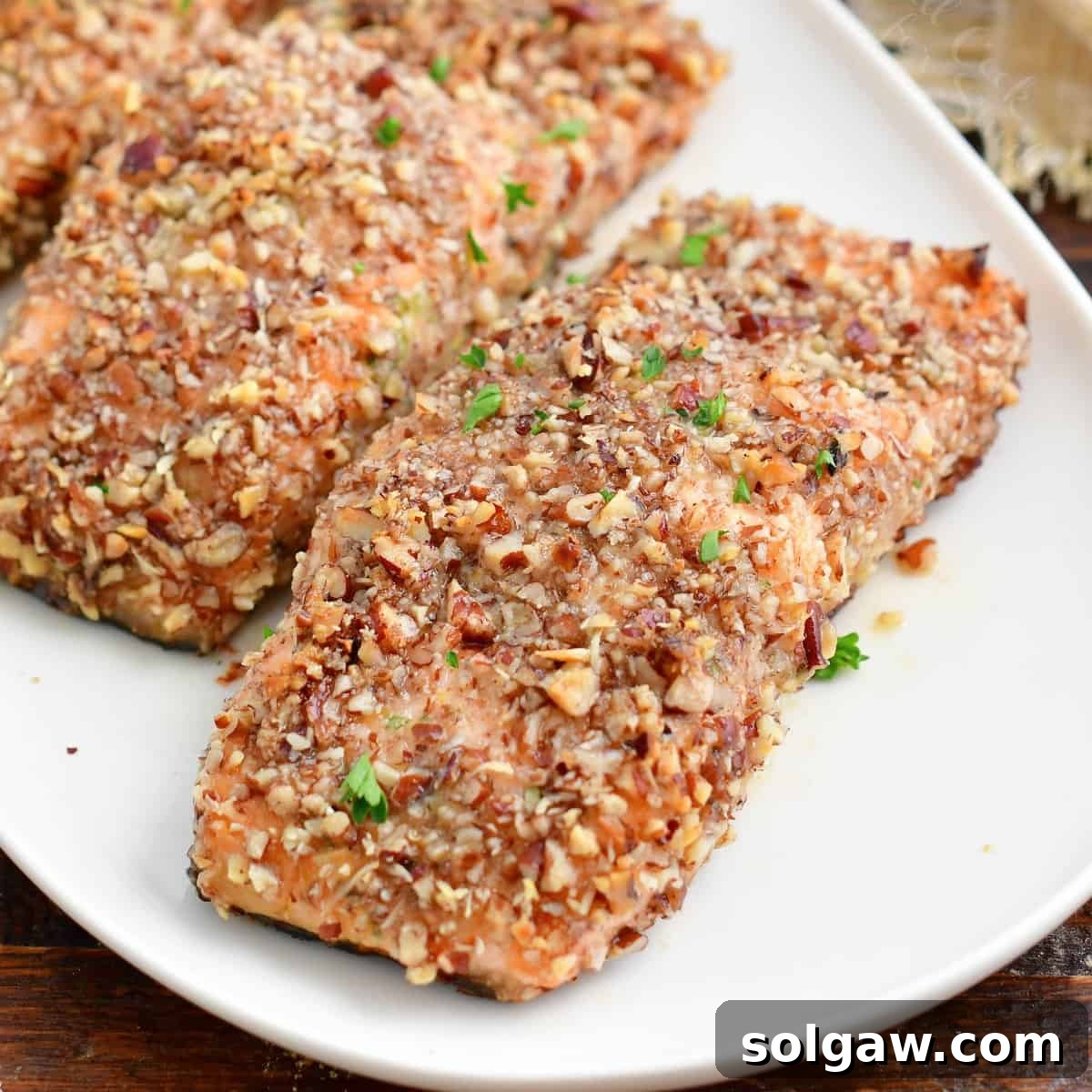
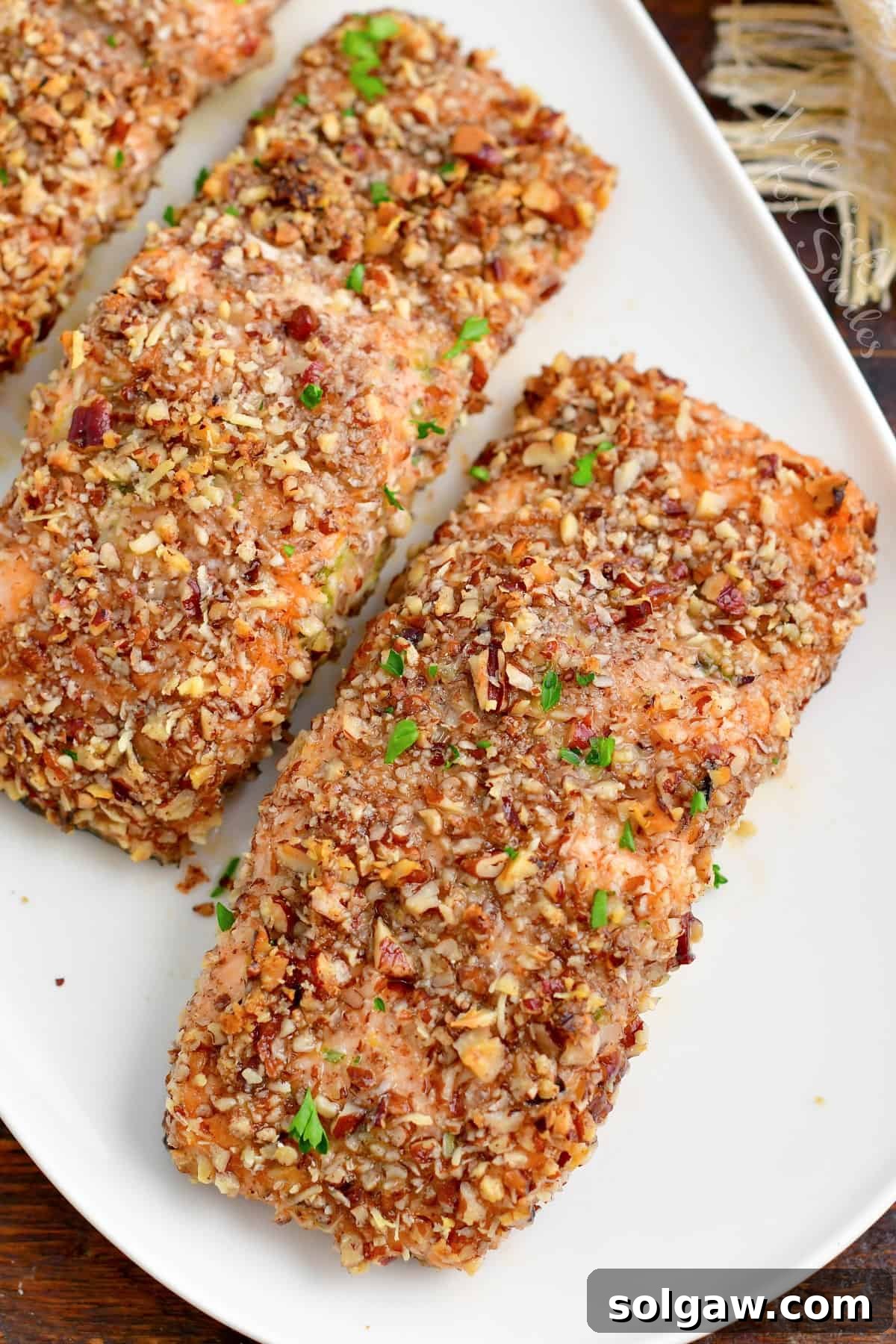
Pecan Crusted Salmon is more than just a meal; it’s a culinary revelation that needs a permanent spot on your dinner rotation! This effortlessly elegant, gluten-free recipe transforms ordinary salmon into an extraordinary dish. Each tender, flaky fillet is generously coated in a thin, flavorful layer of seasoned mayonnaise, then meticulously encrusted with a delightful mixture of finely crushed pecans and freshly grated Parmesan cheese. The result is a symphony of textures and flavors that will tantalize your taste buds and impress even the most discerning palates.
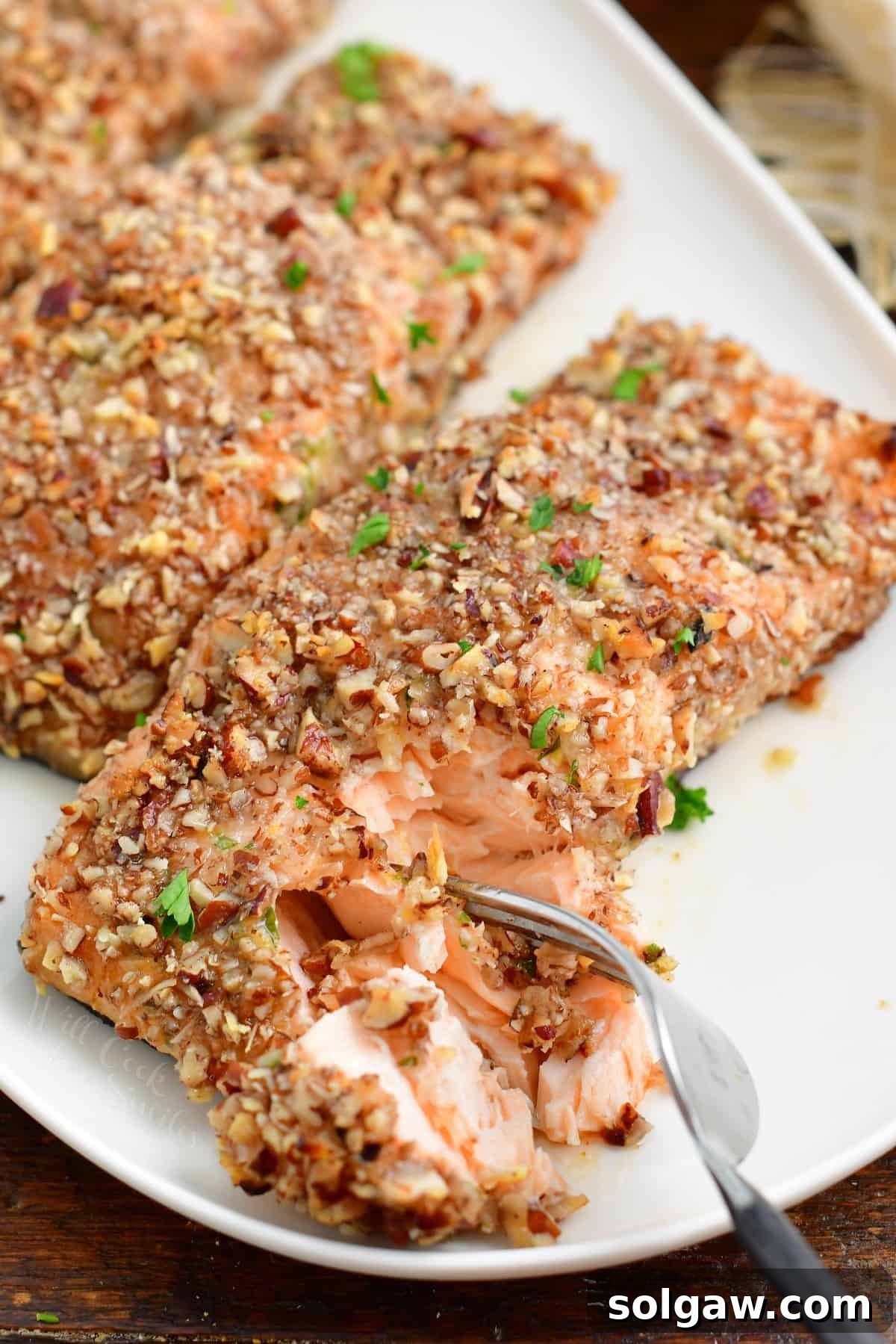
Table of Contents
The Allure of Pecan Crusted Salmon
This incredibly simple yet sophisticated pecan crusted salmon recipe comes together in just over 30 minutes, making it an ideal choice for busy weeknights or when you need to whip up something impressive in a flash. The salmon itself boasts a wonderfully juicy and tender texture, while the savory Parmesan and nutty pecan crust adds an irresistible crunch and depth of flavor that will truly make your mouth water. If you’ve been searching for a unique and incredibly flavorful salmon recipe that stands out from the crowd, this is undoubtedly the one you need to try.
I particularly love serving pecan crusted salmon when I want to dazzle my dinner guests without spending hours in the kitchen. It’s one of those entrées that consistently garners attention and a flurry of compliments. What’s even better is that people are often surprised when I reveal just how incredibly simple it is to prepare. You’ll only need about 30 minutes, a handful of fresh ingredients, and a blender or food processor to finely chop the pecans. The rest involves a few straightforward steps and the magic of your oven! This makes it a versatile main course you can enjoy and serve all year long, perfect for both casual family dinners and more formal gatherings with friends.
Why Salmon is a Superfood for Your Dinner Table
Salmon is renowned globally not just for its exquisite flavor but also for its impressive nutritional profile, making it a true superfood. Packed with beneficial nutrients, incorporating salmon into your diet regularly can have a significant positive impact on your health.
- Rich in Omega-3 Fatty Acids: Salmon is one of the best sources of long-chain omega-3 fatty acids, EPA and DHA, which are crucial for brain health, heart health, and reducing inflammation throughout the body. These essential fats are vital for maintaining proper bodily functions and can contribute to a lower risk of chronic diseases.
- Excellent Source of Protein: Providing high-quality protein, salmon supports muscle repair, growth, and overall satiety. Protein is fundamental for countless bodily processes, from enzyme production to hormone regulation.
- Abundant in Vitamins and Minerals: This versatile fish is a powerhouse of vitamins, including B vitamins (B1, B2, B3, B5, B6, B9, and B12), which play a critical role in energy production and nerve function. It also supplies essential minerals like potassium, selenium, and vitamin D, crucial for bone health, immune function, and thyroid regulation.
- Supports Bone Health: With its vitamin D content, salmon aids in calcium absorption, which is key for strong bones and preventing conditions like osteoporosis.
- Boosts Brain Function: The omega-3s in salmon are integral for cognitive health, memory, and even mood regulation. Regular consumption may help reduce the risk of age-related cognitive decline.
Beyond its health benefits, salmon is also incredibly versatile in the kitchen, adapting beautifully to various cooking methods and flavor profiles. Its rich, buttery texture and distinct taste make it a favorite among seafood lovers. Opting for sustainably sourced salmon further enhances its appeal, allowing you to enjoy this delicious and nutritious fish responsibly.
Crafting the Perfect Pecan Crusted Salmon: Step-by-Step
- Begin by preheating your oven to the specified temperature and prepare your baking sheet. Lining it with parchment paper is crucial; it not only prevents the delicate salmon from sticking but also makes cleanup remarkably easy, saving you precious time and effort.
- While your oven is warming up, turn your attention to the star of the crust: the pecans. Pulse them in a blender or food processor until they achieve a coarse, crumbly texture. Be careful not to over-process them into a fine dust; you want distinct pieces for that satisfying crunch. Once chopped, combine these pecans with freshly grated Parmesan cheese, a pinch of salt, and a dash of black pepper.
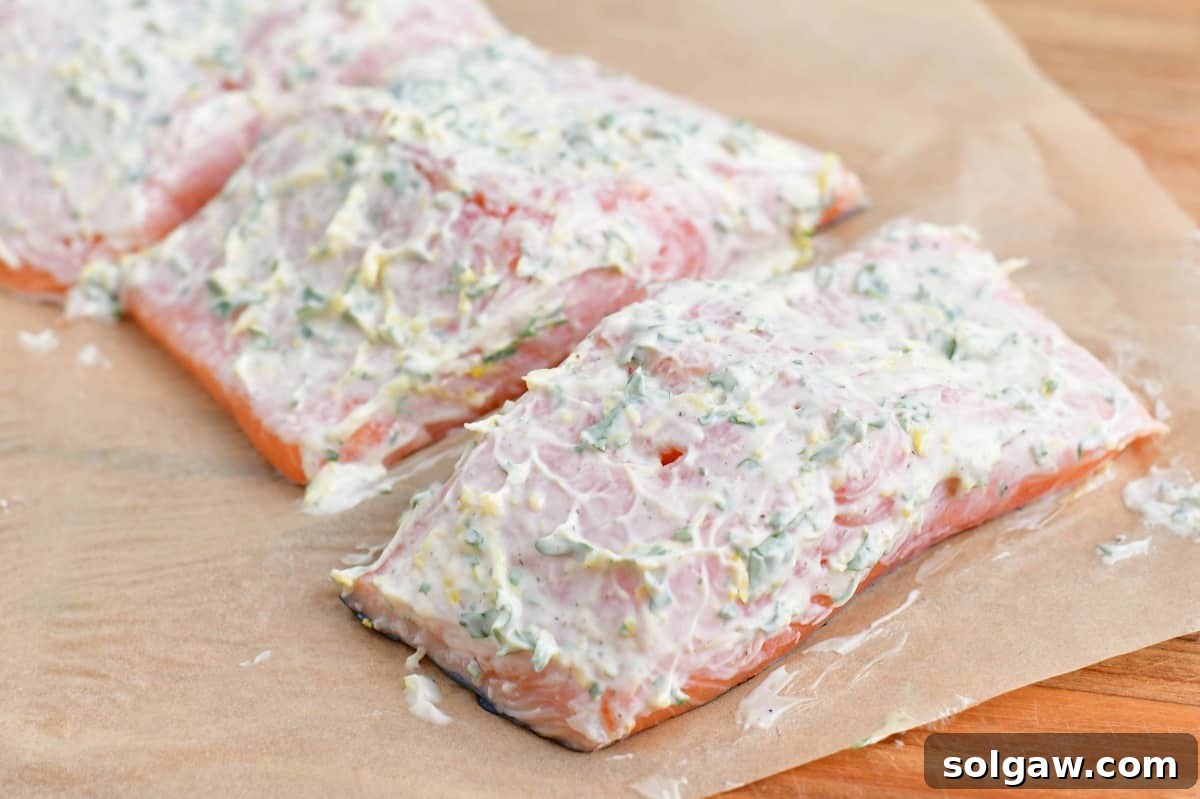
- Next, prepare your flavorful mayonnaise binder. In a separate bowl, whisk together all the mayonnaise ingredients, ensuring they are well combined. Before applying, gently pat your salmon fillets dry with paper towels to help the mayo mixture adhere better. Season the salmon lightly with salt, then generously rub the prepared mayonnaise mixture onto three sides of each fillet, leaving the skin side uncoated. This ensures the crust forms beautifully on the top and sides.
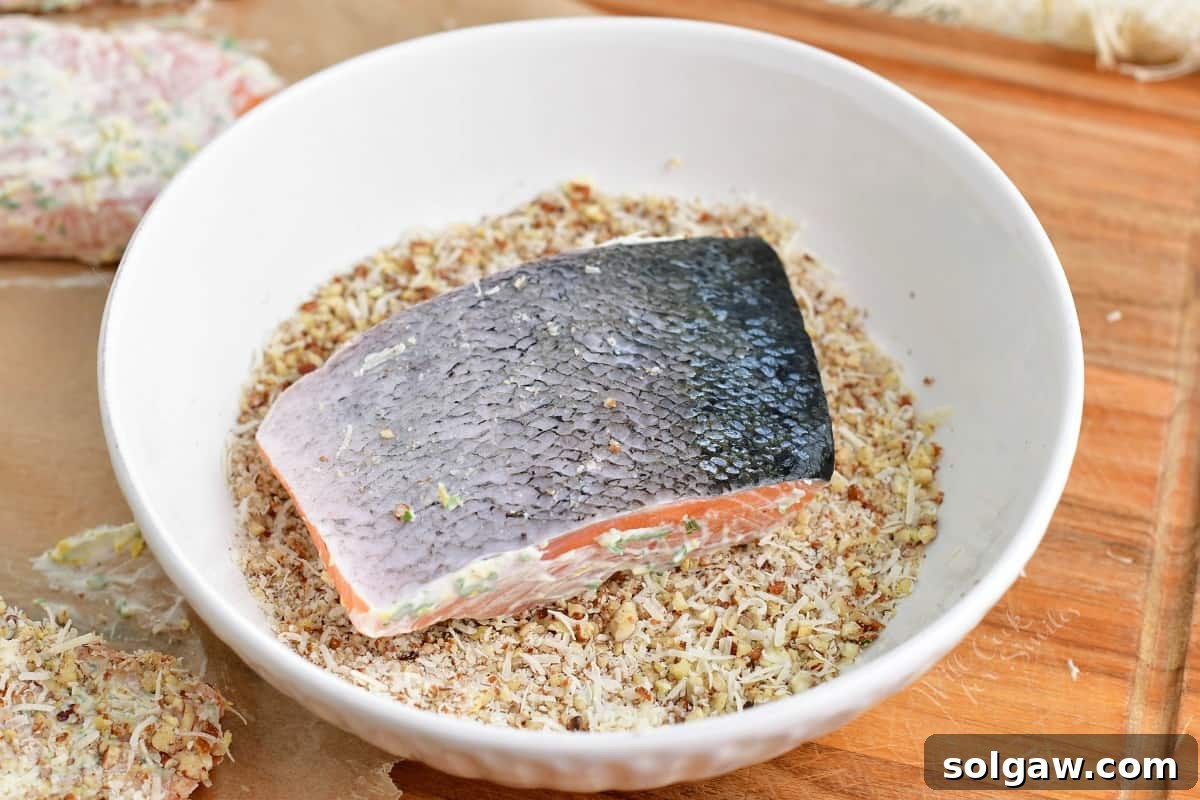
- Now for the crowning glory: the pecan-Parmesan crust. Carefully dip each mayonnaise-coated fillet into the pecan and Parmesan mixture. Gently press the mixture onto all three coated sides to create a delicious, even, and thoroughly satisfying crust. This step is where the magic happens, locking in moisture and adding incredible texture.
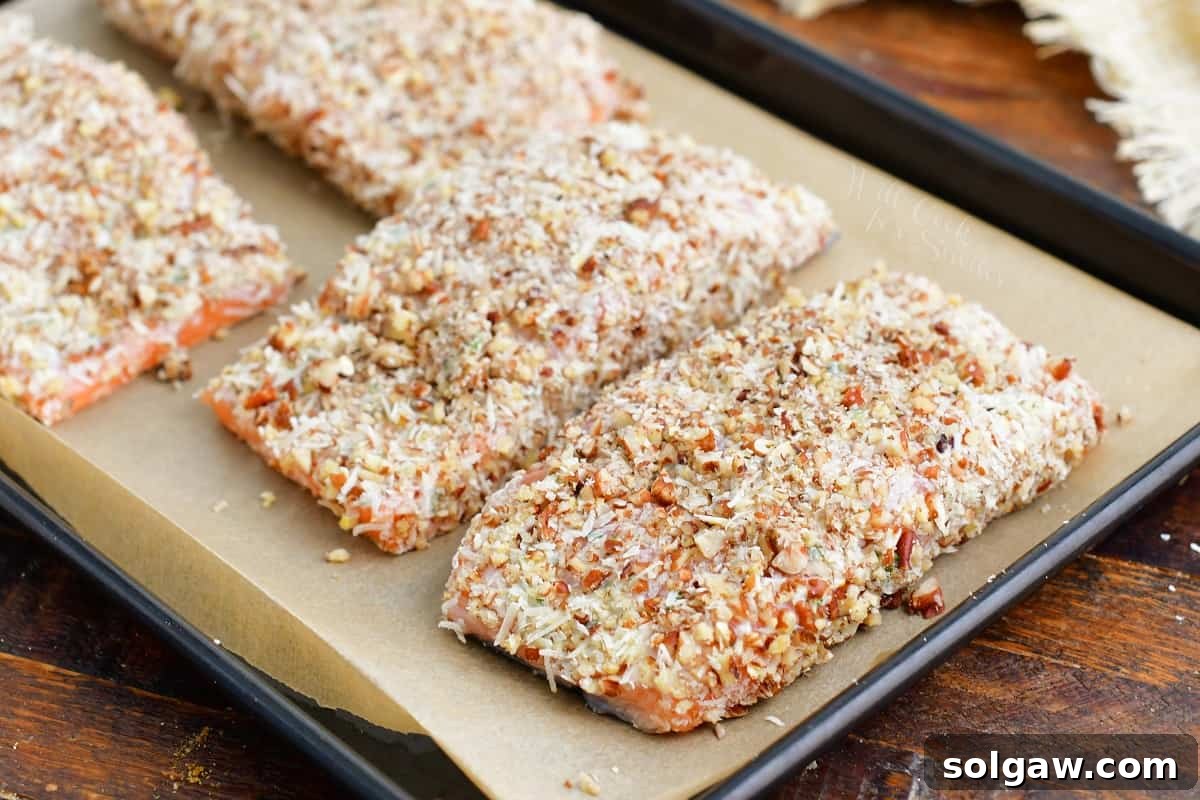
- Place the crusted salmon fillets onto your prepared baking sheet, ensuring they are skin-side down. Bake for approximately 18-25 minutes.
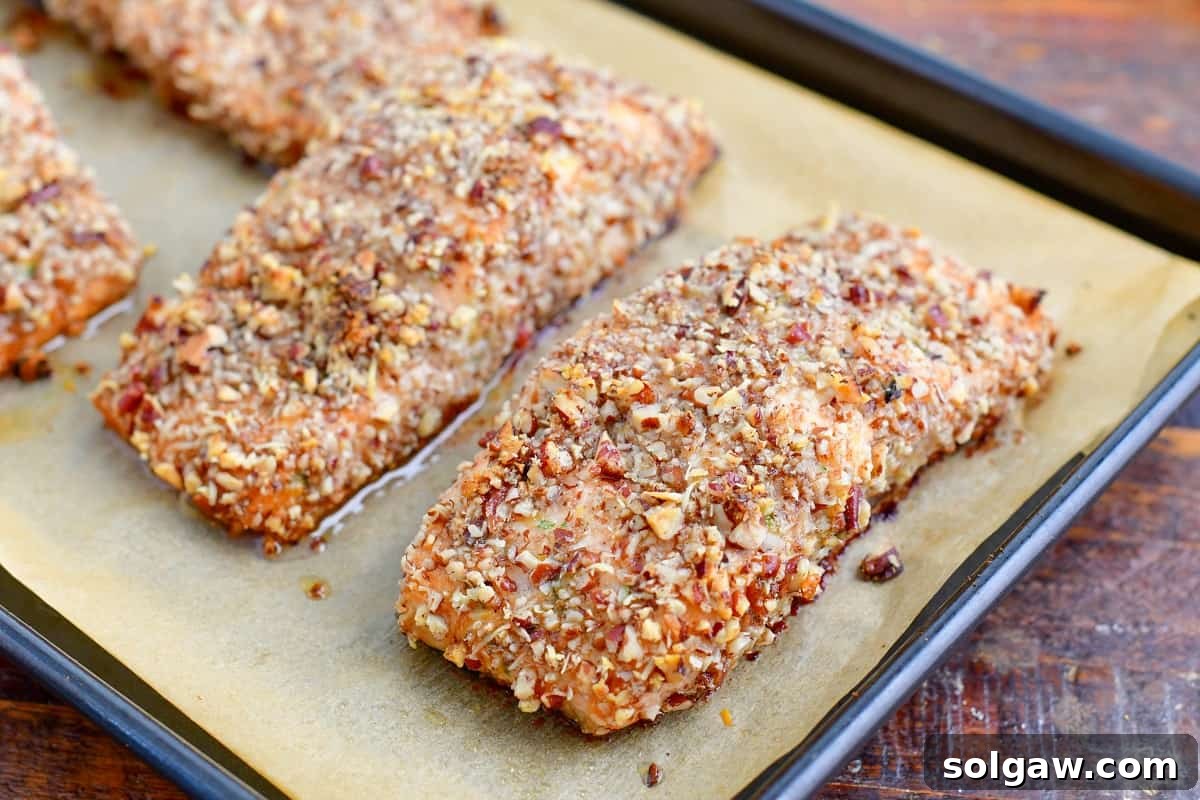
- It’s important to remember that baking times can vary significantly based on the size and thickness of your salmon fillets. Smaller, thinner fillets might cook through in as little as 15 minutes, while larger, thicker cuts could require up to 25 minutes to reach perfect doneness. Always use the indicators below to ensure your salmon is cooked just right.
How to Ensure Your Salmon is Perfectly Cooked
Achieving perfectly cooked salmon is key to a delightful dining experience. While suggested cooking times offer a good starting point, remember that various factors like fillet thickness and oven calibration can influence the actual time needed. Moreover, individual preferences vary—some enjoy their fish medium-rare, while others prefer it well-done. Here’s how to tell when your salmon is cooked to perfection:
- Internal Temperature is Your Best Friend: The most accurate way to gauge doneness is with a Digital Instant Read Thermometer. Insert the thermometer into the thickest part of the fillet, avoiding the bone. Salmon is considered fully cooked and safe to eat at 145°F (63°C). If you prefer your salmon in the medium to medium-well range, aim for an internal temperature between 125°F and 135°F (52°C – 57°C). The higher the temperature, the firmer and more cooked through the fish will be.
- The Firmness Test: Gently press down on the center of the salmon fillet with a fork or your finger. When cooked through, the flesh should feel firm but still have a slight bit of give. If it still feels squishy or raw, give it a few more minutes in the oven and check again.
- The Flake Test: Perhaps the most classic method, the flake test is highly reliable. Take a fork and gently twist it into the thickest part of the salmon. Cooked salmon will easily flake apart along its natural white lines (which are actually fat deposits). If it resists flaking, it needs more time.
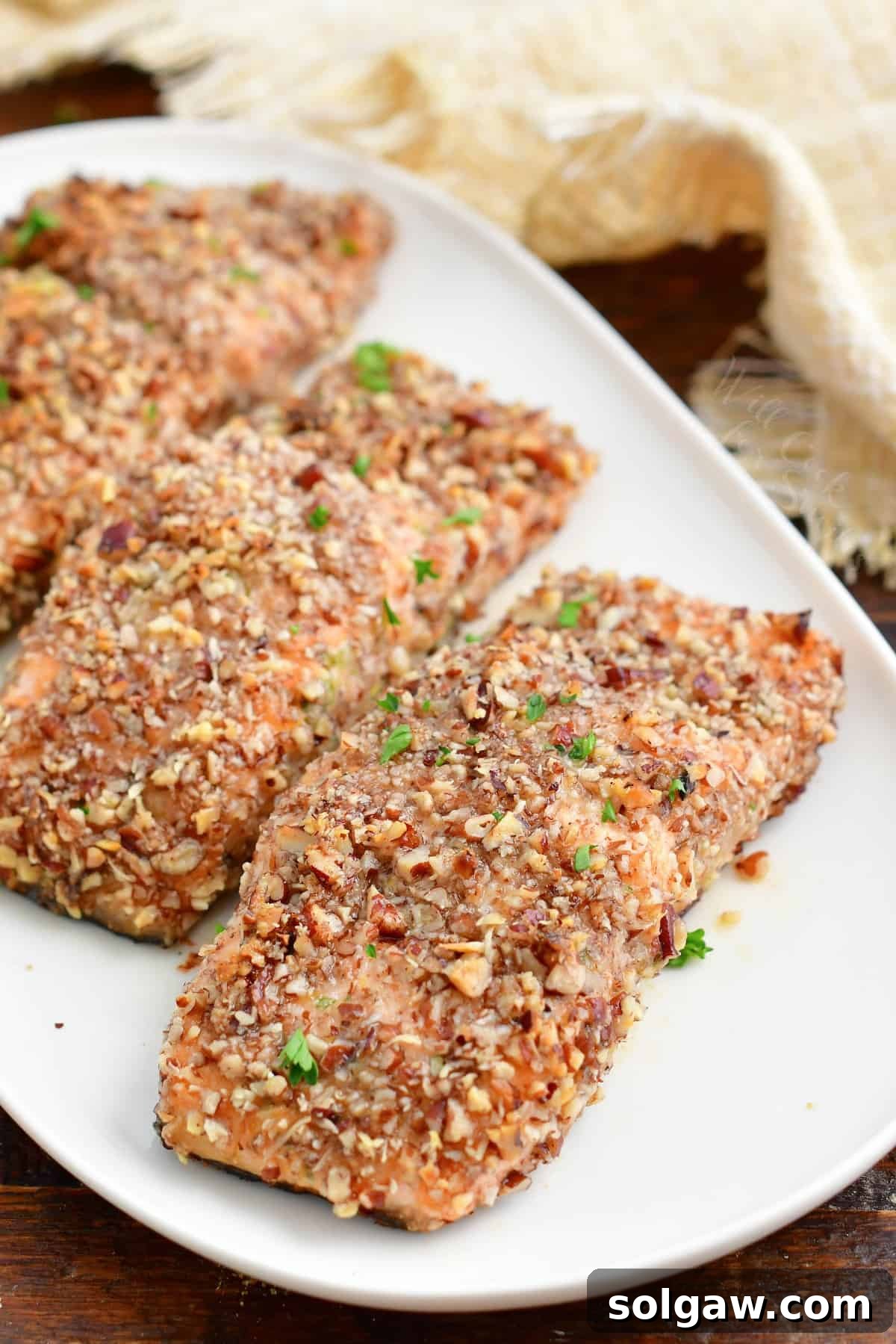
- Observe Opacity: Raw salmon is typically translucent and vibrant pink or orange. As it cooks, the flesh becomes opaque. The interior of a perfectly cooked fillet should still retain a slight “shine” and a very subtle translucence right at the center, transitioning to fully opaque towards the edges. The outside should appear completely opaque and golden from the crust.
Frequently Asked Questions About Pecan Crusted Salmon
There are several excellent reasons to keep the skin on your salmon fillets during cooking, even if you plan to discard it before serving.
Firstly, the salmon skin acts as a natural protective barrier. It shields the delicate flesh from the direct heat of the baking sheet and oven, preventing it from drying out and helping to keep the salmon moist and tender. Secondly, and very importantly, the fatty layer located between the skin and the flesh is where a significant portion of salmon’s healthy omega-3 fatty acids and rich flavors are stored. Cooking with the skin on helps to render these beneficial fats and infuse more flavor into the fillet, contributing to a more succulent and nutritious end product.
When planning your meal and estimating how much salmon to serve per person, a reliable rule of thumb is to allow for approximately 1/2 lb (about 225 grams) per person. This amount typically accounts for a generous dinner portion, especially when served as the main course. Of course, you can adjust this quantity based on your guests’ appetites and the number or richness of the side dishes you plan to serve alongside it. For lighter meals or if you have many accompanying dishes, you might opt for slightly less per person.
Delightful Sides to Complement Your Salmon
Pecan Crusted Salmon is a versatile main course that pairs wonderfully with a variety of side dishes. To create a balanced and satisfying meal, I always recommend including both a potato or grain-based side and a fresh vegetable.
- For hearty and comforting options, classic Mashed Potatoes or rustic Oven Roasted Potatoes are always a big hit. Their creamy or crispy textures provide a lovely contrast to the salmon’s rich flavor and crunchy crust.
- When it comes to vegetables, you can’t go wrong with vibrant choices like Roasted Green Beans and Mushrooms or elegant Italian Roasted Asparagus. These add freshness, color, and essential nutrients to your plate.
- If you’re aiming for a lighter dinner, consider serving your salmon with a crisp green salad or cauliflower-based side dishes. Options like perfectly Roasted Cauliflower or creamy Mashed Cauliflower offer a low-carb alternative that’s equally delicious and satisfying. The subtle flavor of cauliflower allows the salmon to truly shine.
More Healthy and Delicious Salmon Recipes to Try
If you’ve fallen in love with the ease and flavor of this Pecan Crusted Salmon, you’ll be thrilled to discover more incredible salmon recipes that are both healthy and utterly delicious. Salmon is a fantastic choice for any meal, offering a wealth of nutrients and endless culinary possibilities. Here are some other favorites to inspire your next seafood dinner:
- Easy Healthy Baked Salmon: A simple yet satisfying recipe perfect for any day of the week.
- Avocado Salmon Rice Bowl: A vibrant, fresh, and wholesome bowl packed with good fats and flavors.
- Creamy Spinach and Sun-Dried Tomato Stuffed Salmon: An elegant dish that’s surprisingly easy to make, bursting with creamy, savory fillings.
- Teriyaki Salmon: A classic sweet and savory glazed salmon that’s a family favorite.
- Grilled Salmon Burgers: A fantastic alternative to traditional burgers, offering a lean and flavorful meal.
Each of these recipes brings out the best in salmon, ensuring you always have a delightful and nutritious option ready for your culinary adventures.
PIN THIS RECIPE FOR LATER
DID YOU MAKE THIS RECIPE? Please leave a 🌟 star rating! Let me know how you liked it by leaving a 📝 comment below or share and tag me on social media @willcookforsmiles. DON’T FORGET to subscribe to my newsletter for more delicious recipes!
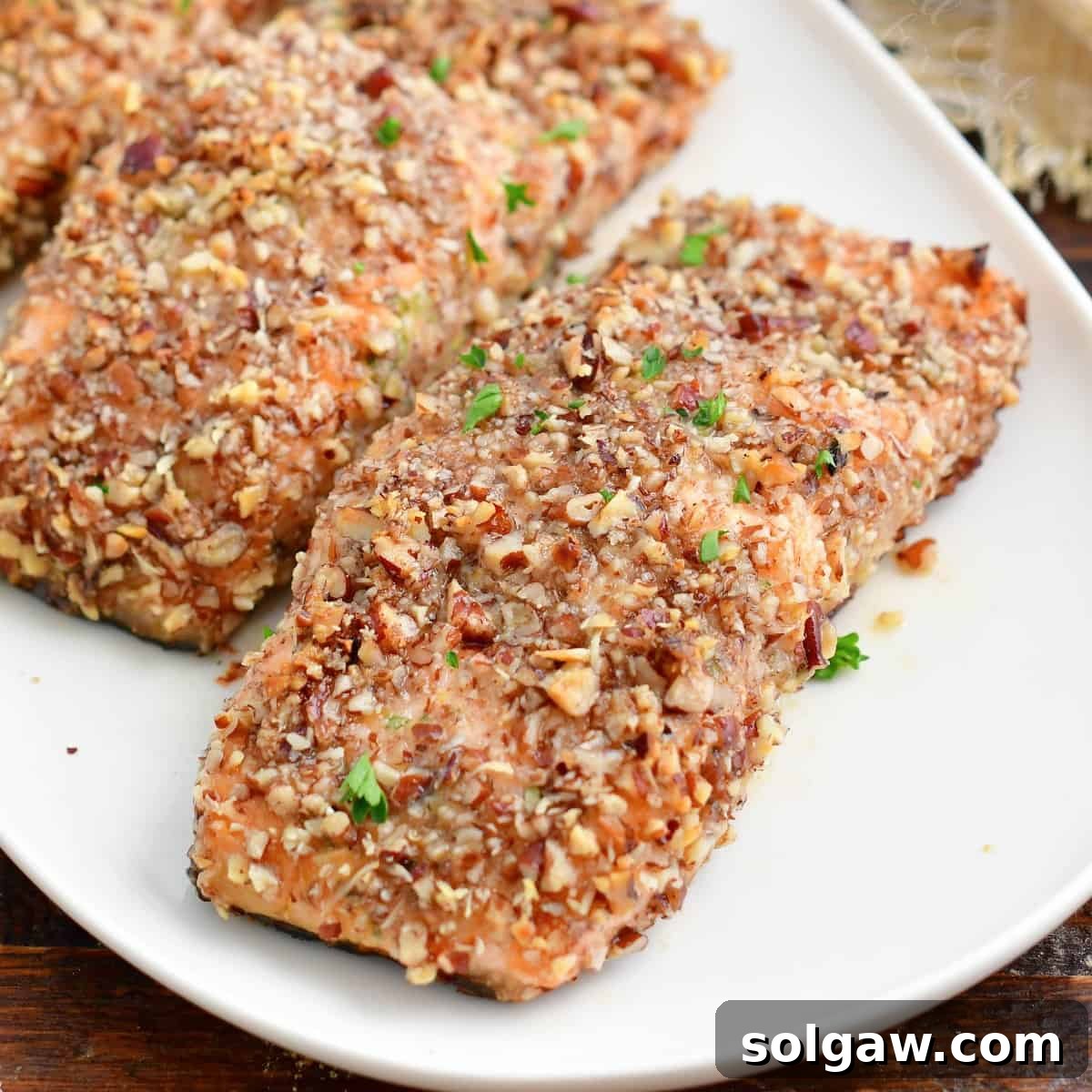
Pecan Crusted Salmon Recipe
Pecan Crusted Salmon is an easy, juicy baked salmon coated in a layer of flavored mayo and a mixture of crushed pecans and Parmesan cheese, perfect for a healthy gluten-free dinner.
Print Recipe
Pin Recipe
Watch Video
Rate This Recipe
Main Course
American
Gluten Free
15 minutes
20 minutes
35 minutes
4
517kcal
Lyuba Brooke
Ingredients
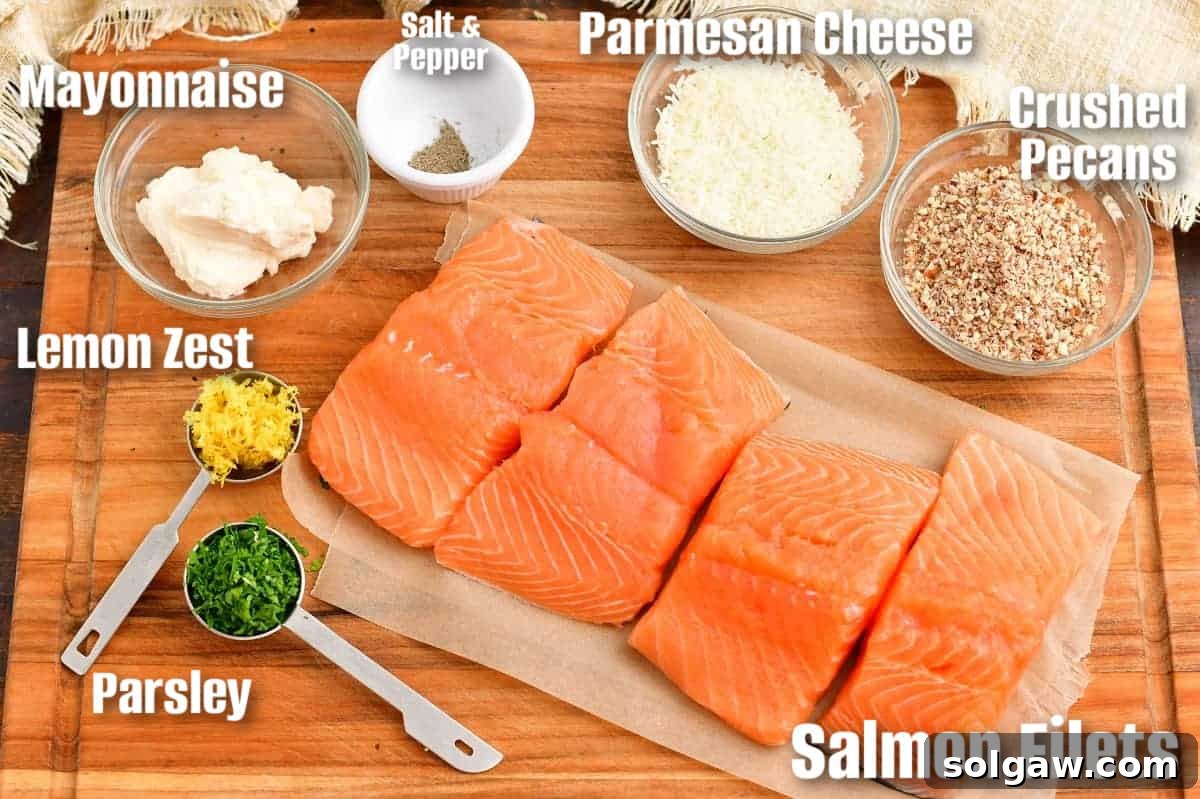
- 4 skin-on salmon fillets, 6-8 oz. each
- 1/4 cup mayonnaise
- 1 lemon – zest only
- 1 tbsp fresh minced Parsley
- 1/2 cup grated Parmesan Cheese
- 2/3 cup crushed pecans
- Salt, to taste
- Black pepper, to taste
Instructions
- Preheat your oven to 425°F (220°C). Line a rimmed baking sheet with parchment paper to prevent the salmon skin from sticking and to ensure easy cleanup.
- In a blender or food processor, pulse the pecans until they form coarse crumbles. Be careful not to process them too finely into a dust; you want a visible texture for the crust. If using a block of Parmesan, grate it fresh.
- In a small bowl, combine the mayonnaise, lemon zest, fresh minced parsley, and a dash of salt and pepper. Mix until all ingredients are well incorporated.
- In a separate wide and shallow bowl, combine the coarsely crushed pecans, grated Parmesan cheese, and a sprinkle of salt and pepper. This will be your crust mixture.
- Pat the salmon fillets thoroughly dry with a paper towel. This step is crucial for the mayonnaise and crust to adhere properly. Lightly rub the skin side of the salmon with a touch of oil to help prevent sticking.
- Season the top of each salmon fillet with a little salt. Then, generously rub the prepared mayonnaise mixture onto three sides of the fillets (the top and two long sides), leaving the skin side free.
- Carefully dip each mayonnaise-coated salmon fillet into the pecan and Parmesan mixture. Gently pat the mixture onto the three coated sides to create an even and robust crust.
- Place the crusted salmon onto the prepared baking sheet, skin-side down. Bake for 18-22 minutes. Keep in mind that the exact baking time may vary based on the thickness of your salmon fillets; thinner fillets may cook in as little as 15 minutes, while thicker ones could take up to 25 minutes. Refer to the ‘How to Tell If Salmon Is Done’ section for guidance.
Video
Notes
How To Tell If Salmon Is Done:
- Internal temperature is always the best indicator. Use a Digital Instant Read Thermometer to check the temperature in the center of the thickest part. Salmon is considered done at 145°F (63°C). If you prefer it medium to medium-well, cook it to 125°F – 135°F (52°C – 57°C). The higher the temperature, the more cooked through the fish will be.
- Press on the center. When the meat is cooked through, it will feel firm to the touch with the slightest bit of give. If it still feels squishy, allow it a few more minutes and check again.
- See if it flakes. You’ll notice white lines running throughout the fillet, which indicate the fat content. If the fish separates easily along these lines when gently prodded with a fork, it’s ready to eat!
- Check the opacity. Raw fish is fairly translucent but becomes more opaque when cooked. The inside of a properly cooked fillet should still have a slight “shine” to the flesh, while the outside should look completely opaque and the crust golden.
Nutrition
Carbohydrates: 3g |
Protein: 40g |
Fat: 38g |
Saturated Fat: 7g |
Polyunsaturated Fat: 15g |
Monounsaturated Fat: 14g |
Trans Fat: 1g |
Cholesterol: 110mg |
Sodium: 355mg |
Potassium: 934mg |
Fiber: 2g |
Sugar: 1g |
Vitamin A: 280IU |
Vitamin C: 3mg |
Calcium: 176mg |
Iron: 2mg
Mention @willcookforsmiles or tag #willcookforsmiles!
Originally published on Will Cook For Smiles in June 2021.