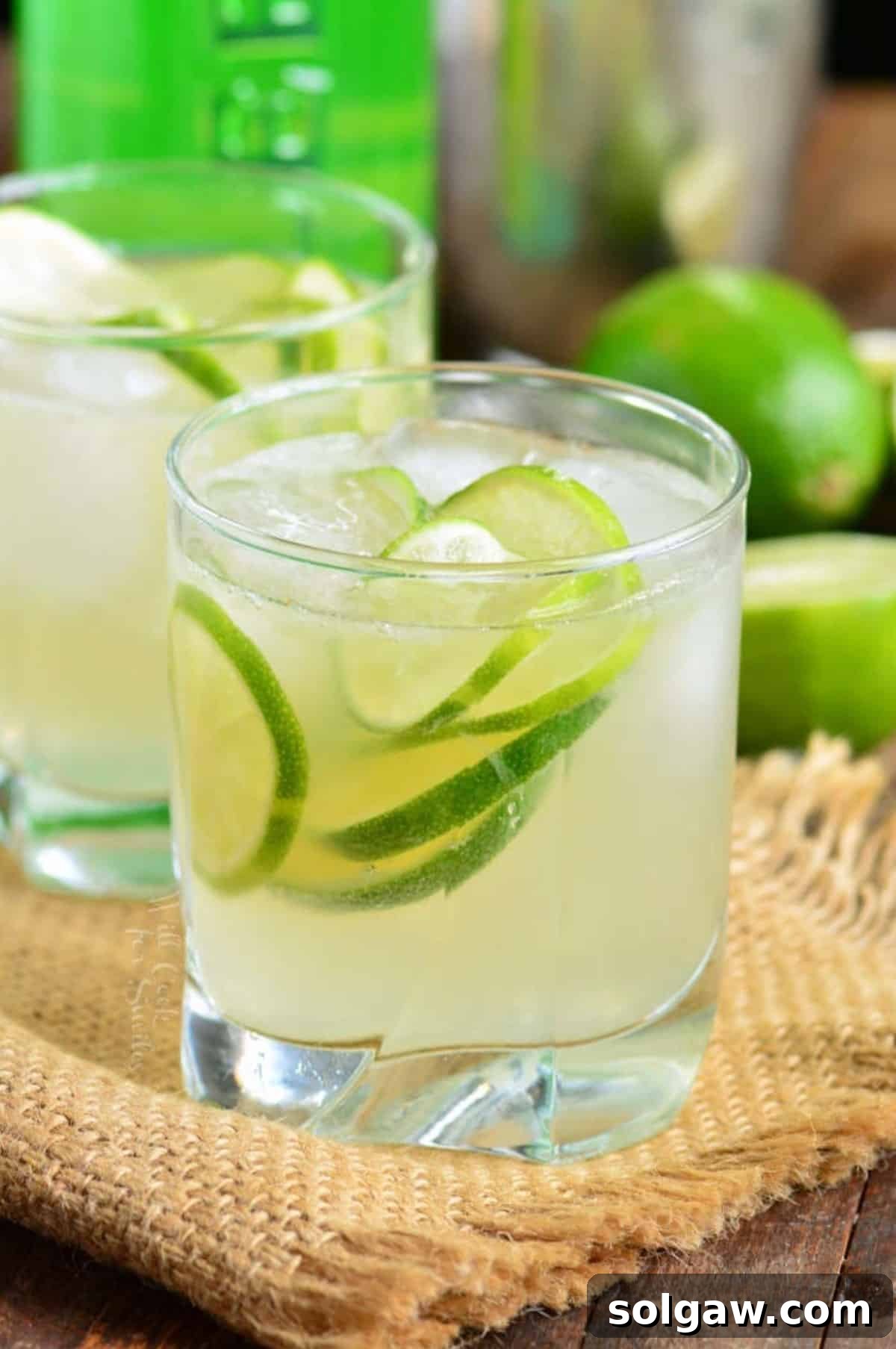
Caipirinha is much more than just a cocktail; it’s a vibrant taste of Brazil, perfectly capturing the country’s lively spirit and tropical essence. This iconic drink is famously crafted from just three simple ingredients: premium Cachaca liquor, fresh limes, and sugar. When prepared with care and precision, it transforms into an incredibly smooth, sweet, and wonderfully refreshing concoction, ideal for leisurely sipping, especially during warm weather or as a delightful companion to any celebration. Its effortless charm and potent flavors have made it a global favorite, beloved by cocktail enthusiasts and those seeking a unique, exotic experience.
If the invigorating flavors and zesty kick of the Caipirinha pique your interest, you’ll undoubtedly appreciate other classic cocktails that share a similar refreshing profile. Consider exploring timeless favorites like the Mojito, with its fresh mint and rum; the crisp and effervescent Tom Collins; or the perfectly balanced Daiquiri, known for its elegant simplicity. Each offers a unique journey of taste, yet all deliver that sought-after refreshment that defines a truly great drink.
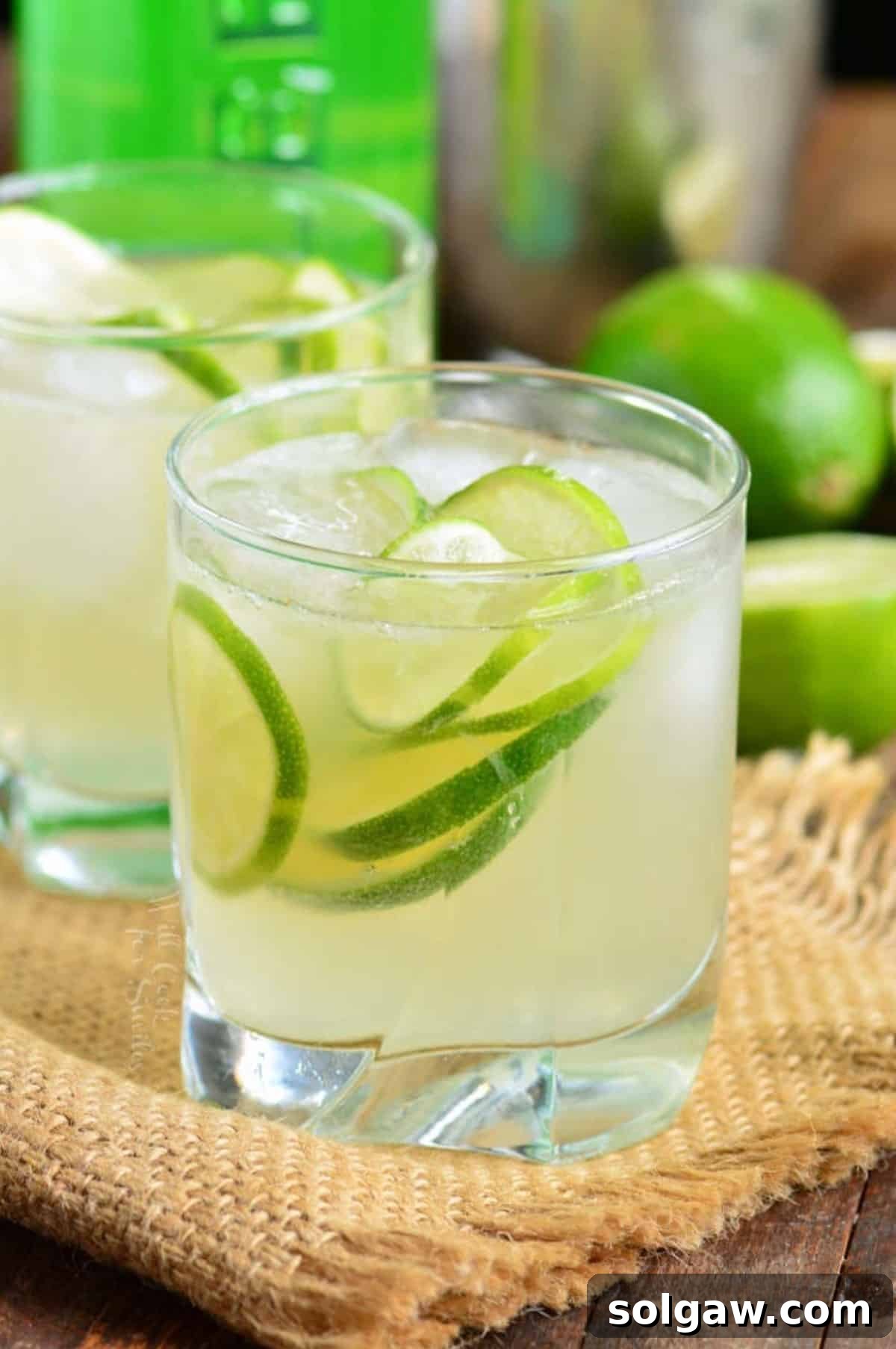
Table of Contents
What is Caipirinha? Brazil’s National Cocktail
So, what exactly is a Caipirinha (pronounced kai-per-EE-nyuh)? At its core, the Caipirinha is Brazil’s official national cocktail, a declaration that speaks volumes about its importance in Brazilian culture. You’ll find it proudly served in most Brazilian steakhouses across the United States, as well as in numerous restaurants and bars worldwide. However, a word of caution: unless you’re at an authentic Brazilian establishment, it’s often wise to inquire about their preparation method. This seemingly simple cocktail can be surprisingly nuanced, and getting it right is key to its legendary appeal.
An improperly prepared Caipirinha is a missed opportunity. Instead of a delightfully sweet and refreshing experience, you might end up with something closer to straight Cachaca—which, trust me, isn’t as pleasant as it sounds for most palates. Cachaca, a distinctive Brazilian spirit, is often compared to rum, but with crucial differences. Unlike rum, which is typically distilled from molasses, Cachaca is made directly from the fermented juice pressed from raw sugarcane stalks. This fundamental distinction gives Cachaca a unique flavor profile that sets it apart.
Because Cachaca utilizes raw sugarcane juice that hasn’t been processed into molasses, it possesses a more distinct herbaceous, grassy, or even plant-like taste, often lacking the inherent sweetness found in many rums. This bold character means that a Caipirinha absolutely requires a generous and precise amount of sugar to achieve the perfect equilibrium. The magic happens during the muddling process: when lime slices and sugar are thoroughly crushed together, the sugar gradually melts, releasing all the vibrant, aromatic juices and essential oils from the lime peel. This infusion is what truly defines the Caipirinha, transforming raw ingredients into a symphony of balanced, invigorating flavors.
The Story of Caipirinha: A Rich History
The Caipirinha’s origins are deeply rooted in Brazilian history, believed to have emerged in the early 20th century in the rural areas of São Paulo state. Initially, it was a local drink concocted by farmers and rural workers, a simple blend of Cachaca, lime, honey, and garlic, used as a remedy for the Spanish Flu! Over time, the honey and garlic were replaced by sugar, and ice was added, transforming it from a medicinal tonic into the refreshing cocktail we know and love today. Its name, “Caipirinha,” is the diminutive of “caipira,” which loosely translates to “countryside dweller” or “rustic,” perfectly reflecting its humble, rural beginnings.
From these rustic roots, the Caipirinha slowly but surely moved from the countryside to the bustling cities of Brazil, eventually becoming a staple on beaches, in bars, and at celebrations across the nation. Its official recognition as Brazil’s national drink solidified its status as a symbol of Brazilian identity and hospitality. Today, no visit to Brazil, or a Brazilian-themed restaurant, would be complete without experiencing the authentic taste of a well-made Caipirinha. It embodies the warmth, the joy, and the vibrant culture of Brazil in every sip, making it a truly global ambassador for Brazilian flavors.
Ingredient Deep Dive: The Heart of Your Caipirinha
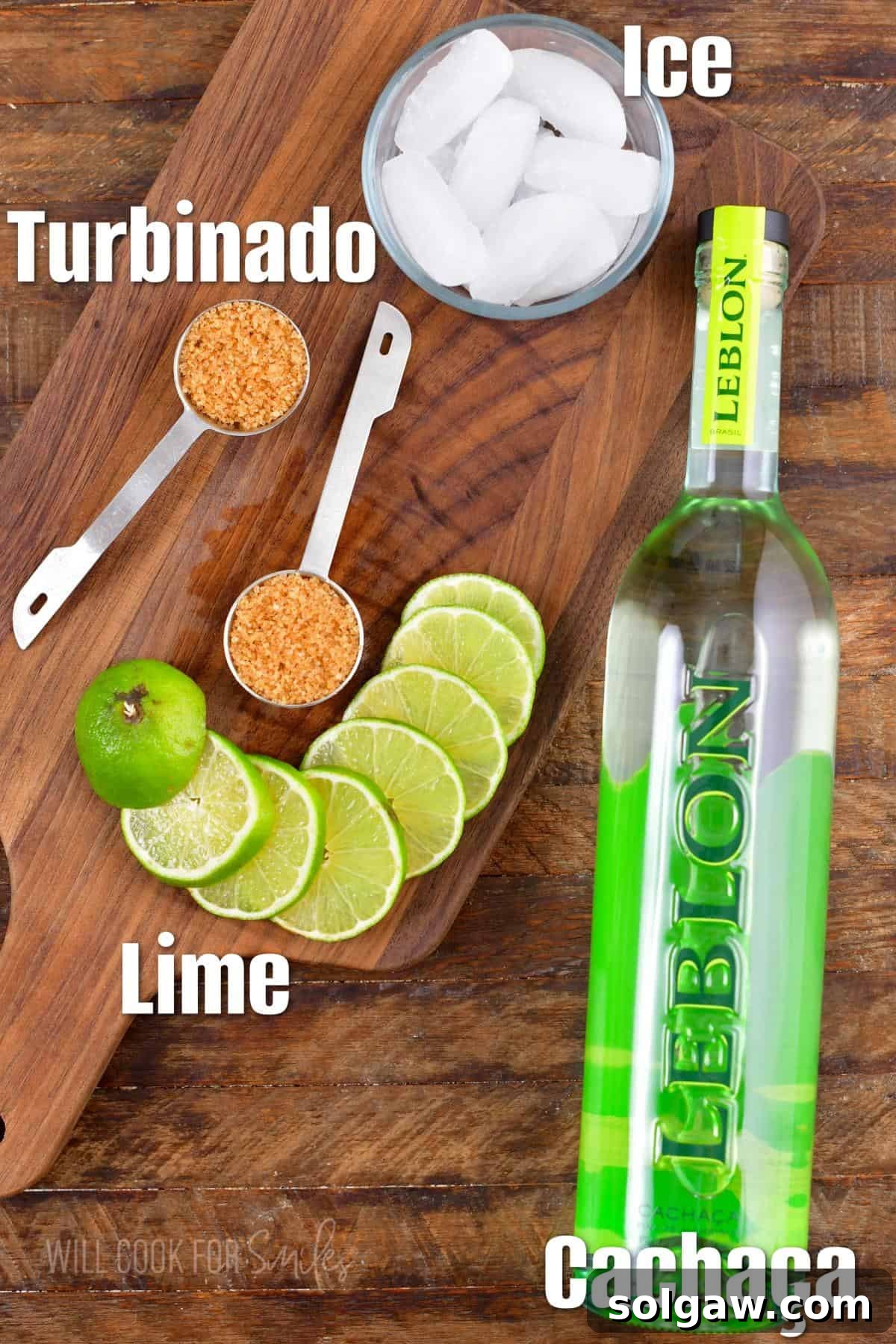
Making an exceptional Caipirinha starts with understanding and selecting the best possible ingredients. Since this cocktail has a relatively high liquor-to-other-ingredients ratio, the quality of each component shines through vividly. Here’s how to choose wisely:
Cachaca: Choosing the Right Spirit
As Cachaca forms the backbone of the Caipirinha, your choice of spirit is paramount. This is not the time to skimp on quality. Using a **better brand of Cachaca** will elevate your cocktail from good to outstanding, making a world of difference in its smoothness and overall flavor profile. Look for artisanal or premium Cachacas, which are often aged briefly in wood barrels, offering a more refined taste. Brands like Leblon, Sagatiba, and Avua are widely available and well-regarded for their quality. While cheaper Cachacas exist, they can be harsh and unpleasantly alcoholic, masking the delicate balance you aim to achieve. A good Cachaca will offer a complex, vegetal, and slightly funky aroma, with a smooth finish that complements the lime and sugar beautifully.
Limes: The Essential Citrus Element
The lime is the undisputed co-star of the Caipirinha. For the most flavorful and juicy results, always use **ripe, fresh limes**. How to pick the best ones? Select limes that are firm, feel heavy for their size (indicating juiciness), and have a bright, vibrant green skin. Avoid those that are too hard, light, or have wrinkled, dull skin. Before slicing, give your limes a good roll on the countertop with the palm of your hand; this helps to break down the internal membranes, making them much easier to juice and muddle. Slice them into wedges or small chunks, ensuring they’re small enough to fit comfortably in your glass and be efficiently muddled. Using **room temperature limes** is also a pro tip, as their juices melt the sugar faster, contributing to a smoother mix.
Sugar: Balancing the Flavors
Sugar is not just for sweetness in a Caipirinha; it’s a critical component that interacts with the lime to extract its essential oils and balance Cachaca’s strong character. The gold standard for this cocktail is **raw sugar, also known as turbinado sugar**. Its larger, coarser crystals are perfect for the muddling process, as they act as an abrasive, helping to break down the lime and release maximum flavor. Turbinado also imparts a subtle, slightly caramel-like note that enhances the cocktail’s complexity. The main downside is that it takes a little longer to melt, so you’ll need to muddle the limes and sugar for a more extended period.
If turbinado isn’t available, you have other options. You can **substitute brown sugar** for a deeper, richer molasses flavor, or **superfine sugar** (caster sugar) for quicker dissolution. When using brown or superfine sugar, it’s advisable to use a slightly smaller amount than you would turbinado, as they are finer and can taste sweeter in the same volume. Granulated white sugar can also be used, but it offers a less complex flavor profile than turbinado or brown sugar. The goal is always a smooth, dissolved sugar that blends seamlessly with the lime and Cachaca.
Ice: The Unsung Hero
While often overlooked, the quality and type of ice play a crucial role in a Caipirinha. Use **fresh, clean ice cubes** made from filtered water. Large, solid cubes are preferable as they melt slower, chilling your drink without over-diluting it too quickly. Avoid using ice that has absorbed freezer odors, as this can negatively impact the taste of your cocktail. Plenty of ice is essential to keep the Caipirinha perfectly chilled and refreshing, especially given its potent nature.
For a full list of ingredients and precise measurements, please refer to the recipe card below.
Crafting the Perfect Caipirinha: Step-by-Step Guide
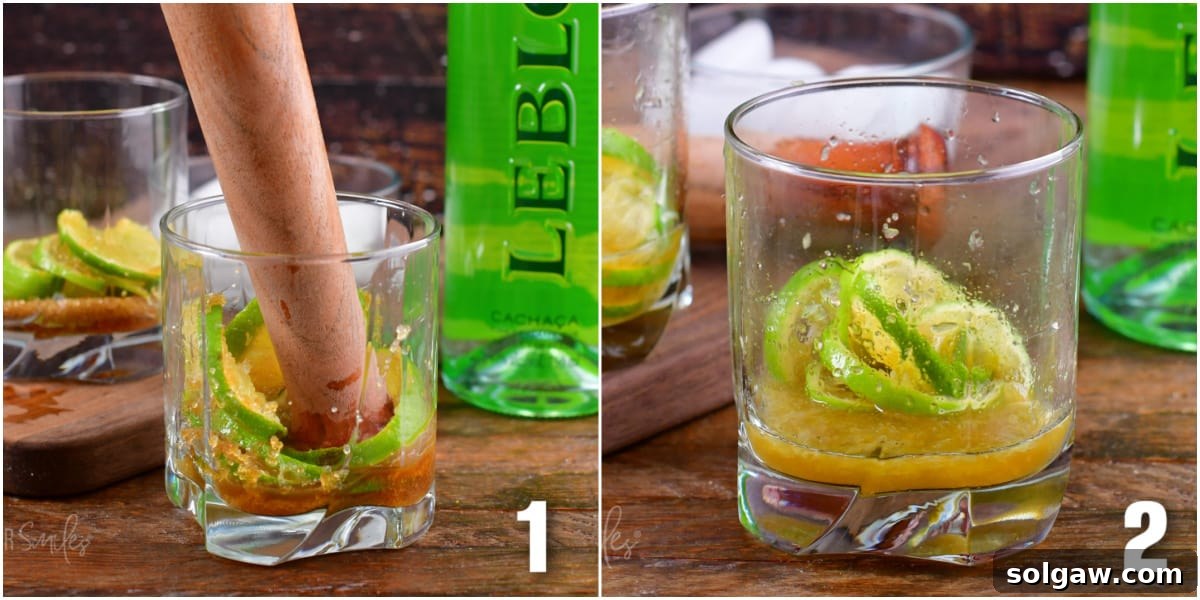
Making a Caipirinha is an art of simplicity, where technique truly matters. Follow these steps to achieve a perfectly balanced and utterly delicious cocktail:
Mastering the Muddling Technique
**1. Prepare the Limes:** Start with a fresh lime at room temperature. Give it a firm roll on your countertop to maximize juice extraction. Cut off both ends of the lime, then slice it into small wedges or half-moon chunks. Aim for about 4-6 pieces from a medium-sized lime. Place these lime pieces into a sturdy rock glass or a dedicated cocktail mixing glass.
**2. Add the Sugar:** Spoon your preferred amount of raw (turbinado) sugar over the lime pieces in the glass. Typically, 1.5 to 2 tablespoons is a good starting point, but you can adjust to your sweetness preference.
**3. Muddle with Care:** This is the most crucial step. Using a muddler, gently but firmly press and twist the lime and sugar together. The goal is to extract the lime juice and essential oils from the peel, while simultaneously dissolving the sugar. Avoid over-muddling the white pith of the lime, as this can release bitter flavors into your drink. You should see the sugar granules dissolving and the lime releasing its fragrant juices. Continue muddling, muddle, muddle, until the sugar is almost entirely dissolved, forming a thick, syrupy mixture with the lime juice. This may take 30-60 seconds depending on the sugar type.
PRO TIP: Always use **room temperature limes**. Their cell walls are more relaxed, making it easier for the juices to escape and melt the sugar faster, leading to a more efficient and flavorful muddle.
Mixing and Serving for Optimal Enjoyment
**4. Add Ice and Cachaca:** Once the sugar is dissolved, fill the glass with ice cubes, almost to the top. Then, pour in 3 ounces of your chosen Cachaca.
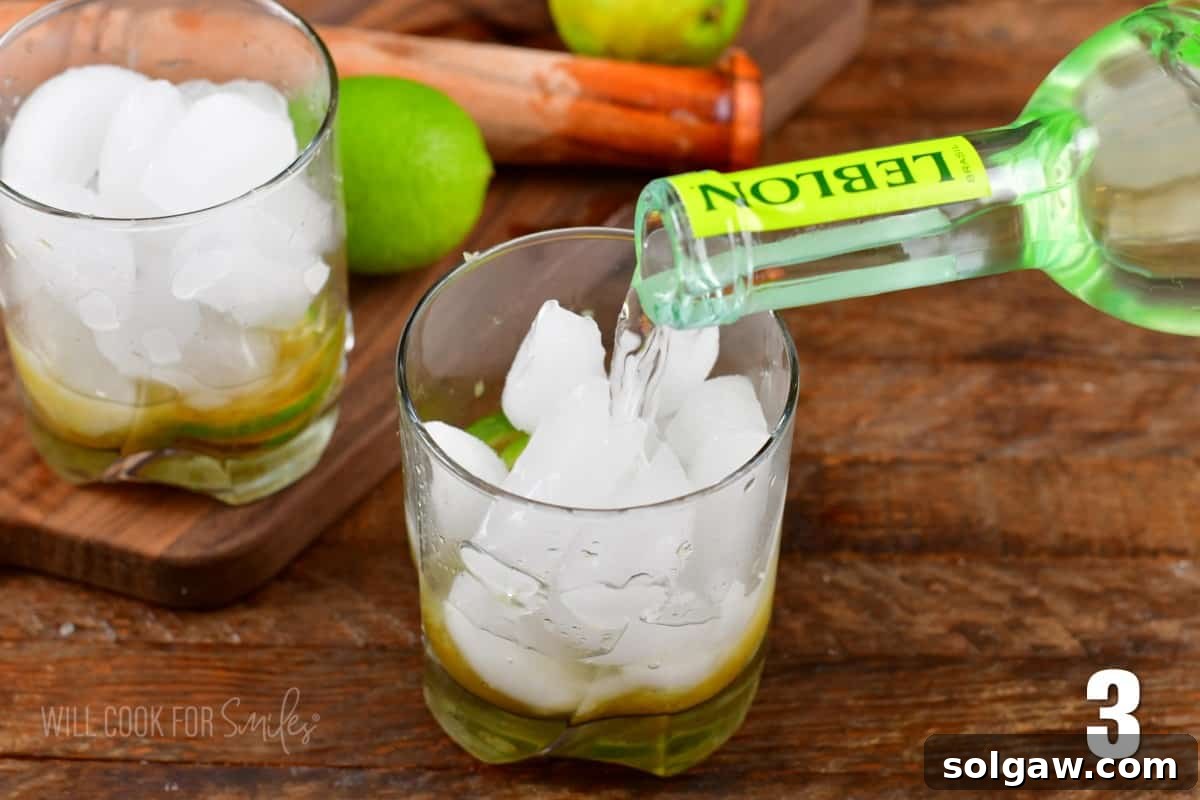
**5. Mix it Up:** To ensure all ingredients are perfectly combined and the drink is properly chilled, use another larger glass or a cocktail shaker. Pour the mixture back and forth between the two glasses a couple of times. Alternatively, give it a good shake for about 10-15 seconds if using a shaker. This mixing process helps to further dissolve any remaining sugar, thoroughly chill the cocktail, and marry the flavors.
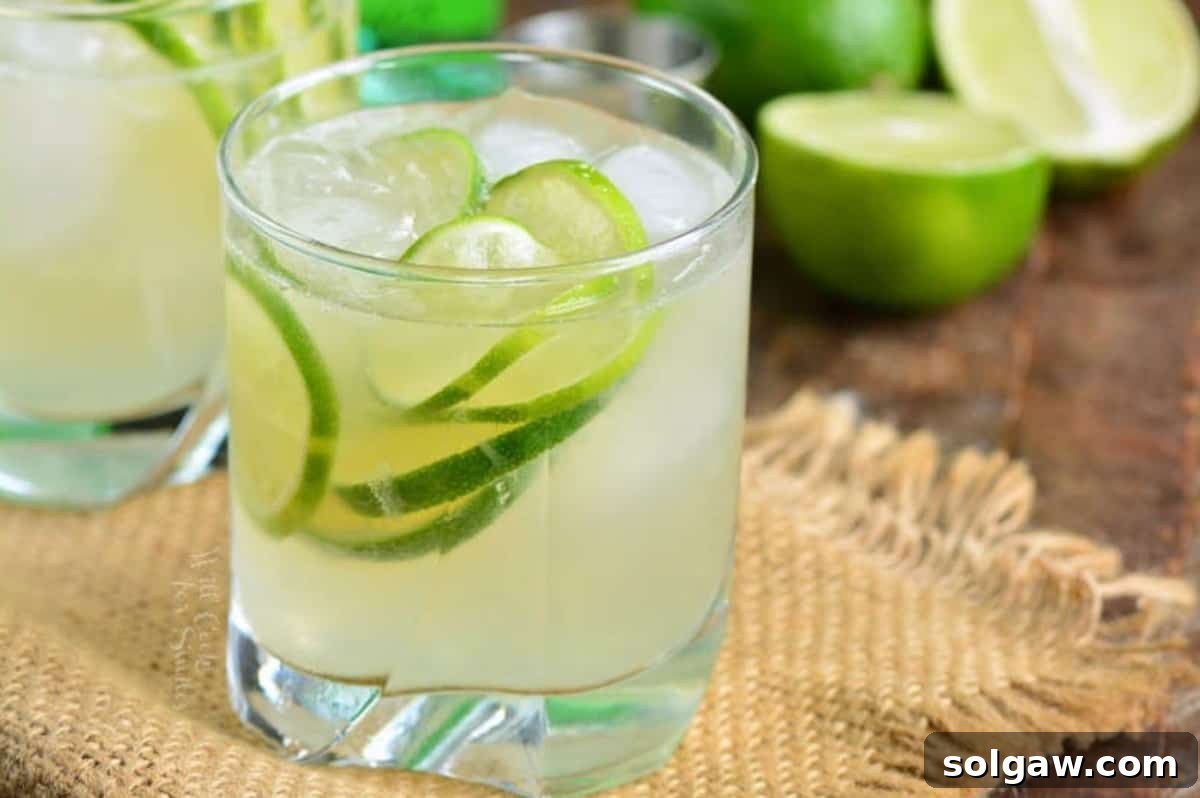
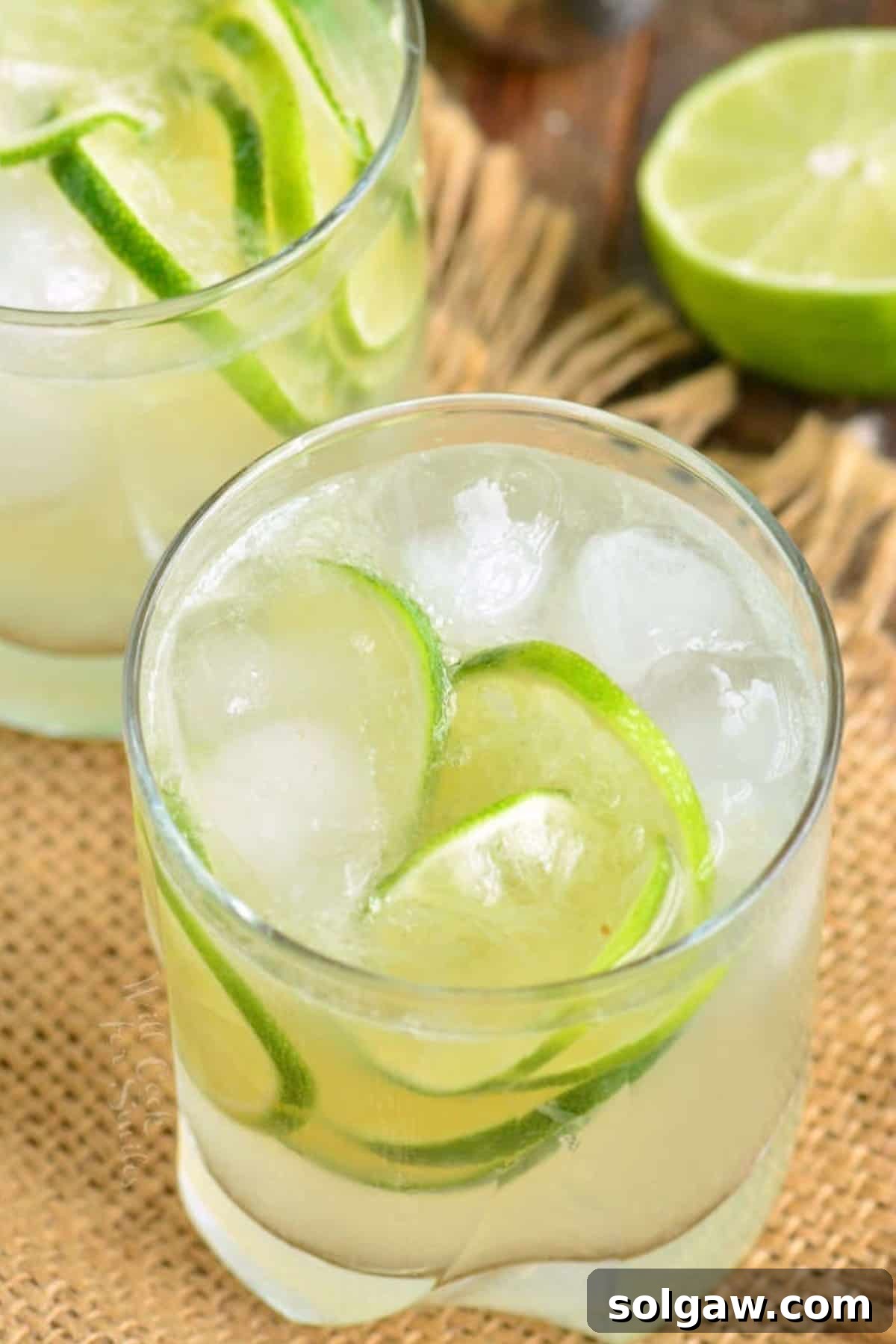
**6. Serve and Enjoy:** Pour the entire contents (limes, sugar, Cachaca, and ice) back into the original glass or a fresh rock glass. Garnish with an extra lime wedge or wheel if desired. The Caipirinha is best enjoyed immediately, savored slowly to appreciate its complex yet refreshing profile.
Caipirinha FAQs: Your Questions Answered
Cachaca (pronounced kah-SHAH-sah in Brazil) is a unique Brazilian “rum-like” spirit, but it has a distinct identity. Unlike traditional rum, which is primarily made from molasses (a byproduct of sugar refining), Cachaca is distilled directly from fresh, raw sugarcane juice. The process involves pressing juice from raw sugarcane stalks, fermenting this juice, and then distilling it into a spirit. Because it’s made with raw sugarcane juice that hasn’t been processed into molasses, Cachaca boasts a distinctive herbaceous, grassy, or vegetal taste that is generally **not sweet** on its own. It can be unaged (clear, potent, and vibrant) or aged (amber-colored, smoother, and more complex), with the unaged variety being most common for Caipirinhas.
Technically, yes, you can use different sugars, but be aware that the flavor and texture won’t be exactly the same. While turbinado (raw sugar) is highly recommended for its coarser grain that aids in muddling and its subtle caramel notes, alternatives like white granulated sugar or light brown sugar can be substituted. If using white granulated sugar, it will dissolve quicker but provide a less nuanced flavor. Brown sugar will impart a deeper, molasses-rich taste. It’s important to note that turbinado is a larger grain, so if you’re substituting with finer granulated or brown sugar, you might need to use a little less to achieve your desired sweetness without making the drink overly sweet. You could also use simple syrup (equal parts sugar and water) for very quick dissolution, but it changes the traditional muddling dynamic of the Caipirinha.
Yes, a Caipirinha is typically considered a strong drink. This is due to its high ratio of Cachaca to other ingredients and the concentrated flavors of muddled lime and sugar. However, if the balance of lime and sugar is just right, it becomes remarkably smooth and dangerously easy to drink. The acidity of the lime cuts through the alcohol, and the sugar mellows Cachaca’s herbal notes. For personal taste, you can adjust the amount of sugar from 1.5 to 2 tablespoons (or even more) to achieve a smoother profile. The key is finding that perfect equilibrium between the potent spirit, the zesty lime, and the sweet sugar to create a cocktail that is robust yet incredibly palatable. Don’t be afraid to experiment with the sugar quantity to suit your preference!
To ensure a perfect Caipirinha every time, avoid these common pitfalls:
- Over-muddling the Limes: Pressing too hard or too long on the lime rind can release bitter oils from the pith. Muddle gently but firmly to extract juice and essential oils, not bitterness.
- Using Cold Limes: As mentioned, room temperature limes yield more juice and melt sugar faster.
- Not Dissolving the Sugar: If the sugar isn’t fully dissolved, you’ll end up with a gritty drink. Muddle until you see a syrup forming.
- Using Cheap Cachaca: A low-quality spirit will result in a harsh cocktail. Invest in a decent bottle.
- Insufficient Ice: Plenty of ice is needed to properly chill and slightly dilute the drink, making it smoother.
While the classic lime Caipirinha is perfect, it also serves as a fantastic base for variations! You can easily substitute the lime with other fresh fruits to create a “Caipifruta.” Popular choices include:
- Strawberry Caipirinha: Muddle fresh strawberries with sugar and Cachaca.
- Passion Fruit Caipirinha: Use the pulp of fresh passion fruit for a tangy, tropical twist.
- Pineapple Caipirinha: Muddle fresh pineapple chunks for a sweeter, juicier version.
- Kiwi Caipirinha: Adds a unique sweet and tart flavor.
Simply replace the lime with your fruit of choice and follow the same muddling and mixing steps. You can also experiment with different types of sugar or a splash of soda water for a lighter version.
More Cocktail Inspirations to Try
If you’ve enjoyed mastering the Caipirinha, here are some other fantastic cocktail recipes to expand your mixology skills and delight your palate:
- Margarita: A timeless classic featuring tequila, lime, and triple sec, perfect for a tangy kick.
- Paloma: A refreshing Mexican favorite with tequila, grapefruit soda, and lime juice.
- Lemon Drop Martini: A sophisticated and sweet-tart martini made with vodka, lemon juice, and triple sec.
- Michelada: A savory and spicy beer cocktail from Mexico, featuring beer, lime juice, sauces, and spices.
- Coconut Mojito: A tropical twist on the classic Mojito, blending rum, coconut cream, mint, lime, and soda water.
PIN THIS RECIPE FOR LATER
DID YOU MAKE THIS RECIPE? PLEASE leave a ✴ star rating! Let me know how you liked it by leaving a 📝 comment below or share and tag me on social media @willcookforsmiles. DON’T FORGET to subscribe to my newsletter!
Caipirinha
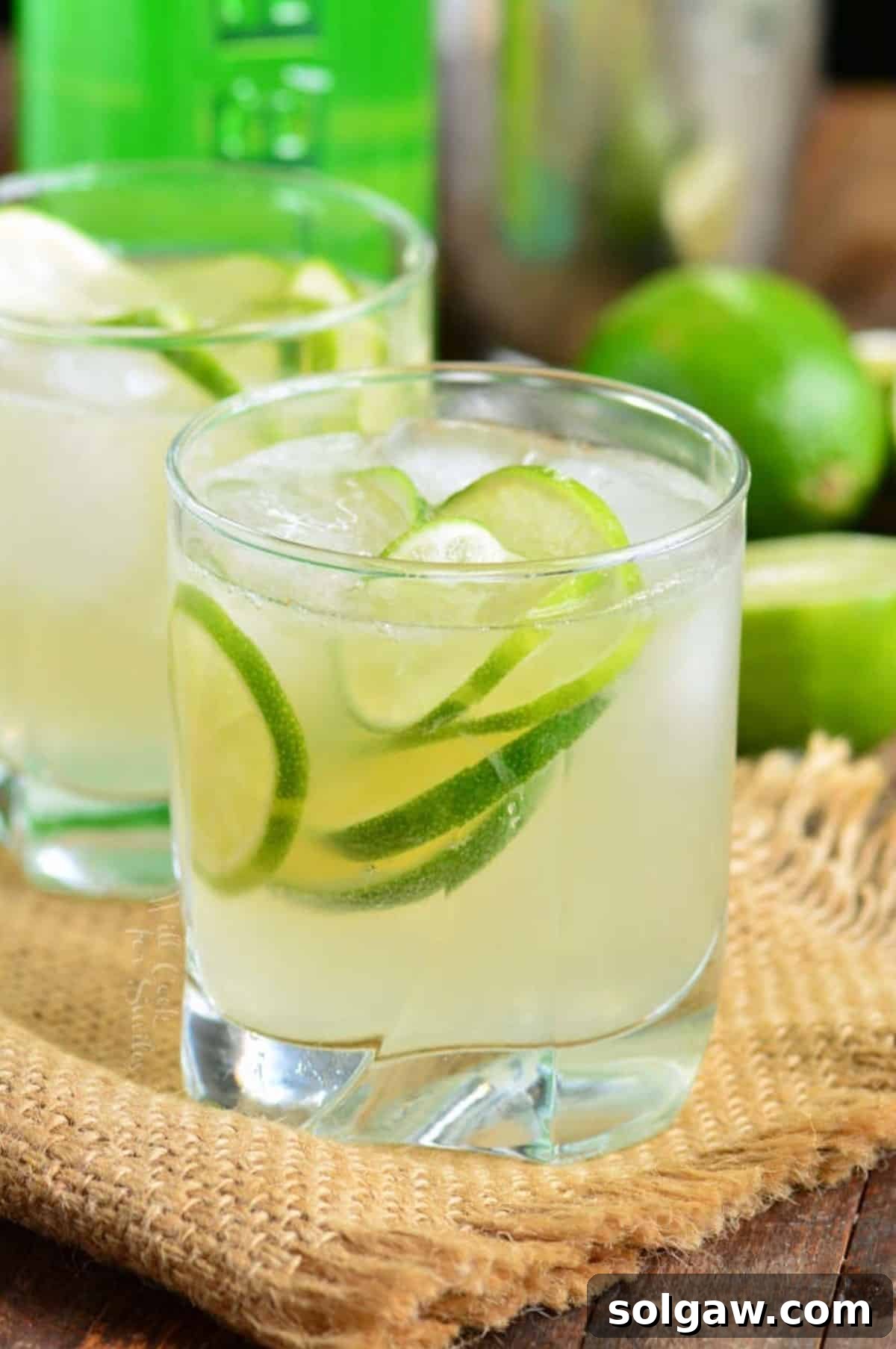
Caipirinha is a traditional Brazilian cocktail made with Cachaca liquor, limes, and sugar. This very simple, refreshing cocktail is best sipped slowly to truly appreciate its vibrant, balanced flavors.
Pin Recipe
Rate This Recipe
Equipment
- Muddler (ideally a flat-ended, unlacquered one for best results)
Ingredients
- 1 medium lime
- 1 1/2-2 tbsp raw sugar (turbinado) (If substituting brown sugar or superfine sugar, use slightly less)
- 3 oz Cachaca (a good quality brand)
- Ice (plenty of fresh cubes)
Instructions
- Start with a room temperature lime for maximum juice extraction. Roll the lime on a counter before slicing into small wedges or chunks and place them into a sturdy rock glass.
- Add the raw sugar to the glass with the lime. Muddle firmly but gently, pressing and twisting until the sugar is dissolved and the lime has released its aromatic juices and oils. Avoid over-muddling the pith to prevent bitterness.
- Fill the glass almost to the top with fresh ice cubes, then pour in 3 ounces of quality Cachaca.
- To thoroughly mix and chill, transfer the contents of the glass to a larger glass or a cocktail shaker, then pour it back and forth a couple of times. Alternatively, shake vigorously for 10-15 seconds.
- Serve immediately in the same glass (or a fresh one), garnished with an extra lime wedge if desired. Enjoy your perfectly balanced Caipirinha!
Notes
- Is Cachaca gluten-free? Most Cachaca spirits are made with pure raw sugarcane juice without additives, making them naturally gluten-free. However, some brands may include additives. Always check the brand’s label and website for confirmation if you have strict dietary requirements.
- Muddler: For optimal results, use a flat-end muddler. When working with citrus and herbs, choosing a muddler without sharp ridges and one that is unlacquered helps prevent imparting bitter flavors or chemical tastes. If you don’t have a dedicated muddler, a small wooden spoon or a wooden utensil handle with a flat end can serve as an effective substitute.
- Limes: Always use ripe, room temperature limes. This simple tip ensures maximum juice yield and helps the sugar dissolve much faster, contributing to a smoother, more flavorful cocktail.
Nutrition Information
Calories: 332 kcal | Carbohydrates: 26g | Protein: 1g | Fat: 1g | Saturated Fat: 1g | Sodium: 2mg | Potassium: 68mg | Fiber: 2g | Sugar: 19g | Vitamin C: 19.5mg | Calcium: 22mg | Iron: 0.4mg
Tried this recipe?
Mention @willcookforsmiles or tag #willcookforsmiles!
Originally published on Will Cook For Smiles in July 2019. This article has been updated and expanded for comprehensive information and clarity.