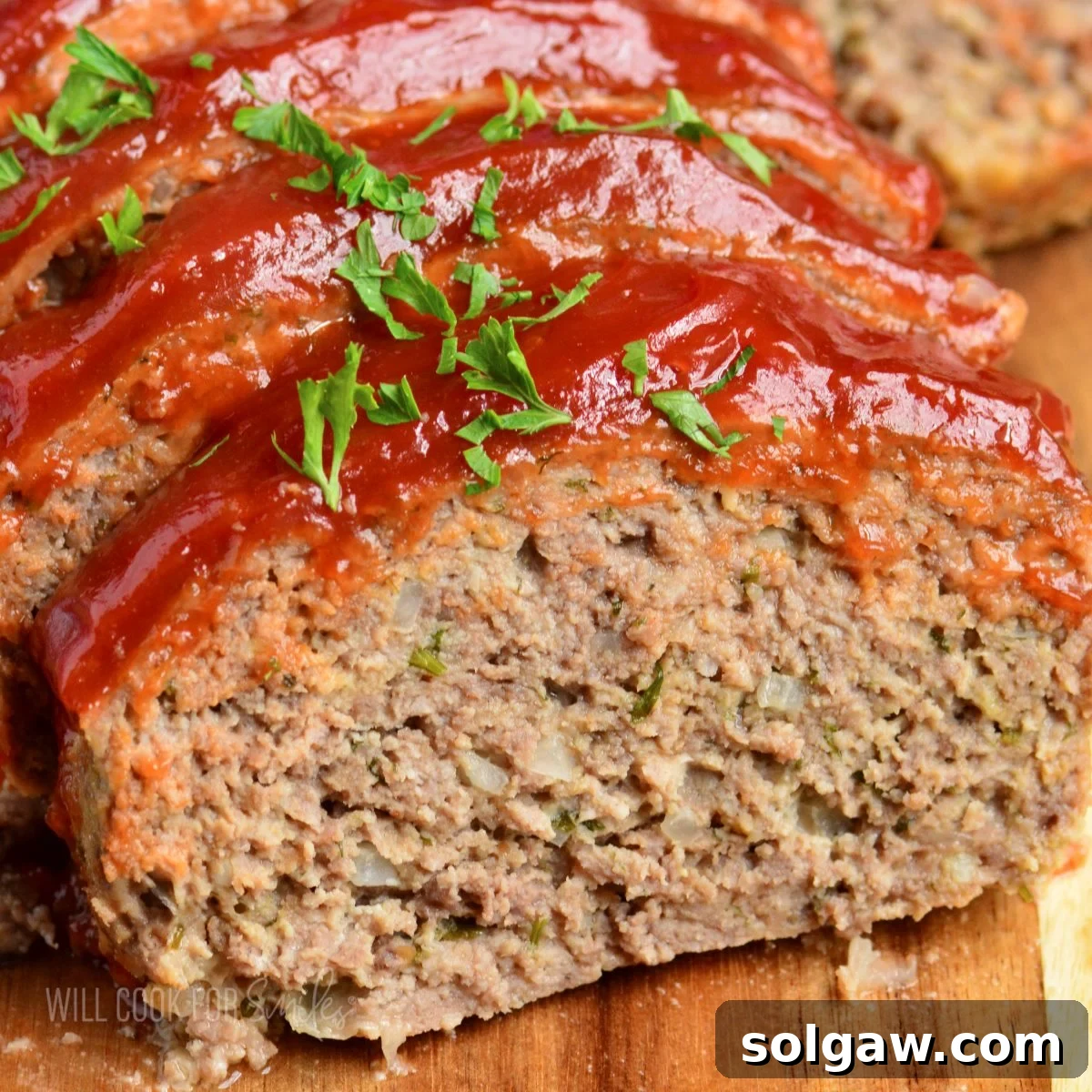
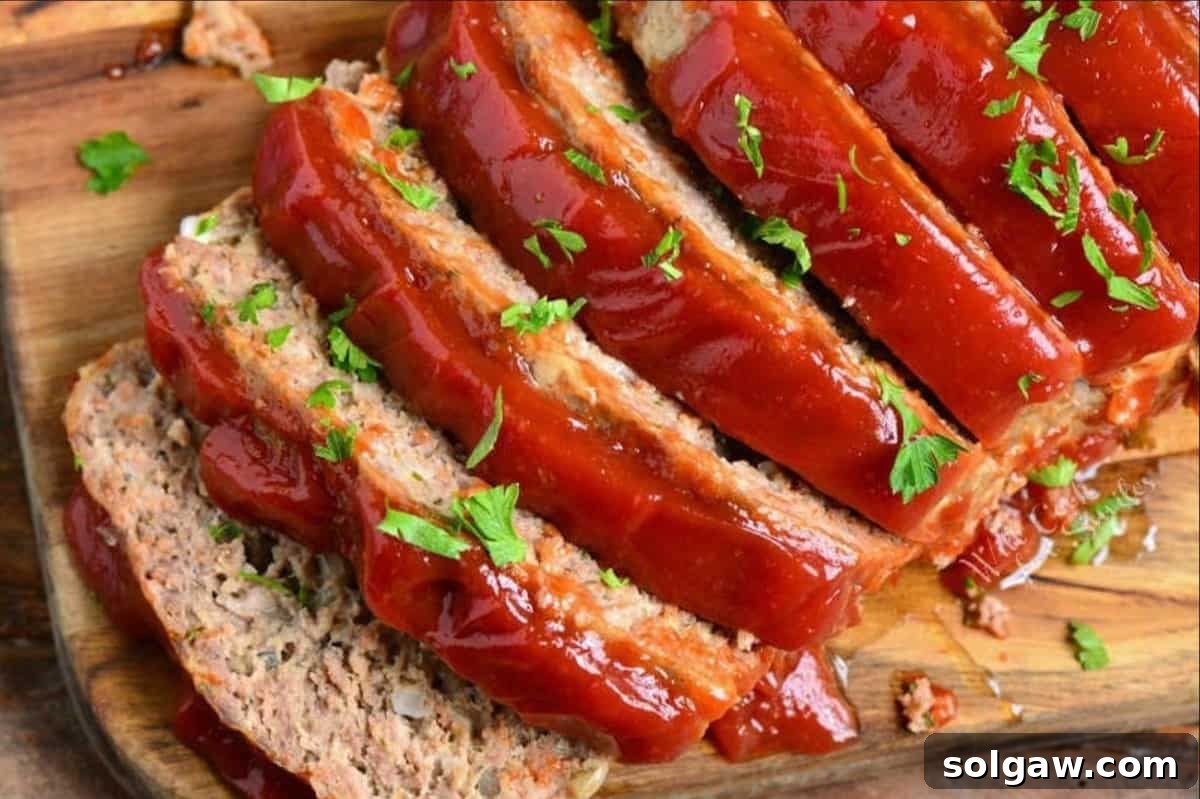
Welcome to the definitive guide for crafting the most tender and juicy meatloaf you’ve ever tasted. This isn’t just a recipe; it’s a culinary journey back to comforting, homemade goodness. Our classic meatloaf recipe is astonishingly easy to master, requiring only a simple combination of ingredients and the magic of your oven. The secret lies in a carefully balanced blend of meats and seasonings, topped with a wonderfully sweet and tangy glaze that elevates every bite.
Few meals evoke the warmth and togetherness of home quite like a slice of perfectly cooked meatloaf. Imagine it served alongside a generous scoop of soft and fluffy mashed potatoes, a timeless pairing that promises satisfaction. This dish transcends generations, a true testament to its comforting power and ease of preparation.
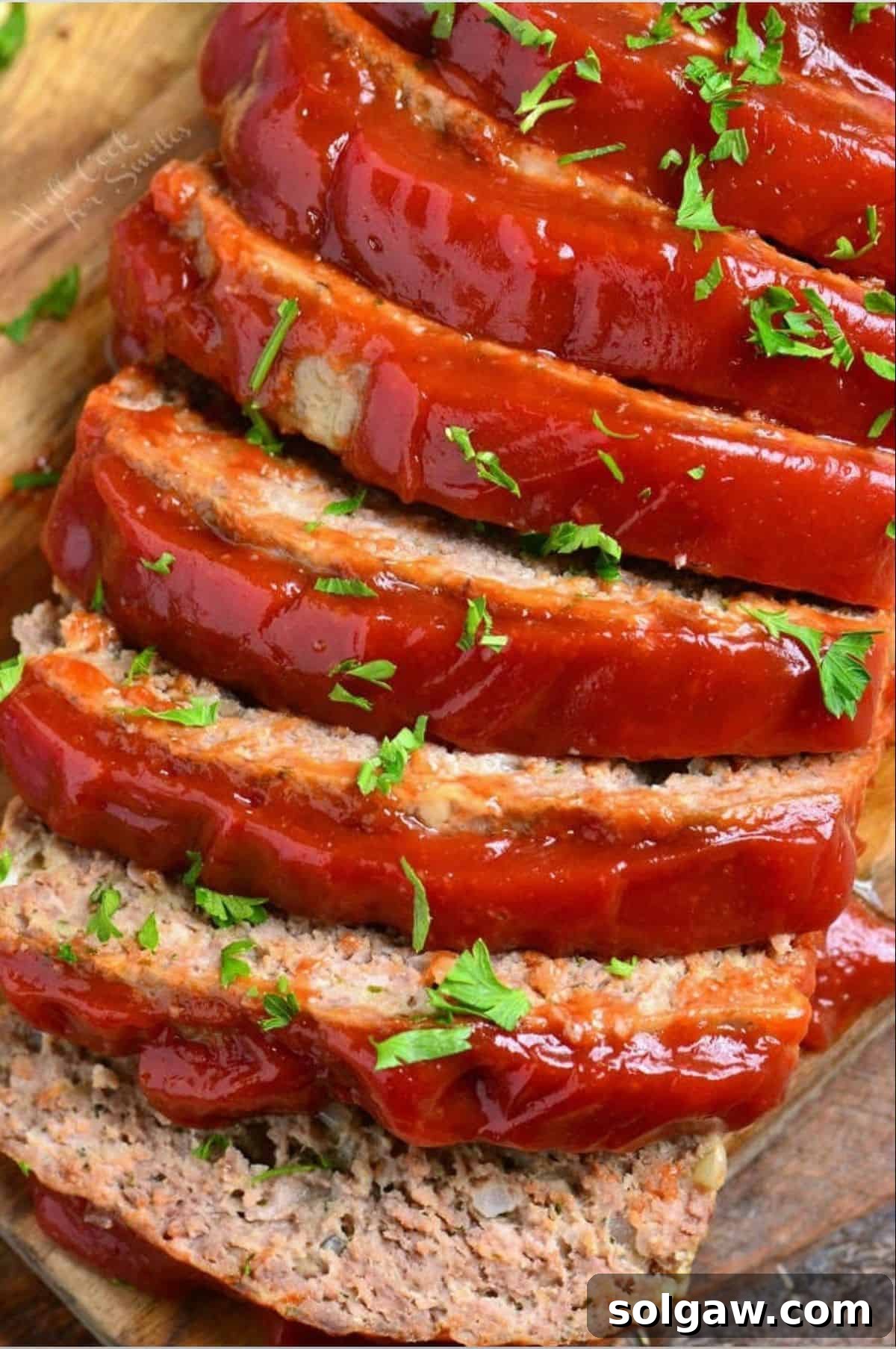
Table of Contents
The Ultimate Comfort Food: Why Everyone Loves Meatloaf
Nothing brings a family together around the dinner table quite like a plate full of juicy meatloaf with a side of fluffy mashed potatoes and crisp green beans. When it comes to fulfilling, easy, and budget-friendly dinners, meatloaf stands out as a quintessential choice. This particular recipe ensures your meatloaf comes out tender and juicy every time, boasting a rich, savory flavor that’s perfectly complemented by its sweet and tangy glaze.
Having honed this recipe over several years, I’m thrilled to share an updated version that guarantees success. To achieve that impeccable texture, I consistently use a thoughtful combination of ground beef and ground pork. This blend is crucial for moisture and flavor. Adding finely diced onions and two eggs provides structure and binds the ingredients beautifully. For a truly unforgettable taste experience, don’t skimp on the Worcestershire sauce, Dijon mustard, and fresh herbs. This dish is so delicious, your family will be asking for it every week!
With this wonderfully moist and flavorful meatloaf, there’s absolutely no need for gravy. The luscious glaze provides all the moisture and zest you could desire. Your only decision will be what delightful sides to accompany it. Whether you opt for a healthier approach or go all-in on classic comfort, this satisfying family dinner is always a hit. It’s a dish that warms the soul and satisfies the palate, making it a staple in any home.
Key Ingredients for the Perfect Meatloaf
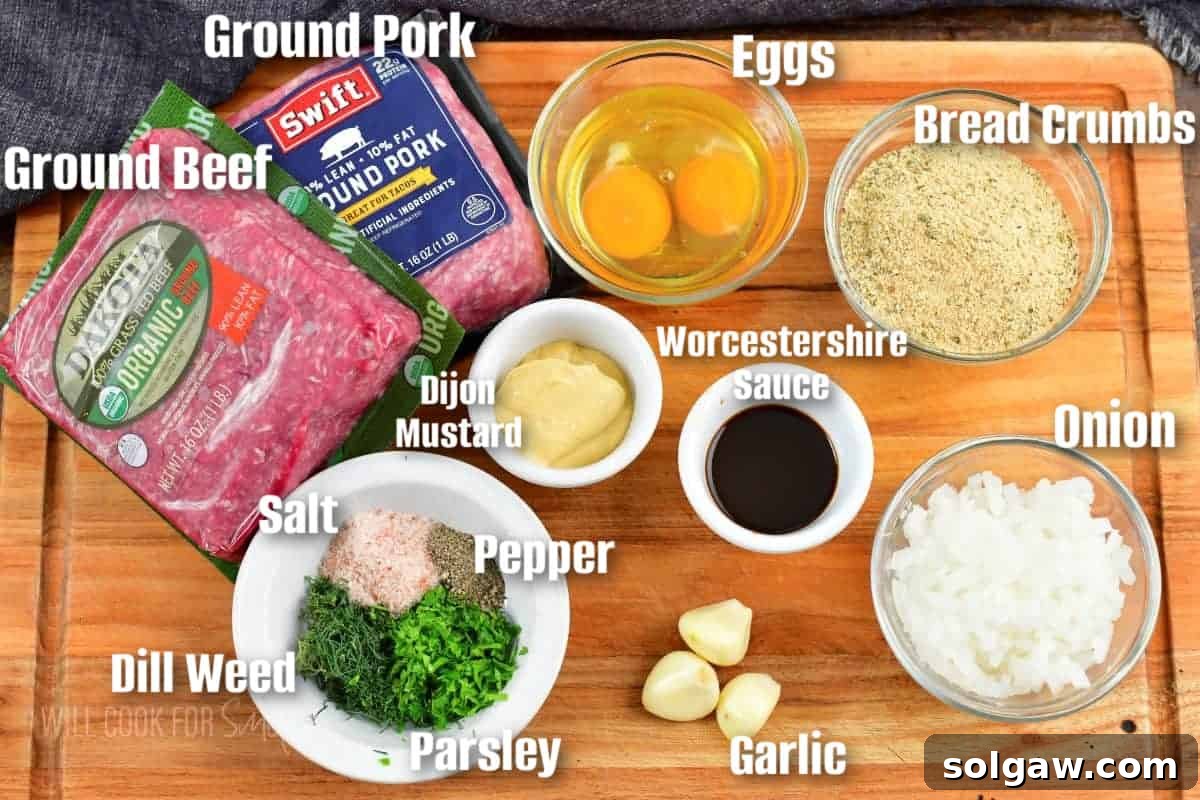
Understanding Your Meat Choices
Ground Meats: The foundation of a truly tender and juicy meatloaf lies in the blend of meats. I always, always recommend using a combination of ground beef and ground pork. This duo creates an unparalleled texture and flavor profile. For the ground beef, aim for an 85/15 or 90/10 lean-to-fat ratio. This specific fat content is critical; if the meat is too lean, your meatloaf will likely come out dry and crumbly. The pork adds additional moisture and a subtle richness that beef alone cannot achieve, making every slice incredibly succulent.
Flavor Foundations
Garlic: When it comes to aromatic ingredients, fresh garlic is undeniably the best choice. Its pungent, sweet, and slightly spicy notes infuse the meatloaf with a depth of flavor that garlic powder simply can’t replicate. Opt for pressing the cloves to release their maximum flavor and aroma. If fresh garlic isn’t available, granulated garlic powder (not salt) can be used in a pinch, about 1 teaspoon per clove.
Onions: Finely diced yellow onion is essential. Dicing them small ensures they integrate seamlessly into the meat mixture, softening and adding sweetness during baking without creating noticeable chunks. They contribute moisture and a foundational savory flavor that balances the richness of the meat.
Binders and Moisture Keepers
Bread Crumbs: These are vital for binding the meatloaf and helping it retain moisture. I prefer using Italian seasoned bread crumbs for an extra layer of herbaceous flavor. If you need to make this recipe gluten-free, simply swap them for gluten-free bread crumbs. (More on this below).
Eggs: The two eggs in this recipe act as a critical binder, helping to hold the meatloaf together and prevent it from falling apart. They also contribute to the overall moisture and richness of the final product.
The Signature Tang and Savory Notes
Dijon Mustard: For the best results, use Dijon mustard. Its sharp, tangy, and slightly spicy profile adds a complex dimension to the meatloaf’s flavor. While spicy brown mustard can be a suitable alternative, please do not use yellow mustard, as its milder flavor won’t provide the same impact.
Worcestershire Sauce: A splash of Worcestershire sauce is a game-changer. It provides a deep umami flavor that enhances the savory notes of the meat and ties all the ingredients together beautifully. It’s a secret weapon for depth of flavor.
Fresh Herbs for Aromatic Depth
Herbs: A combination of fresh dill weed and fresh parsley adds a vibrant, fresh, and aromatic quality to the meatloaf. Dill offers a unique, slightly tangy and grassy note, while parsley provides a clean, green herbaceousness. If fresh herbs are unavailable, use about 1 teaspoon of dried dill and 1.5 teaspoons of dried parsley, remembering that dried herbs are more concentrated.
Salt and Freshly Cracked Black Pepper: These fundamental seasonings are crucial for bringing out and balancing all the flavors in the meatloaf. Adjust to your taste, but don’t underestimate their importance in a savory dish.
For a full list of ingredients and precise quantities, please refer to the recipe card further down the page.
Making Your Meatloaf Gluten-Free
Adapting this delicious meatloaf recipe to be gluten-free is incredibly straightforward. The main adjustment involves simply swapping out traditional bread crumbs for gluten-free bread crumbs. For this recipe, I particularly enjoy using Italian-style bread crumbs for their added flavor profile.
While plain gluten-free bread crumbs are readily available in most grocery stores, Italian-style gluten-free bread crumbs might be a little harder to find. But don’t worry, you can easily create your own seasoned version! If you’re using plain gluten-free crumbs, I recommend enhancing them by adding a medley of dried herbs and spices. A good blend includes about 1 teaspoon each of dried parsley, dried oregano, dried basil, garlic powder, onion powder, along with a pinch of salt and pepper. This small addition will infuse your meatloaf with the robust Italian flavors you desire, ensuring your gluten-free version is just as delicious and satisfying as the original. Remember, you only need a little bit of extra seasoning in the bread crumbs since most of these delightful flavors are already present in the meatloaf mixture itself.
Step-by-Step Guide to Making Meatloaf
Preparation is Key
One of the best aspects of making meatloaf is its simplicity and ease! The process is surprisingly quick: you combine the ingredients, shape the loaf, and then let the oven do its magic. Before you begin, preheat your oven to 350°F (175°C). This consistent temperature is crucial for ensuring the meatloaf bakes evenly and remains moist. While the oven preheats, lightly grease a standard 9×5-inch loaf baking pan. A light coating of cooking spray or butter will prevent the meatloaf from sticking and make for easy removal after baking.
Mixing the Ingredients
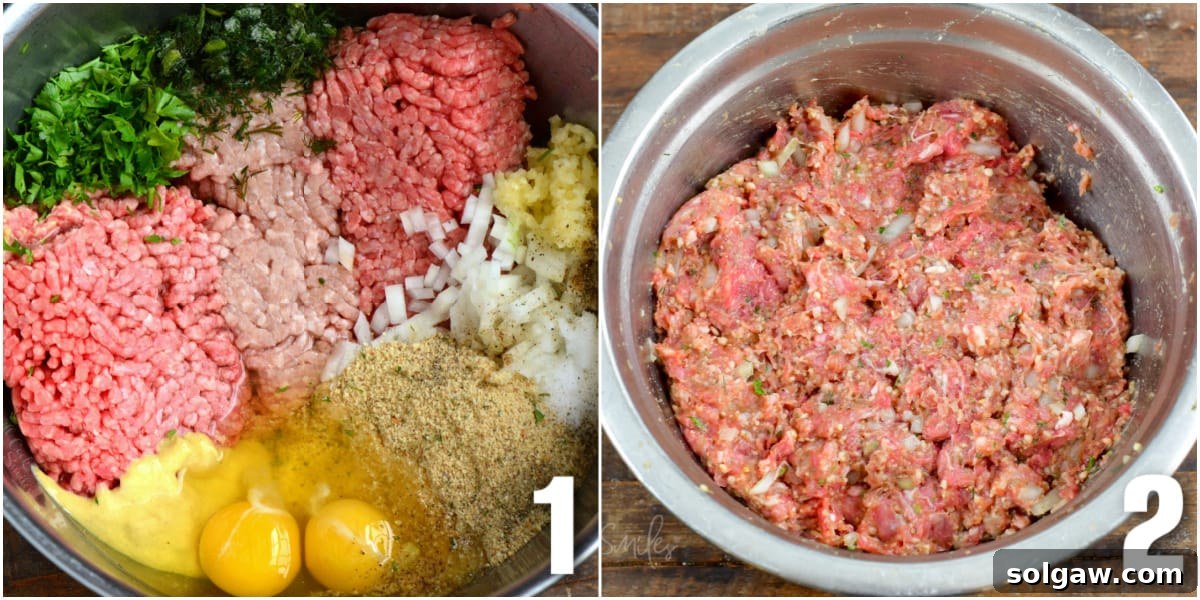
The mixing stage is where all the wonderful flavors come together. In a large mixing bowl, combine all the meatloaf ingredients: ground beef, ground pork, finely diced yellow onion, pressed garlic, Italian bread crumbs, Dijon mustard, Worcestershire sauce, eggs, fresh dill, fresh parsley, salt, and freshly cracked black pepper. Using your hands is often the most effective way to ensure all ingredients are thoroughly and evenly incorporated throughout the meat mixture (as shown in image 1 and 2). However, be mindful not to overmix! Overmixing can lead to a dense, tough meatloaf. Mix just until everything is combined, then stop.
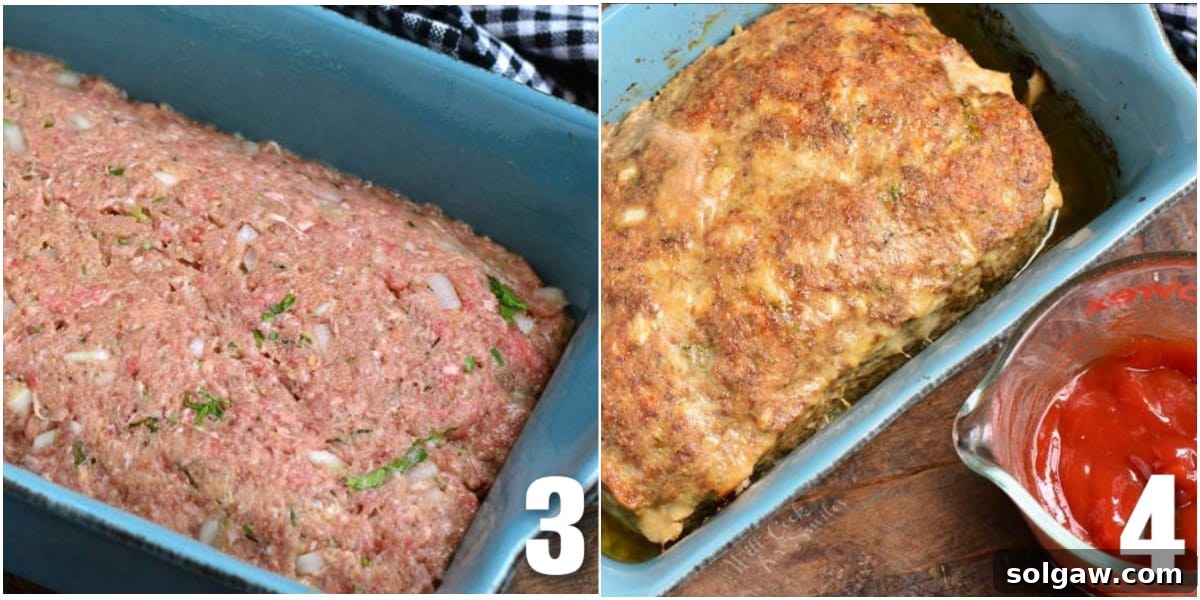
Once mixed, transfer the meat mixture into your prepared baking pan. Use a wooden spoon, spatula, or your hands to gently spread it evenly across the pan (as shown in image 3). Ensure there are no large air pockets and that the loaf is compact and uniform in shape. This helps with even cooking.
Baking Your Meatloaf to Perfection
How Long To Cook Meatloaf: The initial bake is where the meatloaf begins to develop its structure and internal juiciness. Cook your meatloaf for approximately 45-50 minutes. To ensure it’s on track, check the internal temperature with a meat thermometer. At this stage, it should reach around 155°F (68°C) (as shown in image 4). This initial bake prepares the meatloaf for its flavorful topping.
The Secret to a Mouthwatering Glaze
The glaze is what truly sets this meatloaf apart, adding a perfect balance of sweet and tangy flavors that create an irresistible crust. While the meatloaf is undergoing its initial bake, take a few moments to prepare this simple yet impactful topping. In a small bowl, combine 1/2 cup of ketchup, 2 tablespoons of brown sugar, and 1 tablespoon of Worcestershire sauce. Whisk these three simple ingredients together until they are smooth and well blended. This quick preparation ensures your glaze is ready to go when the meatloaf needs it.
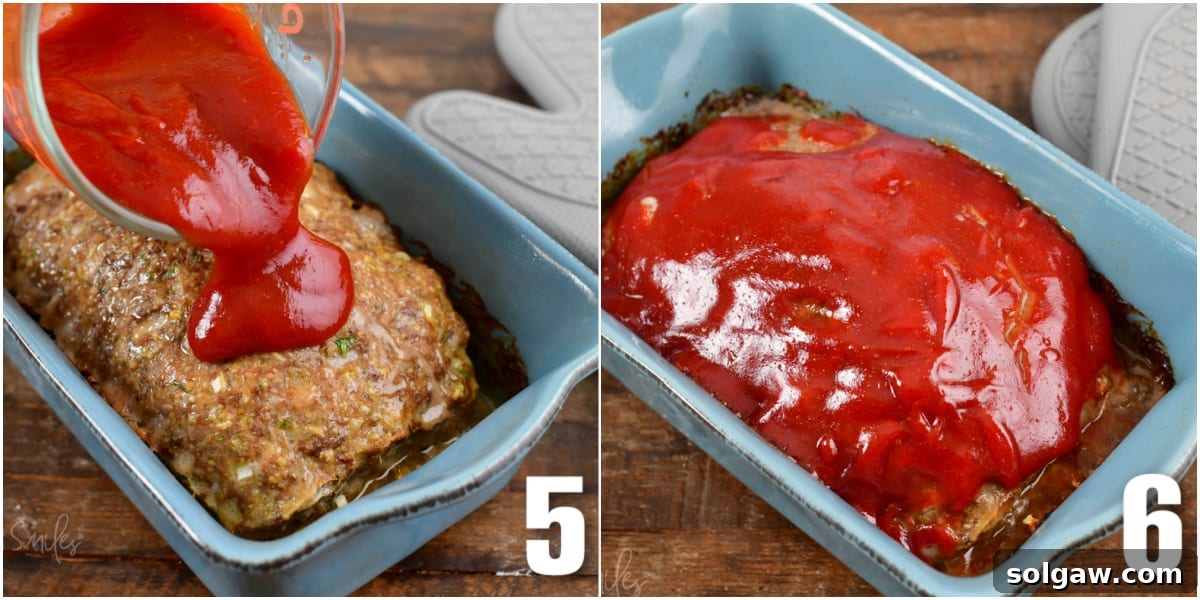
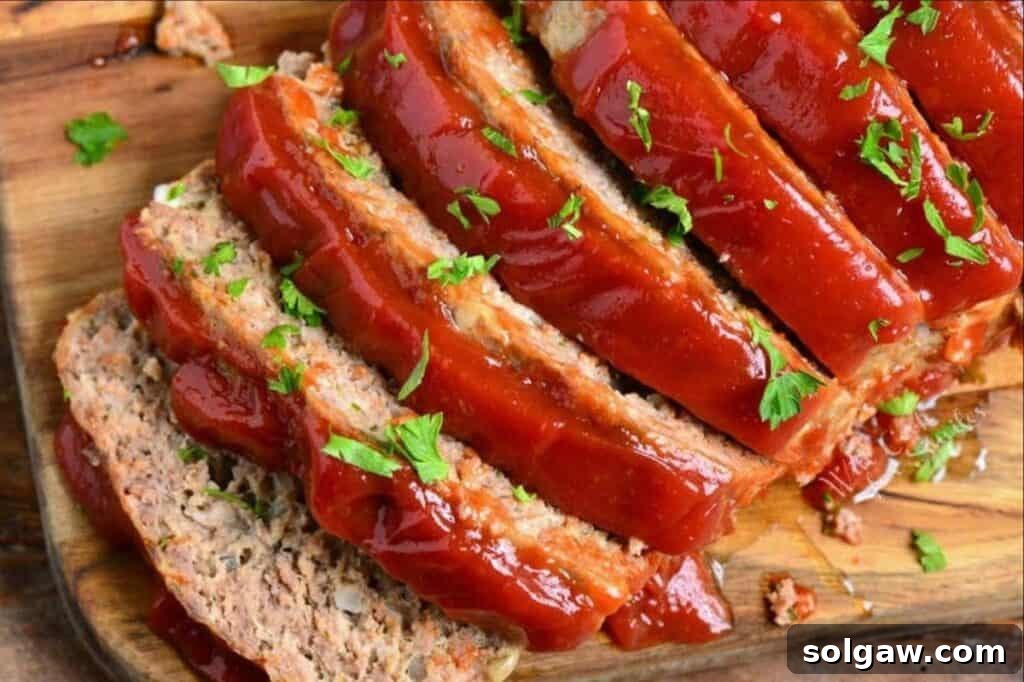
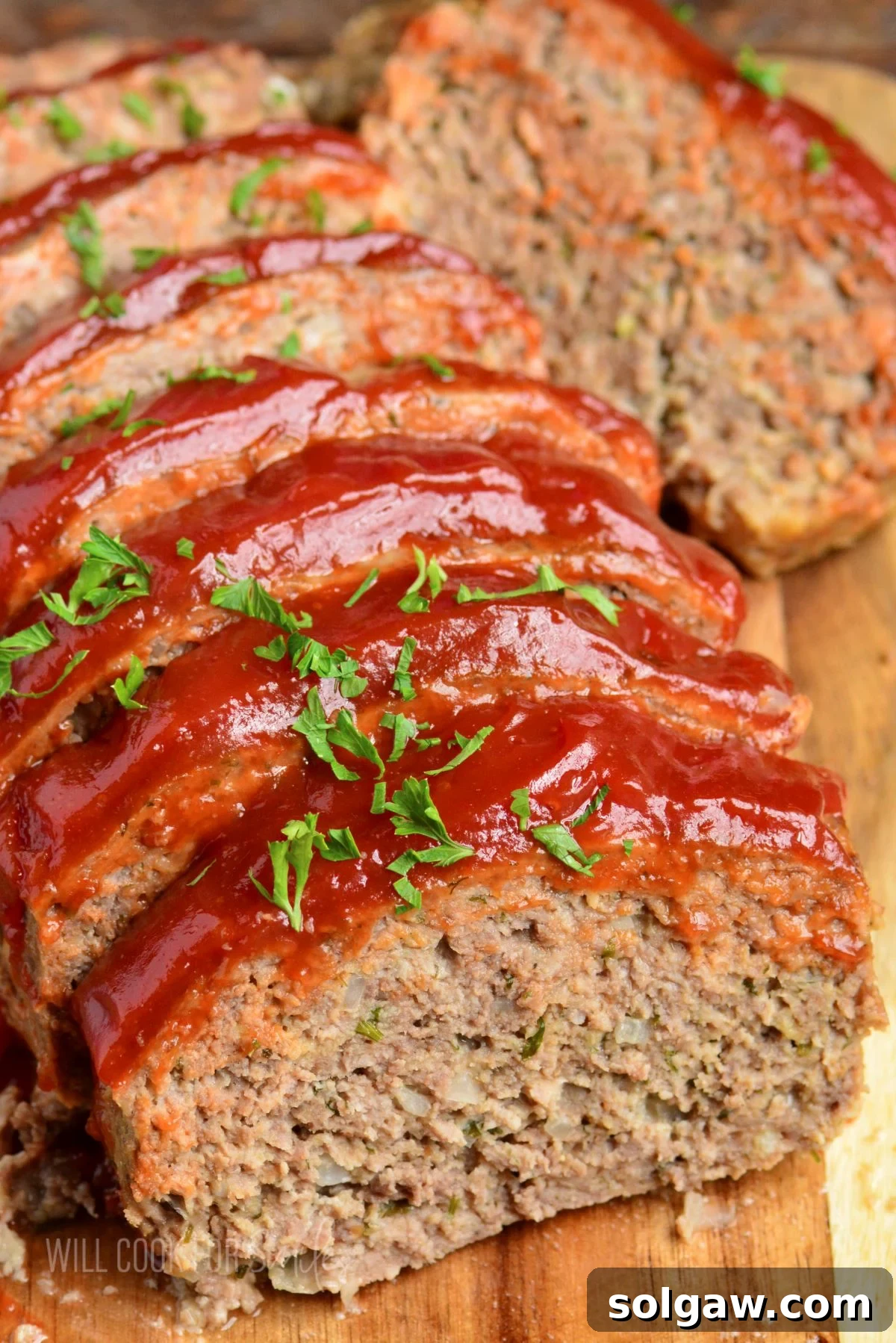
Once your meatloaf has reached the 155°F mark, carefully remove it from the oven. Evenly spread the prepared glaze generously over the entire top surface of the meatloaf (as shown in image 5). This glaze will caramelize beautifully during the final stage of baking. Return the glazed meatloaf to the oven and bake for another 10-15 minutes (as shown in image 6). During this time, the glaze will become rich and sticky, while the internal temperature of the meatloaf will reach its safe serving point of 160°F (71°C). Always use a meat thermometer to confirm doneness. Finally, allow the meatloaf to rest for about 10 minutes after baking; this allows the juices to redistribute, ensuring a tender and moist result when sliced.
Frequently Asked Questions About Meatloaf
Meatloaf pairs wonderfully with a variety of classic comfort food sides. Our top recommendations include Creamy Mashed Potatoes, Garlic Green Beans, Italian Roasted Asparagus, Fluffy Buttermilk Biscuits, Instant Pot Garlic Mashed Potatoes, Green Beans with Bacon and Onions, The Best Pan Gravy (if you prefer gravy!), Honey Butter Glazed Carrots, and even a vibrant Ratatouille for a Mediterranean twist. The key is to choose sides that complement the rich, savory flavors of the meatloaf and its sweet-tangy glaze.
No, it is generally recommended to bake meatloaf uncovered. Covering the meatloaf with foil can trap steam, which can prevent the top from caramelizing and forming that delicious crust, especially with the glaze. It might also extend the baking time. Baking uncovered allows the exterior to brown beautifully and the glaze to set perfectly, enhancing both flavor and texture. If you notice the top browning too quickly before the interior is cooked, you can loosely tent it with foil during the last 15-20 minutes, but typically it’s not necessary.
For optimal results, it’s generally better to cook meatloaf at 350°F (175°C). Baking at a slightly lower temperature, like 350°F, allows the meatloaf to cook more evenly from the inside out, helping it retain its moisture and tenderness. Cooking it at a higher temperature, such as 375°F or above, can cause the outside of the meatloaf to cook and brown too quickly, potentially leading to a dry exterior before the interior is fully cooked to a safe temperature. The steady heat of 350°F ensures a moist, flavorful, and uniformly cooked meatloaf.
Preventing dry meatloaf involves a few key steps. First, ensure you use the correct meat blend, ideally a mix of ground beef (85/15 or 90/10 lean-to-fat ratio) and ground pork, as recommended in this recipe. The fat content is crucial for moisture. Second, avoid overmixing the ingredients, as this can develop the proteins too much, leading to a tough texture. Third, use a reliable meat thermometer to avoid overcooking. Remove the meatloaf from the oven as soon as it reaches 160°F (71°C) internal temperature. Finally, allowing the meatloaf to rest for 10-15 minutes after baking lets the juices redistribute, ensuring every slice is succulent.
Absolutely! Mini meatloaves are a fantastic option for individual portions and faster cooking. To make them, simply press the prepared meat mixture into a standard muffin pan, filling each cup completely. The baking time will need to be adjusted significantly. Bake at 350°F (175°C) for about 15 minutes for the initial bake. If too much juice accumulates, carefully drain some, but not all. Then, spread the prepared glaze over each mini meatloaf and return to the oven for another 10-15 minutes, or until the internal temperature reaches 160°F (71°C). They are perfect for meal prep or quick weeknight dinners!
Storage and Freezing Instructions
Meatloaf is an excellent meal for making ahead or freezing for later, making weeknight dinners a breeze. Proper storage ensures its delicious flavor and texture are preserved.
Freezing Cooked Meatloaf
If you’re planning to freeze your meatloaf after baking, you have a couple of options. You can bake it directly in aluminum loaf baking pans, which makes freezing and reheating incredibly convenient. Alternatively, bake it in a regular loaf pan and then carefully transfer the fully cooked and cooled meatloaf into an aluminum pan for freezing.
To freeze, first ensure the meatloaf is baked until just cooked (internal temperature of about 155°F) and then allowed to cool completely. It’s best to freeze the meatloaf without the topping, as the glaze can become watery or separate upon thawing. Once cooled, transfer the loaf to an aluminum pan. Wrap it tightly first in aluminum foil, then with an additional layer of plastic wrap to prevent freezer burn. Don’t forget to label it with the date, and it can be frozen for up to 2-3 months.
When you’re ready to enjoy it, thaw the meatloaf overnight in the refrigerator. Once thawed, spread fresh topping all over the top and reheat in a preheated oven at 350°F (175°C) for 15-20 minutes, or until heated through and the glaze is bubbly and caramelized. This method ensures your defrosted meatloaf tastes as fresh and delicious as the day it was made.
Freezing Unbaked Meatloaf
You can also freeze meatloaf before baking! Prepare the meat mixture according to the recipe instructions. Form it into a loaf shape and place it in a foil-lined loaf pan. Cover tightly with foil and then plastic wrap. Freeze for up to 3 months. To cook, thaw overnight in the refrigerator, then proceed with the baking instructions, adding the glaze as directed.
Serving Suggestions: What to Pair with Meatloaf
This classic meatloaf is incredibly versatile and pairs beautifully with a range of sides. While it shines with mashed potatoes and green beans, don’t limit your options! Here are some other delightful dishes to complete your meal, offering a variety of textures and flavors:
- Creamy Tomato Gnocchi: For a slightly more upscale but equally comforting option, the richness of gnocchi in a creamy tomato sauce can be a fantastic match. Get the recipe here.
- Roasted Vegetables: Beyond green beans, consider roasted carrots, asparagus, or broccoli. Roasting brings out their natural sweetness and a slight char that contrasts nicely with the meatloaf. Our Honey Butter Glazed Carrots or Italian Roasted Asparagus are excellent choices.
- Fresh Salads: A light, crisp green salad with a vinaigrette dressing can cut through the richness of the meatloaf, offering a refreshing element to the meal.
- Homemade Bread: Serve with warm, crusty bread or fluffy biscuits to soak up any juices and glaze. Our Buttermilk Biscuits are always a crowd-pleaser.
- Pasta Sides: A simple side of buttered noodles or a light pasta salad can also be a satisfying accompaniment. Consider other Will Cook For Smiles favorites like Baked Ziti or a classic Pomodoro Sauce pasta for a heartier meal.
Choose your sides based on your preference for healthy, comforting, or a bit of both – this meatloaf is flexible enough to accommodate them all!
PIN THIS RECIPE FOR LATER
DID YOU MAKE THIS RECIPE? Please leave a 🌟 star rating! Let me know how you liked it by leaving a 📝 comment below or share and tag me on social media @willcookforsmiles. DON’T FORGET to subscribe to my newsletter for more delicious recipes!
Easy Homemade Meatloaf Recipe
This tender, juicy meatloaf recipe is incredibly easy to make and creates the ultimate comforting dinner. Serve it with fluffy mashed potatoes and your favorite vegetables for a meal the whole family will adore.
Recipe Overview
- Course: Dinner, Main Course
- Cuisine: American
- Prep Time: 10 minutes
- Cook Time: 1 hour
- Total Time: 1 hour 10 minutes
- Servings: 4-6
- Calories: Approximately 755 kcal per serving
- Author: Lyuba Brooke
Ingredients
For the Meatloaf:
- 1 lb Ground Beef: 90/10 lean to fat ratio for optimal moisture and flavor.
- 1 lb Ground Pork: Contributes to the meatloaf’s tender and juicy texture.
- 1/2 cup Finely Diced Yellow Onion: Ensures even flavor distribution without large chunks.
- 3 Garlic Cloves: Freshly pressed for the best aromatic depth.
- 1/2 cup Italian Bread Crumbs: Acts as a binder and helps retain moisture. (Use gluten-free if needed)
- 2 Tbsp Dijon Mustard: Adds a tangy, savory note that complements the meat.
- 1 Tbsp Worcestershire Sauce: Enhances umami and adds a layer of complex flavor.
- 2 Large Eggs: Essential binders for holding the meatloaf together.
- 1 Tbsp Minced Fresh Dill Weed: Provides a fresh, slightly herbaceous flavor.
- 1 Tbsp Minced Fresh Parsley: Adds brightness and a classic savory touch.
- Salt and Freshly Cracked Black Pepper: To taste, essential for balancing all flavors.
For the Glaze:
- 1/2 cup Ketchup: Forms the sweet and tangy base of the glaze.
- 2 Tbsp Brown Sugar: Adds sweetness and helps create a beautiful caramelized crust.
- 1 Tbsp Worcestershire Sauce: Deepens the flavor of the glaze.
Instructions
- Preheat and Prepare: Preheat your oven to 350°F (175°C). Lightly grease a 9×5-inch loaf baking pan to prevent sticking.
- Combine Meatloaf Ingredients: In a large mixing bowl, combine the ground beef, ground pork, finely diced yellow onion, pressed garlic cloves, Italian bread crumbs, Dijon mustard, Worcestershire sauce, eggs, fresh dill weed, fresh parsley, salt, and freshly cracked black pepper.
- Mix Thoroughly: Using your hands, gently mix all the ingredients until they are just evenly incorporated. Be careful not to overmix, as this can lead to a tough meatloaf.
- Shape the Meatloaf: Transfer the meat mixture into the prepared baking pan. Use a wooden spoon or your hands to gently spread it evenly in the pan, ensuring there are no air pockets.
- Initial Bake: Place the meatloaf in the preheated oven and bake for 45-50 minutes, or until an internal temperature of about 155°F (68°C) is reached.
- Prepare the Glaze: While the meatloaf is baking, whisk together the ketchup, brown sugar, and Worcestershire sauce in a small bowl until well combined.
- Apply Glaze and Finish Baking: Remove the meatloaf from the oven. Evenly spread the prepared glaze over the top. Return the meatloaf to the oven and bake for another 10-15 minutes, or until the internal temperature reaches a safe 160°F (71°C) and the glaze is nicely caramelized.
- Rest Before Serving: Once baked, remove the meatloaf from the oven and let it rest in the pan for about 10 minutes before slicing. This allows the juices to redistribute, ensuring a tender and moist meatloaf.
Recipe Notes for Success
- Gluten-Free Adaptation: Easily make this recipe gluten-free by swapping traditional Italian breadcrumbs for gluten-free breadcrumbs. If using plain gluten-free crumbs, enhance the flavor by adding a teaspoon each of dried parsley, oregano, basil, garlic powder, and onion powder to replicate the Italian seasoned taste.
- Achieving a Juicy Meatloaf: The key to a tender and juicy meatloaf lies in the meat blend and cooking temperature. Using a combination of ground beef (85/15 or 90/10) and ground pork provides the ideal fat content. Baking at 350°F ensures even cooking without drying out the exterior too quickly.
- Mini Meatloaves: For individual portions, form the mixture into mini loaves and bake in a muffin pan. Reduce baking time to about 15 minutes for the initial bake, then add glaze and bake for another 10-15 minutes, or until cooked through. Drain any excess juices before glazing.
Nutritional Information (Approximate per serving)
- Calories: 755 kcal
- Carbohydrates: 29g
- Protein: 45g
- Fat: 50g
- Saturated Fat: 19g
- Cholesterol: 244mg
- Sodium: 815mg
- Potassium: 908mg
- Fiber: 1g
- Sugar: 15g
- Vitamin A: 382 IU
- Vitamin C: 7mg
- Calcium: 108mg
- Iron: 5mg
Tried this recipe? Mention @willcookforsmiles or tag #willcookforsmiles!
Originally published on Will Cook For Smiles on July 2, 2011. Updated with fresh details and photography.