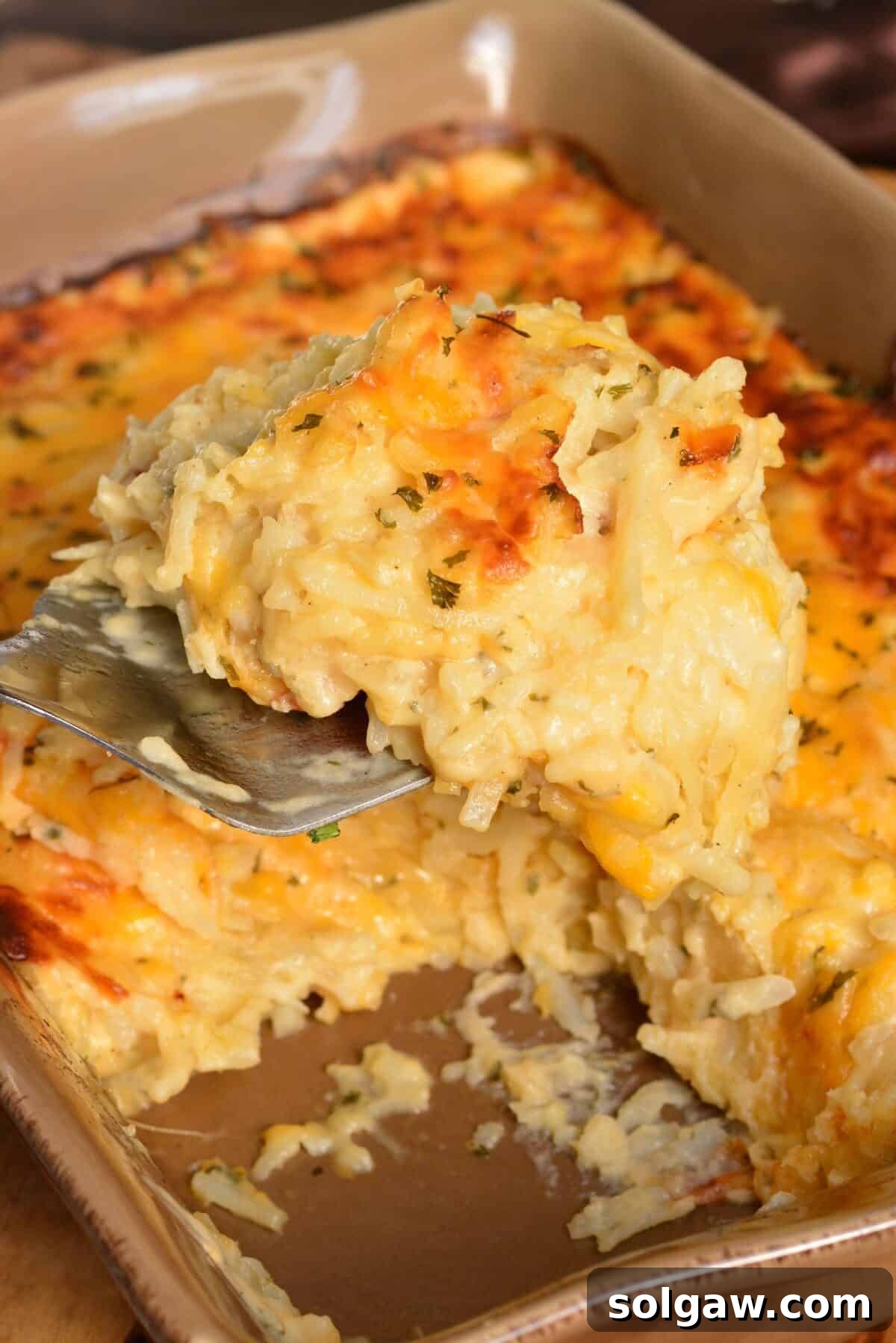
Since its original publication in 2018, this homemade hashbrown casserole recipe has consistently ranked among our most cherished and popular dishes. Its enduring appeal lies in its effortless preparation and the comforting, hearty flavors it delivers. Crafted from scratch without the need for canned soup, it features tender, thawed frozen shredded hashbrowns enveloped in a rich, creamy homemade cheese sauce, delicately seasoned with sautéed onions, aromatic herbs, and, of course, a generous topping of more melted cheese. This recipe proves that creating deeply satisfying comfort food can be both simple and incredibly rewarding.
Featured Comment
“I have made hashbrown casserole for years with COC soup. This is the best recipe for this casserole and the best way to prepare as the recipe states.” ~Barbara ⭐⭐⭐⭐⭐
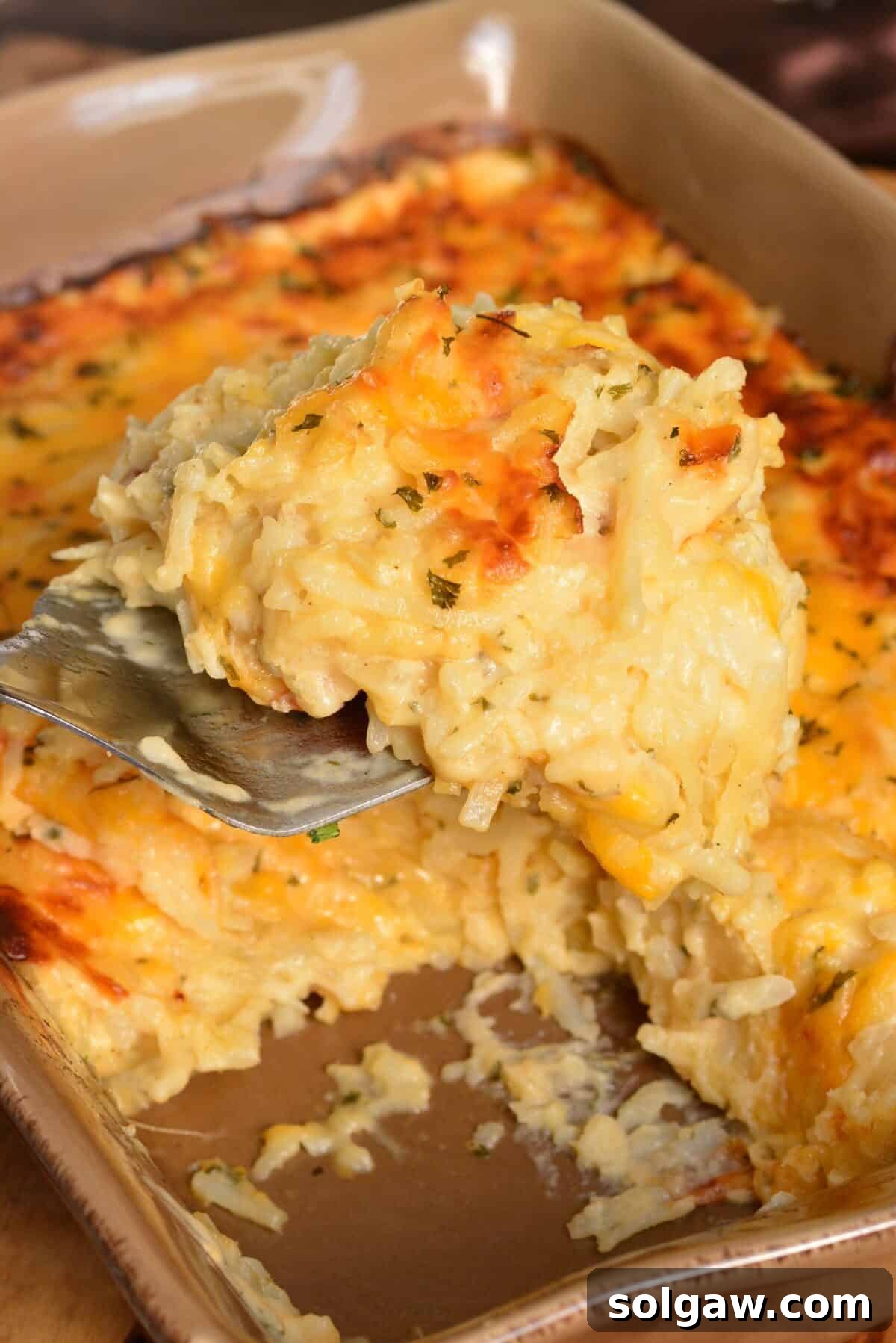
My culinary journey, particularly my time working at Cracker Barrel and indulging in their array of comforting Southern-inspired dishes, profoundly influenced my desire to recreate beloved classics at home. Among these, a truly exceptional Homemade Hashbrown Casserole was a top priority. There’s an undeniable satisfaction in crafting a dish that not only rivals but often surpasses the restaurant version, making those cravings easily fulfilled right in your own kitchen. This recipe liberates you from the need to dine out for that perfect, cheesy potato side. Instead, you’re empowered to prepare it with fresh ingredients and a personal touch, ensuring a superior taste and quality every time.
When it comes to large family gatherings or holiday feasts, Scalloped Potatoes and this hashbrown casserole are my go-to potato sides. Many people associate comforting casseroles with canned cream soups for convenience, but I’m here to tell you that preparing this dish with a homemade sauce is incredibly simple. Don’t let the phrase “no canned soup” intimidate you; it merely means a richer, more flavorful experience awaits, and it adds only about 10 extra minutes to your overall preparation time. The result is a dish that tastes genuinely homemade and is bursting with fresh, creamy goodness. (For another fantastic potato option, my Loaded Cheesy Potato Casserole also makes frequent appearances at my table!)
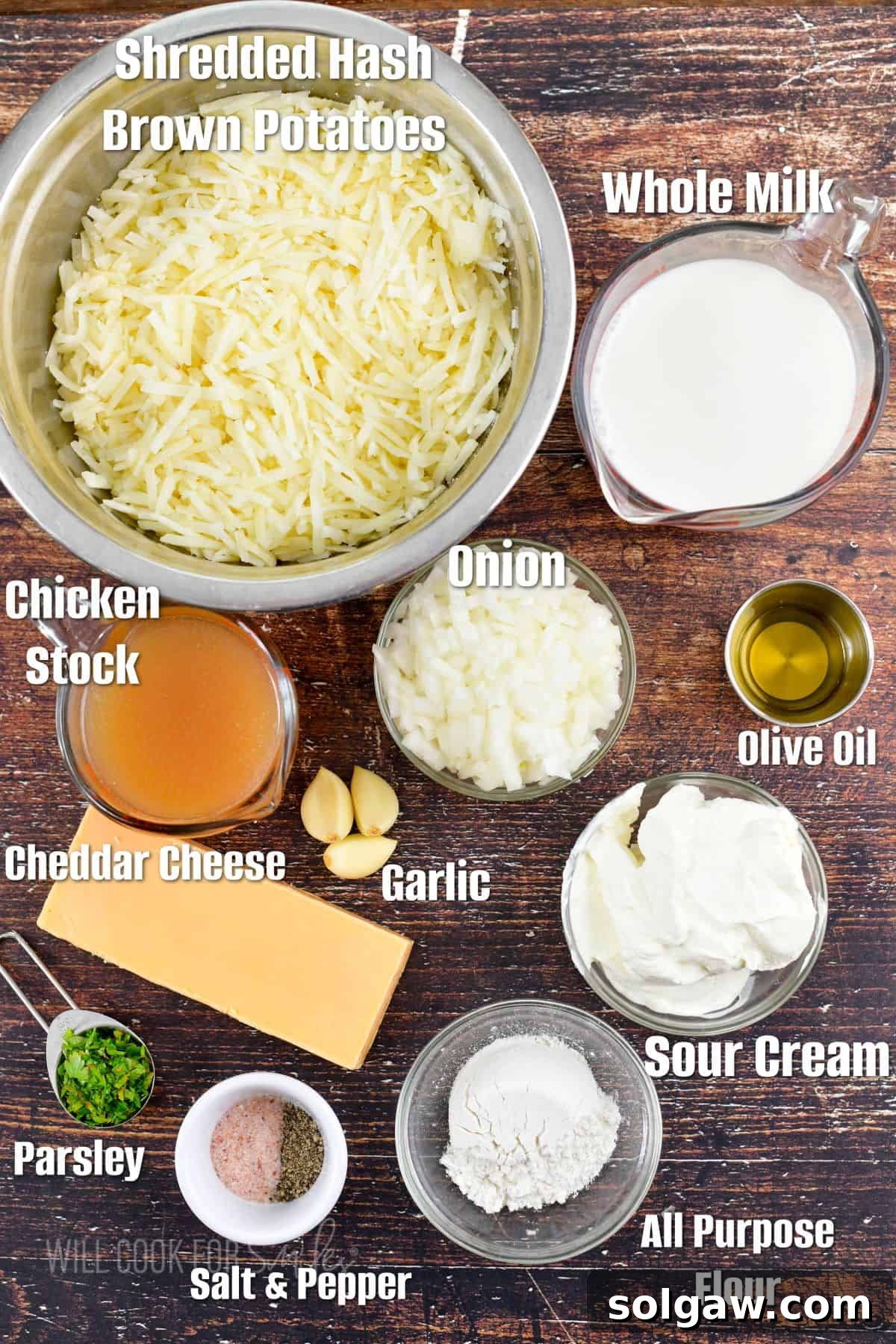
Key Ingredient Notes and Substitutions for Perfect Hashbrown Casserole
Achieving the perfect hashbrown casserole begins with understanding the role of each ingredient and how to best prepare it. Here’s a detailed look at the core components and some helpful substitution tips:
- Frozen Shredded Hash Brown Potatoes: The foundation of our casserole. These typically come frozen, and the most critical step is to completely thaw them before you begin cooking. Failure to do so will result in a watery, soggy casserole that lacks that coveted creamy texture. The best method for thawing is to transfer the bag of hashbrowns to your refrigerator overnight or for up to 24 hours. This slow thawing process ensures even defrosting and minimizes excess moisture. If you’re short on time, you can also spread them out on a clean kitchen towel on the counter for a couple of hours, patting dry any surface moisture.
- Cheese: For unparalleled flavor, I highly recommend using sharp cheddar cheese. Its robust, tangy profile cuts through the richness of the creamy sauce and delivers a distinctive taste that generic cheddar often misses. While sharp cheddar is my top choice, other excellent options include Monterey Jack for a milder, meltier result, Pepper Jack for a hint of spice, or a Colby Jack blend for a balanced flavor. Always opt for block cheese that you shred yourself, as pre-shredded varieties often contain anti-caking agents that can hinder a smooth melt.
- All-Purpose Flour: This is essential for creating the roux that thickens our homemade cheese sauce, giving it body and creaminess without relying on canned soups.
- Whole Milk & Chicken Stock: These liquids form the base of our luxurious sauce. Whole milk contributes to a richer, creamier texture, but reduced-fat milk can be used if preferred, with a slight adjustment in sauce thickness. Chicken stock adds depth of flavor; vegetable stock can be used for a vegetarian option.
- Sour Cream: This ingredient adds a wonderful tang and extra creaminess, balancing the richness of the cheese.
- Yellow Onion & Garlic: Sautéed aromatics are key to building a complex flavor base for the sauce. Diced yellow onion cooked until soft and translucent, combined with freshly minced garlic, creates a fragrant foundation.
- Fresh Parsley: A touch of fresh herbs brightens the dish and adds a pop of color. Minced fresh parsley is ideal, but dried parsley can be used in a pinch (use about half the amount).
- Salt & Freshly Cracked Black Pepper: Essential for seasoning the sauce to perfection. Always taste and adjust as you go!
- Gluten-Free Option: This casserole is incredibly versatile and can easily be made gluten-free. Simply substitute all-purpose flour with a good quality gluten-free all-purpose flour blend. Keep in mind that some gluten-free flours absorb liquid differently, so you might need to add an extra 1/2 to 1 tablespoon of flour to achieve the desired sauce thickness, depending on the brand.
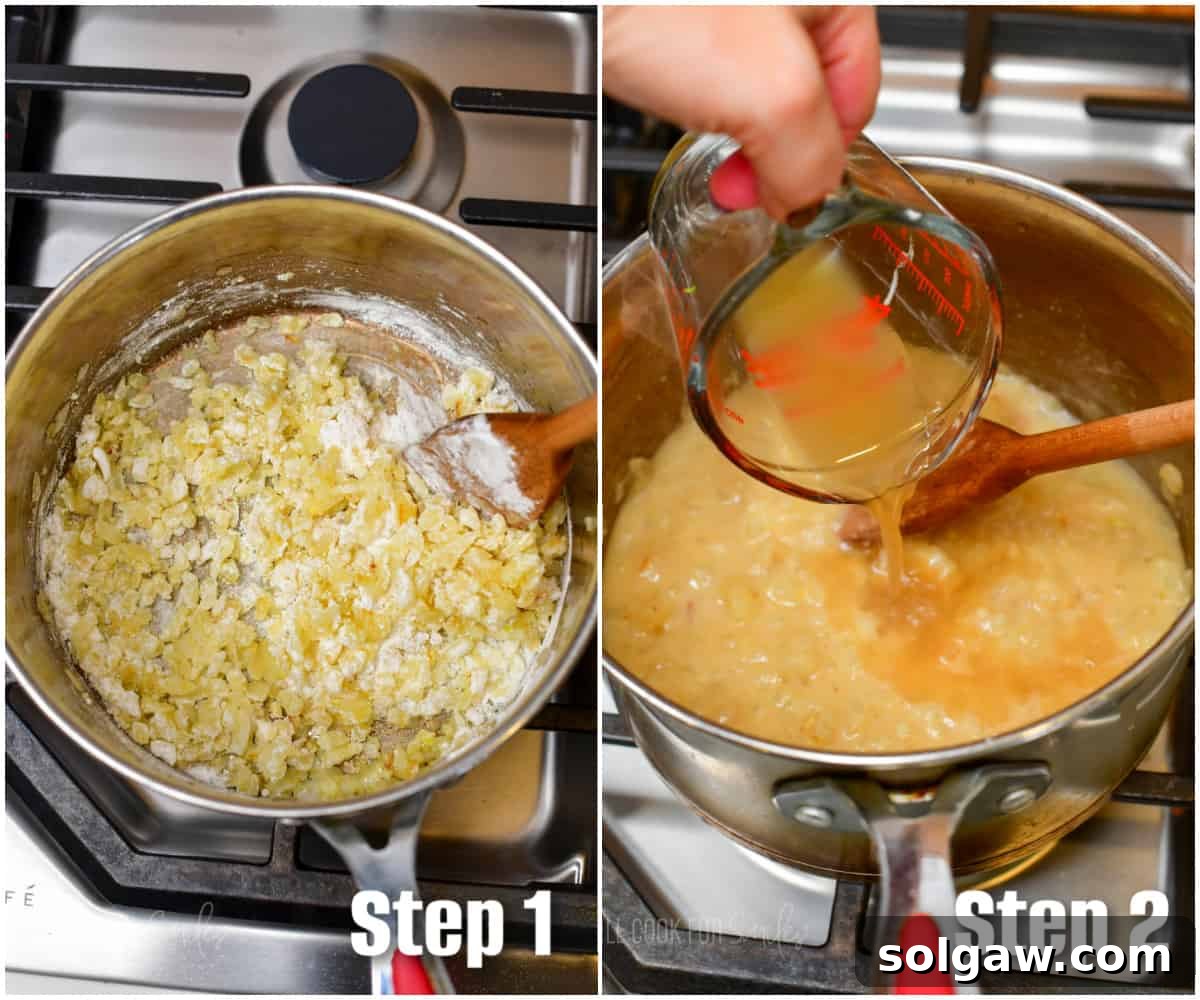
Crafting the Perfect Hashbrown Casserole: Step-by-Step Guide and Expert Tips
Follow these detailed steps and essential tips to create a hashbrown casserole that is consistently creamy, cheesy, and utterly delicious:
- Critical Pre-Cooking Step: Thawing Hashbrowns: As mentioned, frozen hashbrown potatoes must be completely thawed before you start. This is not a suggestion; it’s a requirement for a non-watery casserole! Set a reminder the day before you plan to cook to move the hashbrowns from the freezer to the refrigerator. Once thawed, you can gently squeeze out any excess moisture with a clean kitchen towel for an even crispier result.
- Building the Flavorful Cheese Sauce Foundation: Begin by preheating your oven to 350°F (175°C) and generously greasing a 9×13-inch casserole dish. On your stovetop, heat olive oil in a medium-sized pot over medium heat. Add your diced yellow onions and sauté them until they become beautifully soft, translucent, and just begin to caramelize – there’s truly nothing quite like the aroma of onions sizzling in oil! Next, add the minced garlic and stir for just a few seconds until fragrant. Be careful not to burn the garlic, as it can turn bitter quickly.
- Creating a Smooth Roux: Sprinkle the all-purpose flour evenly over the sautéed onions and garlic. Stir continuously for about a minute, allowing the flour to cook slightly and create a roux. This step is crucial for thickening the sauce.
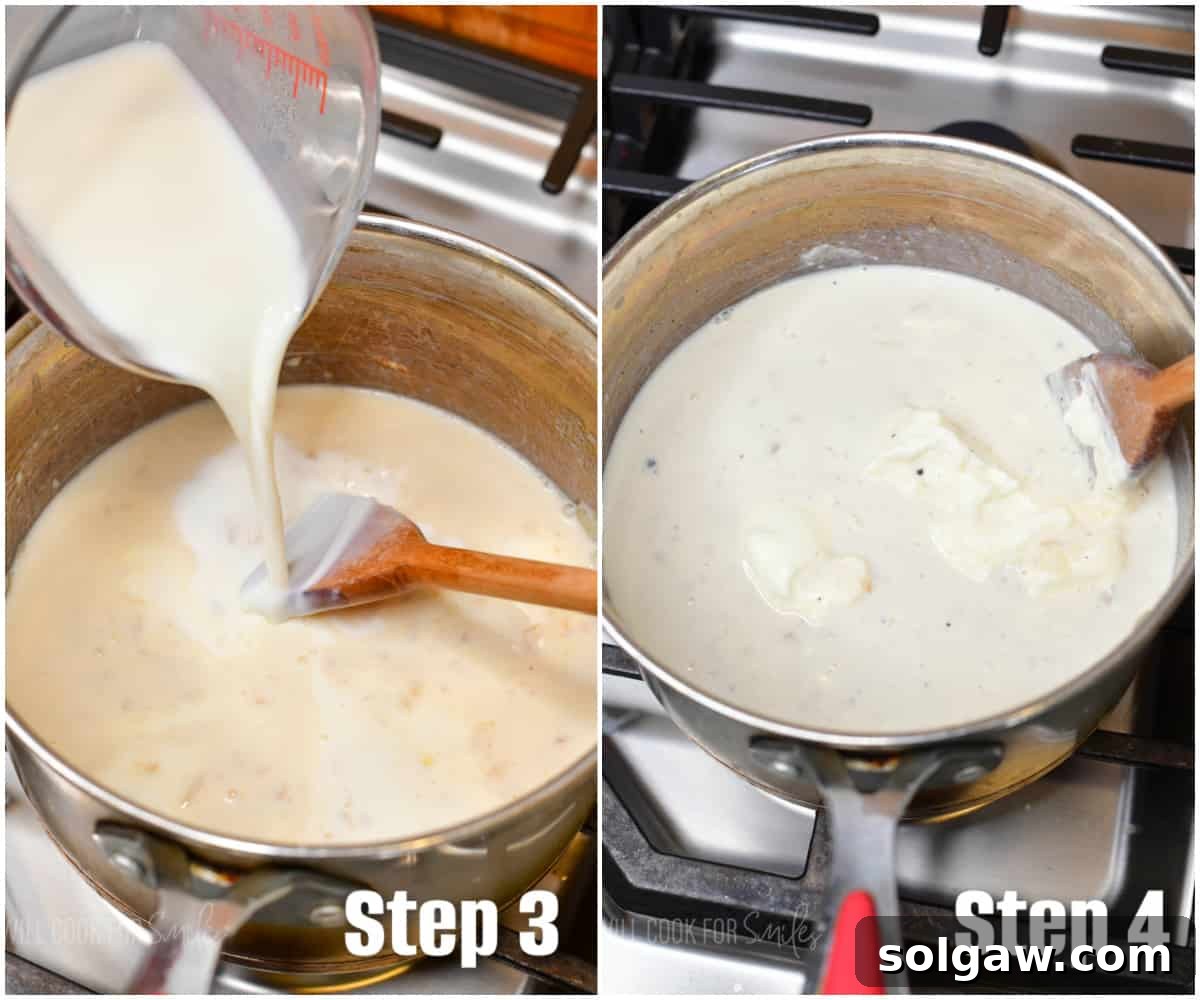
- Achieving a Velvety Smooth Cheese Sauce: This is where patience pays off. Gradually pour in the chicken stock and then the milk, whisking constantly and slowly as you add the liquids. Continuous stirring is key to preventing lumps and ensuring a silky-smooth sauce. The mixture will begin to thicken as it heats.
- Temperature Control is Paramount: Always keep the heat at or below medium when making any creamy cheese sauce. Start at medium to sauté the onions, then lower it to medium-low after adding the liquids. High heat can cause the milk to scorch, the sauce to break, or the cheese to become grainy. Stir frequently to prevent sticking.
- Adding Sour Cream and Seasoning: Once the sauce has thickened slightly, stir in the sour cream, salt, and freshly cracked black pepper. If the sour cream appears difficult to incorporate, a whisk can help achieve a smooth blend. Allow the sauce to gently simmer for about a minute.
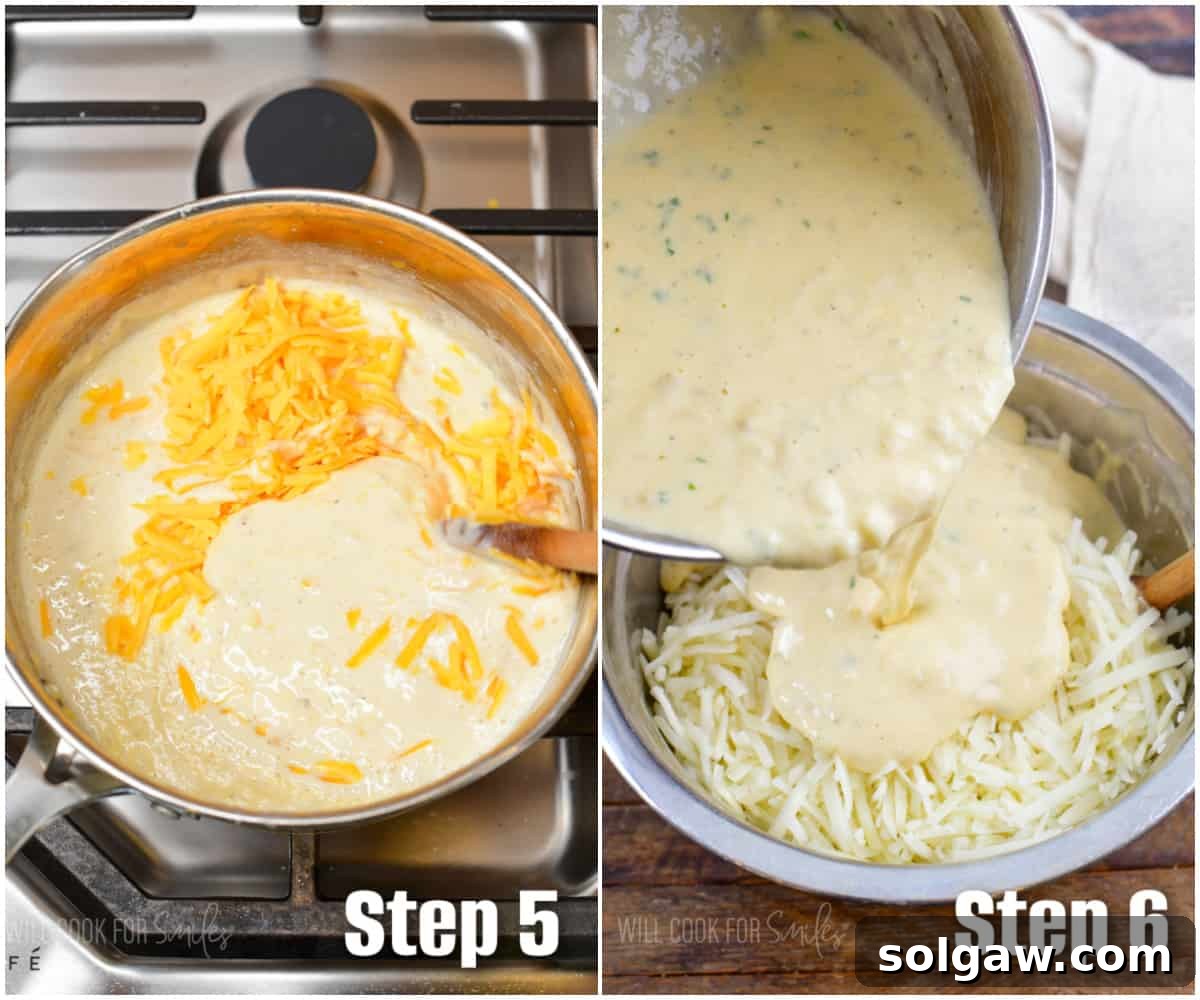
- Incorporating the Cheese: Remove the pot from direct heat before adding the cheese. This prevents overheating and keeps the cheese from separating. Add the shredded sharp cheddar cheese one handful at a time, stirring gently after each addition until it completely melts and is smoothly incorporated into the sauce. Taste and adjust seasonings as needed, adding more salt or pepper if desired. Once all the cheese is melted and the sauce is perfectly seasoned, stir in the fresh minced parsley and remove the pot from the heat completely.
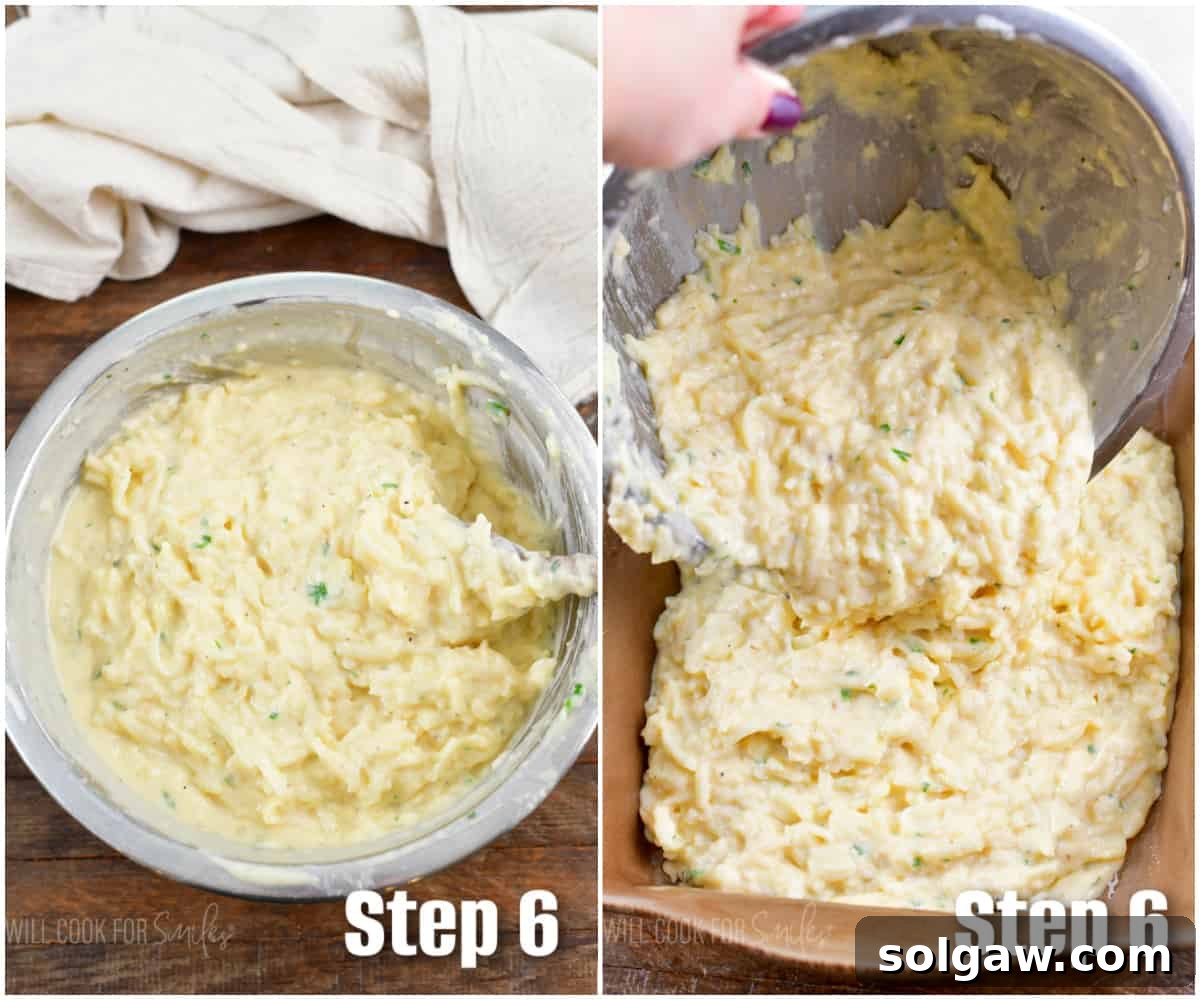
- Combining Hashbrowns and Sauce: In a large mixing bowl, gently combine the thawed hashbrowns with the creamy cheese sauce. It’s important to be gentle and avoid overmixing, which can break down the potato shreds. Ensure the sauce is evenly distributed throughout the potatoes.
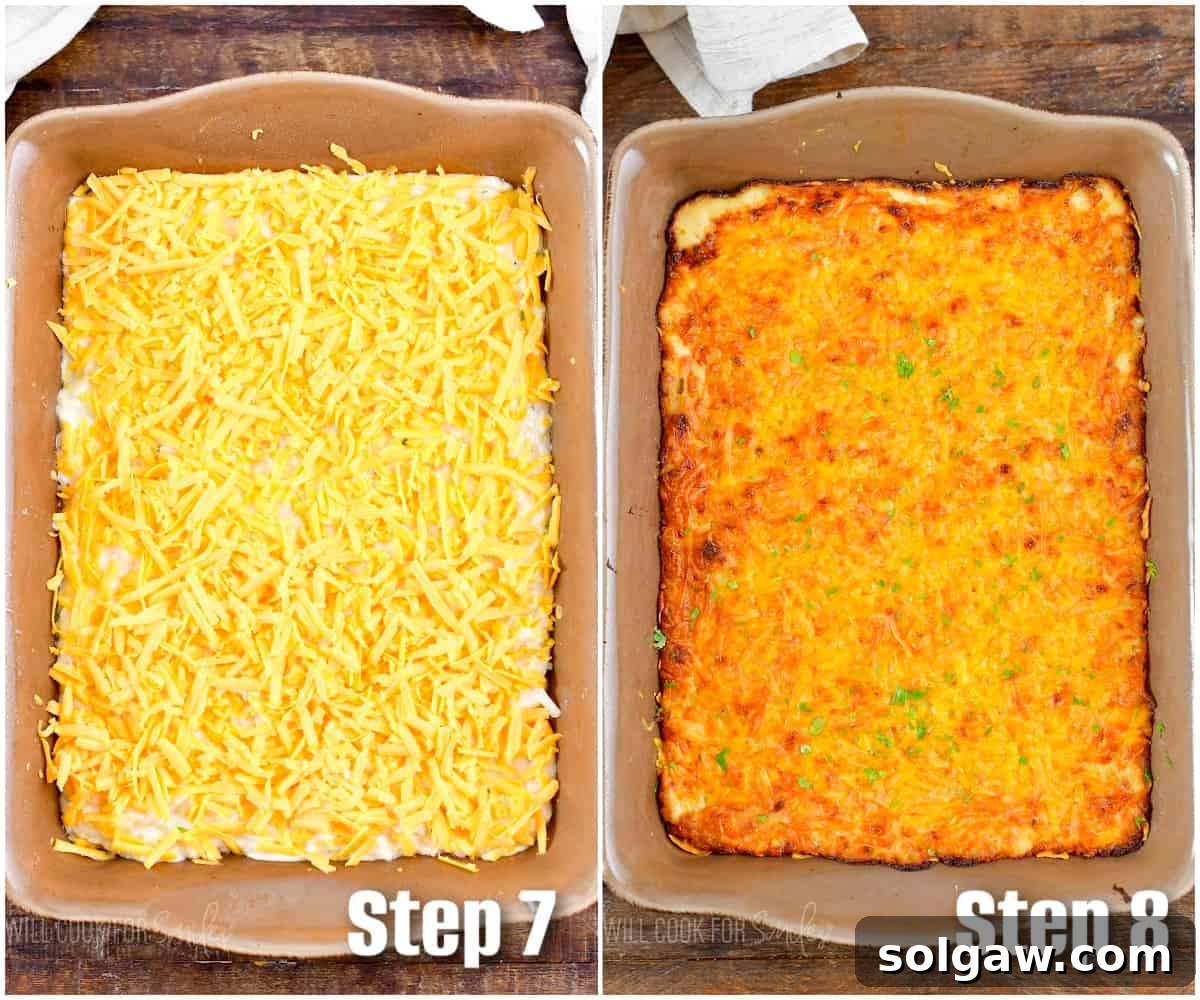
- Baking to Golden Perfection: Transfer the hashbrown and cheese mixture into your prepared 9×13-inch casserole dish, spreading it evenly. Top with an additional cup of shredded sharp cheddar cheese for that irresistible golden crust. Bake for 30-35 minutes at 350°F (175°C), or until the casserole is bubbling around the edges and the top is beautifully browned and gooey. If the top starts browning too quickly, you can loosely cover the dish with a sheet of aluminum foil. This will deflect direct heat, allowing the casserole to cook through without over-browning the cheese topping. For an extra golden-brown finish, you can briefly use the broiler for a few seconds at the very end, but watch it carefully to prevent burning!
Make-Ahead, Storage, and Reheating Instructions for Hashbrown Casserole
This hashbrown casserole is perfect for meal planning and entertaining, as it can be prepared in advance and reheated beautifully. Here’s how to manage it:
Make Ahead: You can easily assemble the entire casserole without baking it up to 24 hours in advance. After mixing the hashbrowns and cheese sauce and spreading them into your baking dish, cover the dish tightly with a lid or plastic wrap. Store it in the refrigerator overnight. When you’re ready to bake, remove the dish from the refrigerator and let it sit at room temperature for about 30 minutes to take off the chill. This helps ensure even baking. You will need to add an additional 5 to 10 minutes to the baking time to account for the casserole starting from a colder temperature.
Storing Leftovers: Any leftover hashbrown casserole should be stored in an airtight container in the refrigerator. It will keep well for 3-5 days. You can either leave the leftovers in the original baking dish, tightly covered, or transfer them to smaller, more convenient storage containers.
Reheating: For best results, you can reheat the entire casserole in the oven. First, allow the dish to come to room temperature for about 30 minutes. Then, bake at 350°F (175°C) until heated through and bubbly, usually about 15-25 minutes, depending on the amount of leftovers. To prevent the top from over-browning, you can loosely cover the dish with aluminum foil. For individual servings, the microwave is a quick and effective option. Place a portion on a microwave-safe plate, cover it loosely, and heat in 1-minute intervals until warmed through, stirring occasionally.
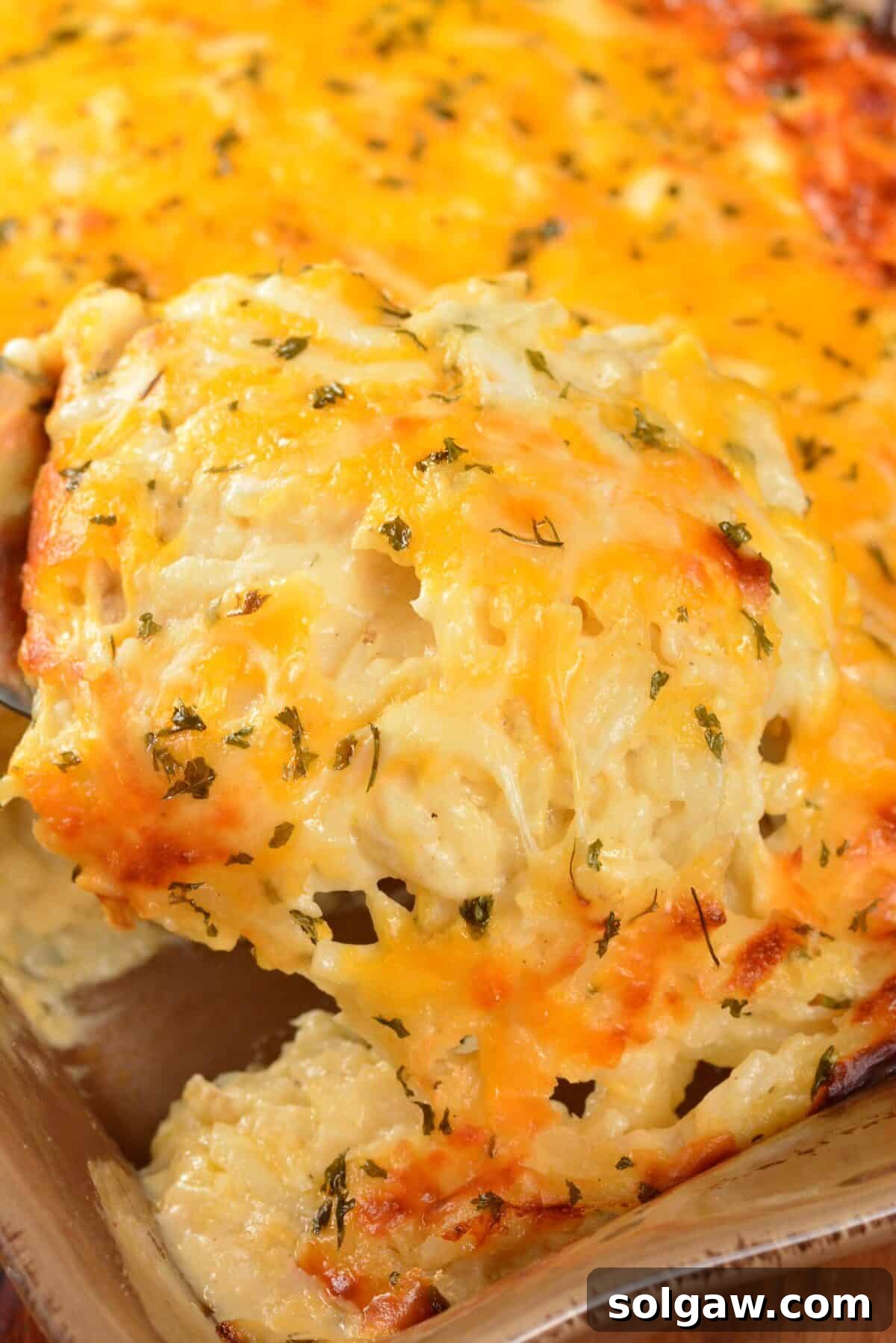
How To Freeze Hashbrown Casserole for Future Enjoyment
Freezing hashbrown casserole is a fantastic way to prepare meals in advance, perfect for busy weeknights or unexpected guests. Here’s a detailed guide to freezing and reheating:
PRO TIP: If you’re planning to freeze this casserole, consider assembling and baking it directly in an aluminum baking pan. This makes it incredibly easy to cover, freeze, and then reheat directly without worrying about ceramic dishes cracking from extreme temperature changes. Note that baking in an aluminum pan might slightly reduce the initial bake time by about 5 minutes.
- Preparation and Initial Bake: Prepare the hashbrown casserole according to the recipe instructions and bake it thoroughly. Ensure it is fully cooked, especially if you plan to freeze it for an extended period.
- Cooling is Crucial: Before freezing, it is absolutely essential to allow the cooked potato casserole to cool completely to room temperature. Freezing a hot or warm dish can create condensation, leading to ice crystals and a less desirable texture upon reheating.
- Secure Wrapping: Once cooled, cover the entire baking pan (especially if using aluminum) with a layer of plastic wrap, ensuring it’s as airtight as possible. Then, wrap it again tightly in aluminum foil. This double-layer covering provides an excellent barrier against freezer burn and helps maintain the casserole’s quality.
- Label and Freeze: Clearly label the pan with the dish name and the date it was frozen. This helps you keep track of its freshness. Freeze the casserole for up to 3 months for optimal taste and texture.
- Thawing Before Reheating: When you’re ready to enjoy your frozen casserole, make sure to thaw it slowly. Transfer it from the freezer to the refrigerator for up to 24 hours. This gradual thawing prevents drastic temperature changes that can affect the texture of the potatoes and sauce.
- Reheating from Thawed: Once thawed, remove the plastic wrap and foil (if the foil is still intact, replace it with a fresh sheet if it’s torn). Reheat in a preheated oven at 350°F (175°C) until heated through and bubbling, typically 25-35 minutes. If the top starts to brown too quickly, cover loosely with foil.
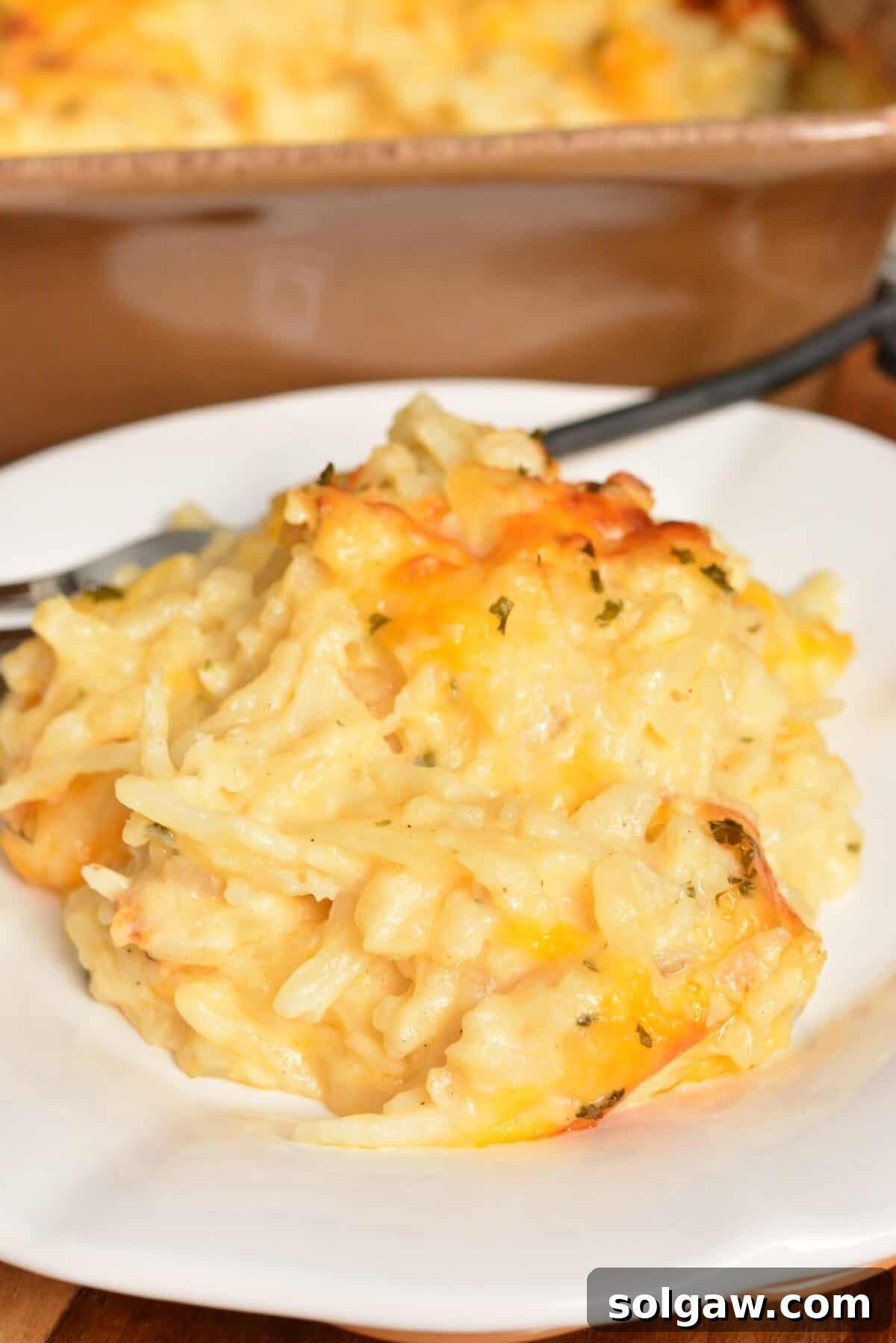
Creative Variations and Delicious Additions to Your Hashbrown Casserole
While this classic hashbrown casserole recipe is perfect as is, it also serves as a fantastic base for customization. Feel free to get creative with these delicious variations and additions:
- Add a Crunchy Topping for Texture: For a delightful texture reminiscent of “Funeral Potatoes,” prepare a crunchy topping. Mix 2 cups of crushed cornflakes or Ritz crackers with 3 tablespoons of melted butter. Sprinkle this mixture evenly over the top of the casserole just before baking. It adds a golden, buttery crunch that contrasts beautifully with the creamy interior.
- Boost with Protein: Transform this side dish into a heartier meal by incorporating cooked protein. Stir in 1 cup of diced ham, shredded rotisserie chicken, crispy crumbled bacon, or leftover cooked turkey. This makes it an excellent option for breakfast, brunch, or a complete dinner.
- Experiment with Different Cheeses: While sharp cheddar is a timeless choice, don’t hesitate to explore other cheese varieties. Monterey Jack offers a milder flavor and exceptionally gooey melt, pepper Jack adds a spicy kick, Colby provides a slightly sweet and buttery note, and a Mexican cheese blend can introduce a blend of flavors perfect for a Tex-Mex twist.
- Introduce a Spicy Kick: If you enjoy a little heat, finely diced jalapeños (seeded for less heat) or a 4-ounce can of mild green chiles (drained) can be stirred into the sauce. They add a subtle warmth and zesty flavor without overpowering the dish.
- Enhance with Fresh Herbs: Beyond parsley, consider stirring in other fresh herbs to elevate the flavor profile. Chopped chives or sliced scallions add a mild oniony freshness, while a touch of fresh thyme or rosemary can impart an earthy depth.
- Add Vegetables: For extra nutrition and flavor, you can sauté finely diced bell peppers or mushrooms and stir them into the casserole mixture along with the onions. Just ensure they are cooked until tender-crisp before adding.
Can I make this Hashbrown Casserole in the Crock Pot (Slow Cooker)?
Yes, you absolutely can adapt this delicious hashbrown casserole recipe for your slow cooker, making it an excellent hands-off option for gatherings or busy days. Prepare the casserole as instructed in the recipe, following all steps for making the creamy cheese sauce and mixing it with the thawed hashbrowns. Instead of spreading it into a baking dish, transfer the cheesy potato mixture into your Crock Pot. Cover with the lid and cook for 2-3 hours on HIGH or for 4-4.5 hours on LOW. To achieve that coveted golden, bubbly cheese topping, spread the grated cheese over the top of the casserole during the last 30 minutes of cook time. This will allow the cheese to melt and become beautifully golden brown, mimicking the oven-baked finish.
Can I use Cubed Potatoes Instead of Shredded Hashbrowns?
While this particular recipe is meticulously designed to optimize the texture and cooking time of shredded hashbrowns, you can certainly use cubed hash brown potatoes as a substitute. The key is to ensure they are also completely thawed first, just like their shredded counterparts. Keep in mind that the cooking time might vary slightly, and the overall texture will be different – a bit heartier and less cohesive than with shredded potatoes. For a casserole specifically formulated for cubed potatoes, you might enjoy my Loaded Cheesy Potato Casserole, which is designed to highlight the best qualities of cubed potatoes.
Why is it Critical to Thaw Frozen Hashbrowns Before Cooking?
Thawing your frozen hashbrowns is arguably the most crucial preparatory step for this casserole, and skipping it can lead to a less than ideal outcome. Here’s why:
- Prevents Watery Casserole: Frozen hashbrowns contain a significant amount of ice crystals. When these melt during baking, they release excess water into your casserole. This extra moisture dilutes the rich, creamy cheese sauce, resulting in a thin, watery consistency instead of the thick, luscious texture we aim for.
- Ensures Even Cooking: Potatoes cook more evenly when they start at the same temperature. If you bake frozen hashbrowns directly, the exterior might cook or even burn before the interior is properly heated and tender. Thawing allows the potatoes to cook consistently throughout, ensuring every bite is perfectly soft and cheesy.
- Better Flavor Absorption: Thawed potatoes are more receptive to absorbing the flavors of the delicious cheese sauce, onions, and seasonings. This leads to a more integrated and flavorful dish overall.
- Optimal Texture: The goal is a casserole with tender potatoes and a gooey, cheesy binder. Frozen potatoes can result in a somewhat rubbery or unevenly cooked texture, whereas thawed potatoes will contribute to a smooth and comforting consistency.
Taking the extra time to properly thaw your hashbrowns is a small effort that yields a significantly superior hashbrown casserole. It’s a foundational step for achieving that ultimate comfort food experience.
PIN THIS RECIPE FOR LATER
If you’ve made my Hashbrown Casserole recipe and found a lot of good information here, PLEASE leave a 🌟 star rating! Let me know how you liked it by leaving the 📝 comment below as well. Don’t forget to subscribe to my newsletter!
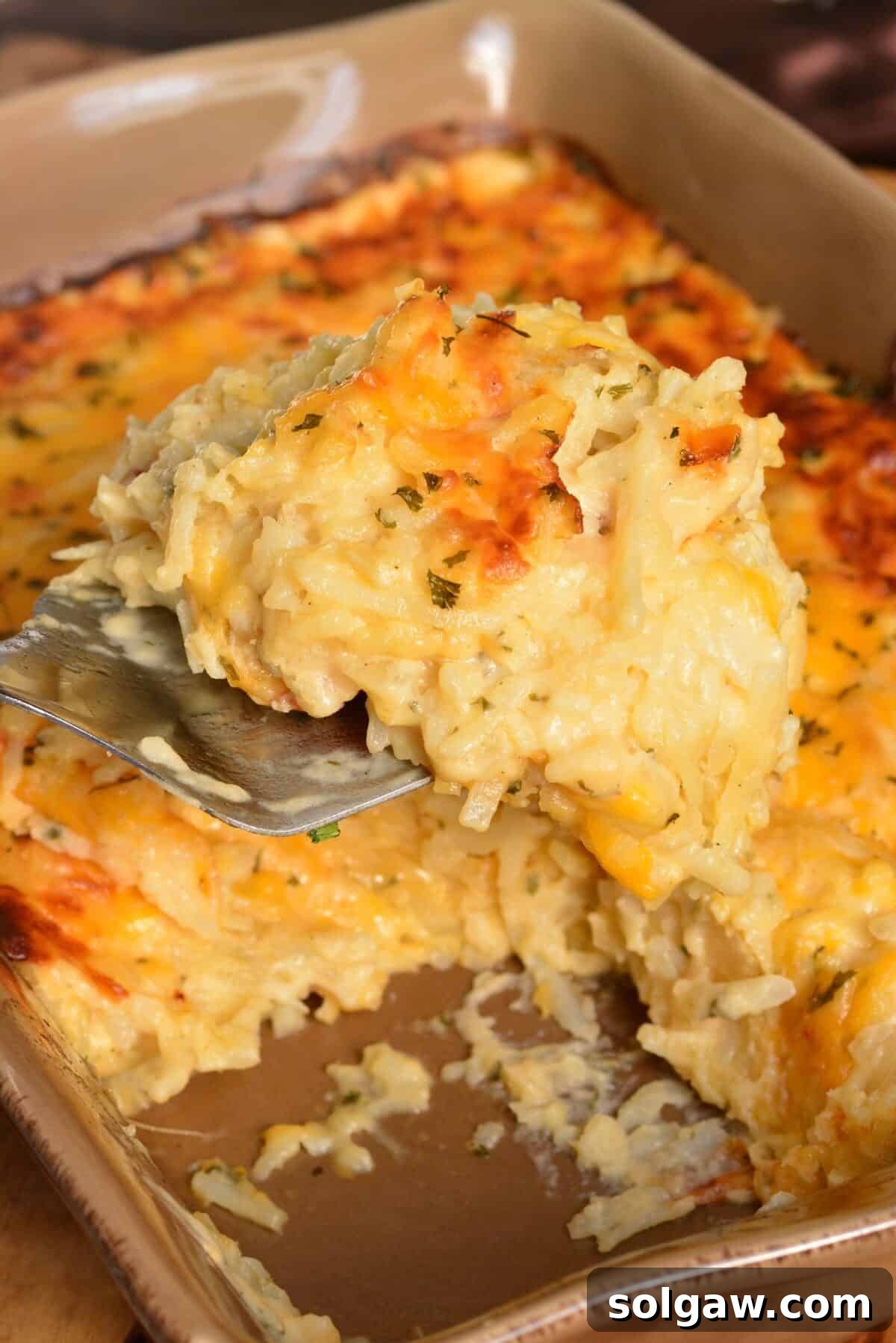
Homemade Hashbrown Casserole
You’ve found the ultimate homemade hashbrown casserole, made completely from scratch with NO canned soup! This recipe features tender shredded hashbrowns baked in a rich, creamy cheese sauce you make yourself. It takes about 10 minutes to prepare and is ready in about an hour, making it the perfect cheesy, comforting side dish for holidays, potlucks, or a cozy family dinner.
Pin Recipe
Watch Video
Rate This Recipe
Course: Side Dish
Cuisine: American
Prep Time: 10 minutes
Cook Time: 50 minutes
Total Time: 1 hour
Servings: 8
Calories: 408 kcal
Author: Lyuba Brooke
Ingredients
- 30 oz frozen shredded hash brown potatoes, thawed
- 2 tbsp olive oil
- 1 yellow onion, diced
- 3 large garlic cloves, minced
- 1/4 cup all-purpose flour*
- 2 cups whole milk (can use reduced fat if needed)
- 1 cup chicken stock
- 1 cup sour cream
- 8 oz shredded sharp cheddar cheese
- 1 1/2 tbsp minced fresh parsley (can use dried parsley if needed)
- Salt, to taste
- Fresh cracked black pepper, to taste
- 1 cup shredded sharp cheddar cheese for topping
Instructions
- Preheat the oven to 350°F (175°C) and generously grease a 9×13-inch casserole baking dish.
- Preheat a medium pot over medium heat on the stovetop. Add olive oil and allow it to heat through, then add the diced onions. Sauté onions until they become soft, translucent, and just begin to brown.
- Add the minced garlic to the onions. Stir and sauté for just a few seconds until fragrant, being careful not to burn it.
- Sprinkle the all-purpose flour over the sautéed onions and garlic. Stir well for about 30 seconds to a minute to cook the flour slightly.
- Gradually and slowly pour in the chicken stock while continuously stirring. After the stock, slowly add the milk, continuing to stir constantly to prevent lumps.
- Lower the heat to medium-low. Allow the mixture to heat through and begin to thicken, stirring often to ensure a smooth consistency.
- Stir in the sour cream, salt, and pepper. Use a whisk if necessary to fully incorporate the sour cream until smooth. Let the mixture cook for about a minute.
- Remove the pot from direct heat. Stir in the 8 oz of shredded cheese one handful at a time, stirring until each addition melts completely and is smoothly incorporated into the sauce. Taste the sauce and adjust seasonings as needed. Once the cheese is melted, stir in the minced parsley.
- In a large bowl, gently mix the thawed hash brown potatoes with the prepared cheese sauce until evenly coated. Avoid overmixing.
- Transfer the mixture into the prepared casserole dish, spreading it evenly. Top with the remaining 1 cup of shredded sharp cheddar cheese.
- Bake for 30-35 minutes, or until the casserole is golden brown on top and bubbling around the edges. If you desire a little more browning on the top, you can briefly turn on the broiler for a few seconds (watch it closely to prevent burning).
Video
Notes
- Gluten-Free*: This casserole is easily made gluten-free by substituting all-purpose flour with a gluten-free all-purpose flour blend.
- Storing: Store any leftover hashbrown casserole in the refrigerator, covered airtight, for 3-5 days.
- Freezing: To freeze, bake the casserole completely, then cool to room temperature. Wrap tightly in plastic wrap and then foil, and freeze for up to 3 months. Thaw overnight in the refrigerator before reheating in the oven.
Nutrition
Mention @willcookforsmiles or tag #willcookforsmiles!
Explore More Comforting Side Dishes and Casseroles
If you loved this hashbrown casserole, you’re in for a treat! Discover more delectable and comforting side dishes and casseroles from our collection that are perfect for family meals, holidays, or any occasion that calls for heartwarming food:
- Sweet Potato Casserole: A classic holiday favorite, sweet and savory with a delightful pecan topping.
- Loaded Cheesy Potato Casserole: Another potato lover’s dream, packed with cheese, bacon, and all the fixings.
- French Toast Casserole: Perfect for breakfast or brunch, a make-ahead dish that’s both elegant and easy.
- Chicken and Sausage Tortellini Casserole: A hearty and satisfying main course casserole, rich with cheese and pasta.
- Beef Enchilada Casserole: Layers of flavor in a comforting Tex-Mex inspired bake.
- Ham and Cheese Mashed Potato Cakes: A creative way to use leftover mashed potatoes, crispy on the outside, soft on the inside.
Originally published on Will Cook For Smiles on December 20, 2018. This article has been updated and expanded for clarity, SEO, and user experience.