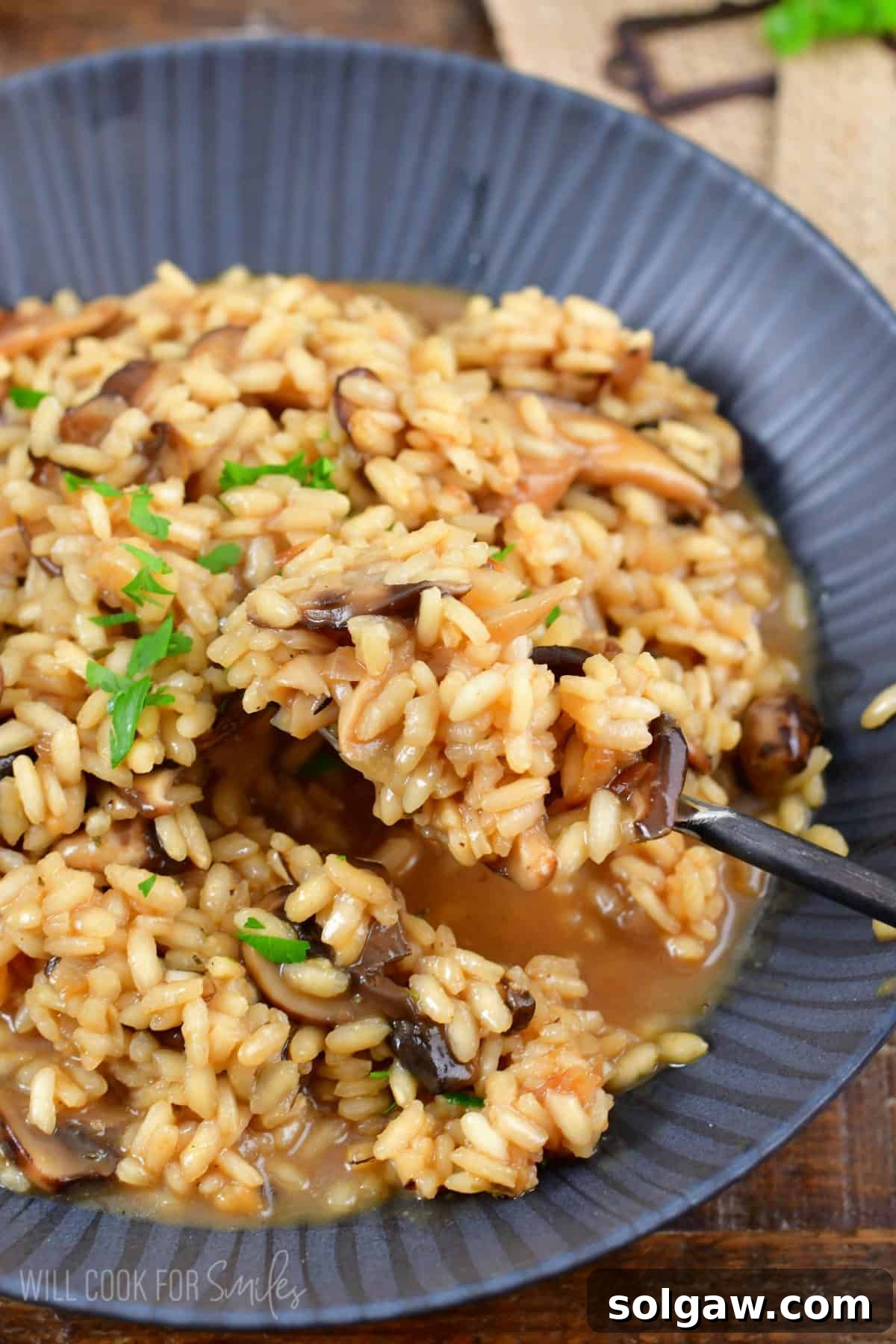
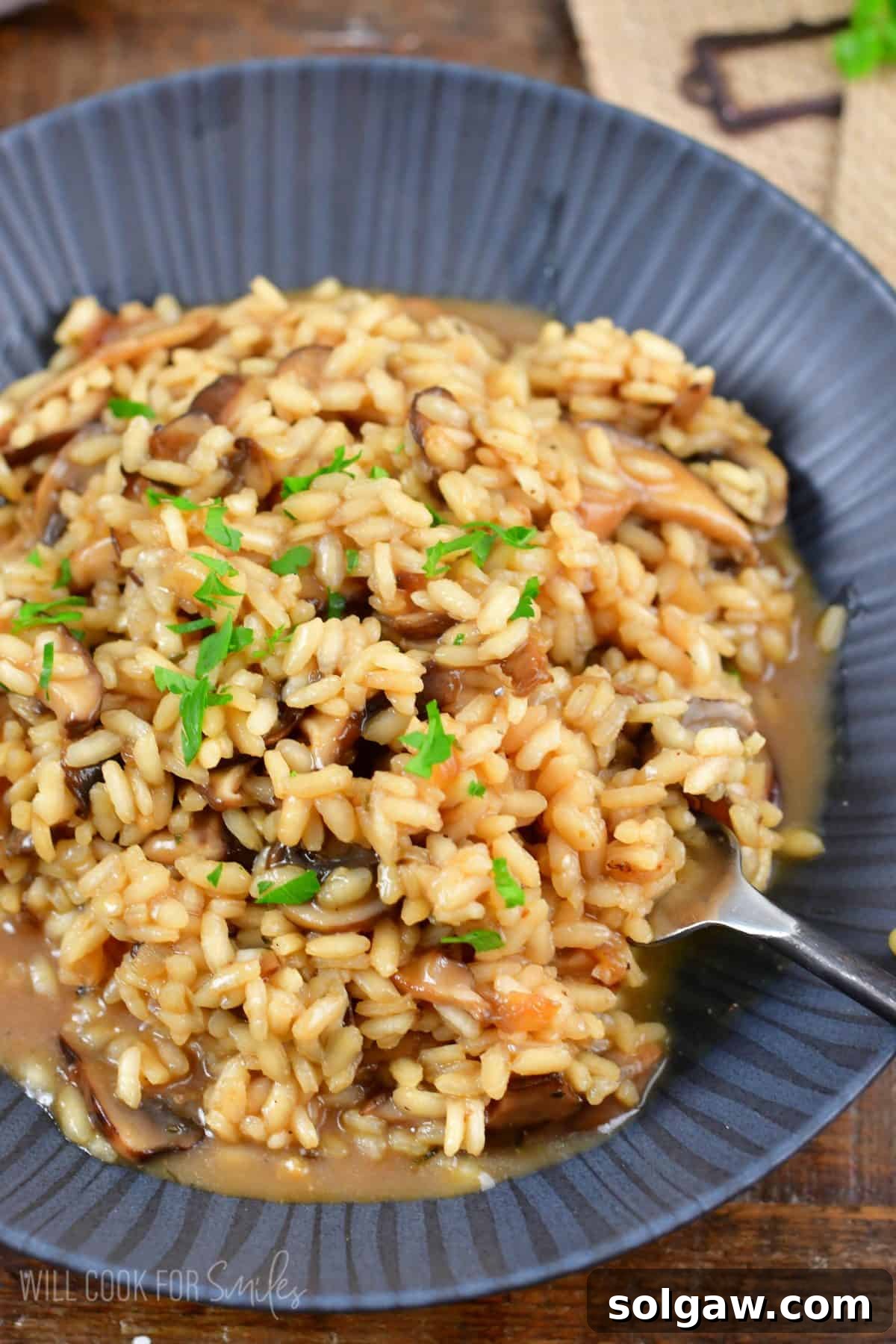
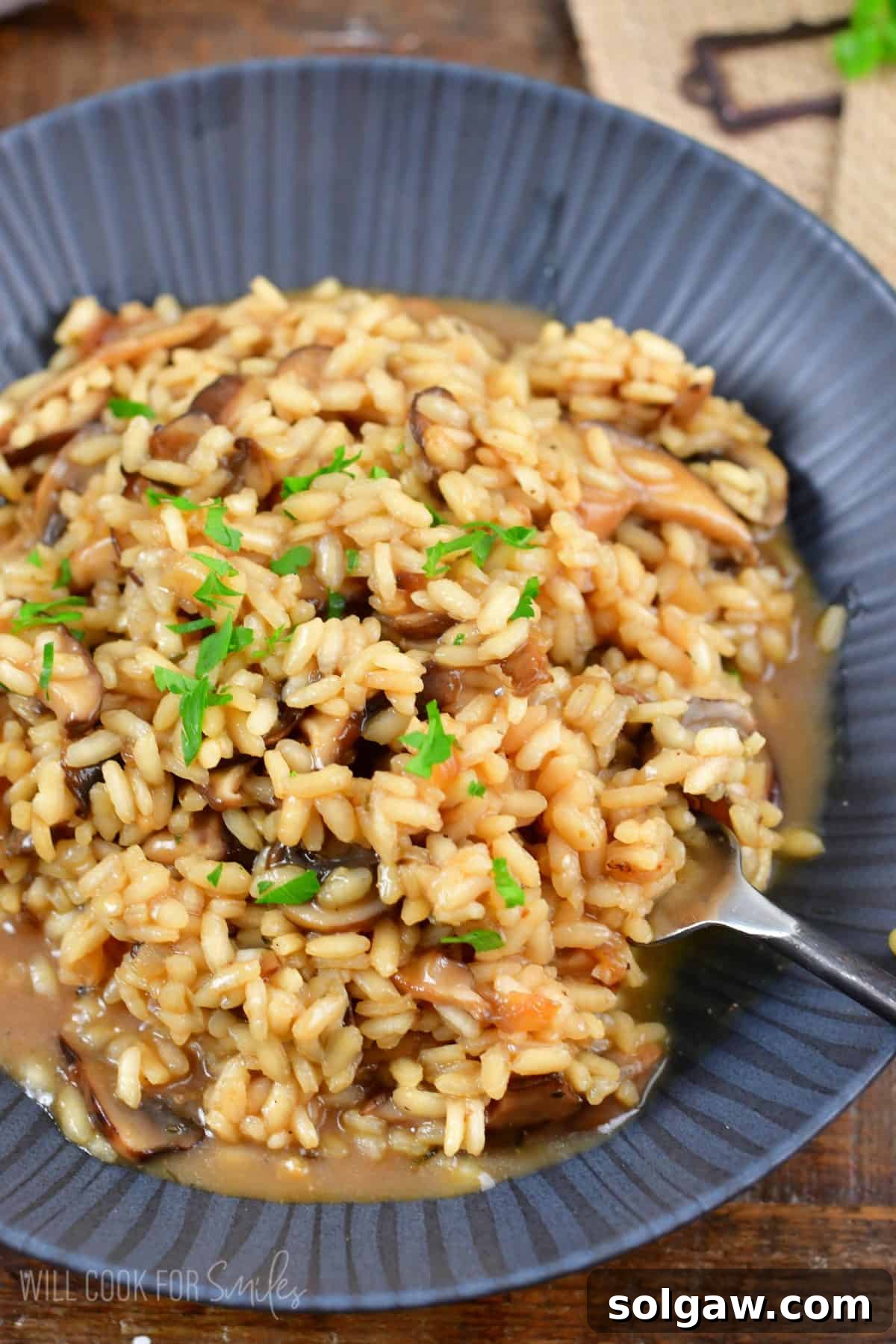
Mushroom Risotto is a truly special, restaurant-quality dinner that’s far easier to master than you might imagine. This classic Italian risotto recipe shines with perfectly sautéed mushrooms and creamy Arborio rice, infused with the subtle richness of white wine, aromatic garlic, and an optional, yet highly recommended, truffle oil finish. It’s a sophisticated dish that promises to impress, whether for a cozy family meal or an elegant dinner party.
Risotto is incredibly versatile and makes a wonderful addition to any special dinner menu. Once you fall in love with this mushroom version, be sure to explore our other delightful creations like Parmesan Risotto and a bright, zesty Lemon Risotto with Lemon Pepper Shrimp.
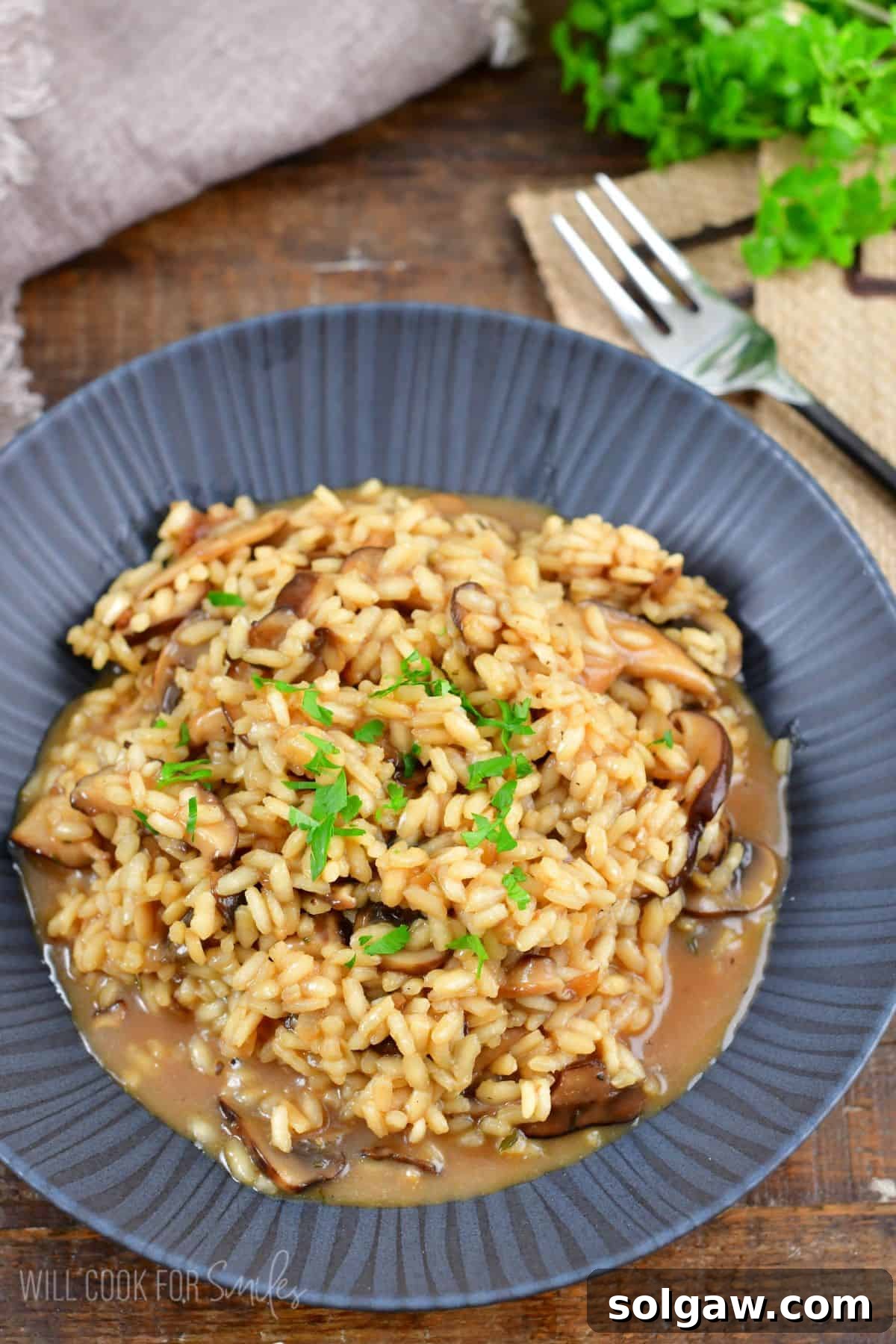
Many home cooks are initially daunted by the idea of making risotto, often believing it to be an overly complicated or difficult dish. However, this perception couldn’t be further from the truth! The fundamental method for preparing a luscious, creamy risotto is remarkably simple. It primarily involves a rhythmic process of gently stirring and gradually adding liquid, followed by more stirring and further liquid additions. You’ll essentially be repeating these two core steps until the rice reaches its perfect al dente texture.
While the steps are straightforward, it’s crucial to understand that making authentic risotto demands your attention. To achieve that signature creamy consistency and perfectly cooked rice, you’ll need to stir the rice consistently every few minutes, both before and after each liquid addition. The magic lies in allowing the Arborio rice to absorb the white wine and warm broth gradually, typically in small ladlefuls at a time. It’s imperative that you NEVER dump all the liquid into the pan at once! This slow, deliberate absorption is what encourages the rice to release its starches, creating the creamy, velvety texture that risotto is famous for.
I genuinely encourage you to dedicate your full focus to preparing this mushroom risotto recipe. The process, while requiring presence, is meditative and rewarding. I assure you that the end results will be immensely satisfying! Each tender bite of flavorful mushroom nestled within the rich, creamy risotto truly elevates this dish, making every effort worthwhile. This isn’t just a meal; it’s an experience in Italian culinary tradition, brought right into your kitchen.
Ingredient Essentials for Perfect Mushroom Risotto
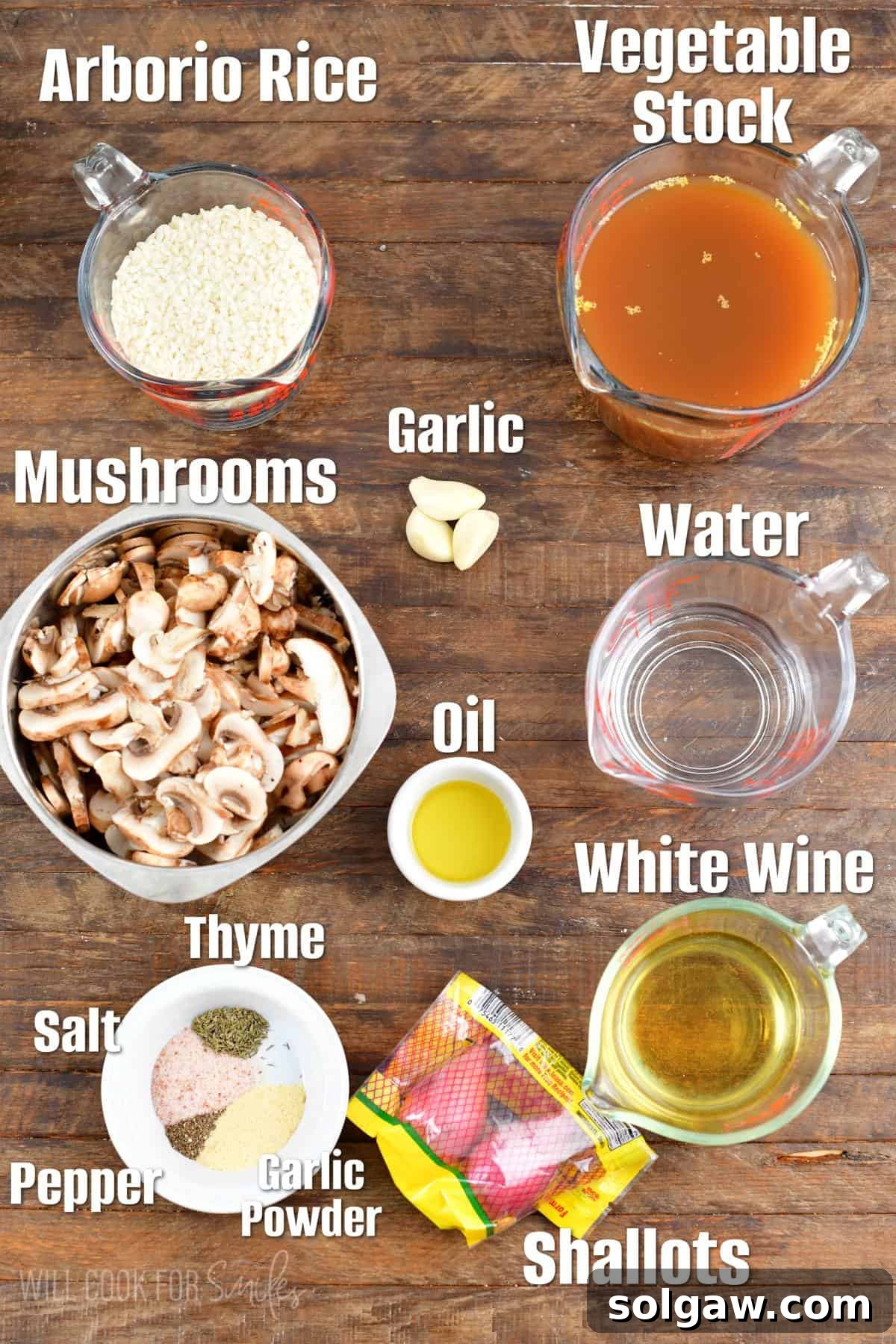
Creating an unforgettable mushroom risotto begins with selecting the right ingredients. Each component plays a vital role in building the depth of flavor and signature creamy texture of this beloved Italian dish.
Arborio Rice – This is the unequivocal star of any risotto recipe. Arborio is a short-grain white rice, specifically chosen for its high starch content. Unlike long-grain rice varieties, Arborio readily releases its starch when gently stirred and cooked in liquid. This starch is what naturally thickens the dish, imparting that irresistible creamy consistency without the need for excessive cream or cheese. While other Italian short-grain varieties like Carnaroli or Vialone Nano can also be used, Arborio is the most widely available and reliable choice for home cooks.
Mushrooms – The beauty of this recipe lies in its adaptability to various fungi. You have the freedom to use any type of edible mushroom you prefer, or a combination for complex flavors. Common, readily available options at most grocery stores include meatier varieties such as baby bella (cremini), and shiitake mushrooms, which offer a robust, earthy flavor. For those seeking a more gourmet touch, exploring exotic mushrooms like oyster, chanterelle, or porcini from a local farmer’s market or specialty store can add unique dimensions to your risotto. Clean mushrooms gently with a damp cloth rather than washing them, as they tend to absorb water.
Shallot – Shallots provide a delicate, sweet, and mild onion flavor that perfectly complements the earthiness of the mushrooms. If shallots are not available, a good substitute would be a small Vidalia onion or other sweet onion, finely diced. They offer a similar sweetness without being overpowering.
Stock or Broth – The liquid base is crucial for both flavor and cooking consistency. I typically use Vegetable stock or broth for a rich, earthy flavor profile that highlights the mushrooms. However, if you plan to serve your risotto alongside chicken or turkey, feel free to use chicken stock to complement the meal. Always ensure your stock is warmed to a gentle simmer before adding it to the rice; cold stock can shock the rice and impede the cooking process.
Dry White Wine – A key ingredient for deglazing and adding a layer of sophisticated flavor. Choose a dry white wine that you genuinely enjoy drinking, such as Sauvignon Blanc, Pinot Grigio, or Chardonnay. Most of the alcohol will evaporate during cooking, leaving behind only its nuanced flavor. If you prefer to omit alcohol, you can easily substitute it with an equal amount of warm stock or broth. For a touch of acidity and sweetness, you can also add a splash of white grape juice and a dash of white wine vinegar (see FAQs for more details).
The full list of ingredients and detailed instructions can be found in the recipe card at the bottom of this article.
Crafting Your Mushroom Risotto: A Step-by-Step Guide
Making risotto is a labor of love, but the process itself is straightforward and incredibly rewarding. The key is methodical preparation and a little patience.
1. Prepare Your Ingredients. Begin by thinly slicing your shallots and mushrooms, and finely mincing the garlic cloves. Take a moment to measure and arrange all your other ingredients within easy reach. This “mise en place” is vital because the initial cooking stages move quite quickly, and you’ll want everything ready to go.
2. Prepare the Broth. In a separate saucepot, combine your chosen broth, water, fresh thyme, garlic powder, salt, and pepper. Bring this mixture to a gentle simmer over medium heat. Once simmering, reduce the heat to its lowest setting to keep the broth warm throughout the risotto cooking process. This prevents shocking the rice with cold liquid, ensuring even cooking.
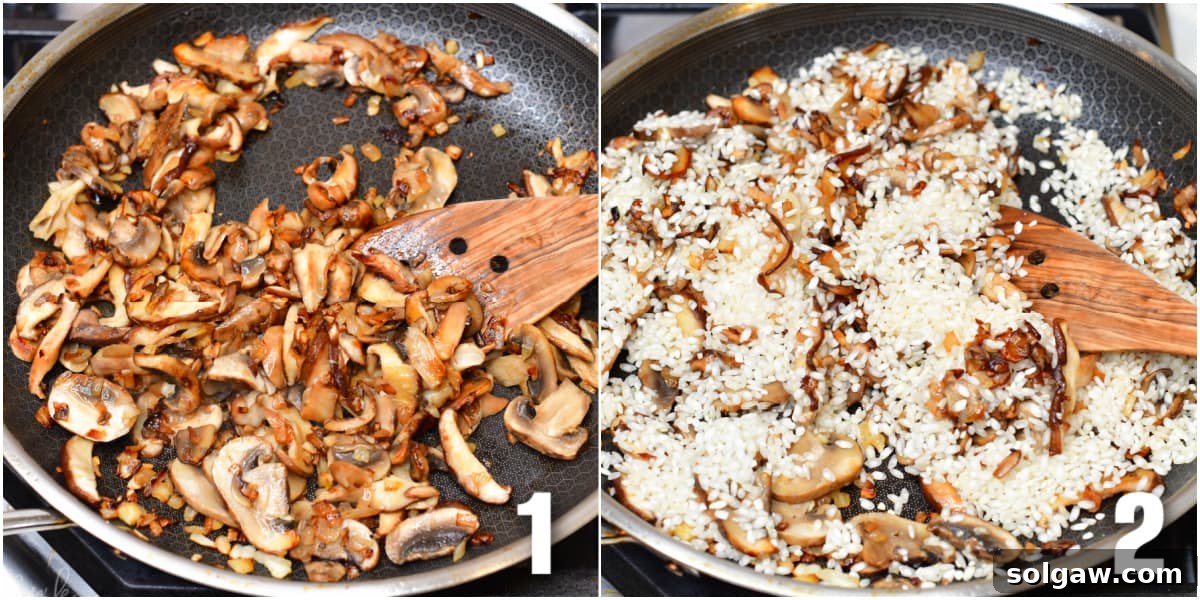
3. Sauté Aromatics and Mushrooms. Preheat a large, heavy-bottomed pan or Dutch oven over medium-high heat. Add the olive oil and allow it to shimmer. Toss in the thinly sliced shallots and sauté until they are translucent and lightly browned, typically for 2-3 minutes. Next, add your sliced mushrooms and continue to sauté for another 5-7 minutes, until they release their moisture, cook down, and begin to develop a beautiful golden-brown color. (See Image 1)
4. Add Garlic and Toast Rice. Stir in the minced garlic and cook for about 30-60 seconds, just until it becomes fragrant. Be careful not to burn it. Immediately reduce the temperature to medium or just below medium. Add the Arborio rice to the pan and mix it thoroughly with the sautéed mushrooms and aromatics. Allow the rice to “toast” for about a minute, stirring constantly. This step helps the rice grains hold their shape and develop a subtle nutty flavor. (See Image 2)
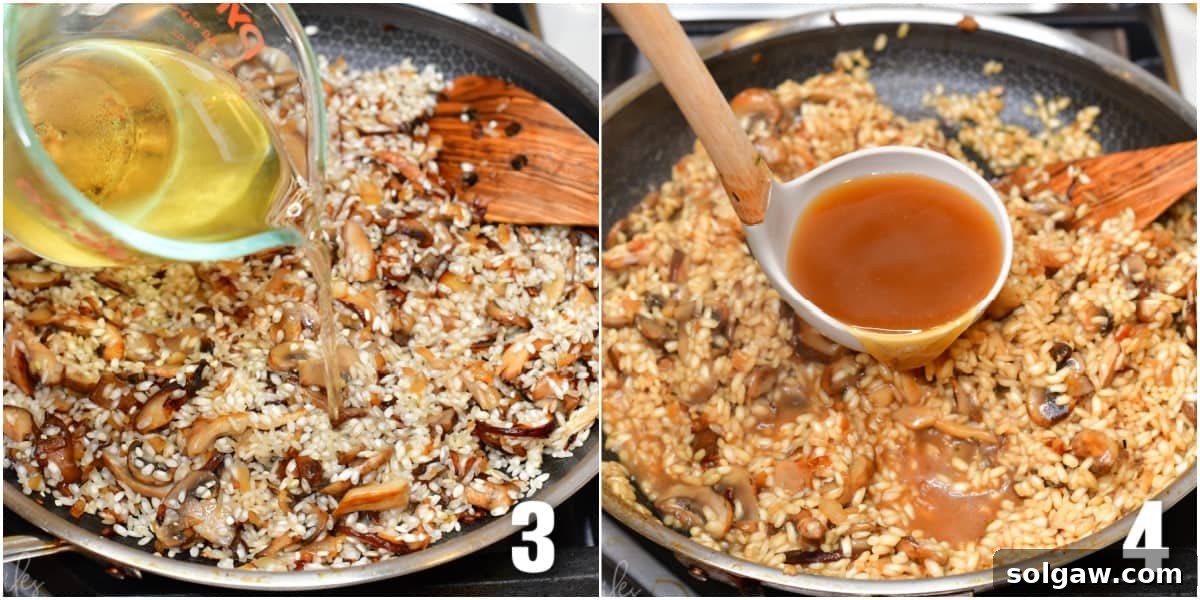
5. Deglaze with Wine. Pour in the first half of the dry white wine. Stir gently to ensure everything is evenly coated. The wine will sizzle and begin to evaporate, lifting any browned bits from the bottom of the pan, which adds tremendous flavor (this is called deglazing). Let the rice simmer, absorbing the wine, stirring occasionally, until the liquid has almost completely evaporated. You should be able to draw a spoon across the bottom of the pan and see it briefly. (See Image 3)
6. Begin Adding Broth. Ladle in about one cup of the warm broth mixture. Stir continuously as the rice gently simmers, allowing it to gradually absorb the liquid. The constant stirring helps to release the starches from the Arborio rice, which is essential for creating the creamy texture. (See Image 4)
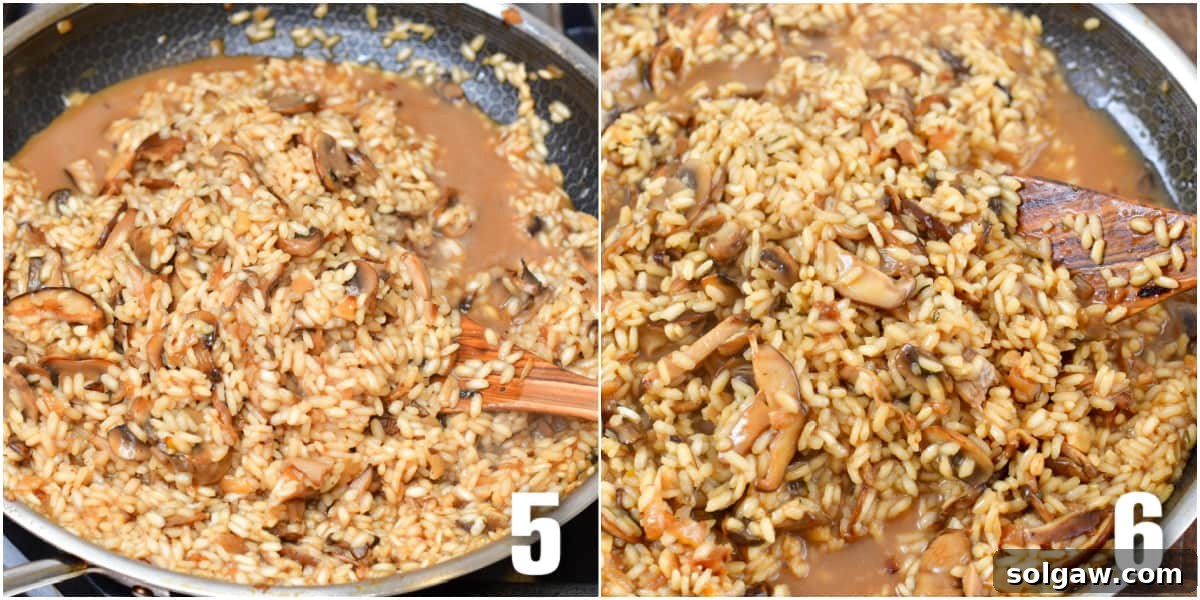
7. Repeat the Process. Once the first cup of broth has been almost fully absorbed, pour in the second half of the white wine, followed by another cup of warm broth. Stir and continue to let the rice simmer and absorb the liquid. Repeat this process, adding approximately a cup of hot broth at a time, and waiting until the liquid is nearly absorbed before each subsequent addition. Remember to stir often enough to prevent sticking and encourage starch release, but not constantly, as too much stirring can lower the cooking temperature. This gradual addition and stirring will take about 20-30 minutes. (See Images 5 & 6)
8. Cook Until Al Dente. Continue adding broth and stirring until the rice is perfectly al dente. This means the rice grains should be tender yet still possess a slight, pleasant resistance or chewiness in the center, without being crunchy or hard. It’s crucial to taste the rice frequently during the last 10-15 minutes of cooking to ensure it reaches your desired texture. The entire cooking process, from adding the first liquid to al dente, usually takes between 25-35 minutes.
PRO TIP: For an exquisite, earthy aroma and flavor, stir in 1/2 to 1 teaspoon of premium truffle oil just before serving. Start with no more than 1/2 teaspoon as truffle oil is incredibly potent. Taste and add more only if desired. Black or white truffle oil can be used, with white generally being more pungent.
Common Risotto Queries
Truffle oil is a gourmet culinary oil infused with the aroma and flavor of truffles, a highly prized underground fungus. In cooking terms, it’s classified as a finishing oil. This means that unlike olive oil or other cooking fats, truffle oil’s delicate flavor compounds degrade with high heat. Therefore, it is not meant for cooking food directly. Instead, it is drizzled sparingly over a dish or mixed in right after the food has finished cooking to enhance its flavor and aroma. Think of it like adding fresh herbs to a caprese salad — it’s for finishing, not cooking. Because truffle oil is very potent, just a tiny drizzle will impart significant flavor. The cost varies based on the purity and type of truffle (black or white), but a good quality oil can typically be found for around eight dollars or more.
Risotto is unequivocally a rice dish. It is fundamentally an Italian method of cooking rice in broth to a creamy consistency. The key ingredient is always a specific type of Italian short-grain rice, most commonly Arborio rice. This variety is naturally starchy, a characteristic that is absolutely crucial for making risotto. This high starch content is what gets released during the gradual cooking and stirring process, creating the naturally creamy, chewy texture unique to risotto. It is distinctly different from pasta, both in its base ingredient and cooking technique.
For an authentic and successful risotto, you truly must use a short-grain rice that is high in starch. While Arborio is the most common and widely available option in most grocery stores, it’s not the only one. Other premium Italian short-grain rice varieties like Carnaroli rice and Vialone Nano rice are also excellent choices, renowned for their even higher starch content and ability to create an incredibly creamy risotto while maintaining a firm structure. However, these varieties are not as widely available in many regions of the US and might require a visit to specialty Italian markets or gourmet food stores. If you can find them, they make superb alternatives to Arborio.
Yes, you can substitute the white wine in risotto, though it’s important to note that the flavor of your risotto will change slightly without it. The wine adds a distinct acidity and depth. The simplest substitution is to use extra warm stock (chicken or vegetable) in place of the wine. If you want to replicate some of the wine’s acidity and sweetness, you can add 3-4 tablespoons of white grape juice (ensure it’s not overly sweet) along with about a tablespoon of white wine vinegar directly into your warm stock. This combination provides a reasonable approximation of the flavor profile imparted by dry white wine.
Expert Tips for the Best Mushroom Risotto
- Always Use Proper Rice! This cannot be stressed enough. For an authentic, creamy, and chewy risotto, you absolutely must use a short-grain rice that is high in starch. Arborio, Carnaroli, or Vialone Nano are your best bets. Using long-grain rice will result in a drier, less creamy dish, as it doesn’t release enough starch.
- Get Creative with Mushrooms! Don’t limit yourself to just one type. This recipe is fantastic with any edible mushroom. While baby bella, cremini, and shiitake are commonly found and excellent, venture out! Explore gourmet varieties like oyster mushrooms, chanterelles, or even dried porcini mushrooms (rehydrated, with the strained liquid added to your broth for extra depth) from a farmer’s market or specialty store for diverse flavors and textures.
- Heat Your Broth. Before you even start cooking the rice, ensure your broth is warm and seasoned (if using homemade or low-sodium store-bought). Adding cold broth to hot rice will drastically drop the temperature of the pan, shocking the rice grains and hindering the consistent release of starch, which is vital for that signature creaminess. Keep it at a gentle simmer on a back burner.
- Don’t Add All Liquid at Once. This is perhaps the most crucial rule for risotto. The gradual addition of wine and broth, a little bit at a time, is what allows the Arborio rice to slowly release its starches. This controlled process is what ultimately creates that velvety, perfect risotto consistency. Patience here yields perfection.
- Stir Often, But Not Constantly. Risotto requires attention and stirring, but there’s a delicate balance. You don’t need to stir every single second, as excessive stirring can actually cool down the rice and prolong cooking time. Aim to stir just before adding your liquids, and then a few times in between each liquid addition. This frequency is enough to prevent sticking and encourage starch release.
- Maintain Medium to Medium-Low Heat. Your risotto should simmer gently as it cooks, never boil aggressively. Boiling too hard will evaporate the liquid too quickly, preventing proper absorption and starch release, and potentially leaving your rice uncooked inside. Conversely, if the heat is too low, the cooking process will stall. Since every stove is different, find the setting that produces a steady, gentle simmer.
- DON’T Try to Rush Risotto! Resist the temptation to speed up the cooking process. While the steps are simple and repetitive, they take time to execute correctly. Each gradual liquid addition and gentle stirring motion is essential for achieving the perfect consistency, texture, and complex flavor you desire. Embrace the process; it’s part of the enjoyment of making risotto.
- Customize for Extra Creaminess or Cheesiness! If you desire an even richer, more indulgent mushroom risotto, feel free to enhance it. You are welcome to stir in about 1/4 cup of heavy whipping cream and/or 1/2 cup of freshly grated Parmesan cheese (or Pecorino Romano for a sharper tang). Add these luscious additions during the last couple of minutes of cooking, stirring gently just until they are heated through and fully incorporated into the risotto. This final touch adds a luxurious finish.
Serving Suggestions
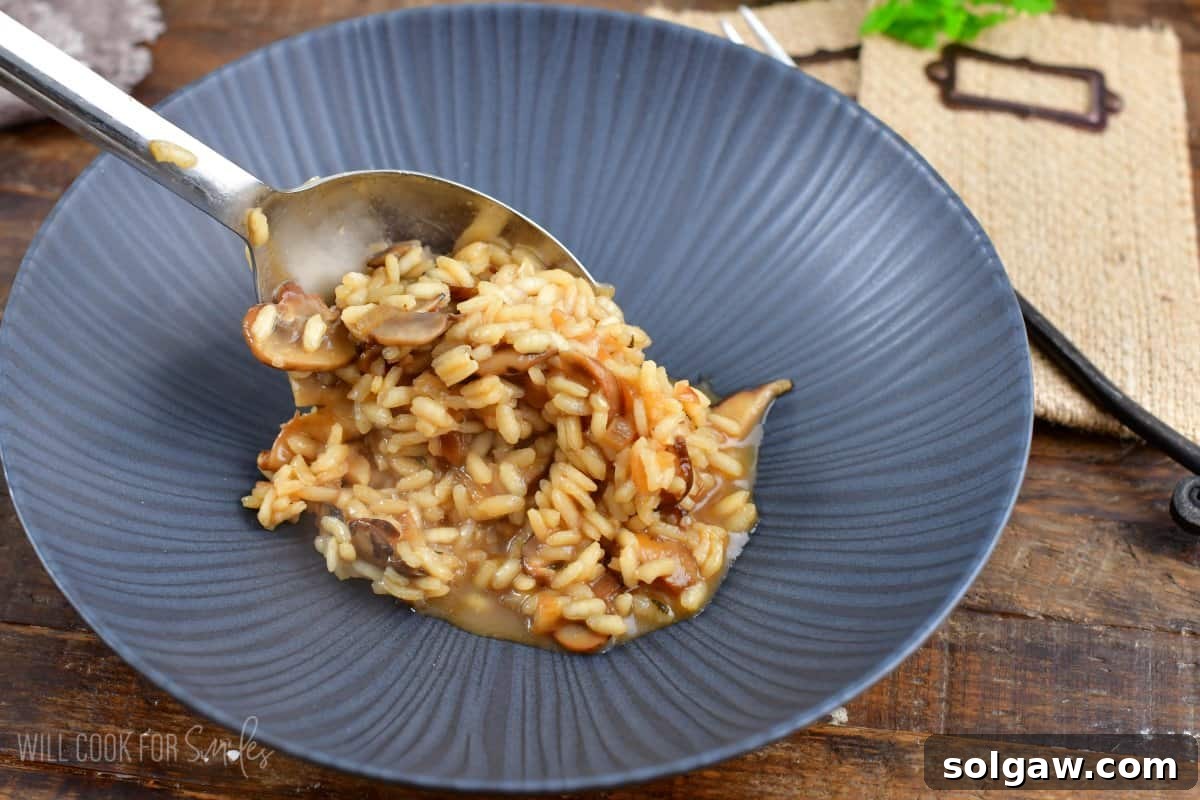
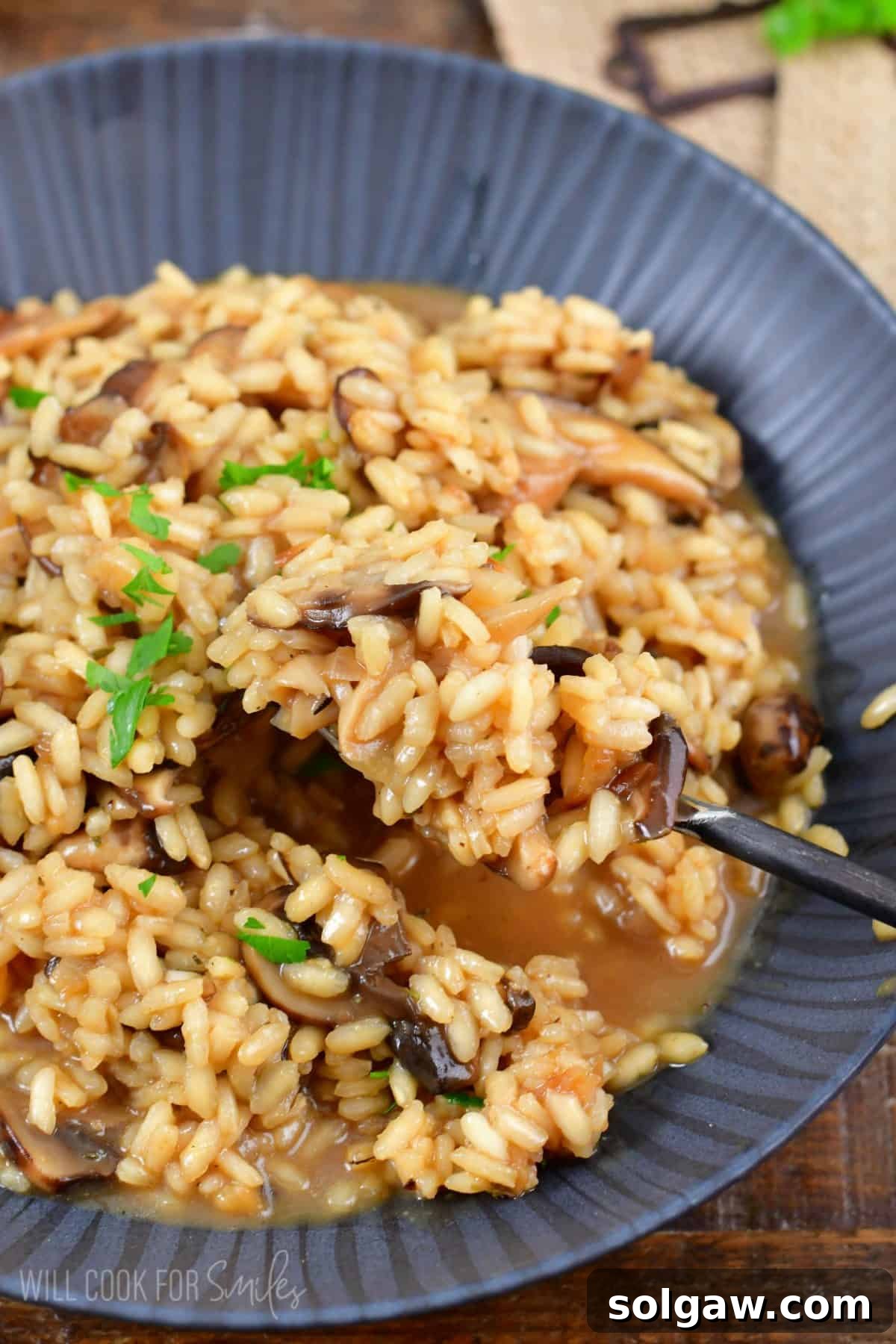
Mushroom risotto, like all risottos, continues to cook and thicken slightly even after it’s removed from the heat. Therefore, it is best to serve it immediately after cooking, while it’s still warm and maintains its ideal creamy consistency (known as “all’onda,” or wavy).
This versatile dish serves multiple purposes at the dinner table. You can confidently enjoy it as a hearty, satisfying meatless main dish, as it’s flavorful and filling on its own. Alternatively, it makes an exquisite side dish, pairing beautifully with a wide array of proteins. Its earthy, rich flavors complement chicken, pork, beef, lamb, and fish dishes, adding a touch of Italian elegance to any meal. Consider pairing it with a light, crisp green salad and a glass of the dry white wine you used in the recipe.
Storage and Reheating Guide
Properly storing your leftover mushroom risotto ensures you can enjoy its deliciousness for days to come. If you have any leftovers, transfer them to an air-tight container and store them promptly in the refrigerator. When stored correctly, plain mushroom risotto should remain fresh for up to 5 days. If you opted to mix in heavy cream or Parmesan cheese, the shelf life might be slightly shorter, typically 3-4 days.
Reheating risotto is quite easy and can be done effectively either in a pan on the stovetop or in the microwave. It’s important to remember that rice tends to absorb liquids as it sits and cools, so your risotto will likely be much thicker and drier when reheating. For this reason, you will need to add a little extra broth or water when warming it up to restore its creamy texture.
If using a microwave, place the risotto in a microwave-safe bowl, add a splash of broth (about 1/4 cup per serving), and make sure to use a microwave lid to cover the plate. Heat in 1-minute intervals, stirring well after each, until hot. If using a pan on the stove-top, transfer the risotto to a saucepan, add a splash of broth, cover with a lid, and reheat over medium-low heat, stirring occasionally, just until the rice is heated through and regains its desired consistency.
More Delicious Risotto Recipes to Try
If you’re now a risotto enthusiast, be sure to explore these other fantastic recipes:
- Bacon Onion Pumpkin Risotto
- Creamy Tomato Basil Risotto
- Parmesan Risotto
- Lemon Risotto with Lemon Pepper Shrimp
- Lobster Risotto
PIN THIS RECIPE FOR LATER
DID YOU MAKE THIS RECIPE? PLEASE leave a 🌟 star rating! Let me know how you liked it by leaving a 📝 comment below or share and tag me on social media @willcookforsmiles. DON’T FORGET to subscribe to my newsletter!
Mushroom Risotto Recipe
Mushroom risotto is a timeless classic, and this recipe delivers an absolutely incredible flavor! Every moment invested in preparing this dish is well worth it, whether for a comforting family night or an intimate romantic dinner. For an even bolder, gourmet touch, finish it with a hint of truffle oil.
Pin Recipe
Rate This Recipe
Course: Main Course, Side Dish
Cuisine: Italian
Diet: Gluten Free
Prep Time: 10 minutes
Cook Time: 50 minutes
Total Time: 1 hour
Servings: 4
Calories: 427 kcal
Author: Lyuba Brooke
Ingredients
- 2 Tbsp olive oil
- 2 shallots, sliced thin
- 16 oz baby bella mushrooms (or other preferred type)
- 3 garlic cloves, minced
- 1 1/2 cups Arborio rice
- 1 cup dry white wine, split into two 1/2 cup portions
- 3 1/2 cups vegetable stock (or chicken stock)
- 1 cup water
- 1 1/2 tsp garlic powder
- 1 tsp fresh thyme
- Salt, to taste
- Fresh cracked black pepper, to taste
Optional:
- 1/2 – 1 tsp truffle oil (black or white)
Instructions
- Slice shallots and mushrooms thinly; mince garlic. Measure and prepare all other ingredients to have them ready.
- Combine broth, water, thyme, garlic powder, salt, and pepper in a saucepot. Bring to a simmer, then reduce heat to the lowest setting to keep it warm.
- Preheat a large cooking pan or Dutch oven over medium-high heat. Add olive oil and let it warm.
- Add sliced shallots and sauté until lightly browned and softened.
- Add sliced mushrooms and sauté for a few minutes until cooked down and they begin to brown.
- Stir in minced garlic and cook until fragrant (about 30-60 seconds). Reduce the temperature to medium or just below medium.
- Add Arborio rice and mix it thoroughly with the shallots and mushrooms. Sauté for about 1 minute, stirring constantly, to lightly toast the rice.
- Pour in the first half (1/2 cup) of white wine. Stir until it’s absorbed by the rice.
- Ladle in about 1 cup of the hot broth mixture. Stir and let the rice simmer, absorbing the liquid.
- Once the liquid is almost fully absorbed, pour in the second half (1/2 cup) of white wine, followed by another cup of warm broth mixture. Stir and let it simmer while the rice absorbs the liquid.
- Continue this process: add about a cup of hot broth at a time, allowing the rice to absorb most of the liquid before each new addition. Stir often, but not constantly. This gradual process ensures the creamy texture.
- Cook until the risotto rice is al dente – tender but with a slight chewiness in the center. Taste frequently during the last 10-15 minutes of cooking to achieve desired texture.
Optional Finishing Step:
- If desired, stir in 1/2 – 1 tsp of truffle oil just before serving. Start with a smaller amount (e.g., 1/2 tsp) as it is very potent, and taste before adding more.
Notes
- Substituting wine: The flavor will change slightly. You can simply use extra warm stock (chicken or vegetable) instead of wine. For a hint of sweetness and tang, add 3-4 tablespoons of white grape juice (choose a not-too-sweet brand) and about a tablespoon of white wine vinegar to your stock.
- DON’T try to rush risotto! The cooking steps are simple but require time and repetition to achieve the perfect creamy consistency, texture, and flavor. Patience is key!
- Feel free to make it creamier or cheesier! To enhance richness, stir in about 1/4 cup of heavy whipping cream and/or 1/2 cup of freshly grated Parmesan cheese during the last couple of minutes of cooking. Stir until heated through and incorporated.
Nutrition
Calories: 427 kcal | Carbohydrates: 72g | Protein: 8g | Fat: 7g | Saturated Fat: 1g | Sodium: 839mg | Potassium: 672mg | Fiber: 3g | Sugar: 5g | Vitamin A: 438IU | Vitamin C: 2mg | Calcium: 35mg | Iron: 4mg
Tried this recipe?
Mention @willcookforsmiles or tag #willcookforsmiles!