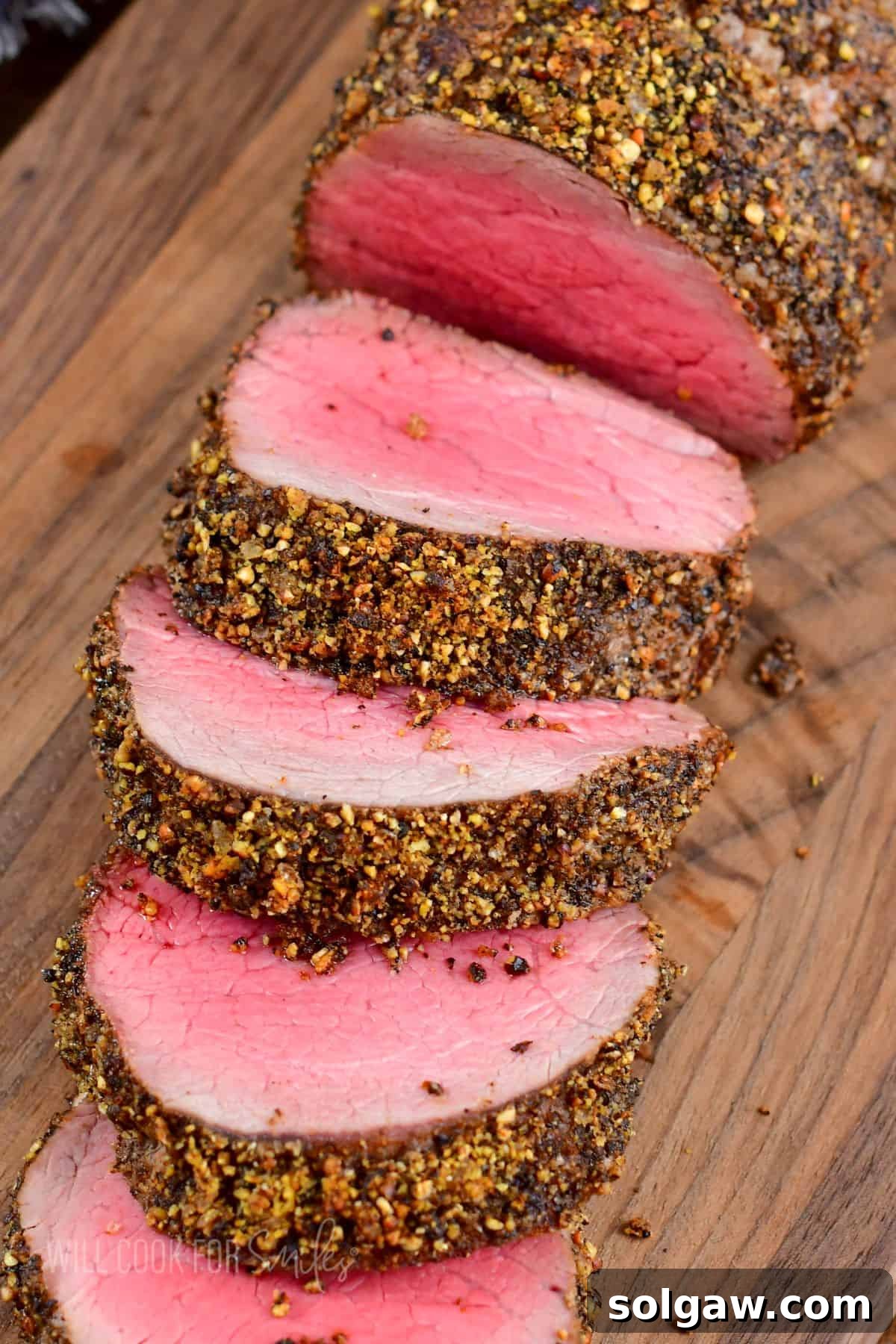
Elevate your dining experience with the exquisite flavor and luxurious tenderness of a Pepper Crusted Beef Tenderloin. This impressive main dish, perfect for any special occasion or a sophisticated weeknight meal, is deceptively simple to prepare. Oven-roasted to perfection, each slice promises a melt-in-your-mouth texture that is so tender, you can effortlessly cut it with a fork. What truly sets this tenderloin apart is its aromatic crust of coarsely crushed peppercorns and freshly grated Parmesan cheese, infusing every bite with a bold, savory depth.
Imagine serving a dish that not only looks stunning but delivers an unparalleled culinary delight. This pepper-crusted masterpiece offers a harmonious blend of spicy, salty, and umami notes that will tantalize your taste buds. It’s a celebration of prime beef, enhanced by simple yet powerful seasonings, ensuring a memorable meal that will earn you rave reviews from family and guests alike.
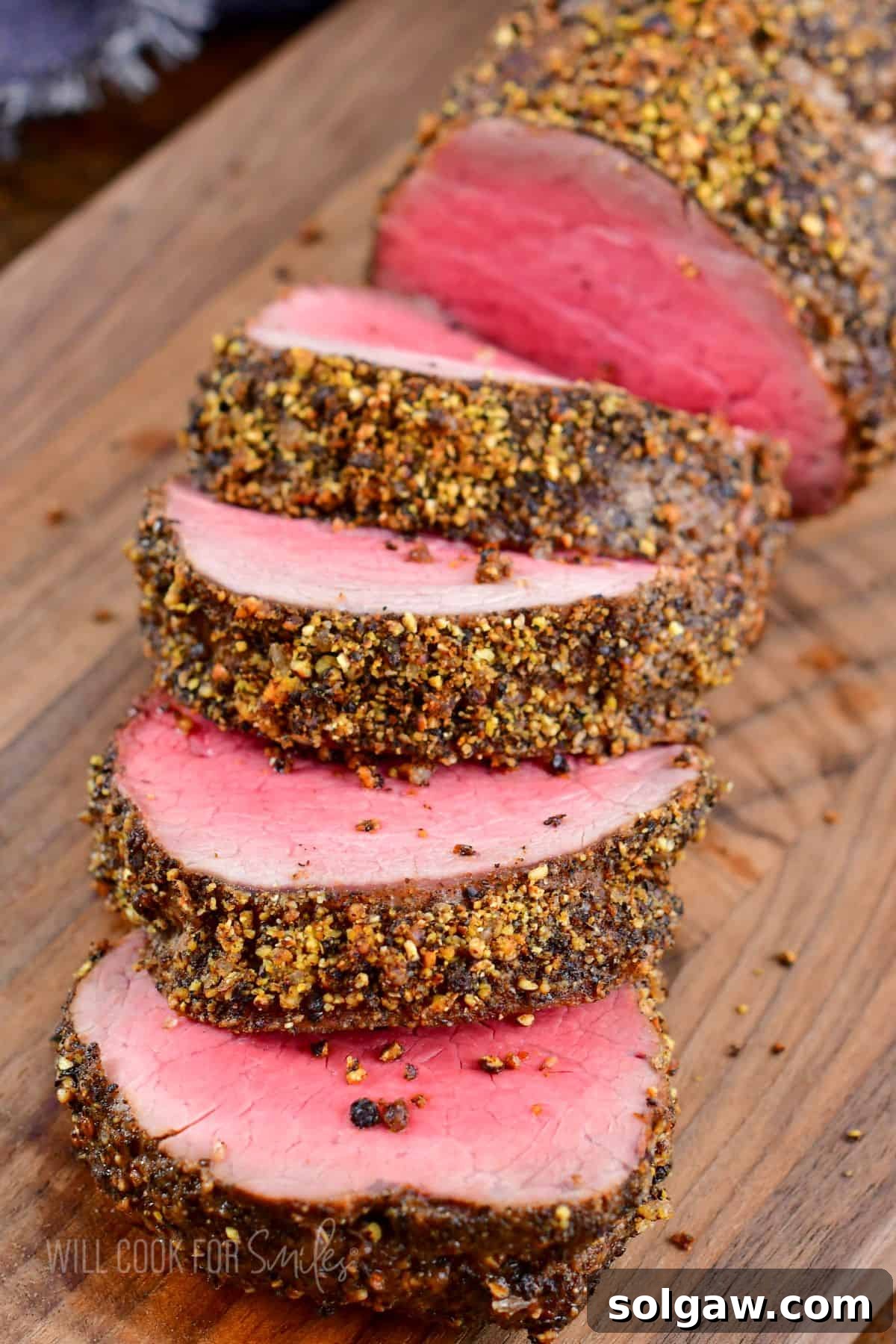
Understanding Beef Tenderloin: The Pinnacle of Tenderness
Beef tenderloin is widely regarded as the most tender cut of beef, a characteristic that also makes it one of the highest-priced and most sought-after selections. This elongated, lean muscle is located deep within the animal, running along the backbone, just beneath the spine. Because it is a non-weight-bearing muscle, it does very little work, resulting in its exceptionally fine grain and minimal connective tissue. This inherent tenderness means it requires little manipulation to achieve a buttery, succulent texture, making it a favorite for gourmet dishes.
The unique location and lack of use contribute to the tenderloin’s incredibly delicate texture and mild flavor profile. Unlike tougher cuts that benefit from slow cooking or marinating to break down fibers, tenderloin shines with quick, high-heat cooking methods that preserve its natural juices and tenderness. Its luxurious appeal is not just about its tenderness but also its subtle beefy flavor, which acts as a perfect canvas for robust seasonings like a pepper crust or rich sauces.
Where Filet Mignon and Chateaubriand Originate
This premium cut is the source of many celebrated steakhouse favorites. The center part of the whole tenderloin, known for its uniform thickness and exquisite tenderness, is where we get those elegant filet mignon steaks. These individual portions are often cut into thick, round medallions, prized for their lean yet incredibly tender nature.
Beyond filet mignon, the tenderloin also plays a crucial role in larger cuts like the T-bone and porterhouse steaks. In these cuts, the tenderloin is the small, rounded section of meat found on one side of the bone, opposite the larger striploin. The presence of a substantial tenderloin section is what distinguishes a porterhouse from a T-bone, making the porterhouse a more prized cut for those who appreciate both cuts of meat. The most desirable portion for roasting, however, is often the “Chateaubriand,” the uniform center cut that offers consistent cooking and presentation.
Conquering Your Fear: Cooking Beef Tenderloin Made Easy
Given its premium status and higher price point, many home cooks might feel intimidated by the prospect of preparing beef tenderloin. The fear of “ruining” such an expensive cut is understandable. However, I assure you that cooking a beef tenderloin to perfection is actually quite straightforward and entirely achievable for cooks of all skill levels. With a few key techniques and a reliable guide, you can confidently create a restaurant-quality meal right in your own kitchen.
The secret to success lies not in complex culinary wizardry, but in understanding the meat and following some fundamental principles. By paying attention to details like proper preparation, seasoning, and most importantly, precise temperature control, you can unlock the full potential of this magnificent cut. Below, I’ll share essential tips and a step-by-step method that will empower you to cook the best beef tenderloin you’ve ever tasted, dispelling any cooking anxieties you might have.
Perfect Pairings: Serving Suggestions for Your Tenderloin
Once your Pepper Crusted Beef Tenderloin is perfectly roasted, you can serve it as is, allowing its natural flavors and the vibrant crust to take center stage. However, pairing it with complementary sauces and side dishes can elevate the meal to an even grander affair. For classic accompaniments, consider rich and flavorful sauces like a robust red wine steak sauce, a zesty horseradish cream sauce, or a savory mushroom steak sauce. These additions can provide a delightful contrast and enhance the tenderloin’s inherent richness.
Beyond sauces, think about side dishes that complete the gastronomic experience. Creamy mashed potatoes, elegant roasted asparagus, delicate green beans with bacon, or a fresh garden salad can balance the richness of the beef. For a truly indulgent meal, consider decadent sides like creamed spinach or gratin potatoes. When it comes to beverages, a full-bodied Cabernet Sauvignon or Merlot would beautifully complement the peppery notes and rich beef flavor, making for an unforgettable dining experience.
If you’re considering purchasing and cooking a whole beef tenderloin, I highly recommend consulting my comprehensive recipe and instructions for cooking the whole beef tenderloin. It provides invaluable guidance and will greatly assist you in preparing a larger roast.
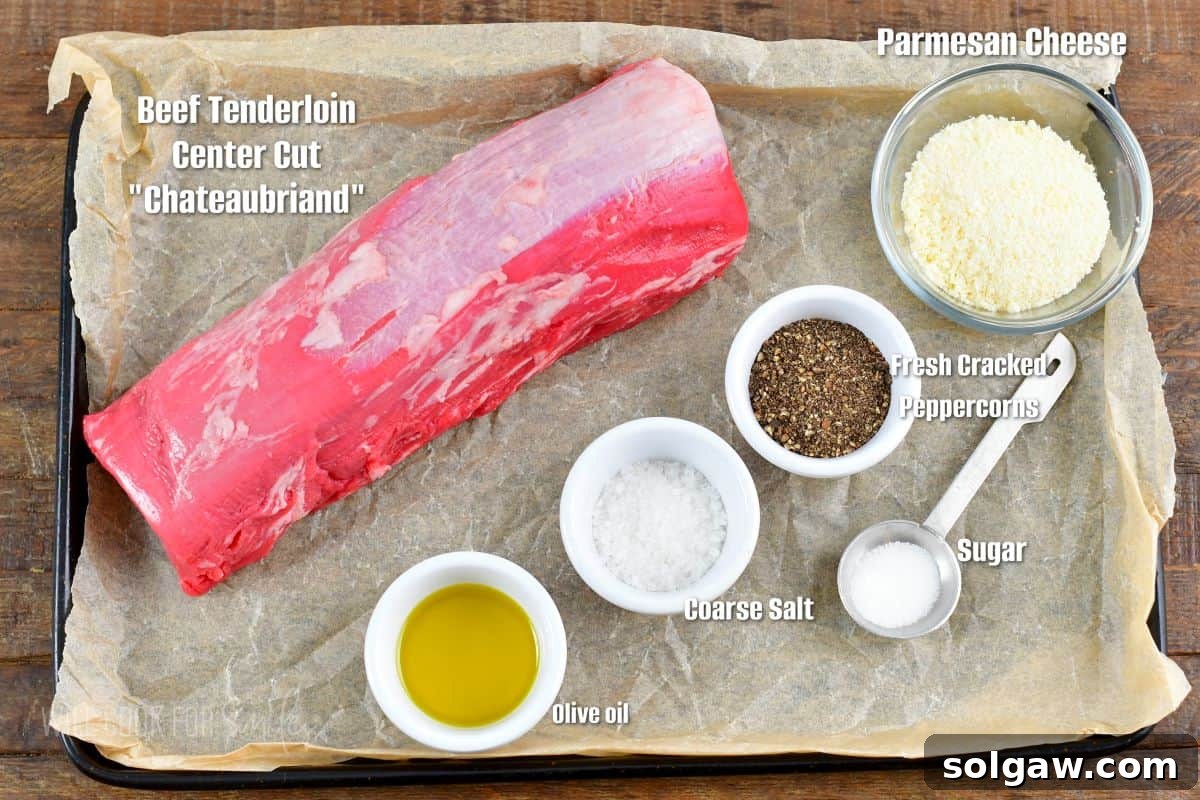
Mastering the Art of Pepper Crusted Beef Tenderloin
Crafting a perfect Pepper Crusted Beef Tenderloin is a rewarding experience. It combines simple ingredients with precise techniques to yield a truly show-stopping dish. Follow these steps to achieve a perfectly cooked, beautifully crusted tenderloin every time.
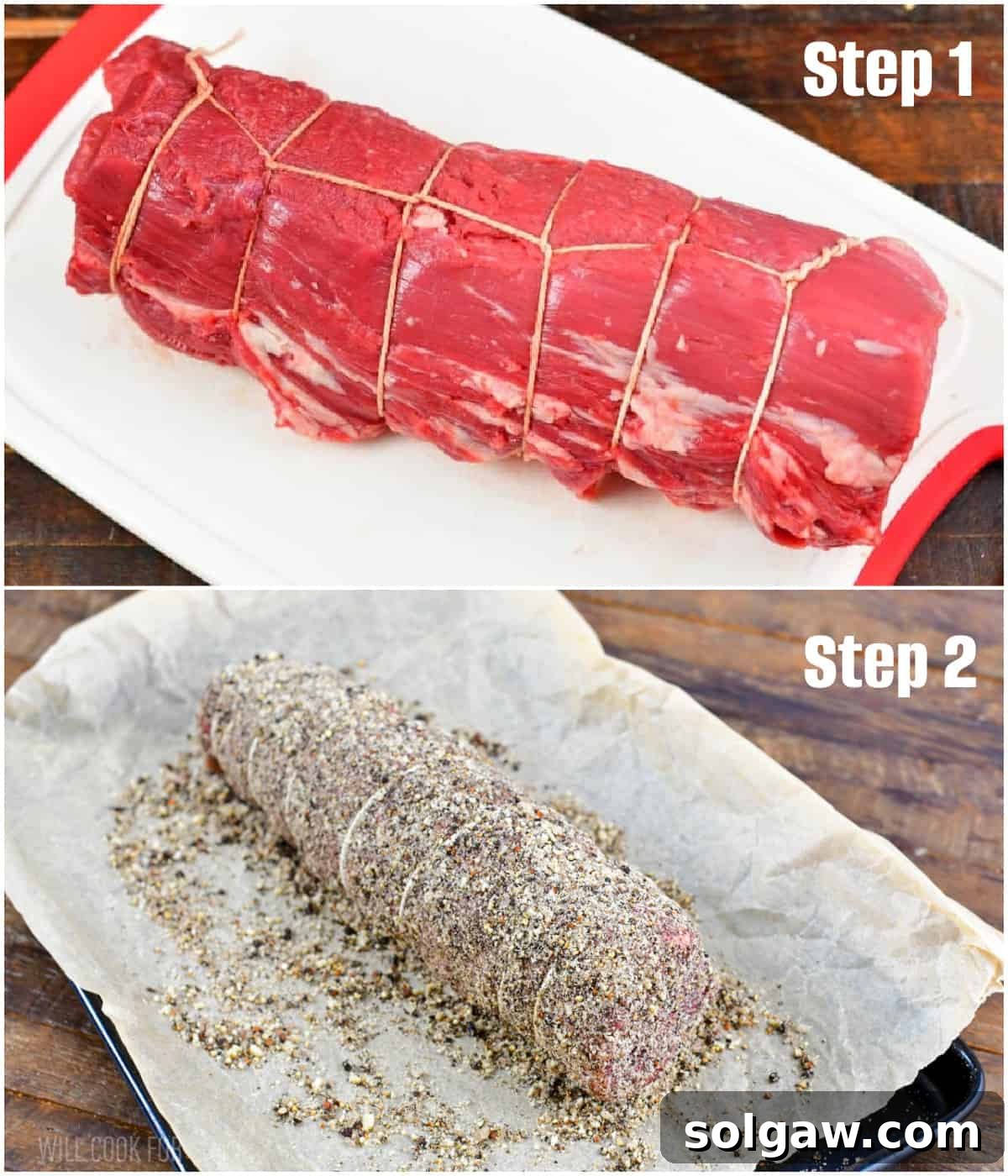
Step 1: Prepare the Tenderloin for Even Cooking
The initial preparation is crucial for an evenly cooked and visually appealing roast. Start by preheating your oven to 425°F (220°C) and line the bottom of your roasting pan with aluminum foil for easier cleanup. Next, prepare your peppercorns; for the best flavor and texture, use whole peppercorns and coarsely crush them. You can achieve this using a coarse setting on a pepper mill, a few pulses in a spice grinder, or even by hand with a heavy cast iron skillet on a cutting board, pressing down firmly to break them.
**Tie the tenderloin tightly with kitchen twine.** This is a critical step you should not skip! Tying the tenderloin at regular intervals, approximately every 1 to 1.5 inches along its entire length, ensures that the meat maintains a uniform shape throughout cooking. This uniformity is vital for even heat distribution, preventing the thinner ends from overcooking while the thicker center reaches the desired doneness. Be careful not to tie the twine so tightly that it cuts into the meat, but firm enough to hold its shape.
Step 2: Create the Flavorful Pepper-Parmesan Crust
Once your tenderloin is tied, lightly rub its entire surface with a small amount of olive oil. The olive oil acts as a binder, helping the seasoning mixture adhere beautifully to the meat, while also contributing to a lovely sear. Next, prepare your crust mixture. On a piece of parchment paper, spread out your coarse salt, white granulated sugar, the coarsely crushed whole peppercorns, and freshly grated Parmesan cheese. It’s essential to use *freshly grated* Parmesan, not the dry, pre-grated variety, as it melts better and forms a superior crust.
Mix all the seasonings thoroughly on the parchment paper until evenly combined. Then, place the olive oil-coated tenderloin directly onto the seasoning mixture. Roll the tenderloin around, pressing gently but firmly, to ensure it is completely and evenly coated with the delicious peppercorn and Parmesan crust. The gentle pressure helps the seasoning adhere well, forming a robust and flavorful layer that will crisp up beautifully in the oven.
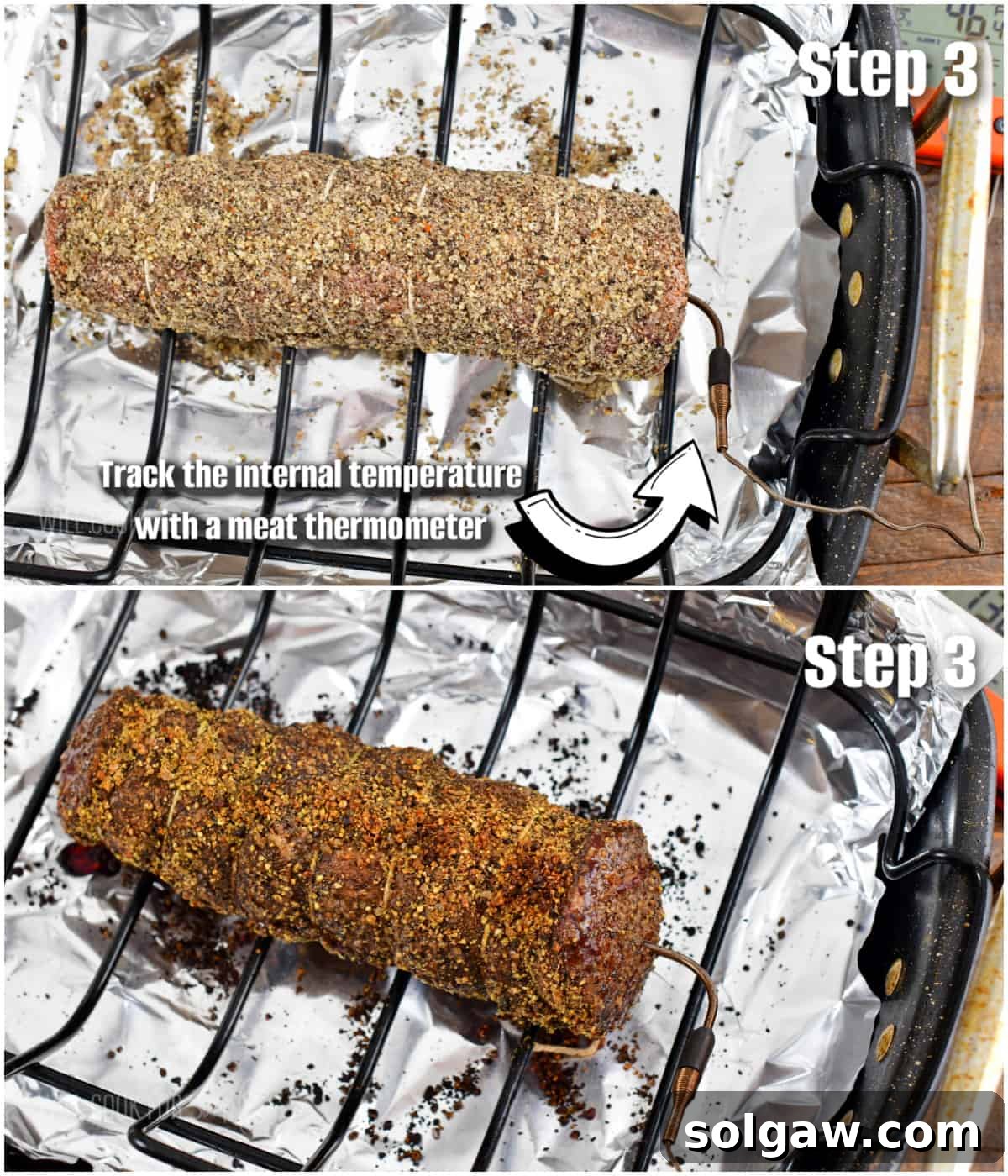
Step 3: Roasting to Perfection
With the tenderloin tied and seasoned, it’s time to roast. Place the prepared tenderloin onto a rack inside your roasting pan. Using a rack is important as it allows air to circulate around the entire roast, promoting even cooking and a beautiful crust on all sides. Insert a leave-in meat thermometer *through the side* of the thickest part of the roast, ensuring the tip reaches the *center of the meat* without touching any bone. This provides an accurate, continuous reading of the internal temperature, which is key to perfectly cooked beef.
Cook the beef tenderloin until it reaches an internal temperature of 130°F-135°F for a perfect medium-rare or 140°F-145°F for a succulent medium. For those who prefer rare, aim for 120°F-125°F. Remember that the meat will continue to cook slightly after being removed from the oven due to “carryover cooking,” so pulling it a few degrees before your target final temperature is often a good strategy. If you don’t have a leave-in thermometer, you’ll need to periodically remove the roast from the oven to check its temperature with an instant-read thermometer, closing the oven door quickly to maintain heat.
Step 4: Rest and Slice Against the Grain
Once the tenderloin reaches your desired internal temperature, carefully remove it from the oven and transfer it to a clean cutting board. Crucially, **do not skip the resting period.** Loosely tent the roast with aluminum foil and **let it rest for about 10-15 minutes before slicing.** This resting period is vital: it allows the muscle fibers to relax and the juices to redistribute throughout the meat, ensuring every slice is incredibly tender and moist. Cutting too soon will result in juices running out, leaving you with drier meat.
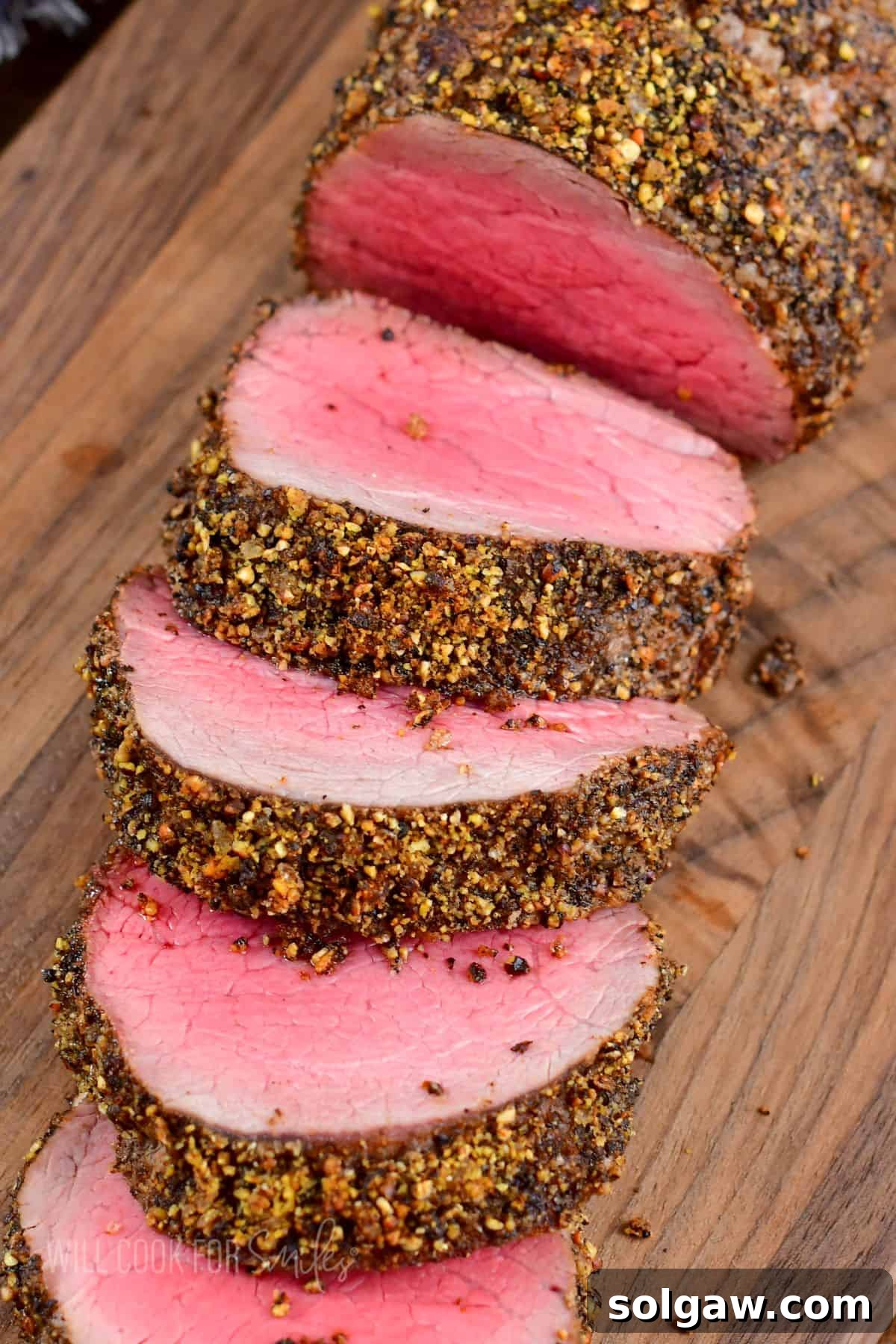
After resting, remove the kitchen twine and gently discard it, being careful not to disturb the delicious pepper crust. Finally, slice the tenderloin into approximately 1/2-inch thick pieces, making sure to **slice against the grain.** Cutting against the grain shortens the muscle fibers, making the meat even more tender and easier to chew. Serve immediately and enjoy the fruits of your labor!
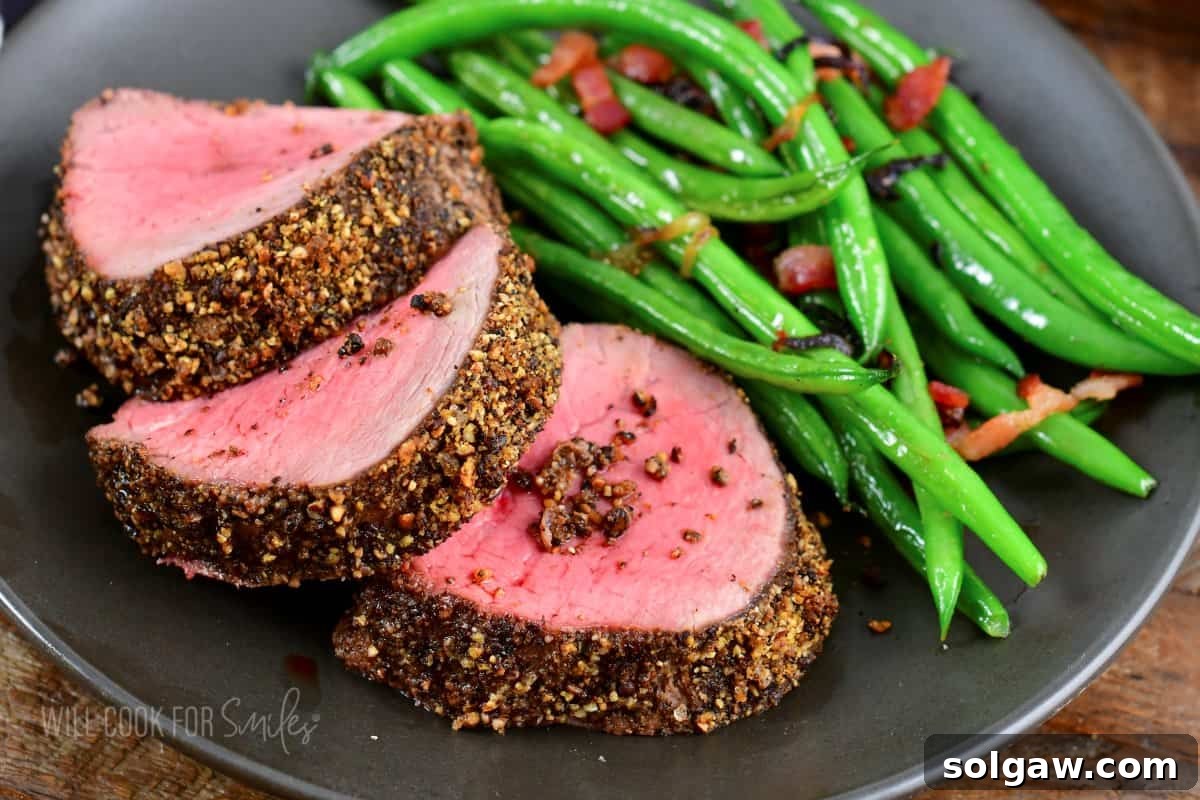
Essential Cooking Temperatures Guide for Beef
Achieving the perfect doneness for your beef tenderloin is all about precise temperature control. Always insert your thermometer into the thickest part of the beef, making sure it reaches the absolute center without touching any bone or fat pockets, to get the most accurate reading. Keep in mind that “carryover cooking” means the internal temperature of the roast will continue to rise by 5-10 degrees Fahrenheit after it’s removed from the oven. Therefore, it’s often best to pull the roast slightly before your target temperature.
- 120°F-125°F – Rare (cool red center, very soft texture)
- 130°F-135°F – Medium-Rare (warm red center, soft and juicy)
- 140°F-145°F – Medium (warm pink center, slightly firmer)
- 150°F-155°F – Medium-Well (slightly pink center, firm)
- 160°F+ – Well-Done (little to no pink, firm, can be dry)
While these are pull temperatures, remember to allow for resting time, during which the temperature will continue to rise. This carryover cooking ensures that your final temperature is exactly where you want it to be.
The Ideal Doneness for Beef Tenderloin: Medium-Rare to Medium
When it comes to delicate and expensive cuts like filet mignon and beef tenderloin,
medium-rare is widely considered the ultimate doneness level by chefs and connoisseurs alike. At 130°F-135°F, the meat boasts a warm red center, exceptional juiciness, and a wonderfully tender, yielding texture that truly celebrates the quality of the cut. This doneness allows the beef’s subtle flavors to shine without being masked by overcooking.
If medium-rare is a little too rare for your preference, you can comfortably aim for medium, reaching an internal temperature of 135°F-140°F. This will result in a warm pink center that is still incredibly tender and moist. We strongly advise against cooking this beautiful and expensive cut of meat to more than medium doneness. Overcooking tenderloin will strip away its moisture, diminish its delicate flavor, and transform its signature tenderness into a firmer, less enjoyable texture, effectively wasting the premium quality of the beef. For those who enjoy a rare steak, target 120°F-125°F for a cool red center.
Deciphering Chateaubriand: A Cut of Distinction
Chateaubriand (pronounced shaa-tow-bree-aand) is a term often used in two contexts: referring to a specific cut of beef or a cooking technique for larger cuts. When speaking of the meat itself, Chateaubriand signifies the beautiful, perfectly uniform center cut of a beef tenderloin. This prime section is meticulously prepared by removing the tapered “tip,” the irregular “top,” and the fibrous “chain” that runs alongside the tenderloin.
What remains is a pristine, cylindrical portion of the tenderloin, revered for its consistent thickness and unparalleled tenderness. This is precisely the section of the beef tenderloin from where filet mignon steaks are traditionally cut. A Chateaubriand typically weighs around 2 pounds and is an ideal roast for elegantly serving 2-4 people, making it a spectacular centerpiece for intimate dinners or small gatherings. Its uniform shape ensures even cooking and impressive presentation.
PRO TIP: To potentially save a little money and gain valuable butchery skills, you can purchase a whole beef tenderloin. Learning how to clean and break down a whole beef tenderloin yourself allows you to trim and portion it into various cuts, including Chateaubriand and filet mignon. I’ve provided a detailed demo video and a step-by-step guide at that link to help you confidently master this technique.
Explore More Exceptional Beef Recipes
If you’ve enjoyed mastering this Pepper Crusted Beef Tenderloin, you might be keen to try other delectable beef dishes. Here are a few more recipes that promise to impress and satisfy your carnivorous cravings:
- Beef Tenderloin with Mushroom Red Wine Sauce
- Boneless Short Ribs in Red Wine Sauce
- Beef Tenderloin Roast Recipe
- Surf and Turf
- Steak Dianne
PIN THIS RECIPE FOR LATER
If you’ve made my beef tenderloin recipe and found this information helpful, please consider leaving a 🌟 star rating! Let me know how you liked it by leaving a 📝 comment below. Don’t forget to subscribe to my newsletter for more delicious recipes and cooking tips!
Pepper Crusted Beef Tenderloin
Print
Pin
Rate
Ingredients
-
2 lbs beef tenderloin center cut roast “Chateaubriand” -
2 tbsp olive oil -
1 tbsp coarse salt -
1/2 tsp white granulated sugar -
1/3 cup whole peppercorns coarsely crushed -
1/3 cup freshly grated Parmesan cheese* freshly grated, not dried
Instructions
-
Preheat oven to 425°F (220°C) and line the bottom of a roasting pan with aluminum foil for easy cleanup.
-
To coarsely crush whole peppercorns, you can use a coarse setting on your pepper mill, pulse them a few times in a spice grinder, or place them on a cutting board and press firmly with a heavy cast iron skillet or the bottom of a pan.
Prepare Beef Tenderloin:
-
Use cooking twine to tie the tenderloin along its entire length at 1-inch intervals. Ensure it’s tied securely to maintain shape but not so tight that it cuts into the meat.
-
Rub the entire tied tenderloin with a small amount of olive oil.
-
On a piece of parchment paper, spread all the prepared seasonings (coarse salt, sugar, crushed peppercorns) and add the freshly grated Parmesan cheese. Mix them evenly. Place the tenderloin on top of the seasoning mixture. Roll the tenderloin around to coat it thoroughly and press gently to ensure the seasoning adheres well.
Cooking Beef Tenderloin:
-
Once the beef tenderloin is tied and coated with seasoning, place it onto a rack inside the roasting pan.
-
Insert a leave-in thermometer through the side, ensuring the tip reaches the center of the thickest part of the meat.
(If you don’t have a leave-in thermometer, you will need to take the meat out of the oven to take the temperature with an instant-read thermometer. Close the oven door quickly to prevent the oven temperature from lowering. Remember to take the temperature at the center of the thickest part.)
-
Cook the beef tenderloin until it reaches 130°F-135°F for medium-rare or 140°F-145°F for medium.
Rest:
-
Take the tenderloin out of the oven and transfer it onto a cutting board. Carefully cut off the twine and gently remove it, trying not to pull off the seasoning crust. Loosely tent the roast with a sheet of aluminum foil and let it rest for 10-15 minutes before cutting.
-
Slice the tenderloin into about 1/2-inch thick slices, making sure to cut against the grain.
Notes
- When purchasing your roast, ask your butcher for a 2-pound beef tenderloin roast, specifically a center cut (also known as a 2-pound Chateaubriand roast). Emphasize that you need the center cut, as opposed to the thinner tail or head end, for optimal cooking. You can also request that they tie the roast for you if you’re not comfortable doing it yourself.
- For beef tenderloin, medium-rare or medium doneness is highly recommended. This allows the meat to retain its incredible tenderness and juiciness. Avoid cooking this beautiful and expensive cut beyond medium, as it can quickly become dry and lose its delicate texture. Aim for 130°F-135°F for medium-rare, 135°F-140°F for medium, and 120°F-125°F for rare.
- Always remember the importance of allowing the roast to REST for 10-15 minutes after cooking. This crucial step redistributes the internal juices, ensuring a tender and moist result. When slicing, always cut against the grain to maximize tenderness.
- Storing Leftovers: Any leftover beef tenderloin slices should be stored in an airtight container and refrigerated promptly. When properly stored, the tenderloin will remain fresh and delicious for up to 4 days.
- Reheating Instructions: To reheat leftover beef tenderloin without overcooking it, preheat your oven to 350°F (175°C). Wrap each individual slice of tenderloin loosely in aluminum foil to retain moisture. Place the wrapped pieces directly onto an oven rack and reheat for 10-15 minutes. The exact reheating time may vary depending on the thickness of your slices, so reheat just until the center is warm to avoid drying out the meat.
Nutrition
Originally published on Will Cook For Smiles in April 2019, this recipe has been updated and enhanced for clarity and comprehensive guidance.