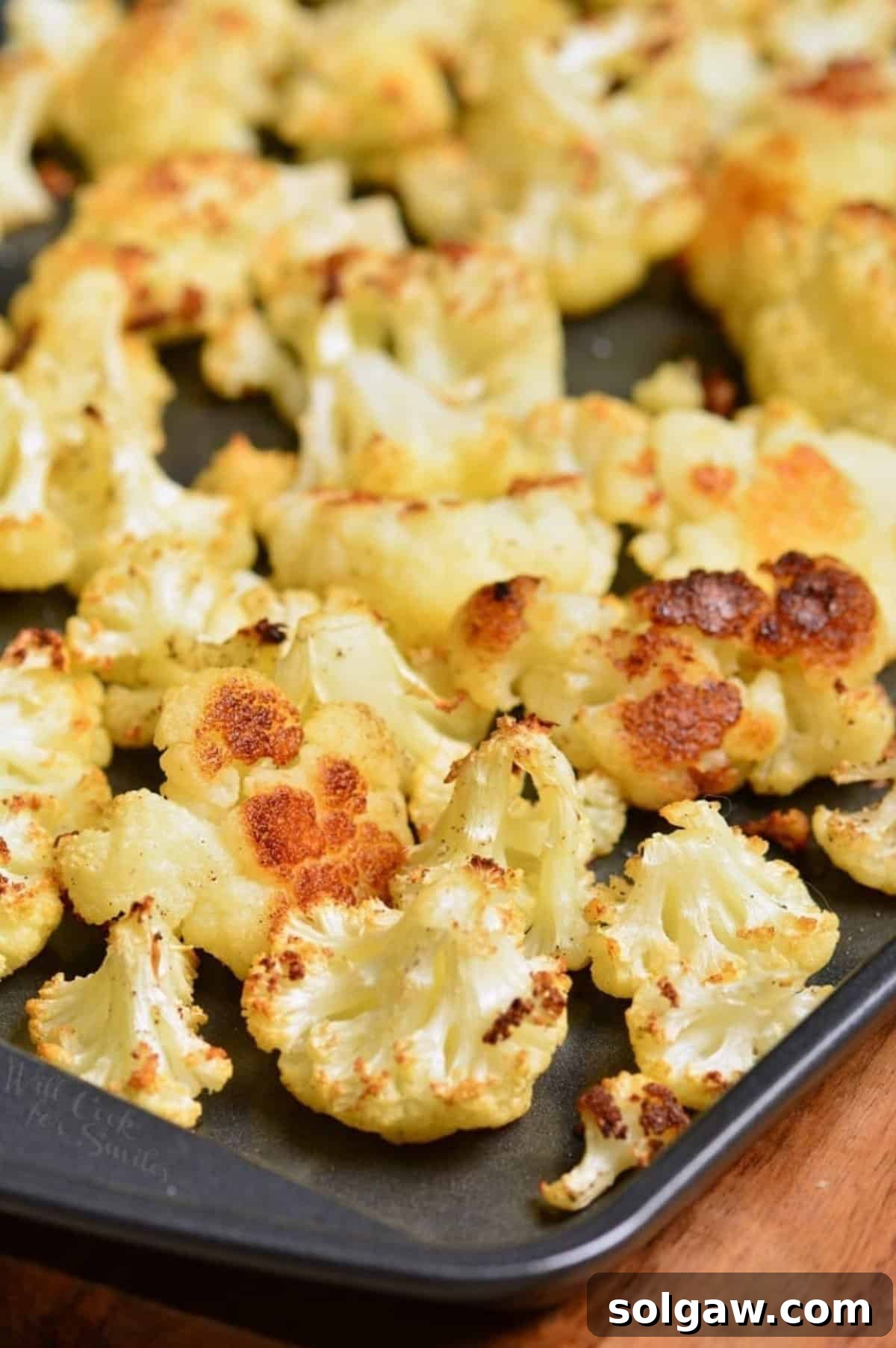
Roasted cauliflower is more than just a side dish; it’s a culinary revelation that transforms simple ingredients into an extraordinary experience. With its naturally nutty flavor and satisfying texture, this versatile vegetable takes center stage when roasted to golden-brown perfection. Whether you’re a seasoned chef or a kitchen novice, preparing this delightful dish is incredibly easy, requiring only five fundamental ingredients and minimal effort. In just 5 minutes of prep and 20-25 minutes in the oven, you can create a healthy, flavorful, and incredibly satisfying accompaniment to almost any meal.
While the basic recipe is wonderfully simple, roasted cauliflower is a blank canvas for culinary creativity. Feel free to experiment with additional flavors like grated Parmesan cheese, a fiery spicy sauce, a sprinkle of nutritional yeast, or a unique blend of your favorite herbs and spices. This recipe is designed to be flexible, allowing you to tailor it to your palate and complement any main course.
Cauliflower’s exceptional versatility extends far beyond just roasting. Stock up on this incredible vegetable to explore other delicious possibilities! Consider making a comforting Cheesy Ham and Cauliflower Soup for a hearty meal, or whip up some crispy Parmesan Cauliflower Crisps for a guilt-free snack. The culinary potential of cauliflower is truly endless, making it a must-have in any kitchen.
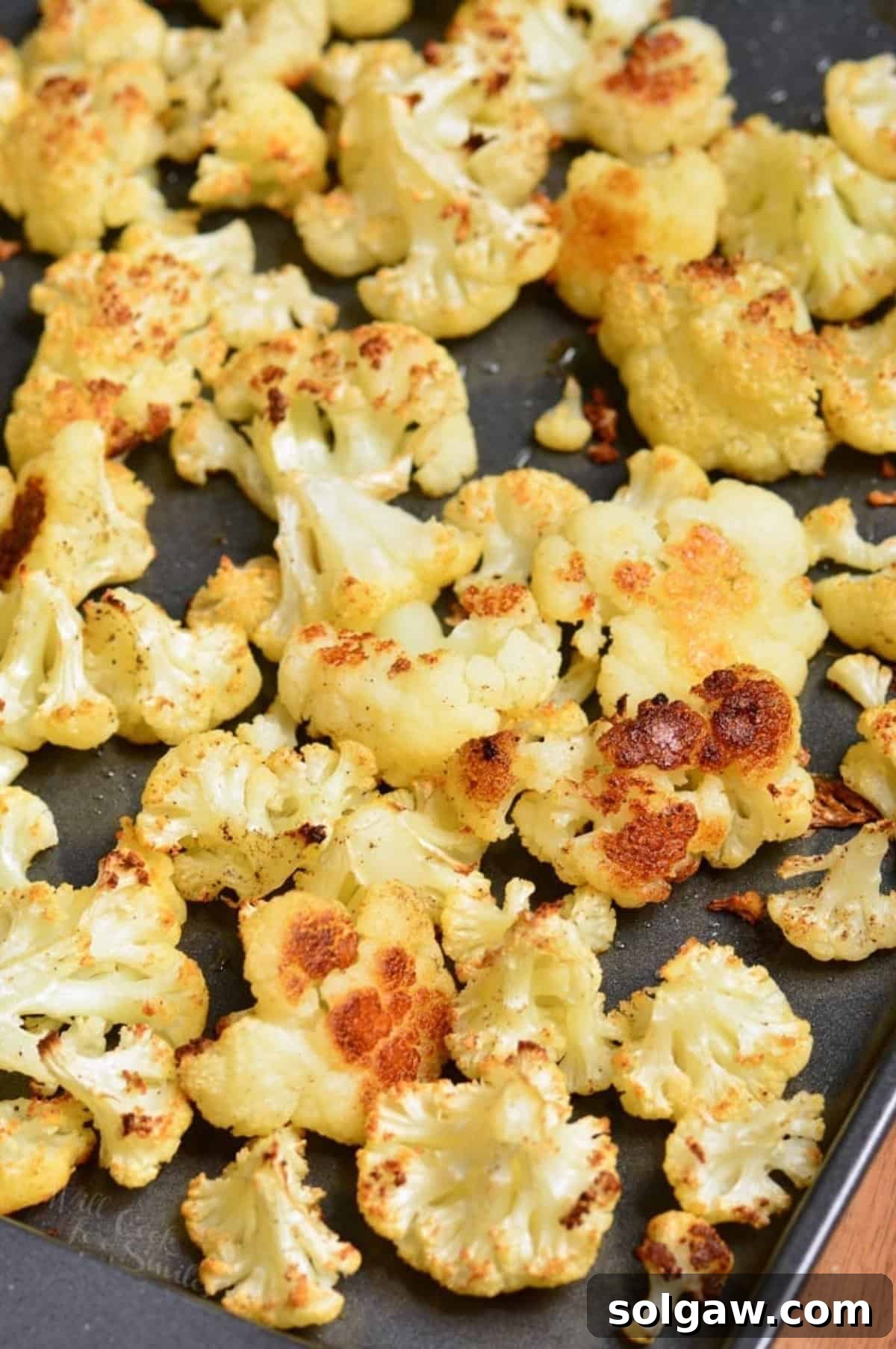
Cauliflower is an incredibly versatile and healthy vegetable that deserves a permanent spot in your kitchen. Beyond its delicious taste and ability to transform into countless dishes, it boasts an impressive array of health benefits that make it a smart choice for any diet.
If you’re looking for a fast, easy, and nutritious side dish, roasting cauliflower is your go-to method. The process is straightforward: simply cut a head of cauliflower into uniform florets, toss them with a few basic seasonings, and roast them in a hot oven. The magic of roasting lies in the high heat, which caramelizes the natural sugars in the cauliflower, bringing out a profound depth of flavor that’s both sweet and savory. This natural enhancement means you don’t need to overload it with heavy seasonings. A simple approach often yields the best results, highlighting the vegetable’s inherent deliciousness. For those who prefer a more dramatic presentation, you can also roast a whole cauliflower head!
Most often, I find that a combination of quality olive oil, a generous pinch of salt, freshly cracked black pepper, and fragrant garlic powder is all that’s needed to create an irresistibly tasty roasted cauliflower. This minimalist approach allows the vegetable’s true flavor to shine through, creating a side dish that’s universally appealing and pairs perfectly with a wide range of main courses.
But cauliflower’s role isn’t limited to just being a side. Its mild flavor and firm texture make it an excellent substitute in many dishes, offering a healthier, gluten-free, and low-carb alternative. From transforming into a crispy pizza crust or pliable tortillas to serving as a fluffy rice alternative or a satisfying snack, cauliflower seamlessly integrates into diverse culinary applications. By substituting cauliflower for traditional bread, pasta, and rice, you can significantly reduce your calorie and carbohydrate intake while still enjoying filling and delicious meals.
Beyond its impressive versatility and diet-friendly nature, cauliflower is a nutritional powerhouse. It’s packed with essential fiber, which supports digestive health, and a wealth of vitamins and antioxidants. Rich in Vitamin C, Vitamin K, and B vitamins like folate, it contributes to overall well-being, boosts immunity, and helps combat inflammation. So, while you’re savoring the incredible taste of roasted cauliflower, you’re also nourishing your body with vital nutrients. For a comprehensive understanding of cauliflower’s extensive health benefits, consider consulting reliable resources like the Mayo Clinic’s detailed articles on nutrient-rich vegetables.
Ingredient Notes and Tips for Perfect Roasted Cauliflower
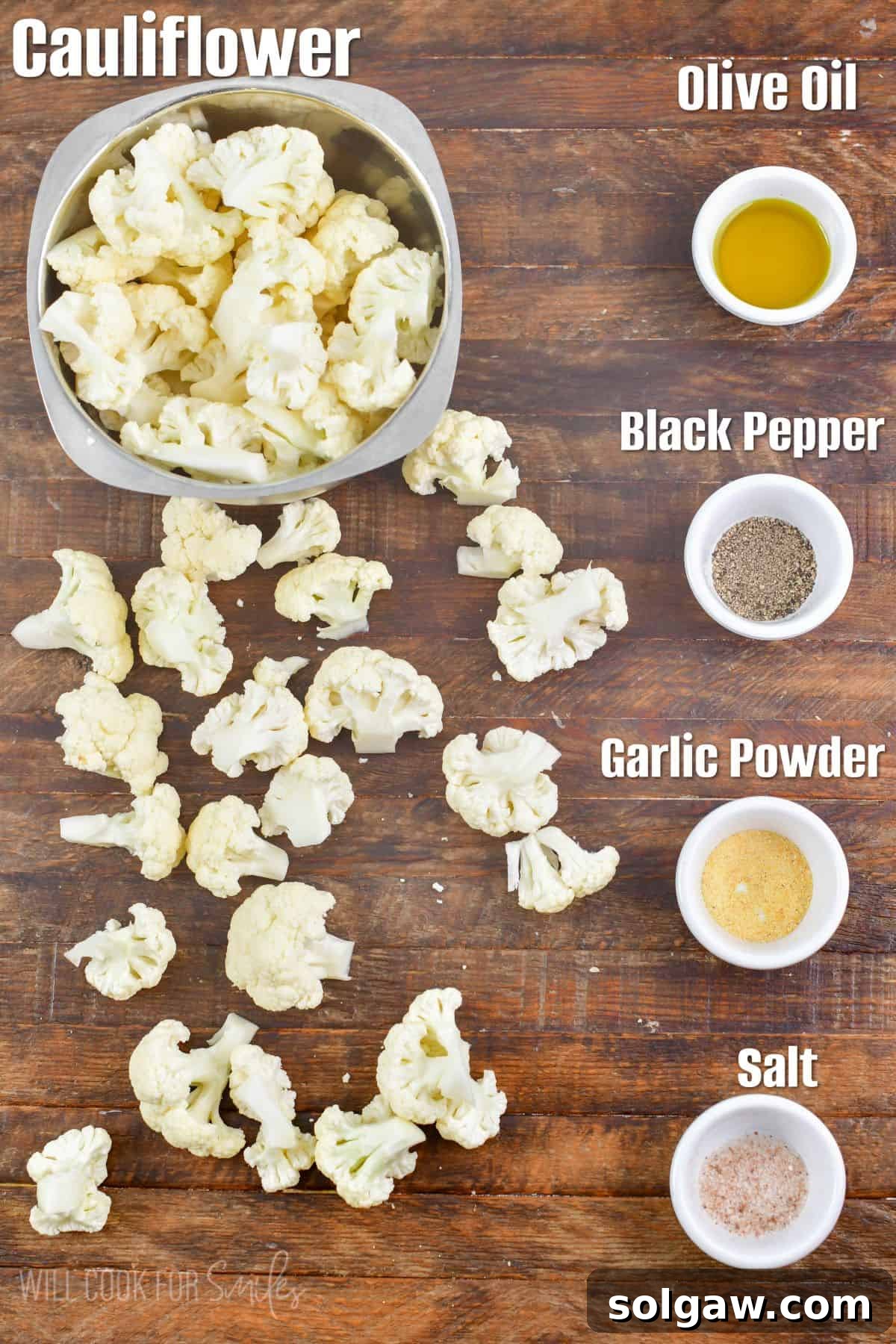
Achieving perfectly roasted cauliflower starts with selecting the right ingredients and understanding a few key preparation tips. Here’s what you need to know to ensure every batch is a success:
Cauliflower – When choosing a head of cauliflower, look for one that is firm, compact, and predominantly white or creamy white. The florets should be tightly packed, and the leaves surrounding the head should be fresh and green. Avoid any heads with dark spots, blemishes, or yellowing, as these are signs of aging or spoilage. While you might be able to trim off small dark spots, it’s always best to start with a pristine white head for the freshest flavor and appearance.
Olive Oil – The choice of oil is crucial for achieving that desirable crispy, golden exterior. Opt for a high-quality olive oil with a light and mild flavor profile. Extra virgin olive oil can be used, but some prefer lighter varieties for roasting due to their higher smoke points, which prevent the oil from burning at high oven temperatures. Avocado oil is an excellent alternative, offering a neutral flavor and an even higher smoke point, making it a fantastic substitution for olive oil in this recipe.
Seasoning – A simple yet powerful combination of salt, freshly cracked black pepper, and aromatic garlic powder provides a foundational flavor that complements cauliflower beautifully and pairs well with virtually any main dish. These basic seasonings enhance the natural sweetness of the cauliflower without overpowering it. However, the world of spices is vast! Don’t hesitate to explore additional options to customize your roasted cauliflower. For more exciting flavor combinations, be sure to check the dedicated section below for “Additional Flavor Options” to truly elevate your dish.
Mastering the Art: How To Make Roasted Cauliflower
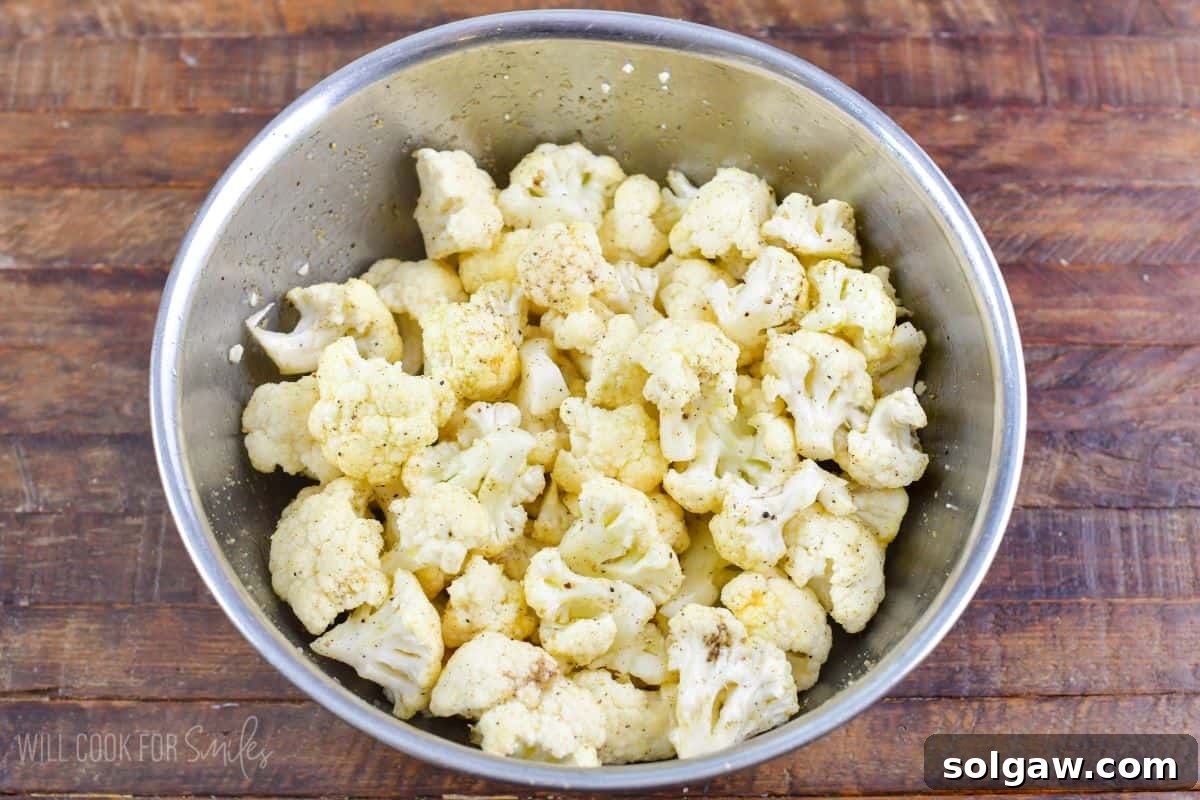
Achieving perfectly roasted cauliflower is all about proper preparation and technique. Follow these steps to ensure your cauliflower turns out tender on the inside and beautifully crisp and golden on the outside, every single time.
Begin by preheating your oven to a high temperature of 425°F (220°C). A hot oven is essential for achieving that sought-after caramelization and crisp texture. While the oven heats, line a baking sheet with parchment paper for easy cleanup and to prevent sticking. If you don’t have parchment paper, a light greasing of the baking sheet will also suffice.
Next, prepare your cauliflower. Start by cutting off and discarding the tough outer leaves and the thick stem from the base of the head. Give the cauliflower a thorough wash under cool running water, then pat it completely dry with a clean kitchen towel or paper towels. Moisture is the enemy of crispiness, so ensuring it’s dry is a critical step. Once dry, cut the cauliflower into uniform florets. Aim for pieces that are roughly the same size, about 1 to 1.5 inches. This consistency is vital for even cooking, preventing some florets from burning while others remain undercooked.
PRO TIP: Strive to cut the florets into as equal-sized pieces as possible. This ensures that they cook evenly, resulting in a consistent texture and golden-brown caramelization across the entire batch.
Once your florets are prepared, transfer them to a large mixing bowl. Drizzle them generously with your chosen oil (olive oil or avocado oil work wonderfully), then sprinkle with salt, black pepper, and garlic powder. Using your hands or a large spoon, toss the cauliflower thoroughly until every single floret is evenly coated with the oil and seasonings. This ensures maximum flavor penetration and promotes consistent browning.

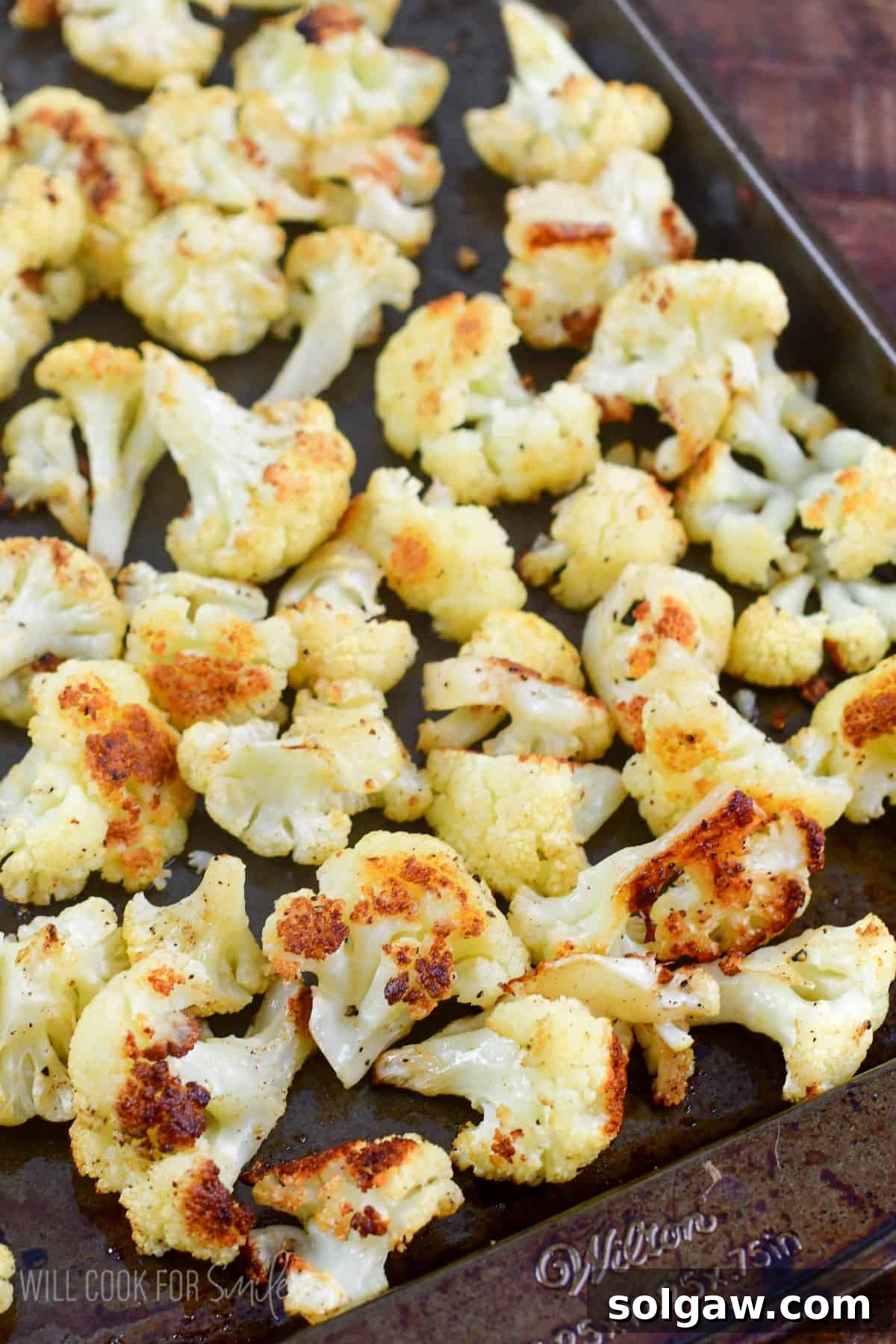
Now, it’s time to arrange your seasoned cauliflower on the preheated baking sheet. Spread the florets in a single, even layer, making sure there’s ample space between each piece. It’s crucial that your baking sheet is large enough to accommodate the cauliflower without overcrowding. This step is perhaps the most important for achieving perfectly roasted cauliflower.
PRO TIP: If your baking pan isn’t large enough to spread the cauliflower in a single, even layer with plenty of room in between each floret, it is imperative to use two separate pans. Never overcrowd your vegetables; otherwise, instead of roasting, they will steam in their own moisture, resulting in a soft, mushy texture rather than the desired crispy, caramelized exterior.
Transfer the baking sheet to the preheated oven and bake for 20-25 minutes, or until the cauliflower florets are tender when pierced with a fork and beautifully golden-brown with caramelized edges. Around the halfway point (after about 10-12 minutes), give the veggies a quick toss or flip to ensure even browning on all sides. Adjust baking time according to your preference: add a few extra minutes if you desire softer, more intensely browned cauliflower, or reduce the time slightly if you prefer a crunchier texture with a bit more bite.
The Nutritional Powerhouse: Health Benefits of Cauliflower
Cauliflower isn’t just delicious; it’s a nutritional superstar packed with an impressive array of vitamins, minerals, and antioxidants. Incorporating this cruciferous vegetable into your diet, especially through healthy preparation methods like roasting, offers a multitude of health benefits:
- Rich in Vitamins and Minerals: Cauliflower is an excellent source of Vitamin C, a powerful antioxidant essential for immune function and skin health. It also provides a significant amount of Vitamin K, crucial for blood clotting and bone health, and several B vitamins, including folate, which plays a vital role in cell growth and metabolism. You’ll also find essential minerals like potassium, magnesium, and manganese in every serving.
- Abundant in Fiber: With a good amount of dietary fiber, cauliflower promotes healthy digestion, aids in maintaining bowel regularity, and can help prevent constipation. Fiber also contributes to a feeling of fullness, which can be beneficial for weight management.
- Packed with Antioxidants: This versatile vegetable contains numerous antioxidants, including glucosinolates and isothiocyanates, which help protect your cells from damage caused by harmful free radicals. These compounds are studied for their potential anti-inflammatory and anti-cancer properties.
- Anti-inflammatory Properties: Cauliflower boasts anti-inflammatory compounds that can help reduce chronic inflammation in the body, which is linked to various chronic diseases.
- Low in Calories and Carbohydrates: For those managing their weight or following a low-carb diet, cauliflower is an ideal choice. It’s incredibly low in calories and carbohydrates, making it a satisfying and nutrient-dense alternative to higher-carb options like rice or potatoes.
- Supports Heart Health: The fiber, potassium, and antioxidants in cauliflower all contribute to cardiovascular health by helping to manage blood pressure and cholesterol levels.
By regularly enjoying roasted cauliflower, you’re not just adding a tasty dish to your plate, but actively contributing to your overall health and well-being. It’s a simple, delicious way to boost your nutrient intake and support various bodily functions.
Elevate Your Dish: Additional Flavor Options for Roasted Cauliflower
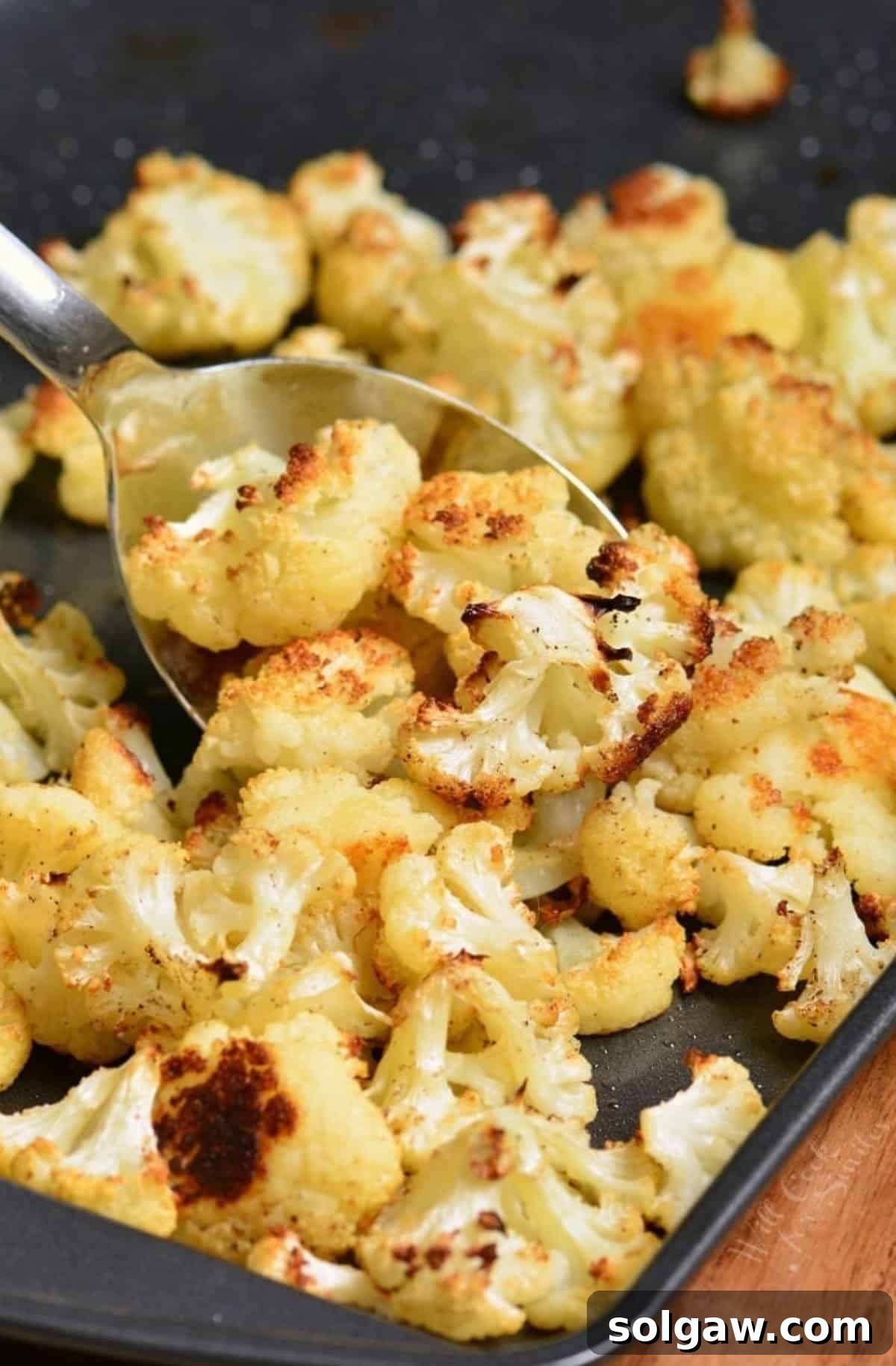
While the classic olive oil, salt, pepper, and garlic powder combination is undeniably delicious, roasted cauliflower truly shines when you start exploring its potential for diverse flavors. Once you’ve mastered the basic recipe a few times, you might find yourself craving something different. The great news is that cauliflower readily absorbs various spices and sauces, allowing for endless customization. Here are some fantastic ways to add a burst of new flavors:
- Parmesan Cheese: For a savory, umami-rich addition, try adding some finely grated Parmesan cheese. You can toss it with the cauliflower and olive oil before roasting for a crispy, cheesy crust, or sprinkle it over the florets immediately after they come out of the oven for a melt-in-your-mouth topping. Both methods offer distinct and delightful results.
- Ranch Seasoning: If you’re a fan of the tangy, herby flavor of ranch, this is a game-changer. Simply omit the standard salt, pepper, and garlic powder, and instead, toss your cauliflower florets with a packet of dry ranch dressing seasoning mix. This creates an incredibly flavorful and addictive snack or side. Ensure you use a large head of cauliflower to accommodate the seasoning packet’s intensity.
- Diverse Seasoning Mixes: The world of pre-made seasoning blends is your oyster! Experiment with various spice mixes to completely transform your roasted cauliflower. Some excellent options include:
- Italian Seasoning: For a Mediterranean twist, offering a fragrant blend of oregano, basil, thyme, and rosemary.
- Cajun Seasoning: To add a spicy, smoky, and earthy kick, perfect for those who enjoy a bit of heat.
- Dry Rubs: A good quality dry rub, typically designed for meats, can provide a surprisingly complex and delicious flavor profile to roasted vegetables.
- Curry Powder: For an Indian-inspired flavor, offering warmth and aromatic complexity.
- Smoked Paprika: Adds a beautiful color and a deep, smoky undertone.
- Lemon Herb: Combine dried dill, parsley, and a pinch of lemon zest for a bright, fresh flavor.
- Buffalo Style: For a spicy and tangy treat, toss your roasted cauliflower florets in some buffalo wing sauce or sriracha sauce immediately after baking. This transforms them into delicious “buffalo bites” that are fantastic served with a cool ranch dressing or a creamy blue cheese dip. It’s a great vegetarian alternative to traditional buffalo wings.
- Herbs (Fresh or Dried): Fresh herbs like chopped rosemary, thyme, or parsley can be added during the last 5-10 minutes of roasting or sprinkled on after for a burst of freshness. Dried herbs can be mixed in with the initial seasoning.
- Citrus Zest & Juice: A squeeze of fresh lemon or lime juice and a sprinkle of zest after roasting can brighten the flavors and add a refreshing tang.
Don’t be afraid to get creative and tailor these suggestions to your personal taste. Roasted cauliflower is remarkably forgiving and delicious in almost any permutation!
Frequently Asked Questions about Roasted Cauliflower
While freshly roasted cauliflower has an unbeatable texture, you can certainly reheat leftovers. For the best results, I find it’s best reheated on the stove-top. Preheat a skillet or frying pan over medium-high heat until it’s hot, then add a small amount of oil. Sauté the roasted cauliflower just until it heats through and regains some crispiness, typically 3-5 minutes. You can also reheat it in the oven at 350°F (175°C) for about 10 minutes, but watch it carefully to prevent over-browning or drying out. Avoid microwaving, as it tends to make the cauliflower mushy.
Absolutely! Roasted cauliflower is an excellent candidate for meal prep. You can prepare the cauliflower florets right up to the step of baking. After cutting and seasoning the florets, transfer them to an airtight food storage container or wrap the mixing bowl tightly with plastic wrap. Refrigerate for up to 24 hours. When you’re ready to cook, spread them on a baking sheet and roast as directed. This makes weeknight dinners incredibly quick and convenient.
Yes, the air fryer is fantastic for making perfectly crispy roasted cauliflower! Prepare the cauliflower florets exactly as described in the recipe, up to the cooking step. Depending on the size of your air fryer basket, you may need to cook it in one or two batches to avoid overcrowding. (Remember, overcrowding leads to steaming, not crisping!) Spread the seasoned cauliflower florets in a single layer in the air fryer basket and cook at 390°F (200°C) for about 15 minutes. For even cooking and maximum crispiness, make sure to shake or toss the florets every 3-5 minutes during the cooking process. The exact time may vary slightly depending on your air fryer model and floret size.
The key to non-mushy, crispy roasted cauliflower lies in two main factors: dryness and space. First, ensure your cauliflower florets are completely dry before tossing with oil and seasonings. Any excess moisture will steam the cauliflower instead of roasting it. Second, do not overcrowd the baking sheet. Give each floret enough room to breathe; if they are packed too tightly, they will steam rather than caramelize. Use two baking sheets if necessary. Also, ensure your oven is preheated to the correct high temperature, as this helps achieve a quick sear and crisp exterior.
Roasted cauliflower is an incredibly versatile side dish that pairs well with a wide variety of main courses. It’s excellent alongside grilled or baked chicken, fish, or steak. It also complements vegetarian mains like lentil soup, quinoa bowls, or bean burgers. For a complete meal, serve it with pasta dishes, or as part of a larger roasted vegetable medley. Its mild yet satisfying flavor makes it a perfect accompaniment to almost any cuisine.
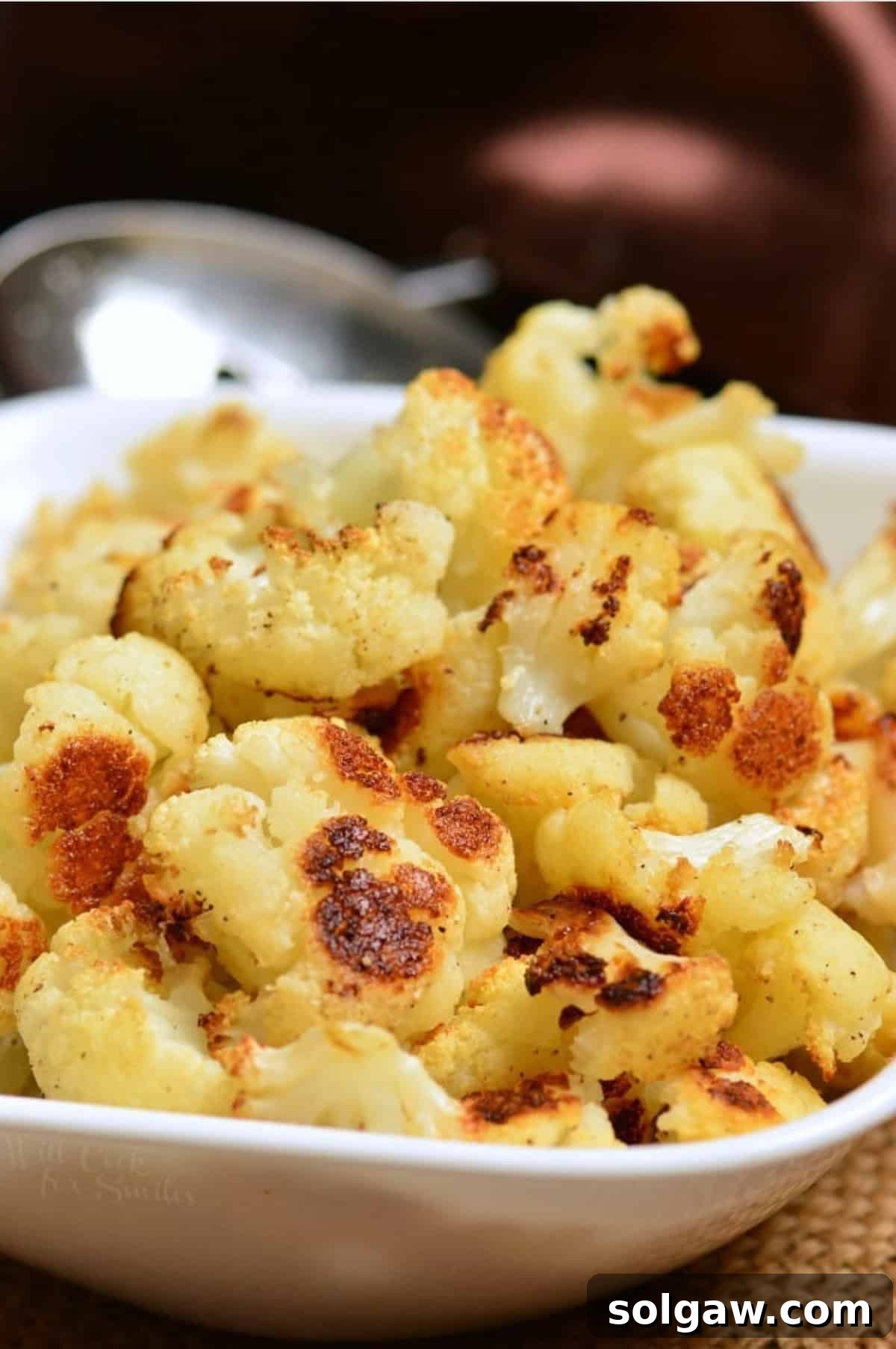
Beyond Roasting: More Delicious Cauliflower Side Dish Recipes
Cauliflower’s incredible adaptability means it can be the star of many other delightful side dishes. If you love roasted cauliflower, you’ll definitely want to explore these other fantastic recipes that highlight this amazing vegetable:
- Cauliflower Mac and Cheese – A healthier twist on a classic comfort food.
- Cauliflower Casserole – Creamy, cheesy, and utterly satisfying.
- Mashed Cauliflower – A low-carb alternative to mashed potatoes that’s just as creamy.
- Cauliflower Rice – A versatile base for many meals, replacing traditional rice.
- Cauliflower Fried Rice – A flavor-packed, lighter version of your favorite takeout dish.
PIN THIS RECIPE FOR LATER
DID YOU MAKE THIS RECIPE? PLEASE leave a 🌟 star rating! Let me know how you liked it by leaving the 📝 comment below or share and tag me on social media @willcookforsmiles. DON’T FORGET to subscribe to my newsletter!
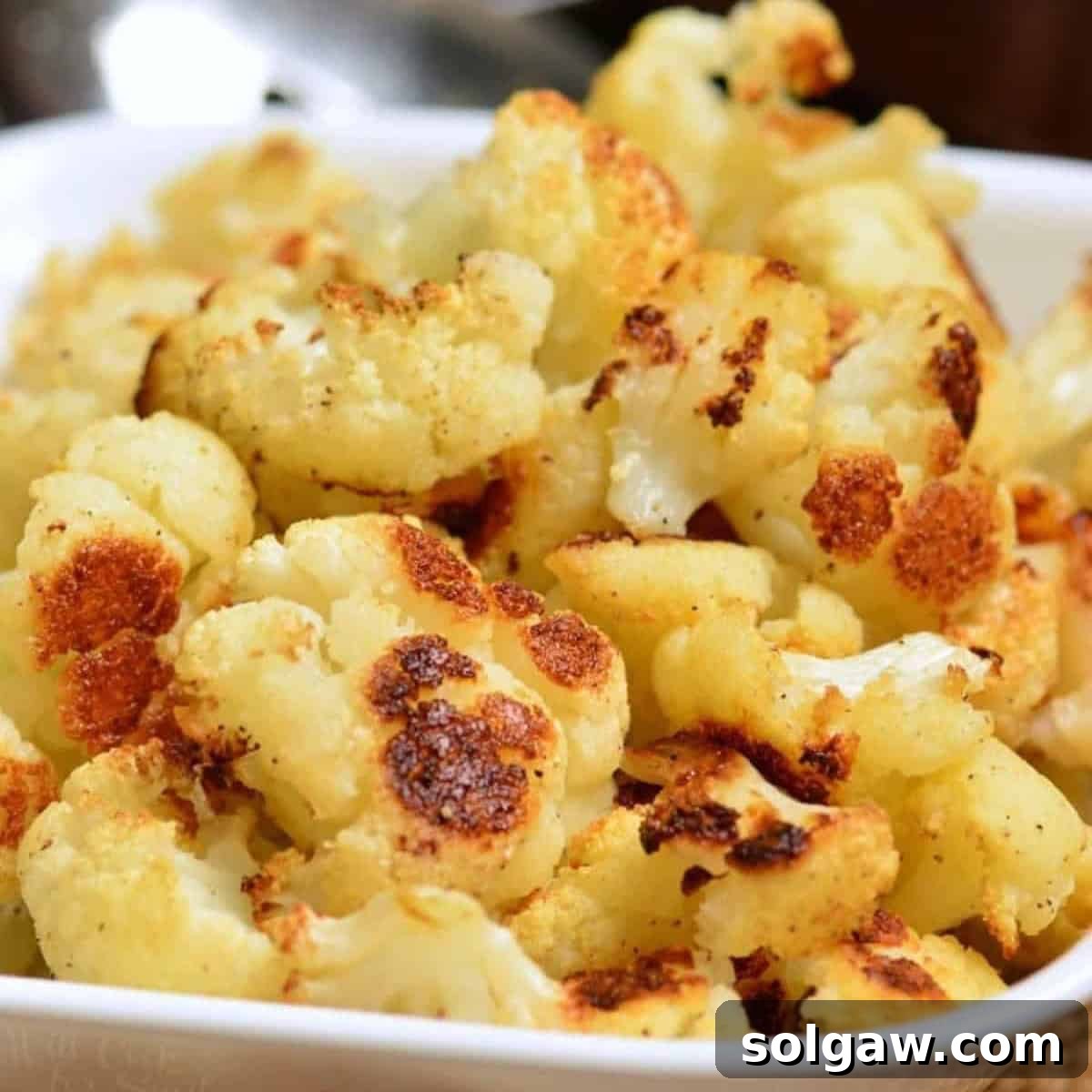
Easy Roasted Cauliflower Recipe
⭐
⭐
⭐
✨
🖨️Print
📌Pin
💬Rate
Ingredients
- 32 oz head of cauliflower
- 2-3 tbsp olive oil
- 1 tsp garlic powder
- salt (to taste)
- fresh cracked black pepper (to taste)
Instructions
-
Preheat your oven to 425°F (220°C). Line a large baking sheet with parchment paper, or lightly grease it to prevent sticking.
-
Carefully cut off and discard the outer leaves and the tough stem from the head of cauliflower.
-
Wash the cauliflower thoroughly under cool running water and then pat it completely dry with a clean towel. This step is crucial for crispy results.
-
Cut the cauliflower into uniform florets, aiming for pieces that are roughly 1 to 1.5 inches in size. Smaller florets tend to cook faster and achieve better caramelization.
-
In a large mixing bowl, combine the cauliflower florets with olive oil, salt, pepper, and garlic powder. Toss vigorously until all florets are evenly coated.
-
Spread the seasoned cauliflower in a single, even layer on the prepared baking sheet. Ensure there is plenty of space between the florets; use a second baking sheet if needed to avoid overcrowding, which can lead to steaming instead of roasting.
-
Bake for 20-25 minutes, or until the cauliflower is golden brown, tender-crisp, and caramelized at the edges. For even browning, toss the florets halfway through the cooking time. Adjust baking time based on desired tenderness and crispiness.
Notes
- To Cook In Air-Fryer: Prepare cauliflower florets as per the recipe instructions up to the point of cooking. Spread the seasoned florets in a single layer in your air fryer basket. Cook at 390°F (200°C) for 15 minutes, shaking or tossing the florets every 3 minutes to ensure even cooking and optimal crispiness. Depending on your air fryer size, you may need to cook in batches to avoid overcrowding.
- Reheating Leftovers: For best results, reheat roasted cauliflower on the stove-top in a preheated pan with a little oil, sautéing just until it heats through and re-crisps slightly. Alternatively, you can reheat in a preheated oven at 350°F (175°C) for about 10 minutes.
- Make Ahead: You can chop and season the cauliflower florets up to 24 hours in advance. Store them in an airtight container in the refrigerator and roast when ready.
Nutrition
Originally published on Will Cook For Smiles in January 2019, this recipe has been updated and enhanced for clarity and expanded culinary insights.