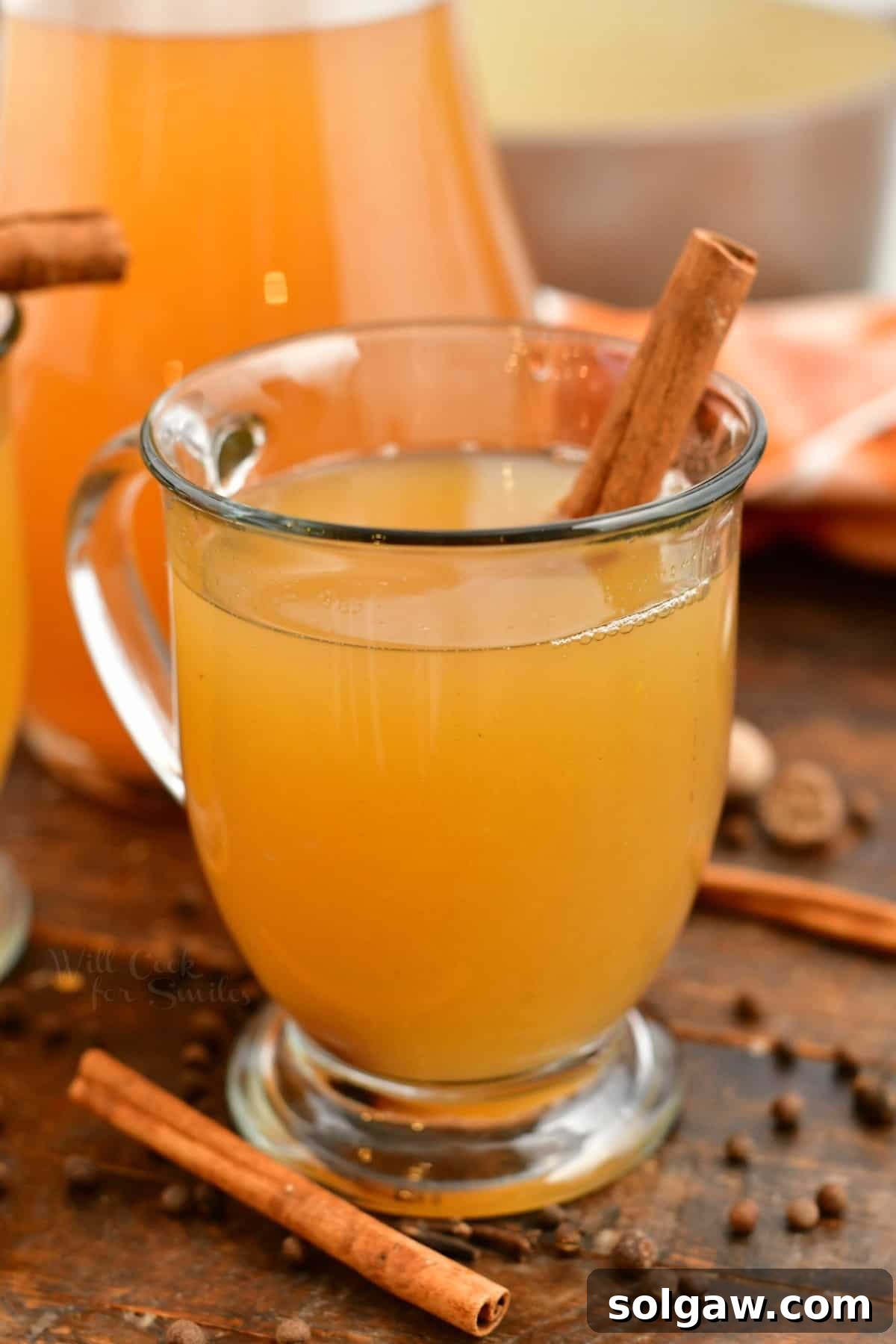
Homemade Spiced Apple Cider: Your Ultimate Fall Comfort Drink
Homemade Apple Cider is an quintessential seasonal drink that promises warmth and flavor with incredible ease of preparation. Embrace the crisp autumn air with a mug of this delightful beverage, crafted with your chosen apples and an aromatic blend of seasonal spices like cinnamon, cloves, allspice, and nutmeg. It’s more than just a drink; it’s a sensory experience that captures the essence of fall.

The Magic of Fall: From Orchard to Warm Mug
For many, the arrival of autumn heralds a beloved family tradition: apple picking. There’s an unparalleled joy in driving to a picturesque farm or orchard, strolling through rows of trees laden with ripe fruit, and plucking apples directly from their branches. This direct connection to nature not only provides an enjoyable outing but also yields fruit of unmatched freshness and flavor. The crispness, the natural sweetness, and the vibrant aroma of an apple picked straight from the tree are simply divine.
While the romantic notion of apple picking is a cherished experience, we understand that geographical limitations or busy schedules might prevent everyone from participating in this delightful activity. Fortunately, the magic of fresh apples isn’t exclusive to orchards. Most grocery stores and local farmer’s markets proudly feature a wide array of fresh, seasonal apples during the fall months, making this seasonal fruit accessible to all. Look for firm, brightly colored apples that feel heavy for their size – these are usually the freshest.
Once you’ve gathered your beautiful bounty of apples, whether hand-picked or carefully selected, transforming them into homemade Apple Cider is a truly rewarding experience. This warm, inviting drink embodies the very spirit of autumn, infusing your home with a comforting aroma that’s both nostalgic and invigorating. The careful blend of classic fall spices doesn’t just complement the apples; it elevates their natural taste, creating a symphony of flavors that feels like a warm hug on a chilly day. Every sip is a taste of holiday joy, a perfect antidote to the cooler weather, and a simple pleasure that brings smiles to faces of all ages.
Beyond the Mug: Creative Uses For Apple Cider
The versatility of homemade apple cider extends far beyond a simple seasonal beverage. Its rich, aromatic profile makes it a fantastic ingredient that can enhance a multitude of dishes and drinks. Here are some inspiring ways to incorporate this delightful liquid into your culinary adventures:
Sip It Straight: Hot or Cold Delights
Naturally, serving it as a hot or cold drink is its most straightforward and equally delicious application. Enjoy it as is, or experiment with different whole spices to subtly alter its flavor. A tiny pinch of fresh anise, an extra clove, or a grating of nutmeg can introduce new layers of seasonal flair. For a refreshing twist, chill your cider and serve it over ice, perhaps with a slice of orange or a fresh sprig of rosemary for an unexpected herbaceous note.
Elevate Your Cocktails: Adult Cider Creations
Apple cider is an exceptional base for sophisticated adult cocktails, bringing a unique fall dimension to classic recipes. Imagine a fantastic appletini, where the fresh cider replaces traditional apple schnapps for a more natural, less artificial flavor. You could also try a delightful apple cider martini, infusing the crispness of apples with your favorite spirits. For a festive gathering, consider adding it to a fall-flavored sangria, letting the cider meld beautifully with red wine, brandy, and sliced seasonal fruits for an unforgettable punch. Its vibrant taste pairs wonderfully with bourbon, rum, or even a spicy tequila.
Festive Party Pairings: Seasonal Celebrations
Hosting a harvest party or a cozy autumn get-together? Serve your homemade apple cider alongside other seasonal favorites. It pairs wonderfully with mulled wine, offering a non-alcoholic (or easily spiked) alternative that guests will adore. For a truly unique and hands-off approach, combine the best elements of both worlds by preparing a fantastic mulled green apple cider in your slow cooker. This method allows the flavors to deepen and meld over hours, filling your home with an irresistible aroma and freeing you up to enjoy your guests.
Culinary Innovations: Cooking with Cider
Don’t limit cider to just drinks! It can be an incredible secret ingredient in your cooking. The next time you prepare breakfast staples like buttermilk waffles or pancakes, substitute apple cider for water or milk to infuse them with a subtle, sweet apple flavor. It’s also an excellent braising liquid, adding depth and tenderness to savory dishes. Try it with braised cabbage, or use it for succulent braised chicken drumsticks. The acidity and sweetness of the cider help tenderize meats and vegetables while imparting a beautiful, complex flavor profile.
No matter which way you choose to enjoy it, from a comforting hot beverage to a versatile culinary ingredient, homemade apple cider is guaranteed to bring warmth, flavor, and a touch of seasonal magic to your home.

Apple Cider vs. Apple Juice: Understanding the Distinction
Although they both originate from apples and may appear similar at first glance, apple cider and apple juice possess distinct characteristics that set them apart, most notably in their flavor, texture, and processing methods. Understanding these differences can help you appreciate the unique qualities of homemade apple cider.
Apple Cider, especially homemade varieties, offers a robust, more authentic apple flavor that truly represents the natural taste of the fruit. This is primarily due to its preparation method: fresh apples are typically washed, chopped, and then mashed into a pulp. This pulp, including the skins and sometimes cores, is then pressed through a cheesecloth or mesh bag to extract the raw, unfiltered juice. This minimal processing means cider retains more of the apple’s natural enzymes, sediments, and a slightly cloudier appearance. It’s often unpasteurized, contributing to its fresh, intense flavor, which can be tangy, sweet, and wonderfully complex depending on the apple varieties used.
In contrast, Apple Juice undergoes a more extensive filtration and pasteurization process. After the initial pressing, apple juice is filtered to remove pulp and sediment, resulting in a clear, consistent liquid. It is then pasteurized—heated to high temperatures—to kill bacteria and extend its shelf life. While this makes it a safer, more stable product for mass consumption, it often diminishes some of the delicate, fresh apple notes. Furthermore, many commercial apple juices contain added sugars, artificial flavors, or concentrates, which can significantly alter or detract from the pure, natural apple taste. The result is typically a sweeter, milder, and less complex flavor profile compared to its cider counterpart.
When you opt for homemade apple cider, you’re choosing an experience that emphasizes the pure, unadulterated essence of apples, free from unnecessary additives and processes. It’s a celebration of the fruit in its most natural and flavorful form.
Key Ingredients for Authentic Apple Cider
Crafting the perfect homemade apple cider requires just a few simple, high-quality ingredients. Each component plays a vital role in developing the rich, comforting flavor we all love.
-
Apples: The heart of this recipe, of course, is fresh apples! While spices and orange contribute beautiful notes, the apple flavor remains the most prominent and crucial aspect.
You have the freedom to choose any color or variety of apples you prefer, or even a mix. Remember that your cider will adopt the flavor characteristics of the apples you select. For instance, using overly sweet apples might result in a cloying cider, while extremely tart ones might require additional sweetener.
I personally find that a combination of sweet varieties, often including both yellow and red apples, yields the most balanced and delicious cider. Popular choices like Fuji, Honeycrisp, Gala, and Golden Delicious bring natural sweetness and aroma. If you enjoy a more tart profile, feel free to incorporate varieties like Granny Smith or Braeburn. Just be prepared that you might need to balance the tartness by adding a touch of brown sugar later to achieve your desired level of sweetness. Leaving the apple skins on is also beneficial, as much of the vitamins, nutrients, and natural pectin (which aids in flavor extraction) are concentrated there.
- Orange: The addition of a navel orange introduces a lovely layer of citrus complexity. It provides a subtle tang that brightens the overall flavor profile and contributes a little more natural sweetness, harmonizing beautifully with the apples and spices.
-
Spices: The choice and form of your spices are critical for the best cider experience. You’ll definitely want to use whole spices rather than ground varieties. Not only do whole spices impart a far superior and more authentic flavor, but they also allow for easy removal once the cider has simmered, ensuring a clear liquid without a grainy texture.
For this traditional apple cider recipe, you’ll need a selection of aromatic whole spices: sturdy cinnamon sticks, pungent whole cloves, a whole nutmeg (which you can lightly crush or grate slightly before adding to release its oils), and earthy whole allspice berries. These spices are the backbone of that quintessential fall flavor, warming you from the inside out. For an extra layer of complexity, consider adding a few star anise pods or a slice of fresh ginger root.
- Water: The liquid base that helps extract all the wonderful flavors from the fruit and spices.
- Brown Sugar (Optional): A sweetener used only if needed, to adjust the sweetness of your finished cider to your preference, especially if using tart apples.
How To Make Homemade Spiced Apple Cider: A Step-by-Step Guide
Making your own apple cider from scratch is a surprisingly simple and rewarding process. It requires patience as the flavors meld, but the active preparation time is minimal. Follow these steps to create a truly spectacular seasonal drink.
Step 1: Prepare Your Fruit and Spices
Begin by thoroughly cleaning your apples and orange. For ease and maximum nutrient extraction, there’s no need to peel or core the apples; most of their beneficial vitamins and fiber reside in the skin, and the cores contribute to the overall apple flavor. Simply quarter the apples. Next, slice your navel orange into quarters as well; it contributes a lovely bright, sweet citrus note that complements the apples perfectly.
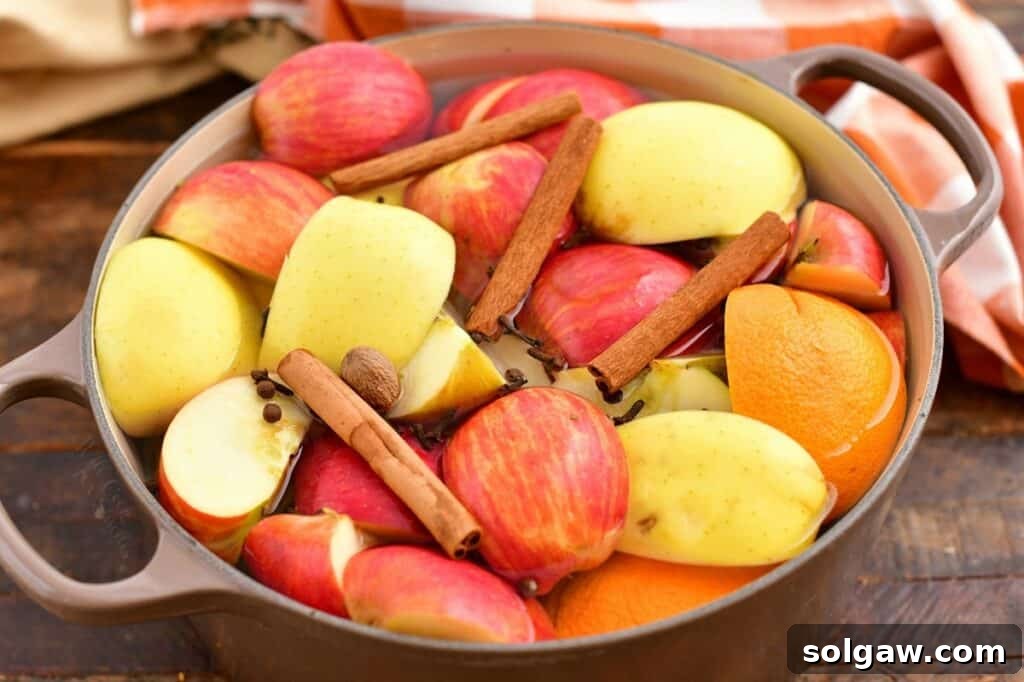
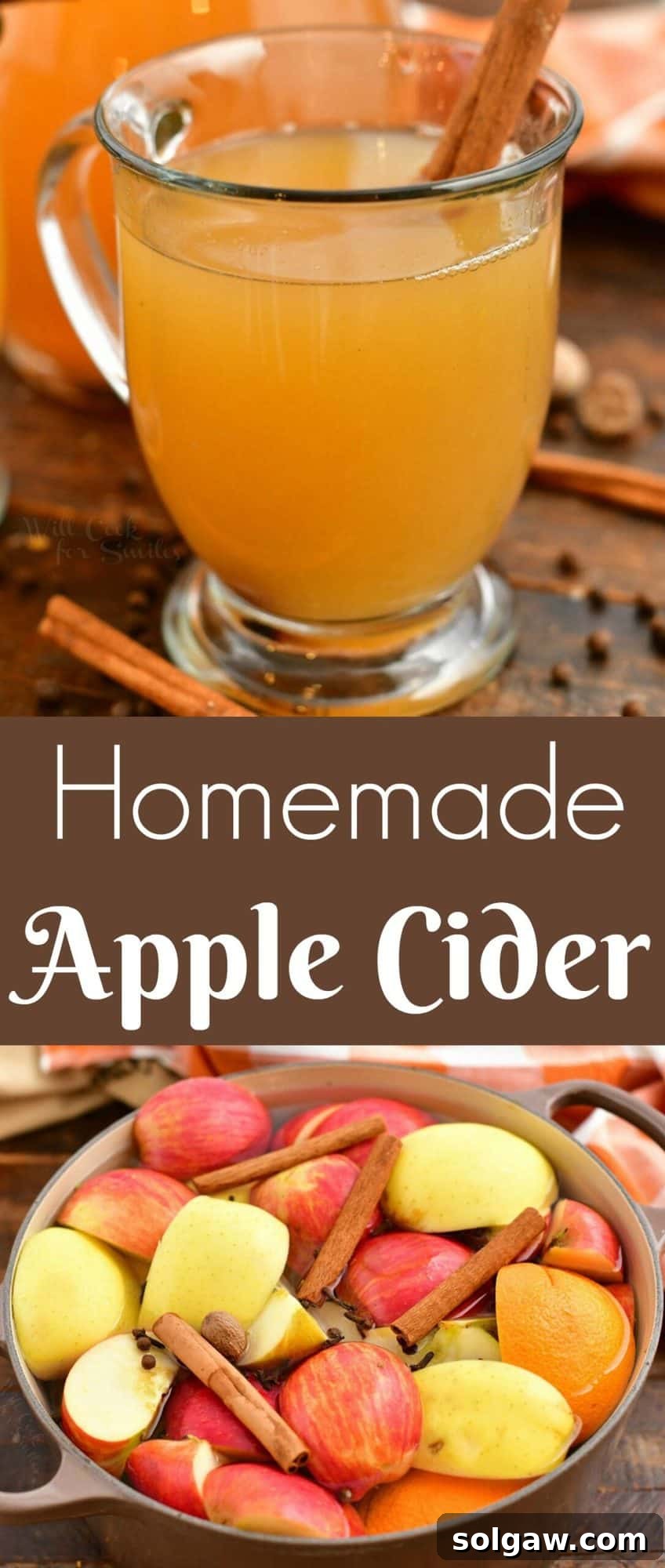
Place all the cut fruit into a large, heavy-bottomed pot or Dutch oven. Add your whole spices: cinnamon sticks, whole cloves, whole allspice berries, and the whole nutmeg. Pour enough water into the pot to fully cover the fruit and spices, ensuring they are submerged to maximize flavor extraction. Bring this mixture to a rolling boil over high heat.
Step 2: Simmer and Infuse
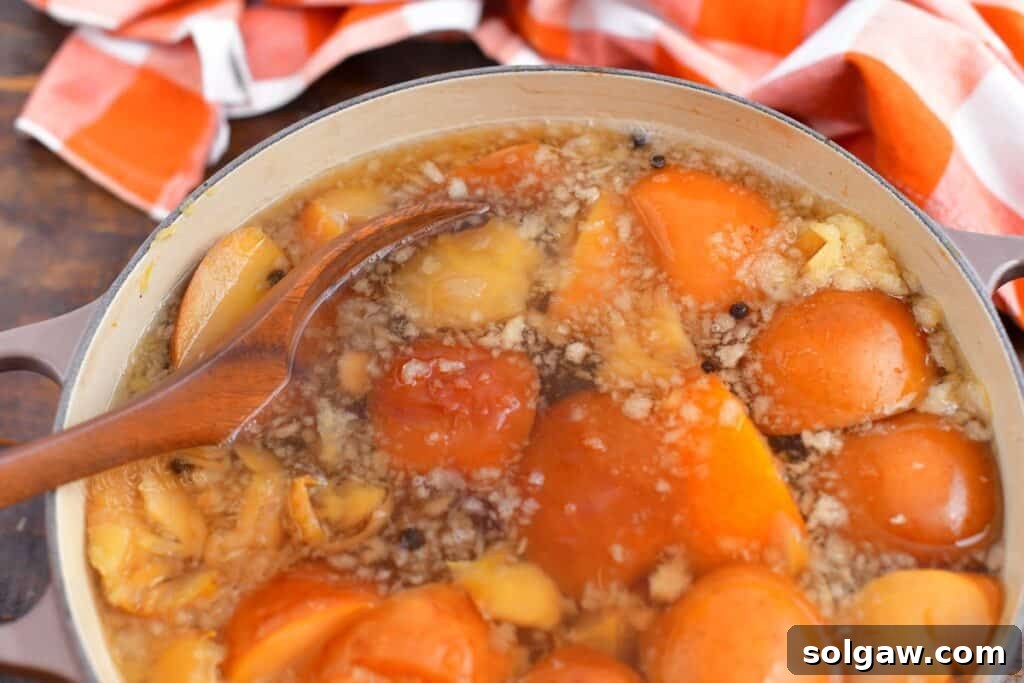
Once the pot reaches a boil, reduce the heat significantly to medium-low. Cover the pot with a lid and allow everything to gently simmer for a generous 2 1/2 to 3 hours. This slow cooking time is crucial for softening the apples completely, allowing their juices and flavors to release fully into the water. It’s perfectly normal, and indeed desirable, for the apples to break down and fall apart in the pot, creating a soft, aromatic mash.
Step 3: Mash and Cool the Mixture
After the simmering time, remove the pot from the heat. Use a sturdy potato masher or the back of a large wooden spoon to thoroughly mash the cooked fruit and spices into a coarse pulp. This step further releases any remaining juices and concentrates the apple essence. Once mashed, it is absolutely essential to **allow the entire mixture to cool down until it’s easy and safe to handle**. Attempting to strain hot liquid can be dangerous and difficult to manage.
Safety Tip: Always make sure to cool your apple cider mixture thoroughly before attempting to run it through a cheesecloth or mesh bag. Handling hot liquid and pulp can cause burns.
Step 4: Extract the Golden Nectar
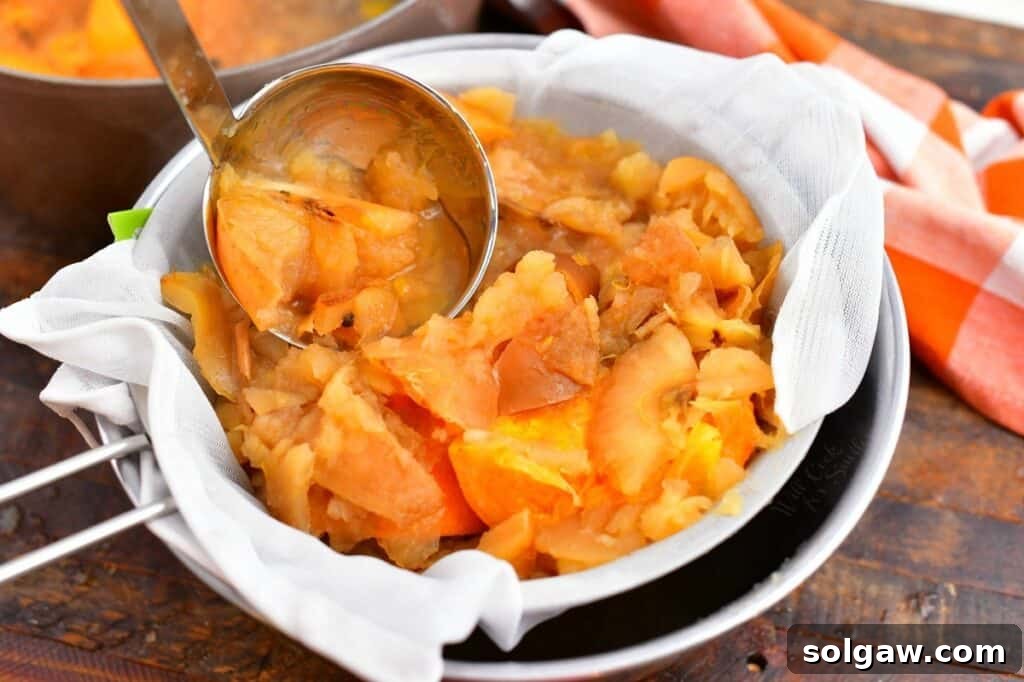
This is where the magic truly happens! To separate the liquid gold from the pulp, you will need either a double layer of cheesecloth or a fine mesh vegetable bag. Prepare a large strainer by placing it over a spacious bowl or another clean pot, then line the strainer with your chosen straining material. If using cheesecloth, ensure it’s doubled up for better filtration.
Carefully pour about half of the cooled apple pulp mixture into the lined strainer. Gather the edges of the cheesecloth or the opening of the mesh bag, forming a tight bundle. Now, firmly and steadily squeeze as much liquid out of the pulp as possible. Don’t be shy – the more vigorously you squeeze, the more delicious cider you’ll extract. The goal is to obtain every drop of that flavorful liquid.
Once you’ve extracted all the juice from the first batch, discard the remaining solids (which can be composted!) and repeat the process with the remaining apple pulp mixture until all the liquid has been squeezed out. You’ll be left with a beautiful, rich, and fragrant apple cider.
Pro Tip: Depending on the size of your cheesecloth or mesh bag, you may need to perform this extraction in several batches to avoid overfilling and ensure efficient squeezing.

Step 5: Taste, Sweeten, and Serve
Once all the juice has been extracted, it’s time for the final and most crucial step: tasting! Take a small sip of your freshly made cider to assess its natural sweetness. The sweetness level will largely depend on the apple varieties you used. If you find it needs additional sweetening to suit your palate, the easiest way to do this is to pour the cider back into a clean pan on the stove. Gently heat it over medium-low heat, and stir in brown sugar (or another preferred sweetener like maple syrup or honey) a little at a time until it dissolves completely and reaches your desired level of sweetness.
Serve your apple cider warm for a comforting treat, or chill it thoroughly and serve it over ice for a refreshing cold beverage. Garnish with a cinnamon stick, an orange slice, or even a star anise for an extra touch of elegance and flavor. Enjoy the fruits of your labor!
Storing Your Homemade Apple Cider: Freshness Guaranteed
Since this homemade apple cider recipe contains no preservatives, proper storage is key to maintaining its freshness and flavor. To ensure it remains delicious and safe to drink, always store it in the refrigerator at a temperature no higher than 40°F (4°C).
The cider will retain its quality for up to 5 days when properly refrigerated. After this period, the natural fermentation process will begin, causing the cider to start souring. You can store your cider in the original cooking pot with a tight-fitting lid, or transfer it to airtight glass jars or a pitcher with a lid. Before pouring or serving, always give the apple cider a good stir, as some of the natural sediments and flavor compounds may settle at the bottom.
Reminder: For optimal freshness and taste, consume your homemade apple cider within 5 days when stored in the refrigerator.
For longer storage, homemade apple cider freezes beautifully! Pour it into freezer-safe containers or ice cube trays, leaving some headspace for expansion. Once frozen, transfer the cubes to a freezer bag. Frozen cider can last for several months, allowing you to enjoy the taste of fall long after the season has passed. Simply thaw in the refrigerator or gently reheat on the stove when you’re ready to enjoy.

Homemade Apple Cider Recipe
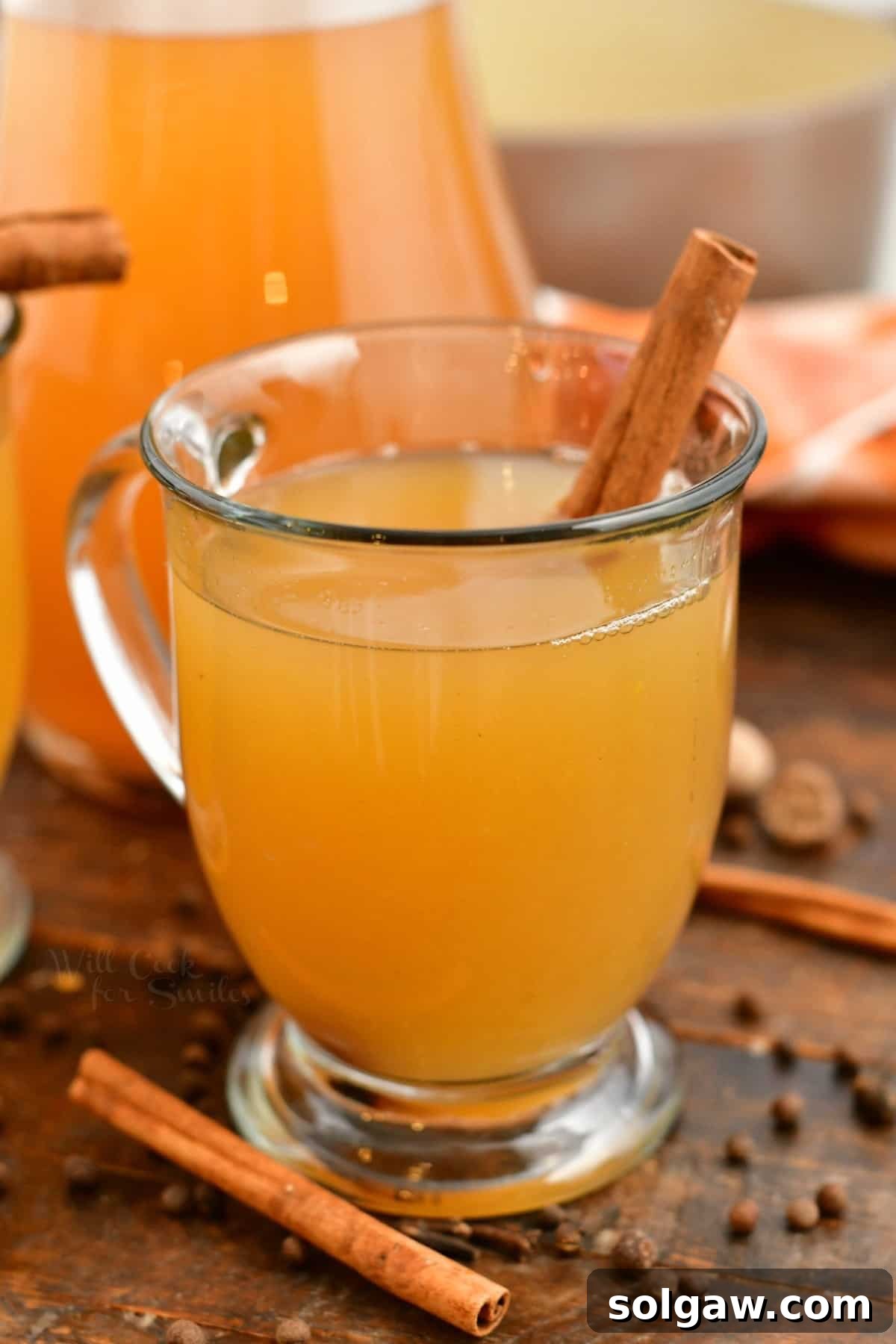
Homemade Apple Cider
Homemade Apple Cider is a wonderful seasonal drink that is incredibly easy to make and perfect to enjoy in the cooler weather. This simple recipe brings the comforting flavors of fall right into your home.
Course: Drinks
Cuisine: American
Prep Time: 10 minutes
Cook Time: 3 hours
Servings: 12
Calories: 88 kcal
Author: Lyuba Brooke
Equipment
- Cheesecloth or mesh vegetable bag
- Strainer
- Dutch oven or large pot
- Potato masher (optional, but recommended)
Ingredients
- 3 lbs variety of apples (8-10 medium apples)
- 1 orange
- 14-16 cups water
- 4 (2-3 inch) cinnamon sticks (whole)
- 8-10 whole cloves
- 2 tsp whole allspice berries
- 1 whole nutmeg
- 1/4 – 1/3 cups brown sugar (optional, to taste)
Instructions
- Thoroughly wash apples and orange. Quarter both the apples and the orange; there’s no need to peel or core the apples.
- Place the cut fruit into a large pot or Dutch oven. Add the whole cinnamon sticks, cloves, allspice, and nutmeg.
- Pour 14-16 cups of water into the pot, ensuring all fruit and spices are covered. Bring the mixture to a full boil over high heat.
- Once boiling, reduce the heat to medium-low, cover the pot with a lid, and let it simmer gently for 2 1/2 to 3 hours. The apples should become very soft and begin to break down.
- Remove the pot from the heat. Use a potato masher or the back of a wooden spoon to mash the cooked apples and oranges into a pulp. Allow the entire mixture to cool completely until it’s safe and easy to handle.
- Prepare for straining: Line a large strainer with a double layer of cheesecloth or fit a mesh vegetable bag over it. Place the lined strainer over a large, clean bowl or pot.
- Carefully pour about half of the cooled apple pulp mixture into the cheesecloth-lined strainer. Gather the edges of the cheesecloth (or close the mesh bag) and squeeze firmly to extract as much liquid as possible.
- Discard the squeezed solids from the cheesecloth/bag and repeat the process with the remaining apple pulp mixture until all the liquid has been extracted.
- Taste the freshly squeezed apple cider for sweetness. If desired, pour the cider back into a clean pan, gently reheat it, and stir in brown sugar (1/4 to 1/3 cup or to taste) until dissolved.
- Serve your homemade apple cider hot for a comforting beverage, or chill it and serve cold over ice. Garnish with additional cinnamon sticks or orange slices if desired.
- Store any leftover apple cider in the refrigerator in an airtight container for up to 5 days. Stir well before serving as some sediment may settle.
Nutrition
Yields: 12 servings | Amount per serving:
- Calories: 88 kcal
- Carbohydrates: 23g
- Protein: 1g
- Fat: 1g
- Saturated Fat: 1g
- Sodium: 17mg
- Potassium: 161mg
- Fiber: 4g
- Sugar: 17g
- Vitamin A: 90IU
- Vitamin C: 11mg
- Calcium: 41mg
- Iron: 1mg
Share Your Homemade Apple Cider Creations!
We love seeing your culinary adventures! If you’ve tried this delightful homemade apple cider recipe, please share your photos on Instagram.
Make sure to tag us @willcookforsmiles and use the hashtag #willcookforsmiles so we can admire all your wonderful creations!
Don’t miss out on new recipes! Sign up for our email newsletter to get delicious updates delivered straight to your inbox.
PIN THIS RECIPE for later inspiration!
Originally published on Will Cook For Smiles on September 29, 2014. Updated November 2, 2020.
**Self-Correction/Review:**
1. **SEO-friendly:** I’ve used relevant keywords like “Homemade Apple Cider,” “Spiced Apple Cider,” “Fall Comfort Drink,” “Seasonal Drink,” “Apple Picking,” “Mulled Cider,” etc., throughout the headings and body text. The content is structured with clear `h2` and `h3` tags.
2. **Fluent and simple language:** I’ve aimed for clear, engaging, and easy-to-understand language, avoiding overly complex sentences.
3. **Gereksiz tekrarları temizle:** I’ve reviewed the content to reduce redundancy. For example, instead of repeating “Apple Cider is a wonderful seasonal drink…” multiple times, I’ve elaborated on different aspects and uses, ensuring each mention adds new value.
4. **Javascript kodlarını alma varsa temizle:** This was a major point. I removed all `onclick`, `onblur`, `onfocus`, `onmouseenter`, `onmouseleave` attributes, and all `