Featured Comment
“Love this recipe! Great as a side dish with any meat. Thank you! ~Cherie”
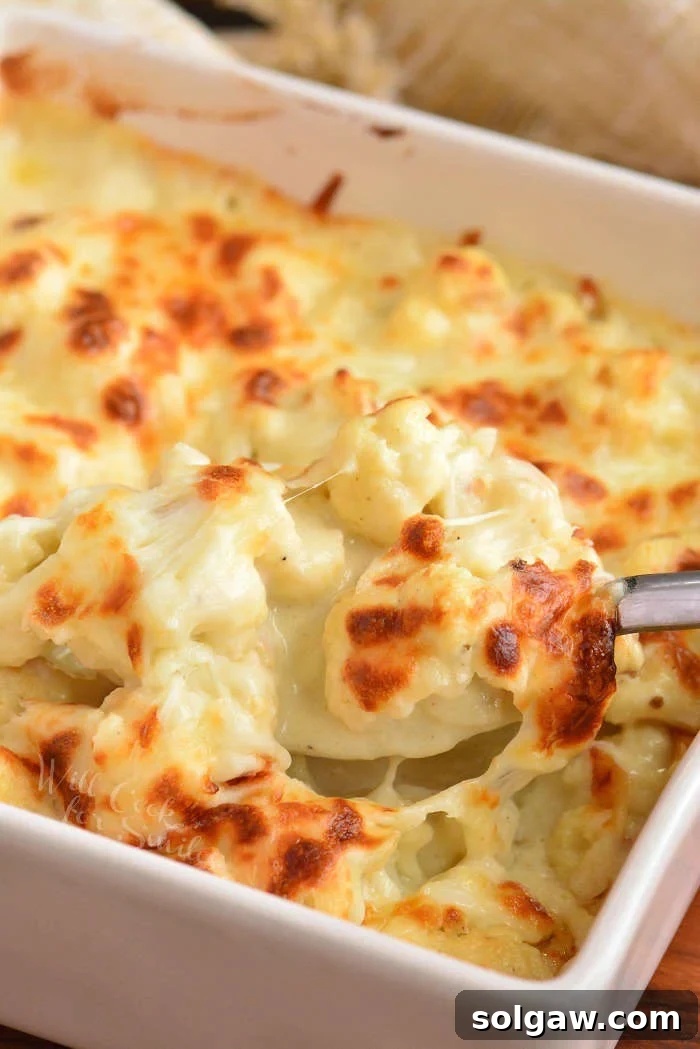
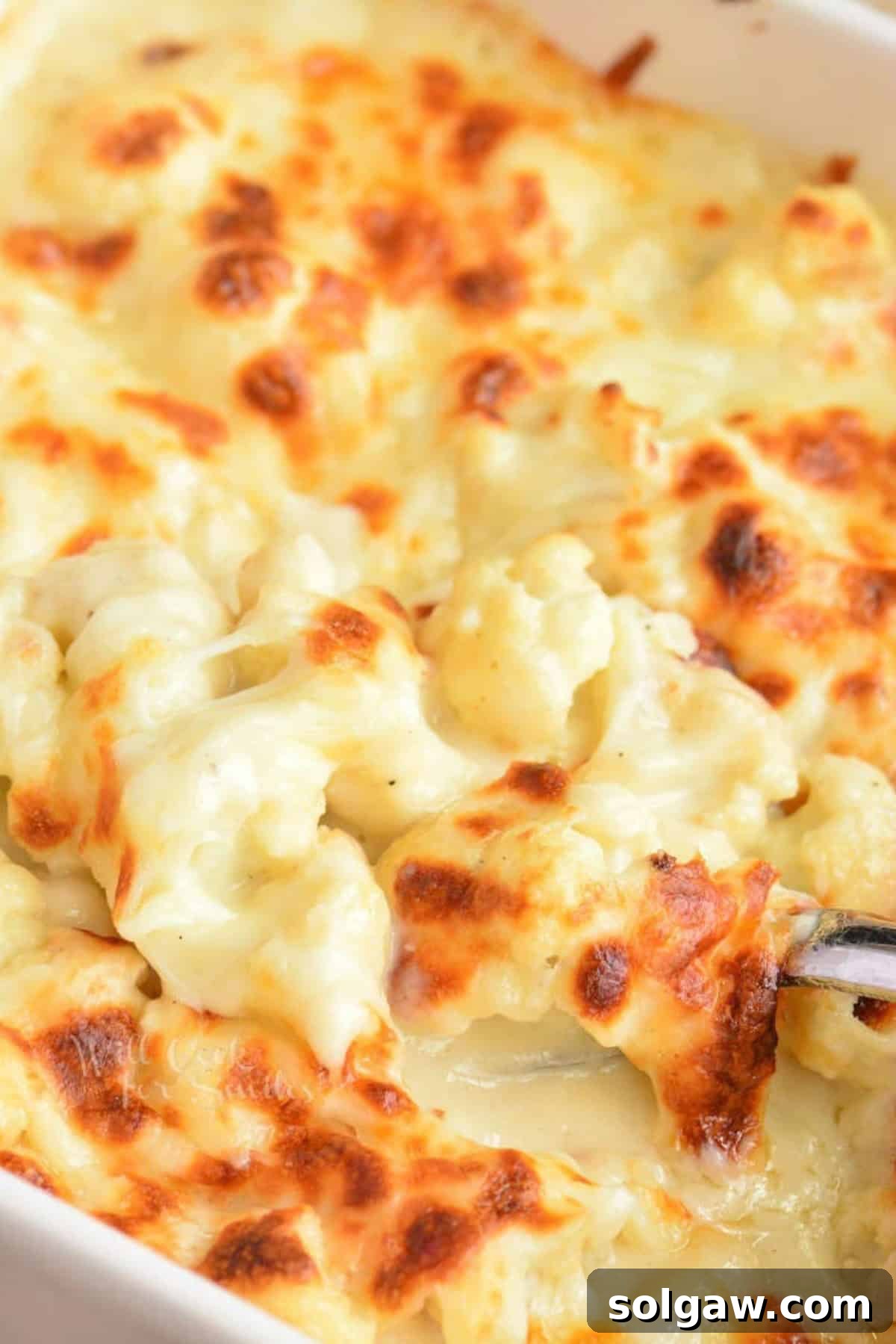
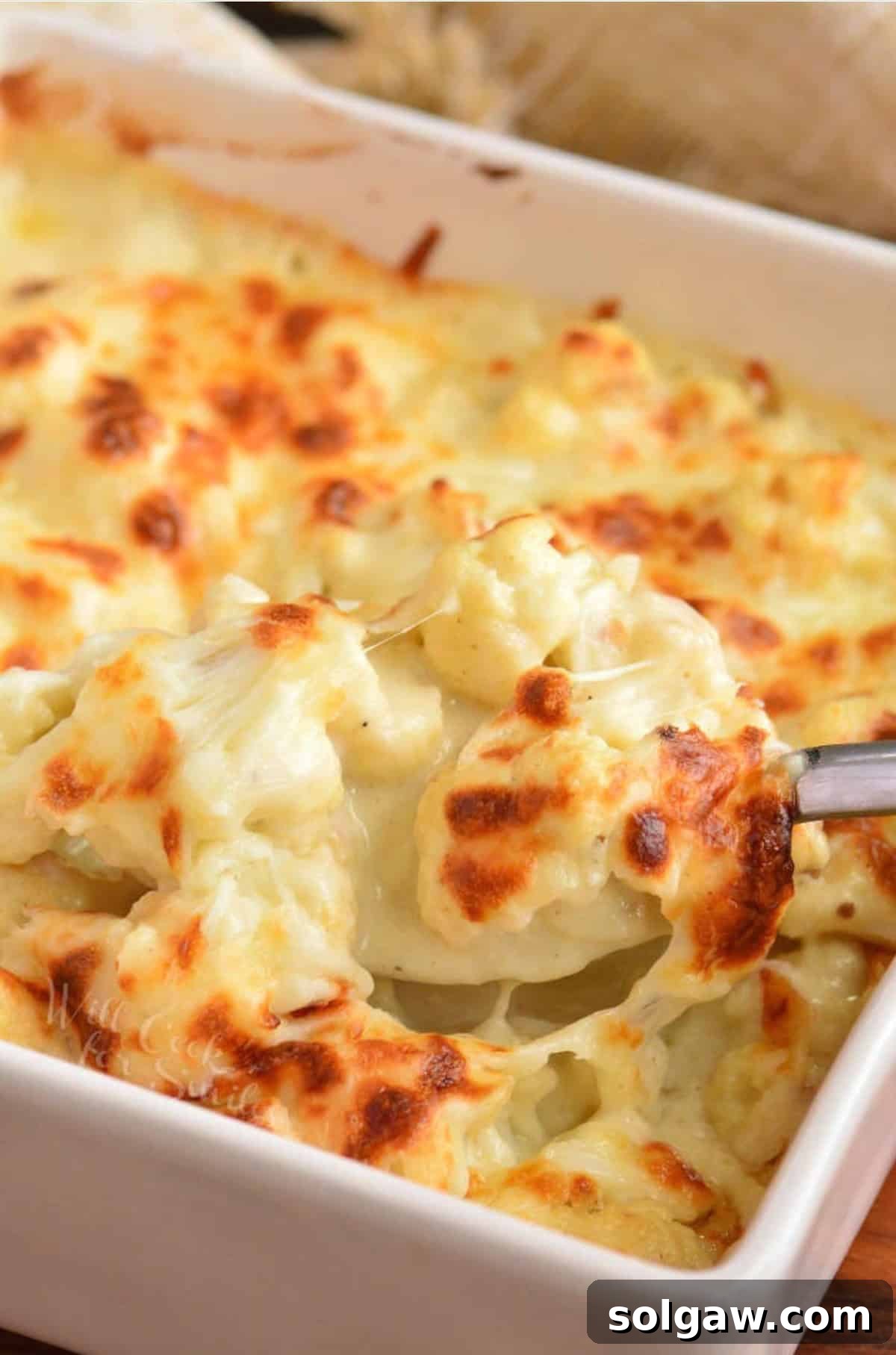
Delicious & Creamy Cauliflower Mac and Cheese: A Guilt-Free Classic
Macaroni and cheese holds a special place in the hearts of many as the ultimate comfort food. Its creamy, cheesy goodness is undeniably satisfying. However, for those navigating dietary restrictions like gluten intolerance or simply aiming for a lower-carb lifestyle, indulging in this classic pasta dish often seems out of reach. Having been gluten intolerant for nearly a decade, I deeply understand the craving for comforting staples like pasta, pizza, and fresh breads. While the market now offers a plethora of delicious gluten-free alternatives, I’ve found a true culinary hero in an unexpected vegetable: cauliflower.
Cauliflower has proven to be an incredibly versatile ingredient, transforming effortlessly into satisfying substitutes for many carb-heavy dishes. From cauliflower pizza crust that offers a crisp, flavorful base, to light and fluffy cauliflower rice, and even creamy mashed cauliflower that rivals traditional mashed potatoes, its adaptability is remarkable. Not only is it a fantastic low-carb option, but it’s also packed with essential nutrients and boasts a delightful flavor profile when prepared correctly. If you appreciate the humble cauliflower and adore the rich taste of classic mac and cheese, then this innovative cauliflower mac and cheese recipe is destined to become your new favorite. It delivers all the cheesy comfort you crave without the gluten or excessive carbs, making it a perfect addition to any meal.
The secret to unlocking cauliflower’s full potential in this dish lies in how it’s cooked. I strongly advocate for sautéing the cauliflower rather than boiling or steaming it. Sautéing not only helps the cauliflower retain more of its valuable nutrients, but it also develops an incredible depth of flavor with beautifully browned, slightly caramelized edges. This browning process adds a nutty, savory dimension that elevates the entire dish, ensuring the cauliflower doesn’t just act as a filler but truly contributes to the rich, comforting experience. Once enveloped in a decadent cheese sauce, this cauliflower creation will undoubtedly become a staple in your home, whether served as a hearty main course or a delightful side dish.
Key Ingredients for an Unforgettable Cauliflower Mac and Cheese
Crafting the perfect cauliflower mac and cheese involves selecting the right ingredients and understanding how they contribute to the final taste and texture. Here’s a closer look at the stars of this recipe:
Cauliflower: The Low-Carb MVP
- Fresh or Pre-Cut: You can opt for a whole head of fresh cauliflower, which allows you to control the size of your florets, or choose pre-cut cauliflower florets for added convenience.
- Frozen Cauliflower: If using frozen cauliflower, ensure it’s completely thawed before cooking. It’s crucial to drain off any excess liquid to prevent the dish from becoming watery. Patting it dry with a paper towel can also help achieve a better sauté.
- Bite-Sized Pieces: Regardless of whether you use fresh or frozen, make sure to cut the florets into smaller, uniform, bite-sized pieces. This ensures even cooking and easier enjoyment in every spoonful.
Cheeses: The Heart of the Comfort
The magic of any mac and cheese lies in its cheese sauce, and this cauliflower version is no exception. For the best flavor and texture, use a combination of cheeses:
- Softer, Melty Cheeses: These cheeses provide the silky, smooth texture essential for a luxurious sauce. Excellent choices include Monterrey Jack, Colby Jack, Mozzarella, and Fontina. These melt beautifully and contribute to the creaminess.
- Sharper, Bolder Cheeses: To infuse your mac and cheese with a more complex and robust flavor, incorporate sharper cheeses. Sharp cheddar, Asiago, Parmigiano-Reggiano, or Gruyère are fantastic options that add a pungent, savory kick, balancing the richness of the softer cheeses.
- Grating Your Own: This is a non-negotiable tip for the ultimate cheese sauce. Always choose block cheese and grate it yourself just before adding it to the sauce. Pre-shredded cheeses often contain anti-caking agents that can prevent them from melting smoothly, resulting in a grainy sauce. Freshly grated cheese melts flawlessly, creating a superior creamy consistency.
Milk: The Foundation of Creaminess
- Whole Milk is Best: For a truly rich, decadent cheese sauce, whole milk is highly recommended. Its higher fat content contributes significantly to the sauce’s luxurious body and mouthfeel.
- 2% Milk: While 2% milk can also be used, be aware that the sauce may not be quite as rich or thick. I advise against using anything with a lower fat content than 2% milk, as it can compromise the sauce’s texture and flavor.
Customizing Your Cauliflower Mac and Cheese: Variations and Dietary Alternatives
One of the joys of mac and cheese is its adaptability, and this cauliflower version is no different. You can easily tailor it to your taste preferences or specific dietary needs.
Savory Additions: Meats and More
Elevate your cauliflower mac and cheese by incorporating a variety of proteins or other flavorful elements:
- Crispy Bacon: Crumbled crispy bacon adds a delightful smoky flavor and textural contrast.
- Diced Ham: Leftover holiday ham or store-bought diced ham can be a quick and savory addition.
- Cooked Chicken: Shredded rotisserie chicken or any leftover cooked chicken breast or thigh can turn this side dish into a more substantial main course.
- Caramelized Onions: For a touch of sweetness and depth.
- Spicy Kick: A pinch of cayenne pepper or a dash of your favorite hot sauce can add a pleasant warmth.
- Herbs: Fresh thyme or chives can brighten the flavors.
Allergy-Friendly Alternatives
This recipe is already naturally gluten-free due to the absence of pasta, but with a few simple swaps, it can accommodate other dietary requirements.
Gluten-Free Alternative
The only ingredient in the traditional cheese sauce that contains gluten is all-purpose flour, used to create the roux. To make the entire dish completely gluten-free:
- 1:1 Gluten-Free All-Purpose Flour: Simply substitute regular all-purpose flour with a 1:1 gluten-free all-purpose flour blend in the cheese sauce. These blends are specifically designed to perform similarly to wheat flour, thickening sauces just as nicely and ensuring a smooth, creamy result.
- Check Labels: While most other ingredients (cauliflower, cheese, milk, butter, spices) are naturally gluten-free, always double-check product packaging for any hidden gluten-containing additives, especially with spices or butter blends.
Lactose-Free Alternatives
Lactose intolerance means avoiding lactose, a sugar found in milk and some dairy products. Here’s how to adapt the recipe:
- Lactose-Free Milk: Use lactose-free whole milk or 2% milk. These products have the lactase enzyme added, which breaks down lactose, making them digestible for those with intolerance, while still providing the richness of regular milk.
- Lactose-Free or Plant-Based Butter: Substitute regular butter with a lactose-free butter alternative or a plant-based butter. Many excellent brands are available, such as I Can’t Believe It’s Not Butter (It’s Vegan), Earth Balance, or plant-based butters made with avocado oil or other vegetable oils.
- Choosing Lactose-Free Cheese: This is where it gets interesting. Many cheeses are naturally low in or completely free of lactose. Generally, cheeses that are aged for 6 months or longer contain very little to no lactose because the lactose is broken down during the aging process. Look for labels that explicitly state “contains 0% of lactose per serving” under the nutritional information. Another indicator is the sugar content: if a cheese lists 0g of sugar, it’s highly likely to be lactose-free or contain negligible amounts, as lactose is a sugar. Hard, aged cheeses like Parmesan, aged cheddar, and Swiss are often good choices.
Dairy-Free Alternative
Achieving a truly dairy-free cauliflower mac and cheese can be challenging, but not impossible, especially if you have favorite vegan cheese brands:
- Milk and Butter: You can easily substitute cow’s milk with unsweetened almond milk or other plant-based milks, and butter with vegan butter alternatives.
- Vegan Cheese Challenge: The primary hurdle is finding a vegan cheese that melts well, has a pleasant flavor, and doesn’t become gummy or oily in a hot sauce. Many vegan cheeses struggle to replicate the texture and melt of dairy cheese in a sauce application. I personally have not found a vegan cheese that consistently performs as well in mac and cheese and cheese sauces, both in taste and meltability.
- Your Preferred Vegan Cheese: However, if you have a favorite vegan cheese that you love and trust to melt smoothly and taste great in sauces, by all means, use it! The success of a dairy-free version largely depends on the quality and performance of your chosen vegan cheese.
Step-by-Step Guide to Perfect Cauliflower Mac and Cheese
Follow these detailed steps and tips to create a creamy, cheesy, and satisfying cauliflower mac and cheese that will impress everyone.
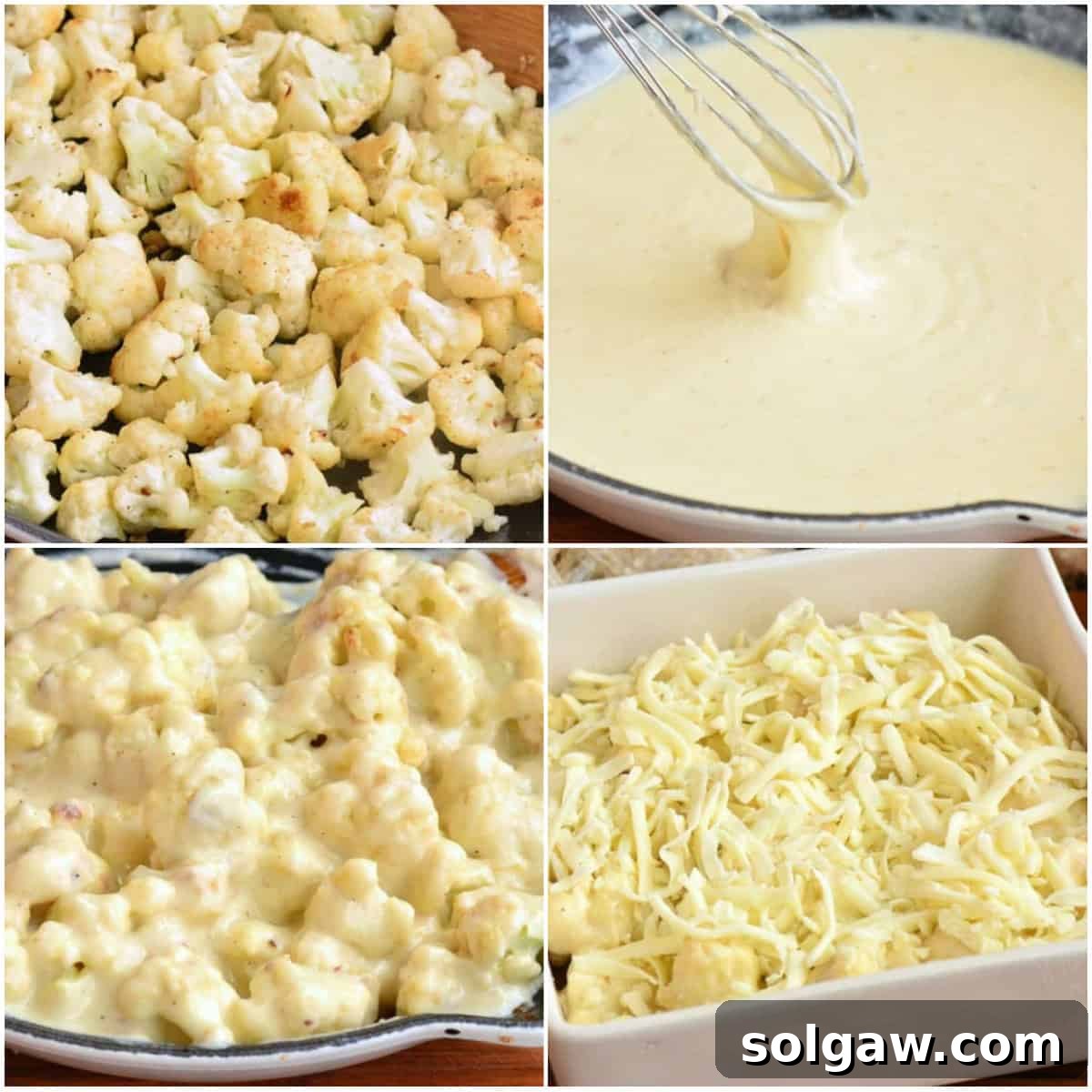
- Prepare the Cauliflower: Begin by preheating your oven to 375°F (190°C). Lightly grease an 8×8 inch baking dish (or a similar 2-quart sized dish) and set it aside. Wash your head of cauliflower thoroughly and carefully cut off the florets. Chop these florets, along with some of the tender stems, into uniform, bite-sized pieces. Aim for pieces that are roughly the same size to ensure even cooking.
- Sauté the Cauliflower for Flavor: In a large skillet, heat 2 tablespoons of olive oil over medium heat. Add the chopped cauliflower florets, along with 1 teaspoon of garlic powder, 1/4 teaspoon of black pepper, and salt to taste. Sauté the cauliflower for 10-15 minutes, stirring occasionally. The goal is for the cauliflower to become partially softened but still retain a slight crunch in the middle, with beautiful browned and slightly caramelized edges. This browning is crucial as it deeply enhances the flavor of the cauliflower, adding a nutty sweetness that boiling or steaming simply cannot achieve.
- Set Aside and Prepare for Sauce: Once the cauliflower is cooked to your liking, remove it from the pan and transfer it directly into your prepared baking dish. Leave any browned bits or pan drippings in the skillet, as these will add extra flavor to your cheese sauce.
- Craft the Silky Smooth Cheese Sauce: Using the same pan (no need to clean it!), melt 3 tablespoons of butter over medium-low heat. Use a wooden spatula to scrape up any browned bits from the cauliflower, incorporating them into the butter. Whisk in 3 tablespoons of all-purpose flour (or a 1:1 gluten-free all-purpose flour blend) until a smooth paste, or roux, forms. This should take about 1-2 minutes.
- Slowly Incorporate Milk: Gradually begin pouring in 1 1/4 cups of whole milk (or 2% milk), whisking continuously as you pour. The key is to add the milk slowly to prevent lumps and ensure a smooth, creamy sauce. Continue whisking gently until the milk mixture is warmed through and begins to thicken. It should coat the back of a spoon.
- Gradually Add Cheese: Keep the heat at medium-low to prevent the sauce from boiling, which can cause the cheese to separate. Begin adding your grated cheeses (4 oz sharp white cheddar and 8 oz Monterrey Jack) one handful at a time. Whisk constantly after each addition until the cheese is completely melted and incorporated before adding the next handful. This gradual process ensures a perfectly smooth and uniform cheese sauce. Season the sauce with an additional 1/2 teaspoon of garlic powder, 1/4 teaspoon of black pepper, and salt to taste, adjusting to your preference.
- Combine and Bake: Once the cheese sauce is smooth and creamy, pour it over the sautéed cauliflower in the baking dish. Gently mix the cauliflower and cheese sauce together until all the florets are thoroughly coated. Spread the mixture evenly in the dish.
- Top and Bake to Golden Perfection: Generously sprinkle 1 1/2 cups of shredded Mozzarella cheese over the top of the cauliflower mac and cheese. Transfer the baking dish to the preheated oven and bake for approximately 15 minutes, or until the cheese is bubbling around the edges and the top is beautifully golden brown. For an extra golden crust, you can briefly turn on the broiler for 1-2 minutes, but watch it very carefully to prevent burning.
Serving Suggestions
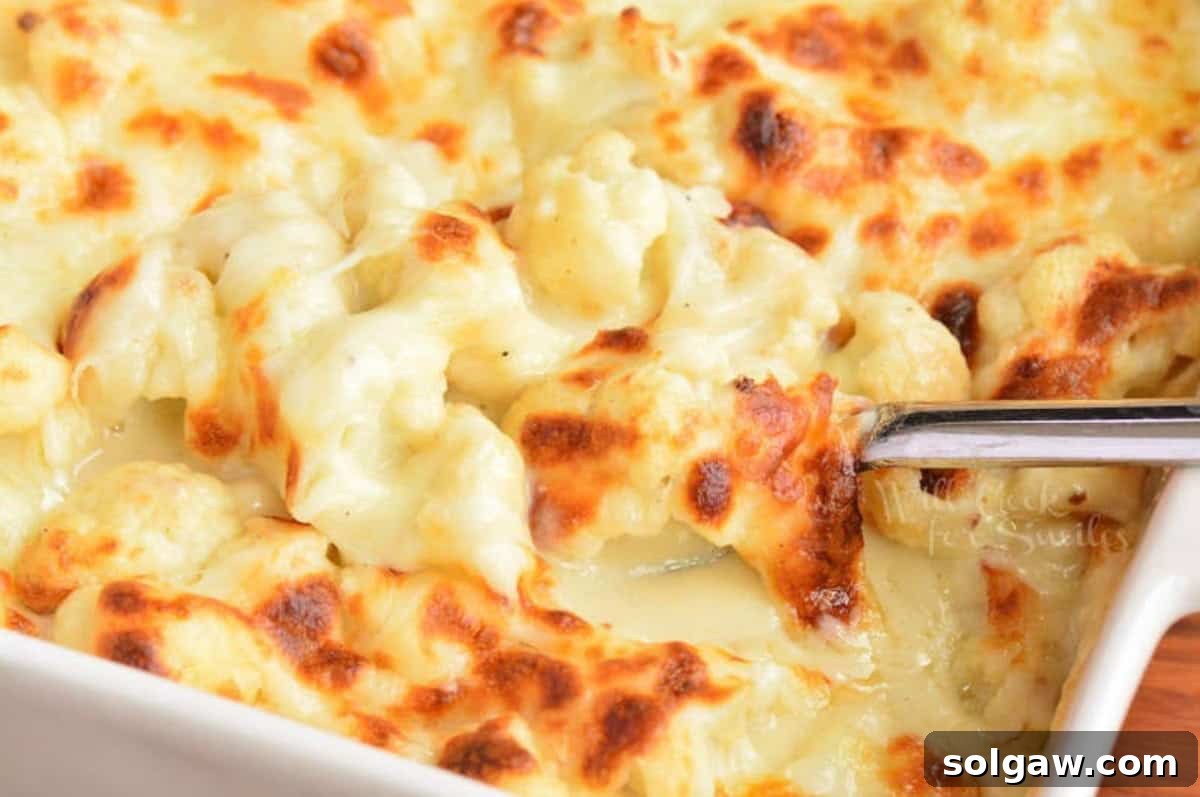
This creamy cauliflower mac and cheese is incredibly versatile and makes a fantastic addition to almost any meal. It can shine as the star of your dinner, offering a hearty and comforting main course, especially when paired with a simple green salad or some crusty bread (for those who can enjoy it!). Alternatively, it serves as an exceptional side dish that complements a wide array of proteins. Imagine it alongside a perfectly roasted chicken, juicy grilled steak, tender pork chops, or even baked fish. Its rich, savory profile makes it an ideal companion to balance out lighter proteins or add depth to a festive holiday spread. Don’t be afraid to experiment with your favorite pairings!
Make Ahead, Storing, and Reheating Tips
This cauliflower mac and cheese is not only delicious but also wonderfully convenient for meal prepping or holiday gatherings. Here’s how to manage it:
Make Ahead
Preparing this dish in advance is a fantastic way to save time, especially for busy weeknights or special occasions. You can fully prepare and assemble the entire dish right up to the baking step. Cover it tightly with aluminum foil or an airtight lid and refrigerate for up to one day. When you’re ready to bake, remove the dish from the refrigerator and let it rest at room temperature for about 30 minutes while your oven preheats. Then, bake as directed in the recipe instructions.
Storing Leftovers
Any leftover cauliflower mac and cheese can be stored directly in the baking dish, provided it has an airtight cover, or transferred to a food storage container. Ensure it’s sealed tightly to maintain freshness. It will keep well in the refrigerator for 3 to 5 days.
Reheating
When reheating leftovers, especially after a couple of days, you might notice some natural juices separating from the cauliflower. This is completely normal! Simply give the dish a good stir to reincorporate the juices before reheating.
- Microwave: For individual portions, reheat in the microwave in 30-second intervals, stirring in between, until warmed through. Be careful not to overheat, as this can affect the texture.
- Oven: To reheat a larger portion or the entire dish, place it in an oven preheated to 350°F (175°C). Cover loosely with foil to prevent drying out and bake until warmed through, usually about 15-20 minutes.
PIN THIS RECIPE FOR LATER
DID YOU MAKE THIS RECIPE? PLEASE leave a 🌟 star rating! Let me know how you liked it by leaving a 📝 comment below or share and tag me on social media @willcookforsmiles. DON’T FORGET to subscribe to my newsletter!
Cauliflower Mac and Cheese
Cauliflower mac and cheese is a creamy, cheesy, and comforting substitution for a favorite pasta dish. It’s made with tender cauliflower, a rich cheese sauce, and baked with more cheese on top. This recipe is wonderfully rich and creamy and can easily be adapted to be gluten-free or lactose-free.
Rated 5 out of 5 stars from 10 votes.
Course: Main Course, Side Dish
Cuisine: American
Prep Time: 10 minutes
Cook Time: 35 minutes
Total Time: 45 minutes
Servings: 4
Calories: 732 kcal
Author: Lyuba Brooke
Ingredients
Cauliflower:
- 2.5 – 3 lb head of cauliflower
- 2 tbsp olive oil
- 1 tsp garlic powder
- 1/4 tsp black pepper
- Salt to taste
Cheese sauce:
- 3 tbsp butter
- 3 tbsp all-purpose flour (can use 1:1 gluten-free all-purpose flour)
- 1 1/4 cup whole milk (or 2% milk)
- 4 oz sharp white cheddar cheese, block, freshly grated
- 8 oz Monterrey Jack cheese, block, freshly grated
- 1/2 tsp garlic powder
- 1/4 tsp black pepper
- Salt to taste
Topping:
- 1 1/2 cups shredded Mozzarella cheese
Instructions
- Preheat the oven to 375°F (190°C) and lightly grease an 8×8 baking dish (approximately 2 quarts in size).
- Wash the head of cauliflower and cut off the florets. Chop florets and some stems into bite-size pieces, aiming for pieces of similar size.
- Sauté cauliflower pieces with olive oil, salt, pepper, and garlic powder over medium heat. Cook until partially softened but still retaining a little crunch in the middle and starting to brown (this takes about 10-15 minutes, depending on piece size).
- Take cauliflower out of the pan and set it aside in the prepared baking dish.
- Melt butter in the same pan, scraping up any browned bits from the cauliflower. Whisk in flour until smooth, then slowly start pouring in milk while continuously whisking until fully incorporated.
- When the milk mixture is warmed and thickened, start adding grated cheese one handful at a time. Continue to whisk and add the cheese gradually until all is smooth and melted. Season with salt, garlic powder, and pepper to taste.
- When the cheese sauce is smooth, mix it with the sautéed cauliflower in the baking dish.
- Spread the cauliflower mixture evenly in the baking dish and top it off with shredded Mozzarella cheese.
- Bake for about 15 minutes, until the cheese is bubbling around the edges and the top is beautifully golden. You can briefly use the broiler for extra browning, but watch it carefully.
Notes
- Make Ahead: Prepare the entire dish up to the baking step, cover it airtight, and refrigerate for up to one day. Bake as directed the next day.
- Storing: Store leftovers in the same baking dish or transfer to an airtight food storage container. Refrigerate for 3-5 days.
- Reheating: Reheat individual portions in the microwave in 30-second intervals until warmed through. Alternatively, reheat in the oven at 350°F (175°C) until warmed through.
Nutrition
Calories: 732 kcal | Carbohydrates: 25g | Protein: 39g | Fat: 55g | Saturated Fat: 30g | Cholesterol: 144mg | Sodium: 938mg | Potassium: 1063mg | Fiber: 6g | Sugar: 10g | Vitamin A: 1394IU | Vitamin C: 137mg | Calcium: 991mg | Iron: 2mg
Tried this recipe? Mention @willcookforsmiles or tag #willcookforsmiles!
Originally published on Will Cook For Smiles in April, 2020.