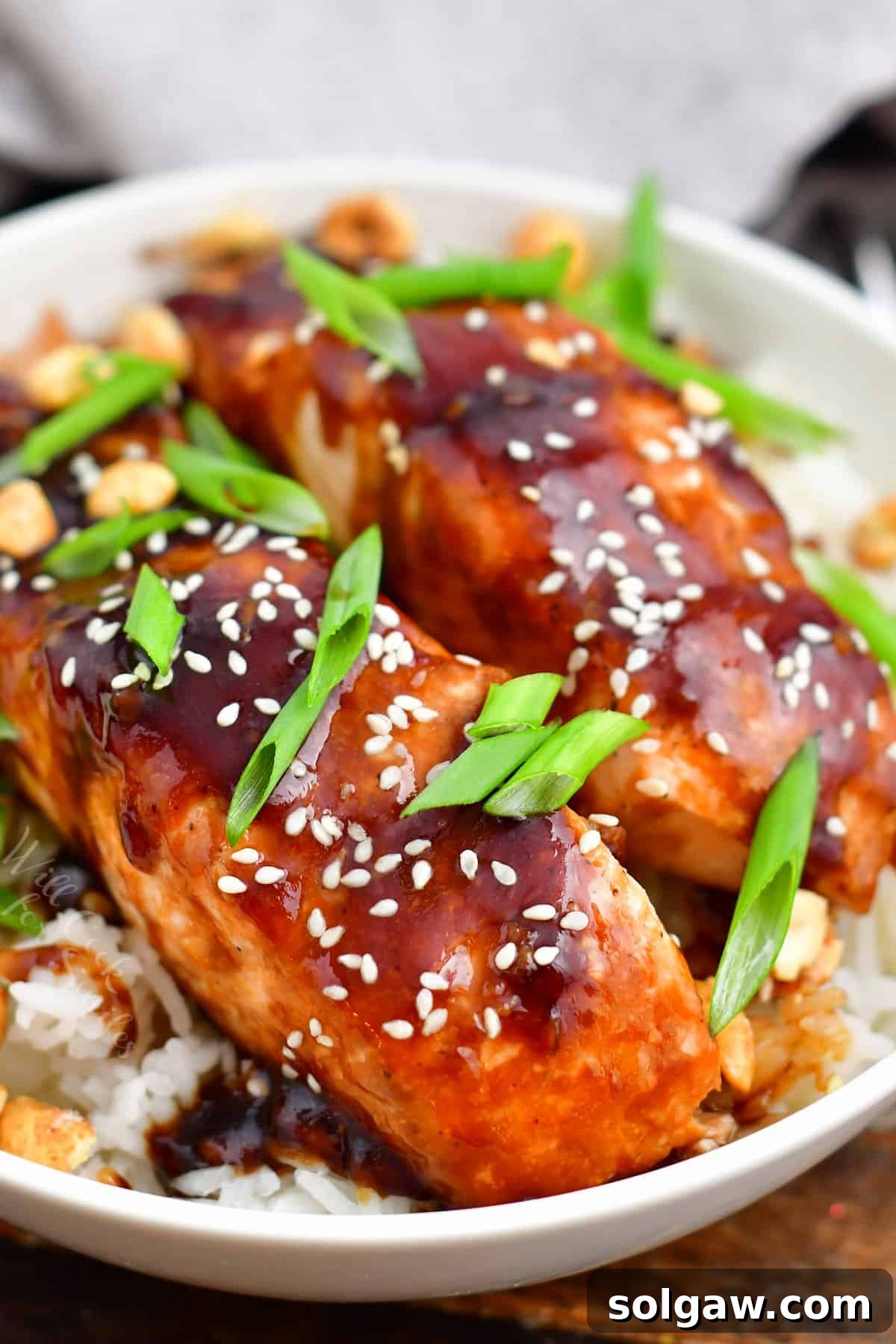
Teriyaki salmon is a remarkably simple yet incredibly flavorful dish, making it a perfect choice for any night of the week. This culinary delight features tender salmon fillets bathed in a rich, homemade teriyaki sauce, then expertly baked to perfection. Whether served over fluffy rice, alongside a vibrant salad, or with a medley of fresh vegetables, this dish promises a delicious and satisfying meal that can be ready in under 30 minutes. It’s an ideal option for those seeking a quick, healthy, and utterly irresistible dinner.
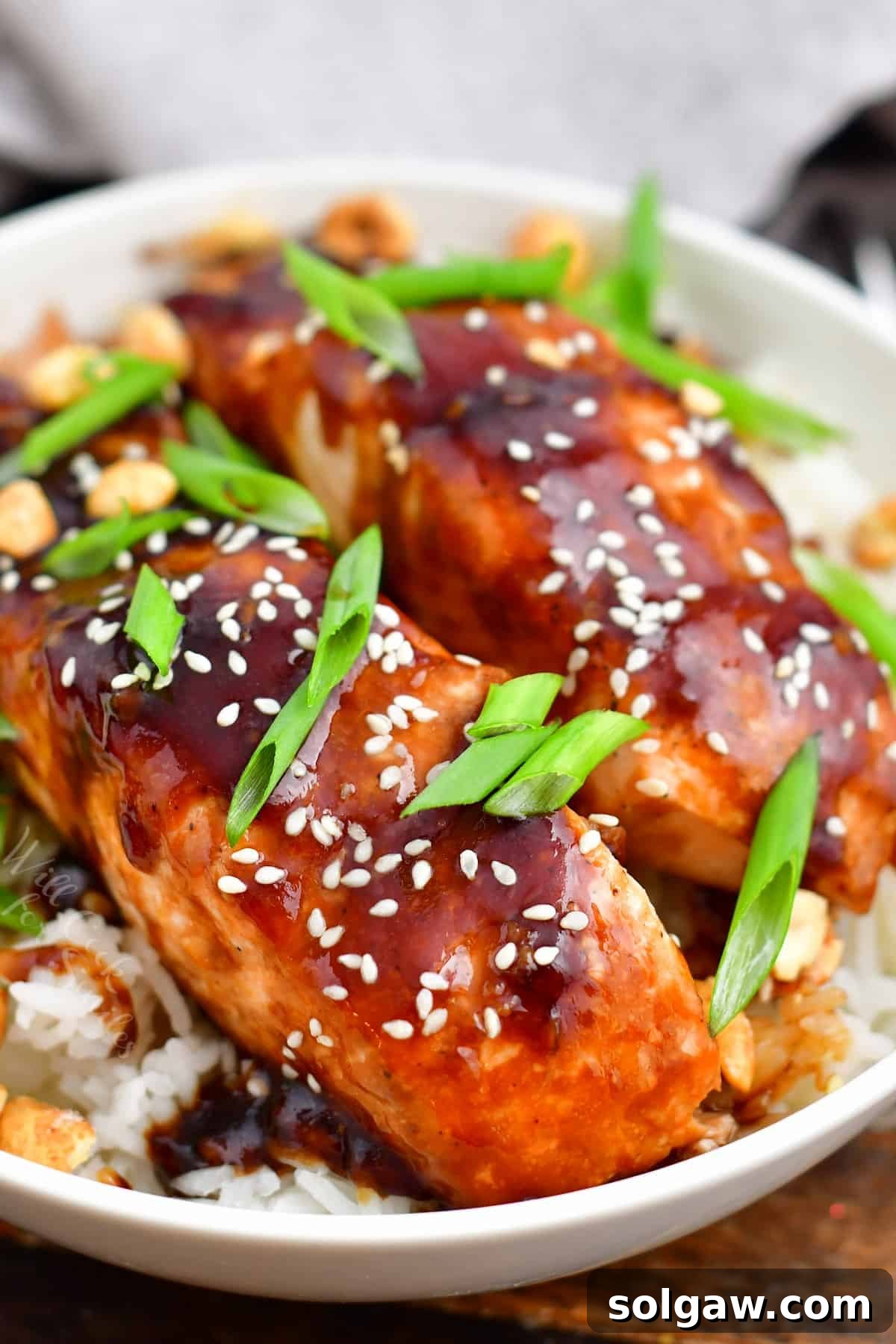
Table of Contents
- The Irresistible Appeal of Teriyaki Salmon
- Salmon: A Powerhouse of Nutrition
- Crafting the Perfect Homemade Teriyaki Sauce
- Essential Ingredients and Smart Substitutions
- Step-by-Step Guide to Baking Teriyaki Salmon
- Mastering Salmon Doneness
- Creative Serving Suggestions
- Best Methods for Reheating Leftover Salmon
- More Teriyaki-Inspired Dishes to Explore
The Irresistible Appeal of Teriyaki Salmon
When it comes to effortlessly healthy and delicious weeknight dinners, salmon consistently ranks as a top choice in my kitchen. Its mild flavor profile is less “fishy” compared to many other seafood options, making it a crowd-pleaser even for those who are typically hesitant about fish. The rich, succulent, and flaky texture of salmon is universally loved, providing a satisfying mouthfeel with every bite.
This natural richness of salmon creates an exquisite harmony with the complex flavors of homemade teriyaki sauce – a delightful balance of savory soy, sweet honey, and a tangy hint of rice vinegar. The combination is simply magic, transforming a simple fillet into a gourmet experience with minimal effort. This recipe not only delivers on taste but also offers incredible convenience, coming together from start to finish in less than 30 minutes, proving that healthy eating doesn’t have to be time-consuming.
Salmon: A Powerhouse of Nutrition
There’s a well-deserved reason why salmon frequently appears on the list of “superfoods.” This incredible fish is brimming with a wide array of health benefits, making it an essential addition to your weekly meal plan. Beyond its delicious taste and versatile nature, salmon is a rich source of vital vitamins, minerals, and, most notably, healthy Omega-3 fatty acids.
The potent combination of these nutrients is renowned for its positive impact on cardiovascular health. Regular consumption of salmon has been linked to better blood pressure regulation, a reduced risk of heart attacks, and overall improved heart function. Recognizing these profound benefits, the American Heart Association recommends including at least two servings of fish per week, with fatty fish like salmon being an excellent choice. Incorporating this teriyaki salmon into your diet is a flavorful way to support your well-being.
Crafting the Perfect Homemade Teriyaki Sauce
While store-bought teriyaki sauces offer convenience, nothing quite compares to the depth of flavor and freshness of a homemade version. This recipe features a simple yet incredibly potent teriyaki sauce that elevates the salmon to new heights. Making your own sauce allows you to control the quality of ingredients, adjust sweetness and saltiness to your preference, and avoid unnecessary additives often found in commercial products.
Our homemade teriyaki sauce typically combines low-sodium soy sauce for a salty umami base, honey for natural sweetness and a beautiful glaze, fresh minced garlic for aromatic depth, rice vinegar for a crucial tangy balance, and chicken stock to provide body and dilute the intensity. A touch of cornstarch acts as a thickening agent, ensuring the sauce coats the salmon beautifully and becomes a rich, glossy glaze as it bakes. This careful blend of ingredients creates a sauce that perfectly complements the rich flavor of salmon, making every bite truly unforgettable.
Essential Ingredients and Smart Substitutions
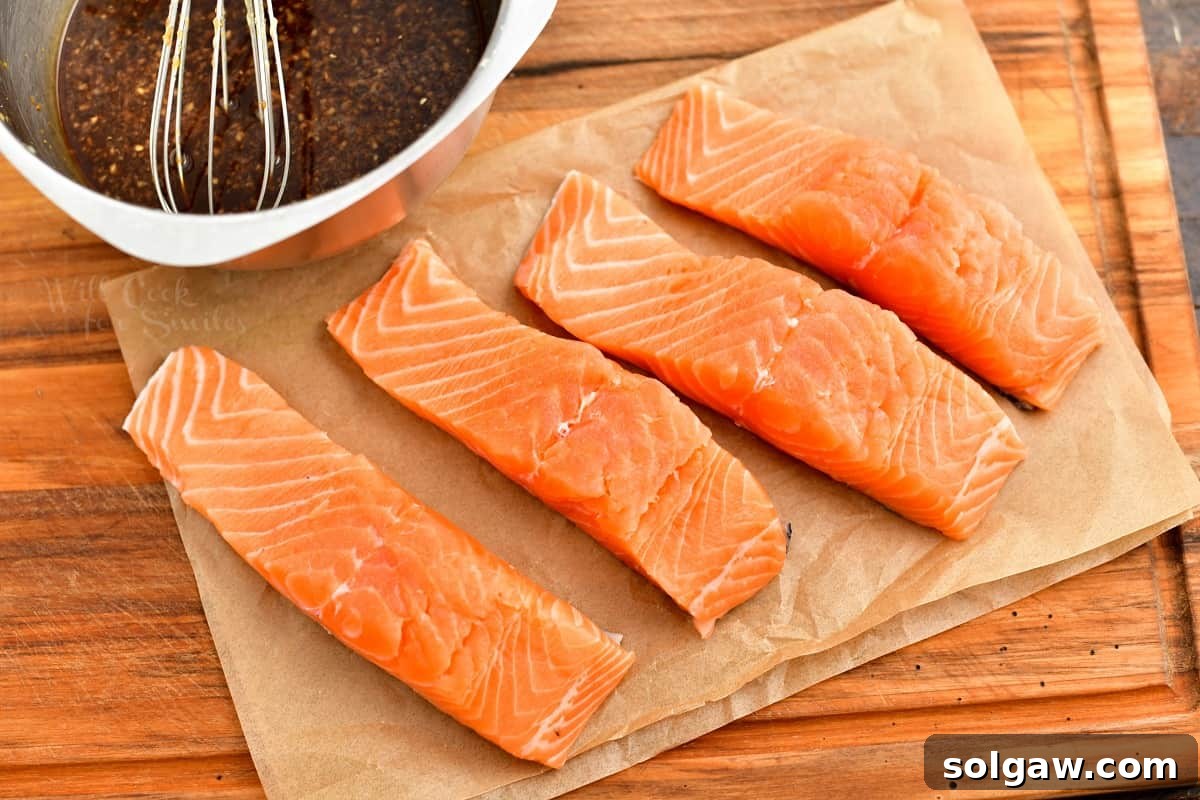
Achieving the best teriyaki salmon starts with quality ingredients. Here’s what you’ll need, along with some helpful tips and substitutions to customize your dish:
- Fresh Salmon Fillets: Opt for high-quality, fresh salmon fillets, ideally with the skin still on. The skin serves multiple purposes: it acts as a natural barrier, protecting the delicate fish from direct heat and preventing it from drying out, thereby locking in moisture and tenderness. When seared properly, the skin becomes wonderfully crispy, adding a textural contrast that enhances the dish. Furthermore, the layer of healthy fats between the skin and meat contributes to the salmon’s rich flavor and nutritional value. If skin-on isn’t available, skinless fillets will work, but be extra mindful of cooking times to prevent over-drying.
- Soy Sauce: The backbone of any good teriyaki sauce. I highly recommend using a low-sodium soy sauce to control the overall saltiness of the dish, allowing the other flavors to shine without being overwhelmed. For those with dietary restrictions, a gluten-free alternative such as gluten-free tamari or coconut aminos can be used interchangeably to maintain the savory umami depth.
- Honey: This provides the signature sweetness and helps create that beautiful, glossy glaze. If honey isn’t on hand, you can substitute it with maple syrup or brown sugar. Keep in mind that these substitutions might slightly alter the final flavor profile, but will still yield a delicious result.
- Garlic Cloves: Freshly minced garlic is essential for an aromatic and pungent flavor that elevates the sauce. While garlic powder can be used in a pinch, fresh garlic offers a superior taste. Approximately 1 teaspoon of garlic powder can replace 1 clove of fresh garlic.
- Rice Vinegar: Adds a crucial tangy note that balances the sweetness of the honey and the saltiness of the soy sauce. If you don’t have rice vinegar, apple cider vinegar can be a suitable substitute, though it has a slightly stronger, fruitier tang.
- Chicken Stock or Broth: Used to thin out the sauce and add another layer of savory flavor. Vegetable broth works equally well for a lighter taste, or even water if you’re in a pinch, though chicken or vegetable stock will provide more depth.
- Cornstarch: This is our thickening agent, ensuring the teriyaki sauce transforms into a luscious, glaze-like consistency. For a gluten-free alternative, arrowroot powder can be used in the same quantity.
- Oil: A neutral-flavored oil with a high smoke point, such as avocado, canola, or vegetable oil, is perfect for searing the salmon. This prevents sticking and helps develop that desirable crispy skin.
Step-by-Step Guide to Baking Teriyaki Salmon
Creating this delicious teriyaki salmon is surprisingly straightforward. Follow these steps for a perfectly cooked, flavorful meal:
- Step 1: Prepare the Fish. Begin by thoroughly patting your salmon fillets dry with paper towels. This crucial step removes excess moisture from the surface, which is essential for achieving a beautifully crispy skin when seared. Season both sides of the salmon lightly with salt and freshly ground black pepper. Next, gently rub a small amount of your chosen cooking oil onto the skin side of each fillet. This helps in achieving a crispier texture during searing and prevents sticking.
- Step 2: Sear for Crispy Skin. Place a cast-iron skillet (or another oven-safe pan) over medium-high heat and allow it to preheat thoroughly. Once hot, add a tablespoon of oil, then carefully place the salmon fillets into the skillet, skin-side down. Let the salmon sear undisturbed for about 1 to 1.5 minutes. During this time, the skin will begin to crisp up and release its natural oils, forming a flavorful, golden-brown crust. This searing step also prevents excessive fat from rendering into your teriyaki sauce, leading to a cleaner flavor.
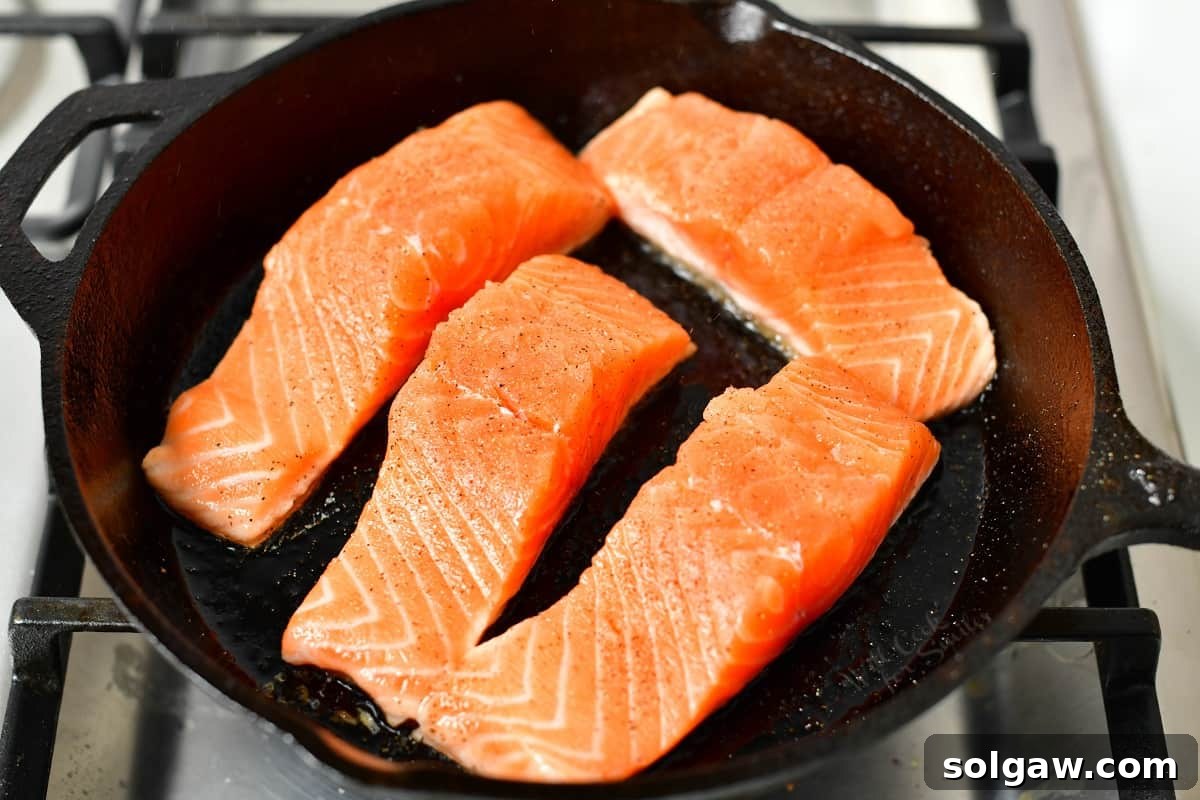
- Step 3: Introduce the Homemade Teriyaki Sauce. While the salmon is searing, quickly whisk together all the ingredients for your homemade teriyaki sauce in a medium bowl until well combined and the cornstarch has dissolved. Once the salmon has seared for the allotted time, use a fish spatula to gently loosen the fillets from the pan if needed. Then, carefully pour the prepared teriyaki sauce directly over the salmon in the skillet, ensuring each fillet is generously coated.
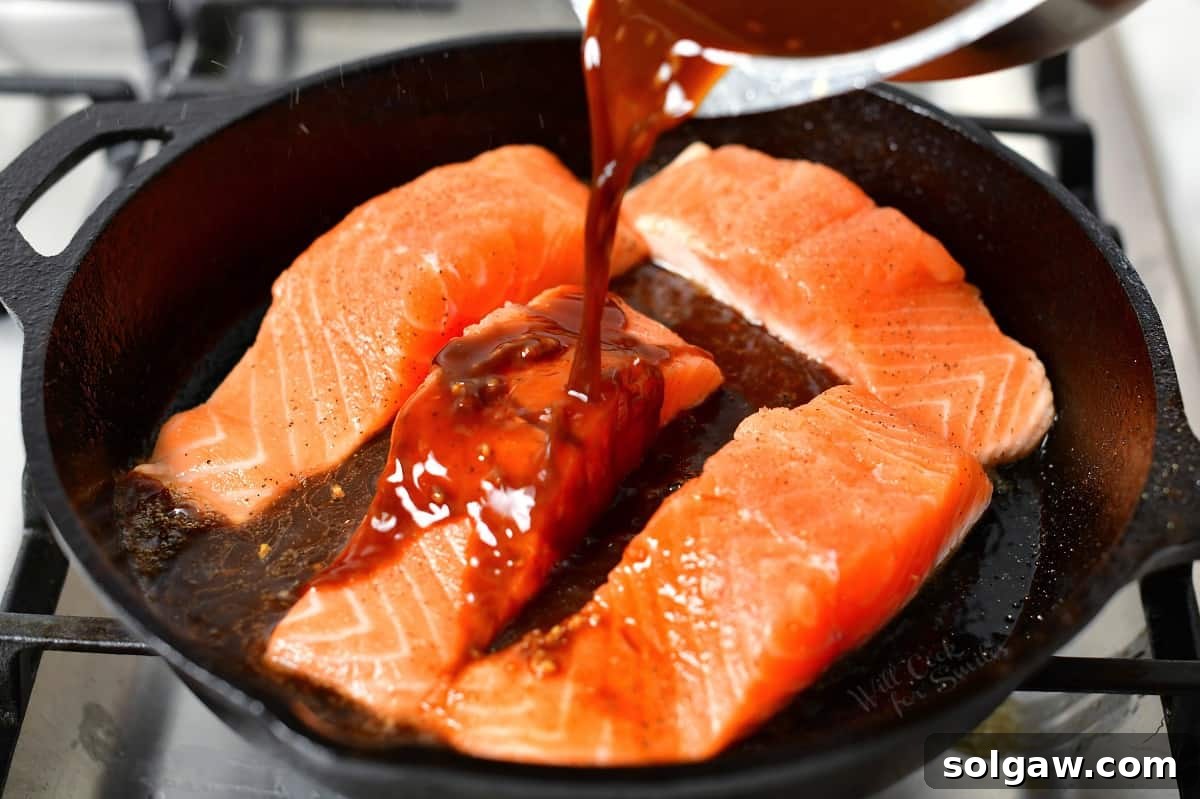
- Step 4: Bake to Perfection. Immediately transfer the skillet containing the salmon and sauce into a preheated oven set to 425°F (220°C). Bake for approximately 10-15 minutes, or until the salmon is cooked through to your desired level of doneness. The exact baking time will depend on the thickness of your salmon fillets. As it bakes, the sauce will thicken and caramelize, forming a beautiful, irresistible glaze.
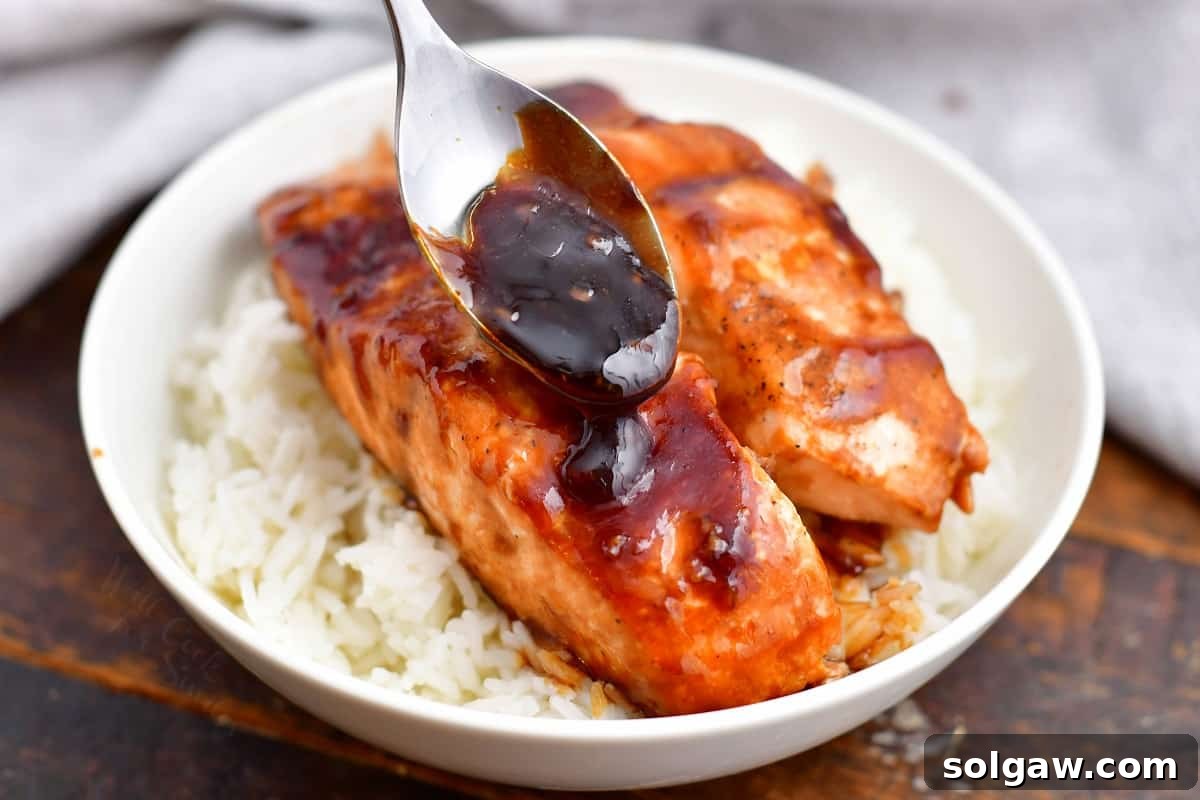
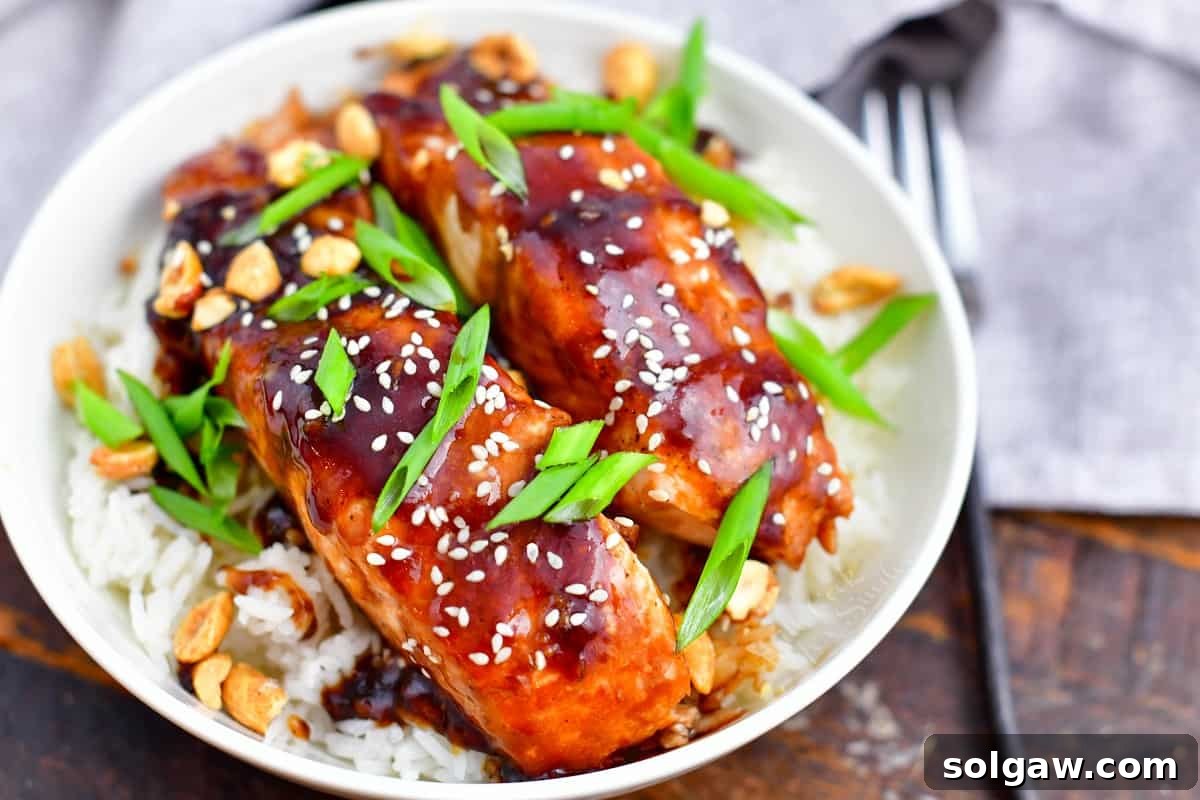
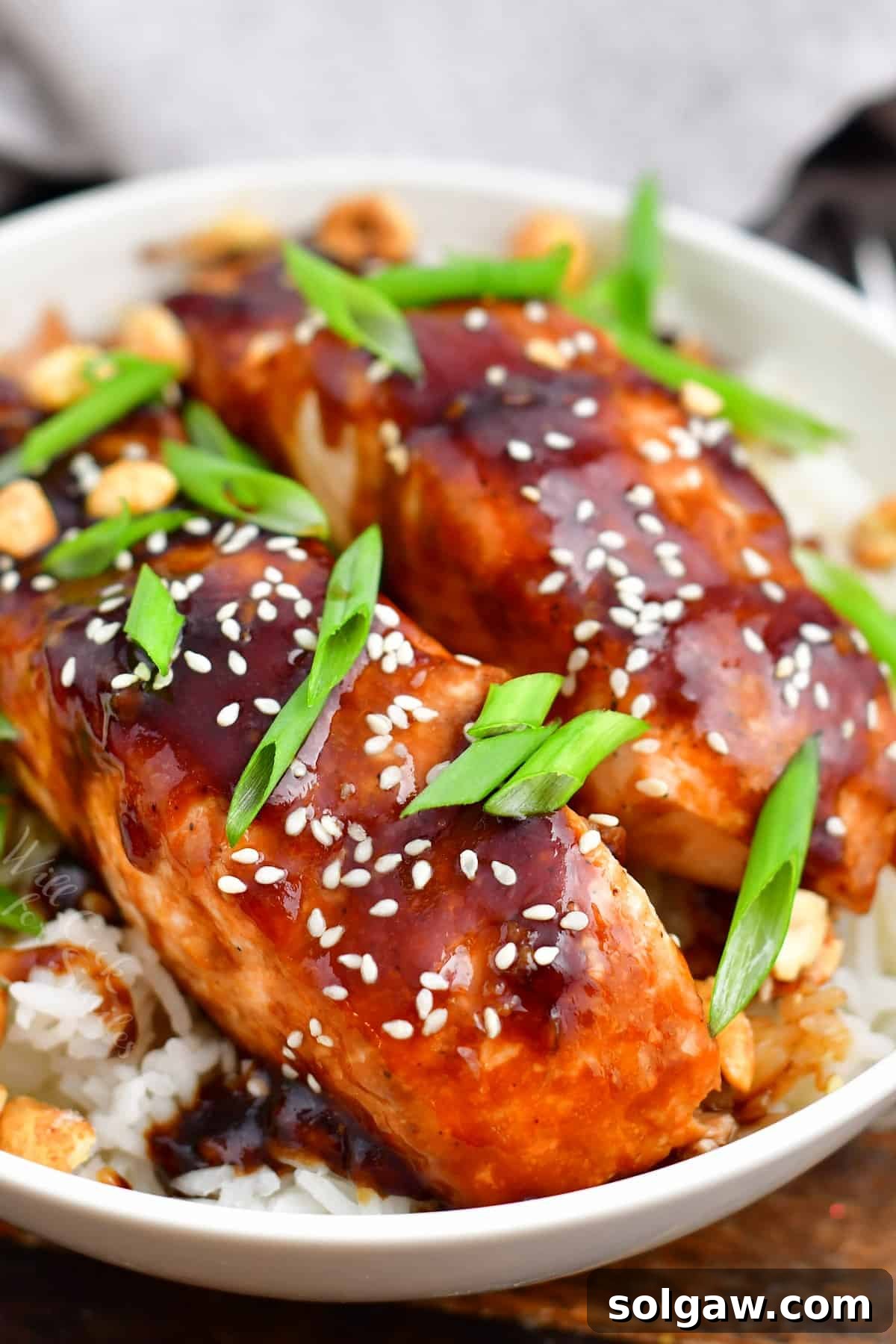
- Step 5: Garnish and Serve. Once cooked, carefully remove the skillet from the oven. To prevent overcooking, it’s best to transfer the salmon out of the hot pan immediately. Serve your flavorful teriyaki salmon over a bed of fluffy jasmine rice, spooning extra sauce from the pan generously over the top. For an added burst of freshness, color, and texture, garnish with thinly sliced scallions, a sprinkle of sesame seeds, and even some chopped peanuts for a delightful crunch.
Mastering Salmon Doneness
Knowing when salmon is perfectly cooked is key to enjoying its tender, flaky texture. Overcooked salmon can quickly become dry and less appealing. Here are several reliable methods to determine if your salmon is done:
- Use a Meat Thermometer: The most accurate and foolproof method is to use a reliable meat thermometer. The USDA recommends cooking salmon to an internal temperature of 145°F (63°C), which indicates it is fully cooked and safe to eat. Insert the thermometer into the thickest part of the fillet for an accurate reading.
- Personal Preference for Medium-Well: Many chefs and home cooks, myself included, prefer salmon cooked to a medium or medium-well temperature, typically around 125°-130°F (52°-54°C). At this temperature, the salmon remains incredibly moist, tender, and slightly translucent in the very center, offering a richer flavor and melt-in-your-mouth texture.
- The Touch Test: Experienced cooks can often gauge doneness by touch. Gently press the center of the salmon fillet with a fork or your finger. Properly cooked salmon will feel firm to the touch in the center, not squishy or overly soft.
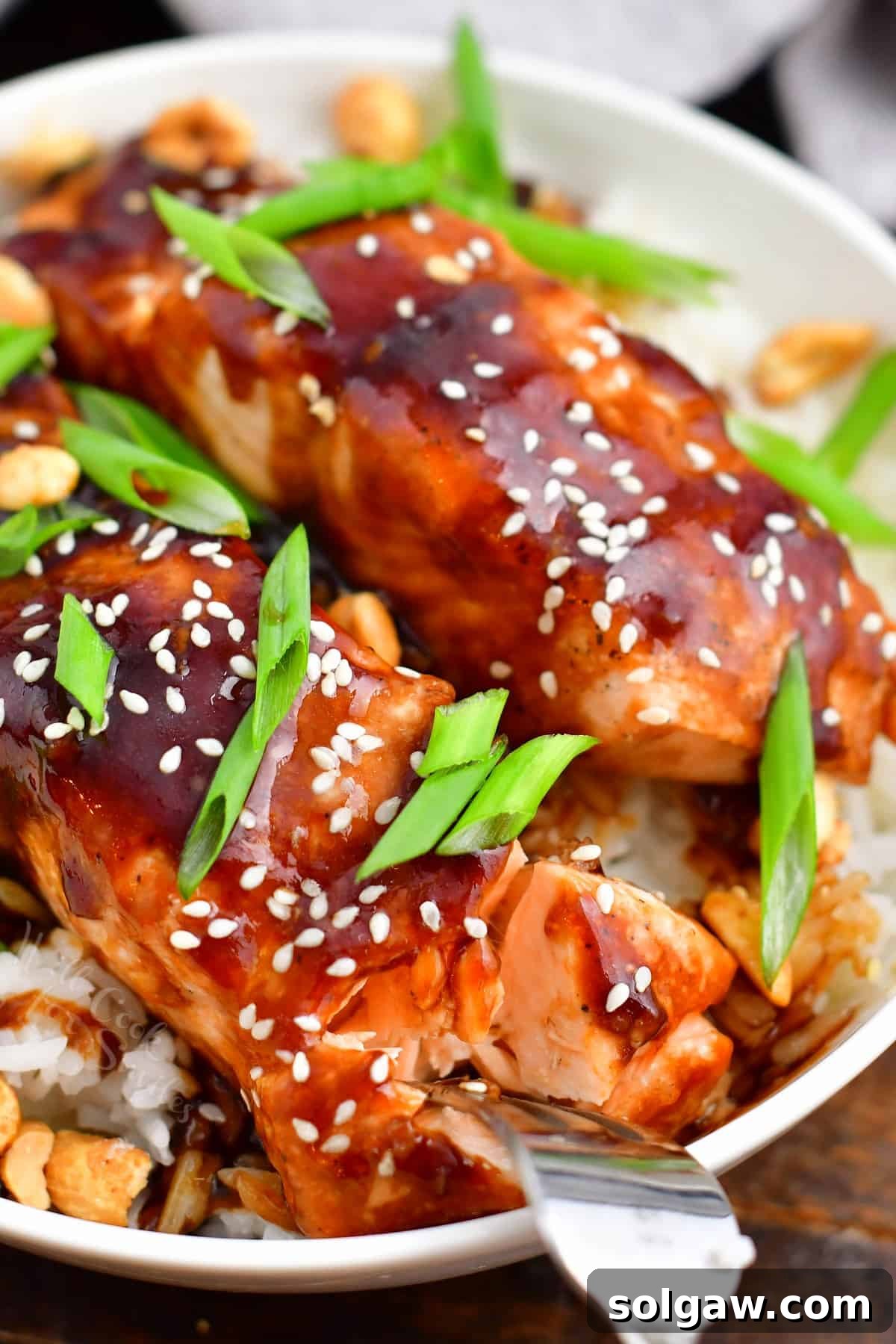
- Visual Cues: When thoroughly cooked, the salmon’s flesh will no longer appear shiny or translucent. Instead, it should be opaque throughout and visibly flake apart easily when gently pressed with a fork. The muscle fibers will separate without resistance.
- The Fork Test: A classic method involves inserting the tines of a fork at an angle into the thickest part of the fillet and gently twisting. If the flesh easily separates along its natural lines of fat and muscle, the salmon is done. If it resists, give it a minute or two longer in the oven.
Creative Serving Suggestions
This teriyaki salmon is incredibly versatile and pairs beautifully with a variety of side dishes, allowing you to tailor your meal to any occasion or dietary preference:
- Classic Asian Pairing: For a traditional and comforting meal, serve your teriyaki salmon over a generous bed of steamed jasmine rice. Enhance the presentation and flavor with a sprinkle of fresh scallions and toasted sesame seeds. For a delightful twist, consider trying it with creamy coconut rice.
- Crunchy Texture Additions: To introduce an exciting textural element, I highly recommend adding some chopped peanuts or cashews as a garnish. Their crunch perfectly complements the tender salmon and the silky sauce.
- Healthier, Low-Carb Options: If you’re looking to boost the vegetable content or reduce carbohydrates, replace the rice with steamed or roasted vegetables. Excellent choices include crisp broccoli florets, vibrant green beans, or tender roasted cauliflower. A simple side salad with a light vinaigrette also makes a refreshing accompaniment.
- Keto-Friendly Adaptation: To make this recipe suitable for a Keto diet, make a few simple adjustments to the sauce. Substitute soy sauce with coconut aminos, and swap the honey for an alternative sweetener like erythritol or monk fruit. Serve the salmon with low-carb vegetable sides such as cauliflower rice, zucchini noodles, or sautéed spinach instead of traditional rice.
Best Methods for Reheating Leftover Salmon
Reheating salmon can be tricky, as it tends to dry out or develop an undesirable “fishy” odor if not done correctly. To preserve the delicate texture and flavor of your leftover teriyaki salmon, it’s best to avoid the microwave. Instead, opt for gentler reheating methods like the oven or stovetop:
- Reheating in the Oven: This is often the preferred method for maintaining moisture. Preheat your oven to a moderate 350°F (175°C). Place the salmon on a baking sheet lined with parchment paper or foil for easy cleanup. To prevent drying, add a splash of water, broth, or a little extra teriyaki sauce to the pan, and then loosely cover the salmon with aluminum foil. This traps steam and moisture, keeping the fish tender. Reheat for about 10-15 minutes, or until warmed through, checking periodically to ensure it doesn’t overcook.
- Reheating on the Stovetop: For a quicker method, reheat salmon on the stovetop. Add a small amount of oil (like avocado or olive oil) to a non-stick pan over medium-low heat. Place the salmon fillets in the pan, cover it with a lid, and allow it to warm through gently. The lid helps to trap moisture, ensuring the salmon stays flaky and moist. This method typically takes about 5-8 minutes, depending on the thickness of the fillet.
More Teriyaki-Inspired Dishes to Explore
If you’ve fallen in love with the savory-sweet goodness of teriyaki, you’ll be thrilled to discover how versatile this sauce is across various dishes. Expand your culinary repertoire with these other fantastic teriyaki recipes:
- Easy Homemade Teriyaki Sauce Recipe – Master the foundational sauce that makes all these dishes shine.
- Chicken Teriyaki Rice Bowl – A hearty and satisfying meal featuring tender chicken and a flavorful rice base.
- Easy Chicken Teriyaki Recipe – Another quick and simple option for succulent chicken glazed in teriyaki.
- Teriyaki Rice and Salmon Patties – A creative way to use leftover salmon or enjoy new textures with teriyaki flavor.
PIN THIS RECIPE FOR LATER!
DID YOU MAKE THIS RECIPE? Please leave a 🌟 star rating below! Let me know how you liked it by leaving a 📝 comment or share and tag me on social media @willcookforsmiles. DON’T FORGET to subscribe to my newsletter for more delicious recipes!
Teriyaki Salmon Recipe
Print
Pin
Rate
Main Course
American
Gluten Free
5 minutes
22 minutes
27 minutes
4
431
kcal
Lyuba Brooke
Ingredients
-
2
lbs
salmon fillets
skin on preferred -
oil
avocado, canola, or vegetable
Teriyaki Sauce:
-
1/2
cup
low sodium soy sauce*
use gluten free if needed -
1/4
cup
honey -
4
garlic cloves -
1
tbsp
rice vinegar -
1/2
cup
chicken stock or broth -
1 1/2
tbsp
cornstarch
Serving Suggestions:
-
Jasmine rice -
scallions -
sesame seeds -
chopped peanuts
Instructions
-
Note: If using skin-on salmon, I highly recommend an extra step of searing the skin first before adding the sauce and placing it in the oven. This technique results in a much better-tasting sauce and salmon, as less excess fat will render into the sauce during baking.
-
Preheat your oven to 425°F (220°C).
-
Ensure there are no scales left on the salmon skin. Pat the salmon fillets thoroughly dry with a paper towel and season the top and sides lightly with salt and pepper. Rub the skin side with a little oil.
-
Preheat a cast iron skillet, or any other oven-safe cooking pan, over medium-high heat on your stovetop.
-
Add a little bit of oil to the hot skillet, then carefully place the salmon fillets into the pan, skin-side down.
-
Let the salmon sear for approximately 1 to 1 1/2 minutes to achieve a crispy skin.
-
While the salmon sears, whisk all the ingredients for the teriyaki sauce together in a bowl until smooth.
-
Use a fish spatula to gently loosen the salmon from the pan. Then, carefully pour the prepared teriyaki sauce over the salmon, ensuring it coats the fillets.
-
Transfer the skillet directly into the preheated oven. Bake for 10-15 minutes, depending on the size and thickness of your salmon. The recommended internal temperature for fully cooked salmon is 145°F (63°C). If you prefer a medium to medium-well doneness, aim for 125°F-130°F (52°-54°C).
-
Once cooked to your liking, remove the salmon from the oven and carefully transfer the fillets out of the hot pan to prevent them from continuing to cook.
-
Serve the salmon immediately on a bed of rice, generously topped with additional sauce from the pan, fresh scallions, and a sprinkle of sesame seeds for garnish.
Notes
- *Gluten Free Notes: To make this recipe entirely gluten-free, ensure you use a certified gluten-free soy sauce or tamari when preparing the teriyaki sauce.
- Storing: Store any leftover teriyaki salmon in an airtight food storage container in the refrigerator for up to 3-4 days.
- Reheating: To maintain moisture and flavor, reheat teriyaki salmon in the oven at 350°F (175°C) until warmed through. Use a lined baking sheet for easy cleanup. Adding a splash of liquid (water or broth) to the pan and covering it loosely with foil helps to trap moisture. Alternatively, reheat on the stovetop: add a little oil to a pan, place the salmon in, cover, and warm over medium-low heat until heated through.
Nutrition
Calories:
431
kcal
|
Carbohydrates:
25
g
|
Protein:
48
g
|
Fat:
15
g
|
Saturated Fat:
2
g
|
Cholesterol:
126
mg
|
Sodium:
1207
mg
|
Potassium:
1223
mg
|
Fiber:
1
g
|
Sugar:
18
g
|
Vitamin A:
91
IU
|
Vitamin C:
1
mg
|
Calcium:
38
mg
|
Iron:
3
mg
Tried this recipe?
Mention @willcookforsmiles or tag #willcookforsmiles!
Originally published on Will Cook For Smiles in January 2021.